
Where to Stay in Venice: A Complete Guide to 4 Areas
Venice is a city that provokes some of the most intense disagreements in the world when it comes to its perceptions with travelers.
Some are enchanted by the unique nature of a city built on the water, both figuratively and literally. Others are overwhelmed by the sheer volume of visitors making their way through the narrow streets that lead from the train station to the Rialto Bridge and end at Piazza San Marco.
Prior to my latest visit to Venice this spring, I was firmly in the “seen it, don’t ever need to go back” camp.
But I’ll be honest. After my latest trip to Venice, which was a four day stay as the season was changing from winter to spring, I was brought back to the “enchanted” camp.
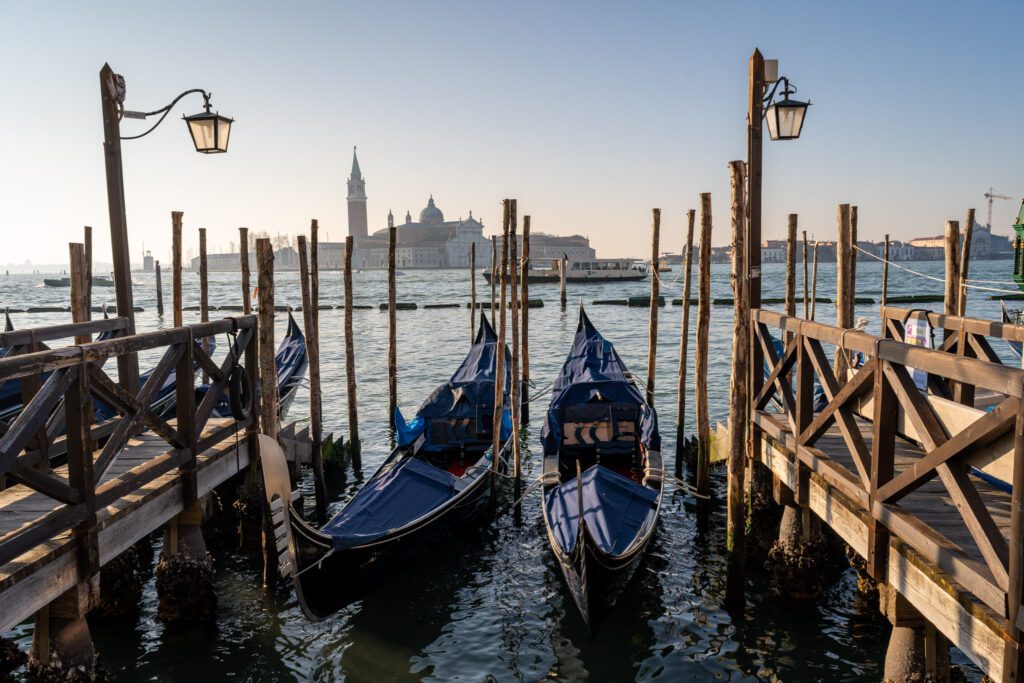
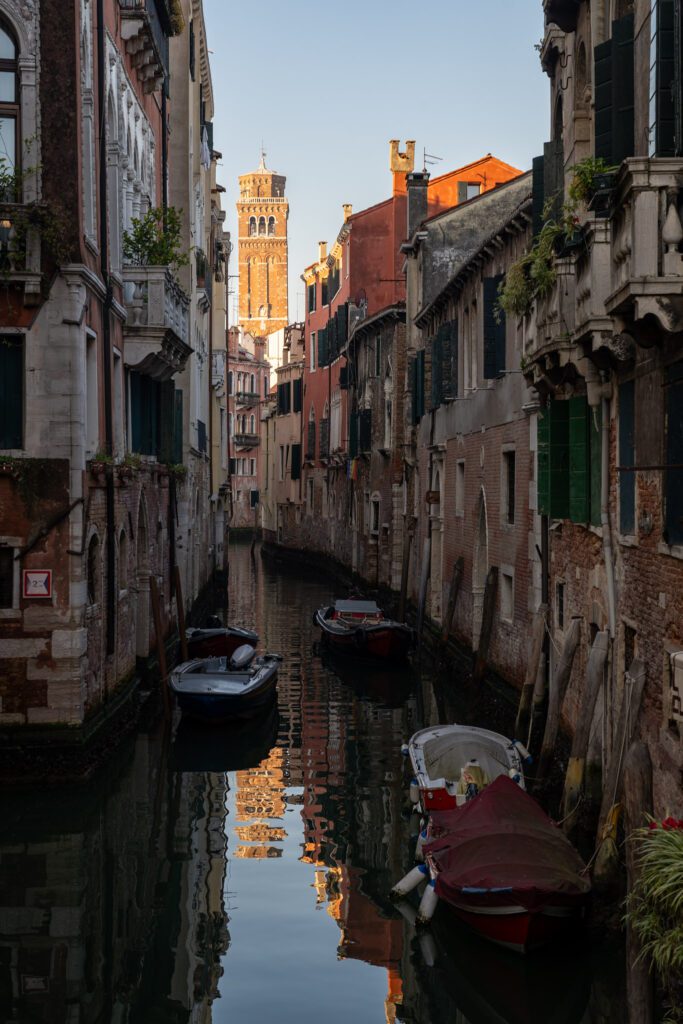
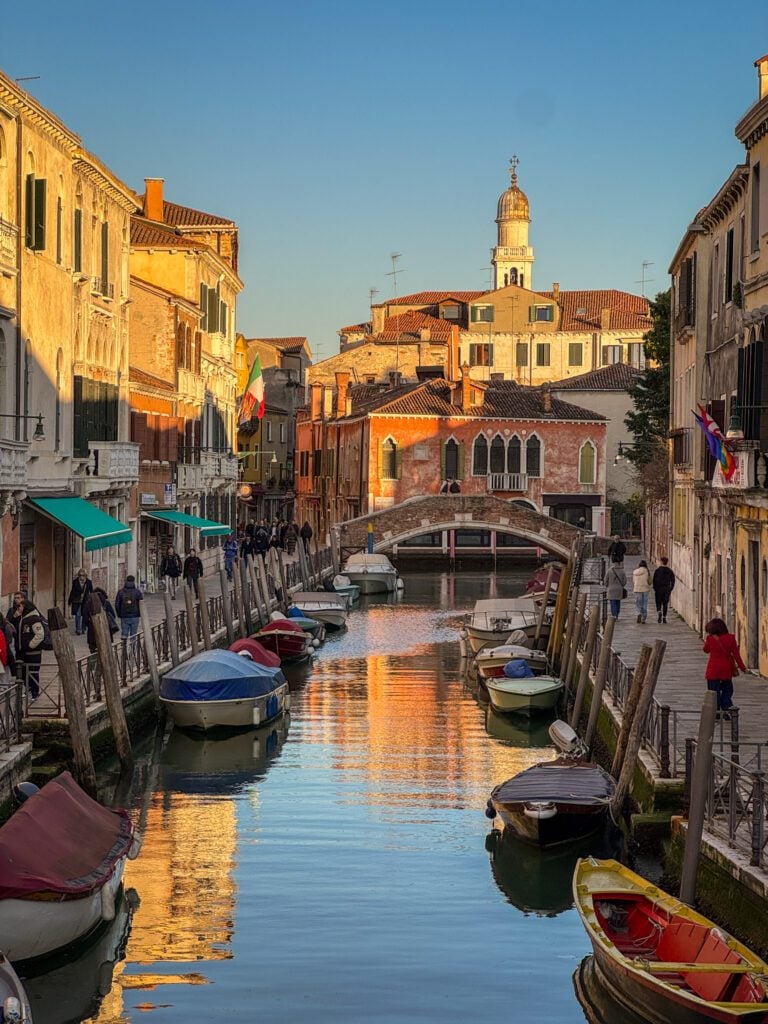
There is truly no other city that I’ve ever been to that can match the beauty of Venice at dawn or dusk, when the streets and canals are empty except for a few people making their way to work or on a morning run.
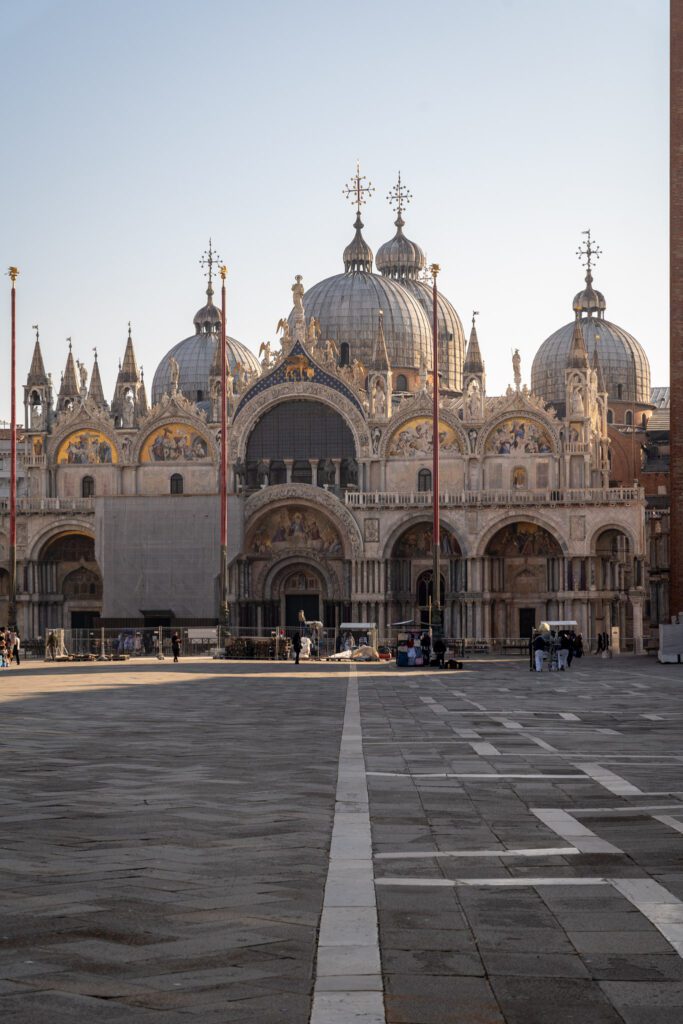
I firmly believe Venice is one of the most unique cities in Italy, and perhaps the entire world, but I also understand the reaction to visiting Venice on a weekend in August and trying to get to Piazza San Marco at noon (which is a hot, sweaty, claustrophobic nightmare).
At this point, I might go so far as to say that Venice is so overrated that it’s actually underrated, if that makes any sense at all.
In this guide, we’re going to use our experiences exploring the city to do our best to walk you through all the information you need to figure out the best area to stay in Venice for your particular style, budget, and preferences.
We’re going to give you three main neighborhoods we’d recommend, why we recommend them, and some specific places to stay in each.
Each neighborhood offers a different blend of vibes, prices, and pros and cons, and we’ll cover it all below so that you’re armed with all the information you need to figure out where to stay for your particular style and budget.
Our intention is that, by the end of this guide, you have everything you need to choose the right place to stay for you and your travel companions.
Sound good to you? Let’s get into it.
Disclaimer: Some of the links in this post, like hotel links, are affiliate links, meaning at no additional cost to you, we make a little bit of money if you click through and book. That being said, we would never recommend something to you that we don’t stand behind 100%.
Where to Stay in Venice: The 4 Best Areas
Let’s get straight into it here, because we have a lot to cover.
Now, we’re well aware that a few of you are currently ready to throw your left shoe at the screen, saying “I don’t have time to read all of this, JUST TELL ME THE BEST PLACE TO STAY!”
Well, here’s a quick summary of this guide if you’re short on time (though we’d recommend reading the section of the place you end up staying for tips and places to add to your list!).
If you want to be as central as possible, stay in San Polo. I stayed here on my latest trip, and I would absolutely do it again.
It sits roughly equidistant from Cannaregio, Dorsoduro, and Rialto Bridge, and is well connected with the vaporetto stops on either end of the neighborhood.
Plus, Campo San Polo and the Basilica di Santa Maria Gloriosa dei Frari are two of my favorite spots in the city, and they’re both in the heart of the neighborhood.
It also has good food and drinks in its own right, with some of my favorite meals and wine bars in the city.
I stayed at Palazzo Morosini Degli Spezieri, an aparthotel in an extremely central location, and loved it – I had a kitchen, enough space to do some writing, and even a canal view from the windows of my apartment.
If you’re looking for a more budget-friendly option, look at Ca’ Angeli or Ca’ Riza, two guesthouses with excellent reviews.
If you want an apartment, we’d also look at Ca’ della Scimmia, whose location right next to Rialto Market could not be more central.
If you want something a little quieter with a younger vibe, stay in Dorsoduro. This is where multiple people told me to go around sunset to wander around and eat cicchetti (a version of aperitivo specific to Venice, though my issues with gluten precluded the eating part, I did find a nice Select spritz as I was wandering around).
It’s a neighborhood where people actually live – a rarity in modern day Venice – and is centered around the University, which gives it a nice youthful vibe.
Both the Gallerie dell’Accademia and Peggy Guggenheim Collection are down here, and you’re just a short walk (you do have to cross the Grand Canal) from Piazza San Marco.
If you want to stay on the water at the southern edge of the city, look at Palazzo Veneziano.
For something a little more value-oriented, look at Cà Santo Spirito, which is a quiet location with nicely designed rooms.
If you want to find something a little more budget friendly, look towards Cannaregio. Of the three neighborhoods we’re talking about here, Cannaregio is probably the least convenient just because it’s a little further from Piazza San Marco (but the differences we’re talking about are very marginal).
However, it’s the place where I found the most serenity, especially as you go further north and east, and it had my single favorite stretch of places to eat and drink in the entire city (this canalside promenade just outside the former Jewish quarter).
For classic decor and good value, look at Ca’ Rosetta, which is just east of that extremely charming stretch.
I’d also consider Combo Venezia, a boutique hostel (think hostel facilities with boutique hotel vibes) on the northern edge of the city (they also have studios with kitchenettes) and Hotel al Sotoportego (a great mid-range option in a relatively central location).
If you’re on a tight budget, we’d skip Mestre (more on that down below in the “where not to stay” section) and look to Castello, the eastern end of the city.
The majority of tourists never make it out to Castello, and there are some nice places to stay that offer a good value.
We’d look at Laguna724, a cozy little B&B out in outer Castello, or Residenza La Duchessa, a hotel a few blocks from the water that gets excellent reviews.
Both of those are far enough out to offer a quieter experience and a good value, but you’re still only 15 minutes or so from Piazza San Marco.
If you’re traveling with a bigger group (4+), we’d look at Casa Marsilli in the inner section of Castello (so it’s walkable to everything) or Palazzo Dei Fiori by Room Mate, an aparthotel from a reputable brand with all sorts of two and three bedroom units in a relatively quiet slice of San Marco.
Here’s a map of the neighborhoods we’d recommend so that you can visualize what we’re talking about when we reference different aspects of each neighborhood.
See that big black hole in the bottom right? That’s Piazza San Marco and the area immediately around it.
Don’t stay there.
It’s the center of overtourism in Italy, and it’s not a pleasant place to be spending much time (though you should do this after-hours tour of the Basilica di San Marco and Doge’s Palace, which I loved because you’re literally the only group inside).
Now, with the summary out of the way, let’s talk details.
For each of the four neighborhoods we’re talking about below, we’ve created a structure to help you figure out if it’s the right home base for you.
Here’s what we’ll cover:
- An overview of the neighborhood and our experience with it. We’ve personally been to and explored (more than once) all of the areas on this list, so we’ll try to give you a little bit of our perspective on what makes each area special.
- Pros and cons of staying in this area. The things you need to know to make your decision.
- A collection of a few places to stay that stood out to us. Sometimes it’ll be because they have rooms with great views, sometimes it’s the rooftop pool, sometimes it’s that the hotel offers a great value given the location.
The intention here is to give you the information you need to figure out the right place to stay for your particular group, style, and budget.
San Polo: Staying in the Center of Venice
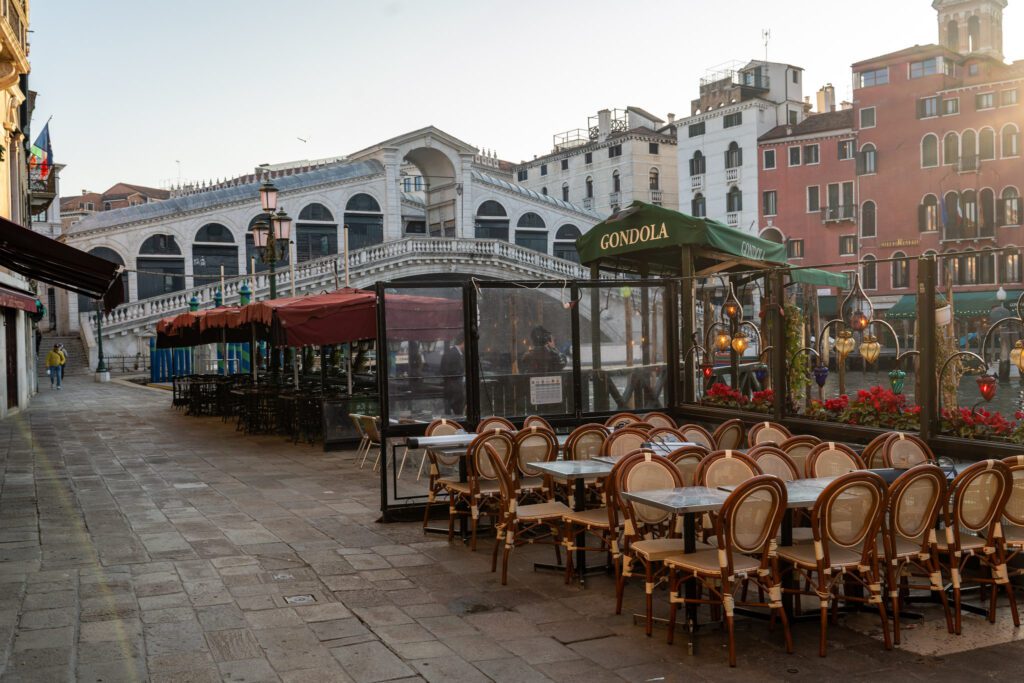
As we covered above, Venice is divided into six sestieri, which are basically districts, and they form a flower pattern with one neighborhood in the center, and five radiating out from there.
That neighborhood in the center is called San Polo, and the western, northern, and eastern edges follow the Grand Canal as it winds its way from the train station past Rialto Bridge and down to San Toma.
From San Polo, you can walk basically anywhere in Venice within 20 minutes or so. Which is good, because Venice is definitely a walking city (there are no cars in the historic city, and when you arrive you’ll quickly understand why).
While that central location is probably the biggest reason to stay here, it’s worth noting that San Polo is a great neighborhood to explore in its own right.
My second favorite church (after the Basilica di San Marco) is the Frari Church (that’s the colloquial name – its full name is Basilica di Santa Maria Gloriosa dei Frari), which is an imposing brick building that soars above the canalside houses and seemingly comes out of nowhere.
Campo San Polo (here on Google Maps) is an excellent example of the big, open shared spaces that I think Italy does well, and wish we had more of here at home.
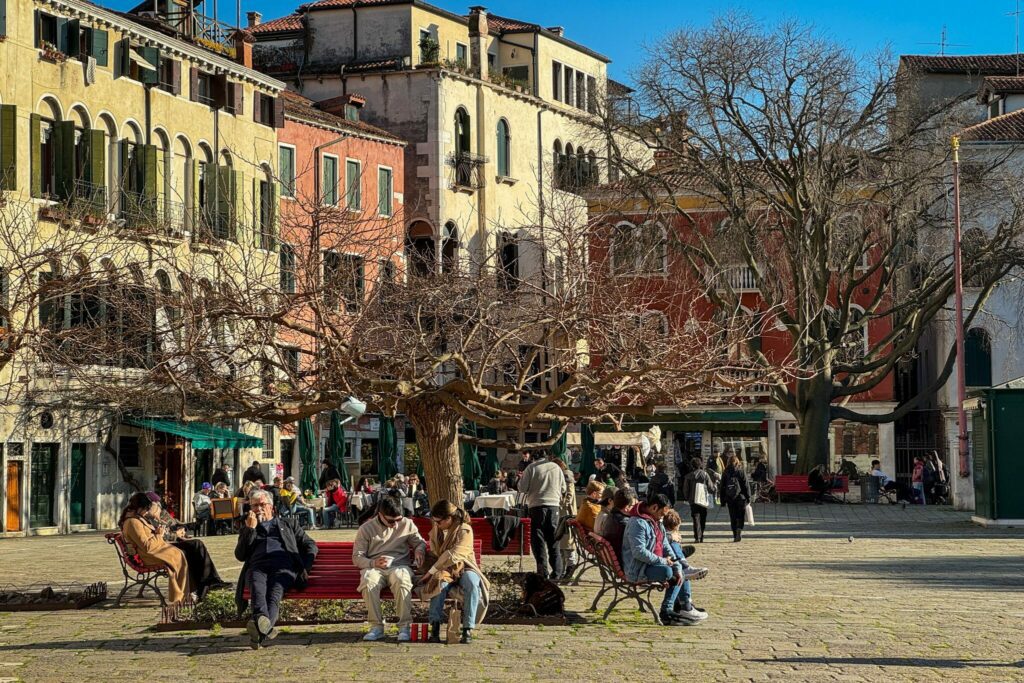
It’s full of dogs chasing balls, people sitting on the benches and basking in the sun deep in conversation, and a few lively restaurants with outdoor tables on the southern end of the square.
A few of my favorite food and drink experiences in Venice were in San Polo, too. Wine at La Bottiglia (here on Google Maps). Coffee at Caffè del Doge (here on Google Maps). Dinner at Frary’s (here on Google Maps).
Generally speaking, I found the most interesting part of the neighborhood to be the southern end, as far from Rialto Bridge and Rialto Market as possible.
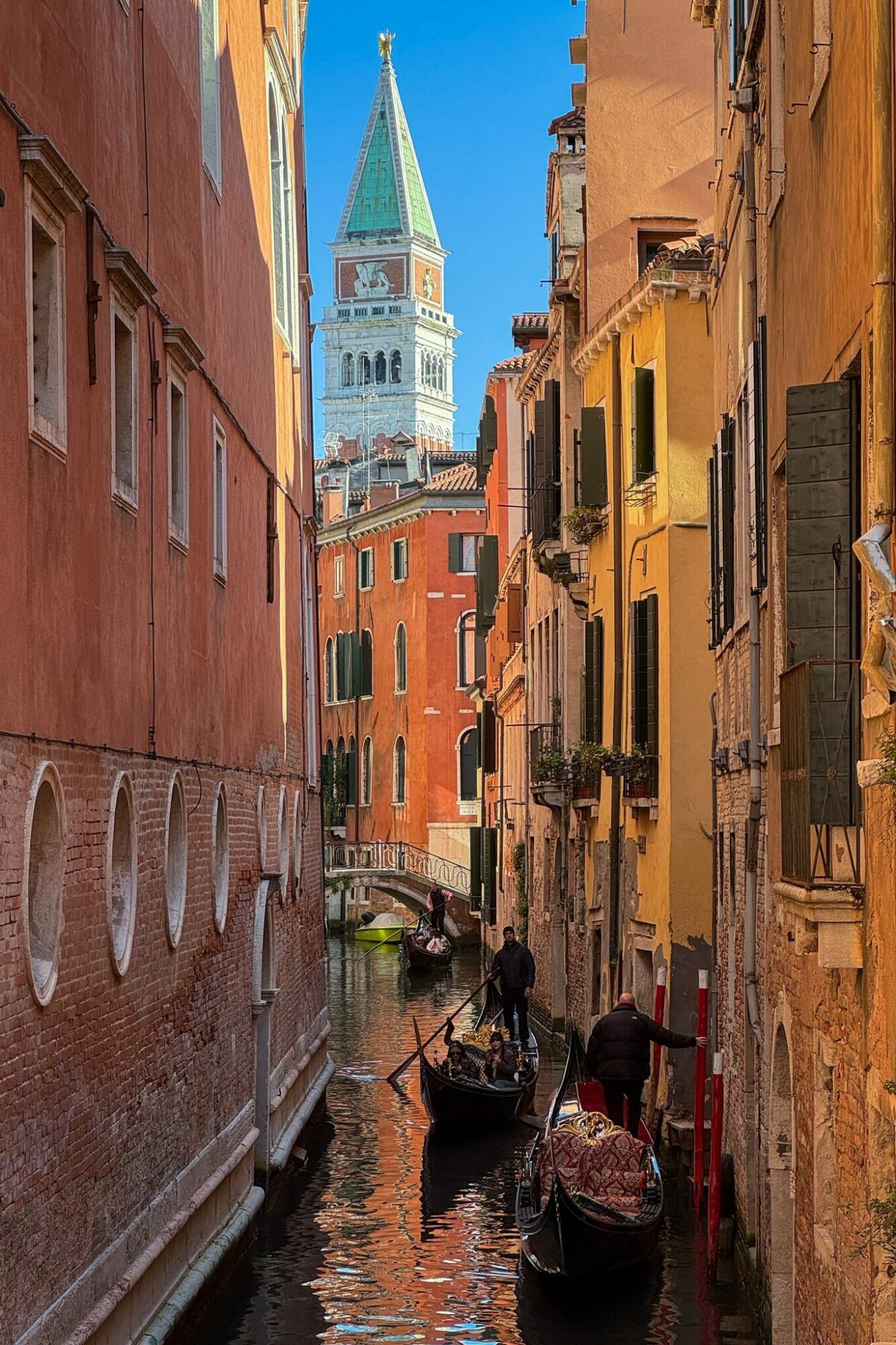
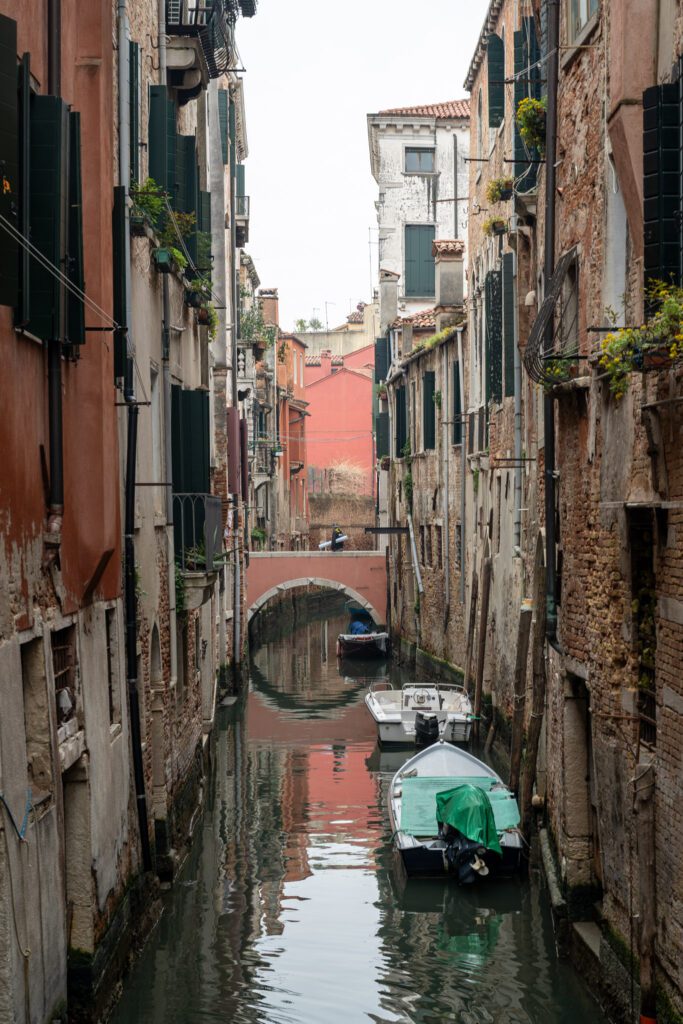
It doesn’t get more central and more walkable than San Polo, and it has a nice mix of places to eat and drink (particularly at the southwestern end, as I already mentioned) and quiet streets where you can escape the crowds, even if it’s just for a block or two.
Pros and Cons of Staying in San Polo
Here are the pros and cons of staying in San Polo as we see them.
Pros of Staying in San Polo
It’s central and walkable. The proximity to Rialto Bridge and the Grand Canal is part of why this neighborhood makes such a good home base. From here, I walked to Piazza San Marco, the train station, Cannaregio, and Dorsoduro within 15-20 minutes.
It’s well connected via vaporetto and aliguna. There are multiple vaporetto stops – one on the north side, one on the east side – that can take you across the Grand Canal or to places like the train station or Piazza San Marco.
Plus, the Alilaguna – the ferry from the airport – also makes multiple stops, making getting to and from the airport relatively straightforward (the orange line, arancio, is the one you want).
There are plenty of places to explore in San Polo. Putting aside the proximity to other neighborhoods, San Polo has plenty going on in its own right.
From places that are definitely on the beaten path like the Rialto Bridge, to less-visited sights like the Frari Church, there is a nice mix of things to do and see in San Polo itself.
Plus, as I already mentioned, some nice places to eat and drink (though when you’re near the Rialto Bridge, there are also some not-so-good places).
Cons of Staying in San Polo
It’s less quiet than the other two areas. Because of its central location and proximity to the main tourist trail from the train station to Piazza San Marco (which is what 90% of tourists in Venice focus on and passes right over Rialto Bridge), San Polo is certainly less quiet.
However, as you go further south, you’ll be able to find a bit of solitude – especially if you’re out and about in the early morning or evening.
It can be more expensive. As is the case with most central locations, you’re going to pay a premium. San Polo is no exception (though it’s not as expensive as staying near Piazza San Marco).
Part of what you’re paying that premium for is the privilege of being able to walk everywhere, which is worth it for some people (especially with a short trip to Venice).
The Best Places to Stay in San Polo
Here are a few places to stay in San Polo that stand out to us as particularly good options.
Palazzo Morosini Degli Spezieri: Nice Spacious Apartments
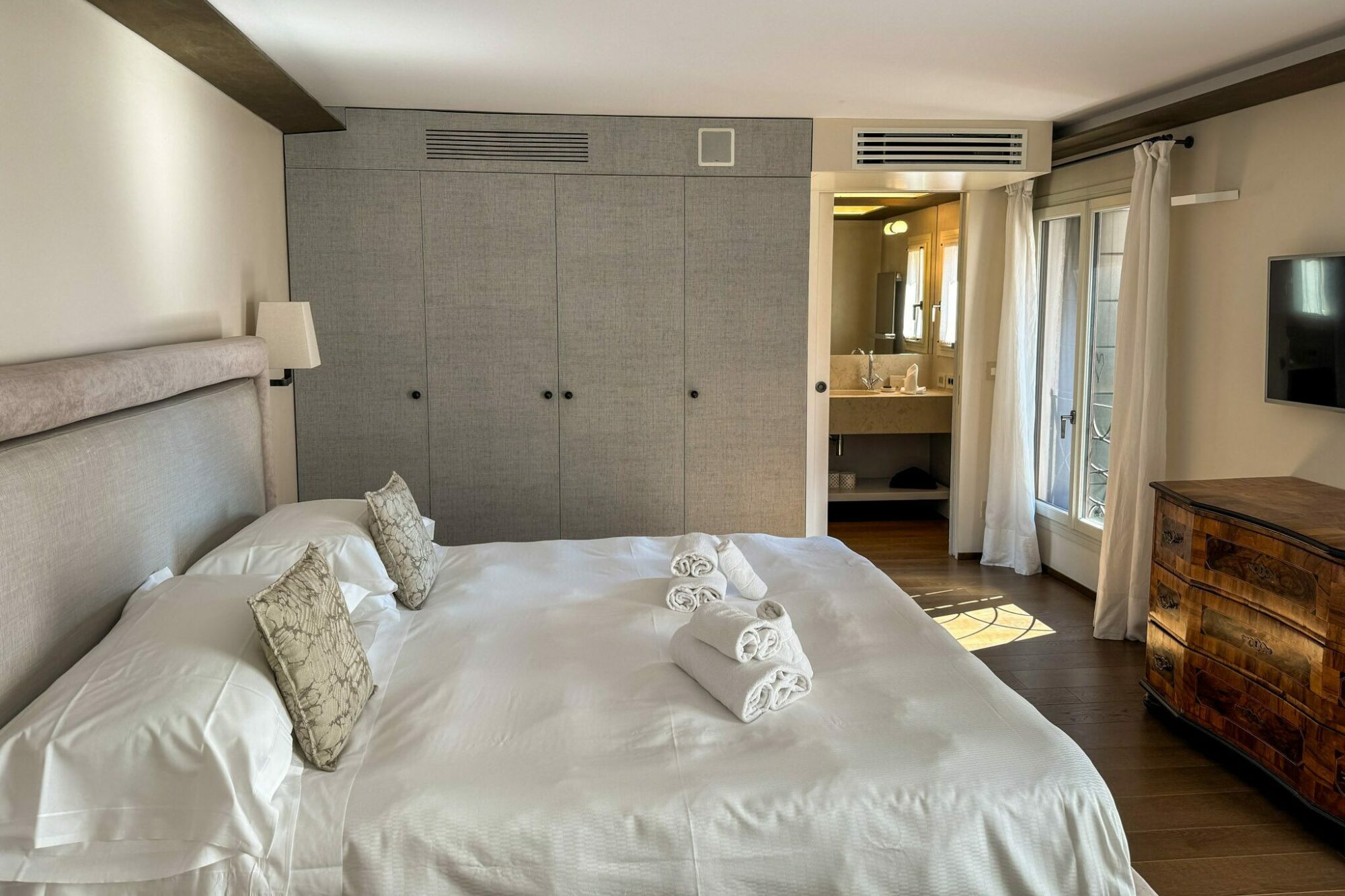
Palazzo Morosini Degli Spezieri is where I stayed on my latest trip to Venice because I wanted an apartment with a kitchen and a little extra space to spread out and do some writing, and I would recommend it (though it’s certainly not cheap).
They have a bunch of beautifully renovated apartments in a historic palazzo, and my room had a view of the canal from both the kitchen and bedroom!
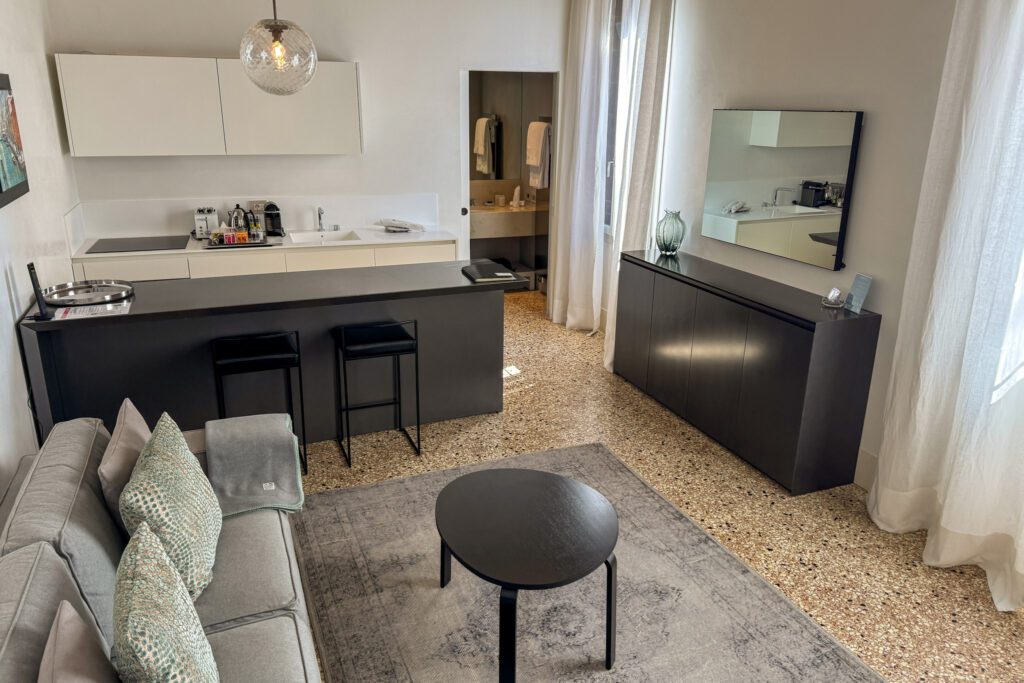
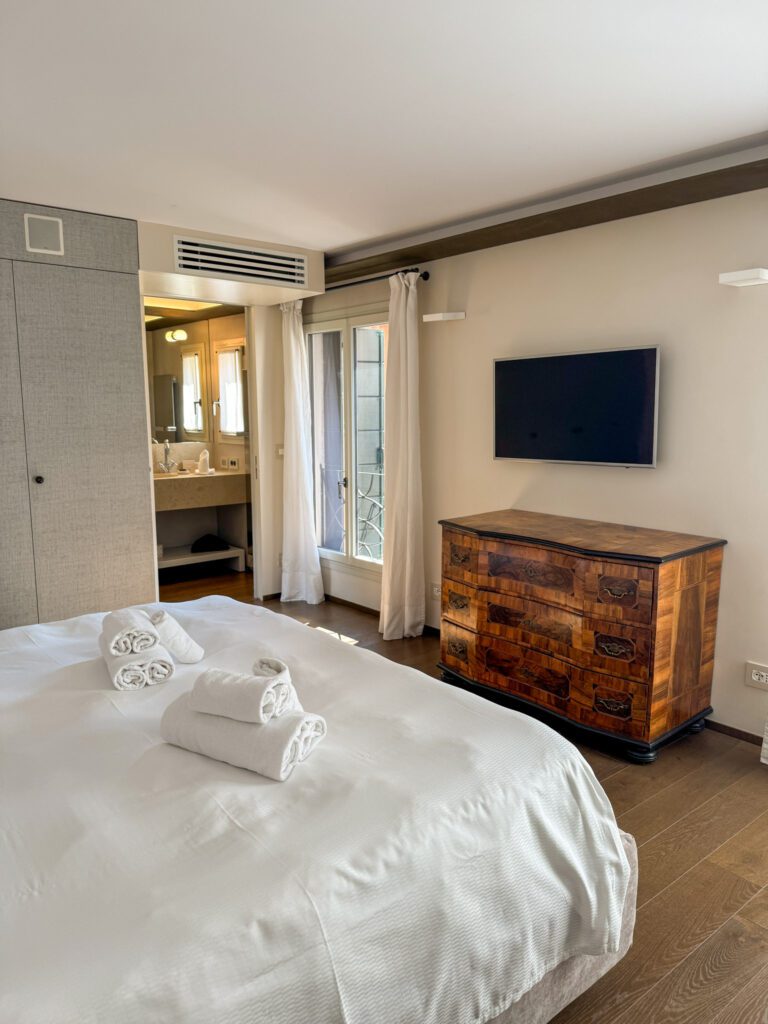
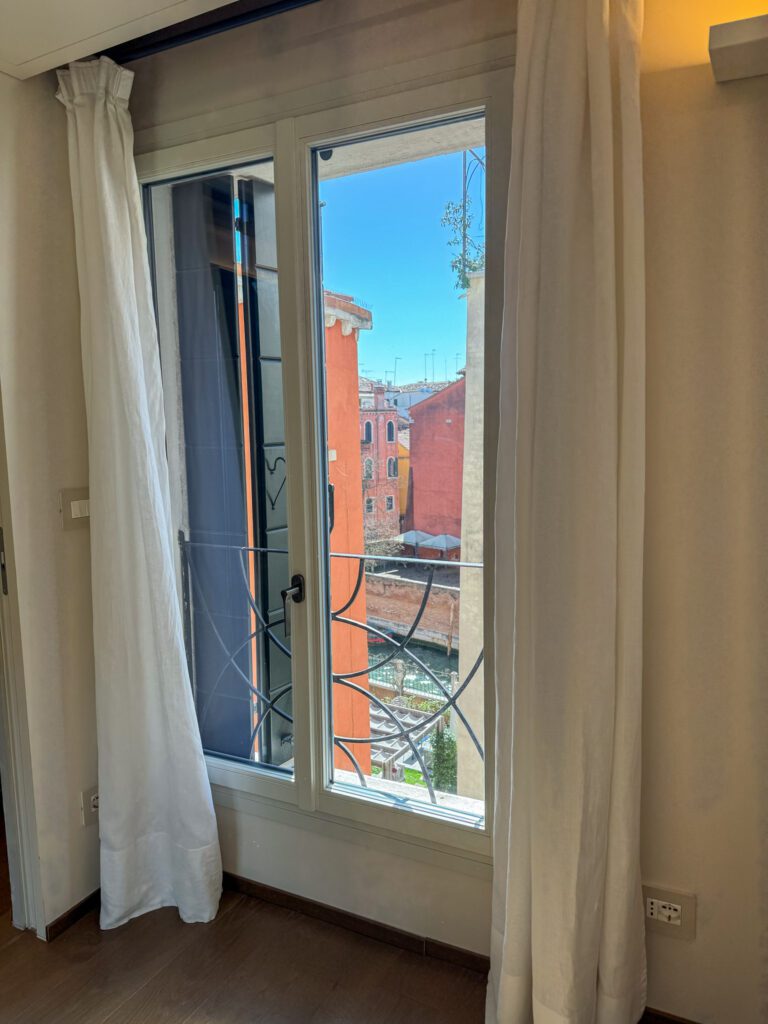
The location is great, the staff are friendly and helpful, and the shared patio is a nice refuge from bustling Venice out the front door.
They have one, two, and three bedroom units (though it’s mostly one bedroom).
The Acca Hotel: A Modern Boutique Hotel
If you want a nice modern hotel in a good location half a block from Campo San Polo, this is a great option. It’s a small hotel with less than 10 rooms, which we view as a positive (they tend to be a bit quieter and service tends to be better).
Plus, breakfast is included in the room rate (it’s a big buffet, but it’s something).
They offer a pretty standard mix of hotel rooms here, but they have all been recently renovated (there are some reviews from ~6 years ago where the hotel was clearly not in great shape, but recent reviews are stellar).
Some rooms have a balcony or private patio, though it will cost you a little extra (which isn’t a surprise, but is worth noting).
Ca’ Angeli: An Good Value in San Polo
If you’re looking for a good value in San Polo, this small guesthouse along the Grand Canal (but further south than Rialto in a quieter location) is where we’d look.
Side note: You’re going to see the word “Ca” a couple of times, and it’s a short version of “casa” (house) in Venice that just means a residence (particularly a residence of a noble family, so it’s closer to a palace than a shack).
The building is along the Grand Canal, about a five minute walk from both Rialto Bridge and Campo San Polo.
They’ve restored an old residence and kept a lot of the character intact, which is cool.
Rooms are pretty small, but part of the reason they’re relatively affordable (it is Venice, so costs are generally higher) is that they have a nice range of room types, from singles and standard doubles, to suites overlooking the Grand Canal.
Ca’ della Scimmia – Rialto: Beautiful Apartments + Excellent Location
This set of elegant serviced apartments has a range of units from one bedroom to two bedroom units, and the vast majority have full kitchens and plenty of space to spread out.
Now, you should know that the location here is FIRMLY in the middle of all the tourist action (and that steady stream that goes from the train station to Piazza San Marco).
But that also means you’re walkable to just about everything you’re going to want to see in Venice, and you’re right next to a bridge to cross the Grand Canal.
You’ve also got the water taxi a short walk away, which will get you to both the airport and places like Piazza San Marco.
Dorsoduro: The Area Where We’re Staying on Our Next Trip
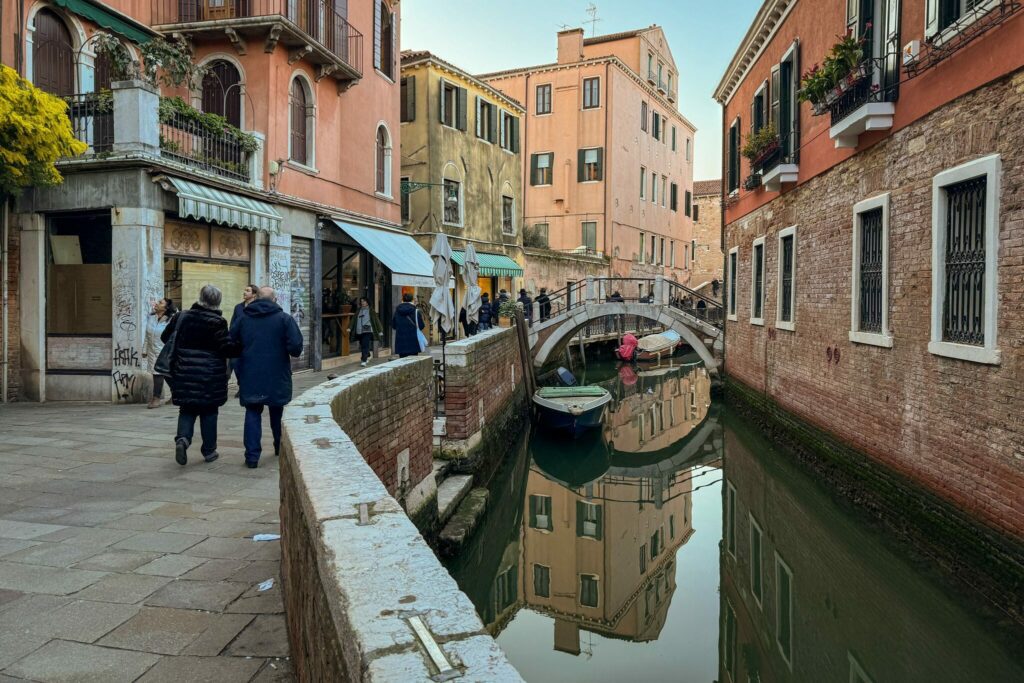
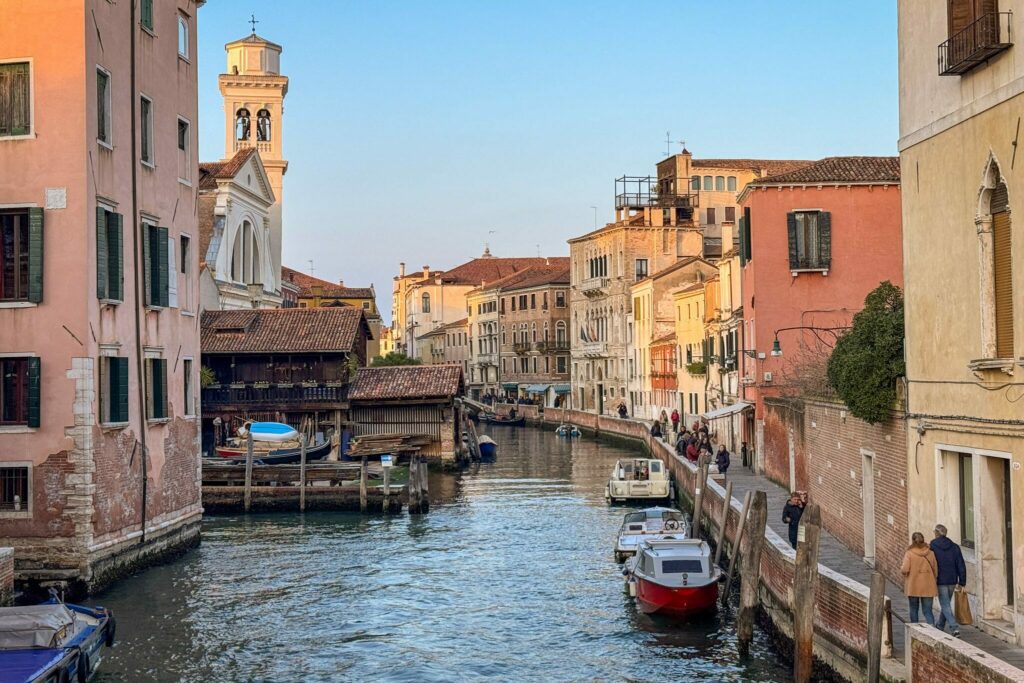
If you want to stay in what quickly became my favorite neighborhood to hang out in and explore, stay in Dorsoduro.
In terms of geography, Dorsoduro is the sestieri that sits at the southern end of the city, taking up the area that sits southwest of the Grand Canal and southeast of the train station (with San Polo, the eye of the storm, on its northern border).
While places like Cannaregio tend to lean a little bit older, walking around Dorsoduro feels quite a bit younger thanks in large part to the university that sits at the northern end of the neighborhood.
This is particularly noticeable in places like Campo San Barnaba and Campo Santa Margherita, which are packed full of students enjoying a coffee or spritz at one of the many tables on the square (on a warm day, anyway).
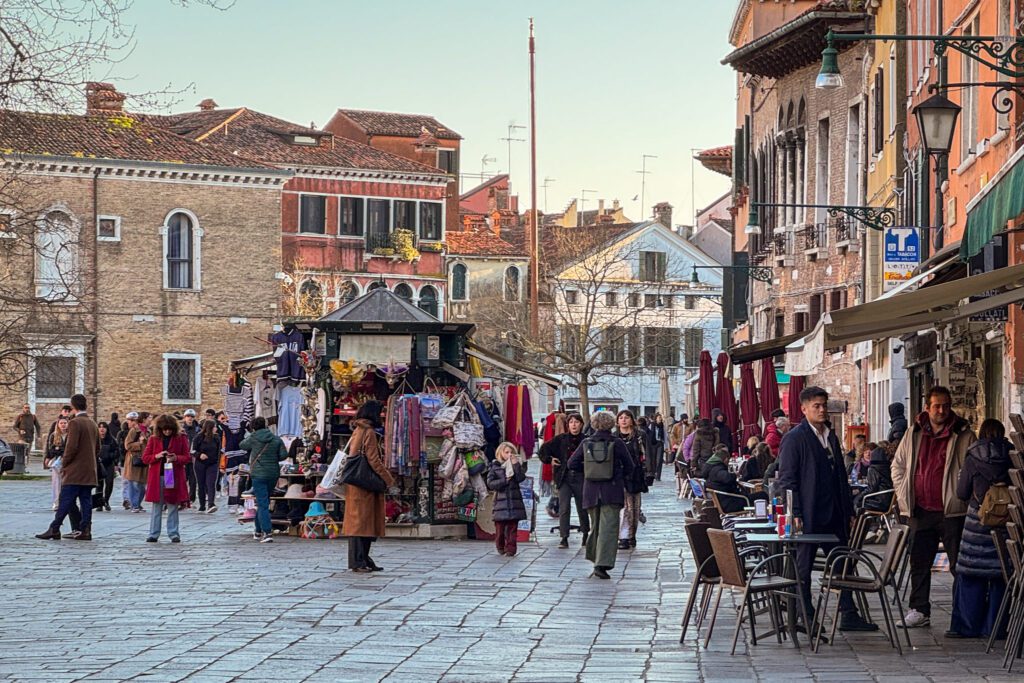
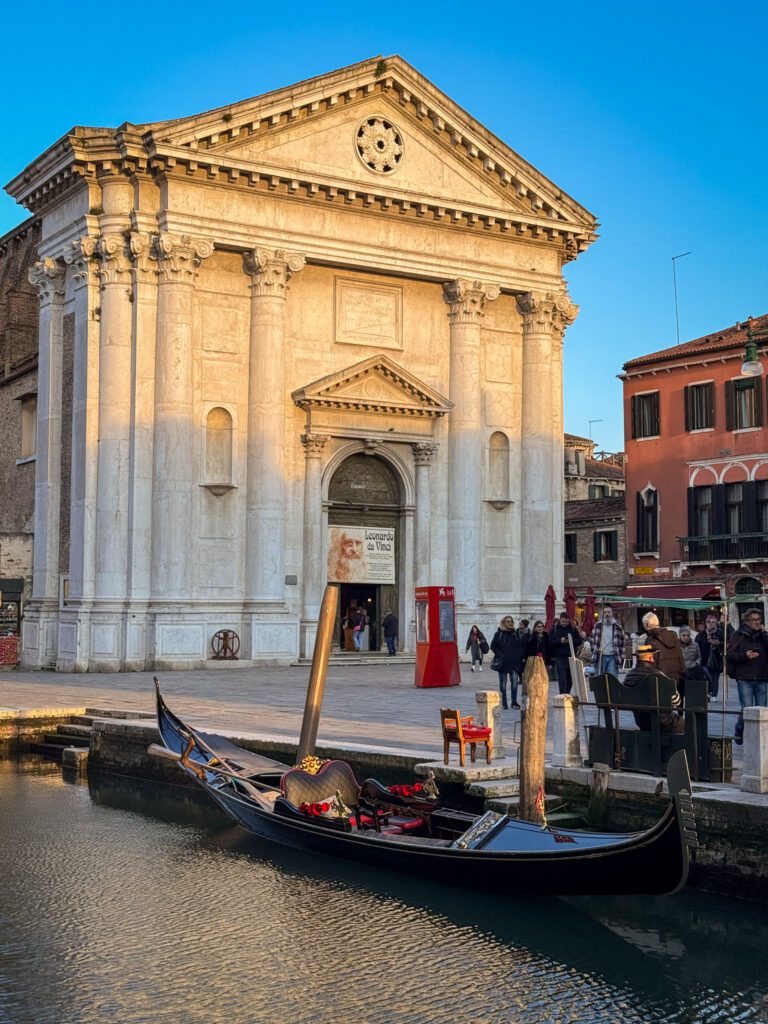
The connection point to San Marco – the Ponte dell’Accademia – is worth visiting in the later afternoon too. It’s a beautiful wooden bridge that is full of people watching the boats pass underneath along the Grand Canal as the sun dips.
Like many of our favorite neighborhoods around the world (Gràcia in Barcelona is a great example, as is Oltrarno in Florence) it’s a neighborhood where people actually live – a rarity in modern day Venice – and is centered around the university, which gives it a fun youthful vibe.
However, putting aside the younger vibe, there are also countless gems to be found in Dorsoduro, from the art museums (both the Gallerie dell’Accademia and Peggy Guggenheim Collection are here) to the cicchetti at bacari (the stretch along Fondamente Nani is one of the best in the city – here on Google Maps) and the lively Campo San Barnaba.
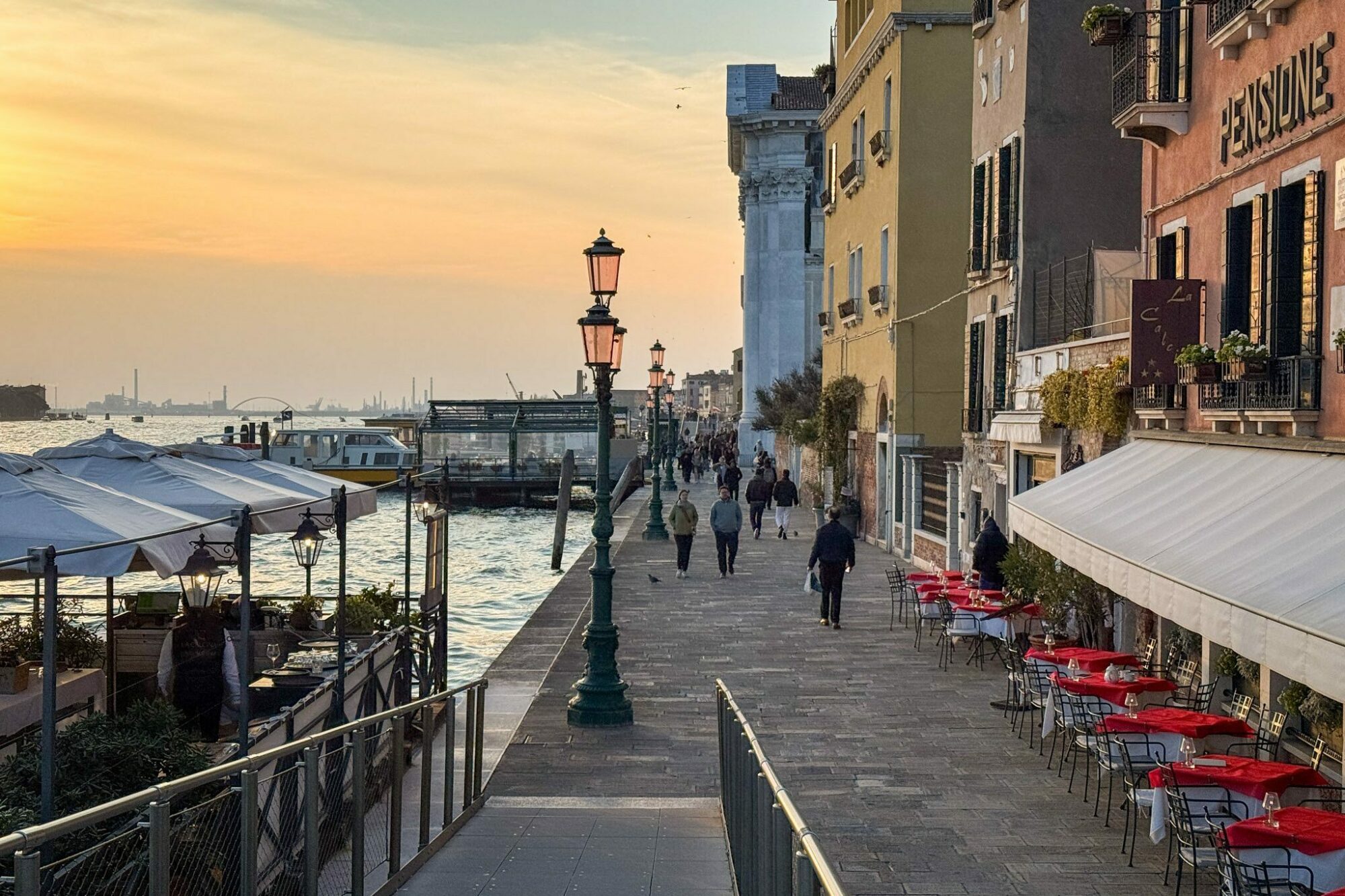
Plus, the canalside promenade along the southern end of the neighborhood to the towering cupola of the Basilica Santa Maria della Salute, where you’ll find frescoes by Titian and Tintoretto along with a great view from the dome, is a must-do.
As you might imagine, the characteristics I laid out above that explain why I’m enamored with Dorsoduro also mean that there are fewer places to stay here. Though there are some gems (we’ll get there in a second).
Pros and Cons of Staying in Dorsoduro
Here are the pros and cons of using Dorsoduro as your home base for exploring Venice.
Pros of Staying in Dorsoduro
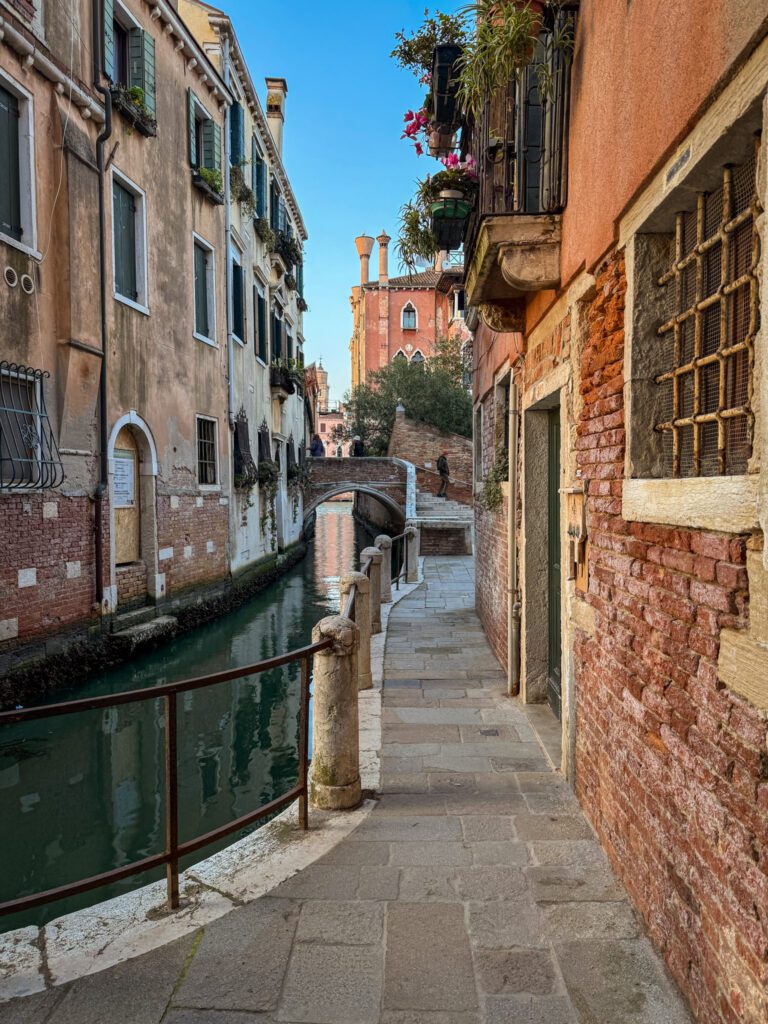
It’s charming. One of the things we think makes Venice special is the quieter canals. Sure, the Grand Canal is gorgeous, but there’s something magical about turning a corner and finding yourself alone walking along an equally beautiful smaller canal. Dorsoduro has tons of those to explore.
It’s equal parts quiet and lively. Generally speaking, the northern end of the neighborhood near the University tends to be a little more lively, so if you’re looking for somewhere to feel that youthful energy, it’s just a short walk away.
However, as you head south away from the Grand Canal, you will start to see fewer and fewer people (especially visitors) and it gets significantly more quiet.
In a sense, this means you get to be within a short walk of the action, but get a good night’s sleep.
It has excellent places to eat and drink. There is a nice mix in Dorsoduro. There are stretches of bacari for cicchetti, great osterias where you won’t find a single patron speaking English, and campos full of outdoor seating to enjoy a drink or meal.
You could eat every meal in Dorsoduro and never get sick of it or run out of new places to try.
Cons of Staying in Dorsoduro
It’s less convenient. While it’s actually fairly close to the train station and a relatively short walk from Piazza San Marco, Dorsoduro sits as far south as you can get in the city of Venice itself.
The airport is across the lagoon to the north, which means it’s a longer journey to reach Dorsoduro if you’re arriving by plane and planning on taking the Alilaguna.
It’s also further away from the Vaporetto stops that will take you to the islands in the lagoon (like Murano and Burano), so if that’s part of your Venice itinerary, plan on some extra travel time.
There are fewer places to stay. Large swaths of Dorsoduro are residential, which we love because it generally means you’ll find businesses catering to those residents (rather than selling souvenirs to tourists).
However, the tradeoff is the fact that there are just fewer places to stay, which also tends to mean it can be slightly more expensive.
The Best Places to Stay in Dorsoduro
Here are a few places to stay in Dorsoduro that stand out to us as particularly good options.
Cà Santo Spirito: A Value-Oriented Bed & Breakfast
This value-oriented bed and breakfast in Dorsoduro is tucked away on a quiet street near La Salute (the basilica), which is close to the vaporetto stops and a short walk from the Ponte dell’Accademia to cross the Grand Canal.
This is a great little B&B that puts you in a nice location for exploring the rest of Venice.
Rooms are comfortable, nothing extravagant, and it’s a true bed and breakfast, meaning that breakfast is included in the room rate.
There are two room types here; the double room that is a classic hotel-style room, and the bigger suite that has a seating area and sofa bed.
Palazzo Veneziano: A Gorgeous Modern Hotel
This beautiful modern hotel on the southern end of the neighborhood is right along the water, and this is a place to stay if you’re hoping for a touch of luxury on your trip to Venice.
The location at the southern end of Venice is a bit less convenient than staying somewhere further north (and therefore closer to the Grand Canal), but it also means a slightly quieter location that sees far fewer tourists than other, more central areas.
If you want a room with a canal view, they have a bunch of options (though they are a little extra). Rooms are modern, with hardwood floors in the bedroom and marble textures in the bathrooms.
Nice, but somewhat expensive, breakfast buffet (though we usually prefer to get coffee and cornetti out and about).
Cannaregio: The Budget-Friendly Option in Venice
Cannaregio is the last of the neighborhoods that top our list of the best locations to stay in Venice.
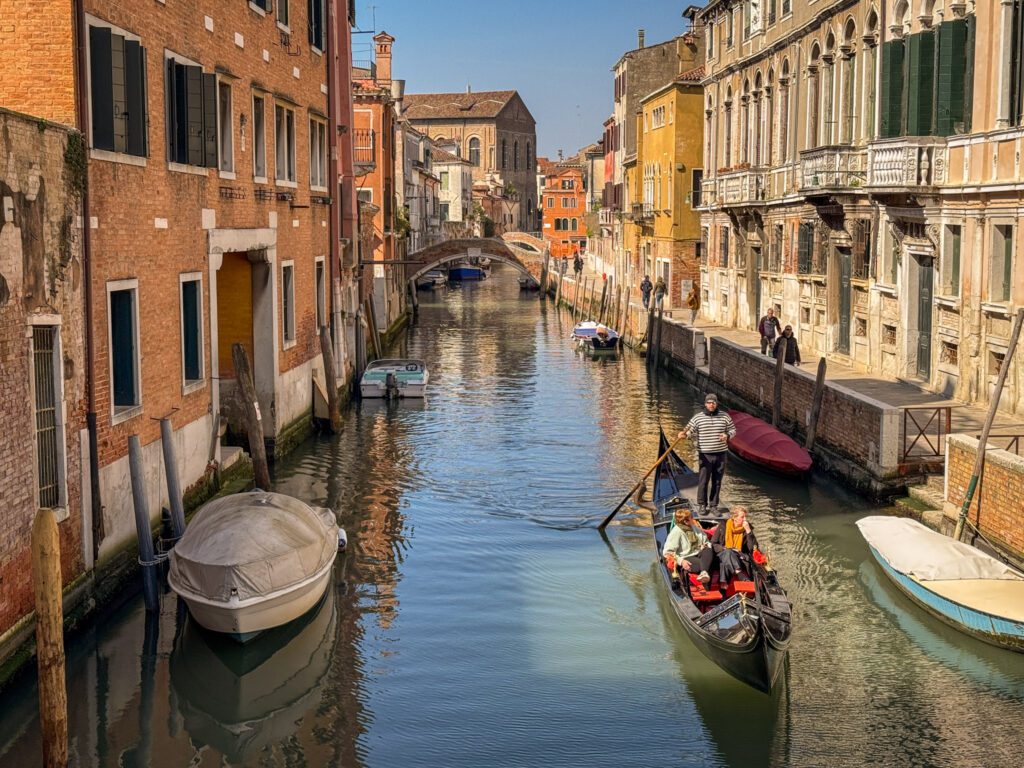
It’s the district along the northern border of the city away from that tourist thoroughfare that leads from the train station to Piazza San Marco, which means it’s going to be significantly quieter.
This is the part of the city where I was wandering around 2pm on a weekday and realizing that there really are multiple sides to Venice, and most visitors only get a chance to see one side on their trip.
The further north and east you go (and thus the further from Piazza San Marco), the more interesting things get and the fewer visitors you see.
While the location is slightly – and we do mean slightly – less walkable than the rest of the neighborhoods we’ve featured in this guide, we do think it has some positives in terms of location.
You’re close to Fondamente Nove, which is the main artery to get out to the islands in the lagoon (like Murano and Burano) and also serves both the blue and orange Alilaguna lines, which connect the city to the airport via the water.
Whether or not you decide to stay here, we’d highly recommend spending an afternoon exploring the Jewish quarter, enjoying a spritz and some cicchetti along the canals.
Fondamenta de la Misericordia is my single favorite stretch of the city.
It’s a canalside walkway full of places to eat and drink, and is a great place to have cicchetti and a spritz or three. Vino Vero was recommended to me by two different Venetians when I asked where to eat and drink in the city.
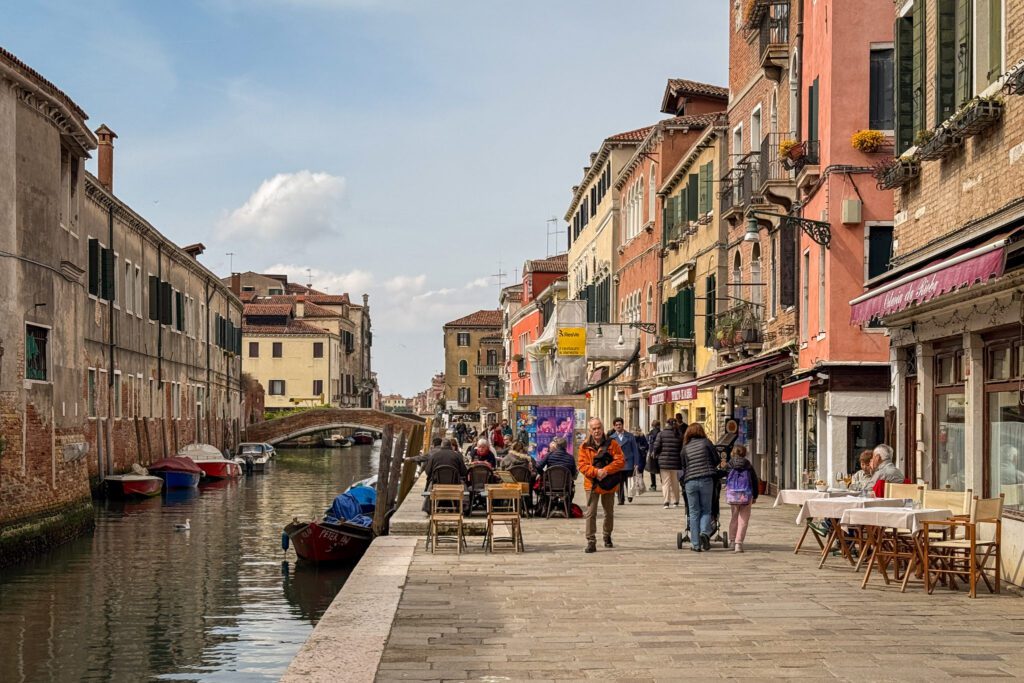
There are truly an endless number of places to eat here, and I’d follow it to Ponte de Gheto Novo (here on Google Maps), the entry point to one of the three former Jewish ghettos in Venice.
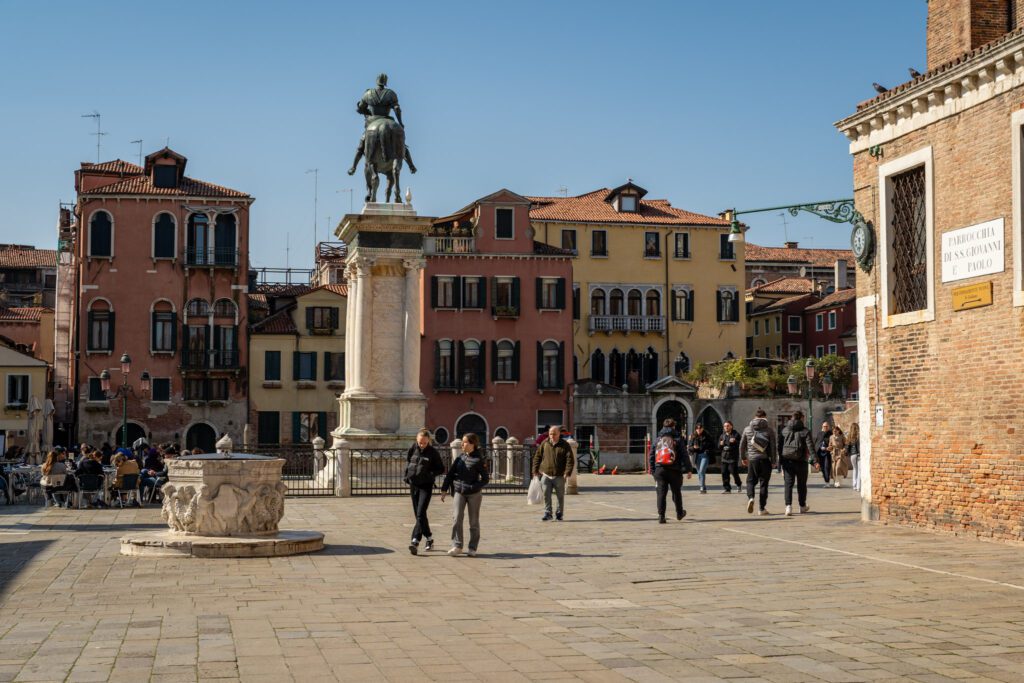
It’s also worth stopping by the Basilica dei Santi Giovanni e Paolo (and the square in front of it).
This was My third favorite church in Venice, and though it’s more austere than the other two, it is worth poking your head in to see the final resting place of 25 Venetian Doges and the soaring ceiling done by Veronese.
Overall, Cannaregio is a nice, quieter version of Venice that comes with a lower price tag and a slightly longer walk to some of the city’s main sights.
Pros and Cons of Staying in Cannaregio
Here are the pros and cons of staying in Cannaregio for your trip to Venice as we see them.
Pros of Staying in Cannaregio
It’s more budget-friendly. Because of the slightly less desirable location (though we’d point out that it depends on what precisely you desire), the prices here are going to be more affordable than most other locations in Venice. Especially as you head further north and east, away from the main corridors.
It’s quieter. Of the sestieri in Venice, Cannaregio is pretty clearly near the top of the list in terms of what is going to be the quietest place to stay. The only spot that comes close is the eastern end of Castelo and the southwestern corner of Dorsoduro.
It’s a great place to eat and drink. Particularly the stretch here, which is the most lively strip in the neighborhood in terms of bacari serving wine/spritzes and cicchetti in the afternoon.
You’re further from the main tourist corridor from the train station to Rialto to Piazza San Marco, which generally means the food is going to be better.
It has good transport connections. Between the walkability to the train station, the Alilaguna stops on both the orange and blue lines that connect you to the airport, and the vaporetto connections (including to the islands of Murano and Burano), staying here is actually less inconvenient than you’d think.
It does add a bit of walking if you’re traveling on foot, though, which you should because it’s the best way to explore Venice.
Cons of Staying in Cannaregio
It’s less convenient. Of the three neighborhoods in this guide, I think Cannaregio is probably the least convenient option in terms of proximity to the top things to do in Venice (though that can also be a pro – it’s basically the flipside of the “it’s quieter” pro listed above).
However, it does have its advantages, as we covered above (it’s closer to the islands and the Alilaguna lines to the airport, for example).
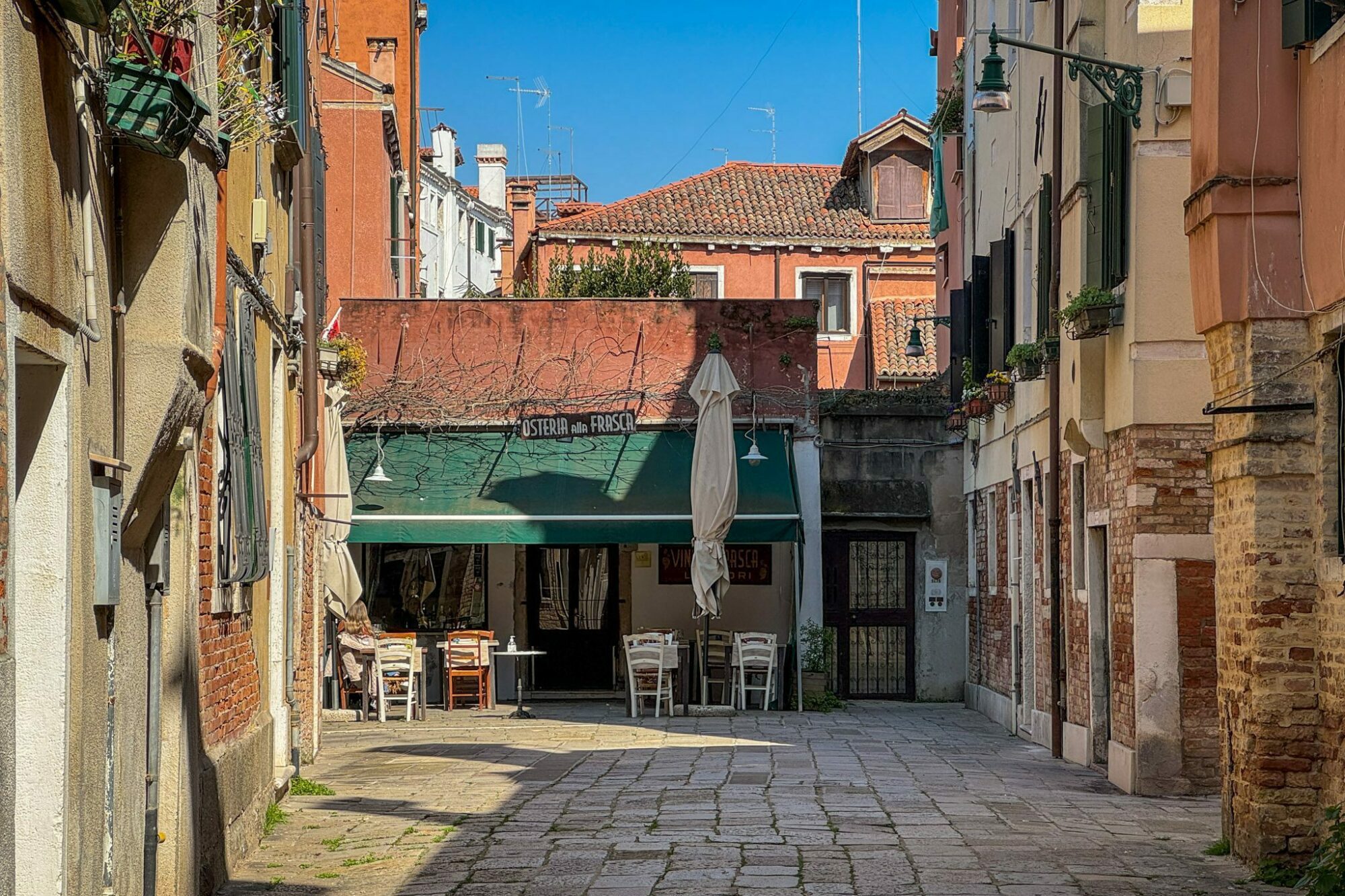
The Best Places to Stay in Cannaregio
Here are a few places to stay in Cannaregio that stood out to us as we were researching both for our trip and this guide.
B&B Al Pozzo di Luce: Our Top Pick in Cannaregio
This mid-range B&B is right next to Fondamente Nove, which is the vaporetto stop that you’d use to get out to the islands AND serves both lines of the Alilaguna connection to the airport.
So in terms of convenience for those connections, it’s perfect.
It is, however, further north along the northern border of the city center, which means a slightly longer walk to get down to Piazza San Marco, over to the train station (though you can hop on the vaporetto), and, especially, Dorsoduro.
While it’s not necessarily the cheapest option in Cannaregio, we like it because it’s a nice balance between affordability and comfort, with beautifully designed rooms, nice common areas, and a relatively affordable price tag (which is basically our definition of “value”).
It’s also a B&B in the traditional sense, so both the bed and the breakfast are included in the room rate, which we like (though we generally try to get breakfast and coffee out if we can).
The big downside here is that it’s a tiny B&B, with just a few rooms (all in double bed configurations, so maybe not the best place to stay in Venice with a family). So book early!
Hotel al Sotoportego: Our Top Hotel in Cannaregio
If you’re more into a traditional hotel experience than a smaller B&B or hostel, this charming mid-range hotel on a canal in Cannaregio would be our recommendation.
It’s not the “fanciest” hotel in town, but between the location (it’s on the southern end of Cannaregio, which is closer to Rialto Bridge and therefore a more walkable part of Venice) and the fact that you can get a room with a canal view here for a reasonable rate, we think it’s one of the better options in the area (the reviews are pretty consistently excellent).
Rooms are mostly double rooms with a few triples sprinkled in (a triple is basically a queen bed and a twin bed in the same sized room), split between rooms with a canal view (which are brighter and more expensive) and rooms without a canal view (darker and more affordable).
Combo Venezia: A Nice Boutique Hostel
A few years ago, we spent exactly 89 days in the E.U., and almost half of that time was spent in Italy.
We ended up skipping Venice on that trip, but I had picked this boutique hostel in the northern end of Cannaregio as my top place to stay for that trip.
Housed in a former convent near Fondamente Nove (as we explained above, this gives you good connections to the rest of the city and the airport via the vaporetto and Alilaguna water buses), this is a combination between a boutique hotel, with nicely designed rooms and common spaces, and a more traditional hostel, with bunk rooms and lots of social programming.
They have rooms that span a wide range of budgets, from beautiful lofts and apartments that offer a private stay, to hotel-style double rooms, to shared rooms.
All include the same access to the common areas, such as a shared kitchen and big courtyard (it was a convent, after all).
Ca’ Rosetta: A Budget Guesthouse
Like we already said, if you’re on a budget, Cannaregio is probably going to offer you some of the best value that you can find in the historic city center.
This affordable guesthouse is our top pick for budget travelers in Venice, and offers nice, comfortable rooms in a central location.
They’re also located a few steps from that stretch of bacari we mentioned above, which means excellent aperitivo is just a few steps away.
The decor and rooms are nothing particularly special – though they do have a suite with a private terrace which looks lovely. They have double rooms with queen beds and a couple of triple rooms that have a queen bed and a twin sofa bed.
Santa Croce: A Convenient Area near the Train Station
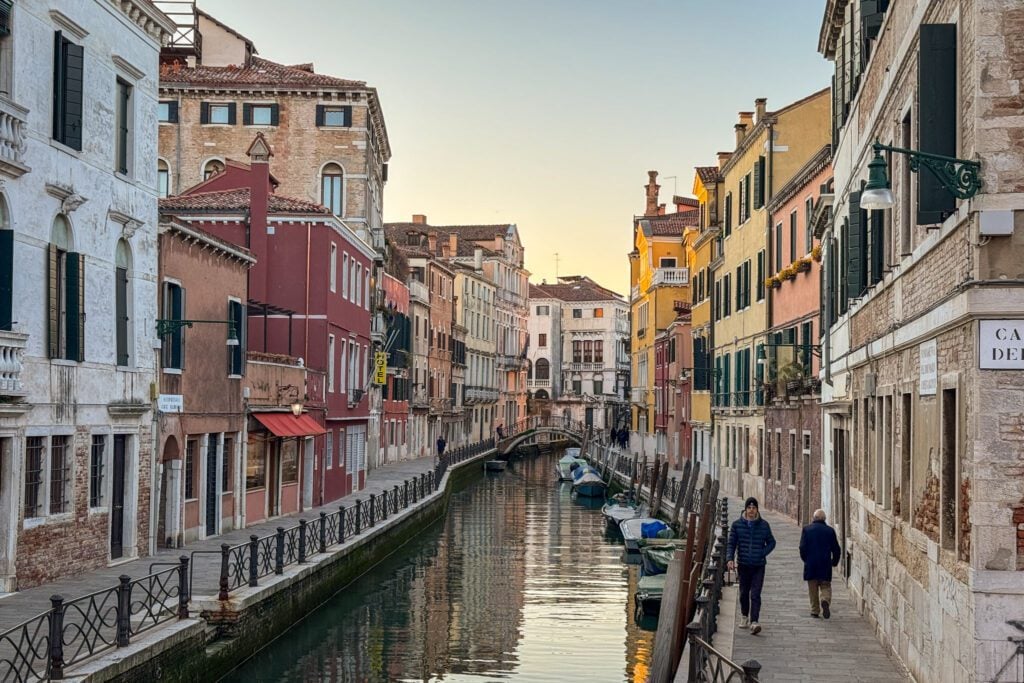
Santa Croce is the area at the northwestern end of Venice, near Stazione Santa Lucia, the city’s main train station.
Santa Croce is particularly useful if you have an early or late train to catch, because it means you don’t have to navigate the vaporetti or a long walk involving multiple bridge crossings (which means dragging your luggage up and down).
The big issue we have with Santa Croce, particularly the northern half, is that it’s right on the well-worn path from the train station to Rialto Bridge, and there is a consistent stream of tourists passing through between the hours of 10am and 7pm, which can feel oppressive given Venice’s narrow walkways.
If you’re going to stay in Santa Croce and you don’t feel like you need to be right next to the train station, the part we like the most is at the southwestern corner near Ponte dei Squartai (here on Google Maps).
At that point, you’re basically in Dorsoduro in terms of the vibe because the vast majority of the tourists follow the same path that meanders through the northern end of Santa Croce towards Rialto Bridge.
This part of Santa Croce is a lot quieter and, we’d say, equally beautiful.
Plus, it’s walkable to many of our favorite slices of Venice (Dorsoduro and San Polo, for example), which is where we’d recommend spending the majority of your time anyway.
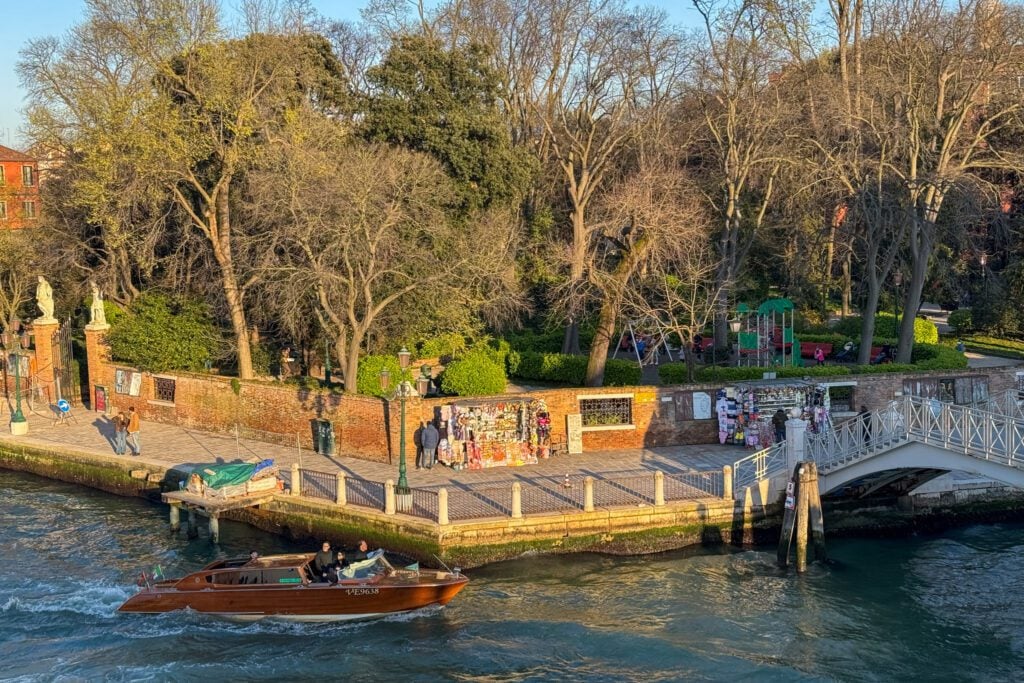
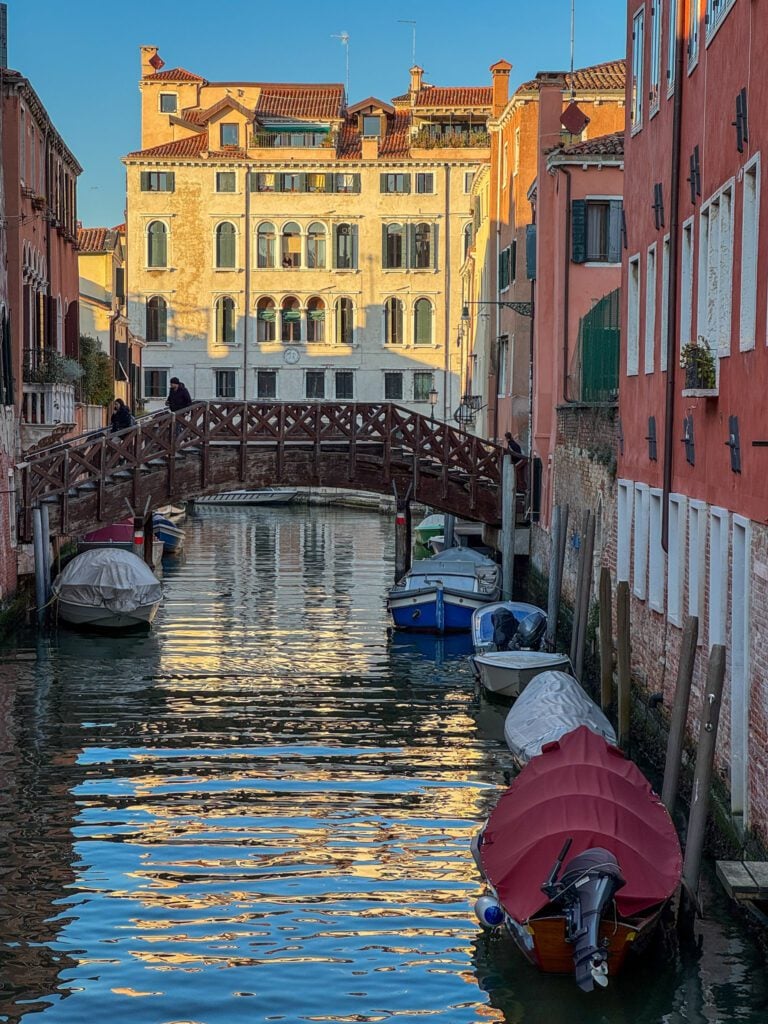
Pros and Cons of Staying in Santa Croce
Here are the pros and cons of staying in Santa Croce as we see them.
Pros of Staying in Santa Croce
It’s relatively affordable. It’s not the most romantic area in Venice, nor is it the most central, so the prices here are going to be relatively affordable (it’s still Venice, we’re talking relative prices).
It’s walkable to the train station. If you’re arriving or departing by train, there is something to be said for staying close to the station to avoid either carrying your luggage up and over multiple bridges, or cramming onto a crowded vaporetto.
Easy connections to the airport. Getting to and from Aeroporto di Venezia Marco Polo can be complicated (especially for the dreaded early morning flight), but staying in Santa Croce means you’re near Piazzale Roma (here on Google Maps), where you can catch all sorts of buses to the airport.
Pro tip: You want the ATVO buses – specifically line 35a – which are express buses between the airport and Piazzale Roma (they start running to the airport at 4:20am).
Cons of Staying in Santa Croce
It’s further from the main sights. Staying in Santa Croce means you’re a 20 minute walk from Piazza San Marco, and further from places like Cannaregio.
It’s not particularly charming. As we mentioned, the area closer to Dorsoduro and San Polo at the southeastern end of the neighborhood (10-15 minutes away from the train station) is far more charming, and is the slice of Santa Croce we’d choose if we were you.
It’s crowded near the train station. There’s a specific path that many tourists in Venice take that involves leaving Stazione di Venezia Santa Lucia, crossing the Grand Canal at Ponte degli Scalzi, and walking towards Ponte di Rialto.
If you stay on this route, there will be tourists constantly meandering past, which can make the narrow streets and canals feel loud and crowded.
The Best Places to Stay in Santa Croce
As we already mentioned, the slice of Santa Croce that we prefer is the one that is in the southwestern corner, a little bit of a walk away from the train station.
That’s where most of the places we’d recommend are located, though we did give you one option right across the canal from the train station if that’s something you’re looking for.
Ca’ Riza: An Affordable Guesthouse in the Best Area
The location of this affordable guesthouse could not be better (for Santa Croce, that is).
You’re right on the border of Dorsoduro and San Polo (it’s basically around the corner from Basilica di Santa Maria Gloriosa dei Frari in San Polo, which is worth a stop), which means walkable to just about everything (including the vaporetto to Piazza San Marco).
They have a small variety of rooms, including standard doubles and quadruple rooms with multiple beds (good for families traveling together).
The rooms are compact, but are laid out nicely, and we’re big fans of the exposed wood beams in the ceilings.
Casa Dei Pittori: Elegant 2BR Apartments in a Nice Location
If you’re traveling with a group and need two separate bedrooms, this set of serviced apartments is your best bet in Santa Croce.
It’s a 19th Century palace right on the canals that has been completely renovated to be a set of serviced apartments.
In a city where it’s tough to find accommodations for groups of 4+ that want to stay together (without booking separate hotel rooms), this place is a great option because all of their units are two bedrooms, and some of them have canal views and private terraces.
The location is great, though on the side of the neighborhood that tends to see more tourists.
It’s right on the border with San Polo, and is actually only a couple of blocks from the place I stayed on my last trip, which was a perfect location.
Hotel Antiche Figure: A Nice Hotel near the Train Station
If you’re looking to stay right next to the train station to make catching the train as easy as humanly possible, this boutique hotel on the Grand Canal is our pick.
It’s right across the Grand Canal from the station, which means you only need to cross up and over Ponte degli Scalzi (the big bridge across the Grand Canal outside the station) and you’re there.
They have a range of rooms, from basic doubles that are compact but comfortable, to bigger rooms with views out onto the Grand Canal (and even suites with kitchenettes).
Like we’ve said numerous times, this isn’t the location we’d choose for most people in Venice.
However, if your priority is catching an early train or bus to the airport and want to make that journey as smooth as possible, this is your best bet.
Where NOT to Stay in Venice: 3 Areas to Avoid
There are a couple of areas in Venice that we would avoid if we were you.
Either because they are inconvenient (e.g. they require a long public transit journey to get to Venice itself) or because they are in some of the most overcrowded areas in the city.
Piazza San Marco: Too Many Tourists
You might think to yourself that staying within a couple of blocks of Piazza San Marco will be worth the significant premium you’re going to pay, but we’re here to do our best to talk you out of it.
The crowds milling around Piazza San Marco are stifling between about 10am and 6pm, and it is truly the last place we would want to be during that timeframe (which is why we strongly recommend an early morning visit in our Venice itinerary).
The best parts of Venice, at least to us, are the ones that are off of that main tourist path from the train station, to the Rialto Bridge, and then down to Piazza San Marco.
We’d stay elsewhere, come here sparingly, and be strategic about the time of day of your visit here.
That being said, the southwestern corner of the neighborhood near Ponte dell’Accademia (here on Google Maps) is pretty nice comparatively.
If you want to stay in San Marco, avoid the area between Rialto Bridge and Piazza San Marco (and the area immediately around the Piazza).
Mestre: You’re Missing the Best Part of Venice!
The second place we’d avoid is the one that often gets recommended for budget travelers is Mestre.
Mestre is the city on the mainland that is connected to Venice by train, and it has tons of big, modern hotels clustered around the train station that are somewhat convenient for visiting Venice.
However, if you stay in Mestre, you are essentially a day tripper, and you will fall in the same trap that other day trippers do: you’ll miss the best part of Venice!
Which is the part when all the day trippers leave and its canals are relatively quiet and peaceful (before 9am, after 8pm, ish).
We’d much prefer you stay out in the far reaches of Castello, which is certainly cheaper and arguably a more authentic Venice experience, than stay in Mestre, which is basically just a modern suburb on the mainland.
The Islands (Murano & Burano) or Lido: Inconvenient
Similar to Mestre, staying on one of the islands near Venice, like Murano, Burano, or Lido, is going to mean that you miss the best times to be in Venice because there’s a long ferry ride between your home base and the city.
Longer than the train ride from Mestre, in some cases!
Now, we will say that staying on Murano and Burano after all the tourists leave would be an excellent experience, but not if it’s your first time in Venice and you’re trying to tackle the main sights in the city itself.
By all means, visit the islands! But we wouldn’t use the islands as a home base if you’re planning on spending most of your time in Venice itself.
Planning a trip to Italy? We’d love to help!
Here are our other Italy travel guides to help you plan an incredible trip (even if you have to eat gluten free!).
If there’s no link below, it means we’re still working on it – long, in-depth guides take time! We’re working on it, though, we promise.
If you’re planning a trip and you’re not sure where to start, your first stop should probably be one of our detailed itineraries.
We have a two week Italy itinerary that blends the main cities with some less-visited cities that we love (BOLOGNA!), a guide to spending 10 days in Italy that focuses mostly on the highlights, and a whirlwind guide to spending one week in Italy that features the Rome – Florence – Venice highlight circuit.
We also have a guide covering important tips for traveling to Italy for the first time, which is a collection of things we’ve learned over the course of our time in Italy that will help you have a smoother, more immersive trip.
Here are more specific guides to the main cities in Italy.
Rome
- What to do in Rome (as a First Timer)
- How to Plan an Amazing 4 Day Rome Itinerary
- Where to Stay in Rome: A Complete Guide for First Timers
- 26 Things to Know Before You Visit Rome
- Gluten Free Rome: A Complete Guide to GF Restaurants + Bakeries
- Where to Find the Best Specialty Coffee in Rome
Florence
- What to do in Florence (as a First Timer)
- How to Plan an Amazing Florence Itinerary (3 Days)
- Where to Stay in Florence: A Complete Guide for First Timers
- Gluten Free Florence: A Complete Guide to GF Restaurants + Bakeries
- Where to Find the Best Specialty Coffee in Florence (for Coffee Nerds)
- The Best Day Trips from Florence (Complete Planning Guide)
Venice
- A Perfect 3 Day Venice Itinerary (for First Timers)
- Exactly What to Do in Venice (As a First Timer)
- Where to Stay in Venice: A Complete Guide
- Gluten Free Venice: A Complete Guide (for Foodies)
Bologna
- What to do in Bologna (as a First Timer)
- How to Spend One Incredible Day in Bologna
- How to Plan an Amazing Bologna Itinerary (2 Days)
- Where to Stay in Bologna: A Complete Guide for First Timers
Cinque Terre
- What to do in Cinque Terre (as a First Timer)
- How to Plan an Amazing Cinque Terre Itinerary (2 Days)
- Where to Stay in Cinque Terre: A Complete Guide for First Timers
Milan
- What to do in Milan (as a First Timer)
- How to Plan an Amazing Milan Itinerary (2 Days)
- Where to Stay in Milan: A Complete Guide for First Timers
- Gluten Free Milan: A Complete Guide to GF Restaurants + Bakeries
The Rest of Italy
