
A Perfect 3 Day Porto Itinerary (for First Timers)
Porto is a charming city, offering something a little different from Lisbon and the Algarve, and it has a unique contrast going on that you’ll feel immediately when you get off the train.
On a walking tour we did, we relentlessly questioned our walking tour guide about why it feels so different from other parts of Portugal, particularly the parts to the south.
On one hand, the vibe in Porto feels much younger and more vibrant than any of the other places we’ve visited in Portugal (with the exception of Coimbra, which is essentially a college town).
On the other hand, from an architecture and urban design perspective, Porto feels much, much older than most of the other places we visited in Portugal (again, with the exception of both Coimbra and Évora).
It’s an odd feeling, and we were excited to explore the reasons behind that.
Porto may not be as well known as the Portuguese capital of Lisbon, but it has a distinctly older feeling than Lisbon, which was leveled by an earthquake in 1755.
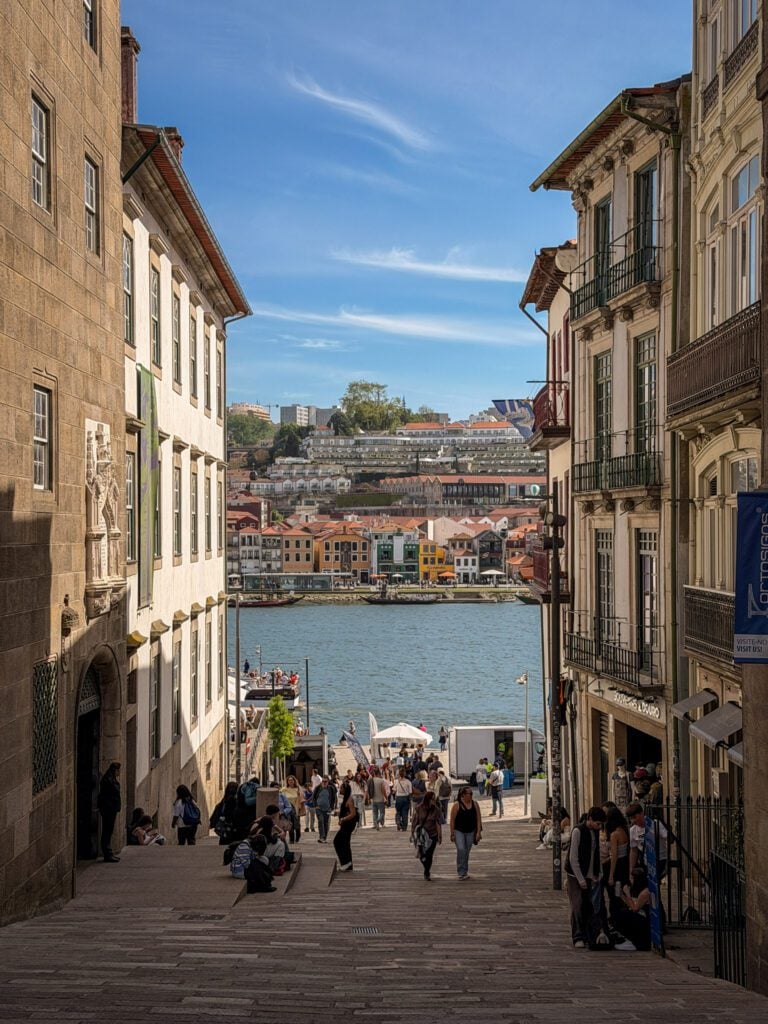
You’ll especially experience this when you’re walking around the areas near the river just below the cathedral, which have some winding, narrow alleyways that feel very medieval.
Our walking tour guide let us know several times that Porto was the country’s (more accurately, kingdom’s) original most important city thanks to its port (see what they did there?), and lended its name to the country in its early days before the capital was moved to Lisbon in 1255 at the end of the Portuguese Reconquista.
While it doesn’t get nearly as much press as Lisbon these days, Porto is absolutely worth a visit, whether it’s as a part of your Portugal itinerary, or as a weekend trip (if you live in Europe) thanks to its thriving food scene, rich history, and, of course, port.
In this guide to planning your trip to Porto, you’ll find a detailed 3 day Porto itinerary, complete with things to do, see, eat, and drink, along with the important details you need to know to plan an incredible trip.
You’ll also find logistics – like how to get around and some useful tips and tricks for visiting Porto – that are important for planning your trip.
Throughout the guide, we’ll share our favorite finds and experiences in Porto based on our multiple trips (including the most recent trip this past spring) to help you plan your unforgettable trip.
Sound good to you? Let’s get into it.
Disclaimer: Some of the links in this post, like hotel links, are affiliate links, meaning at no additional cost to you, we make a little bit of money if you click through and book. That being said, we would never recommend something to you that we don’t stand behind 100%.
The Quick Version
Now, we’re well aware that some of you are ready to throw your left shoe at the screen and scream “I don’t have time to read all that, JUST GIVE ME THE SUMMARY” so we put together a quick summary of the itinerary you’re going to find below.
Day 1: An Intro to Porto
- Coffee at So Coffee Roasters or Hakko
- Step Inside the Sé do Porto
- An Introductory Walking Tour (we loved this tour with Carlota)
- Lunch + Your First Pastel de Nata
- A Port Tasting in Vila Nova de Gaia
- Sunset at the Jardins do Palácio de Cristal
Day 2: Diving Deeper into Porto
- An Early Morning Walk across Ponte Luís I
- Dive Deeper into Porto’s Food Scene (my mom did this tour with Isa and loved it)
- An Afternoon at Bolhão Market
- A Cruise on the River at Sunset (this is the one we did and we liked it!)
Day 3: A Day Trip to the Douro Valley
- Book this excellent tour (it’s called “Douro Valley Premium Small Group: Wine, Lunch & Private Boat“), sit back, and enjoy the wine, food, and company. Trust us, we’ve sent hundreds of people on this tour, including my mom and some of Alysha’s best friends.
Where to Stay
- We like the neighborhoods at the top of the hill (rather than at river level) for convenience of walking everywhere without going up and down a hill
- Clérigos: Our #1 Recommendation (stay at Hotel Moon & Sun or Gharb)
- Bolhão: The Best Value in the Center (stay at Hotel Spot Family Suites or Village by BOA)
What Can You See With 3 Days?
If it’s your first time in Porto, we actually think three days is a perfect introduction to the city.
Usually we find ourselves saying something to the effect of “X days isn’t quite enough time”, but Porto is relatively compact, and doesn’t have any huge tourist attractions that will take half a day to do (like the Colosseum or the Louvre, for example).
Porto is best explored by walking, eating, and drinking, with a few historic sites sprinkled in between (which are mostly beautiful azulejos).
You’ll be able to tackle most of the main sights over the course of the first two days, along with some time spent diving into the food culture (don’t worry, pastéis de nata and the bifana are on the menu).
You might be saying “wait, but what about the third day?”
Whatever you do while you’re in Porto, we STRONGLY recommend spending a day outside of the city in the picturesque Douro Valley on this excellent guided day trip (Viator shows you a bunch, the one we recommend is called “Douro Valley Premium Small Group: Wine, Lunch & Private Boat“).
It’s a lovely day full of scenic views, great wine, and delicious food with friendly local guides and likeminded travelers.
On our first trip to Porto years ago, during our three months exploring Europe, this was the single biggest highlight of that entire trip.
We’ve sent my mom, Alysha’s best friends, and hundreds of readers on this tour, and everyone loves it (and we think you probably will too). More details in a section of the itinerary below.
3 Days in Porto: A Complete Itinerary for First Timers
Here’s a quick overview of the detailed itinerary you’re going to find below:
- Day 1: Introduction to Porto’s Historic Center (Walking Tour + Port Tasting)
- Day 2: Diving Deeper into Porto (Food Tour + River Cruise)
- Day 3: Day Trip to the Douro Valley
For this itinerary, we’ll assume you’re arriving the evening before and have three full days to explore. You’re going to have to do some massaging to make it fit your exact trip.
Pro-tip: Every single local we met in Porto said something along the lines of “hey, be careful with port” – it’s super easy to drink, it’s 20% alcohol, and it’s full of sugar so the hangovers are awful. You’ve been warned.
Day 1: An Introduction to Porto
On your first day in Porto, build yourself a nice foundation for the rest of your trip by getting a crash course in history and culture from a local and trying some local specialties before ending at our favorite viewpoint in Porto.
But First, Coffee!
If you’re like me (Matt here, the resident coffee nerd and caffeine addict), you need a healthy dose of caffeine in order to prepare yourself for a full day of sightseeing, eating, and drinking.
There are fewer things I take more seriously than coffee (soccer – or football – may be the only one), and I have some opinions about where to get really good coffee in Porto.
Lucky for you, there is one little section of the city where most of our favorite coffee stops are clustered; Cedofeita, the area northwest of Igreja do Carmo (the big church with the tiled exterior near Livraria Lello).
Here, you’ll find three great coffee shops within a short 5-10 minute walk of each other, perfect for a morning coffee crawl before the day starts in earnest.
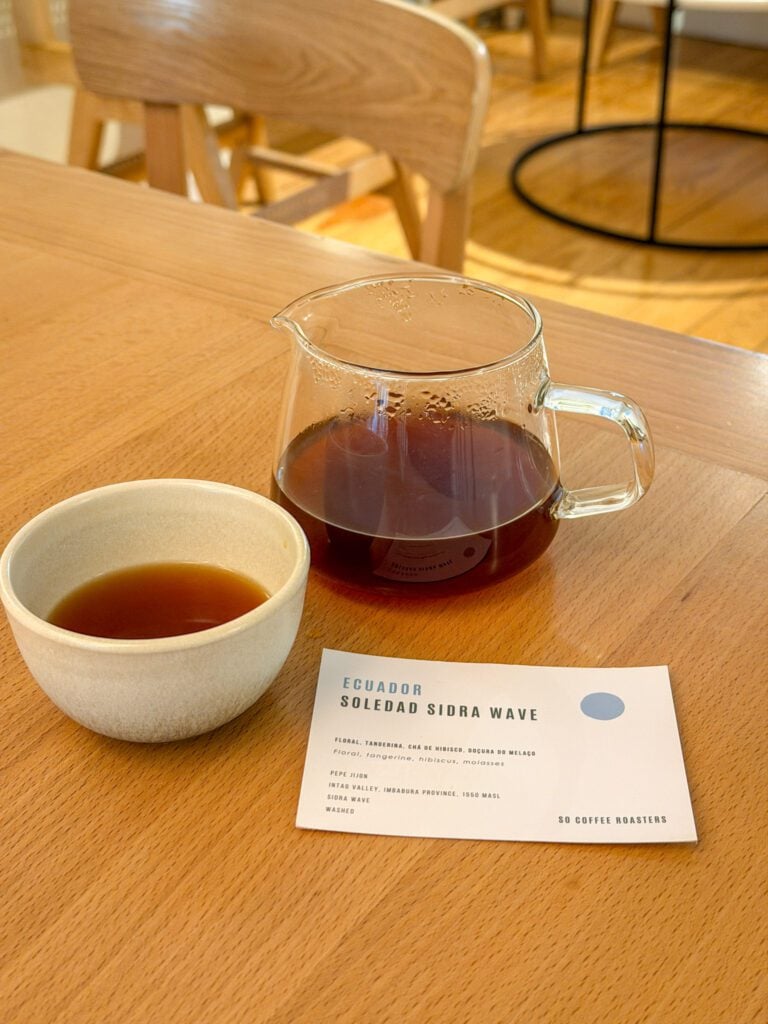
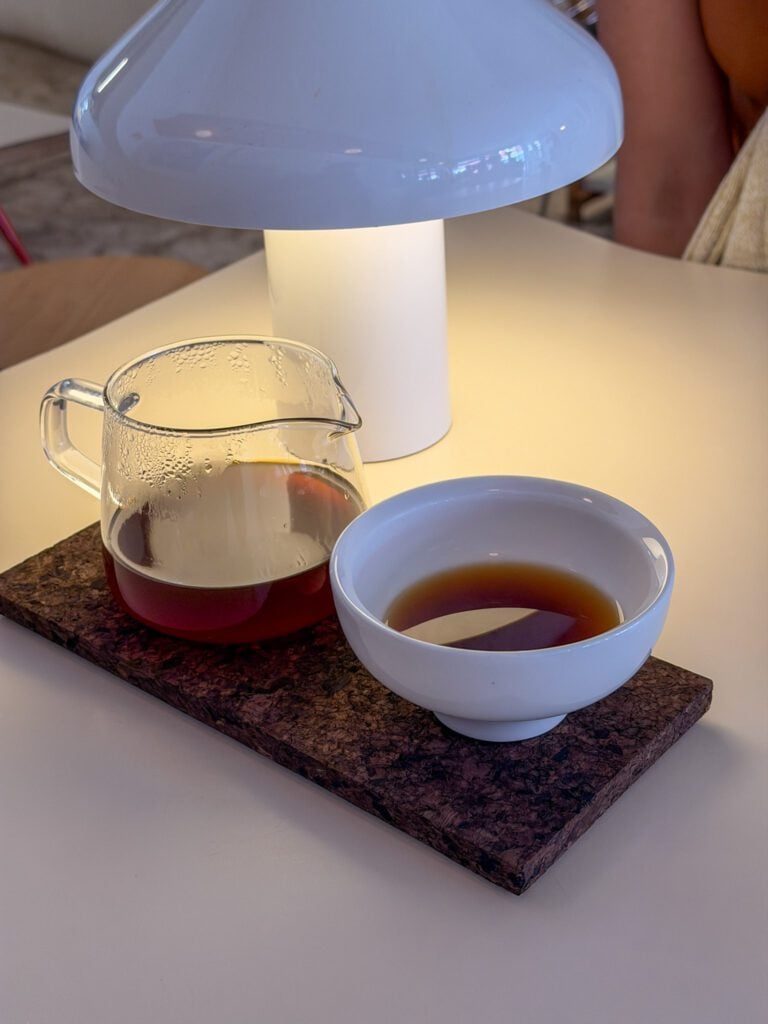
SO Coffee Roasters: One of the OG coffee roasters in Porto (and all of Portugal, really), we’ve been here across multiple trips and they made me the single best cup of coffee I’ve had anywhere in Portugal on this last visit (it was a Pepe Jijón Sidra Wave). Good central location too, walkable to your next stop.
Hakko: I like this place for two reasons. First, they have a nice selection of different European roasters, and they were in the middle of brewing up a few of them and slurping while tasting when we walked in. Second, they have an old-school lever espresso machine, which is fun. Good coffee, good vibe.
Protest Kitchen: This place feels very brunchy (rather than being focused specifically on coffee), but they might have one of the best coffee programs in the city.
What stood out to me is the fact that they have a drink that only nerds will know – OXO Soup – on the menu (it’s a bigger, less concentrated form of espresso that I make at home).
They use coffee from local roasters (including SO, listed above).
Now that you’re appropriately caffeinated, time to learn about the city!
Get Oriented with an Introductory Walking Tour
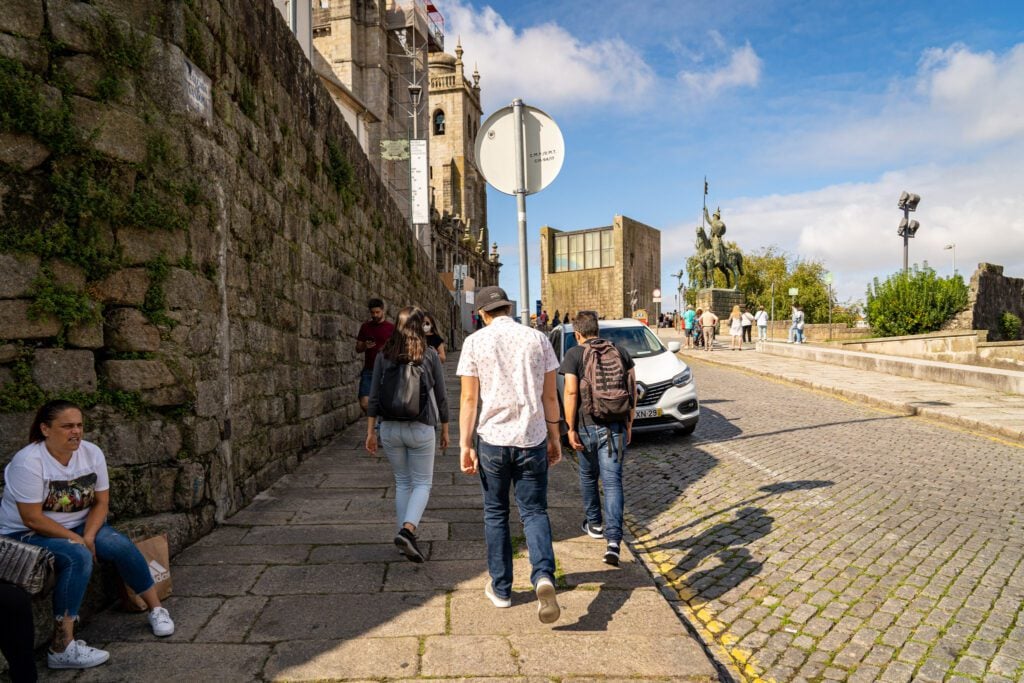
Over the past few years, we’ve come to the realization that walking tours are often our favorite way to get oriented in a new city for a few reasons.
First, you get a crash course in history and culture, which is a valuable baseline that will make the rest of your trip more enjoyable.
Second, you get to spend a few hours with a local who will give you all sorts of tips about what to eat, drink (and see), and specifically where to find the best version of said things.
Last, but not least, you’ll discover places that you definitely would never have found on your own.
All this is to say that if you want to get below the surface of the historic center of Porto, which is “the room where it happened” as Hamilton would say, you should absolutely do a guided walking tour.
We’ve done a few different walking tours in Porto, and there are two that we’d recommend.
First is Carlota’s history-focused tour of Porto, which we had on our list for years before we got to actually do it on our latest visit.
Carlota is a lifelong Porto resident, and she’s a goldmine of information both about history, but also about what to do, see, and eat in modern-day Porto.
Over the course of the three hour tour, you’ll go from the cathedral, down to the water via a set of medieval-feeling streets, and then back up past a couple of excellent viewpoints to end with some beautiful azulejos.
We liked this tour because it covers a ton of our favorite spots in Porto’s historic core, like the Miradouro da Vitória and São Bento station (with the amazing azulejos) and gives you the context to fully understand what you’re seeing, which leads to a deeper, richer experience, we think.
Second is this walking tour with WithLocals, a company we’ve come to enjoy because all of their tours are private (so they tend to work best for groups and families), which means you can customize your tour by choosing the guide that fits your interests and vibe, and customize your route based on your interests.
Eat a Sandwich for Lunch
You might be underwhelmed at the idea of a sandwich for lunch, but before you close the window in disgust, you should know that two of Porto’s culinary specialties are…sandwiches.
For lunch (which you’re probably ready for after walking a bunch), we’d try one (or both) of those sandwiches, and wash it down with a pastel de nata, the famous egg custard tart that has swept the world by storm (we see them everywhere now, including here at home in Portland).
The two sandwiches that we’re talking about are the bifana and the francesinha, and they are actually quite different.
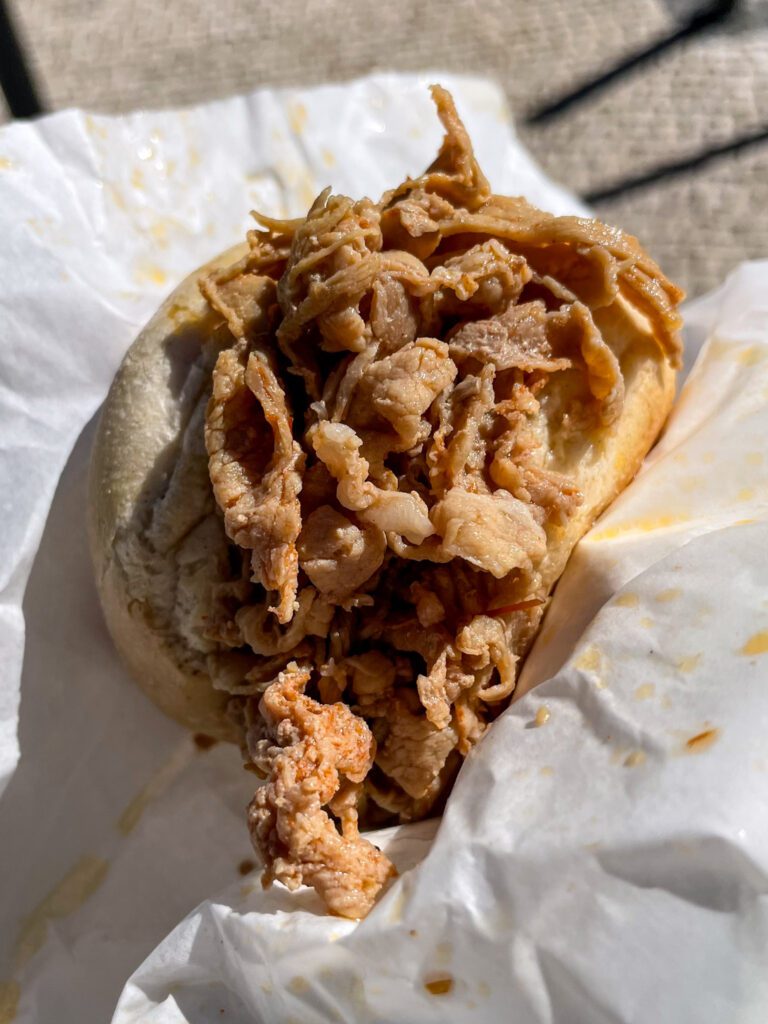
The bifana is a relatively simple pork sandwich that is made with thin slices of pork that are simmered in a slightly spicy sauce (you want it without cheese, which is the more traditional way to eat it).
You’ll see versions of it all over Portugal, and it’s a really great lunch option when it’s paired with a nice cold beer or glass of vinho verde.

The francesinha, on the other hand, is anything but “simple.” It’s a big, rich gut bomb that is kind of similar to a croque monsieur. This is the sandwich that Porto specifically is known for.
You start with two thick slices of bread, stuff a variety of meats (usually some combination of sausage, beef, and pork) in between them, top it with cheese, and pour a generous dose of a piping hot sauce made with tomatoes and beer over the top of it to melt the cheese and soak the bread.
For us, it’s the kind of sandwich that we want to try exactly once, and probably never again.

If you want to try both sandwiches, our recommendation (which came from a recommendation from a walking tour guide) is to head over to Conga (here on Google Maps).
They’re known for their bifana (you can see the meat stewing in the window as you walk by), but they also serve the francesinha. Two birds, one stone, but there are better versions of the francesinha to be found around Porto.
We made my brother (who has no issues with gluten) try a bifana here when we were in Porto together, and he enjoyed it. Eat at the counter with a beer or glass of wine.
If you want to try the places that are specifically known for their francesinha, there are two good options that have been recommended to us (I always ask even if I can’t personally partake).
The two places are O Afonso, which is the place to go for the most traditional experience, and Casanova is a place to go if you’re vegetarian and want to try a version of it without meat (though they also have regular versions).
Devour Your First Pastel de Nata in Porto
After lunch, it’s time for your first pastel de nata of the trip.
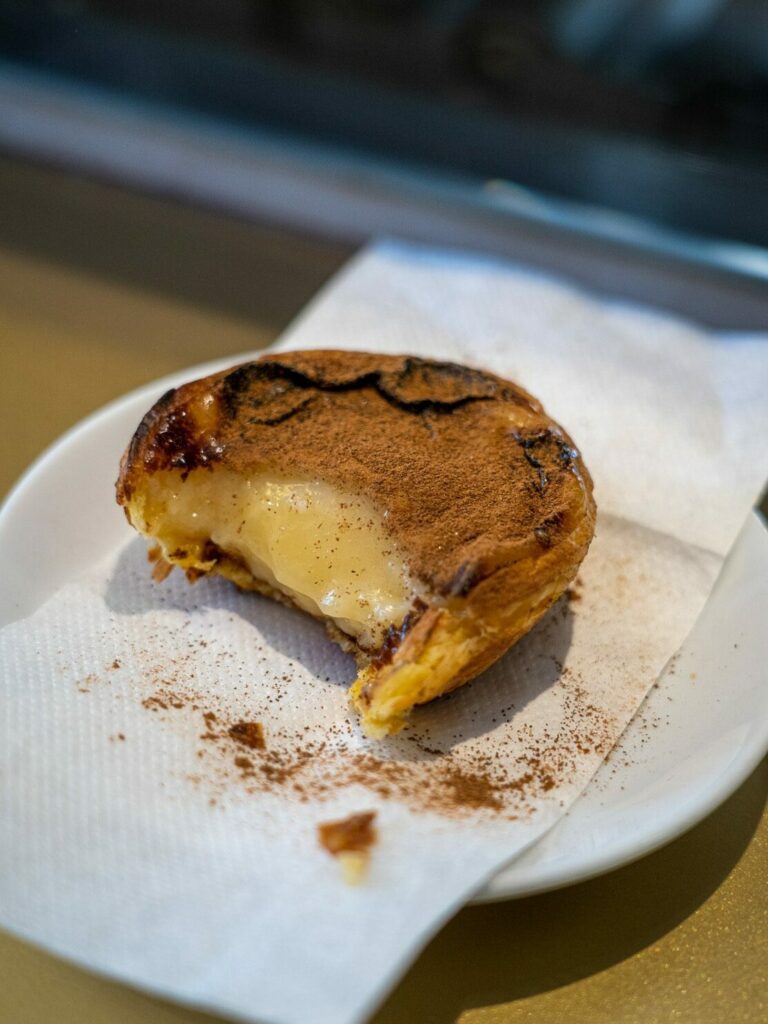
If you’re not aware, the pastel de nata is arguably the most famous pastry in Portugal (I’m not sure it’s even arguable at this point), and it consists of a sweet egg custard tucked inside a flaky pastry cup. Best served warm with a dusting of cinnamon.
The original version of the pastel de nata is allegedly a product of the shrewd business practices of the Catholic Church.
The legend goes that monks at the Jerónimos Monastery in Belém (just outside of Lisbon) had a huge stock of egg yolks on hand because they used the whites to starch their robes.
Rather than just throwing the yolks away, they figured out that they could combine them with sugar and flour to make a sweet pastry.
The event that allowed them to proliferate came in the 1830’s, when all religious buildings were shut down and the monks at the monastery sold their recipe to the sugar refinery down the road, who then started selling the pastries at Pastéis de Belém, which still exists and is coming up on its 200 year anniversary.
Now, of course, they’re everywhere (even in Portland), and they’re synonymous with Portugal at this point.
Obviously, there are literally hundreds of places making pastéis de nata in Porto, and on our head-to-head taste test in Lisbon, we found that the main differentiator was how fresh they were and whether they were warm (rather than “this specific place makes the best ones”).
That being said, there are two places in Porto that you shouldn’t miss.
First is Castro, a historic Fábrica down near the river (here on Google Maps), which is the place that multiple walking tour guides recommended.
Second is Manteigaria, which has multiple locations across Lisbon and Porto (and even Spain and France now), and is the place that won our little pastel de nata taste test a few years ago (which was conducted by Alysha and Matt’s two brothers on a trip to Lisbon).
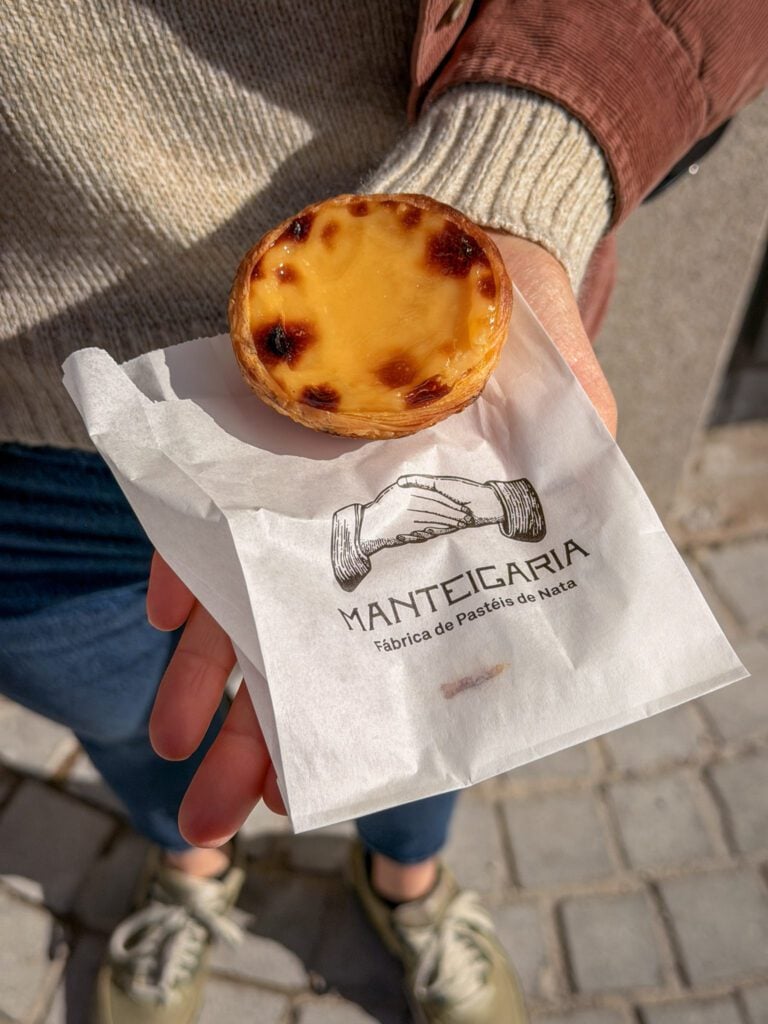
Both are walkable from Conga AND on the way down to the waterfront, so you can sample some pastel de nata en route to your next stop, which is the river.
Dive into the World of Port in Vila Nova de Gaia
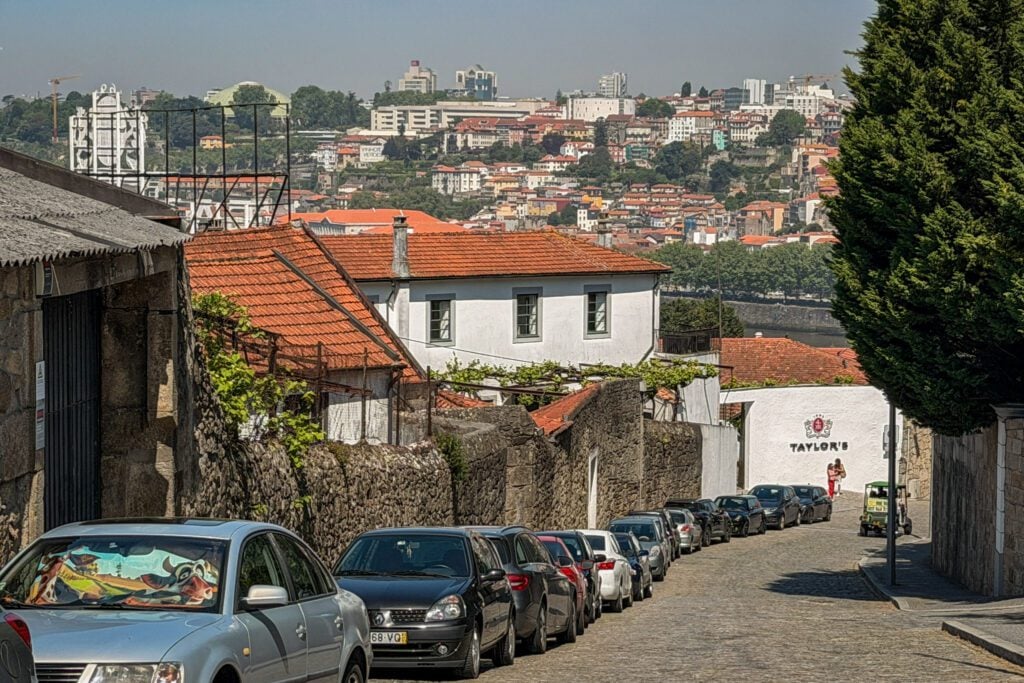
For the rest of the afternoon, head across the river to the south bank, which is where all of the port houses are located.
Port is a type of fortified wine that comes specifically from the Douro Valley, just to the east of Porto.
It’s typically pretty sweet, and it comes in many forms including more fruit-forward ruby ports (which are aged for a shorter period of time), to the more prestigious tawny ports, which are aged to perfection.
If you follow the Douro River, the river that runs through the center of Porto, out to the east, you’ll quickly find yourself in a world of rolling hills and terraced vineyards (don’t worry, we have you heading out there on the third day of this itinerary – it’s pretty spectacular!).
While the grapes are grown out in the Douro Valley, which is the oldest recorded denomination of origin in the world (like Champagne, it can only be called “port” if it’s made with grapes from the Douro and in a specific way), the aging process happens in the city of Vila Nova de Gaia.
Vila Nova de Gaia is a completely separate city from the city of Porto despite being just across the river.
If you look from Porto across the river, you’ll see countless signs marking the location of port houses dotting the hillside (though the city itself extends quite a bit beyond that hill, and is several times the size of Porto).
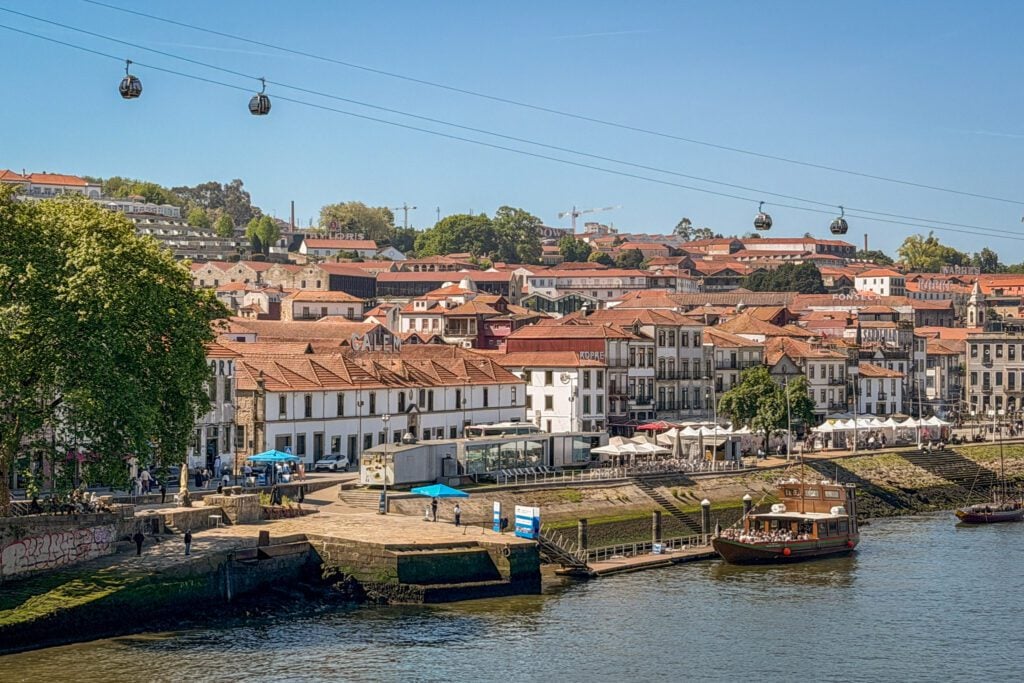
Port has to age quite a while in barrels before it can be sold (part of the reason why it’s so expensive), and port houses have these big, vast warehouses that are filled to the brim with barrels full of port.
The reason they’re over in Gaia (rather than in Porto) is simple: real estate is cheaper, and taxes were historically lower.
The other unique thing you may notice is that, for some reason, all of the port houses have British names like Taylor, Sandeman, and Graham.
The reason behind that is the fact that Britain and France fought a series of near-constant wars throughout the 1700s and 1800s, and importing wine from France to Britain became problematic.
Some British guys visited Portugal and came across port wine, and they decided to invest in the industry to fill the void that French wine had left. Fast forward several hundred years and what you have is an industry rooted in Porto’s land and traditions, but almost entirely run by a bunch of Brits.
If you’re interested in visiting a port house that was established by a Portuguese family and has been in Portuguese hands since, Ferreira is the place to go. They have a similar variety of tasting experiences, including cellar tours and higher end tastings if that’s what you’re looking for.
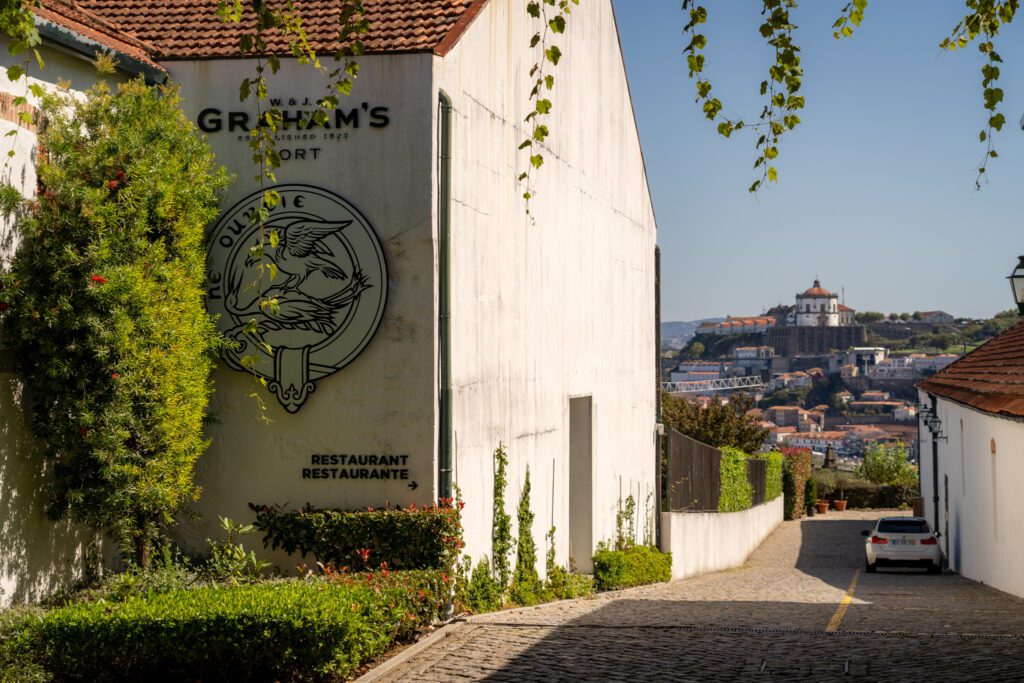
Graham’s is the port lodge we visited, and we enjoyed the tour and tasting. Graham’s dates back to the 1800s and is one of the most famous names in the industry.
When we came back from Portugal, we actually did a port tasting with friends at home in the US, and we were able to find Graham’s 10 Year Tawny at home (at Trader Joe’s, of all places).
The reason we chose Graham’s is the fact that the lodge is set a little back from the main tourist area, so it doesn’t get the big crowds the others do.
Plus, it’s up on a hill with great views (though to our disappointment, the tastings are done inside, and the restaurant is the part that has the nice views).


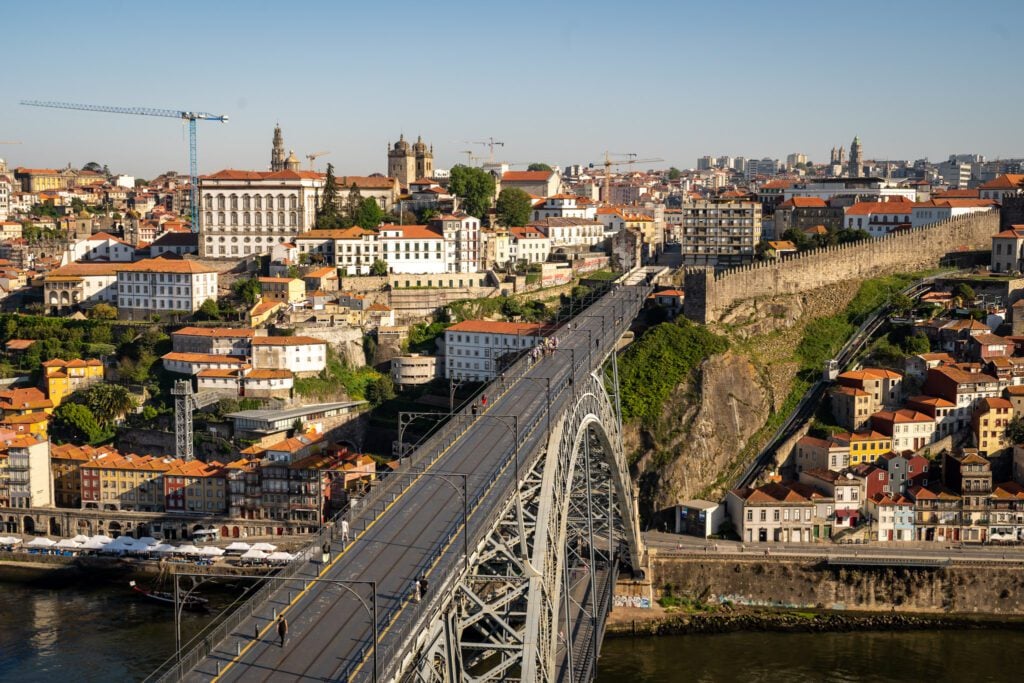
Here’s how we’d do it: walk along the waterfront promenade in Ribeira to the base of Ponte Luís I (the big two-tiered bridge), walk across the pedestrian path on the bottom level of the bridge, and then take a walk along the Cais de Gaia where you have some excellent views of Porto across the river.
If you want coffee, take a quick detour over to 7g Roaster (here on Google Maps), which has a nice vibe and the coffee was pretty good.
Then head to your port house of choice, do your tour, and stop by Churchill’s 1982 Garden Bar (here on Google Maps) for a porto tonico, another delicious concoction of white port and tonic, with a great view.
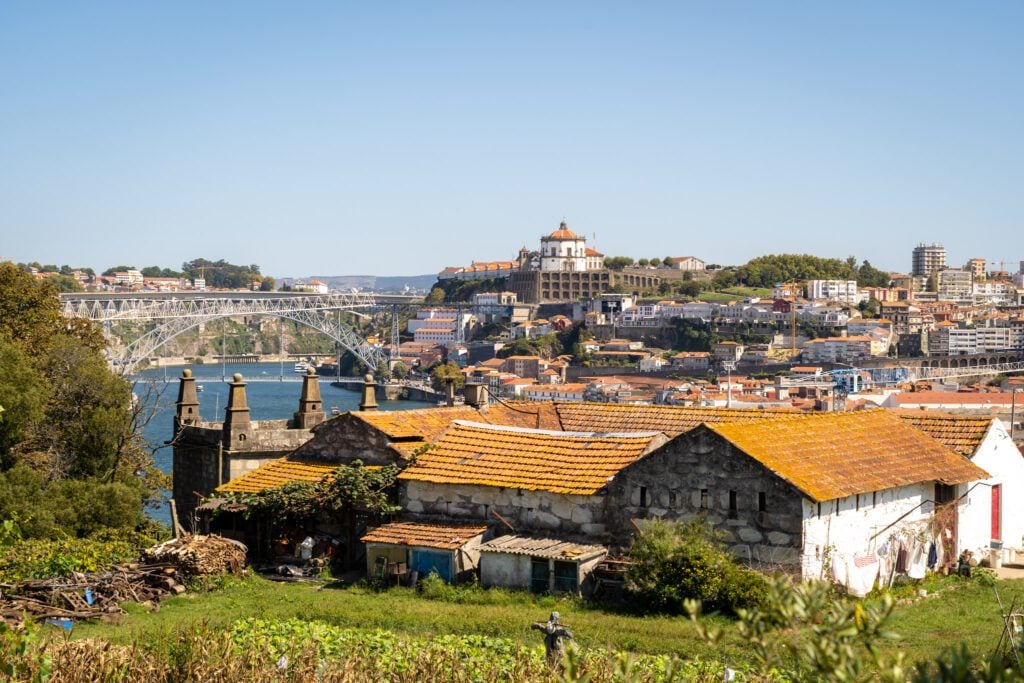
This is a place we discovered on our first trip and it was so pleasant (we were the only ones there) that we tell everyone about it.
Then head back the same way you came (there are buses you can take from Gaia if you don’t want to walk up the hill on the other side of the river).
Sunset at the Jardins do Palácio de Cristal
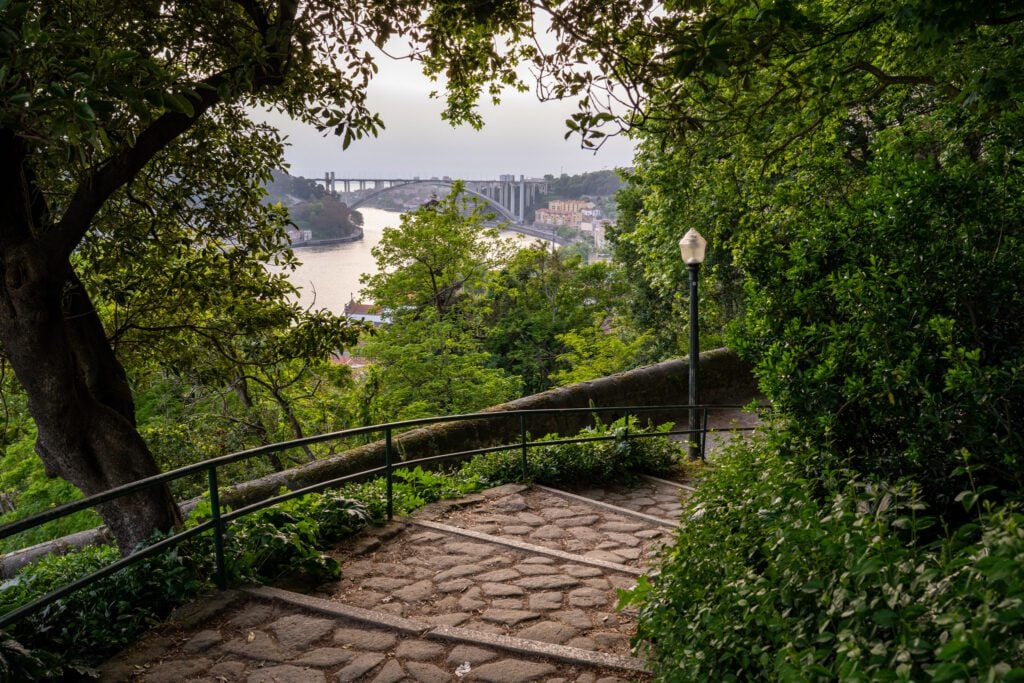
For sunset, head west along the Douro River towards the ocean to check out one of our favorite discoveries on our last trip, the Jardins do Palácio de Cristal.
We actually discovered this place based on a recommendation from the captain of our river cruise, who pointed it out from the water as we passed it, and said it was his favorite sunset spot in the city, and it was much less crowded than the other, more central spots.
Don’t worry, that river cruise – which we really enjoyed – will close out your second day in Porto.
Based on that recommendation, on our last night in Porto, we headed west and made our way through the peacock-filled gardens to the Torreão do Jardim do Palácio (here on Google Maps), a tower overlooking the city that has a commanding view.
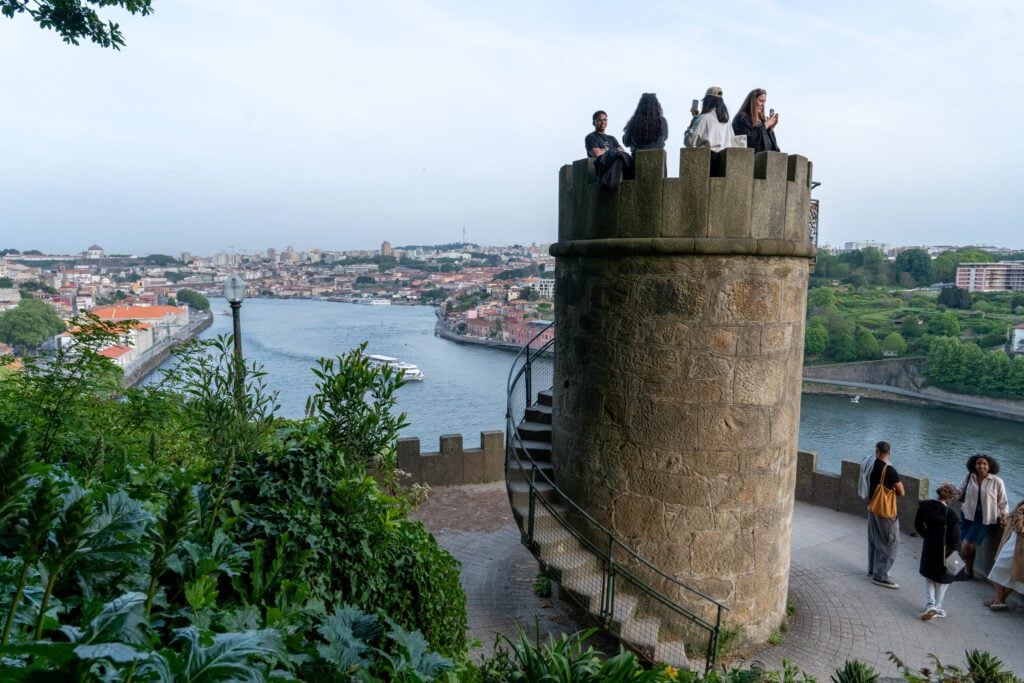
It was nice, but we actually really enjoyed the rest of the gardens too.
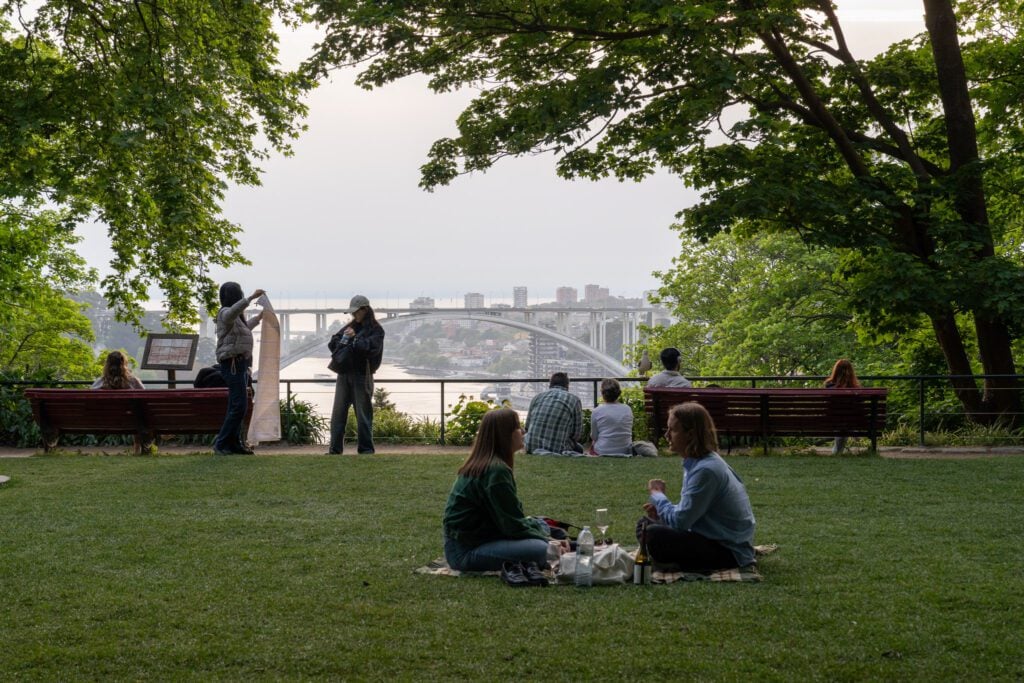
There were countless groups of people set up with picnic blankets and some wine enjoying the view out towards the Atlantic, and most of them seemed to be people that actually live in Porto, rather than a sea of tourists.
Day 2: Getting Deeper into Porto’s Culture
On your second day, start your day with our favorite view of Porto’s riverfront (at an unexpected time) and then take a food tour and get out on the river at sunset to see the city from a different perspective.
An Early Morning Walk Across Ponte Luís I
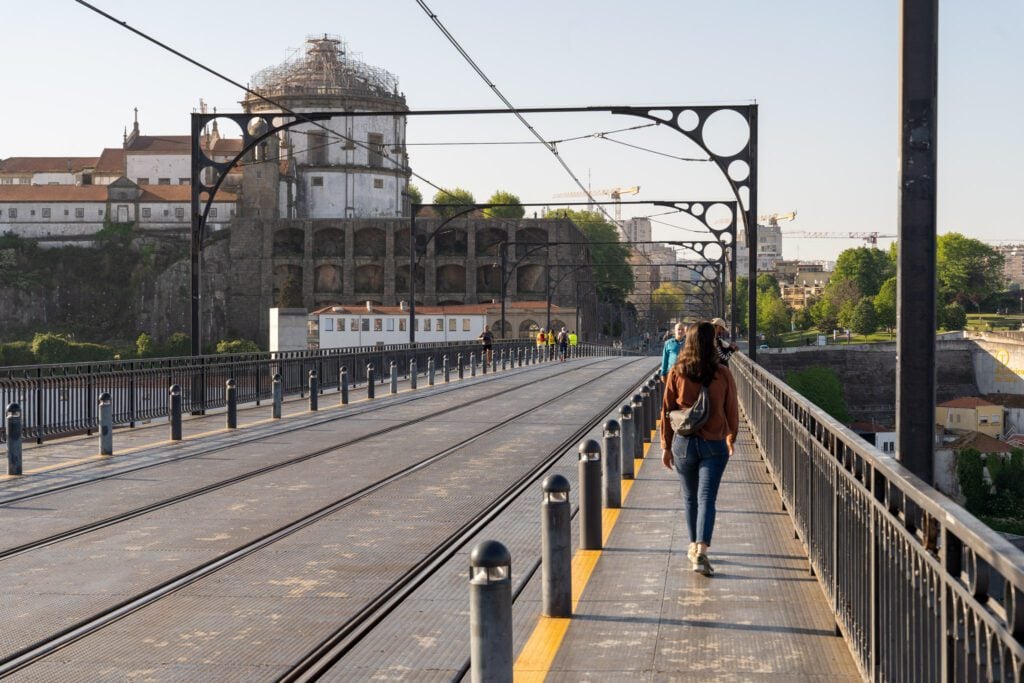
As you’re doing your research about visiting Porto, you’re likely to come across some recommendations for the best places to catch a sunset.
It’s almost certain that somewhere on that list, you’re going to find Ponte Luís I – the big bridge that connects Ribeira to the Cais de Gaia on the other side of the river.
Or maybe the Jardim do Morro on the other side of the bridge (here on Google Maps), or the viewpoint at the church right above it, the Miradouro da Serra do Pilar (here on Google Maps).
They are EXTREMELY popular sunset spots, and they are crowded AF within a couple of hours of the sun dipping below the Atlantic to the west of Porto.
We have been to these same exact viewpoints several times now, but all but one of those visits was in the early morning.
We were legitimately the only people there on every single one of those visits save for some runners crossing the bridge, or a person walking their dog.
Plus, and this is the photographer in Matt talking, the light is actually better in the morning because the sun is coming from behind you, illuminating the city (rather than washing it out).
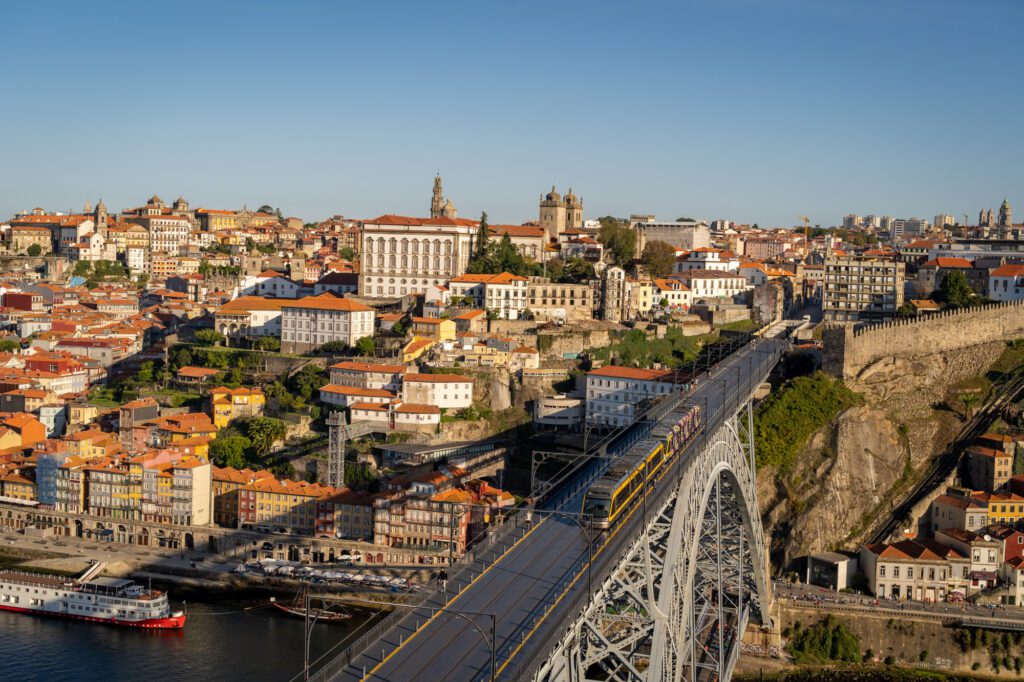
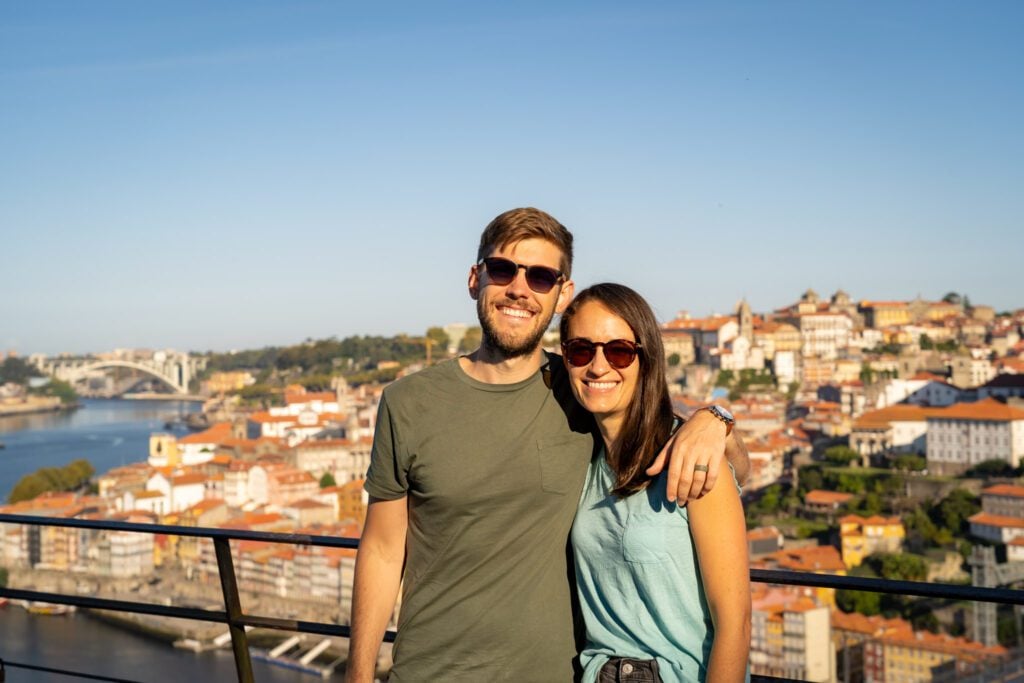
We’d highly recommend starting from the northern end of the bridge (on the Porto side) and walking across the bridge, taking in the views along the way, and heading up to the church and garden for the exact same views that the sunset chasers are after, with a tiny fraction of the crowds.
It’s a very nice walk, and they’re some of the best views you’ll find in the city.
It’s also worth noting that we’re talking about the upper level of the bridge, the one that the metro runs across.
There’s a lower span too that we recommended you cross yesterday over to Cais de Gaia, but the views are from the upper one.
Step Inside the Sé do Porto
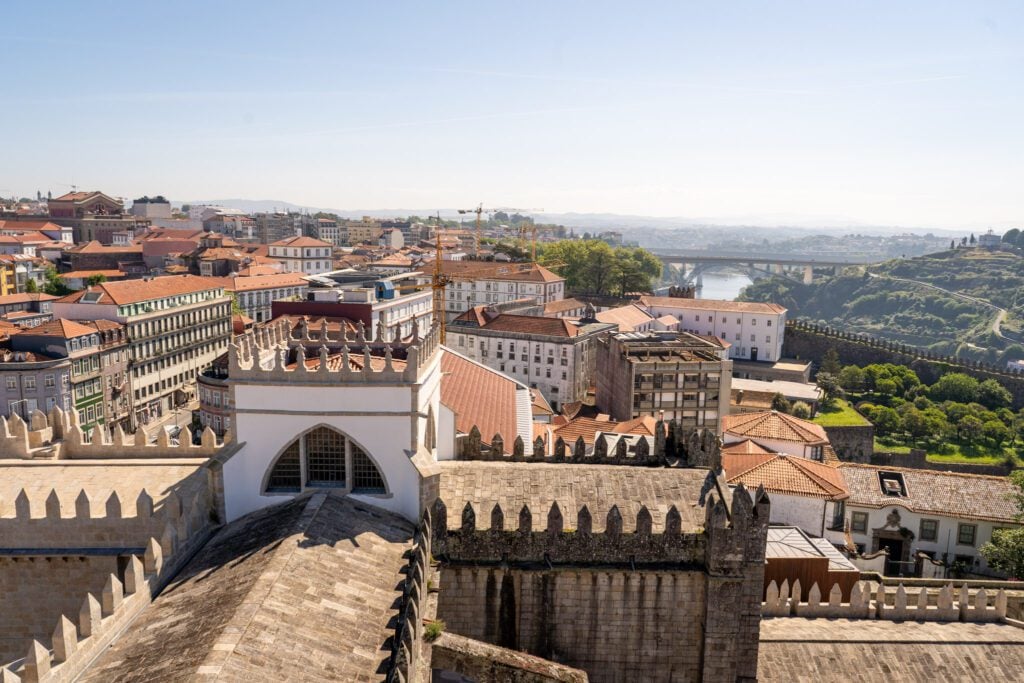
Before the latest trip to Porto, we had never actually been inside the Sé do Porto, Porto’s main cathedral set up on the hill above Ribeira.
I think the reason that we skipped it is the fact that the plaza outside seems to be the meeting space for just about every tour group in Porto, so it feels very busy and crowded, and we decided the juice wouldn’t be worth the squeeze.
It’s safe to say that the cathedral was the unexpected hero of our latest trip because it has a stellar collection of azulejos in the cloister, and the view from the tower is pretty nice.
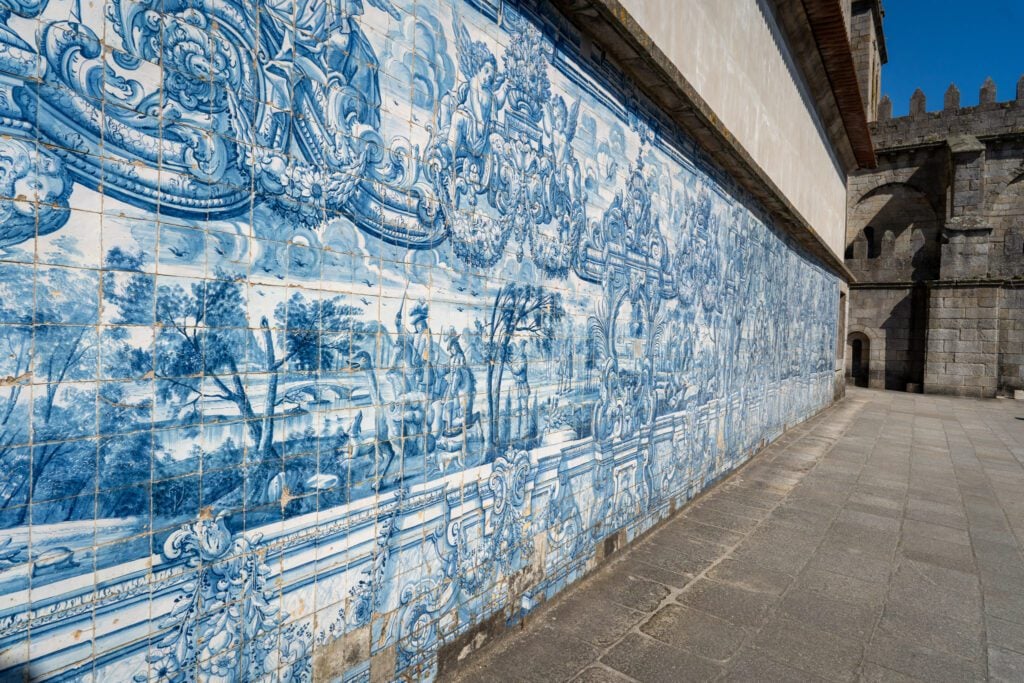
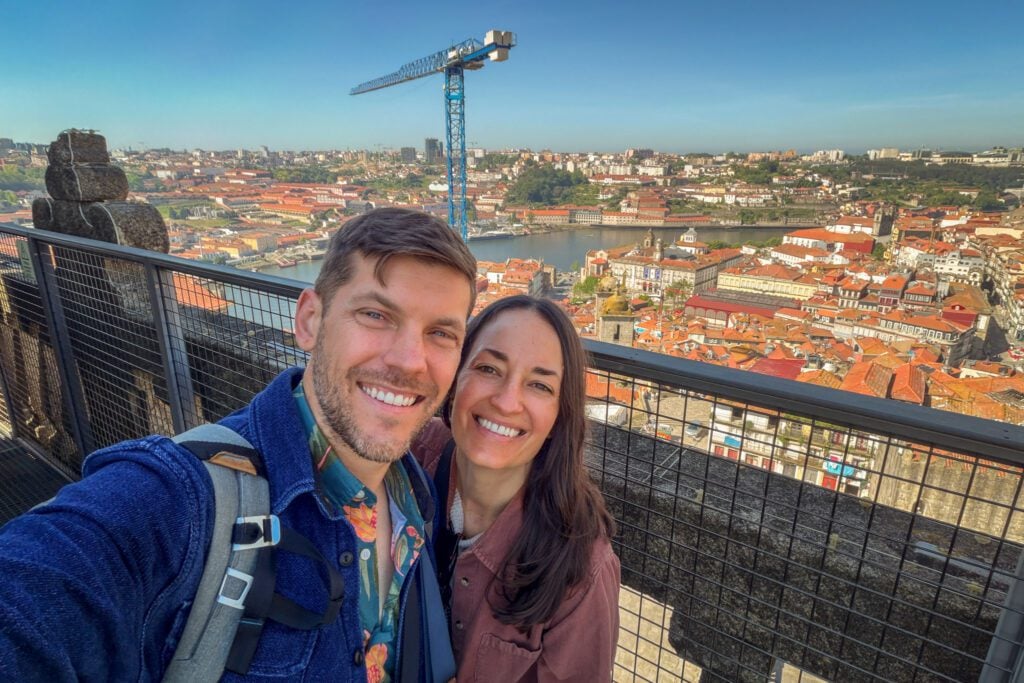
And it’s not expensive at just €4 a person, which you don’t need to book in advance.
It’s well worth somewhere between 30 and 60 minutes of your time, we think.
Our advice is to go before 10am because we stepped inside at about 9:15am, when there were a handful of people in line, and came out around 10am to a line zigzagging around the plaza outside.
Not only does waiting in line suck, the space inside the cathedral isn’t particularly spacious, so it’s bound to feel crowded and claustrophobic later in the day.
Dive Deeper into Porto’s Food Scene on a Food Tour
Diving into the food culture in places we’re visiting is one of our favorite aspects of traveling, and we try to include a food tour, cooking class, or market tour in most places we visit.
The food of a place tells you so much about the culture, history, and influences that have shaped it, and exploring a city through its food scene is a unique perspective that a lot of people don’t even consider.
Unfortunately, the reality is that because Matt has Celiac Disease and can’t have even a speck of gluten without being sick for days, a food tour or cooking class wasn’t in the cards for us in Porto.
HOWEVER. That does NOT mean it shouldn’t be for you!
We’d highly recommend it because it gives you a local’s perspective on the city’s food scene – what and where to eat and drink – and you get to connect with fellow travelers and try some amazing food.
We’ve been doing this thing lately where we send family and friends on food tours, and my mom did this food tour with Isa in Porto with a friend and loved it. Isa is a local, and you’ll get to try a variety of foods and indulge in a tasting of a couple of ports.
A Late Afternoon Tipple at Bolhão Market
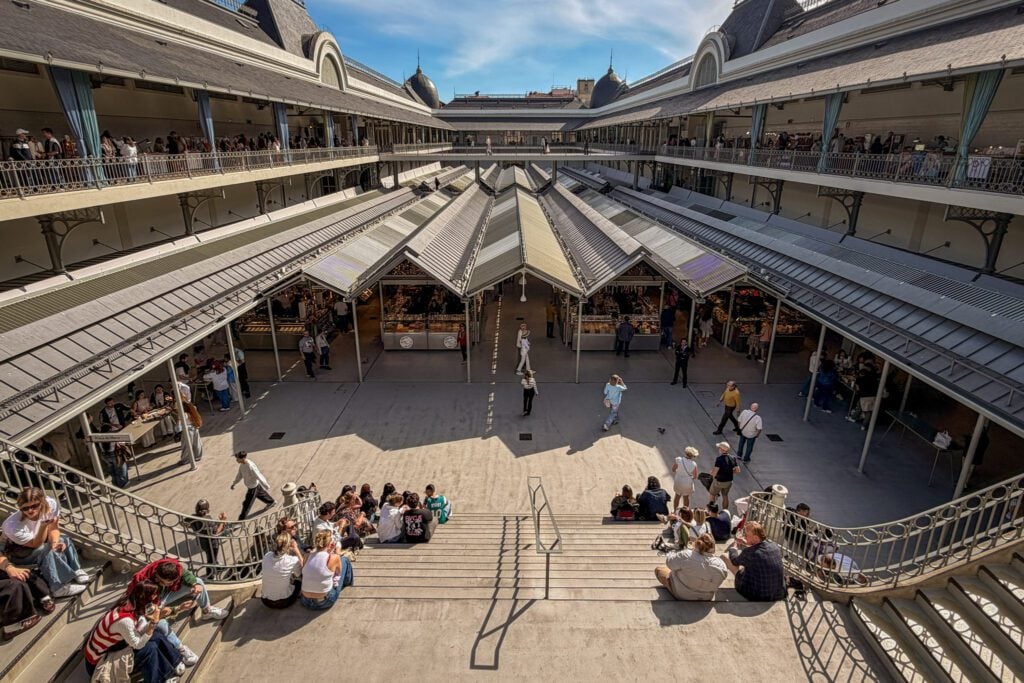
On our first trip to Porto, we were excited to check out the local food market – Mercado do Bolhão – but it was sadly closed for a big long term renovation.
On our latest visit, it was finally open after being closed for several years (it reopened in 2022 after four years of renovations), and it was one of the first things that the receptionist at our apartment recommended to us.
He recommended going in the afternoon, in particular, because the steps at the north end of the market get good sun, and it’s full of people sitting on the stairs with a glass of wine and some snacks.
Let me tell you, he wasn’t lying. We’re suckers for a good outdoor food market (this one happens to be mostly covered, but definitely in the “outdoor” category), and we loved the vibe of the market in the afternoon. That’s the time that we’d recommend stopping by for a drink and a few snacks.
It’s also a good place to pick up some ingredients for a cheese and tinned fish plate, or some souvenirs to take home to share with friends and family.
I asked someone we met on that latest trip about the renovation and how things were going, and they made a good point: before the renovation, the proportion of locals to tourists was higher, and prices were lower and the selection was more geared to Porto residents.
Now, prices are higher (often too high for locals), and the clientele is mostly tourists. Which makes sense to me considering the transformation that Portugal as a whole has seen in the past five or so years, when the number of tourists has grown immensely.
The market is a mix of stalls selling fresh produce, cheese, meat, and seafood, and prepared foods (mostly along the outer ring).
Our recommendation here is to do a little crawl. Crucially, from any given stall, we’d get the thing that stall specializes in (e.g. get a sandwich from the sandwich shop, cured meats from the meat stall, and a glass of wine or port from the wine stall).
It’s easy to put together a nice little aperitivo package to enjoy on the steps in the sun, which is exactly what we’d do here.
A Six Bridges River Cruise at Sunset
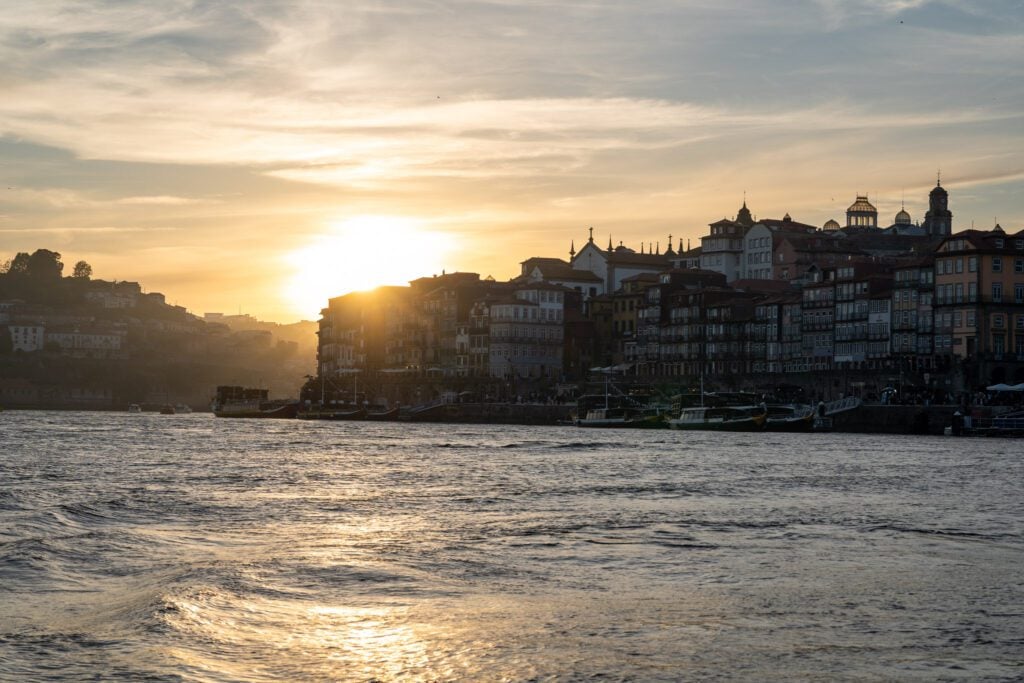
One of the things I’ve come to really value since a perspective-changing canal cruise in Amsterdam is seeing a city that is shaped by water (like Amsterdam, Venice, or Porto) from that water.
It gives you a completely different perspective of the city, and you often discover new places and notice things that you wouldn’t if you were on land.
Close out your second day by doing just that.
There are dozens of different river cruises along the Douro branded as “Six Bridges” because they take you past, you guessed it, six different bridges en route to the mouth of the river where it meets the Atlantic.
We were looking for a smaller boat with a group of 10 or so, which is going to be a more intimate experience. After searching through a bunch of different options, we found this river cruise with a sunset option that was on a small boat with snacks and three different wine tastings.
I went in not expecting too much from the captains, but I was truly impressed with the guides and their warmth and willingness to chat and engage in conversation along the cruise.
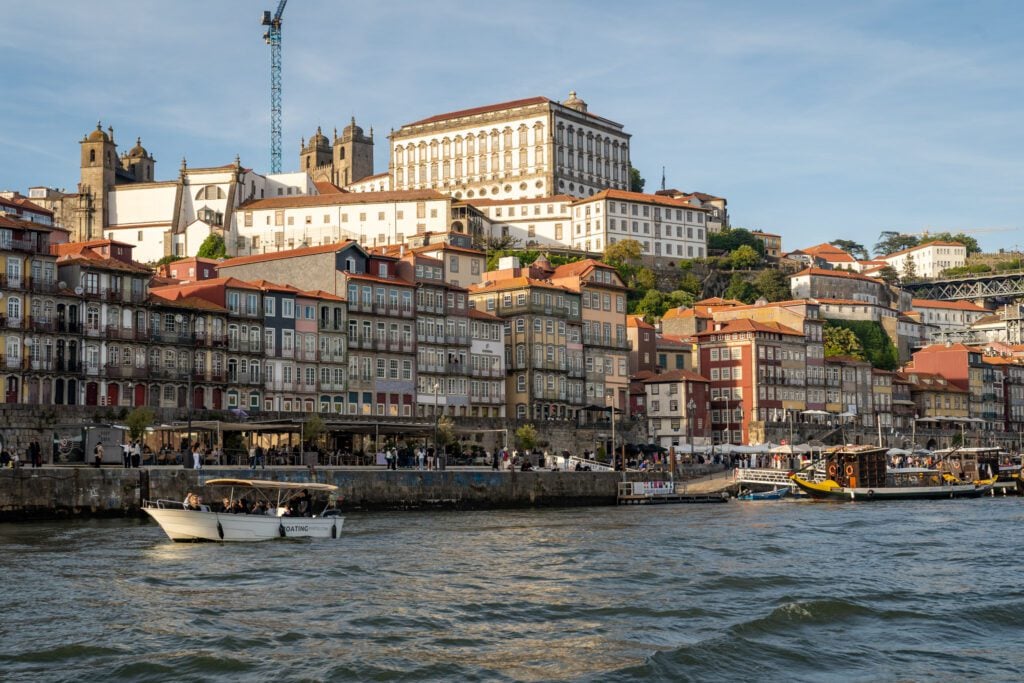
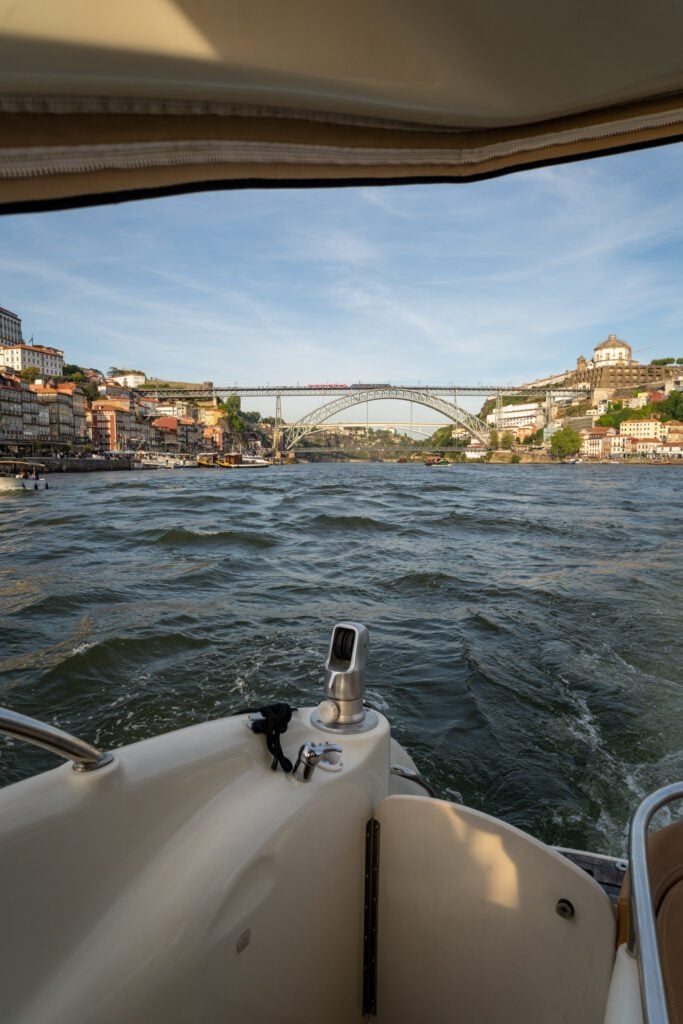

Like I mentioned above, it’s how we discovered the Jardins do Palácio de Cristal as a must-visit sunset spot that locals actually go to.
Also worth noting here that the best vinho verde we’ve ever had in Portugal was on this boat, which is kind of funny but speaks to the level of care that they put into the experience.
They have multiple sailings a day, including one in the late afternoon around sunset, which is the one we’d recommend if you can swing it.
The meeting point is at a marina to the east of the city center (here on Google Maps), and you’ll have to either take a bus to get there, or call a rideshare or taxi.
For what it’s worth, we took the bus there, and took a rideshare on the way back. Make sure to use the bathroom right before the cruise leaves, because there’s no bathroom on board the small boat.
Day 3: A Day Trip to the Douro Valley
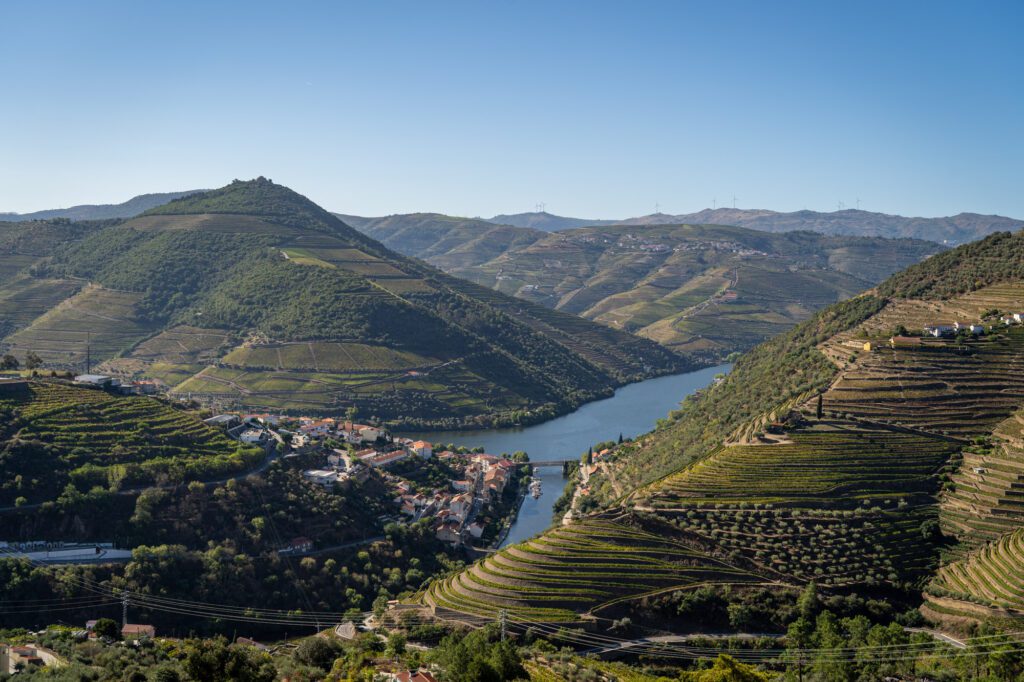
Use day 3 of this itinerary to take a trip from Porto to the nearby Douro Valley. If you only have time for one day trip during your stay in Porto, we’d highly recommend making it this one.
Our visit to Porto was part of a three month European adventure that took us to Portugal, Spain, and Italy, and our day trip to the Douro Valley was among our top memories from the entire trip.
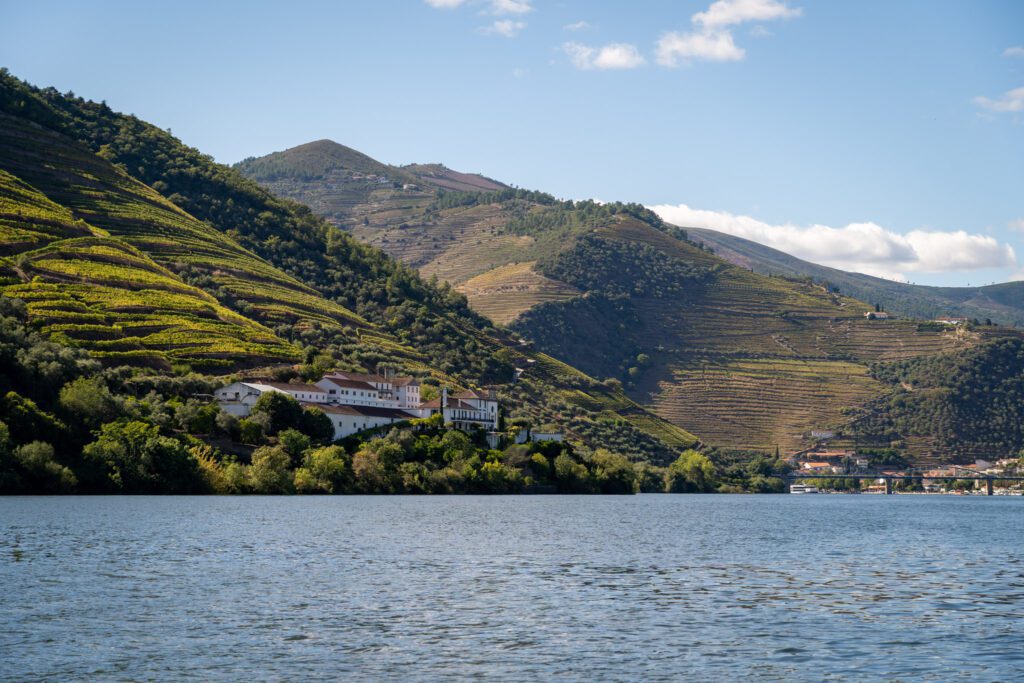
Located 100km east of Porto, the Douro Valley is home to the many vineyards and wineries that produce port wine.
The region is an UNESCO World Heritage Site and the oldest denomination of origin (DOC) wine region in the world.
The enchanting vineyard-dotted countryside is also known for its stunning scenery, great hiking routes, and picturesque towns and villages nestled on the banks of the winding Douro River.
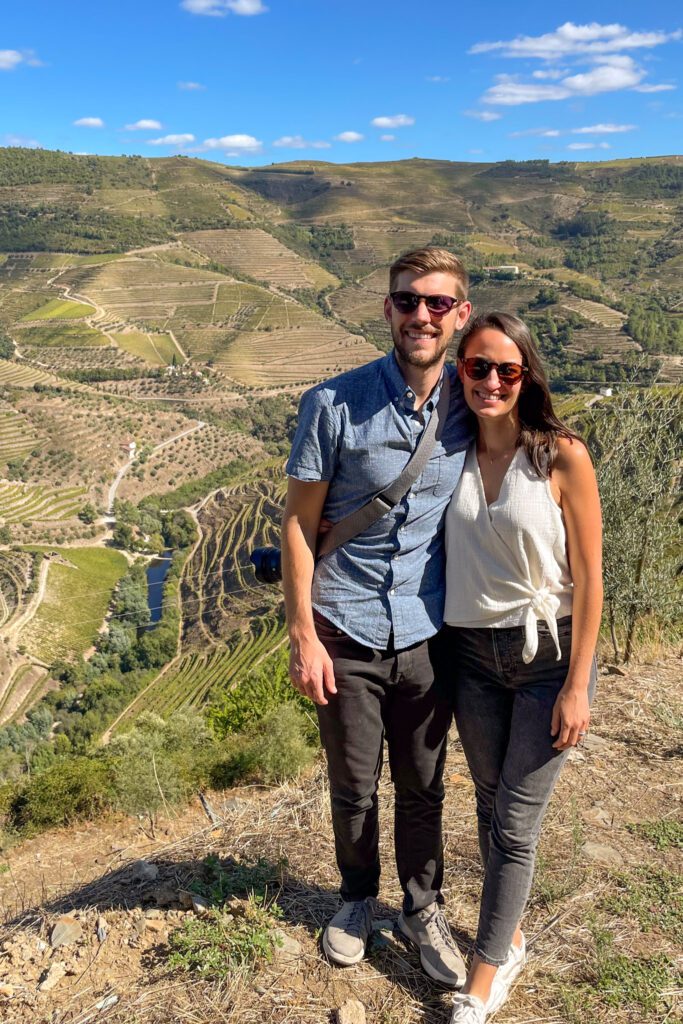
One of the most interesting parts of the Douro Valley is the terraced vineyards, which reminded us a lot of coffee farms in Colombia that use the mountainous landscape to their advantage.
We’ve never seen that technique used in wine before, and it makes for some pretty spectacular vistas.
We did this excellent guided tour, and it was a highlight of our entire Portugal trip (and our entire three months in Europe, to be honest).
If our recommendation wasn’t enough, two of Alysha’s best friends and Matt’s mom took this tour on their respective trips to Portugal over the past few years, and they loved it too!
Heads up: Viator is going to show you a bunch of different tours, the one we recommend is called “Douro Valley Premium Small Group: Wine, Lunch & Private Boat“.
The tour starts with a drive out to the Douro Valley, stopping at a stunning viewpoint on the way to your first winery.
Here you’ll learn about the wine making process and sample some locally produced wines.
Next, you’ll head to lunch at an old estate, where there’s no shortage of delicious food and wine. Gluten free and vegetarian options are available too.
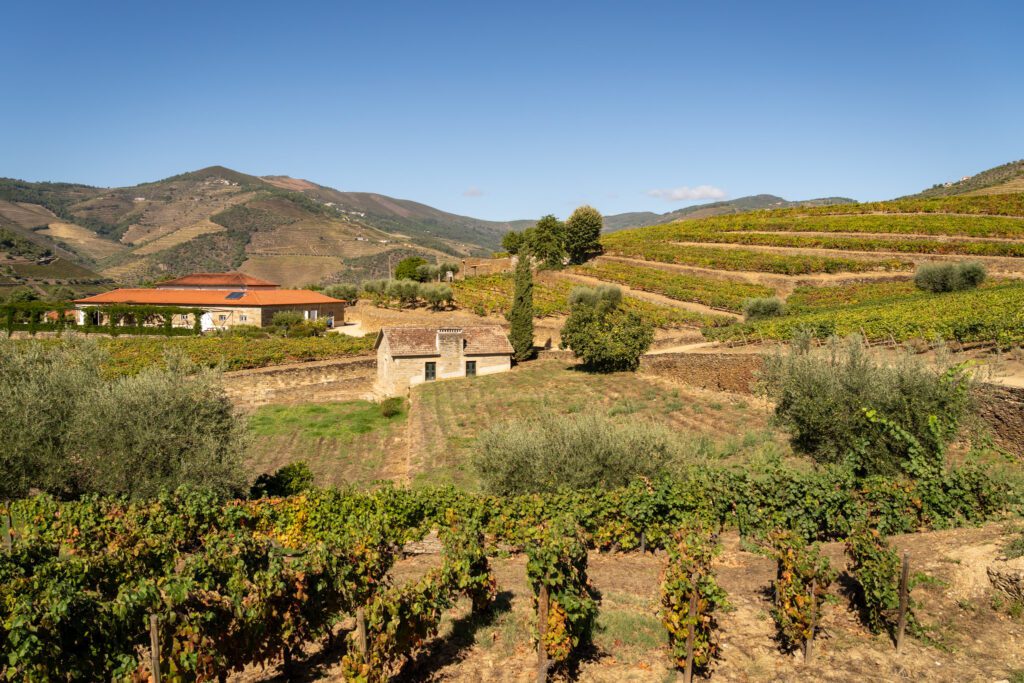
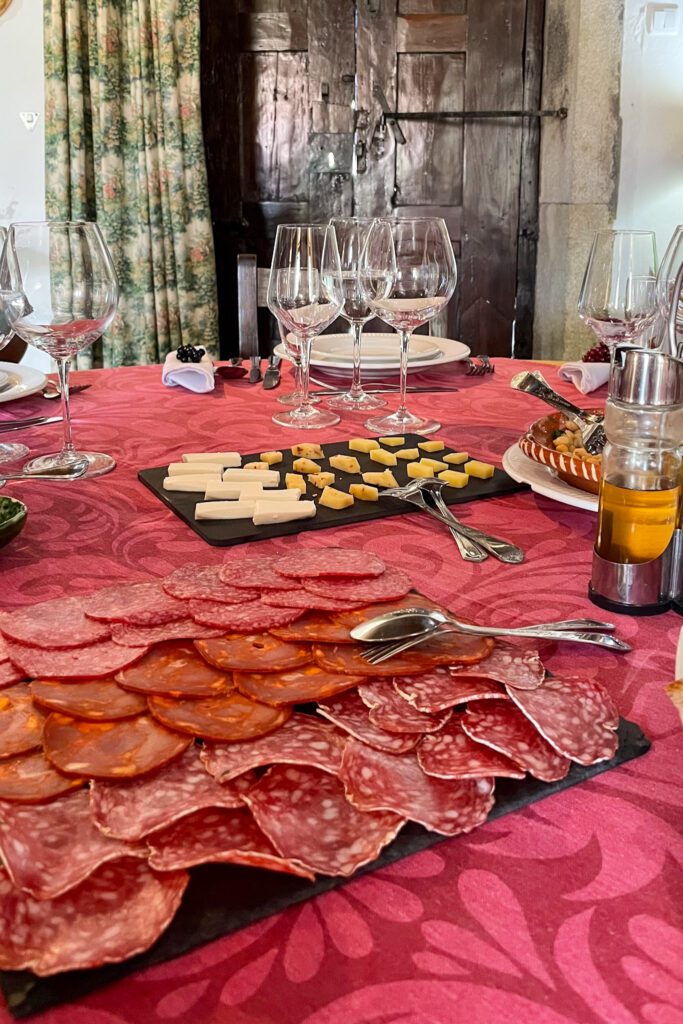

After lunch, you’ll embark on another scenic drive and an hour-long cruise along the Douro River with a charismatic captain and plenty of porto tonico (port and tonic) cocktails. The day trip ends with a leisurely ride back to Porto.


But why choose an organized tour over visiting the Douro Valley by yourself? Well, the region is not the easiest place to visit on your own.
It is possible to reach the Douro Valley from Porto by train. A direct line runs to Pocinho, with Peso da Régua and Pinhão being two of the most popular stops.
However, once you arrive in the Douro Valley, the area isn’t particularly well-served by public transportation. Without a car to get around, you’ll only be able to explore the towns and limited surrounding areas.
The other option is renting a car and driving to the Douro Valley yourself. The biggest downside of this method is that you’ll need a designated driver who won’t get to sample the local wine, and renting a car can be a bit of a hassle.
You’ll also be missing out on visiting the more off-the-beaten-path vineyards and scenic viewpoints that only local guides know about.
And you’ll miss connecting with both the guide, who has a wealth of knowledge about Porto and its port, and like-minded travelers who also love learning and trying new things.
Click here to check prices, availability, and book your tour of the Douro Valley.
What to Do with More Time in Porto
Here are a few ideas on things to add to your itinerary if you find yourself with more time in Porto.
For even more ideas, head over to our guide to our favorite things to do in Porto, which has a collection of all of our favorite things to do, see, eat, and drink in the city.
Livraria Lello
You might have noticed that the most famous tourist attraction in Porto, a bookstore with a gorgeous interior, was conspicuously absent from the main itinerary.
It’s because it is an absolute zoo and, while beautiful, the story behind it (it inspired J.K. Rowling to write Harry Potter) is basically a complete fabrication.
However, the interior is beautiful (they’ve done a great job renovating it), and we understand the impulse to want to see it yourself.
Some people love it, and some hate it. So we’ll leave it entirely up to you whether you choose to visit or not. But to help you decide, here’s what we thought.
Livraria Lello is often described as the most beautiful bookshop in the world. And it’s pretty hard to disagree. Dating back to 1881, the bookshop is famous for its lavish neo-Gothic and Art Nouveau interiors.
Its grand staircases, elaborately carved archways and columns, floor to ceiling bookshelves, and elegant stained-glass skylight are truly a sight to behold.
It was rumored that J.K. Rowling drew inspiration from Livraria Lello when she was in Porto crafting the first drafts of her now-famous books. The author herself has since debunked this myth.
So what’s the downside? The bookshop has gained such fame in recent years that it has turned into one giant tourist attraction.
For a start, there’s always a huge line to enter. We walked past in the morning, midday, and just before closing, and the line was the same at all hours.
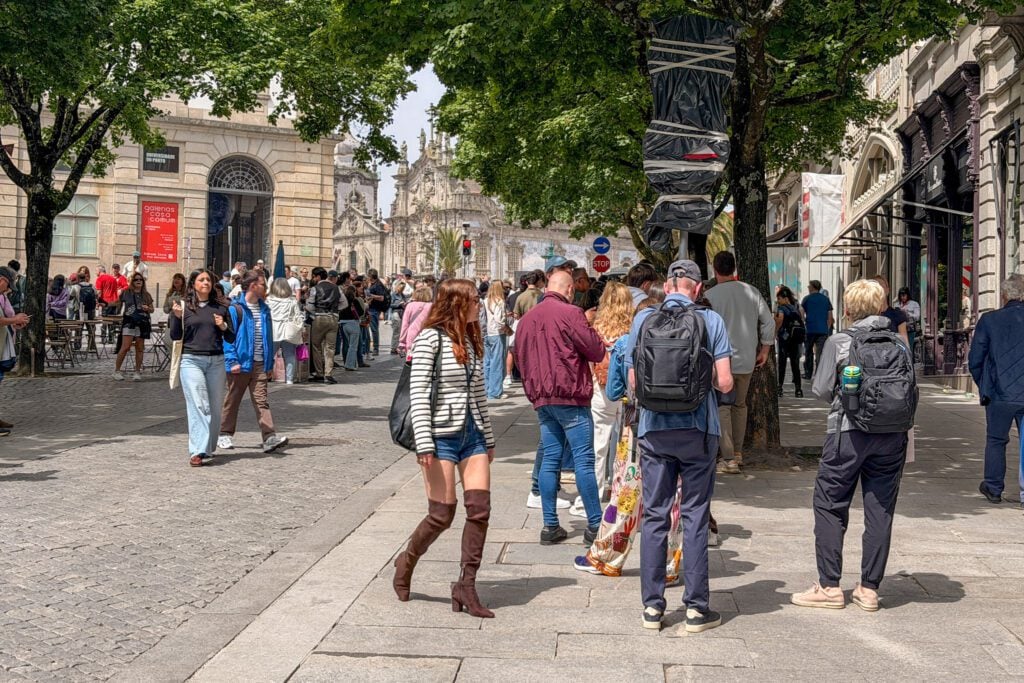
You also need to pay an admission fee to go inside. And you can forget about curling up in a corner in silence with a good book. You’ll be fighting your way through countless photoshoots instead.
If you do plan on visiting Livraria Lello, you need to buy your ticket in advance online for €15.95 (you’ll need to pick a date and time slot), and that ticket price is credited towards the purchase of a “Livraria Lello” edition book (only the books that are edited by Lello are eligible, and they’re pretty but expensive).
For what it’s worth, we saw the line around the block and decided it wasn’t worth it.
Based on the pictures, it’s certainly a gorgeous space, and had there not been a long line, we would have definitely considered it (and probably done it).
Torre dos Clérigos
Clérigos Tower is the imposing bell tower of the beautiful Baroque church by the same name. Built in the mid-1700s, the church and its tower are one of the most emblematic monuments in the city.
The impressive tower stands at 249 feet (76 meters), making it the tallest of its kind in Portugal. It’s pretty difficult to miss Clérigos darting above the rooftops when wandering around Porto.
You’ll have to confront a steep and narrow spiral staircase to reach the top of the tower. But the climb is worth it for the breathtaking 360 views over the city and Douro River from above.
Clérigos Church is free to enter. It costs an additional €6 to climb the tower and visit the Clérigos Museum.
Full disclosure: we have not done this ourselves, mostly because we heard from a few people that the staircase to get up to the top gets very claustrophobic, which is simply not for us.
The tower is extremely popular and only a certain number of guests can climb it each hour, so it’s best to book your ticket in advance.
More Azulejos!
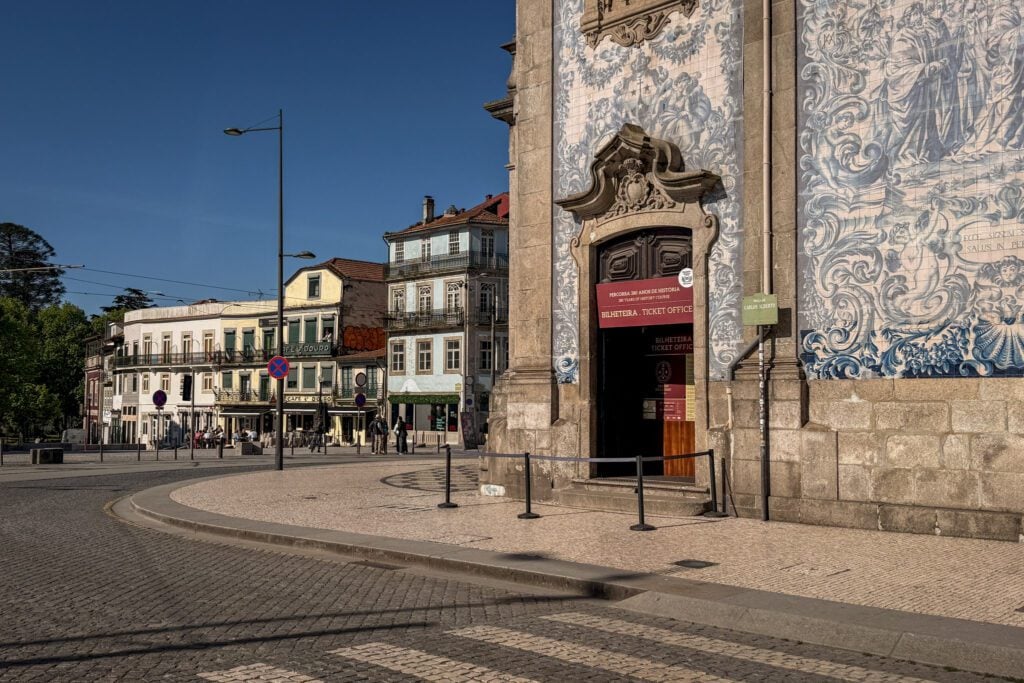
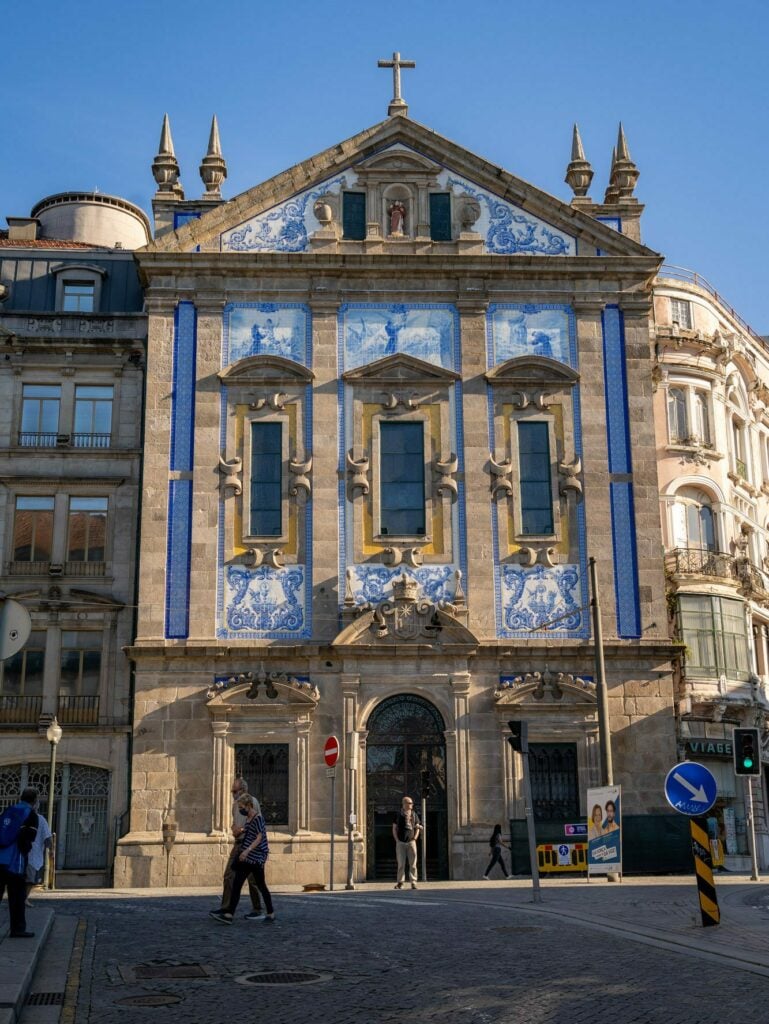
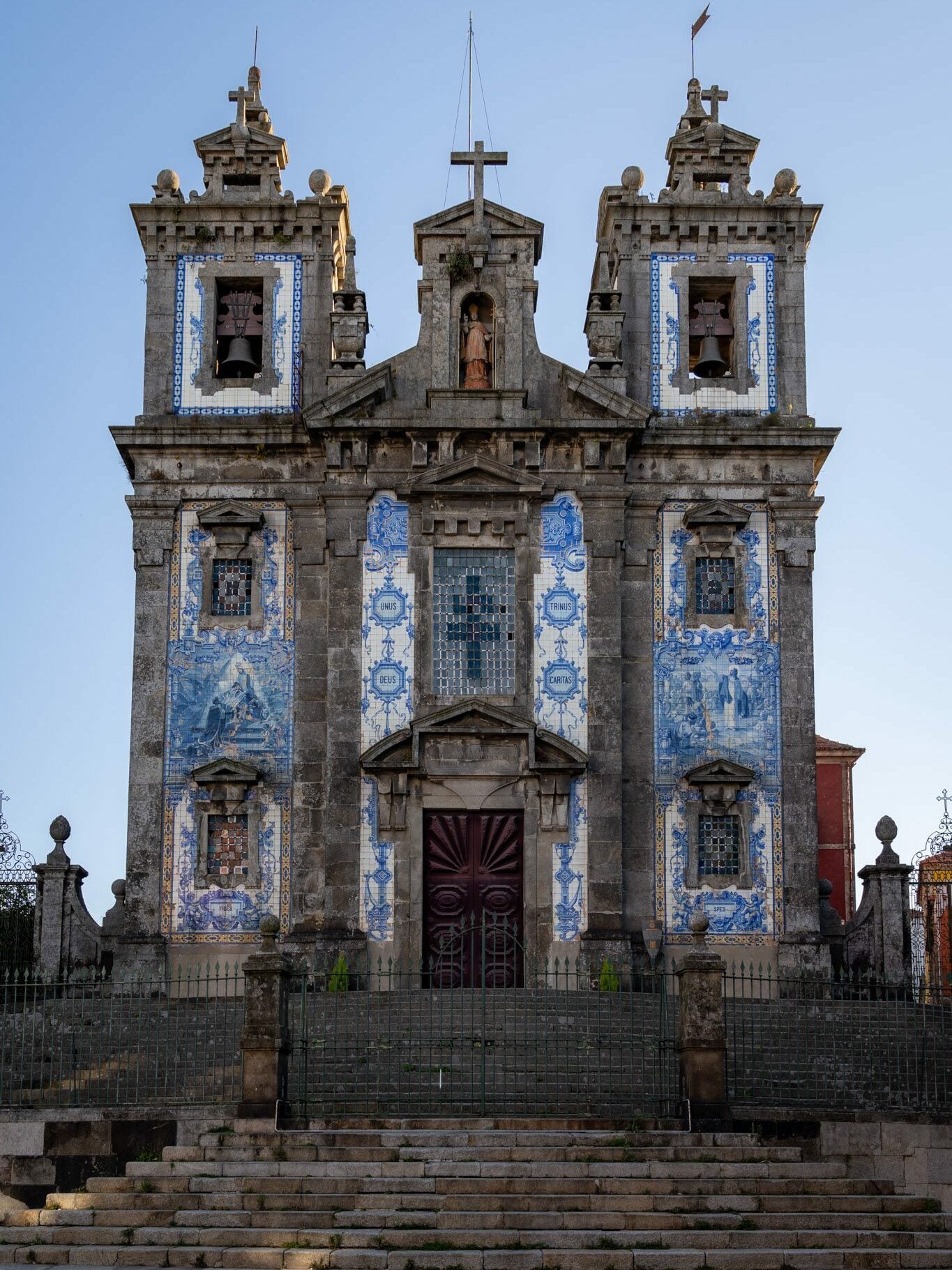
Porto is a city that is just full of azulejos, the picturesque blue and white tiles that are usually used as a sort of mural, telling a story of some kind related to Porto’s history.
You’ve already seen several examples, like the ones at the cathedral and the train station, but there are plenty more where that came from, if you’re interested.
Capela das Almas – This small chapel is famous for its striking blue and white tiles painted with scenes from the lives of saints. The church has become one of Porto’s most photographed landmarks. You’ll find it here in the Bolhão district.
Igreja de Santo Ildefonso – A baroque 18th-century church at the top of a hill in Old Town with azulejo blue and white painted ceramic tiles. Find it here close to São Bento Train Station.
Igreja dos Carmelitas & Igreja do Carmo – These two connected 16th-17th century churches feature orate granite facades with beautiful tiled walls. The lavish Baroque and Rococo style interiors of Igreja do Carmo are worth visiting too. The twin churches can be found here.
Casa do Infante
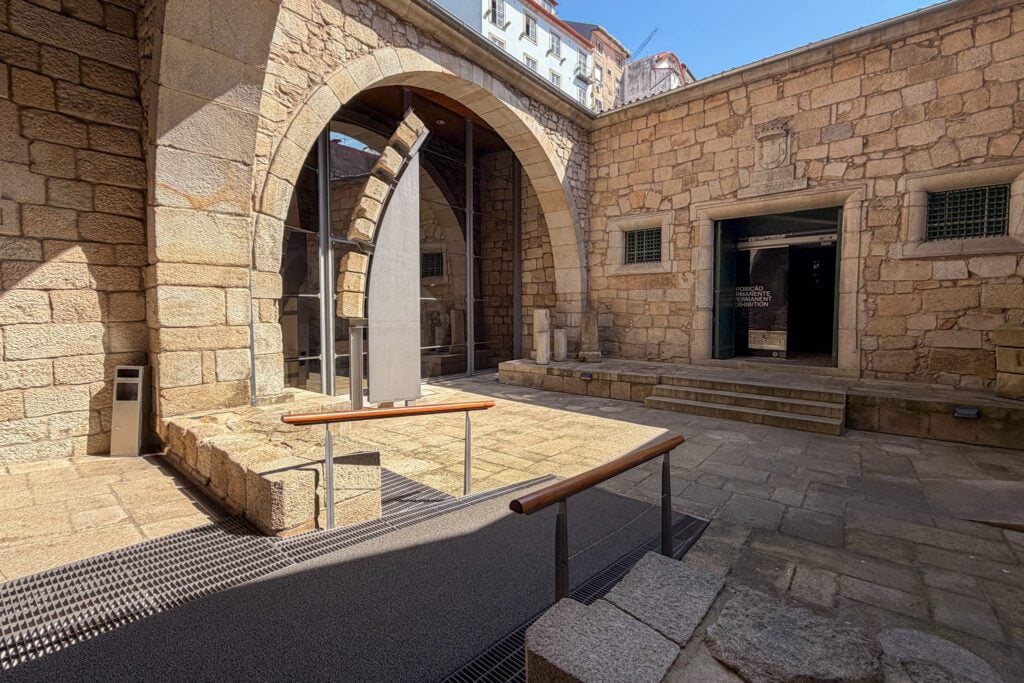
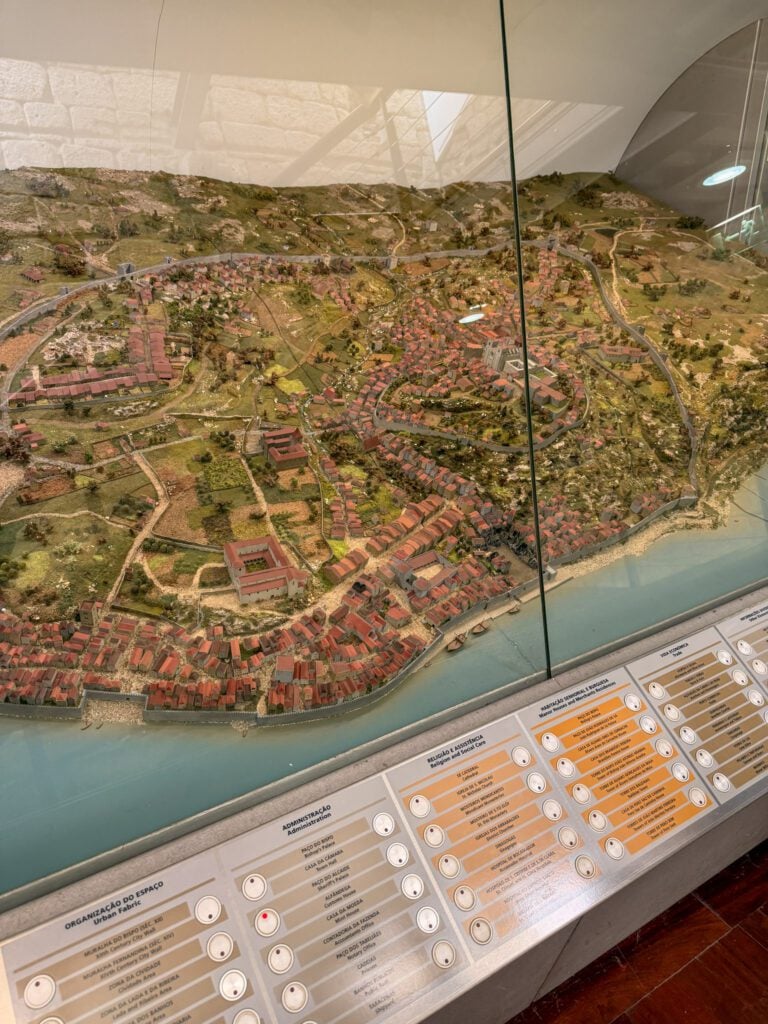
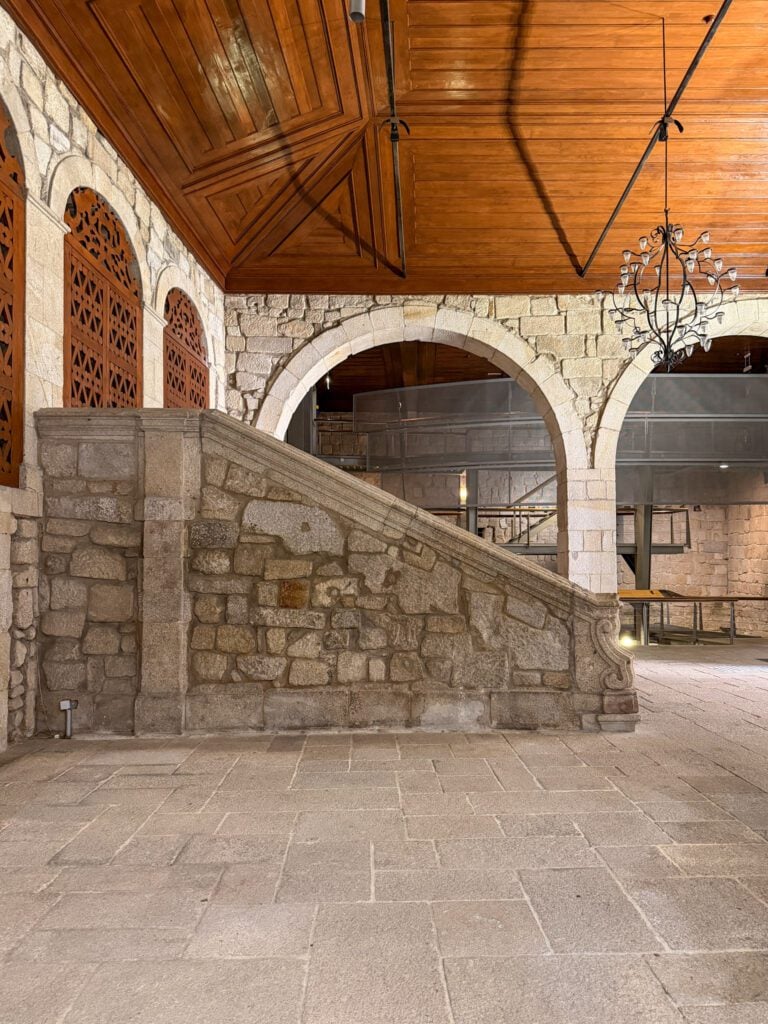
This is a compact little history museum located in the former custom’s house (built in the 1300’s!) down in Ribeira.
that we really enjoyed because it tells the story of Porto, Henry the Navigator (who, spoiler alert, wasn’t a guy that went on any explorations, he just financed them from his comfortable home in Porto), and more.
The real hero here, though, is the fancy 3D map with the laser pointer that shows you the original walled city, the expansion of the city a few centuries later, and all of the points of interest, which you can ask it to explain to you (in English) as the laser points out what it’s explaining on the map.
It’s a very cool way to bring the history to life, and we spent a good 15 minutes just standing there listening to the tidbits about the city.
What to Do with Less Time in Porto
If you have less than three days, the first thing we’d suggest is cutting the day trip to the Douro Valley. It sucks, because it was a fantastic experience, but there’s plenty to do for two days in the city itself.
If you have exactly two days, it’s easy: we’d follow the first two days of the itinerary above as written.
If you have less time than that, the first thing we’d probably cut is the port tasting at a port house in Vila Nova de Gaia simply because it’s relatively far from the center of Porto and takes some traveling to get over there.
There are other opportunities to try port while you’re in town.
Where to Stay in Porto
To set yourself up for three days exploring the city, you’ll want to base yourself somewhere pretty central, especially if it’s your first time.
We have an entire detailed guide to choosing where to stay in Porto.
For more detail, head over there and read that, which has an in-depth guide to each neighborhood we’d recommend with pros and cons, neighborhood highlights, and more.
But here’s the shorter version, if you’re short on time.
You want to be within walking distance of the majority of the main landmarks, plus a good selection of restaurants and bars, and the city’s main transportation hubs (for your day trip to the Douro Valley on day 3).
A lot of people (including us in the past, to be fair) think that Ribeira – the area along the north bank of the Douro River – is the best place to stay.
They’re not necessarily wrong, but it’s not ideal because that area is always packed with tourists, and the food and drinks there are going to be pretty expensive for the quality of food you’re getting.
After spending more time in Porto, we realized that we never really felt the urge to go down there for food, coffee, or drinks, and if you stay down there, you’re going to have to walk up a steep hill to get anywhere else in the city.
Instead, we’d stay at the top of the hill to maximize your walkability.
Our top recommendation is the area near Torre dos Clérigos, which is to the west of Porto’s main central plaza (Avenida dos Aliados, where city hall is located) and is where most of our favorite places to eat and drink are found.
If you want a hotel, stay at Hotel Moon & Sun (my mom stayed there and liked it), or in one of the cute studios at Gharb right around the corner from the tower.
We stayed at Look at Me Apartments near Trinidade Station (good connection to the airport) on our last trip and it was perfect.
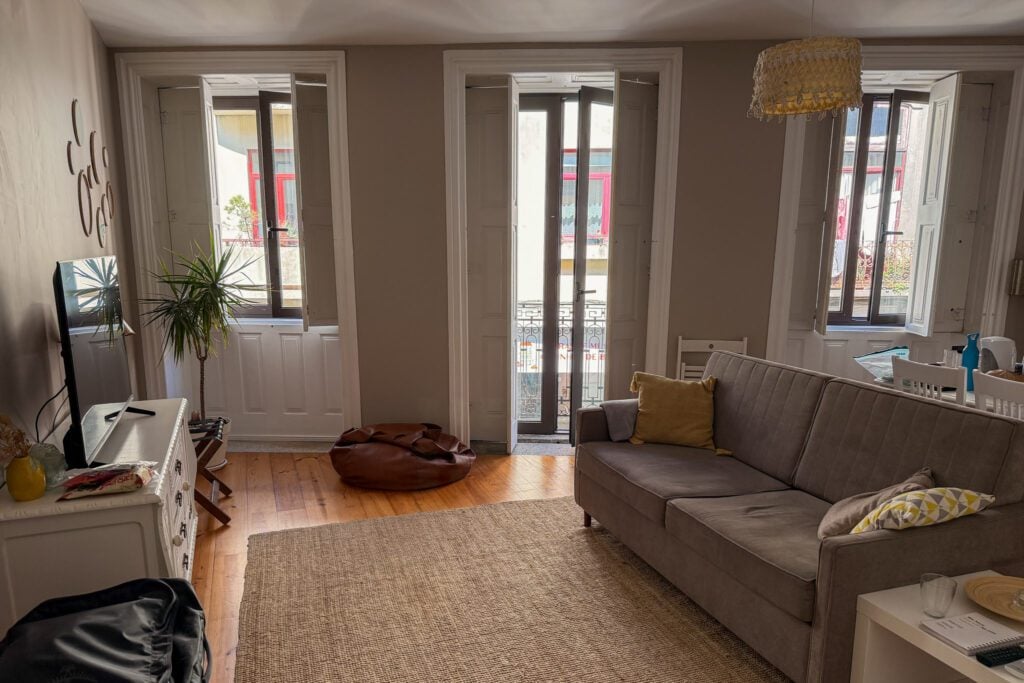
We walked almost everywhere, and the transit connections right outside the station are great for getting to the waterfront or Vila Nova de Gaia.
The best value in the center of Porto is the area near Bolhão Market on the east side of Aliados.
It’s equally walkable to the first area, but slightly less hip and happening, so the prices are going to be a little lower.
If you’re on a budget, look at Hotel Spot Family Suites, which has a variety of comfortable (but not flashy) rooms in a nice location, with some layouts that work for groups of three or four (or families).
We like the beautiful apartments at Village by BOA, which have been renovated in an old housing cooperative, and think Thomaz Palace might be the single nicest place to stay for a group or family in the entire city (they have multiple spacious two bedroom units, which is pretty rare).
Planning a trip to Portugal? We’d LOVE TO HELP!
Here are our other Portugal travel guides to help you plan an incredible trip (even if you have to eat gluten free!).
If there’s no link below, it means we’re still working on it – long, in-depth guides take time! We’re working on it, though, we promise.
Portugal:
- Exactly How to Spend One Week in Portugal (for First Timers)
- 10 Days in Portugal: Planning the Perfect Portugal Itinerary
- 2 Weeks in Portugal: A Perfect 14 Day Itinerary for First Timers
Lisbon
- 25 Incredible Things to Do in Lisbon: A Complete Guide
- 3 Days in Lisbon: Planning the Perfect Lisbon Itinerary
- One Day in Lisbon: The Best of Lisbon in 24 Hours
- Where to Stay in Lisbon: Our Guide to 4 Amazing Places to Stay
- Gluten Free Lisbon: A Complete Guide to Lisbon’s Best Gluten Free Restaurants
- The Best Coffee in Lisbon: 9 Amazing Lisbon Coffee Shops to Add to Your List
Porto:
- All of our Favorite Things to Do in Porto
- 3 Days in Porto: Planning the Perfect Porto Itinerary
- One Day in Porto: How to See the Best of Porto in a Day
- Where to Stay in Porto, Portugal: The 3 Best Places to Stay
The Algarve:

Just started looking at Porto for 4 days and your site appears very detailed and helpful. I’ll be using it more as planning progresses. Many thanks. Stuart
Cheers Stuart! Thanks for the kind words, let us know if you have any questions.
We’ll travel to Porto in 1 week and your site is VERY VERY helpful.
Thanks a lot!
Cheers
Ollie
You’re welcome Ollie! Glad you found it helpful. Hope you enjoy your time in Porto!
Hi – great guide! Are all of the recommendations you lost here (for bifana, pastel, etc) gluten free/coeliac safe?
Unfortunately not.
I’m still working on my gluten free guide to Porto, but here are my recommendations:
There are two dedicated gluten free bakeries, one in the center (Com Coure) and one over on the hill in Gaia (Padaria Celícias).
Sadly, Com Cuore is…not great, in my opinion. They do have all three things you listed, but we were fairly disappointed in the pastel de nata (it’s also worth noting that it’s cash only). This is the only place to get a gluten free bifana that I know of, though.
However, Padaria Celícias is the best gluten free pastel de nata I’ve ever had, along with plenty of baked goods, sandwiches, quiche, etc etc. If you’re a gluten free foodie, I’d strongly recommend hopping on the bus to get out there because it’s worth it, it’s the best gluten free bakery I’ve been to in Portugal.
For a gluten free francesinha, go to Tasquinha do Bé (not 100% gf, but good knowledge of allergies and highly rated on FMGF).
Hope that helps!
Thank you so much, that’s perfect! My partner is coeliac and we’re both huge foodies, but finding places that accommodate both requirements is particularly tricky. Much appreciated 🙏🏼