
2 Weeks in Portugal: A Perfect Itinerary for First Timers
Portugal will always hold a very special place in our hearts because, in many ways, it represents the birth of this very website as it exists today.
Portugal was meant to be the first stop on our first big international trip that we did after betting it all on this corner of the internet, leaving our jobs and apartment to do some long term traveling.
When did we make that big bet? February of 2020. Travel wasn’t exactly booming at that time, was it?
Fast forward a couple of years and we had finally made it happen and set down in Portugal.
It was magical.
Great food, great wine, beautiful architecture, warm people. What more could you want?
On that trip, we spent a month exploring the corridor between Lisbon and Porto and the Algarve, and we’ve been back a few times since to explore different corners of the country.
If you’re planning a trip to Portugal with two weeks to explore and you’re not sure where to start, this guide is for you!
We’re going to give you our version of the best way to spend two weeks in Portugal for the first time all based on our own experiences over the course of our multiple trips in the past few years.
In this guide to planning your trip to Portugal, here’s what we’re going to cover:
- Exactly how to plan out your 14 day trip, including what stops to make, what route to take, and all the important logistics you need to know
- A guide to what to do, where to stay, and how to get there for each stop on the itinerary
- Options for shorter and longer trips if you have more or less time in Portugal
Throughout the guide, we’ll share our favorite finds and experiences in Portugal based on our multiple trips to help you plan your unforgettable trip.
Sound good to you? Let’s get into it.
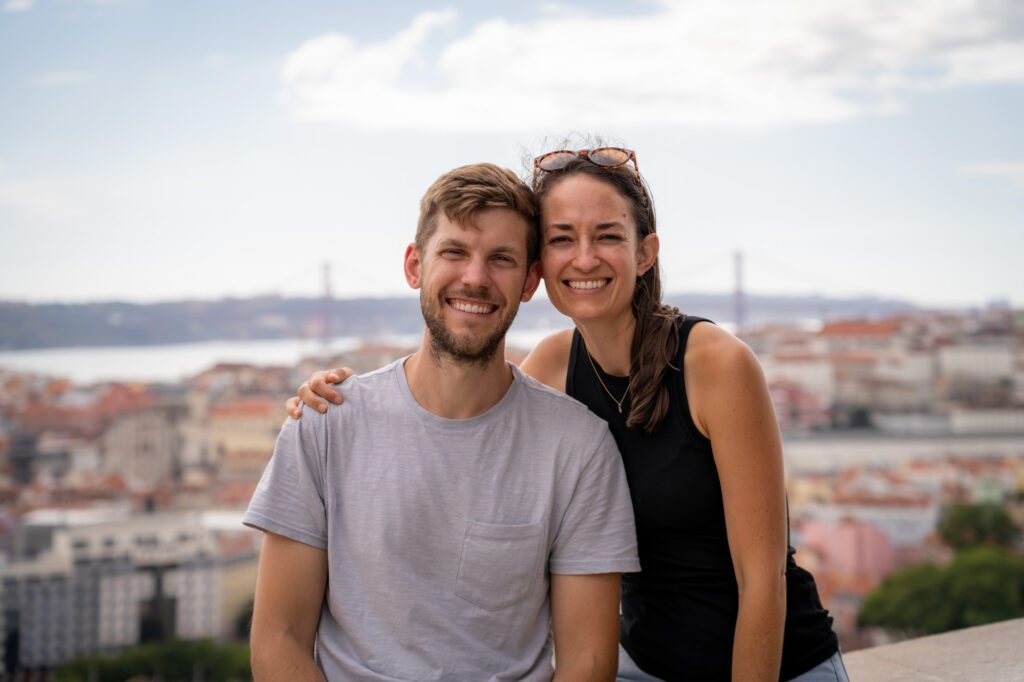
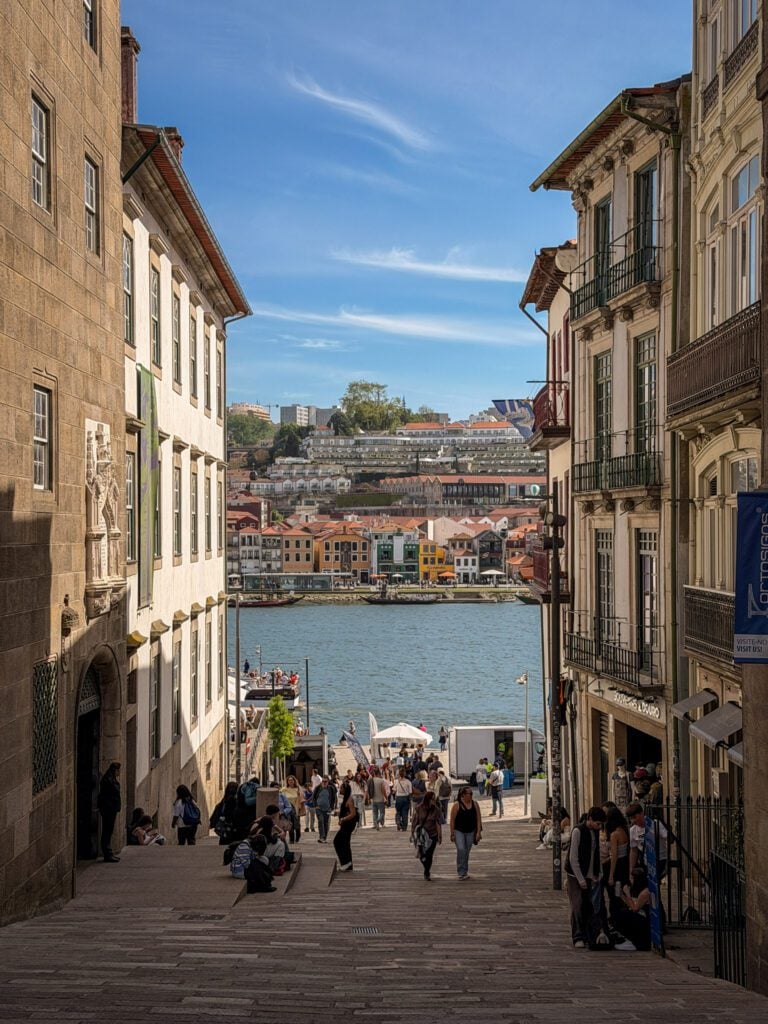
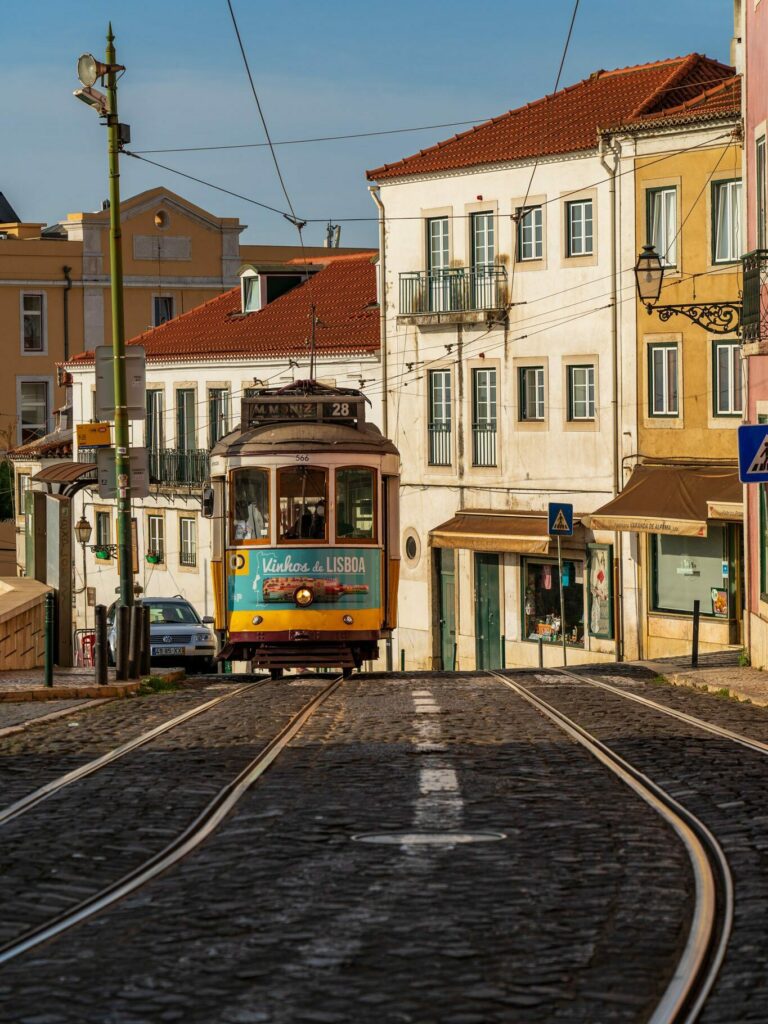
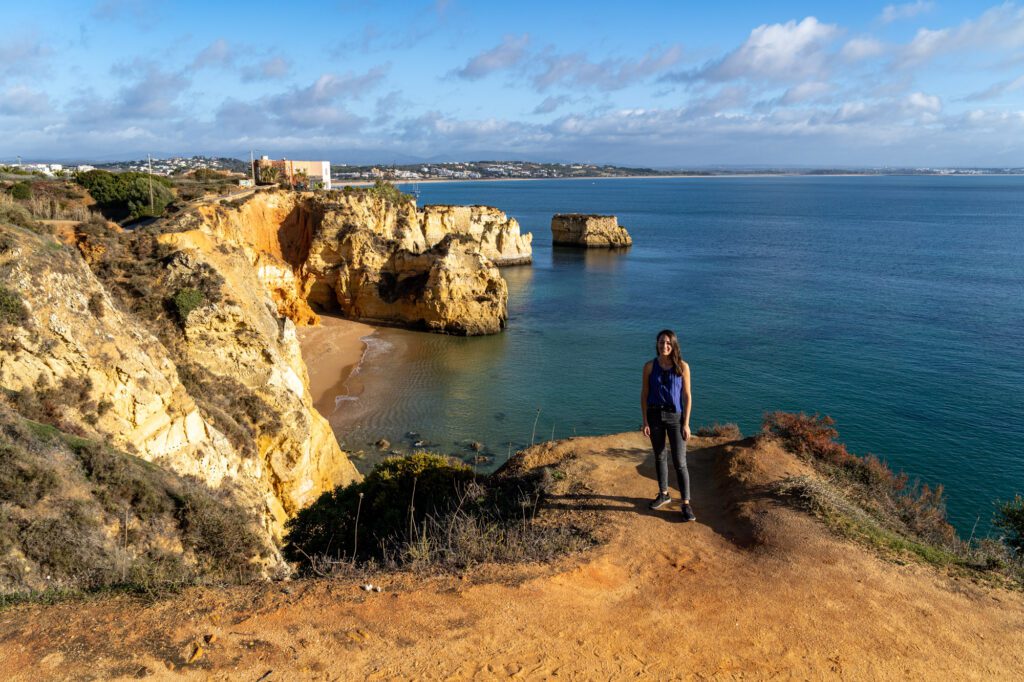
Disclaimer: Some of the links in this post, like hotel links, are affiliate links, meaning at no additional cost to you, we make a little bit of money if you click through and book. That being said, we would never recommend something to you that we don’t stand behind 100%.
What Can You See with Two Weeks?
The first thing we should do here is set expectations for what you’re going to find in this itinerary, because it is very much NOT a “one city per day to cram it all in” situation.
Generally speaking, we highly recommend spending no less than two or three days in a city at the very least.
Mostly because packing your bag and moving every day or two is exhausting, and is not a particularly pleasant way to travel (especially with check in and check out times, which can mean you’re losing precious time on your trip just waiting around).
We like to break mainland Portugal into four chunks when we’re talking about parts of the country that visitors might want to include on their itinerary.
Those four regions are Lisbon (and around), Porto (and around), the corridor between Lisbon and Porto, and the Algarve.
Whatever you do, make sure you save a day for a trip out to the Douro Valley from Porto, which is beautiful and a unique wine region just east of Porto.
We did this guided wine tour and it was the highlight of our entire three month European adventure.
Obviously, there are other parts of Portugal that are absolutely worth visiting – the islands (the Azores and Madeira), for example – but if it’s your first time, we think you should focus on these four.
With two weeks, we do think that you can see all four of those regions without too much rushing around.
We would say that, if you want to do the islands, we’d swap out the Algarve and keep the Lisbon and Porto sections of your itinerary intact.
There is one complicating factor to keep in mind from the beginning, and that is the fact that you really need a car to make the most of both the Algarve and the stretch between Lisbon and Porto.
Whether or not you choose to rent a car (you might be hesitant to deal with driving in a foreign country, which we totally understand) has some pretty major implications for how you lay out your itinerary, which we’re going to get into in the “Getting Around” section in a second.
In this guide, we’re going to assume that you are okay with renting a car, and we’re going to structure the itinerary so that you only have to rent a car once, keeping it for about a week (rather than picking it up and dropping it off multiple times over the course of two weeks, which sounds awful).
If you don’t want to rent a car, we have plenty of suggestions on how to modify the itinerary, which we’ll sprinkle throughout.
Where to Start and End Your Itinerary
The ideal version of this itinerary involves booking an open-jaw flight, which means a flight that arrives in one city and departs from another, that arrives in Porto and departs from Lisbon.
This will avoid about a half day of backtracking that you’ll have to do if you book a round trip flight.
To find those flights, you just need to do a “multicity” search on whatever website you’re using to search for flights.
You’ll want to book your flight to arrive in Porto’s main airport, Francisco Sá Carneiro Airport (OPO).
From the airport, it’s an easy ride on public transportation into the city center, and there are plenty of flights every day (though if you’re coming from North America, you’ll likely need to connect on the way).
At the end of your trip, you’ll want to fly out of the biggest airport in the country, Humberto Delgado Airport (LIS).
Lisbon’s airport is surprisingly close to the city center, which is a rarity in old European cities, and is well-connected through the metro.
If you’re doing a round trip flight arriving and departing from Lisbon, we’d simply change the order so that you start in Lisbon, take the train to Porto, and then make your way down to the Algarve.
This does mean you’ll need to drive back from the Algarve to the airport in Lisbon to catch your flight home, which takes several hours and might require an early wake up call to make your flight (which is why we highly recommend the open-jaw flight arriving in Porto and leaving from Lisbon).
Getting Around Portugal
This is an important section for this particular itinerary, because a lot of your planning is going to hinge on whether or not you want to rent a car, which is essential for making the most of your time in both the stretch between Lisbon and Porto and the Algarve.
We usually don’t recommend renting a car in Europe if you can avoid it, mostly because high speed rail connections between cities are plentiful, affordable, and efficient.
Which, to be fair, is true between major cities in Portugal (like between Porto and Lisbon).
However, there are two problems with trying to do the Algarve and places like Óbidos and Nazaré without a car.
First, getting there is going to be tougher. There are limited high speed train connections (if there are any at all), and the buses and regional trains are relatively slow and inefficient.
Second, many of our favorite sights in those two places are not all that accessible via public transportation.
Even if you do arrive in those places on the bus, you’re still limited on what you’ll be able to see while you’re there without a car.
Our recommendation is to rent a car at the Porto Airport as you leave Porto to head south, keep it through the middle of the itinerary in Óbidos and the Algarve, and then return it when you arrive in Lisbon (at the airport, which is usually the best option).
In terms of rental car companies, our STRONG recommendation is to rent with a multinational corporation rather than a smaller local operator.
It sounds counterintuitive based on everything we believe, but the reason is simple: the bigger companies, in our experience, are less likely to try and nickel and dime you for everything and have more reliable fleets.
For what it’s worth, we’ve rented with Europcar twice in Portugal, and we had good experiences both times (we’ve also used them in Spain, Italy, and France, and they’re our top recommendation).
We like to use Discover Cars to check prices across different providers because they allow you to filter for things like Automatic Transmission and different companies (as we mentioned, we’d stick to the bigger companies).
An important note: You DEFINITELY don’t need (or want) a car while you’re in either Lisbon or Porto.
We’d recommend picking up your car as you’re leaving Porto on day 5, and then dropping it off as you’re arriving in Lisbon on day 11 (which is how we have the itinerary laid out below).
A Perfect 14 Day Portugal Itinerary for First Timers
With the important logistics out of the way, let’s get into the itinerary.
Here’s what the itinerary you’re going to find below looks like written out.
- Day 1: Porto
- Day 2: Porto
- Day 3: Day Trip to Douro Valley (Stay in Porto)
- Day 4: Óbidos (Pick up Rental Car)
- Day 5: Óbidos & Around
- Day 6: Óbidos & Around
- Day 7: The Algarve
- Day 8: The Algarve
- Day 9: The Algarve
- Day 10: The Algarve
- Day 11: Lisbon (Drop off Rental Car)
- Day 12: Lisbon
- Day 13: Lisbon + Day Trip to Sintra
- Day 14: Lisbon
Obviously, you’ll have to massage this itinerary a little bit to make it work with your specific flights and dates.
We’re assuming you have 14 full days in Portugal, not including the half days that would be dedicated to your arriving and departing flights.
Here’s what this itinerary looks like on a map so you can visualize the amount of ground you’re covering.
There is a LOT to see in Portugal, and we have plenty of ideas on how to make changes to this itinerary.
You’ll find those below the main itinerary in sections about what to do with more or less time in Portugal.
One note here: We went to Aveiro on our way from Porto to Óbidos after reading multiple times that it’s “the Venice of Portugal” due to its canals. That is, perhaps, the most uncharitable (to Venice) comparison I’ve ever seen.
It’s not like Venice. At all.
It’s a modern city that they carved a few canals through and called it a day. Not a city that was shaped by the fact that it was built in a lagoon and required canals to get around.
We’d skip it and spend your precious time elsewhere (although we did enjoy the coast just to the west near Praia da Costa Nova, here on Google Maps).
Days 1 & 2: Porto
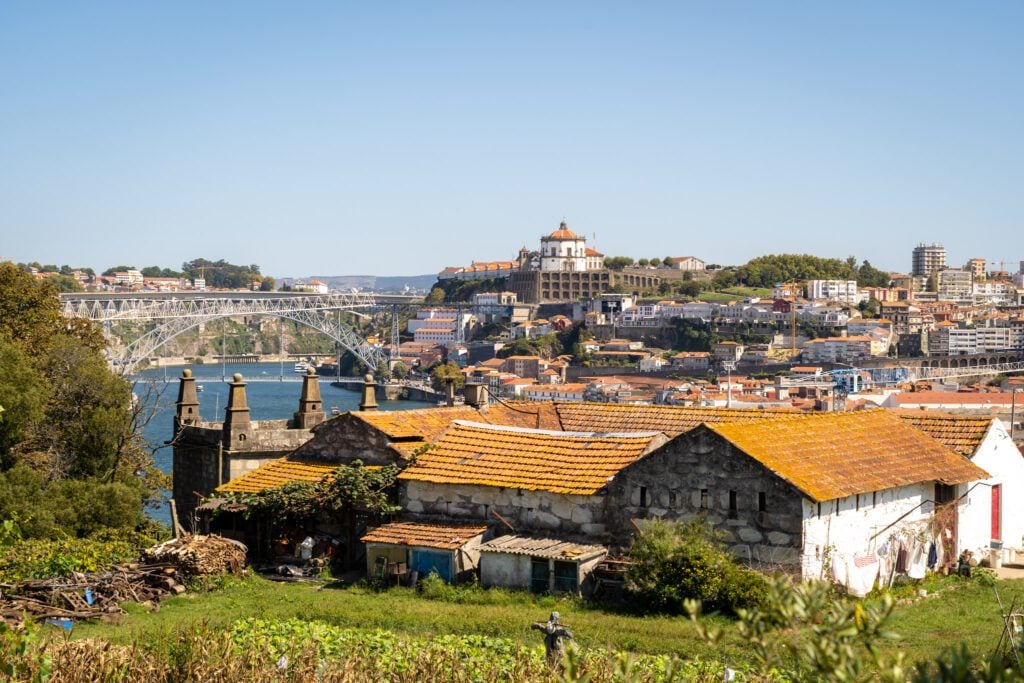
We like the idea of sandwiching your time in Portugal with time in the country’s two biggest cities, Porto and Lisbon, because they look and feel so different, at least to us.
Lisbon, the country’s capital, and it feels more grand in scope and scale, and more aristocratic in terms of the people there.
Porto is Portugal’s second city, and the vibe feels much younger and laid back than Lisbon, kind of like the difference between San Francisco and New York City.
People from Porto will eagerly tell you that northern Portugal is the original Portugal that existed before the conquest of central and southern Portugal from the Muslim Caliphates that ruled there for centuries.
Which is true – the County of Portugal (or Portucale) was originally founded in the area around Porto.
We love the dichotomy that you find in Porto.
As we mentioned, the city has a much more youthful, progressive feeling than Lisbon, but when you take a second to look around, the city feels much…older. Especially around the river, where there are parts of the city that legitimately feel medieval.
That’s mostly because Lisbon essentially crumbled to the ground a few hundred years ago, while Porto largely survived that same event unscathed (much more on this in the Lisbon section).
Porto is a lovely place to spend a few days, and is a worthy introduction to the country as a whole.
Whatever you do, make sure to save a day in Porto for a day trip out to the Douro Valley.
We did this excellent guided tour of the Douro Valley on our first trip to Portugal, and it was the highlight of our entire three month European adventure.
We can’t recommend it more highly – more information in a dedicated section below.
What to Do in Porto
Porto doesn’t really have any single major tourist attraction, like an Eiffel Tower or Colosseum, but there is plenty to do and see to fill a couple of days of exploring.
We’re going to give you a summary here, but we have two separate guides for you that you should read for more ideas on what to do and see while you’re in Porto.
First, our guide to our favorite things to do in Porto, which has a collection of all the things we’ve done in the city, and what we’d recommend.
Second, our guide to planning a 3 day Porto itinerary, which has our take on how to put it all together.
Take an introductory walking tour
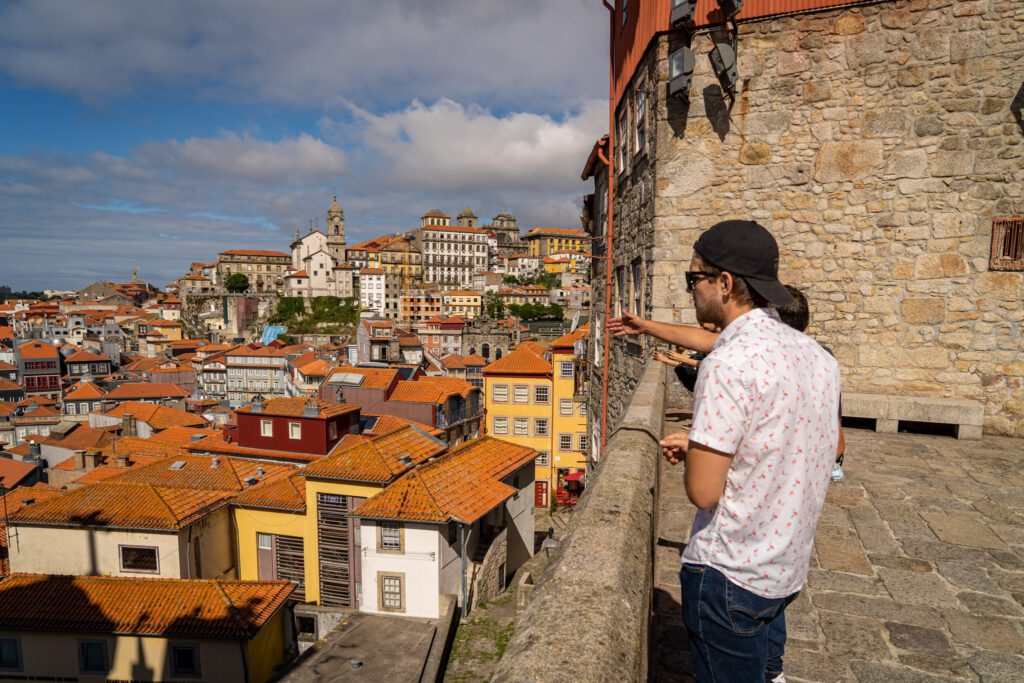
We love a good walking tour as a way to get oriented to a new city, learn about the history and culture, and get connected with a local who can give you tips and tricks on where to eat and drink.
We’ve done a few walking tours in Porto at this point, and we have two favorites that depend on what you’re looking for.
We really loved this history-focused tour with Carlota that we did on our last trip, which takes you from the cathedral to the area near Torre dos Clérigos over the course of a few hours. Good views and information about Porto along the way.
The other walking tour we’ve done is this customizable private tour with WithLocals, a company that we’ve done multiple tours with across Europe.
We like that you can choose from their guides based on your own interests, and that you can customize your itinerary with that guide. It’s a private tour, so it generally works best for groups.
Take a Sunset River Cruise
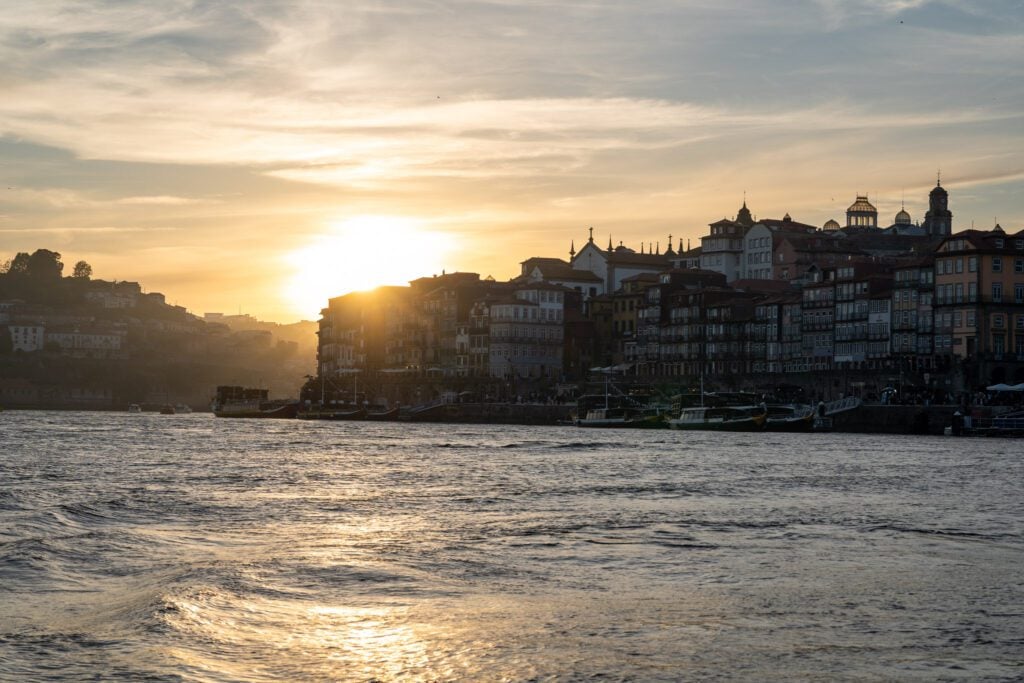
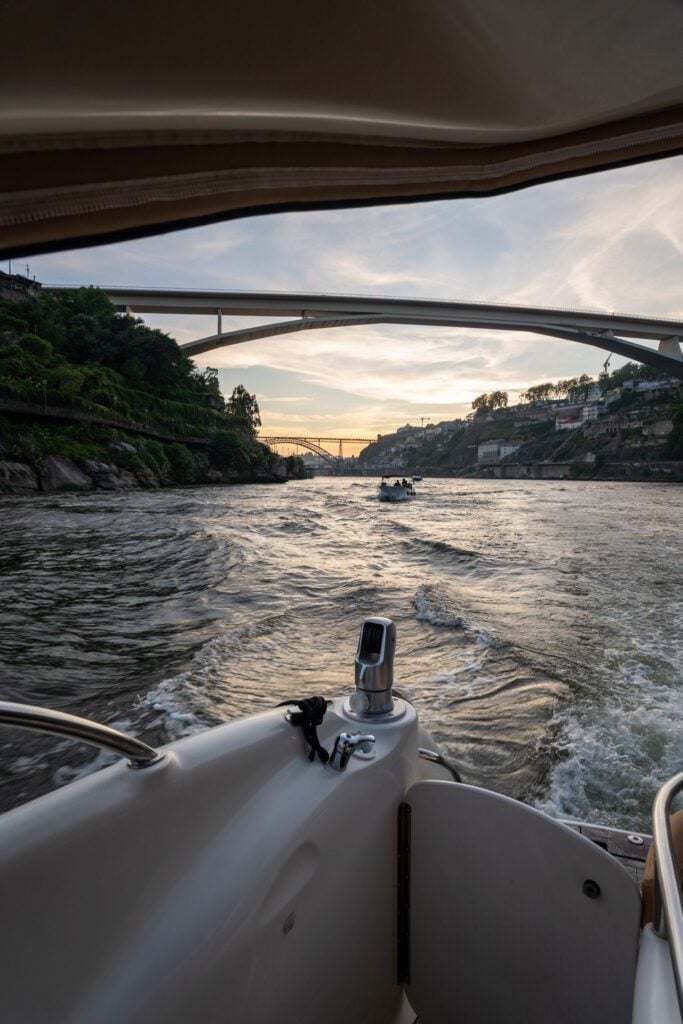
Another thing we have come to love in the past couple of years is an opportunity to see a city shaped by water, like Porto undoubtedly has been, from that water.
On our last trip to Porto we did this Douro river cruise that takes you all the way out to the mouth of the Atlantic, and it was a somewhat unexpected delight.
Local guides, local wine, and some great views along the way. Do it around sunset, which is what we did.
Visit all the Miradouros
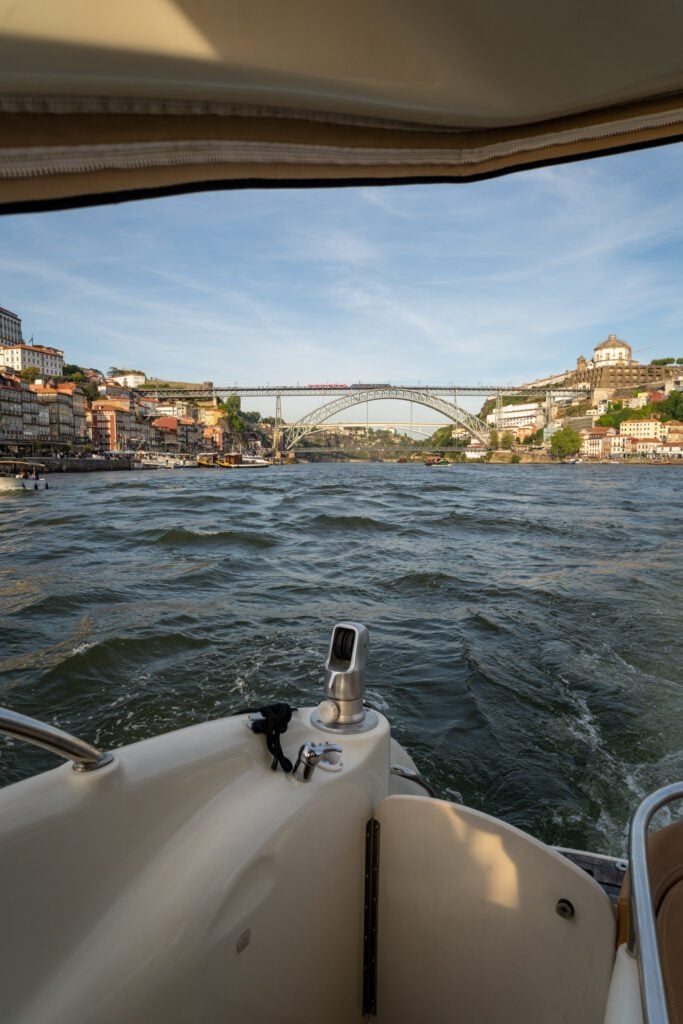
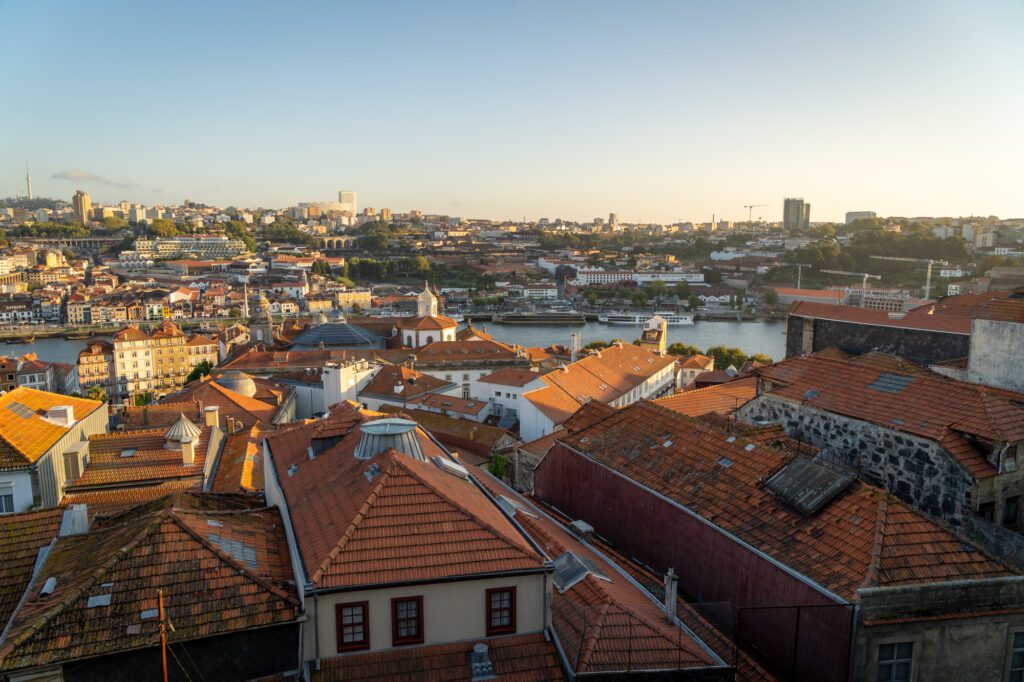
One of our favorite things about Porto is the fact that the city is set on a hill overlooking the river, which means there is no shortage of great viewpoints (miradouros, in Portuguese) throughout the city.
It does mean that you’re likely going to be doing some walking uphill during your trip, but it also means that there are some great views to be found, seemingly around every corner.
There are two miradouros in particular that we absolutely would not miss.
First is Miradouro da Vitória (here on Google Maps), which is at the top of the hill above Ribeira (the riverfront) and has a commanding view out to the south looking over the Douro River.

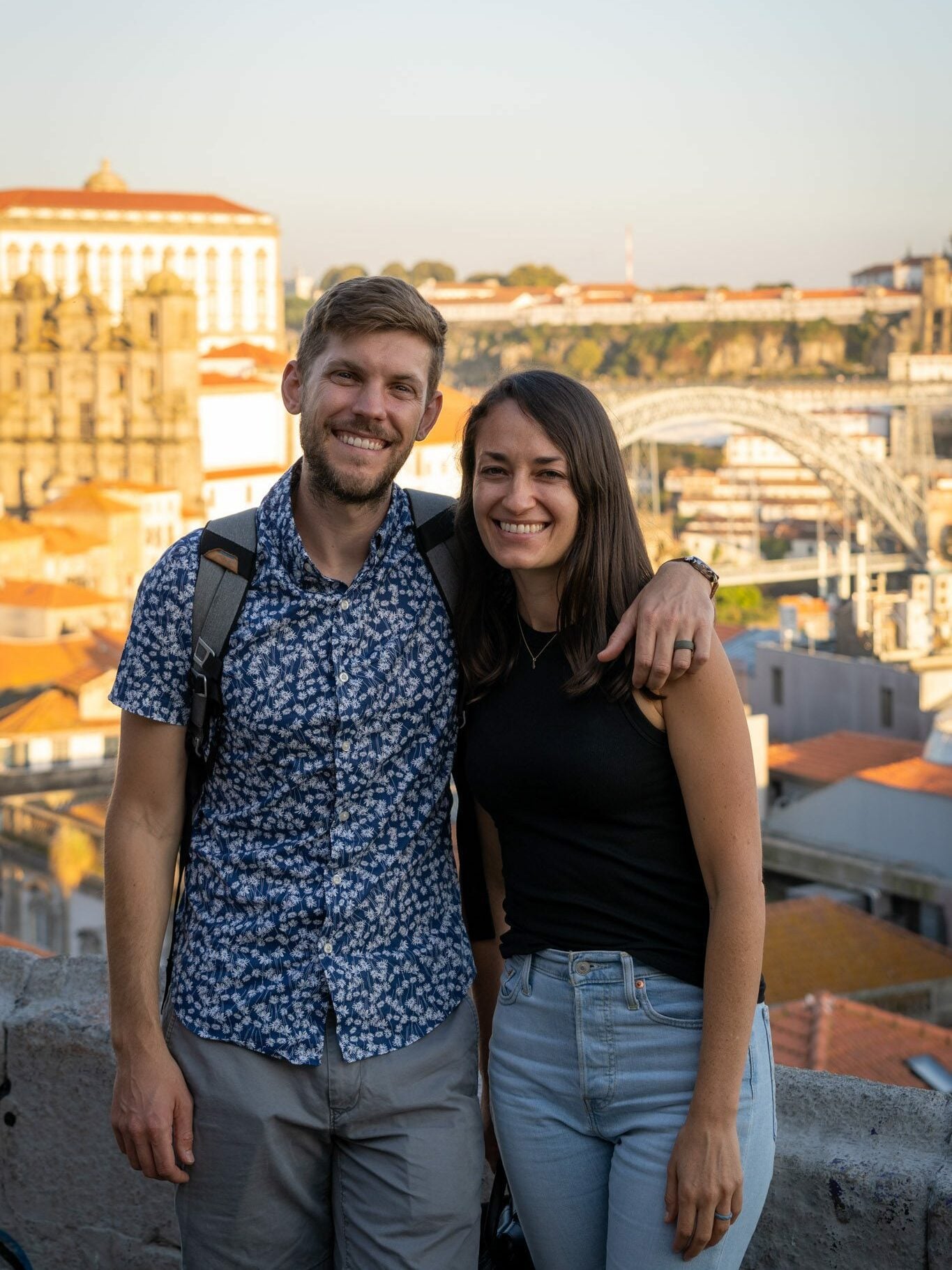
Second is Miradouro da Serra do Pilar (here on Google Maps), which is across the famous bridge, Ponte Luís I, over in Vila Nova de Gaia.
Tons of people come up here for sunset, but we actually like the view in the early morning, when you’ll have it to yourself, more or less.
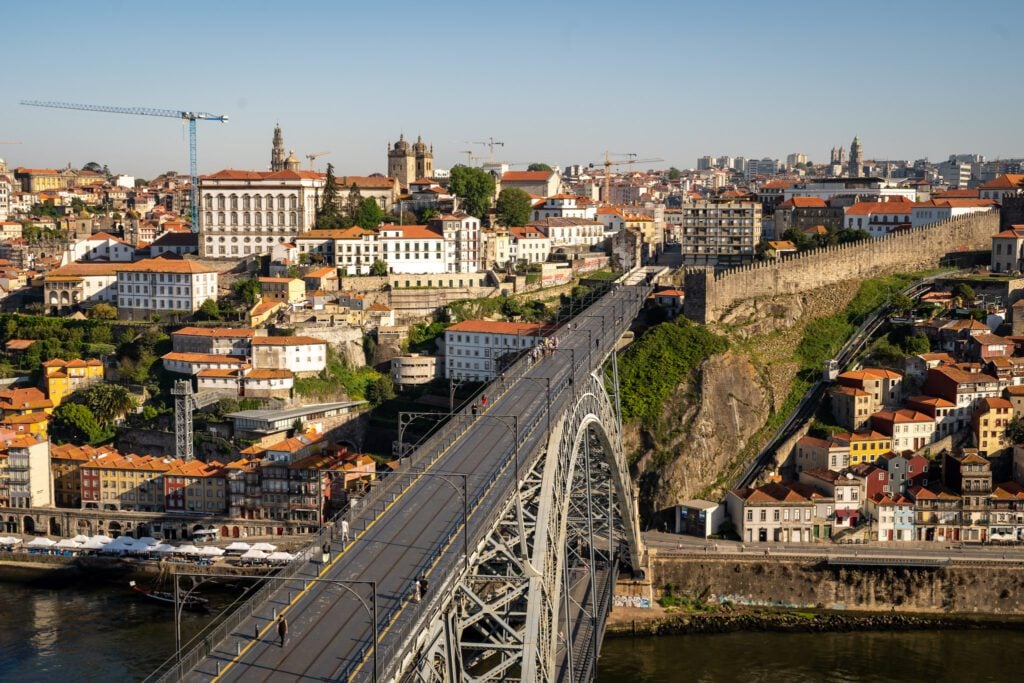
There are obviously many, many other miradouros around Porto, but those are the two that we absolutely would not miss.
Learn all about the world of port wine
Of all of its exports, Porto is probably most famous for port wine, a sweet wine that is made from grapes from the Douro Valley.
However, what you might not know is that port wine is not actually made in Porto, but across the river in Vila Nova de Gaia (it was for tax reasons) where all of the port houses currently reside.
It’s well worth taking an afternoon to learn about port – how it’s made, the history associated with it – and do some tasting.
To do that, we’d cross the river from Ribeira over the lower span of Ponte Luís I, and walk down Cais de Gaia to a port house.
There are tons of different port houses, but they all have British names like Taylor’s, Graham’s, and Sandeman’s.
That’s because port was discovered by the British during a period of dispute with the French that meant it was harder to get French wine, and they eventually invested heavily in the industry.
We’d book a tour of one of the port houses, which usually includes a short tour and a guided tasting of different types of port (including some fancier aged port). We did the tour at Graham’s and enjoyed it – you can book in advance here.
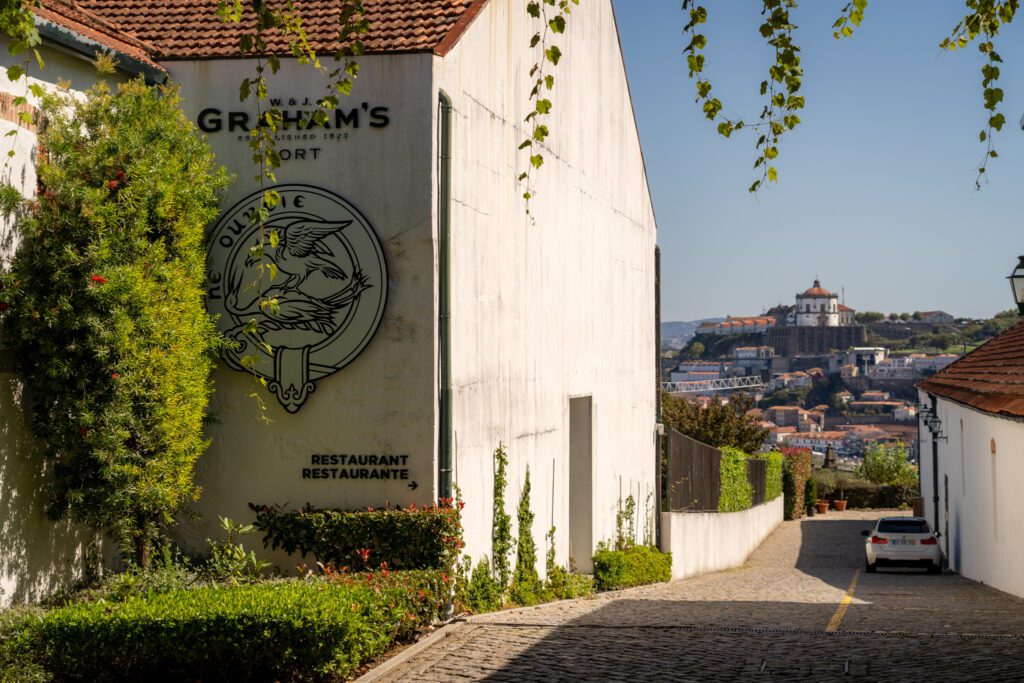


The alternative is to do this small group port tasting, which we had on our agenda on our last trip, but ended up skipping.
It will likely be more informative than the high level information you’d get at Graham’s, but means that you won’t get to see the barrels and cellars where the wine is actually made.
Dive deep into Porto’s food scene
One of the things that we think is underrated is the relationship between history and culture and the food scene of a given place.
What people eat tells you so much about a place, like who they were trading with and what kinds of people and influences were there over the course of thousands of years.
At a high level, there are three things we think you should eat while you’re in Porto; a bifana (at Conga), a francesinha (at O Afonso or Casanova if you want to try the vegetarian version) , and a pastel de nata (at local legend Castro).


If you’re interested in diving deeper into the food scene in Porto and northern Portugal, we’d highly recommend doing a food tour.
Given the fact that I have Celiac Disease, we didn’t do one ourselves (it would just be me salivating over everyone else eating delicious food, even though I’d love the history and stories part of the tour).
Instead, we sent my mom and her friend on this food tour with Isa when they were visiting Porto, and they loved it and would highly recommend it.
Check out some azulejos
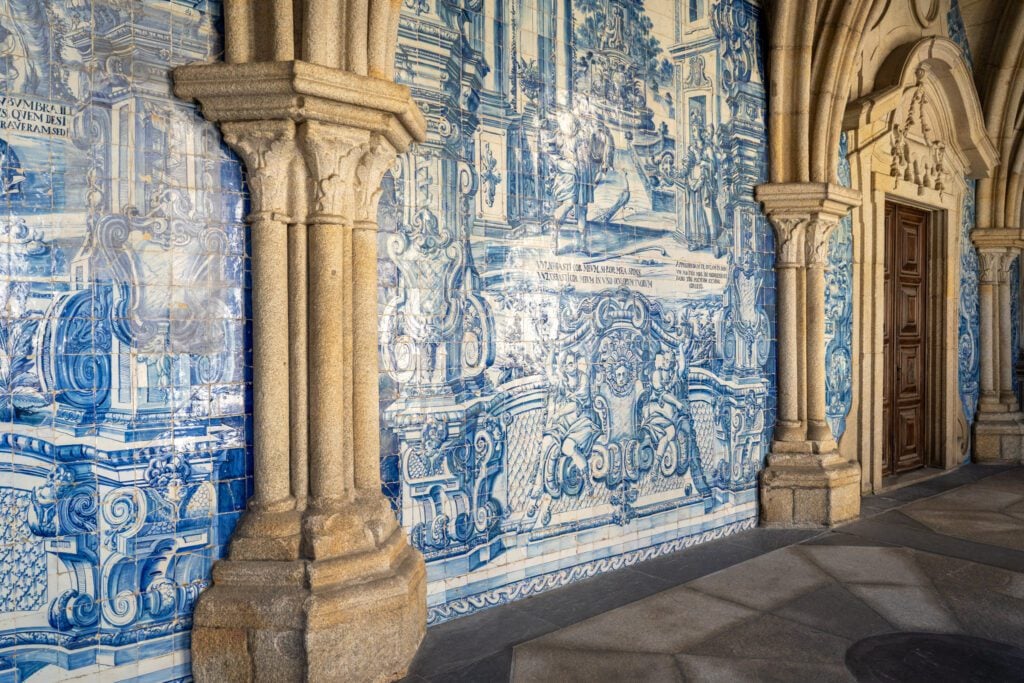
If you know one thing about Porto (or Portugal as a whole), it is probably related to the beautiful blue and white tiles, which are called azulejos and often tell a story.
It’s like a mural made of tile.
Porto, in particular, is an excellent place to see them, and there are multiple places where they are used to decorate the exterior walls of a church, which is both unique and visually stunning.
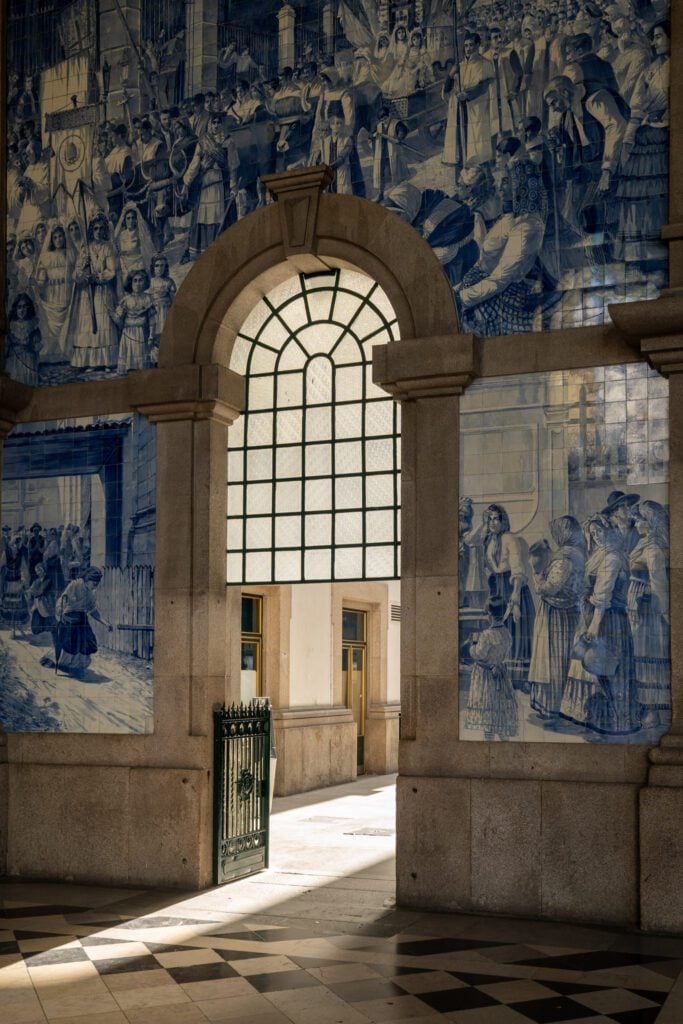
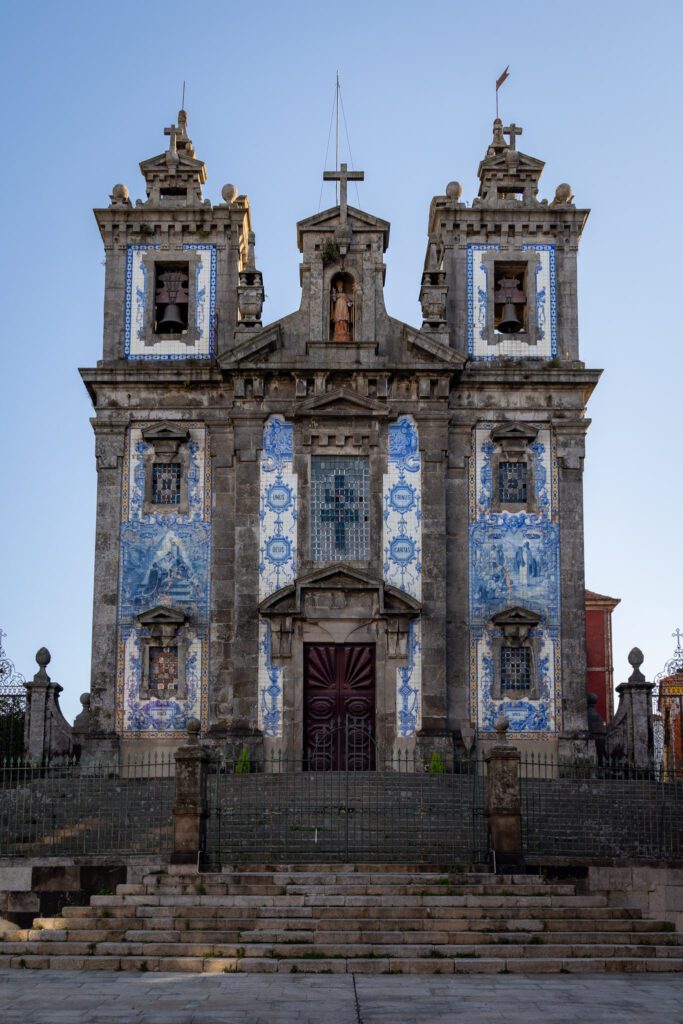
Here are a few places to see azulejos that we enjoyed. Again, there are plenty of other places to see them, but these are the three we’d prioritize.
- São Bento Train Station: In the inner entryway of the train station right in the middle of Porto, you’ll find what is perhaps the best collection of Azulejos in the entire city. The tiled murals from the early 20th Century show events from Porto’s history, and the station is a UNESCO World Heritage Site (that’s how special it is). Find it here on Google Maps.
- The Sé do Porto: Porto’s main cathedral was the unsung hero of our latest visit to the city. We kind of assumed that, based on the fact that the plaza outside is packed full of tourists because all the tour groups go there, it was overrated. That is, until we stepped inside and found the azulejo panels in the cloister, which are magnificent. Go early in the morning to avoid crowds. Find it here on Google Maps.
- Igreja dos Carmelitas & Igreja do Carmo: These two connected 16th-17th Century churches feature ornate granite facades with beautiful tiled walls. The lavish Baroque and Rococo style interiors of Igreja do Carmo are worth visiting too. The two churches can be found here.
Where to Stay in Porto
Porto is a relatively compact city, which means you’ll be able to walk almost everywhere over the course of your trip.
However, the big thing to know about Porto is that it sits on the northern bank of the Douro River, and the city is built onto a fairly steep hill.
The riverfront, known as Ribeira, is lovely (though it’s constantly packed with tourists), but the majority of things to do, see, eat, and drink are actually at the top of the hill.
To us, staying on top of the hill is the better option, and it’s what we’ve done on our two most recent trips to Porto.
We know that people do love staying in Ribeira, the neighborhood along the river, because it’s extremely charming.
However, it’s full of tourists (it’s like Fisherman’s Wharf in San Francisco or Times Square in NYC), and all of the businesses there cater to those tourists, rather than locals.
Which means prices at shops and restaurants are high, and quality tends to be relatively low.
There are two adjacent neighborhoods on top of the hill that offer slightly different experiences that we’d look at instead.
The first neighborhood is the area around Torre dos Clérigos, which is west of Aliados (the big plaza where Porto’s city hall is located) and has a much more residential feel to it. It’s charming, central, and walkable.
A bunch of our favorite places to eat and drink are in this slice of the city, including the best place to try a francesinha that was recommended to us (multiple times), O Afonso, and the best coffee shops in the city (So Coffee Roasters and Hakko, to name two).
If you’re looking for a hotel, my mom stayed at Hotel Moon and Sun on her recent trip to Porto (on my recommendation), and loved it. It’s a nice hotel, and the location is excellent.
If you want an apartment, we’d look at the beautiful studios at Gharb around the corner from the Torre dos Clérigos (great location!), or the comfortable lofts at Look at Me (which is where we stayed on our last trip, and it was a perfect home base).
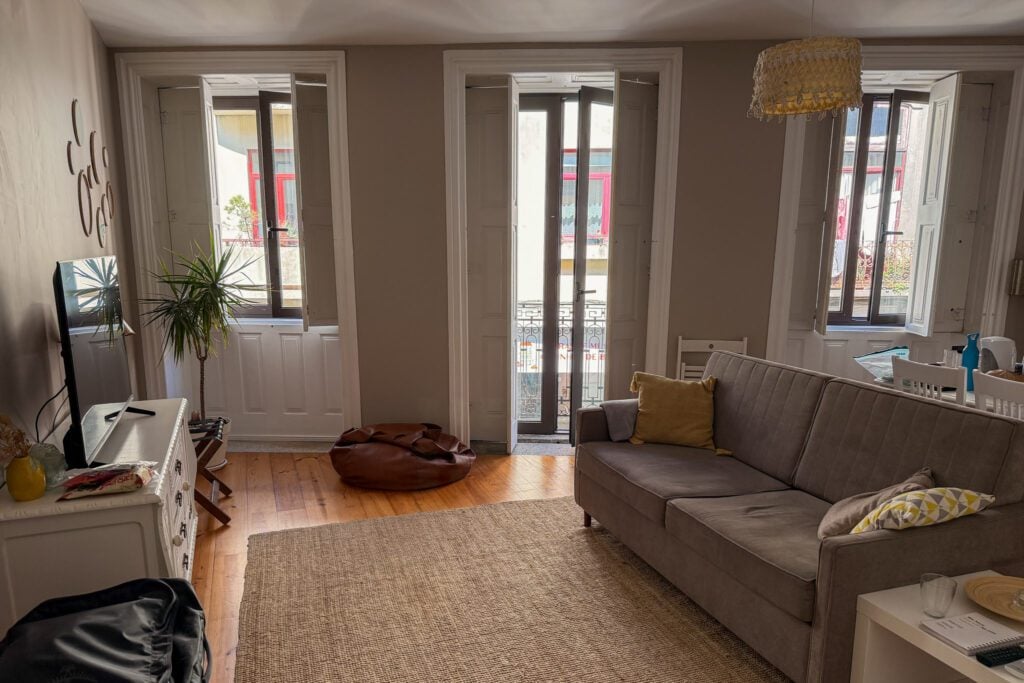
The second neighborhood is on the east side of Aliados, and it’s the neighborhood around the Mercado do Bolhão, Porto’s central market.
This area is going to lean a little more commercial, especially the area around Rua Santa Caterina (a major shopping street in the city), but it’s central and walkable, and tends to be cheaper than other parts of central Porto.
For what it’s worth, we stayed at these serviced apartments in a relatively quiet location on our first ever trip to Porto, and we’d recommend them.
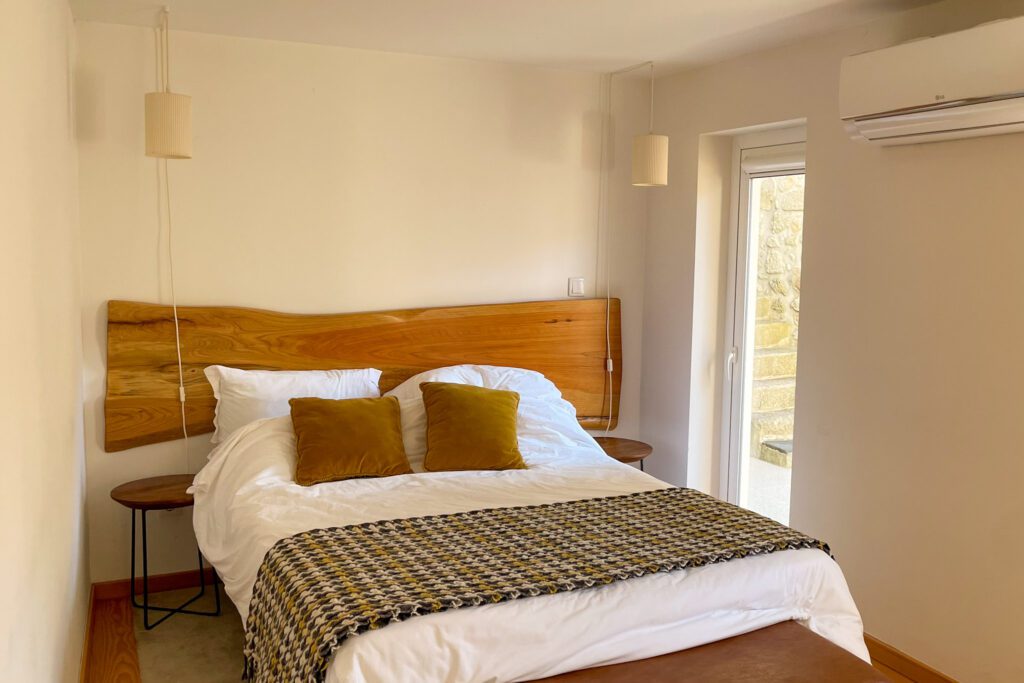
We also really love the apartments at Village by BOA, an old housing cooperative that has been renovated into a nice aparthotel, which is probably where we’ll be staying on future trips.
We have an entire guide dedicated to the best areas to stay in Porto (and how to choose one for your trip), which you should go read for far more detail than we can fit in this summary.
Day 3: Day Trip to the Douro Valley
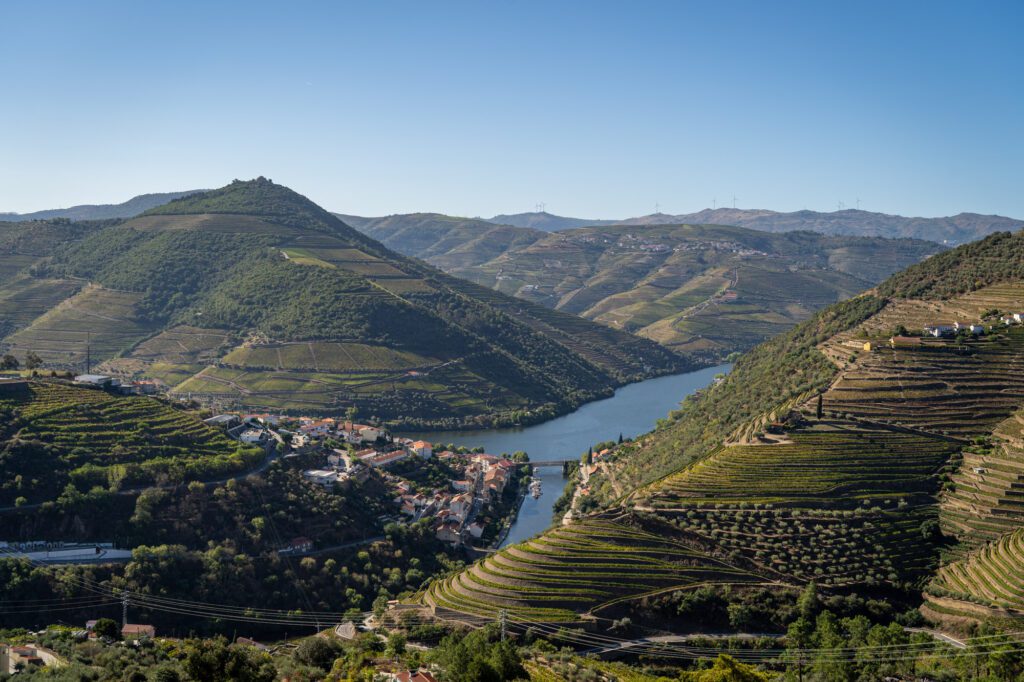
If you aren’t already familiar with our story, this website as it exists today was essentially built on a three month European extravaganza that we did about five years ago (at the time of writing).
It was a trip that had to be delayed for several years, but we finally made it happen after literal years of planning and saving, and it was magical.
That trip was bookended by two 10 day stints in Portugal, and took us on extended trips to Italy and Spain in between.
The single greatest experience on that entire three month trip was this guided tour of the Douro Valley just outside of Porto.
It was a full day of sun, beautiful views, great food, and as much wine as you could possibly want. All shared with a nice, small group of like-minded travelers and a local guide.
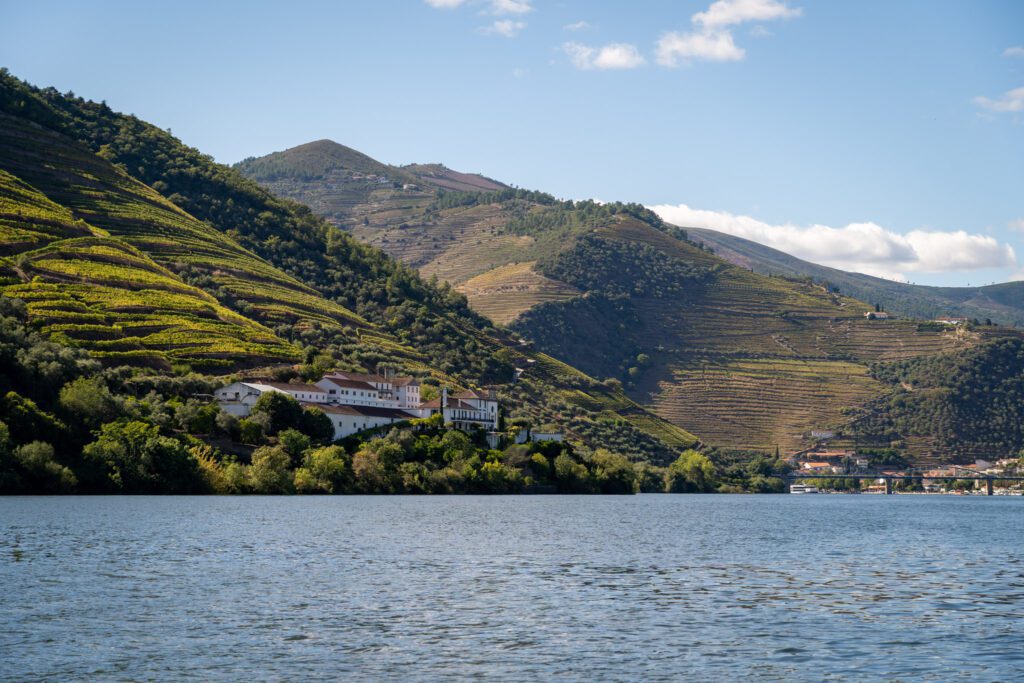
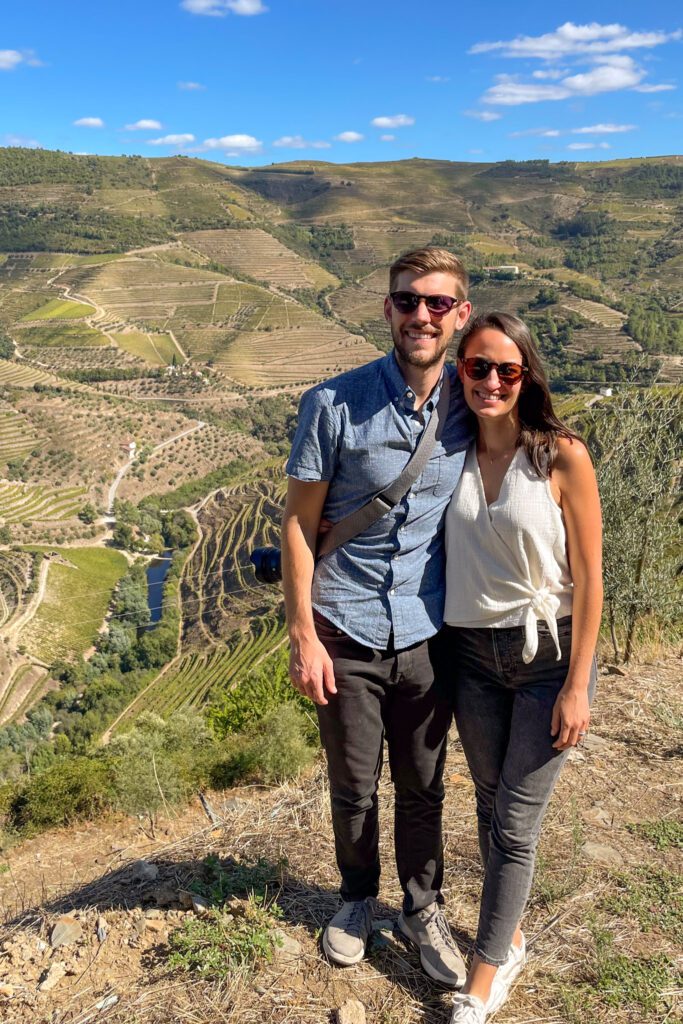
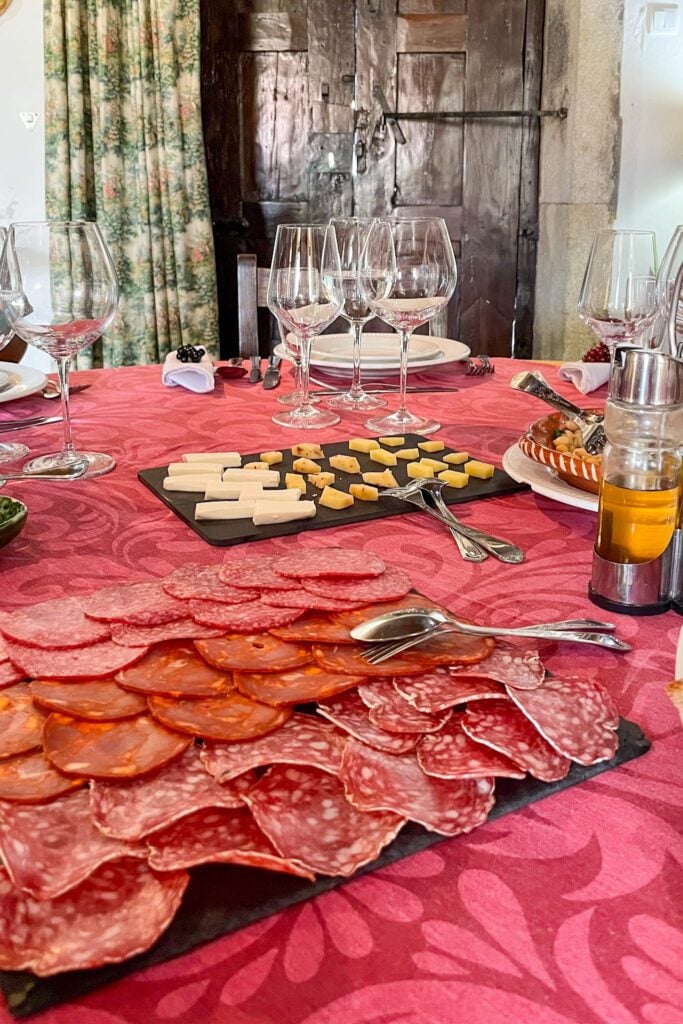
If that’s not enough for you, we’ve also sent friends (two of Alysha’s best friends) and family (Matt’s mom and her friend) on the exact same tour, and they also agreed that it was an excellent way to spend a day.
Finally, because of our strong recommendation, we have also sent hundreds (maybe thousands?) of readers on that exact same tour, and it’s the single tour we hear about most often over email (and it’s all positive).
We cannot recommend it highly enough, and we think you should dedicate one of your precious 14 days to spending a day in the Douro Valley.
The Douro Valley is special for many reasons, but there are two that immediately stand out to us.
First, it’s the oldest known denomination of origin in the world (DOC or DOCG in other countries in Europe), established in 1756.
If you’re unfamiliar, that means that anything that is called “port wine” must come from a specific place (this valley), be made in a specific way with specific grapes, and be labeled in a specific way.
Second, the way they have designed the terraced vineyards to flow down the rolling hills of the valley is a spectacular sight (and you stop at a few excellent viewpoints during the trip).
Here’s what the tour entails:
- It includes pickup in central Porto, so you don’t have to worry about getting out there on your own (it’s a 1.5-2 hour journey by car or train).
- It includes multiple wine tastings, like a guided port tasting, tons of wine with lunch, and a port tonic on the boat ride.
- It includes a HUGE lunch, complete with different non-port wines to try, in a tiny town where one of the owner’s parents grew up. I do mean huge – we thought the first course was the entire thing, and ended up being so full by the end.
- You get to hop on a boat ride on the Douro River to see the terraced vineyards of the Douro Valley from a different perspective than most people.
Now, you could totally do this day trip independently, but it requires renting a car, driving yourself (no drinking and driving, please!), and knowing where to go to eat and drink while you’re in the valley.
We are all for independent day trips, but we chose a tour to avoid having to deal with the transportation element (we got picked up and whisked away in a comfortable van) and to have a local guide helping us dive deeper into the food and wine along the way.
Click here to check prices and availability for your trip to the Douro Valley
Days 4-6: Óbidos & Around (Nazaré, Peniche, Batalha)
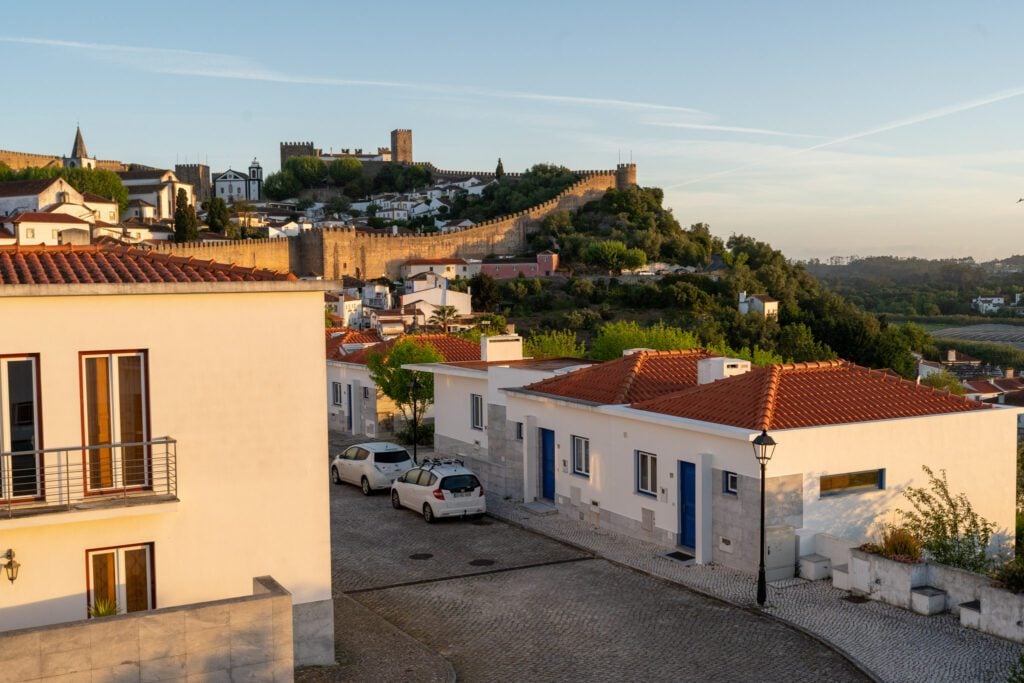
Over the course of building out some of our itineraries, we’ve realized that when you have more time to play with (for example, two weeks), it’s really nice to see a mix of big cities and smaller towns.
We do this in our two week Italy itinerary, where we mix in Bologna and Verona alongside Rome and Florence, and we set out to do the same here.
The first place that comes to mind as a nice place to get a taste of a different side of Portugal is the stretch between Porto and Lisbon, and we spent some time here on our most recent Portuguese adventure and settled on Óbidos as the place to center this stretch of the itinerary around.
We’re big suckers for a city on a hill with intact walls (mostly because if you can get up on the walls, the pictures are incredible), and Óbidos is one of the best examples of that phenomenon in Portugal.
While the town of Óbidos itself is great, the real power of staying there is the access to the rest of the corridor between Porto and Lisbon.
We love Óbidos as a home base for exploring this entire region because it’s ~30 minutes (or less) away from both some great coastal destinations (Nazaré and Peniche), and some great inland destinations (like the incredible Mosteiro da Batalha).
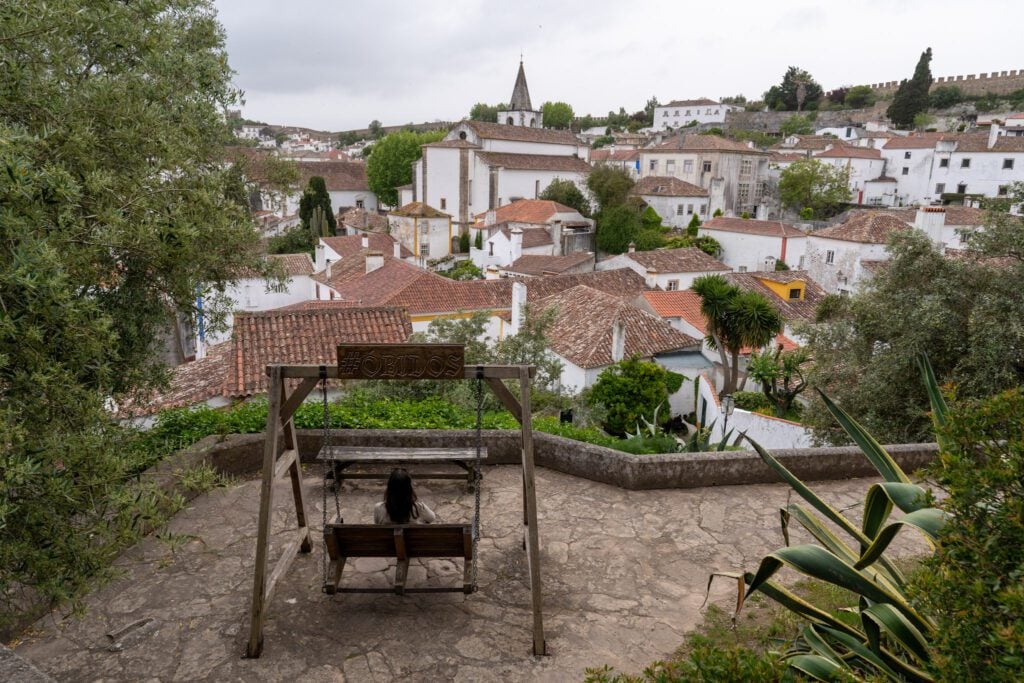
Getting from Porto to Óbidos
As a reminder, this is the stretch of the itinerary where we think you really, really need to rent a car to make the most of your time.
There just aren’t efficient public transit connections between the places we’re going to cover here to make it viable if you don’t rent a car.
Rather than renting your car in the city itself, our strong recommendation is to rent your car starting at the Porto airport (get there on the metro in 20-30 minutes), which means you’ll avoid narrow city streets and traffic and shoot out of the city on the highway.
To get to Óbidos, you’ll head south out of Porto and stick to the major highways.
You’ll be driving on toll roads on your way south, which is relatively easy because rental cars almost always come with a transponder that means you don’t need to stop and pay (make sure to double check!), and the rental car company will bill you later.
There are a few stops you can make along the way, like the Praia da Costa Nova (here on Google Maps), coastal drive at Cabo Mondego (here on Google Maps) and the Real Mosteiro de Santa Maria de Alcobaça (here on Google Maps, more on this below).
You could even stop at Coimbra, a beautiful hilltop town with a big, very old university (think Hogwarts vibes), which is in between the cities.
Overall, we’d plan on a half day to get from Porto down to Óbidos with all the stops included. A drive straight there would be around two and a half hours.
What to Do in and Around Óbidos
As we mentioned, we really do like the town of Óbidos itself, but the real star is its central location to a bunch of other places that we really like.
Here are our favorite things to do in the town itself, along with the places nearby that we’d prioritize.
a walking tour to learn about history and culture
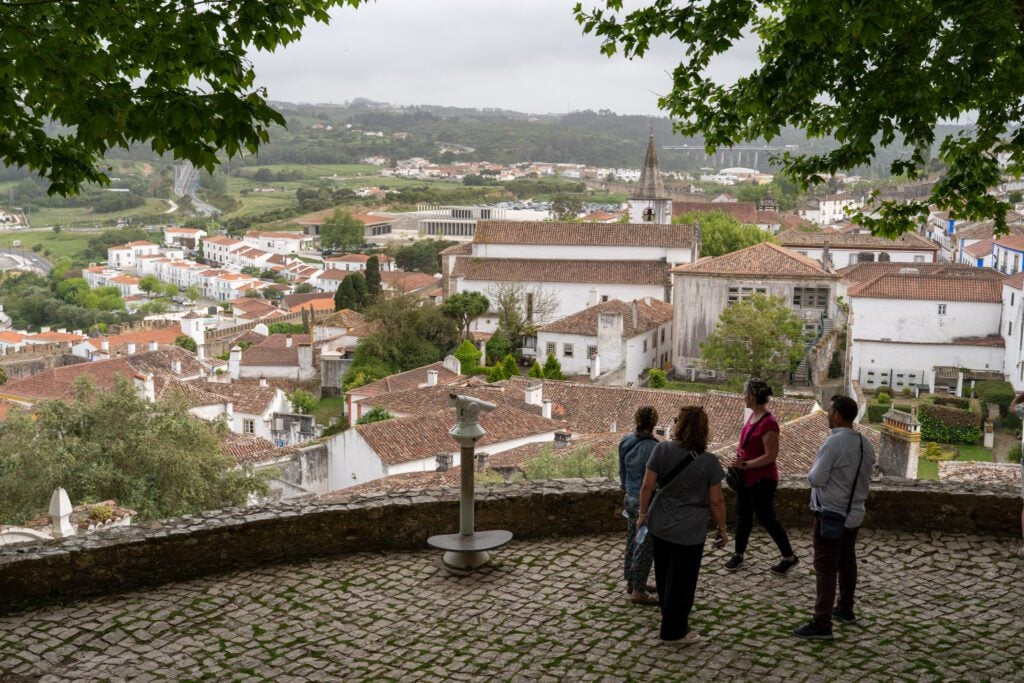
On our first full day in Óbidos, we did this great walking tour with Ivo, a local who grew up here and recently returned after stints in Portugal’s bigger cities.
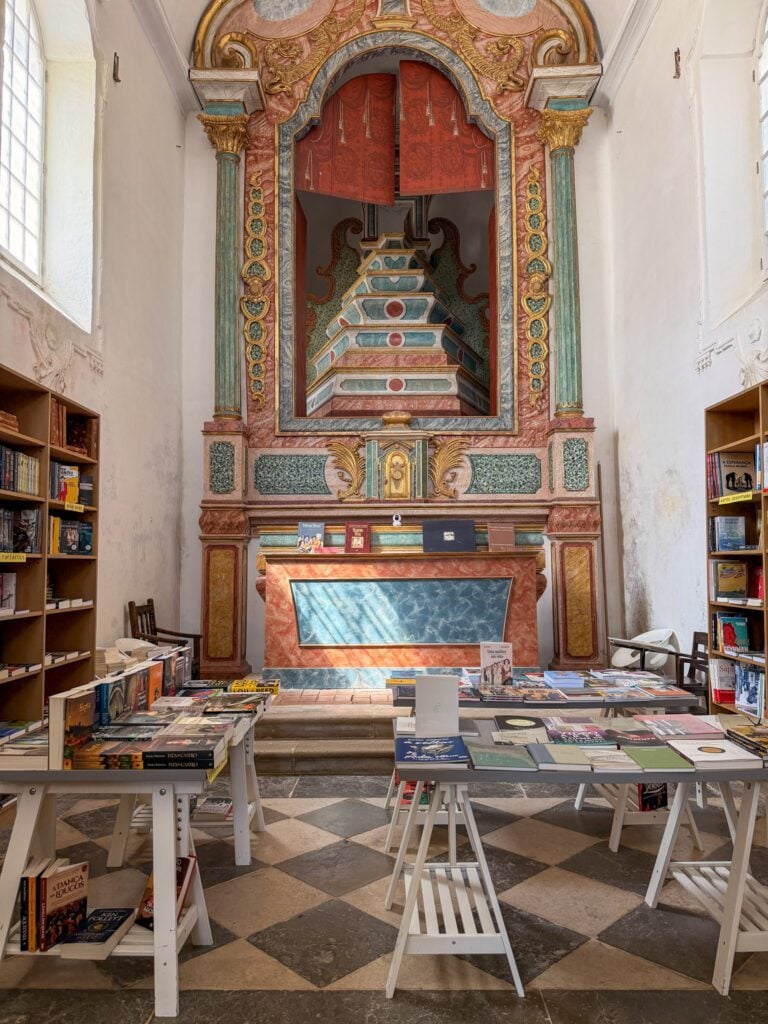
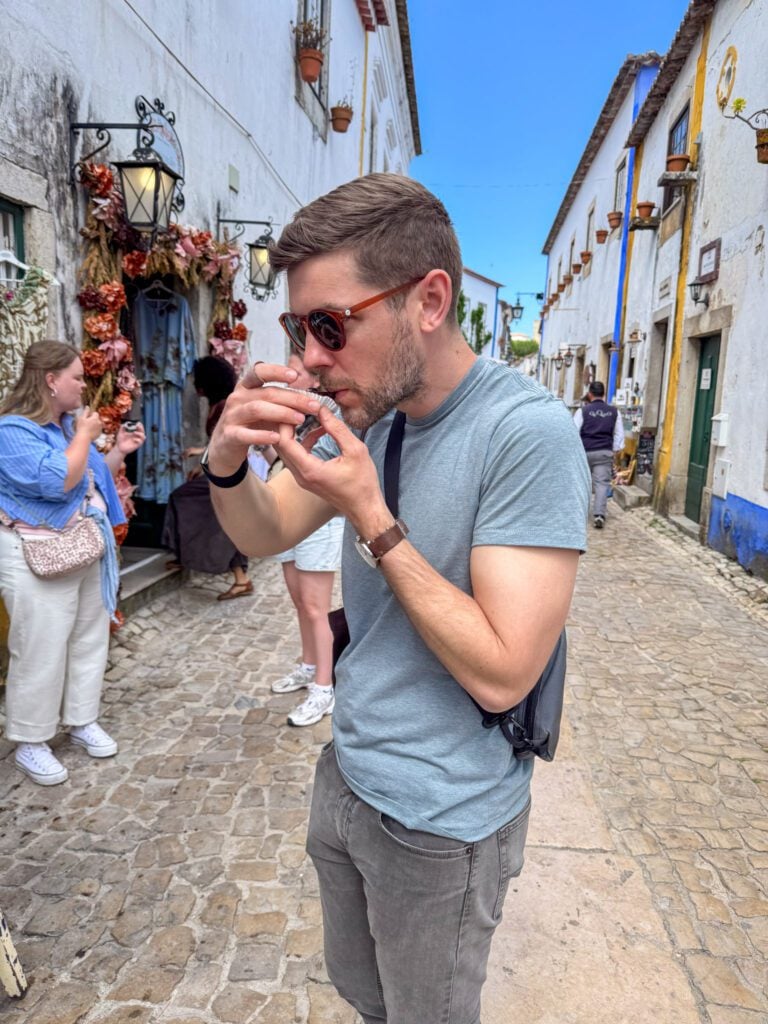
We learned about the city’s history, saw some places we wouldn’t find on our own, and got to try some Ginjinha at the end (more on this in a second).
Walk the walls in Óbidos
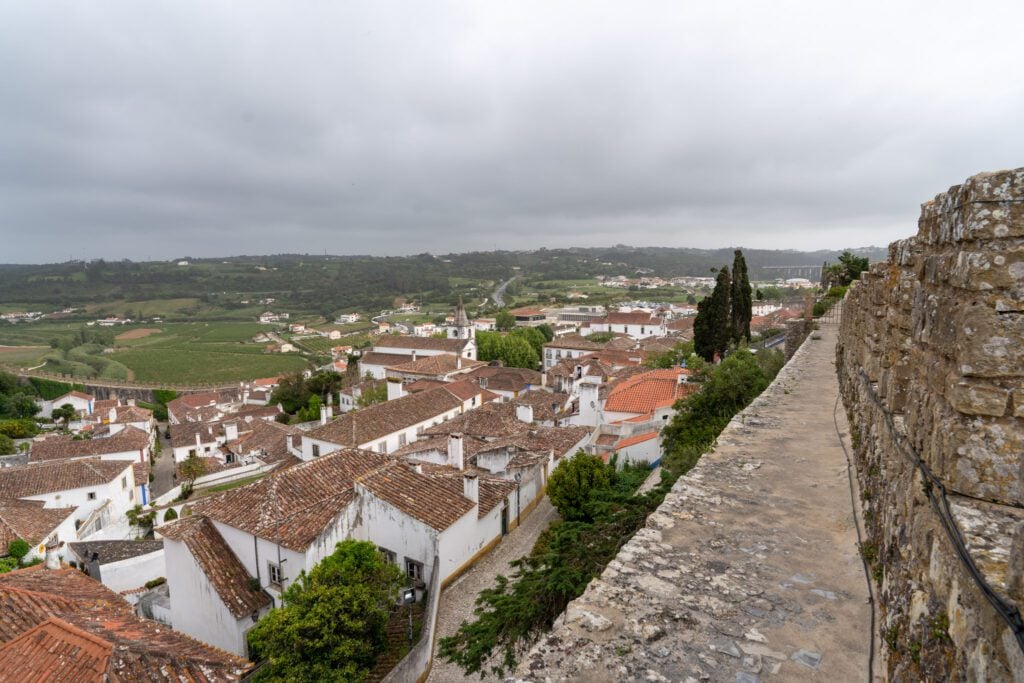
We’re big suckers for a walled hilltop town (it’s part of why we’re so enamored with Tuscany), and boy does Óbidos scratch that itch.
When we arrived, we basically dropped our car off at our accommodations and ran up to the town to walk along the city’s intact medieval walls, which give you great views not only over the town, but over the surrounding area (which, I suppose, is kind of the point of a hilltop walled town).
Head out to the beach town of Nazaré
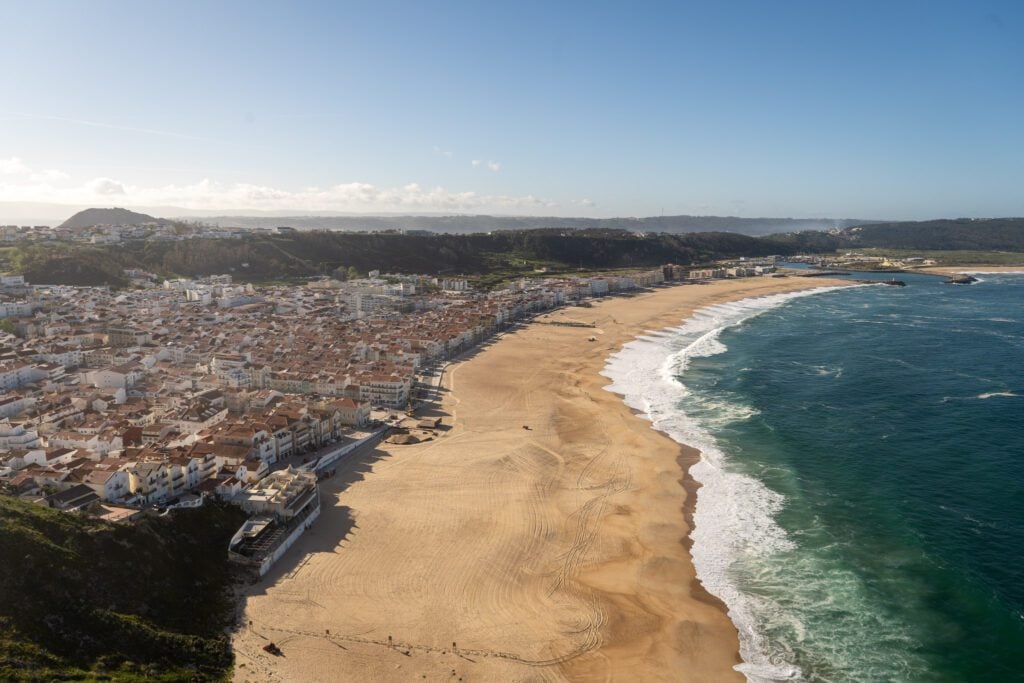
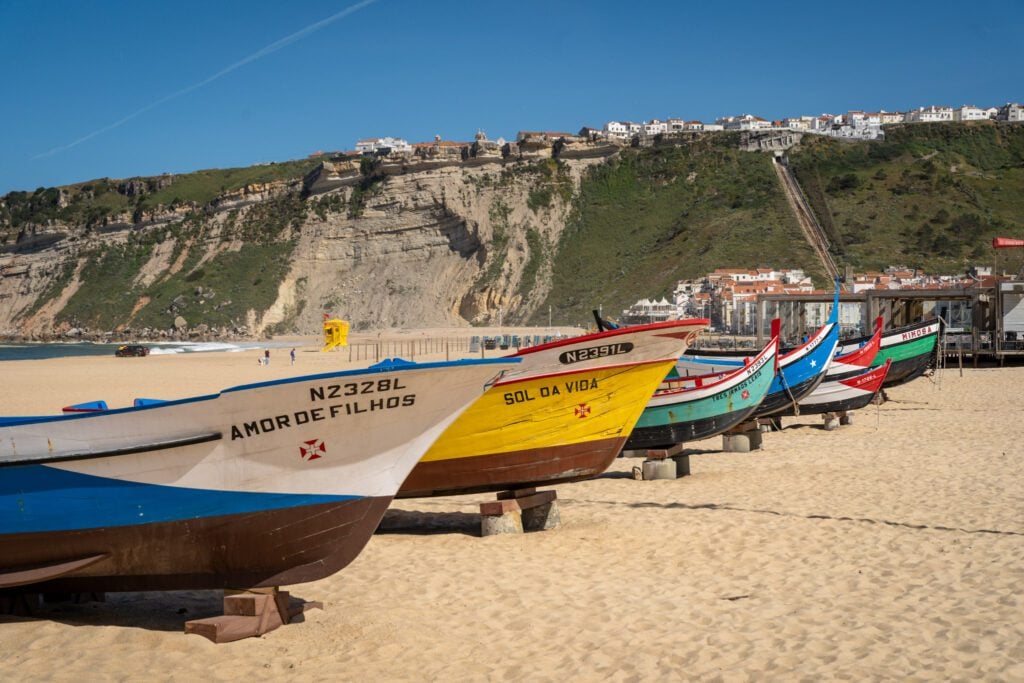
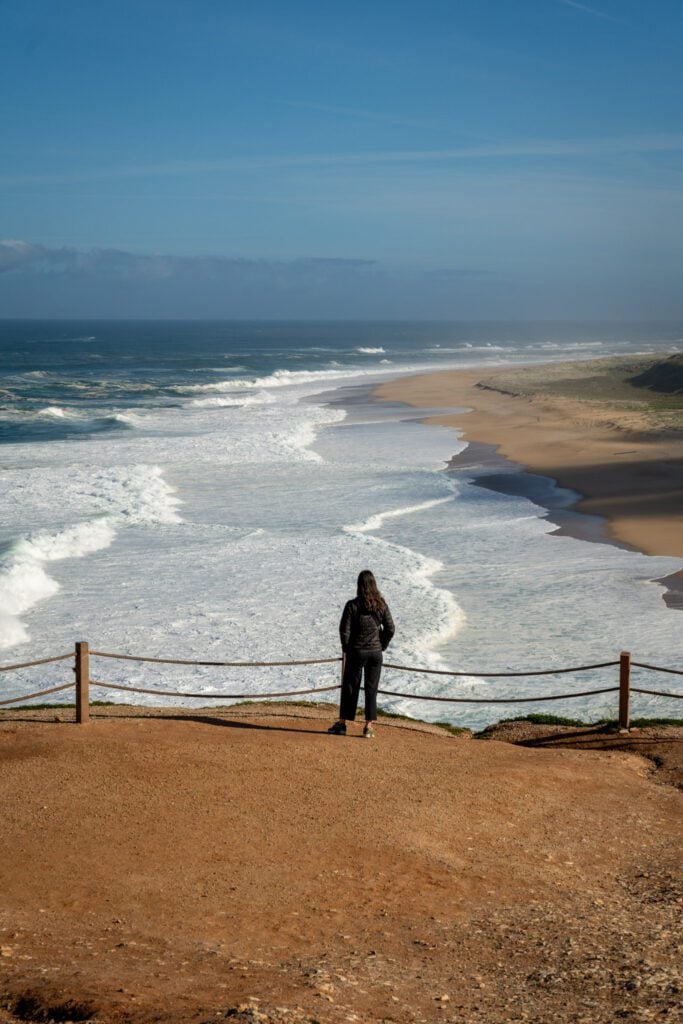
Nazaré is world-famous among surfers for the massive waves here in the winter, and it’s one of the more unique cities we’ve visited in recent memory.
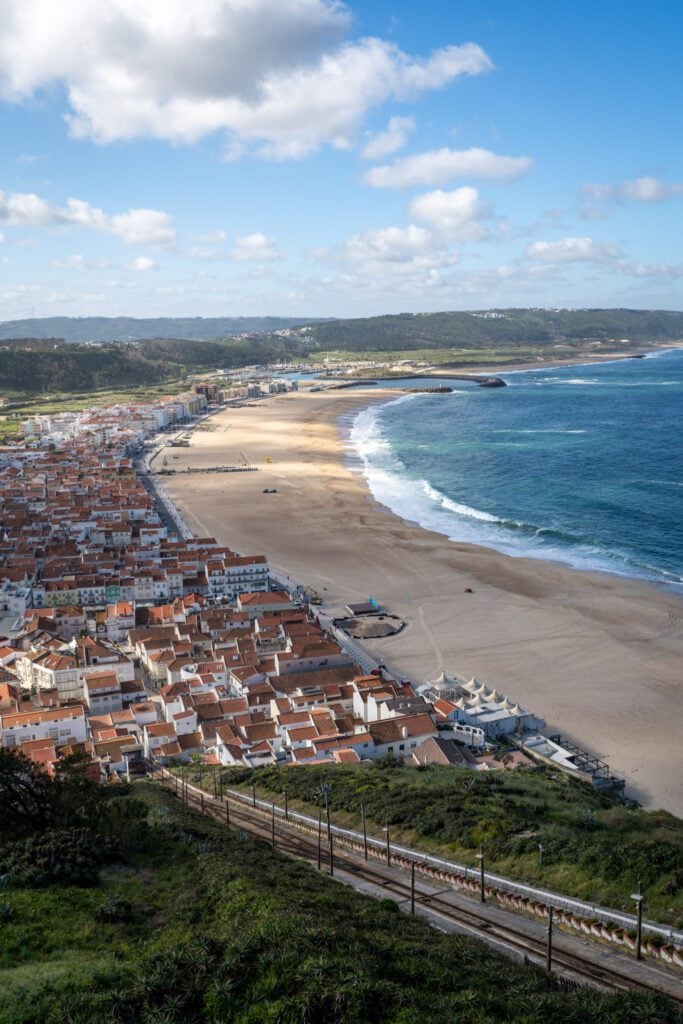
Half of the town is set along the beach at sea level, and the other half is set on top of the cliffs to the north.
They’re connected by a funicular.
We’d make sure to see both, and parking is generally a little easier in the lower town, so park there, walk around, take the funicular up, and walk out to Farol da Nazaré (here on Google Maps), the lighthouse where the big wave surfers all congregate.
Explore the peninsula of Peniche
Peniche is also a coastal town, but it’s completely different from Nazaré because it’s built onto a peninsula that juts out into the ocean. Which makes it another unique coastal town to explore.
The fortress is worth visiting, because it speaks to the whole reason this town exists at all (for coastal defense) and has been turned into the Museu Nacional Resistência e Liberdade after it was used to imprison dissidents during the dictatorship.
Our favorite part of Peniche was…not in Peniche, but over at Ilha do Baleal (here on Google Maps), which you can only access by either walking or driving across the beach.
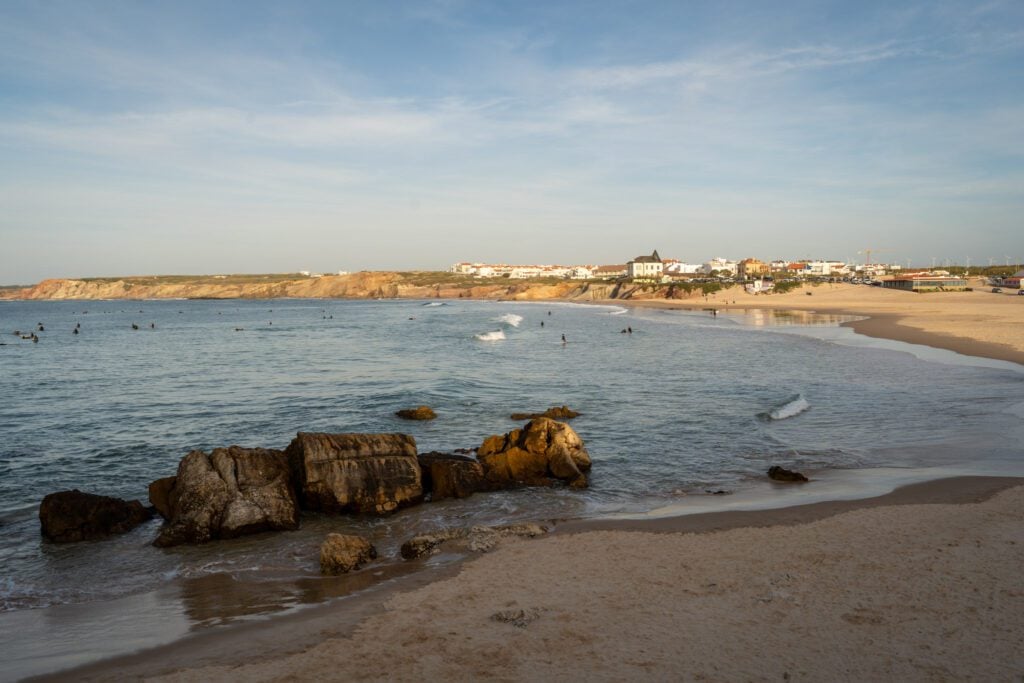
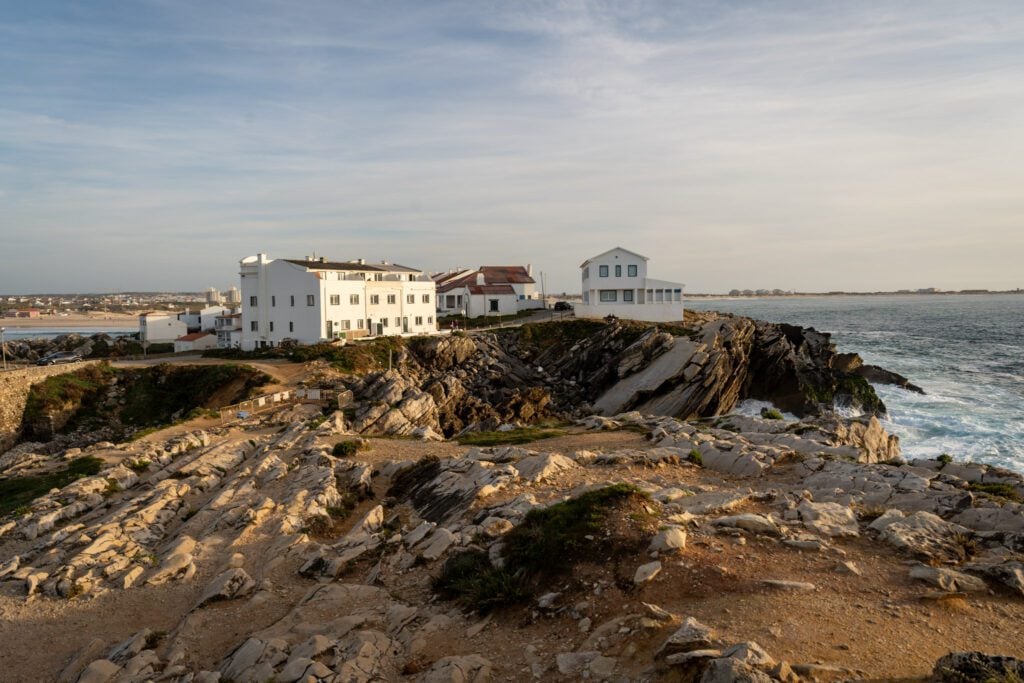
The beach is very popular with surfers, and we enjoyed walking the perimeter of the little island for the great views.
Take a day trip to the Berlengas Islands
The one thing we didn’t get to do was get out to the Berlengas, a chain of islands just off the coast of Peniche.
It reminds us A LOT of the Channel Islands just off of the California Coast in the sense that it’s an ecosystem that is completely different from the mainland because of its isolation.
You take a boat out to the island, and then you can hike, snorkel, and sit on the beach. It truly looks incredible, and we’re sad we had to skip it this time (we just ran out of time and it’s a big time investment).
You should know that the seas between Peniche and the islands can be rough, so if you’re prone to seasickness, it could be a rough ride (there are options in terms of what kind of boat you take).
Stop by the imposing Mosteiro da Batalha

We’re not really huge “go into every church” people, but this Gothic monastery in central Portugal is stunning, and is a great example of how these religious orders built entire functioning societies that existed (mostly) within their four walls.
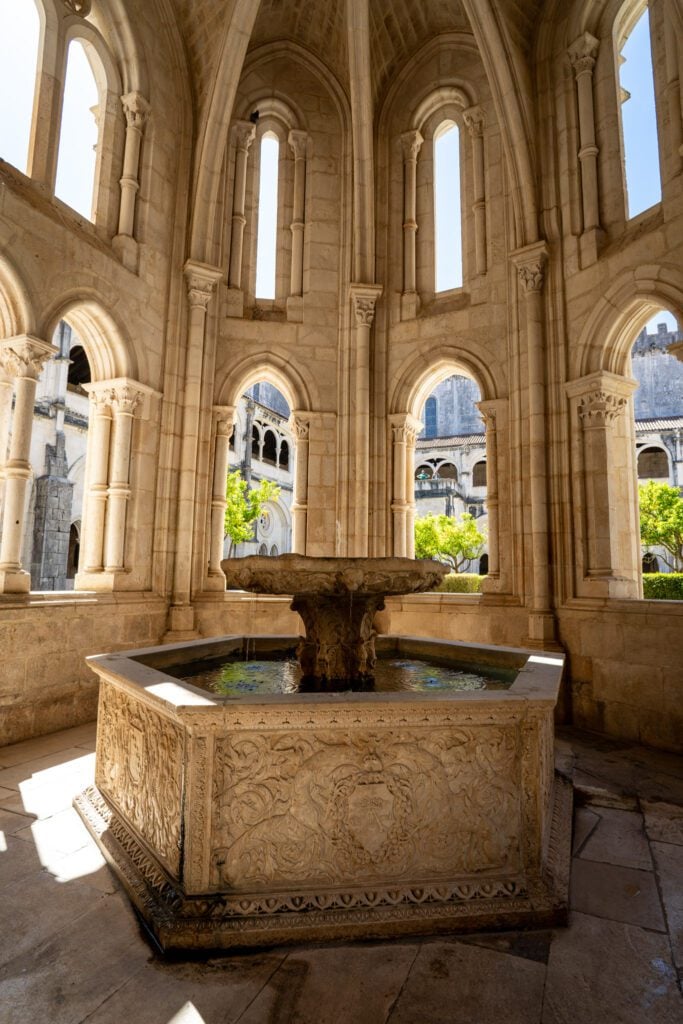
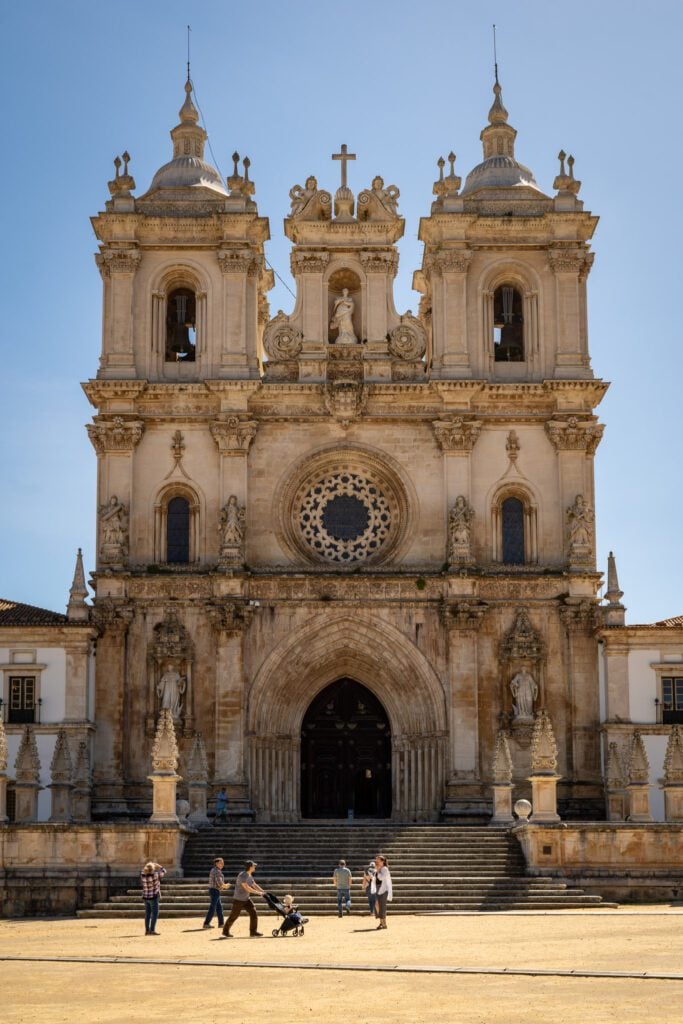
There are dining areas, ovens, dorms, and a lovely cloister with good signage and explanations of what life was like for the 1,000 monks that lived here at its peak.
We really enjoyed this stop, and the architecture is gorgeous.
Where to Stay in Óbidos
Óbidos is a tiny town, and the big decision point you have is whether you want to stay inside the city walls, which is romantic but space is a little more at a premium, or outside the walls where parking can be easier and you will likely have a little more space.
We chose the latter, and stayed a five minute walk from the city’s main gate at Mood Lodging, a set of serviced apartments that were an excellent home base for this leg of our trip.
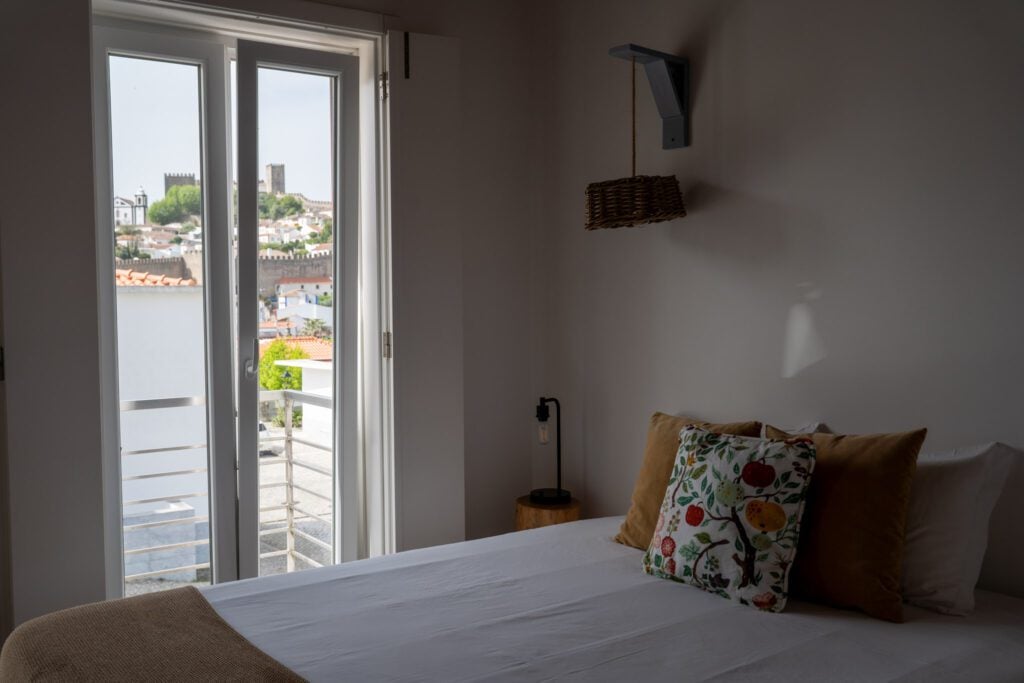
If you want to stay in town, there are only a few options to choose from, and we’d look at Casa Senhoras Rainhas, a nice guesthouse in the heart of the medieval walled town.
You can stay in the Castelo de Óbidos itself, which has been renovated and turned into a nice hotel at the very top of town.
It’s pricey and rooms are, well, in a castle (so they’re small, dark, and sometimes damp), but it’s more about the atmosphere and experience than the pampering in this case.
Days 7-10: The Algarve
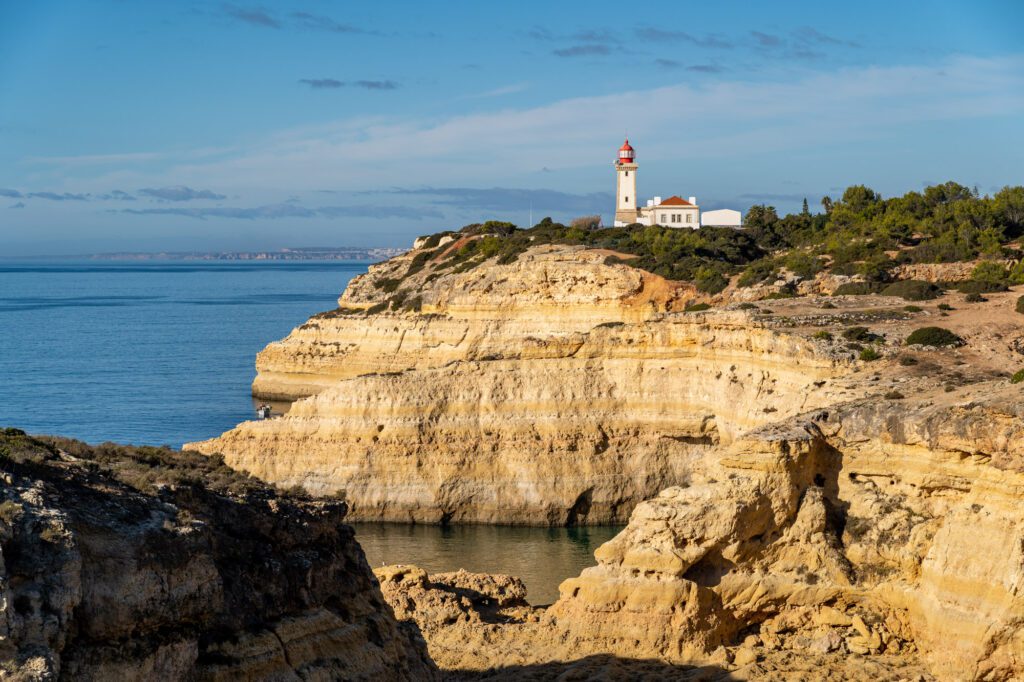
The Algarve is the region along the southern coast of Portugal, which is hotter than other areas to the north and is lined with an endless supply of beautiful beaches.
It’s a big stretch of coast covering about 95 miles (150km), and it takes somewhere between an hour and a half and two hours to drive from one end in Sagres to the other at the Spanish border.
The biggest hub in the Algarve is Faro, which is where the best intercity train station and airport are located.
However, Faro is pretty far east, and our favorite part of the Algarve is the western half, so we wouldn’t really recommend staying there.
In terms of structuring your trip, our recommendation is to choose one relatively central home base, spend all of your nights there, and treat your trips to other parts as day trips.
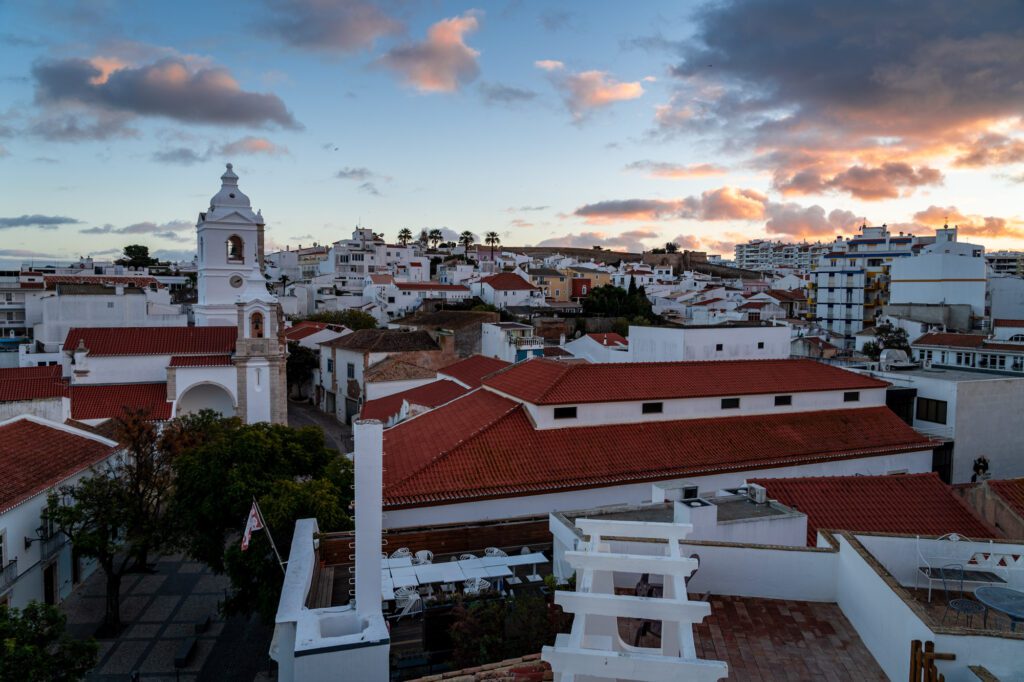
We chose to use Lagos as a home base for exploring, and found it to be perfect.
It’s a nice place to hang out, with good places to eat and drink, beaches that are walkable from the center, and it’s relatively central in terms of the places you’re going to want to visit.
Getting from Óbidos to the Algarve
We think you definitely need a car to make the most of your time in the Algarve, so we’d keep your rental car and drive from Óbidos down to the Algarve.
It’s a three hour (ish) drive, and you’ll be along Portugal’s nice national highways for most of the trip.
The one thing to know is that you’ll be driving on toll roads on your way south, which is relatively easy because rental cars almost always come with a transponder that means you don’t need to stop and pay (make sure to double check!), and the rental car company will bill you later.
What to Do in the Algarve
We have an entire separate guide to planning a great itinerary for the Algarve, which has more information on what to do and see and how to fit it all together.
Here’s the quick version.
Explore the beaches around Lagos
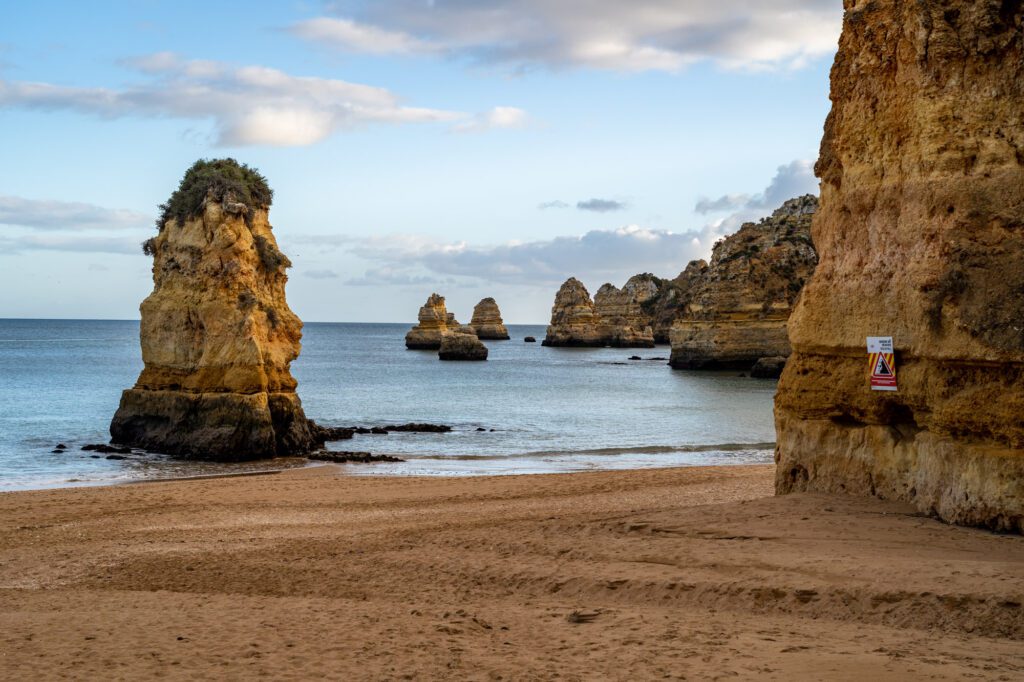
Lagos itself has a bunch of really nice beaches just outside of town, some of which you can walk to right from the center.
We liked Praia Dona Ana (here on Google Maps), Praia do Camilo (here on Google Maps), and Praia dos Estudantes (here on Google Maps) the most.
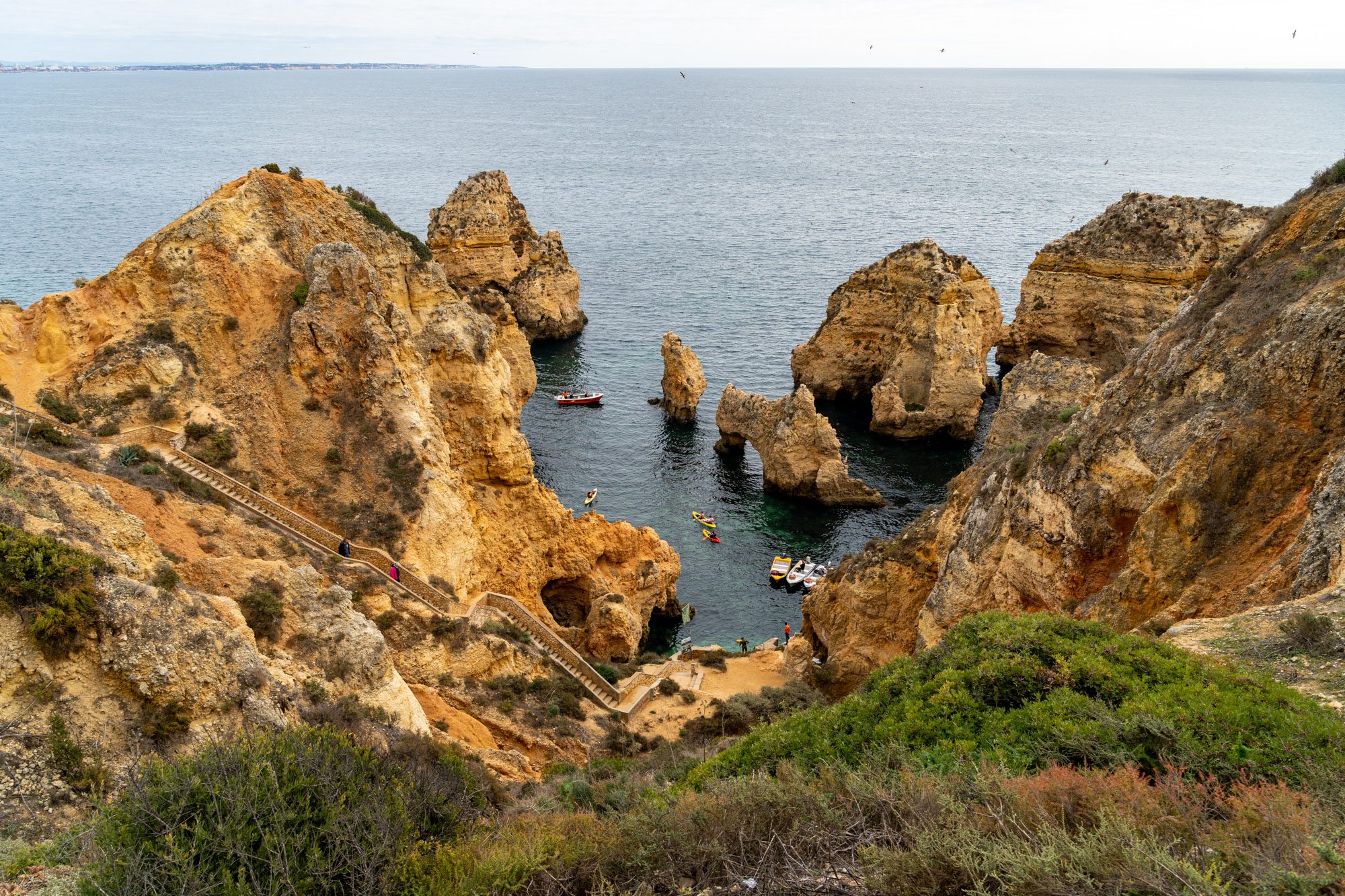
Along with the beautiful coastal walk at Ponta da Piedade (here on Google Maps).
Explore around Carvoiero
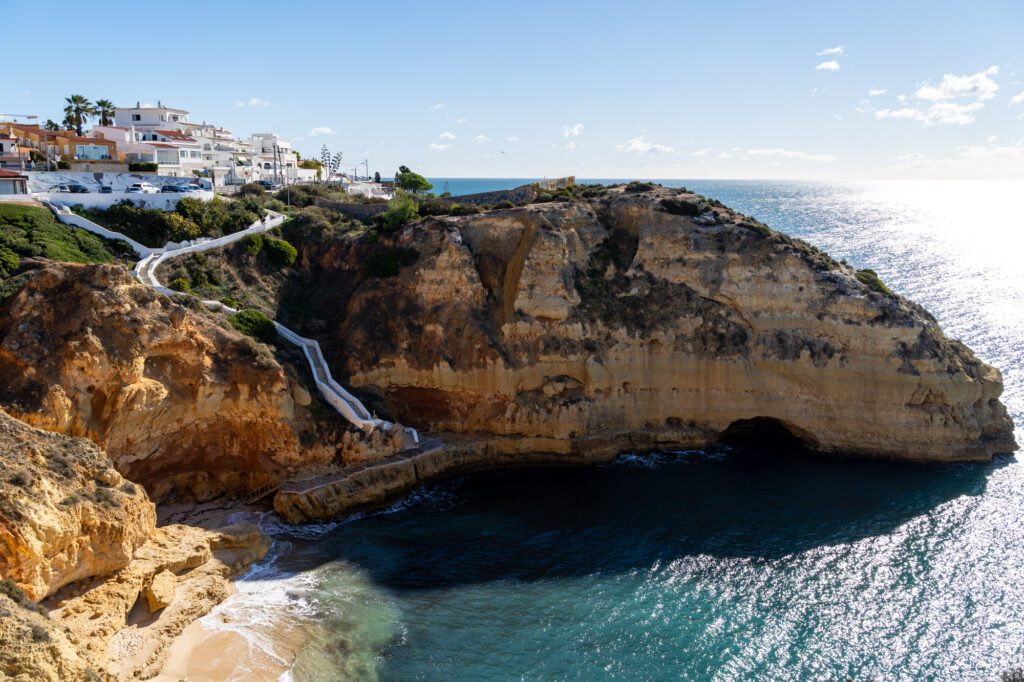
Another place we really enjoyed, Carvoiero is a town a short drive east of Lagos, and it’s another area that is blessed with an endless supply of beautiful sandy beaches that stretch as far as the eye can see.
The town is nice, with a bunch of bars and restaurants with outdoor terraces that are packed in the evenings, but the real highlight is the beaches nearby.
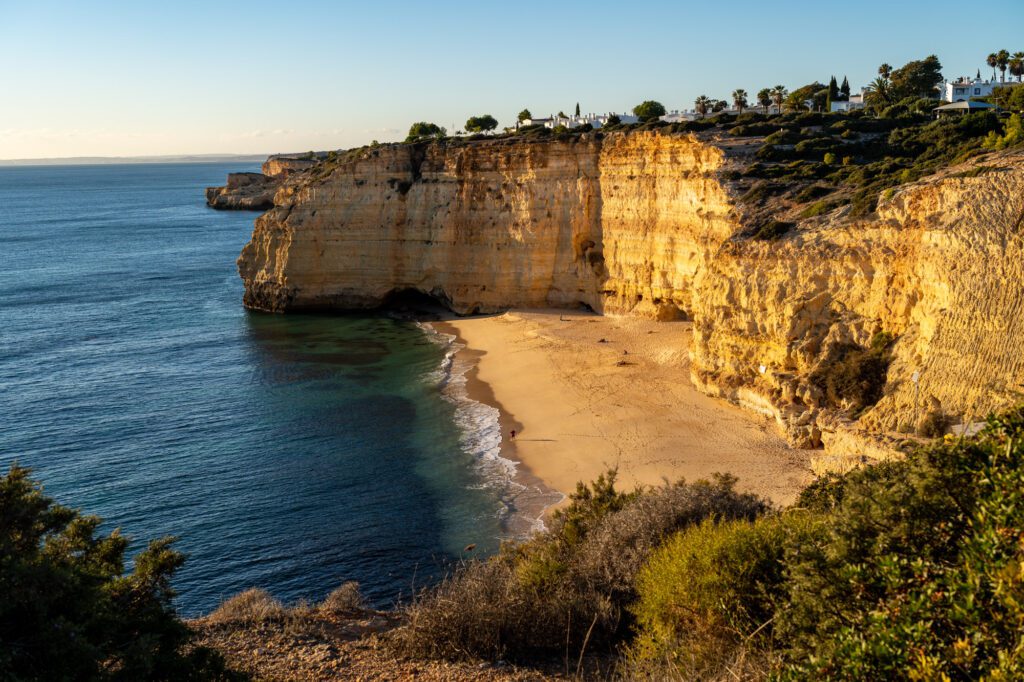
Specifically, Praia do Paraíso (here on Google Maps) and the winding staircase to get down to it, and Praia dos Caneiros (here on Google Maps), a quieter beach that was empty when we were there in the morning.
Hike the Seven Hanging Valleys Trail
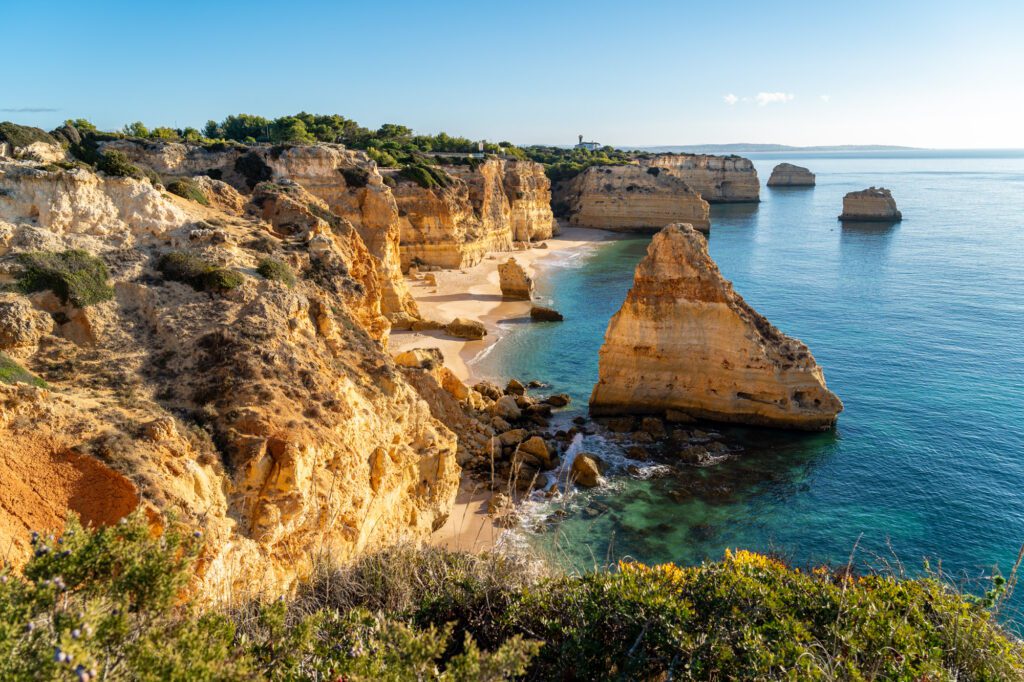
We loved this hike with the caveat that we did it in December, so it was neither crowded nor blistering hot. If you’re going to do it, start as early as possible. Here’s the route on AllTrails.
We’d get as early a start as humanly possible (especially during the summer) and hike from east to west so that you don’t have the sun directly in your eyes on the way out.
We have an entire guide to hiking the Seven Hanging Valleys Trail with far, far more information.
Head out to the western edge of Europe in Sagres
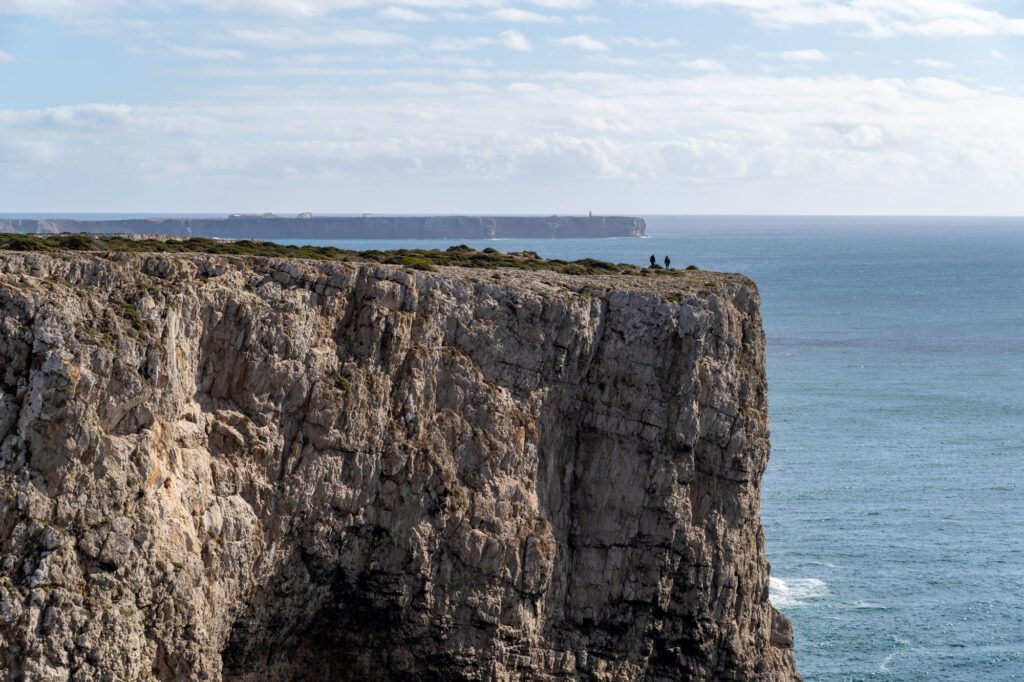
Sagres is one of the surfing meccas in Portugal (along with Nazaré, which you’ve already visited).
It sits at the southwestern corner of continental Europe, and it’s a nice little surf town.
We loved the towering cliffs out here, and they provide a stark contrast to the beautiful sandy beaches that sit at their base.
Praia da Mareta (here on Google Maps) and Praia do Beliche (here on Google Maps) are the two beaches we liked, and we’d also go out to the Fortaleza de Sagres and the Farol do Cabo de São Vicente (the lighthouse at the southwest corner of Europe – here on Google Maps) for great photos.
Where to Stay in the Algarve
As we already covered, we’d pick a home base where you can spend your entire trip to avoid packing up and moving all the time, and we’d choose Lagos as that home base for the convenience of being central and the amenities in Lagos itself (good bars, restaurants, coffee shops, etc).
We stayed at the Salty Lodge and loved it, and would absolutely recommend it if you want to be right in the middle of all the action.
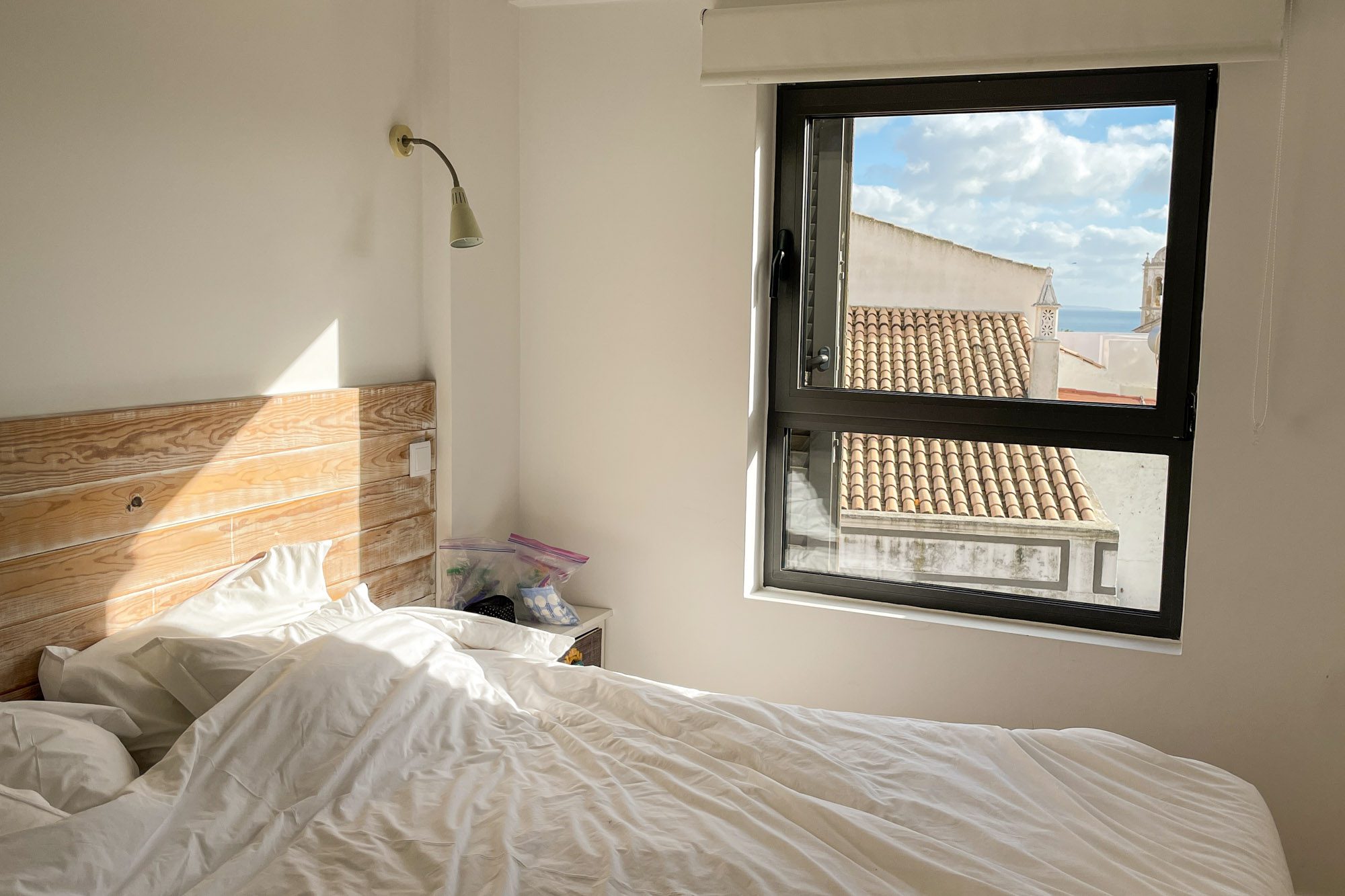
The units are all apartments with full kitchens, and they have everything from relatively spacious studios to two bedroom apartments, some of which have views of the sea (though they also have a great rooftop with views and seating).
Days 11-13: Lisbon
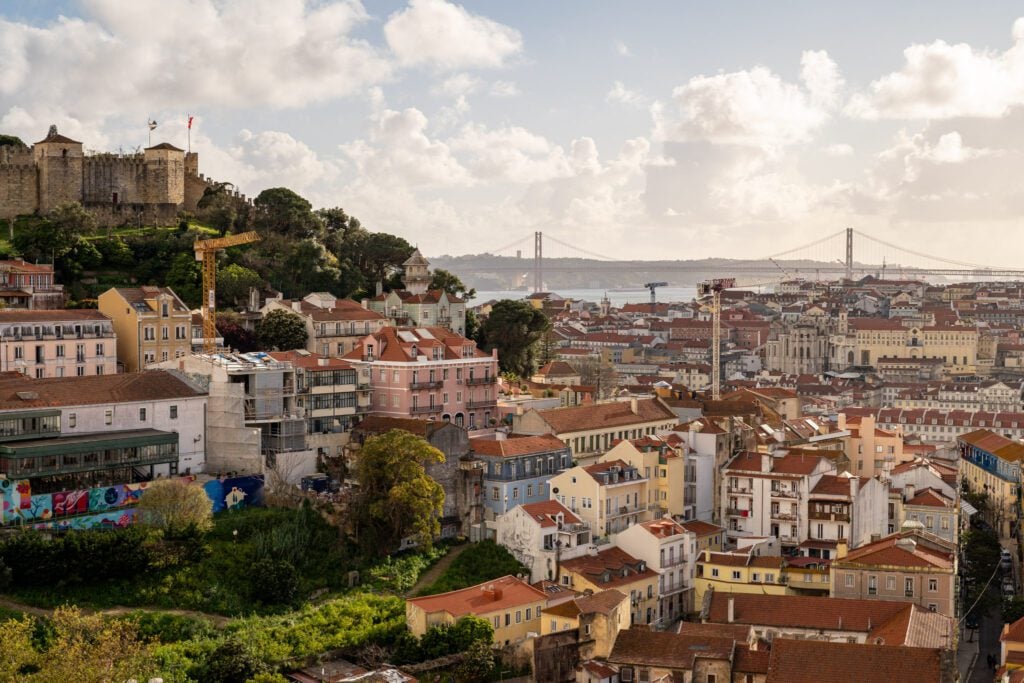
Finally, at the end of your trip, you’ll arrive in the country’s capital, Lisbon.
We have extremely fond memories of Lisbon from our first trip years ago.
In many ways, it reminds us of San Francisco, the city where we met, fell in love, got married, and eventually made the decision to bet it all on this corner of the internet.
It’s a city of hills. It has cable cars. It’s built on the coast and surrounded by water on multiple sides. And it has a big red bridge. Sounds like San Francisco to us!
Over the course of your time in Lisbon, you’re almost certain to hear about the devastating earthquake in 1755 that left an indelible mark on the city’s story.
We referenced it above in the Porto section of this guide, and it’s the reason that so much of Lisbon feels relatively modern.
At a high level, a massive earthquake hit the city in 1755. Which was bad, but wouldn’t have been the end of the world.
Except then the city caught on fire and suffered a tsunami, and the majority of the city center was leveled.
It was a particularly rough time for this to happen to Portugal because the Portuguese Empire was in full swing, and the leveling of Lisbon directly led to its decline.
However, similar to the way a forest fire allows for new growth to occur after the forest has healed, the earthquake paved the way for the modernization of Lisbon through modern city planning and more durable construction practices.
Today, Lisbon is firmly on the beaten path for tourists, and it’s not hard to see why.
It’s a beautiful city, the people are warm and friendly, and the food and drink scene is great (if you like grilled fish and white wine, you’ll be in heaven).
Getting from the Algarve to Lisbon
You have two options here, and which you choose depends on whether you’re dropping the rental car in Faro (down in southern Portugal), or keeping it and driving it to Lisbon to drop it off.
It largely depends on your itinerary and pricing for your dates.
If you drop the car on the Algarve, you’ll want to do it in Faro (an hour east of Lagos) because you can take the high speed train from Faro to Lisbon, which takes between three and four hours (the Alfa Pendular trains run twice a day and are the faster option at three hours).
It’s the best option for dropping off the car because, otherwise, you have to hop on the slower regional train to get to Faro to catch the train up to Lisbon anyway, which adds more than an hour of travel time.
All of the trains are operated by Comboios de Portugal, and you can buy tickets directly through them. We’d buy them in advance, especially if it’s summer and/or a weekend.
If you choose the latter option (drive to Lisbon), we’d recommend dropping it at the airport and using the metro or buses to get into the city from there to avoid driving in central Lisbon, which is a nightmare.
What to Do in Lisbon
In this section, we’re going to cover a selection of the things we wouldn’t miss while you’re in Lisbon.
Obviously, these five or so bullets can’t possibly cover every single thing we’d recommend in the city.
We have two separate guides for you that you should read for more ideas on what to do and see.
First, our guide to the best things to do in Lisbon, which has a collection of all the things we’ve done in the city, and what we’d recommend.
Second, our guide to planning a 3 day Lisbon itinerary, which has our take on how to put it all together.
Take an introductory walking tour
A lot of our knowledge of Lisbon’s history comes from the multiple walking tours we’ve done in the city, which are a great way to get oriented and also get some recommendations for what to do, see, eat, and drink while you’re in town.
Do it on your first day to set yourself up for a great rest of the trip!
We loved this LisboaLove walk with Humberto, which focuses on a slice of the city many people miss and walks through the story of Lisbon, including the not-so-rosy parts.
It covers a lot of ground that you get to see through Humberto’s eyes as someone who grew up in the neighborhood and has seen all sorts of change in the past couple of decades.
More miradouros!
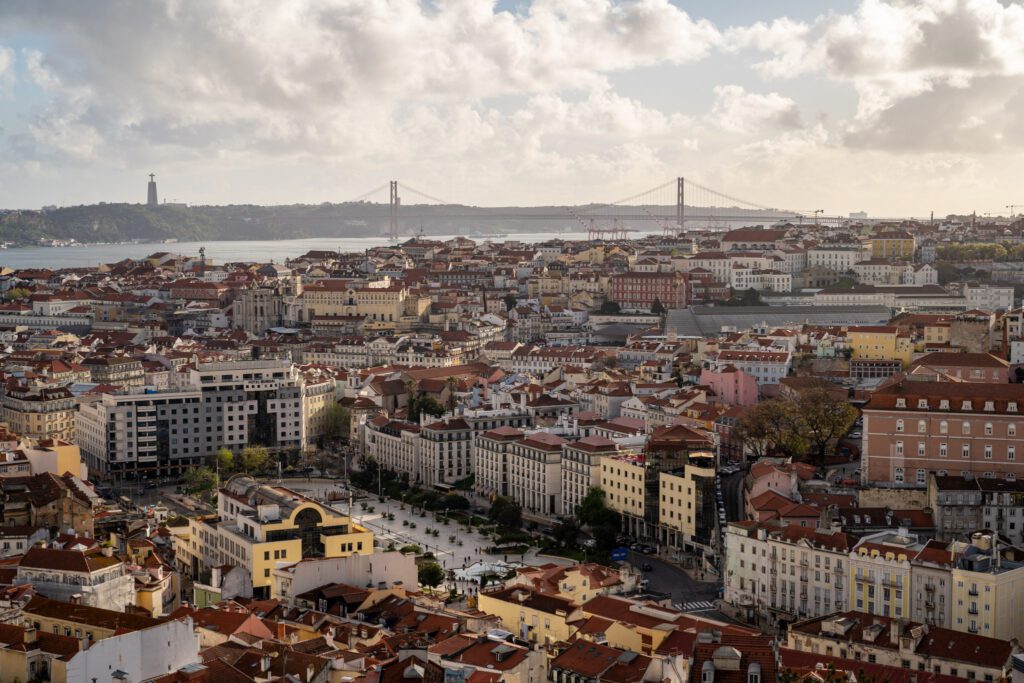
Similar to Porto, Lisbon is a city of hills. In this case, though, there are multiple hills, which means there are so many great views to be found around the city.
There are two in particular that you shouldn’t miss.
First is the Miradouro da Senhora do Monte (here on Google Maps), which is a trek to get to, but the view out across the city looking towards the river and the bridge are worth the sweat to get up there. This is our favorite view in Lisbon, for what it’s worth.
Second is across the valley that runs through the middle of Lisbon, the Miradouro de São Pedro de Alcântara (here on Google Maps).
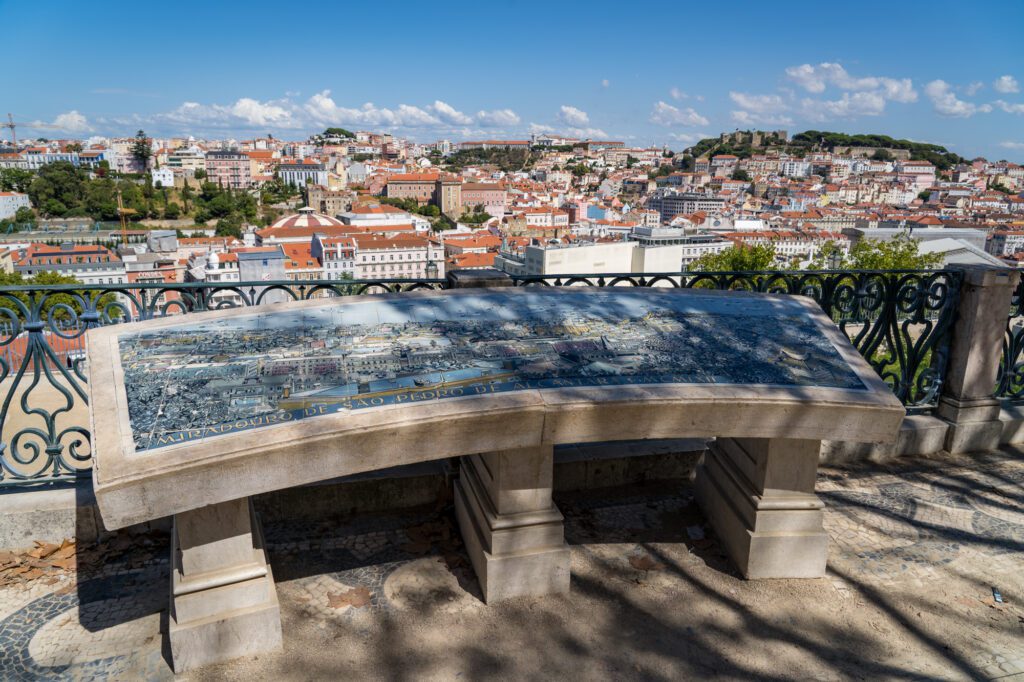
From there, you’ll be looking directly back towards the first viewpoint, with the castle on top of the hill and a handy little map of all the landmarks you’re looking at.
Devour all the pastéis de nata
Like most people, Lisbon was our entry point into Portugal, and first on our group’s agenda was eating as many pastéis de nata as possible to determine who makes the best version in the city.
If you’re not aware, the pastel de nata is a Portuguese specialty, consisting of a pastry shell filled with a sweet egg custard.
Allegedly, the original was developed at the Jerónimos Monastery in Belém as a result of the leftover egg yolks that the religious order had on hand (the whites were used to starch robes).
The “original” is at Pastéis de Belém in a suburb of Lisbon (which is worth visiting on your itinerary).
Seeing a business opportunity, they started selling these sweet pastries with the egg yolks, and here we are hundreds of years later, and we continue to see more and more shops selling pastéis de nata all over the world.
On that first trip, we gathered a bunch of recommendations from local guides and came up with a list of four different places to try in order to suss out which was our favorite.
Rather than a specific place, the consensus was that, after trying two from each at different times, the key factor in determining which was “best” was whether or not it was fresh and warm.
That being said, Manteigaria was the clear winner, and Pastéis de Belém was a close second (Aloma was the third, and it was fine).


If you need a gluten free pastel de nata, Rice Me Deli is the place to go (here’s our guide to eating gluten free in Lisbon, which has that recommendation front and center).
Spend an Afternoon Exploring Alfama
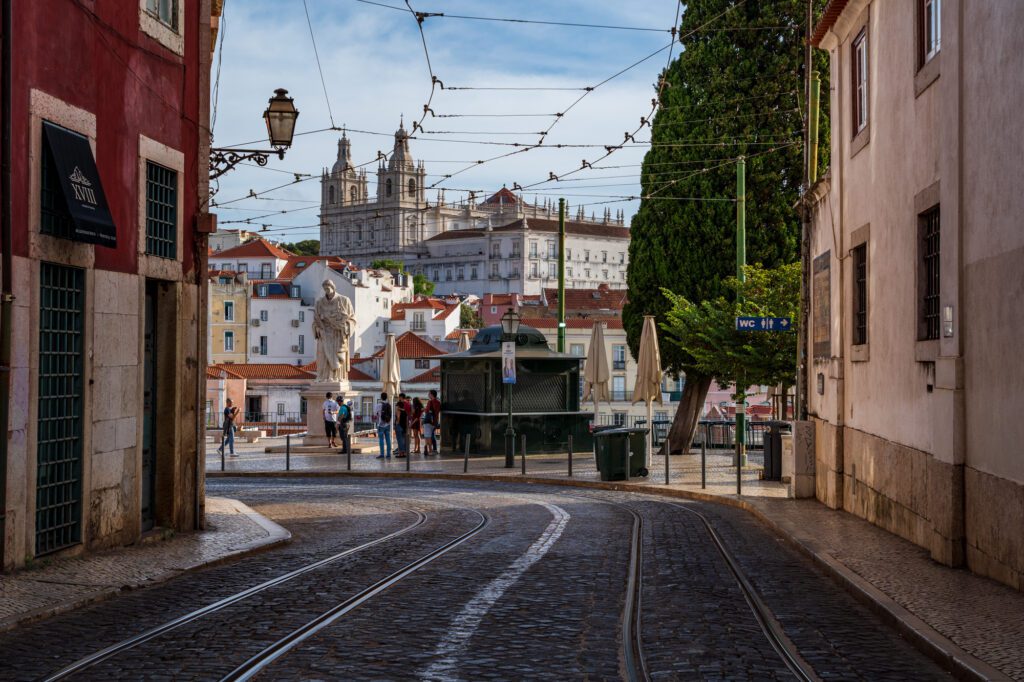
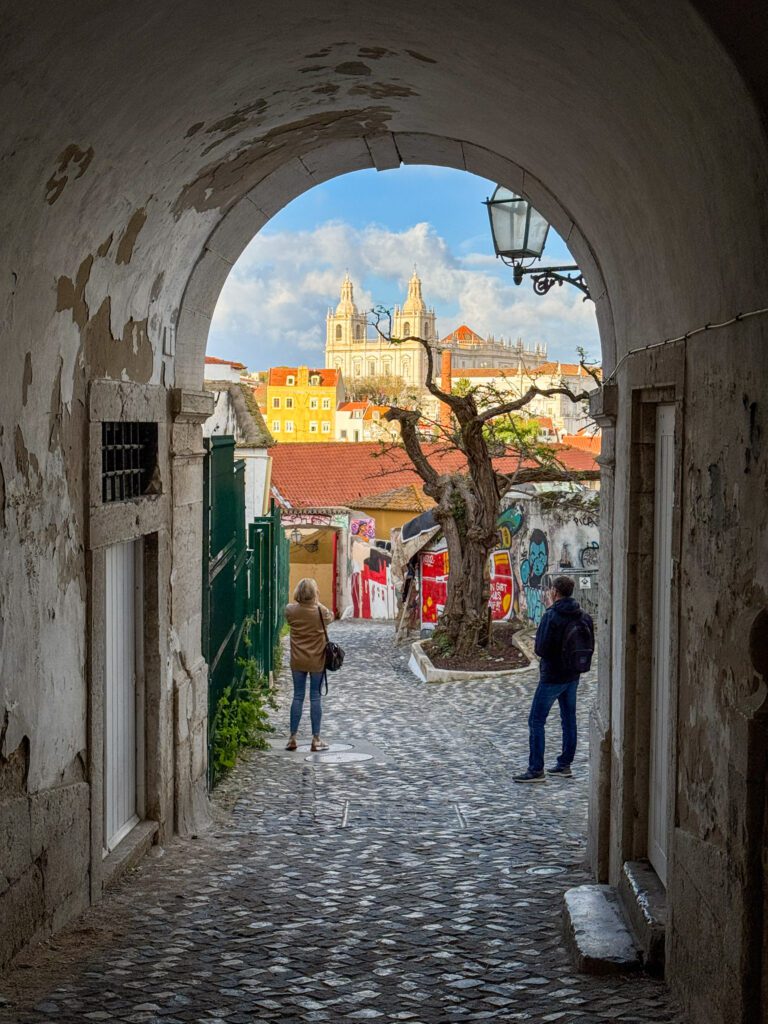
Alfama is the oldest part of Lisbon, and it’s the one part of the city that largely survived the earthquake (and subsequent fires and tsunami), so it still retains that medieval charm that comes with narrow cobblestone streets (often barely wide enough for a car) and older architecture.
At the top of the hill, you’ve got a very old looking castle that is worth a visit for the views from the walls, but you should know that, while the spot where the castle is located is old, the castle itself is relatively new (it was built about 100 years ago by the dictatorship).
There are two other places you shouldn’t miss. First is the duo of viewpoints around the corner from each other – Miradouro de Santa Luzia (here on Google Maps) and Miradouro das Portas do Sol (here on Google Maps).
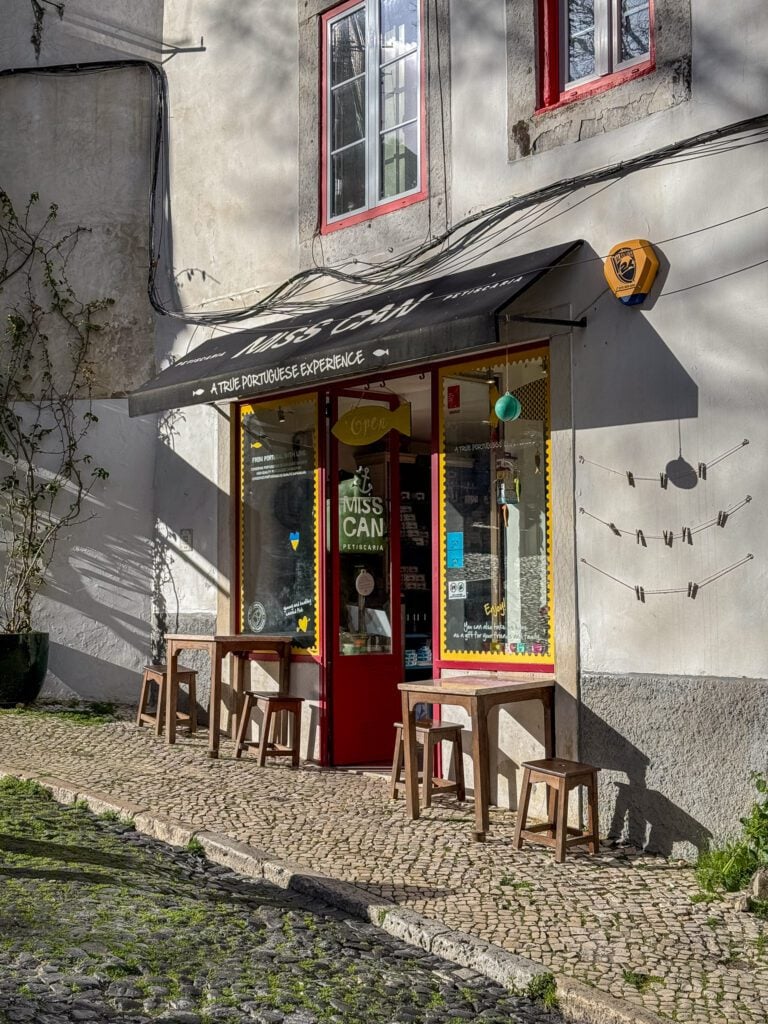
The second place we wouldn’t skip is Miss Can, a canned fish shop just up the street from the viewpoints that we really like. We bring their cans of fish back as souvenirs for friends. Find it here on Google Maps.
Head out to Belém
As we alluded to above, Belém is a suburb out to the west of the center that has been swallowed up by the expansion of Lisbon’s borders over the centuries.
It’s an easy tram ride from Praça do Comércio in Baixa to get out there.
It’s home to a few different monuments, including the beautiful Jerónimos Monastery, which is worth stepping into to see the amazing Gothic Manuelian cloister (buy tickets in advance here).
Don’t miss the free-to-enter church next door, where famous explorer Vasco de Gama and famous poet Luís de Camões are buried.
The other attractions are best seen from the outside.
They are the Padrão dos Descobrimentos (Monument to the Discoveries) and the Torre de Belém. You don’t need to wait (or pay) to go inside either one, we think.
Last, but not least, is the aforementioned Pastéis de Belém, the alleged birthplace of the famous pastel de nata. Worth stopping by on your nata crawl through Lisbon.
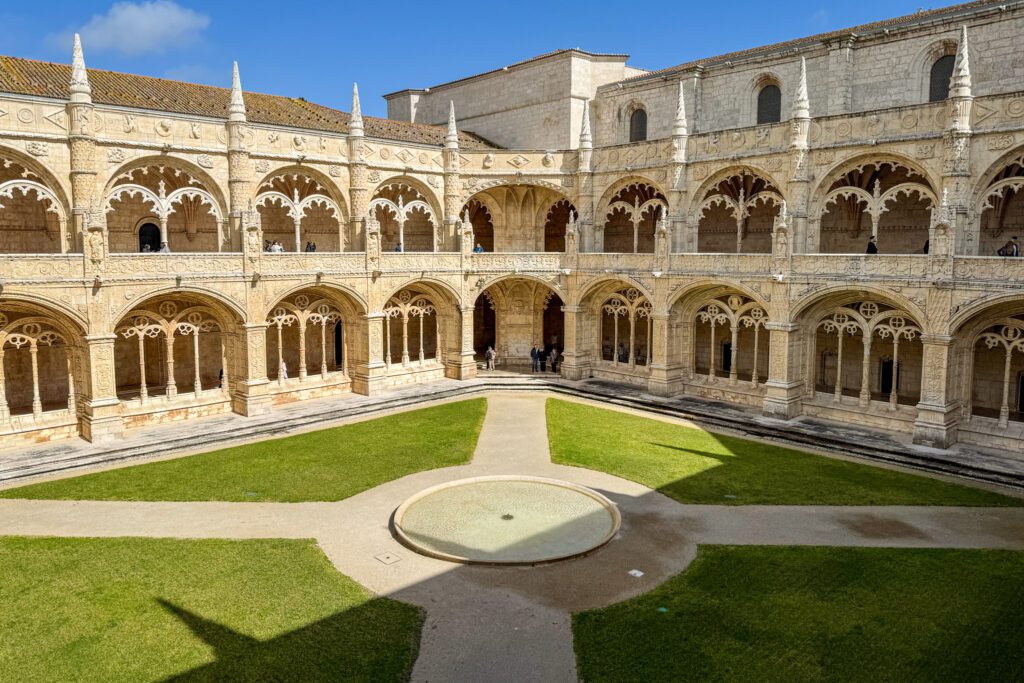

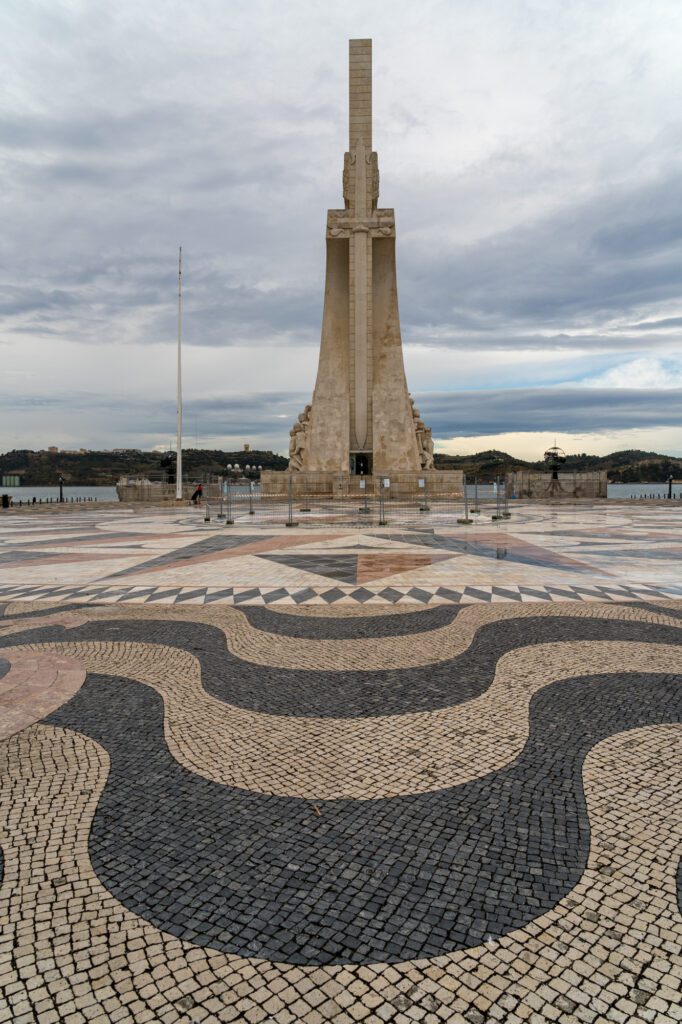
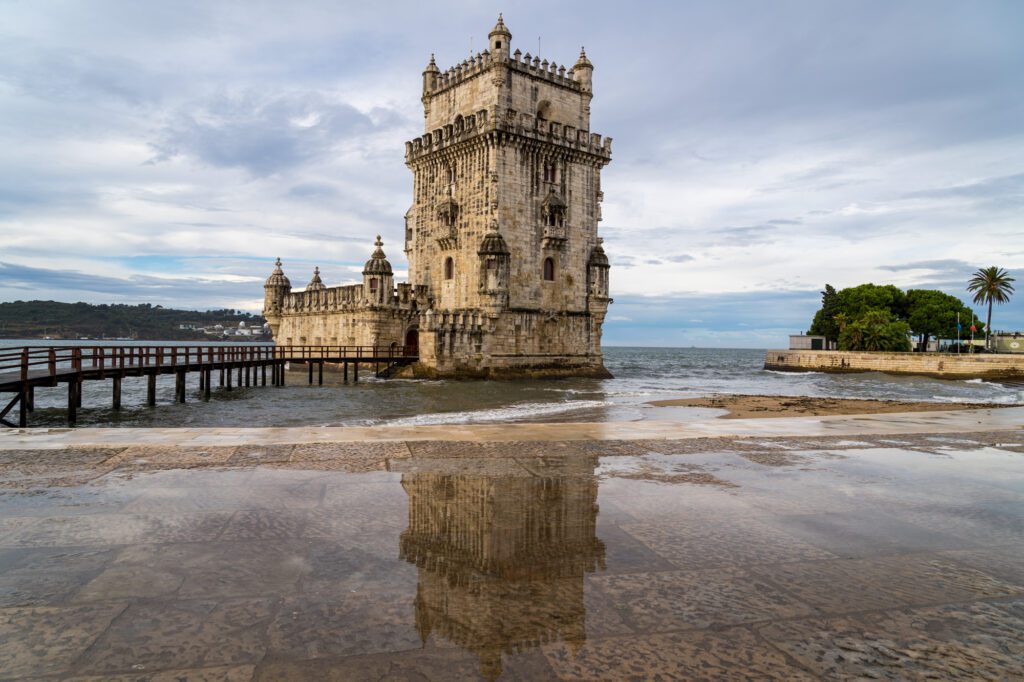
Where to Stay in Lisbon
Lisbon is a big city, and you’re going to want to stay relatively centrally to make it more convenient to get around to all of Lisbon’s highlights.
Similar to Porto, the impact of the city’s hills is something you’re going to want to consider. While Porto is built onto a single hill, Lisbon is basically a series of hills knitted together to form one big metropolis.
The two neighborhoods we’d recommend for most people are Chiado, which is the neighborhood halfway up the main hill in the city (which gives you good access to just about everything in the city), and Baixa, the modern, flat part of the city at the base of the hills, which is convenient because it has transit links to pretty much everywhere (we’d look near Rossio Square).
Chiado is our top choice because it gives you the charm and romance of being on the hill, while also retaining some level of convenience by not being at the very top of a hill, so getting around is a little easier than if you stayed in, say, Alfama or Bairro Alto.
We have friends who stayed at Casa do Barão in Chiado, and they loved the gardens and pool and intimate setting (there are only 12 rooms).
My mom and her friend stayed at 54 São Paulo, an upscale aparthotel on the border of Chiado, on their recent visit (on my recommendation), and they RAVED about it (so much so that it will be the place I stay on my next trip).
We have an entire guide dedicated to the best areas to stay in Lisbon (and how to choose one for your trip), which you should go read for far more detail than we can fit in this summary.
Day 14: A Day Trip to Sintra
As we mentioned in the logistics sections, one of the things we like to do when we travel is utilize day trips to cover more ground without the downside of having to pack up and move all your stuff every day or two (which is the worst).
In Lisbon, there are a few potential day trips, but since you’re already spending some time in Óbidos on this itinerary, our top recommendation for Lisbon is Sintra.
Sintra is basically the summer palace of the Portuguese royals. When it got oppressively hot in Lisbon, they would pack up and move to Sintra, which is on top of a hill along the coast to the northwest of the capital, where it is often cooler and foggier.
Our biggest piece of advice for Sintra is to take transportation to the top and work your way down, which means you only have to walk downhill (for the most part).
You’ll take the train to Sintra from Rossio Station in Lisbon, which is in Baixa (here on Google Maps). You don’t need to buy tickets in advance, you buy them when you show up. It’s a 45 minute ride from Rossio to Sintra.
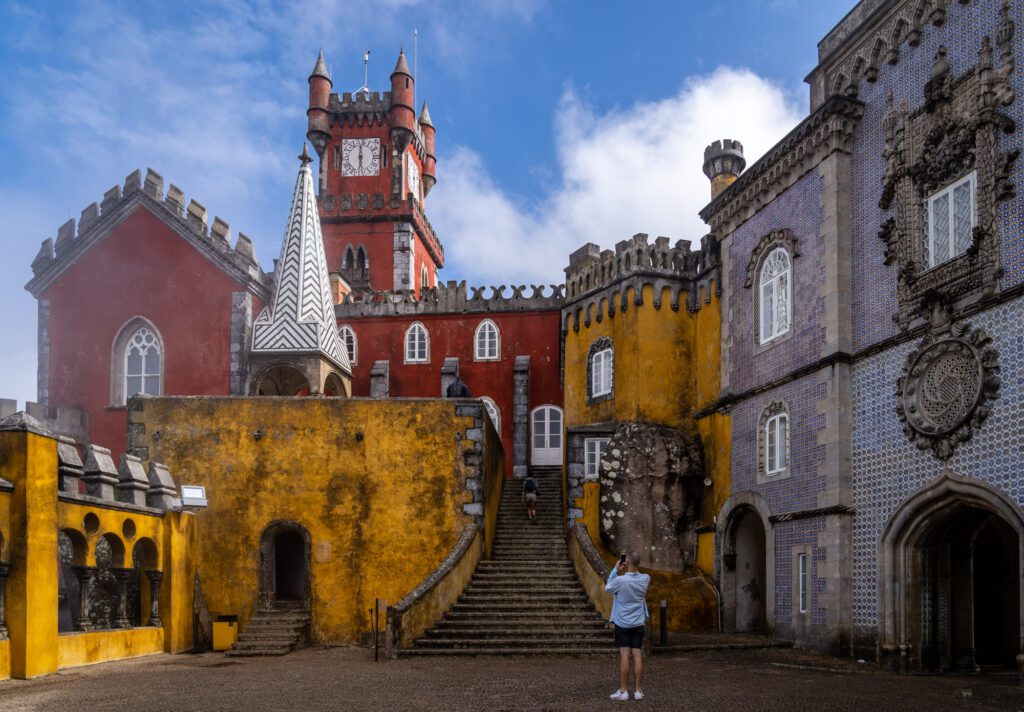
From there, you can take the bus, a taxi, or a tuk tuk up to Pena Palace (which we like for the gardens and wacky architecture on the exterior, and don’t think you need to go inside), which is at the top of the hill.
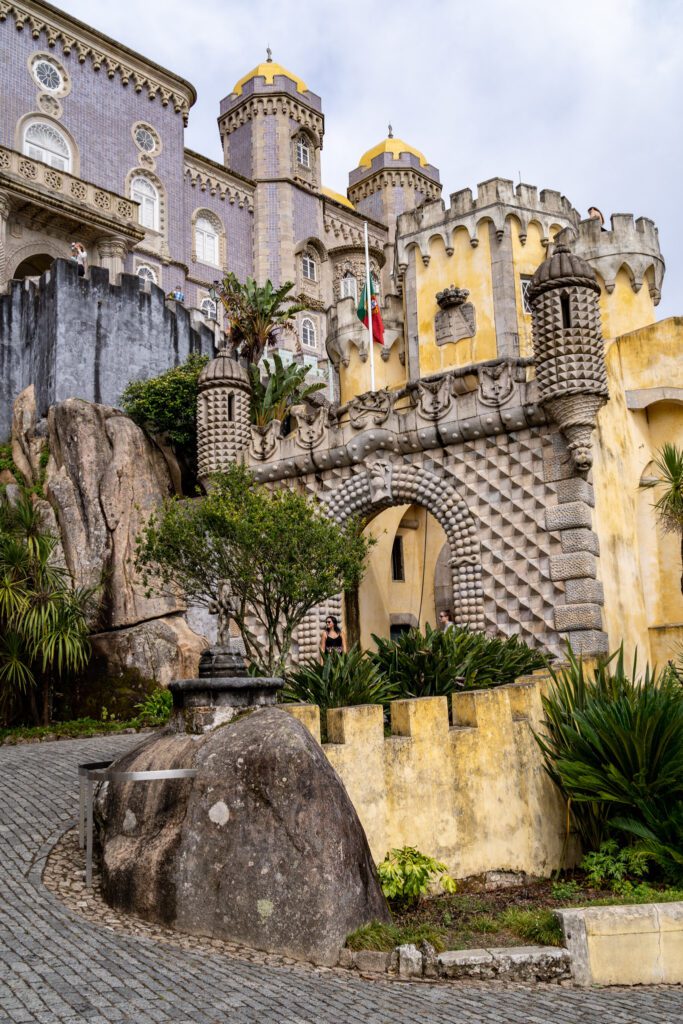
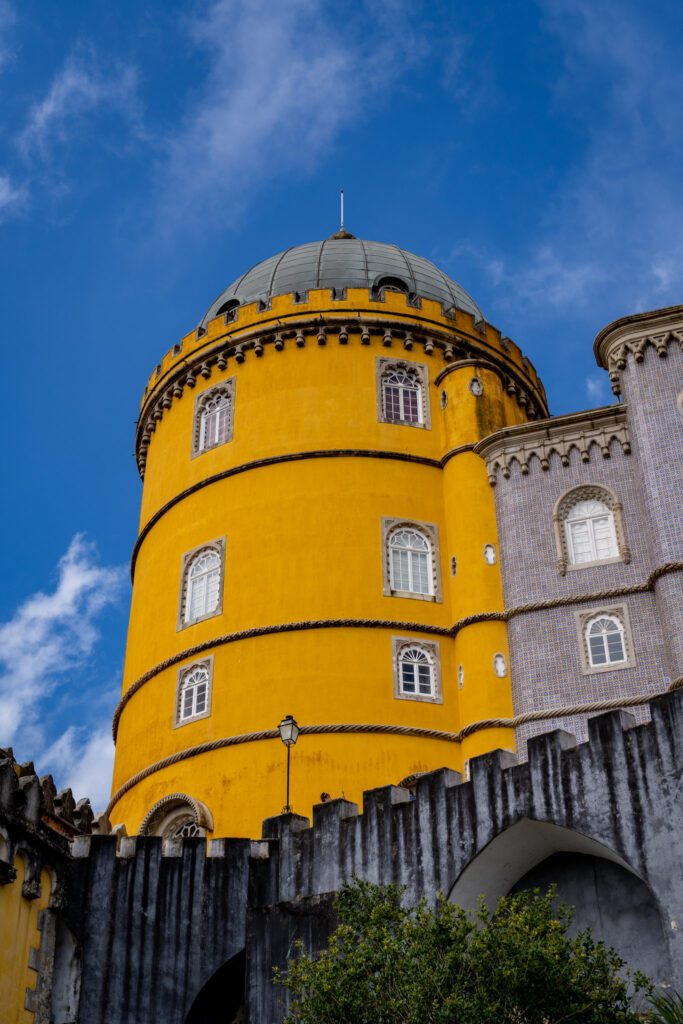
If you don’t go inside, you just need a ticket for the “Park of Pena”, which is cheaper and means you don’t need to choose a timeslot, so it’s more flexible.
You can still check out the exterior of the palace and the lush gardens, which is the best part (in our opinions, anyway).
Then, spend your day working your way back down, stopping at Castelo dos Mouros on your way down to the town of Sintra for lunch (and the town’s famous pastry, the piriquita, at Casa Piriquita).
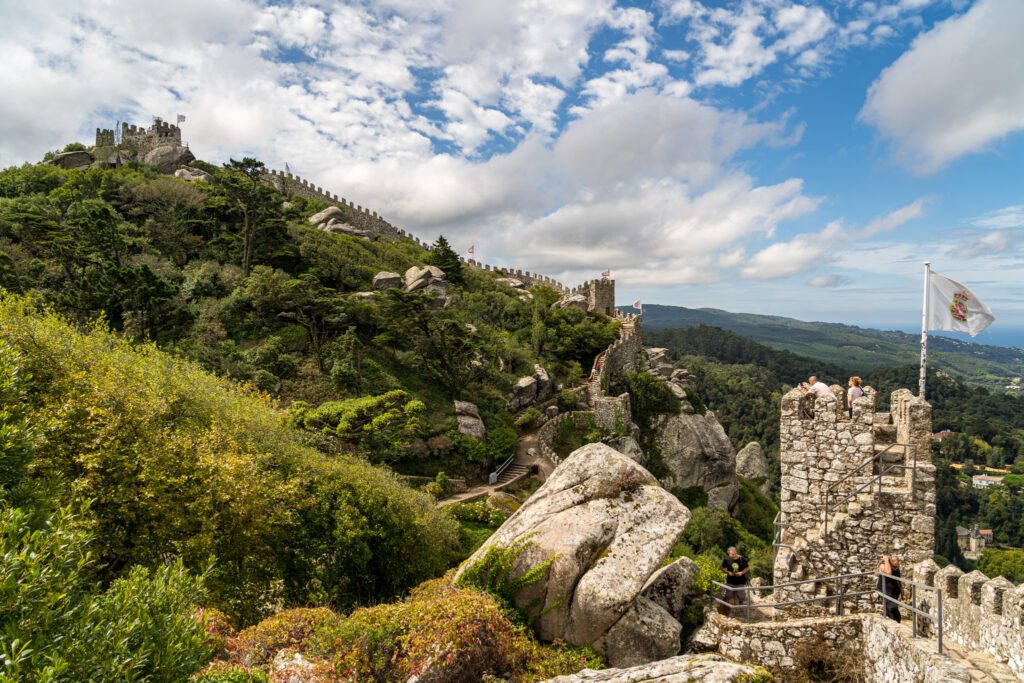
After lunch, head out to Quinta da Regaleira, another palace, and then head back to the train station to catch your train back to Lisbon (again, no need to buy in advance).
We have an entire guide dedicated to helping you plan your day trip to Sintra which you should go read for more detail on what to do, how to fit it all together, and the important logistics you need to know.
What to Do with More Time in Portugal
If you happen to have more time in Portugal, we have a few ideas on what you could add to your itinerary.
Now, usually, we have to make some concessions on the number of days in each place on an itinerary like this because we’re trying to strike a balance between seeing different parts of the country and limited time, but in this case, we actually feel pretty good about the number of days spent in Lisbon, Porto, around Óbidos, and the Algarve.
Which means that the things we’d add here are new destinations, which is kind of fun! Obviously, you totally could add another day to Lisbon or Porto dedicated to exploring the city and have a grand old time.
Add a Day Trip to Braga & Guimarães (+1 Day Each)
We had both of these day trips on our list for our latest visit to Porto, and ended up realizing that we wanted to spend more time in Porto itself.
Both are easily accessible by train from Porto, and they each offer something slightly different.
Obviously, if you only have time for one day trip from Porto, we’d strongly recommend the Douro Valley.
However, if you have another extra day, one of these two would be a nice addition to see another slice of the country without having to pack up your bags and move around too much (which inevitably ends up in lost time to travel and check in).
Braga is a younger-feeling town with a massive university, which the city is basically built around.
The students really give the city life, and it has the youthful energy that you only really find in college towns (we love Bologna in Italy for this reason).
However, Braga is the place to go to see architecture from across Portugal’s history, from Roman times to the Middle Ages, with a massive cathedral, Roman baths, and a Baroque masterpiece of a palace.
You can also get up to Bom Jesus Do Monte, a hilltop sanctuary just outside of town with excellent architecture, gardens, and views, by taking the bus from the center of Braga.
Guimarães, on the other hand, is the place to go for history.
It’s the home of the Dukes of Bragança (their medieval palace is worth seeing – it’s right in the historic center), an influential noble family from northern Portugal during the Middle Ages.
Guimarães is considered one of the most important cities in the country because Portugal’s first king – Alfonso Henriques – was born here.
Before the conquest of central and southern Portugal from the Muslim Caliphates that ruled them for centuries, “Portugal” was basically the area around Guimarães and Porto, with Guimarães being the capital (before everything changed when Portugal conquered the south).
Today, it has a very charming historic center, a cable car that takes you up to the top of the ridge to the east of the city for excellent views (and a hilltop church), and a medieval castle.
Both are accessible via train from Porto, and it’s roughly an hour each way to get to either one.
Add a Couple of Days in Évora (+1-3 Days)
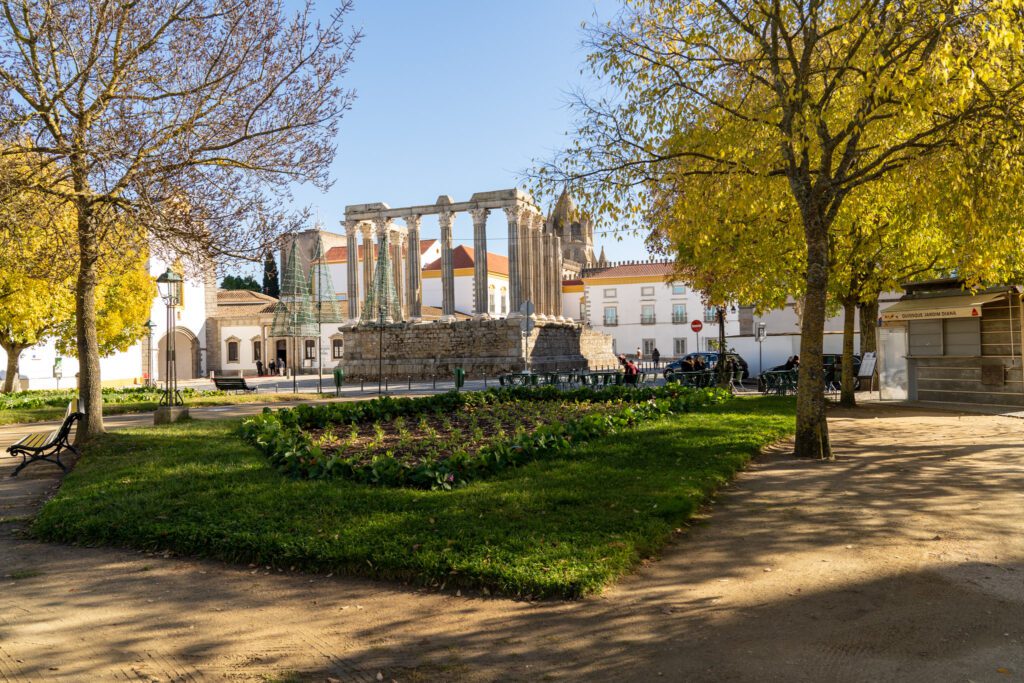
We strongly considered adding Évora, a city in Alentejo, a big region in central Portugal, to the main itinerary (in fact, the first version of the itinerary had it as a stop between Óbidos and the Algarve).
We stopped in Évora between the Algarve and Lisbon, and we spent a couple of nights here exploring, drinking the good wine that comes from Alentejo, and enjoying the charming historic center.
It’s a relatively small town, with white washed buildings and a maze of narrow cobblestone streets, and the crowds here are noticeably thinner than they are in Lisbon and Porto, where the level of tourism can feel oppressive at times.
Over the course of its history it has had multiple groups of inhabitants, from Celtic tribes to the Romans, to the Muslim Caliphates that ruled over most of the Iberian Peninsula (and a few others).
One main reason to come here is the fact that the Alentejo is the breadbasket of Portugal, which means they have all of the great agricultural products (wine, cheese, meats) at their disposal.
If you have the time, it’s worth exploring the broader region (especially if you have a car) where you can find all sorts of wine tasting experiences and farm visits to sample fresh cheese.
In terms of specific attractions in the city, the two things we wouldn’t miss are the views from the rooftop of the church (the Cathedral of Évora), which are spectacular, and the remnants of the Roman Temple.
We also really enjoyed our wine and cheese on the patio of TascaTosca in the middle of the city, and coffee at Do Largo.
What to Do with Less Time in Portugal
If you have anything less than two full weeks to explore Portugal, we’d strongly recommend reducing the number of regions you focus on from all four of the regions we featured in the main itinerary (Lisbon, Porto, around Óbidos, and the Algarve) to just three of them.
If you absolutely must keep all four, the places we’d cut first are a day in the Algarve, and then a day around Óbidos. Less than 12? We really think you need to cut an entire region.
For most people, we’d go with Lisbon, Porto, and the Algarve, which gives you a nice blend of different aspects of Portugal.
Though you could easily make an argument for focusing only on the stretch between Lisbon and Porto and cutting the Algarve, especially considering there are plenty of beaches and charming coastal towns on that stretch of coast.
That’s exactly what you’ll find over in our 10 day Portugal itinerary, which you should read if you’ve got somewhere between 10-13 days.
If you have less than 10 days, we’d strongly recommend only focusing on Lisbon and Porto, with maybe a day or two in between them if you have the time.
You can read our guide to spending one week in Portugal to see how we’d organize a seven day trip, and build your itinerary from there.
Planning a trip to Portugal? We’d LOVE TO HELP!
Here are our other Portugal travel guides to help you plan an incredible trip (even if you have to eat gluten free!).
If there’s no link below, it means we’re still working on it – long, in-depth guides take time! We’re working on it, though, we promise.
Portugal:
- Exactly How to Spend One Week in Portugal (for First Timers)
- 10 Days in Portugal: Planning the Perfect Portugal Itinerary
- 2 Weeks in Portugal: A Perfect 14 Day Itinerary for First Timers
Lisbon
- 25 Incredible Things to Do in Lisbon: A Complete Guide
- 3 Days in Lisbon: Planning the Perfect Lisbon Itinerary
- One Day in Lisbon: The Best of Lisbon in 24 Hours
- Where to Stay in Lisbon: Our Guide to 4 Amazing Places to Stay
- Gluten Free Lisbon: A Complete Guide to Lisbon’s Best Gluten Free Restaurants
- The Best Coffee in Lisbon: 9 Amazing Lisbon Coffee Shops to Add to Your List
Porto:
- All of our Favorite Things to Do in Porto
- 3 Days in Porto: Planning the Perfect Porto Itinerary
- One Day in Porto: How to See the Best of Porto in a Day
- Where to Stay in Porto, Portugal: The 3 Best Places to Stay
The Algarve:
