
Gluten Free Spain: A Complete Guide for Traveling Celiacs
If you made me choose a top five gluten free cities around the world that takes into account the breadth and depth of gluten free options relative to the size of the city, there would be two different Spanish cities on it (at the time of writing, that list goes Portland, London, Madrid, Rome, Barcelona, for the record).
Spain’s big cities are a culinary delight if, like me, you need to eat gluten free (I have Celiac Disease), but also love food.
From excellent bakeries to dedicated gluten free tapas spots to the best gluten free pizza I’ve had outside of Italy, Spain is a great option for traveling Celiacs, and is roughly tied with Italy as my top recommendation for newly diagnosed Celiacs.
In this guide, we’re going to dive deep into three topics.
First, we’ll give our perspective and theories on why Spain is so Celiac-friendly.
Then we’ll tackle our tips for navigating Spain gluten free.
Last, we’ll go through a quick overview of our favorite gluten free restaurants and bakeries in Spain, organized by city (and with links to more guides for that destination).
Our intention here is that by the end of this guide, you’ll feel more prepared to plan your trip to Spain, and be armed with the information you need to experience Spain confidently and safely.
Sound good to you? Let’s get into it.

Disclaimer: Some of the links in this post, like hotel links, are affiliate links, meaning at no additional cost to you, we make a little bit of money if you click through and book. That being said, we would never recommend something to you that we don’t stand behind 100%.
Is Spain a Good Country for Gluten Free Travelers?
There’s a big reason why Spain has leapfrogged Italy as my favorite country to visit for the gluten free food.
Spain, particularly Spain’s big cities, are an absolute paradise for Celiacs and other people who need to eat gluten free.
There are three things going on here in our minds.
First, similar to Italy, food plays an important role as a connection point in Spanish life.
Meals are meant to be savored and enjoyed with people you love, which is part of the reason why the siesta exists in Spain (to allow time to sit down for lunch).
Second, Spain’s big cities tend to be very cosmopolitan, so you get different groups of people from all over (Europe, Latin America, etc).
In our experience, that tends to lead to a more vibrant and innovative food scene.
For example, in Sevilla there’s a great gluten free bakery that’s owned by a man who came over from Uruguay decades ago, and there’s a great dedicated Venezuelan restaurant run by a couple originally from Venezuela.
Lastly, Spanish cuisine naturally tends to be pretty low in gluten (though they love their bread).
They do some fried foods that contain gluten (croquetas and fried fish), but most Spanish dishes don’t use a whole lot of flour (like French food does, for example, where they just toss a tablespoon of flour in every sauce for funzies).
Combine those three factors and you get a great gluten free destination with tons of Celiac-safe gluten free options (and a lot of dedicated gluten free restaurants).
All that being said, there are two big things to watch out for in Spain.
The first thing you need to watch out for is bread. This might seem obvious, but the reason we want to call it out is the fact that when you go to a tapas or pintxos place, oftentimes what you see on the menu – anchovies in vinegar – seems like it should be gluten free, but it’s served on a slice of baguette.
Technically, it can be served without the bread, but that’s a whole different conversation on cross-contact (that we’ll actually touch on in the “tips” section below).
Similar to other places in Europe, many restaurants will also bring out a basket of bread with your meal.
It’s usually not gluten free unless you’re at a very specific restaurant that’s used to catering to Celiacs, and I usually just tell them I’m Celiac and they can take the bread away.
The big thing you need to watch out for is fried food and contaminated fryers. Most places, unless they’re specifically serving gluten free customers, do not have dedicated gluten free fryers.
The ubiquitous croquetas, which usually contain gluten, and the fried calamari go into the same fryer as the potatoes for the patatas bravas and the french fries, which makes those dishes risky, at best, if you have Celiac Disease.
Generally speaking, I assume the fryer is contaminated and ask if it’s safe, rather than assuming it’s safe in the first place.
Tips for Traveling in Spain Gluten Free (as a Celiac)
Here are a few important things to keep in mind as you travel around Spain as a Celiac.
The biggest thing to know is that many people in the restaurant industry in Spain’s big cities speak English, but not always.
You’re going to need to be able to communicate your needs in Spanish in some way, whether that’s speaking or using a gluten free restaurant card, which is a useful tool if you’re not confident in your high school Spanish.
Learn a Few Key Phrases in Spanish
Putting gluten aside for a second, we always recommend learning a few key phrases in the local language, like “hello”, “please”, and “thank you”, and “do you speak English?”, because leading with the local language almost always leads to a warmer, more open interaction.
The key is trying. You don’t have to be good at it, you just have to put forth the effort.
I have personally seen complete transformations happen before my very eyes from grumpy and annoyed to effusive and overjoyed simply because I asked a question in Spanish.
As you might imagine, this will come in handy if you’re trying to ask a server about gluten free processes and procedures.
We’re going to give you two sets of phrases here; the gluten free phrases we’d learn, and the general phrases we’d learn (along with phonetic pronunciation guides).
The gluten free phrases we’d practice are:
- I am Celiac – Soy Celiaco / Celiaca (soy see-lee-ah-ko / see-lee-ah-kah)
- Gluten free – Sin Gluten (seen glue-ten)
- Is this gluten free? – Este es sin gluten? – ask this when your food arrives to confirm (it’s not technically correct grammatically speaking, but it’s easy to say and they’ll understand).
Here are the more general words and phrases I would recommend learning (and their Spanish counterparts with a little pronunciation guide).
- Hello – Hola (oh-la) or Buenos Dias (bwen-ohs dee-ahs) – these two will work in most cases, there’s also buenos tardes (bwen-ohs tar-days) for the afternoon, and buenas noches (bwen-ohs no-chays) for the evening.
- Please – por favor (poor fah-vore)
- Thank you – gracias (grah-see-ahs) – say muchas gracias (moo-chahs grah-see-ahs) for emphasis (thank you very much)
- Goodbye – Adios (ah-dee-ohs)
- Do you speak English? – Habla inglés? (ah-blah een-glays)
- The bill/check please – La cuenta, por favor (la kwen-tah poor fah-vore)
- Where is XXX – Dónde está el/la… (doen-day ess-tah el/la…)
- I would like XXX / We would like XXX – Quiero / Queremos (key-er-oh / keh-reh-moes) – another example where there are technically better ways to say this, but this is the easiest to remember and it gets the point across, especially with a “por favor” at the end of your request.
Use a Gluten Free Restaurant Card to Communicate Your Needs
As I already covered, most people in the service industry in big Spanish cities (and main tourist destinations) speak English, but once you’re in more rural settings, it’s less consistent.
If you are concerned about being able to communicate the nuances of your dietary needs (shared fryers, for example), I highly recommend investing $10 in a Spanish Gluten Free Restaurant Card from Jodi over at Legal Nomads.
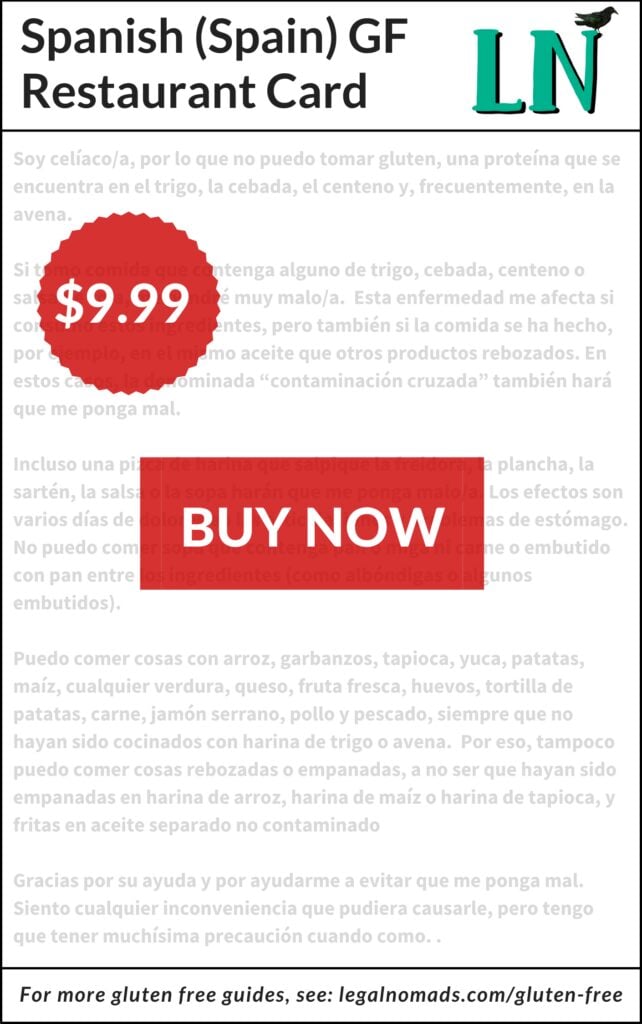
While I don’t use it in Spain because my Spanish is good enough to get by without one, I have used them in Colombia (before my Spanish was developed) and Germany, and they serve as a nice tool to make you feel more comfortable eating out in the face of a language barrier.
It’s kind of like a safety blanket for me – if I run into a situation where communication just isn’t happening, I have a backup plan where I can pull out my printed gluten free restaurant card, and hopefully get my point across.
Now, which gluten free restaurant card you choose matters, I think.
Anyone can learn to say (or pull up on Google Translate) something to the effect of “I have Celiac Disease and I need to eat gluten free.”
However, as you undoubtedly know, most of the battle when you’re trying to find safe gluten free food when you’re traveling is going to be managing cross-contact with gluten, like shared fryers and pizza cutters.
Which is something that 99% of the cards out there – free and paid – don’t mention at all. Crazy!
That’s why I, personally, like the cards from Legal Nomads, which have detailed explanations of what is and is not safe, and mentions cross-contact specifically.
They’re $10, and are well worth the peace of mind, at least for me.
Some people have emailed me to tell me that the Legal Nomads card is just too long, but when we’re talking about my health, I’d much prefer over-communicating and mentioning specific things I can and can’t eat (versus saying, essentially, “I need to eat gluten free thanks”).
Some Chains Have a Location that is Dedicated Gluten Free
There is one phenomenon that I’ve seen all over Spain that I would really like to see the rest of the world adopt, and that is where you have a local chain of restaurants with somewhere between one location and a handful of locations that are dedicated gluten free.
This is a different approach than having gluten free options at all of the locations because it minimizes the risk of cross-contact in the kitchen, especially a flour-intensive environment like a pizzeria or a bakery, and makes it a much safer option for Celiacs.
Generally speaking, outside of Italy where they have an active Celiac association offering guidance on how to prepare gluten free food safely in a mixed environment, I avoid eating at pizza places with mixed kitchens.
Why? Because I’ve gotten into making my own gluten free pizza at home, and by the time I’m done making a couple of pizzas for Alysha and I, every last square inch of exposed surface in the kitchen is covered in a thin layer of gluten free flour.
In Spain, there’s a chain of Neapolitan pizza restaurants called “Grosso Napoletano”, and they have 13 locations across Spain (half of them are in Madrid) that are called “Grosso Napoletano Senza Glutine” that are dedicated gluten free with almost zero risk of cross-contact.

It’s legitimately the best gluten free pizza I’ve ever had outside of Italy (and maybe even including Italy), and I would never eat there if it was a mixed environment.
There are countless other examples of this phenomenon, including a fish and chips spot in Barcelona (the Fish and Chips Shop), a chain of bakeries across Spain (chök), and a smashburger spot in Madrid (Pink’s).
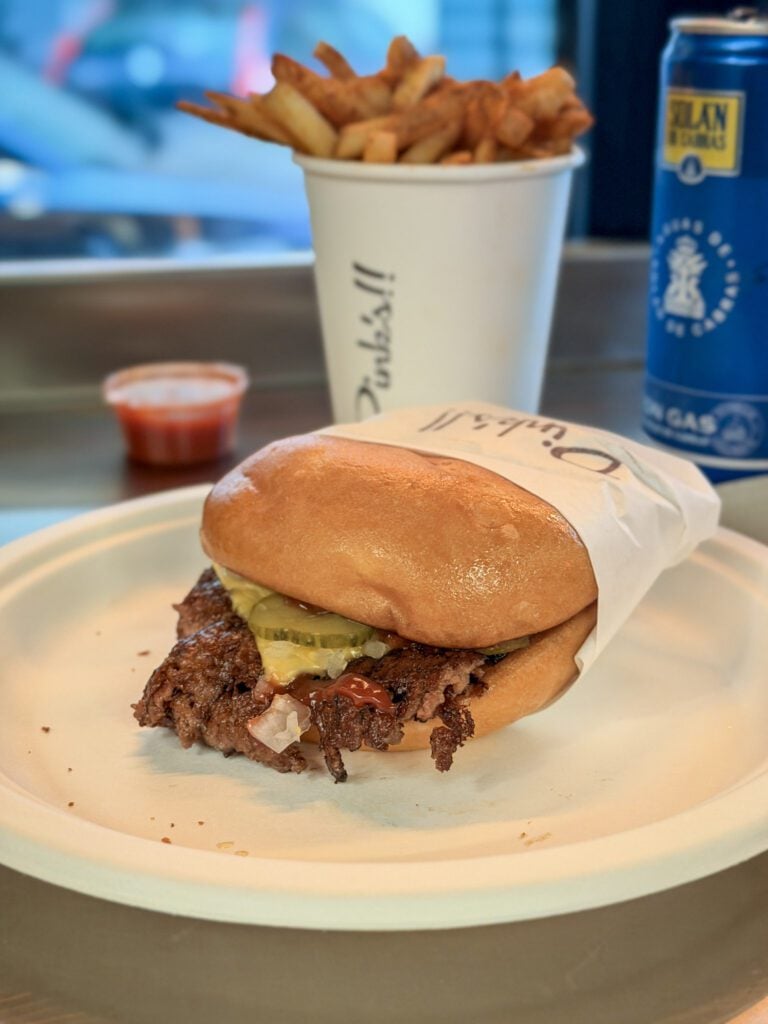

In all of those cases, the chain itself is not gluten free, but they have at least one location that is dedicated gluten free to offer their food to Celiacs and other gluten free folks in a safe environment.
It’s great, and I’d like to see this idea expanded across the globe, please.
Know Your Spanish Celiac Associations
A big similarity between Spain and Italy is the presence of an active Celiac association who helps restaurants figure out what they need to do to serve Celiacs safely.
It’s one big reason why I think Italy is such a good place to visit as a Celiac, and it’s something I wish we had here in the U.S. (though our sprawling geography would make it virtually impossible).
In Spain, you have multiple layers of Celiac Associations; the national Celiac association called FACE (which stands for “Federación de Asociaciones de Celíacos de España”) and local Celiac Associations in big cities / regions like Madrid and Catalonia (La Asociación de Celíacos y Sensibles al Gluten in Madrid and the Associació Celíacs de Catalunya for example).
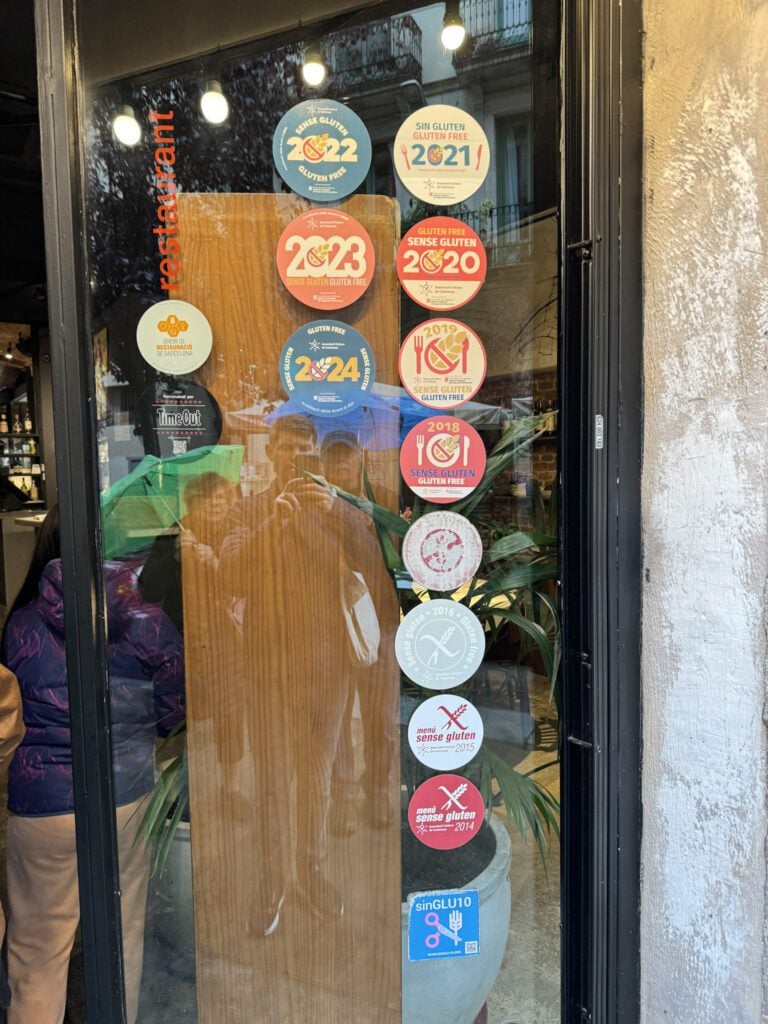
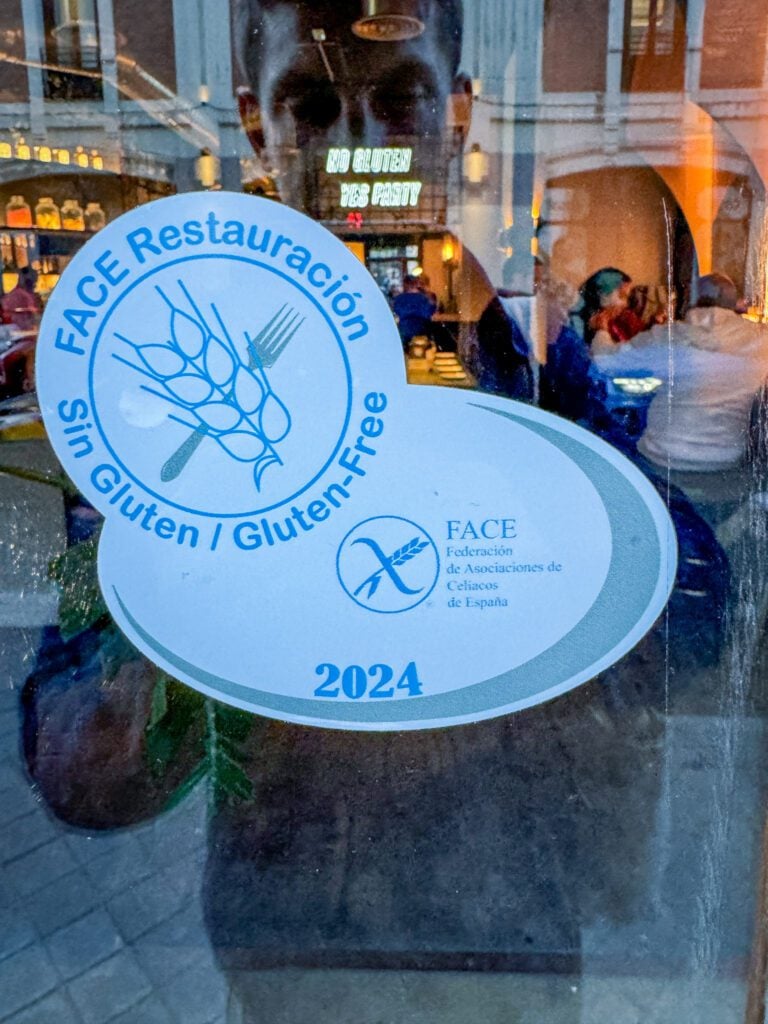
You’ll often find both of their symbols in accredited restaurants, and once you know what to look for you’ll see them plastered all over the windows of many gluten free restaurants in our Spain guides.
Unfortunately, I don’t find their apps all that helpful (unlike the AIC app in Italy, which is useful).
Madrid Sin Gluten, for example, only has a few of the dedicated restaurants in Madrid, which is a good start I suppose, but they don’t cover the full breadth of Madrid’s elite gluten free scene.
How to Find Gluten Free Restaurants in Spain
There are three things I use to put together my hit list of gluten free restaurants in a city I’m visiting: Find Me Gluten Free, Google Maps, and travel guides written by fellow Celiacs.
Think of them all as tools in your toolbox for assembling your list (though you always need to double check since things change constantly in restaurants).
Find Me Gluten Free is my first stop. It’s an app that crowd-sources reviews for gluten free restaurants around the world, kind of like Yelp, but specifically for gluten free spots.
There is one big thing you need to watch out for: the reviews aren’t always 100% reliable, which is why you need to reach out to each restaurant individually (or ask when you stop in before ordering).
It’s all crowd-sourced, and the reviewers’ needs might be different from yours. For example, many people who leave reviews are not Celiacs, and therefore aren’t worried about dedicated fryers or cross-contact in a pizza place, which are things I personally avoid.
Here are a few tips for using Find Me Gluten Free, which I personally use all the time:
- Filter by “Dedicated Gluten Free” first. I recommend dining in 100% gluten free places when you’re traveling with Celiac Disease, but they aren’t always plentiful. Doing this makes it so that you can find those gems and add them to your list.
- Sort by rating, but know that sometimes the top rated restaurants are not actually in the city you searched in. For example, if you look at the highest rated restaurants in San Francisco, you’ll get a bunch that are a 30+ minute drive outside the city. Just something to watch out for.
- Focus on the “% safe for Celiacs.” The star ratings are important, but I use the % who say it’s safe for Celiacs as a directional guide for whether or not they should make the list. Which leads me to my next point.
Google Maps is also a good tool for finding gluten free restaurants. I usually search for “gluten free”, “sin gluten”, or “celiac” in the city I’m looking at, and then read reviews and visit the restaurant’s website to learn more.
Lastly, I’ll Google “gluten free CITY” and look for guides written by fellow Celiacs.
In all cases, you need to double check the information you’re getting because things change all the time, and your needs might be different from another person’s.
Gluten Free Beer is Actually “Gluten-Reduced”
I’ve had multiple friends and family send me pictures of gluten free beers from Spain, like gluten free Daura Damm, and say something like “look, gluten free beer in Spain!”
Unfortunately, the story is a little more complicated, and it’s not actually that easy to find Celiac-safe gluten free beer in Spain as it appears on the surface.
I really can’t figure this one out. In a country (or region, since the labeling laws often come from the E.U. regulations) that does its best to protect Celiacs and give them the information they need to stay safe, they have one major blindspot: gluten free beer.
There are a bunch of gluten free beer brands in the E.U., but 99% of them are what we in the United States call “gluten reduced,” because they are brewed with barley (NOT Celiac-safe!) and then an enzyme is used to break down the gluten.
The alternative, which is what the gluten free breweries in the United States are doing, is to use naturally gluten free grains like rice, millet, and corn (among others) to brew gluten free beer.
After a conversation with an Italian beer shop owner where we could only understand roughly half of what the other person was saying, I believe the reason behind this is the fact that you cannot call a beverage in the E.U. “beer” unless it is made with barley, which he claimed was because of “the Germans,” which means that all of those naturally gluten free beers can’t be called beer in the E.U. (PS if you know more about this, I’d love to hear from you!).
Literally every single gluten free beer I have come across in the E.U. was made with barley, and it was super disappointing when I went to a gluten free restaurant, ordered a beer, paid a ridiculous price because it was gluten free, and found out it was gluten-reduced when it arrived.
Needless to say, I didn’t make that mistake twice.
Now, I don’t think this is the right forum to get into whether or not gluten-reduced beers that are brewed with barley are safe for Celiacs.
I personally do not drink gluten-reduced beers after multiple bad experiences with them, and would refer you to this guide by Gluten Free Watchdog on why they’re problematic.
The point is that if you see “gluten free beer” in Spain, you should be skeptical.
Tapas (and Pintxos) Can Be a Minefield of Cross-Contact
Remember when we said there were two things to watch out for in Spain when it comes to cross-contact with gluten? They were bread and contaminated fryers.
Those two factors come together to make eating at tapas bars in Spain really difficult.
Many of Spain’s traditional tapas and pintxos (pintxos are similar to tapas, but up in Basque Country in northern Spain) bars are a cool experience, packed wall-to-wall with people at peak hours eating and drinking at the bar or standing tables.
I went to a famous bar in Barcelona with some friends (Quimet and Quimet) and we stood at the bar and enjoyed some tapas and drinks on a busy weeknight evening. Or, more accurately, they (not gluten free) enjoyed some tapas and I enjoyed a glass of cava.
The problem in that case was the fact that every single dish was served on a slice of bread, so cross-contact is nearly unavoidable.
The kitchen in many of these tapas bars is basically just the bar, which means there’s not a whole lot of space. Combined with the fact that many of them get extremely busy, it’s a nightmare for Celiacs.
I stood there at the bar and watched as the busy servers ran around touching all of the bread with their hands and utensils and spilled beer all over their hands and the counter.
Even if you could get a piece of gluten free bread, the risk of cross-contact is high.
We ran into a similar thing up in Basque Country, where pintxos that should be naturally gluten free, like anchovies in vinegar, were put on top of a slice of baguette.
The other thing you’ll find is that a lot of tapas bars with things like fried calamari and patatas bravas or huevos con rotos, all of the fried items are fried in the same fryer, so things that should be gluten free are at a relatively high risk for cross-contact in the shared fryer.
Lucky for you, there are some dedicated gluten free spots and others that have a separate area in the kitchen in the back where they’ll prepare you some dishes that come out separately, which we’ll cover below in the city guides.
Gluten Free Groceries Are Easy to Find
While the gluten free restaurant scene in Spain’s big cities is nothing short of great, the options get a little thinner the more rural you get.
For example, while you have a plethora of great options in cities from the size of Barcelona and Madrid down to the smaller tourist-heavy cities like Granada, the options get noticeably thinner in places like Ronda or Tarragona, which are lovely cities to visit, but don’t have a whole lot of gluten free options.
If you’d like to cook for yourself while you’re in Spain, I have some great news: Spain is an excellent place for finding gluten free groceries.
One of my favorite pastimes (which likely comes from working in the food industry) is going to all the different grocery stores in a new place.
These days, it’s mostly to see how they organize their gluten free items.
So as we’re walking around exploring a new place, I’m prone to dragging Alysha into multiple different grocery stores to see how many gluten free things they have, and whether they have a dedicated section.
My first recommendation is to visit El Corte Inglés, a chain of huge department stores that you’ll find all across Spain and Portugal.
They usually have a supermarket tucked away somewhere in the building (often in the basement), and it is easily the best place to find gluten free groceries in any Spanish city.
The gluten free selection is MASSIVE. Every Schar product on the face of the earth, a couple of good gluten free pastas (we bring back gluten free Rummo pasta every time we’re in Europe), and plenty more.
They often have multiple locations in the big cities (Madrid, Barcelona, Sevilla), and one location in the next tier of cities.
Carrefour (and Carrefour Express): The Express version of Carrefour, which is mostly what you’ll find within the city center, still has a nice gluten free selection despite the small footprints (but nothing close to El Corte Inglés, if we’re being honest).
They’ll usually have things like gluten free bread and pasta, but might not have more specialty items like baguettes or cookies, depending on the location.
Bigger Carrefour stores (not labeled “Express”) generally have a better selection.
Mercadona: The least fancy store here with the best prices. Their selection is smaller, and varies wildly by store. They’re generally on the outskirts of Madrid, and you’d likely have to go out of your way to find one if you’re staying in the center.
Eroski: The best gluten free store (aside from El Corte Inglés) in Basque Country. We found them in Bilbao and Donostia / San Sebastián.
Gluten Free Spain: Mini Gluten Free City Guides
Now that we’ve covered our processes for finding Celiac-safe gluten free restaurants while you’re in Spain, let’s get into specific recommendations for places to eat in popular Spanish cities.
For most of the cities below, we have a separate, more detailed city guide with far more options. We’re just going to give you a few highlights in each place in this section, and we’ll give you the link to our full city guide (if we have one) for more information.
What Are the Best Cities for Eating Gluten Free in Spain?
Before we get into specific recommendations in various cities, let’s take a second to talk about where you’ll find the best gluten free options.
This is important if the food is part of the reason you’re visiting Spain – there are certain cities and regions where you’re going to find more gluten free options, and if you’re in it for the food, you’ll want to focus your time there.
At a high level, the big cities are going to have the best gluten free selection.
The best cities in Spain in terms of gluten free options are:
- Madrid
- Barcelona
- Seville
- Valencia
The cities and regions where you’re going to find fewer options are:
- Granada
- Northern Spain (Basque Region + Galicia)
- Southern Spain outside of Seville
- Mallorca & Menorca
That doesn’t mean you shouldn’t visit those places, but it does mean that you should know going in that you aren’t going to find the same level of gluten free options as, say, Rome.
Now, here are our mini-guides to Madrid, Barcelona, and Sevilla.
Madrid
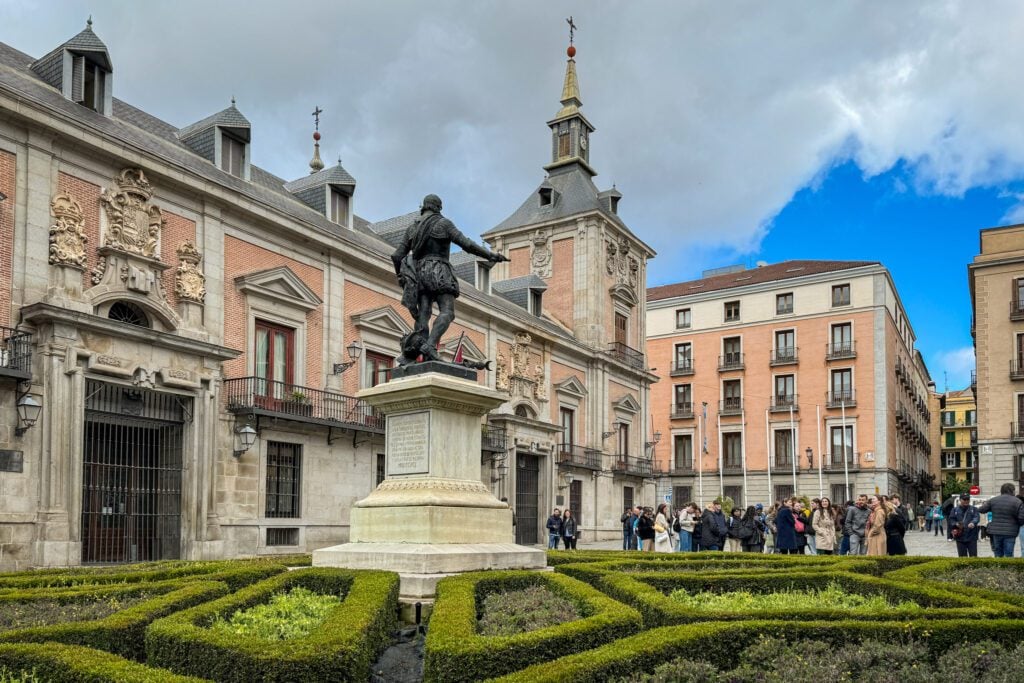
Though Madrid isn’t the most visited city in Spain from an international tourism perspective, it is the biggest city in Spain (by quite a bit), and it is absolutely an elite gluten free travel destination on par with Portland, London, and Rome.
There are far, far too many gluten free spots to list here, so we’re going to cover our top three and point you to our guide to gluten free Madrid for more.
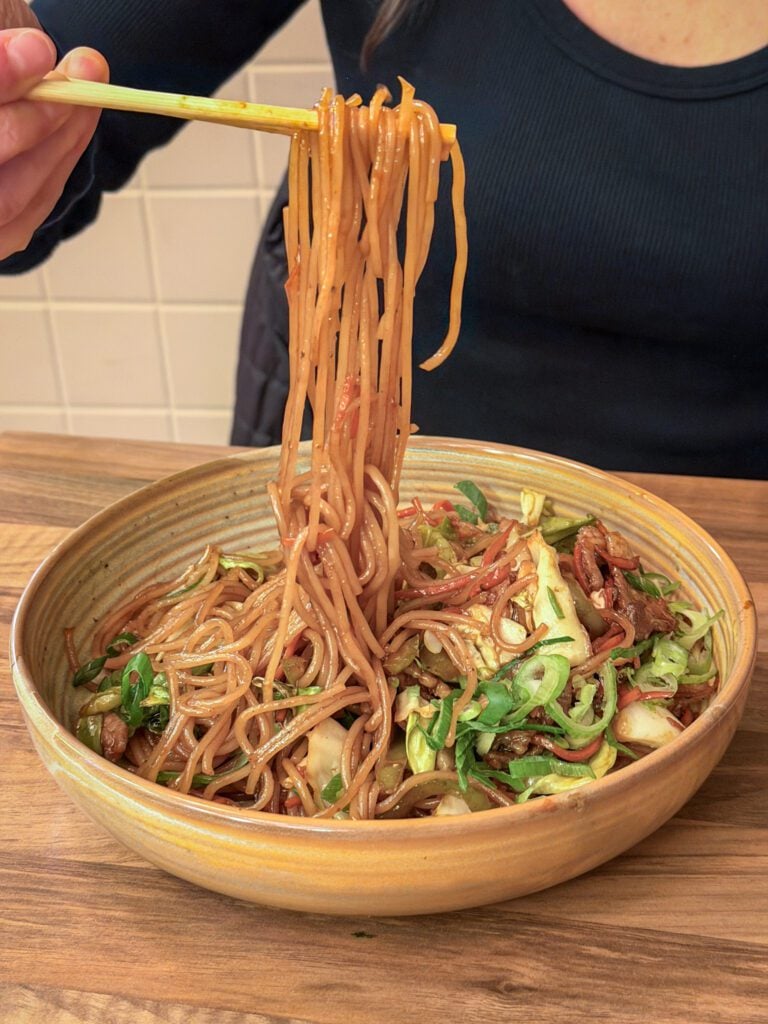
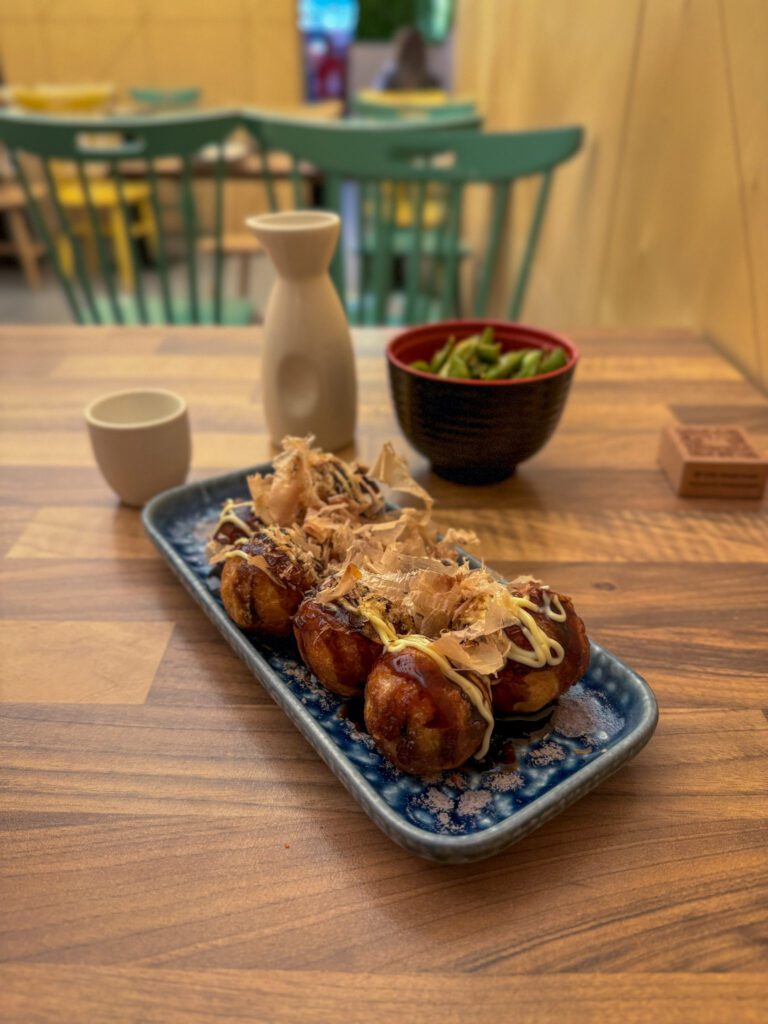
Okashi Sanda: Gluten free Japanese food that goes beyond sushi to things like yakisoba and Takoyaki (sort of like croquettes filled with octopus). This is the place I go first in Madrid, and it’s one of my favorite gluten free restaurants in the entire world. Don’t miss the handmade desserts, either.
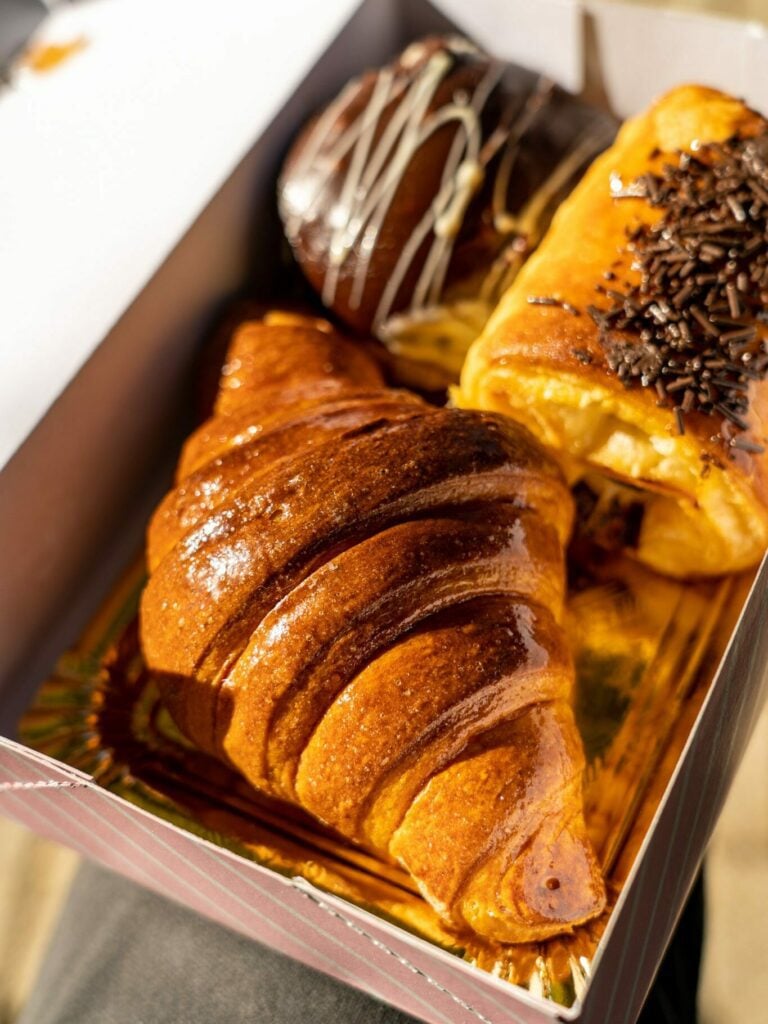
Sana Locura and Pastelería La Oriental sin Gluten: The two best gluten free bakeries in Madrid, both are excellent for pastries like croissants, napolitanas, and plenty more. Sana Locura also has good bread and savory things like sandwiches, which make for great plane/train meals.

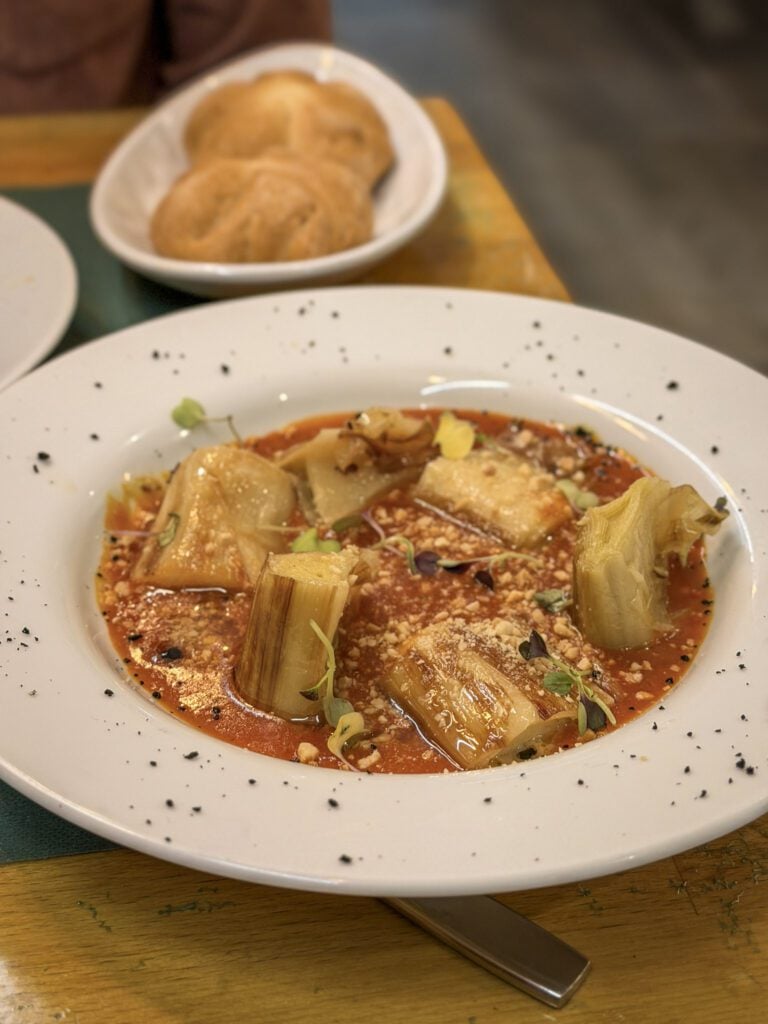
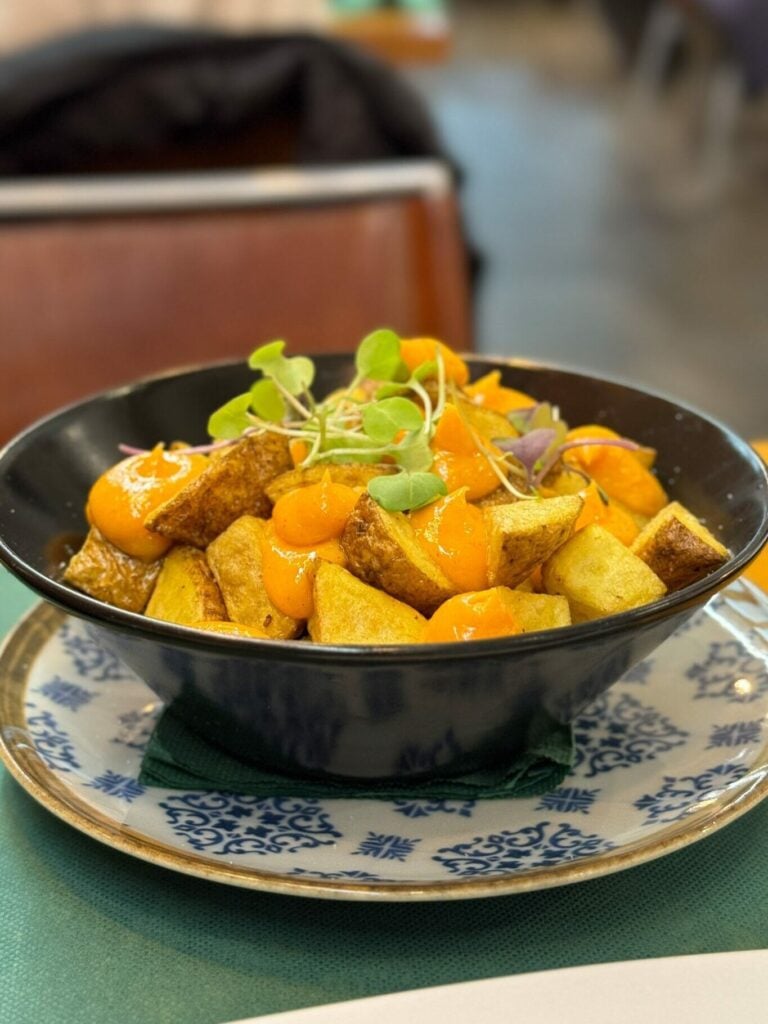
Casa San Juan: The best place I’ve found to experience Spanish cuisine in a dedicated gluten free environment. Patatas bravas, huevos rotos, tortillas, and plenty more. Don’t order paella here, though, because it’s not what they’re good at.
The leeks in Romesco sauce are the single best bite of food we had in Spain on our last trip, and they still live rent-free in our heads.
Barcelona

Barcelona is pretty clearly the most famous city in Spain from a tourism perspective, and over the past few years we’ve seen the local government and population wrestle with ways to make tourism more sustainable.
When you look at Barcelona, it’s easy to see why it’s so popular.
It’s on the Mediterranean.
It’s relatively modern and has a unique architectural style.
And it’s in the middle of Catalonia, home to a diverse range of landscapes from mountains to beaches that are an easy journey from the city center.
Like Madrid, Barcelona is a top 10 gluten free city in the world. Also like Madrid, there are far, far too many gluten free spots to list here, so we’re going to cover our top three and point you to our guide to gluten free Barcelona for more.
One thing to know about Barcelona is that there are a bunch of very “brunch-y” restaurants that have popped up over the past few years that are 100% gluten free. They’re fine, but not my favorite type of place.
Jansana: The best gluten free bakery in Barcelona (in Spain?). Great pastries (get the xuixo, if they have it, which is a Catalonian specialty) and great breads. Top tier, can’t miss, etc etc.
They do use gluten free wheat starch in many of their products, so if you have a wheat allergy you should skip it.
En Ville: A more upscale dedicated gluten free restaurant right in the Gothic Quarter in Barcelona’s historic center. Good place to try Spanish food and have a nice more traditional meal.
Aruku: A dedicated gluten free Japanese spot near the Sagrada Familia. They do have sushi, but they also have things like okonomiyaki and yakisoba that are harder to find made gluten free.


Sevilla
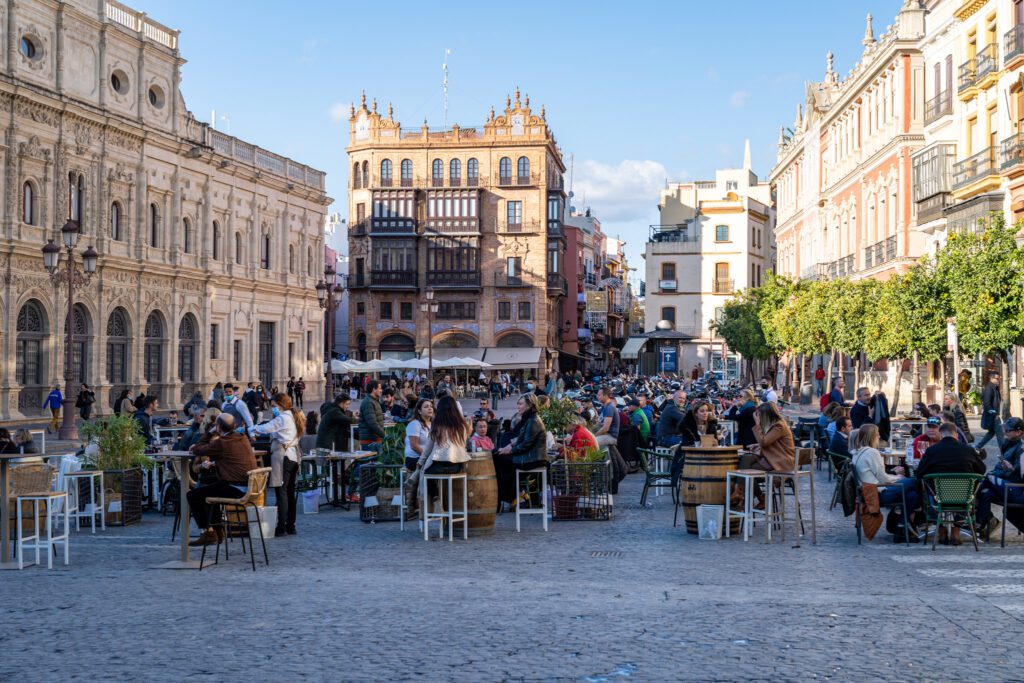
Sevilla is probably in a different tier than Madrid and Barcelona as a gluten free city, one step down.
There are still a bunch of good options, but they’re not quite as numerous as the other two big cities in Spain.
However, there are still too many gluten free spots to list here, so we’re going to cover our top three and point you to our guide to gluten free Seville for more.
Señora Pan: An excellent dedicated gluten free Venezuelan restaurant in the heart of Sevilla.
The tequeños, which is basically a Venezuelan take on a mozzarella stick, are usually coated in bread and deep fried, so they’re not gluten free.
Here, they are, and the guava sauce they’re served with is one of the best things I’ve ever eaten.
Make reservations, it’s a popular spot. Don’t order the paella here, that’s not what they’re good at (good advice for basically any restaurant outside of Valencia, to be honest).
Pastelería Durazno y Chajá: Legitimately one of the best gluten free bakeries we’ve been to, in Spain or elsewhere. Well worth the short journey across the river to Triana to seek out their pastries. Their gluten free croissants are somewhere in my top 5 of all time.
Gloria & Rositas: A dedicated gluten free ice cream shop where everything – all flavors and even the cones – is gluten free. And the ice cream is excellent. Sevilla is famously hot AF, and this is the perfect way to cool down.


Planning a trip to Spain? We’d love to help!
Here are our other Spain travel guides to help you plan an incredible trip (even if you have to eat gluten free!).
If there’s no link below, it means we’re still working on it – long, in-depth guides take time! We’re working on it, though, we promise.
The first place to start, if you haven’t already found them, is with our detailed itineraries. We have one shorter version for 7 days in Spain, one version that covers 10 days in Spain (a good middle ground, we think), and one longer version for two weeks in Spain (with ideas for more and less time in both guides).
Our Barcelona Guides
- What to do in Barcelona (as a First Timer)
- How to Plan an Amazing 4 Day Barcelona Itinerary
- Where to Stay in Barcelona: A Complete Guide for First Timers
- 12 Things to Know Before You Visit Barcelona
- Gluten Free Barcelona: A Complete Guide to GF Restaurants + Bakeries
- Where to Find the Best Specialty Coffee in Barcelona
- How to Plan an Incredible Day Trip to Montserrat (from Barcelona)
Our Madrid Guides
- What to do in Madrid (as a First Timer)
- How to Plan an Amazing Madrid Itinerary (2 Days)
- Where to Stay in Madrid: A Complete Guide for First Timers
- 12 Things to Know Before You Visit Madrid
- Gluten Free Madrid: A Complete Guide to GF Restaurants + Bakeries
- How to Plan an Amazing Day Trip to Toledo (from Madrid)
Our Sevilla Guides
- Our Favorite Things to Do in Seville (for First Timers)
- A Perfect 2 Day Seville Itinerary (for First Timers)
- Exactly Where to Stay in Seville (The Best Areas + Hotels)
- Gluten Free Seville: Our Favorite GF Restaurants & Bakeries
The Rest of Spain
