
Visiting the Alhambra: Everything You Need to Know
Ask anyone visiting Granada what their number one priority is while they’re in town, and it’s bound to be the Alhambra.
We have now been to Granada twice in the past five years, and we feel like we can’t visit Granada without a trip up to the Alhambra. So, we’ve experienced the magic of the Alhambra twice, including on our trip earlier this year (at the time of writing).
The Alhambra is one of the most visited tourist attractions in Spain, and rotates between the most and second-most visited with the Sagrada Familia in Barcelona, depending on the year.
As you can imagine, that means tickets can be hard to come by, and visiting requires planning (often months in advance).
In this guide, we’re going to use our multiple visits to give you everything you need to know to visit the Alhambra for the first time.
We’re going to go through all of the details we could think of, including the different pieces of the Alhambra (the complex is big!), what to prioritize, how to get tickets, and what to expect when you’re there.
By the end of the guide, you’ll have all the information you need to plan your own Alhambra visit (and, importantly, secure your tickets to the Alhambra, which do sell out).
Sound good to you? Let’s get into it.
P.S. The first thing you need to know is that you should book tickets ASAP because they do sell out (we have a whole section on it below). We highly recommend a guided tour here, and we have personally done this excellent tour that includes tickets (so you don’t have to worry about it).
Disclaimer: Some of the links in this post, like hotel links, are affiliate links, meaning at no additional cost to you, we make a little bit of money if you click through and book. That being said, we would never recommend something to you that we don’t stand behind 100%.
What, Exactly, is the Alhambra?
Before we get into details about visiting, we think it’s important to take a step back and talk about what the Alhambra is to build a foundation ahead of your visit.
That foundation will lead to a richer, more rewarding experience in the long-run.
The story of Spain is fascinating, and it’s one that we basically learned nothing about in school in the United States (other than “in 1492 Columbus sailed the ocean blue”, which leaves out several really important historical events of that year that, coincidentally, took place in Granada).
The name “Alhambra” is a sort of bastardization of the Arabic word “al-Ḥamrāʼ,” which translates roughly to “the red one.”
Which, from the jump, alludes to the intertwined nature of modern Spain and the Muslim kingdoms that ruled the majority of its territory for hundreds of years.
Spoiler alert: this is absolutely not the only Spanish word that was, essentially, a mispronunciation of an Arabic word.
We’re not going to give you all the details, because you will no doubt hear them from your guides in Granada, but the key thing to know is that Granada (and most of Spain and Portugal) was ruled by a series of Muslim rulers who crossed the Strait of Gibraltar from the Middle East and then North Africa in 711 C.E.
They then proceeded to conquer almost the entirety of the Iberian Peninsula – that’s Spain and Portugal today – within five years.
“Almost” because they left a small band along the northern coast of Spain where groups of Christians had settled and were protected by difficult geography (and supported by other Christian kingdoms in Europe).
Slowly, as the unified Muslim kingdom known as Al-Andalus (even the name is a good example of how intertwined modern Spain is with its Muslim history) fractured and became a series of city-states, the Christians built an army and started moving south.
They began by taking cities in northern and central Spain and Portugal and pushing further and further south until they eventually brought all of the Muslim territory under their own umbrella.
This event is known as the “Reconquista”, but it’s worth noting that the term, while widely accepted, is kind of a misnomer because the Christians in northern Spain had little connection to the people in southern Spain, and thus they weren’t really “reconquering” so much as “conquering for the first time.”
Granada was the site of the last Muslim kingdom on the Iberian Peninsula that stood until 1492 when King Ferdinand and Queen Isabella of Spain accepted the city’s surrender, and the Alhambra was built by that Emirate.
A lot of people think that the Alcázar in Sevilla is the same style as the Alhambra because they look the same, but the truth is a little more complicated.
The Alhambra is a complex that was built by Muslims for a Muslim ruler (in this case, the founder of the Nasrid Emirate of Granada). It is equal parts defensive structure, royal palace, and self-contained city.
The Alcázar is a complex that was built by Muslim artisans for a Christian ruler using stylistic elements from Islamic architecture because it was en vogue at the time.
That means that the Alhambra is the most important example of architecture from the Muslim period on the Iberian Peninsula, and despite being abandoned for several centuries after the Reconquista, is in relatively good condition.
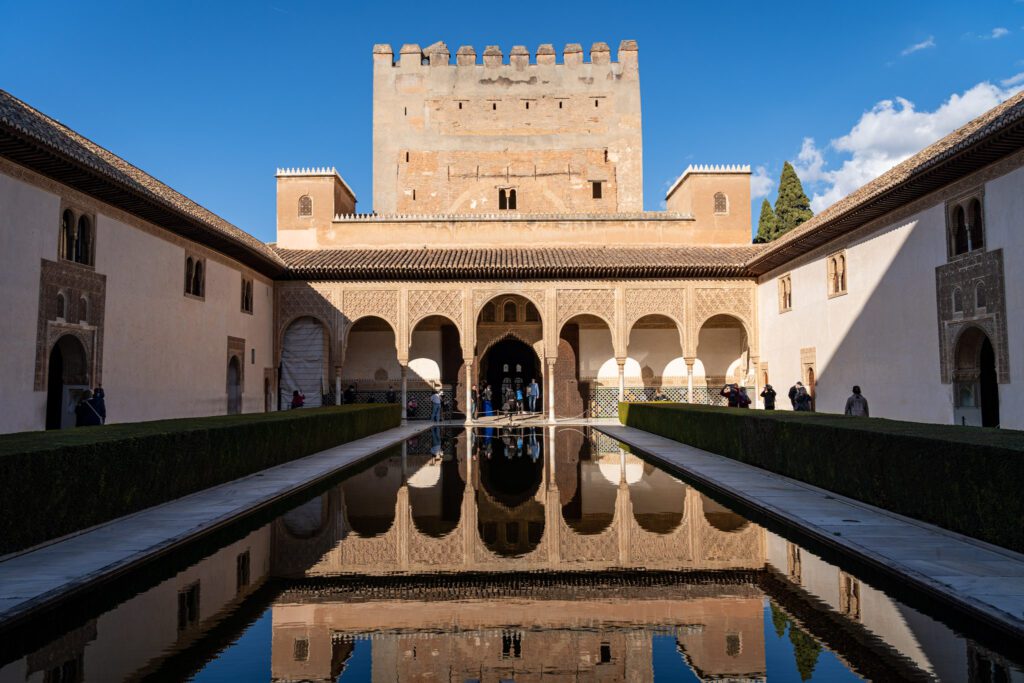
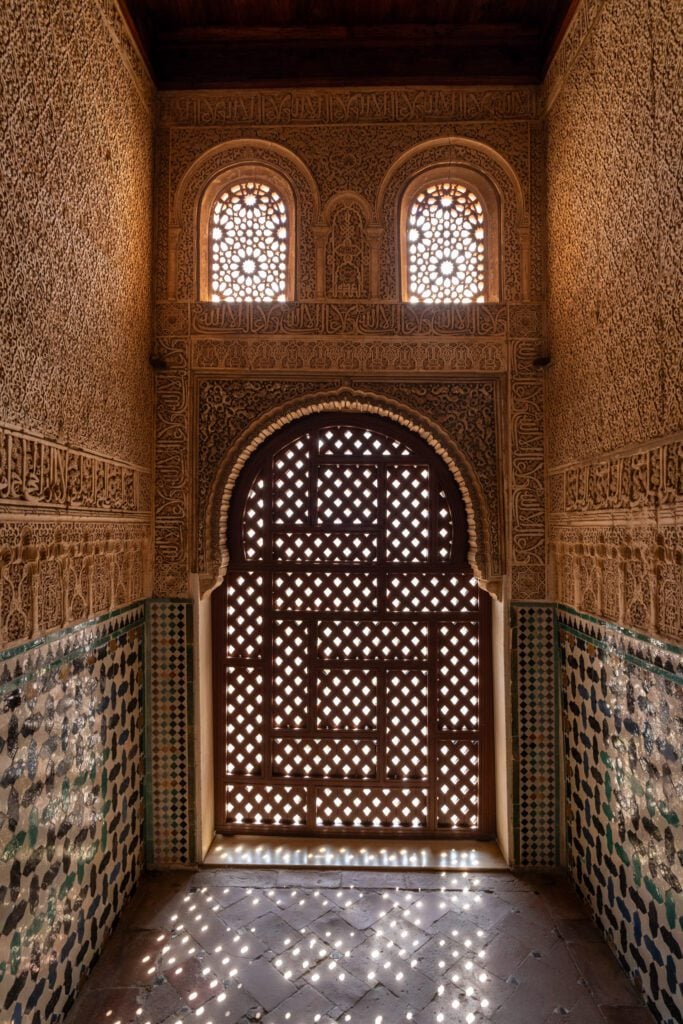
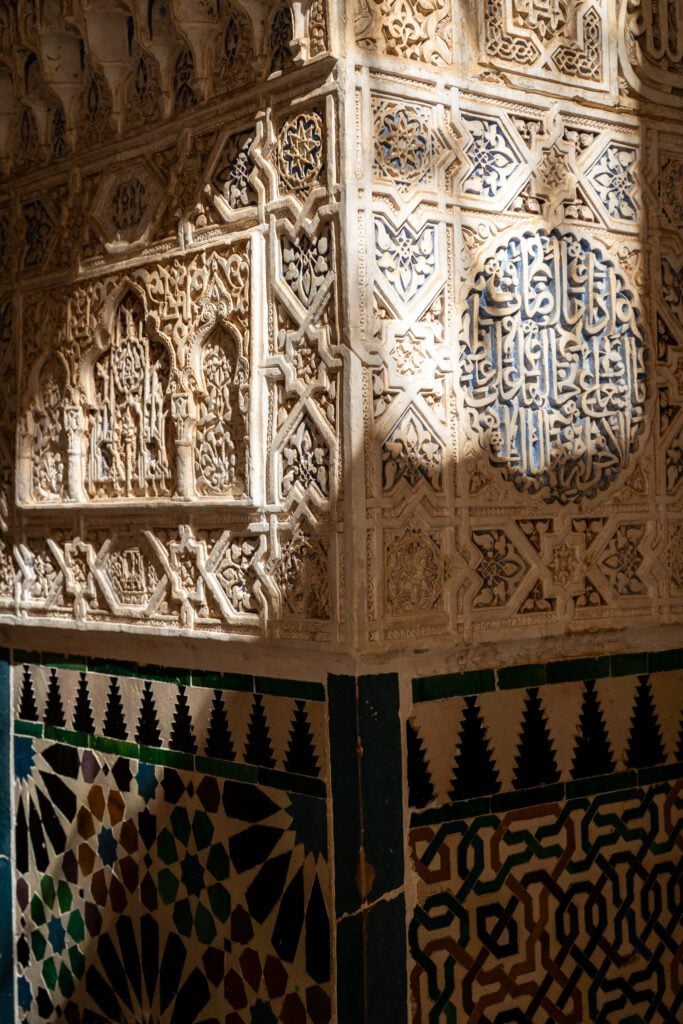
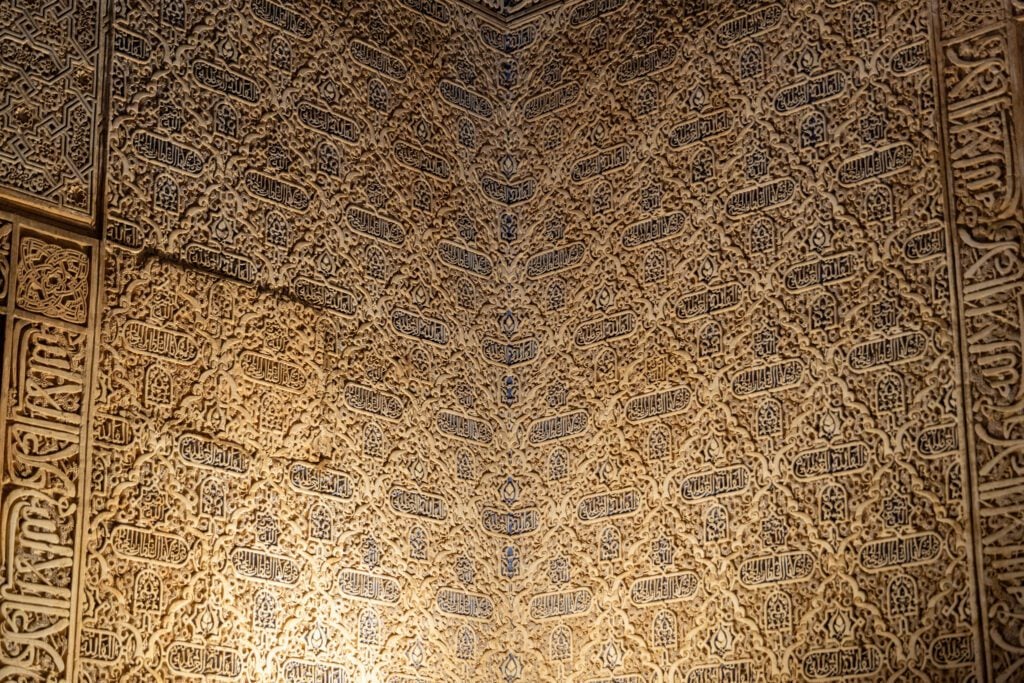
I get the idea that the Christian monarchs saw the beautiful fort/palace on the hill and said “hm, yeah, let’s keep that” when they arrived in Granada, and you can see that they did their best to make it their own once you’re inside.
More often than not, the changes they made stick out like a sore thumb (like the crowns added to the tilework in one of the palaces or the big Renaissance palace plopped in the middle), and are a detraction from the experience and take you out of the moment more than anything else.
The reason you’re here is to appreciate all of the incredible craftsmanship and meaning that went into the construction of this magnificent UNESCO World Heritage Site, and to learn about the rich history behind its existence.
The Layout of the Alhambra
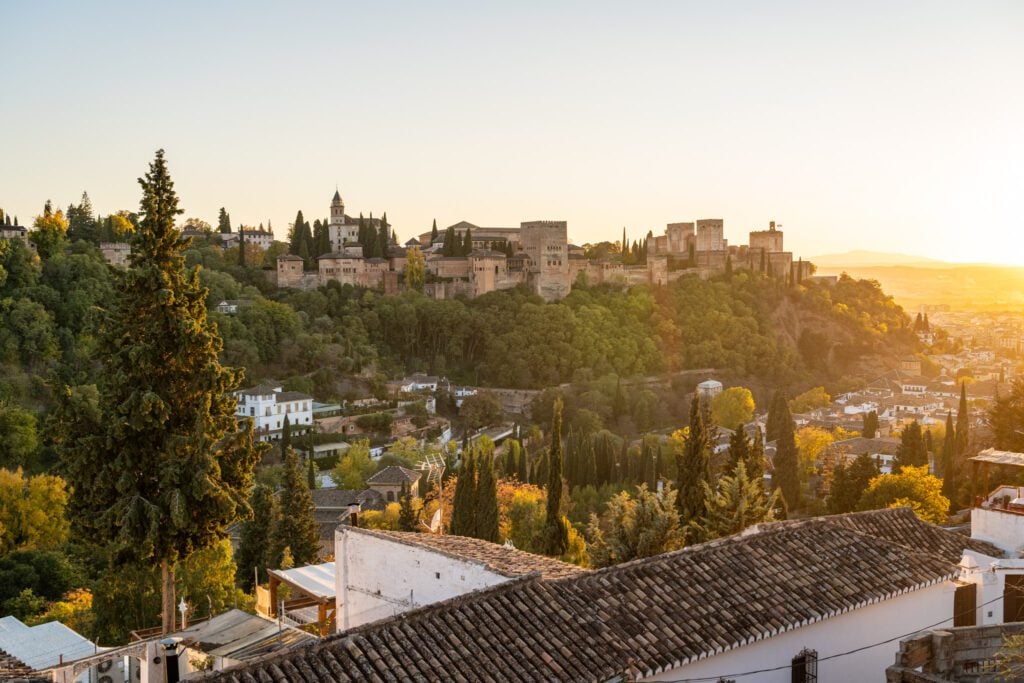
The next thing we need to talk about is the layout of the Alhambra and what it means for your visit.
At a high level, there are three main elements of the Alhambra that you’ll want to visit.
In order from west to east, they are:
- Alcazaba: Hey, look! Another mispronounced Arabic word that made its way into Spanish. This is the fortress portion of the Alhambra on the western end that overlooks the entire area surrounding the hill, with nearly 360 degree views from the top. This is the oldest piece of the Alhambra, which was originally built as a defensive structure before being expanded over time.
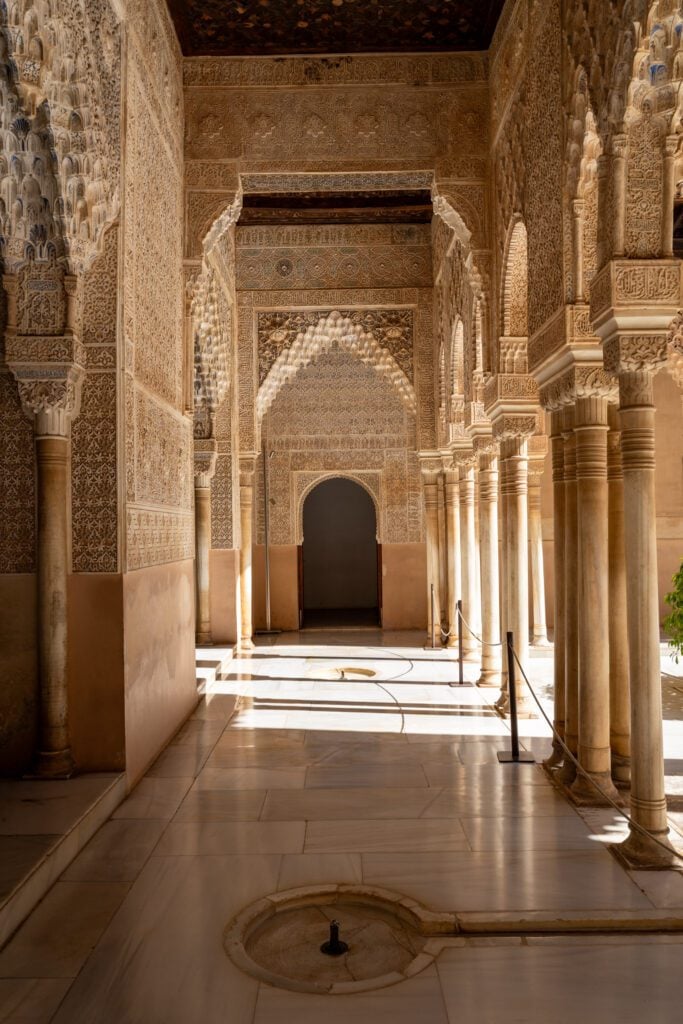
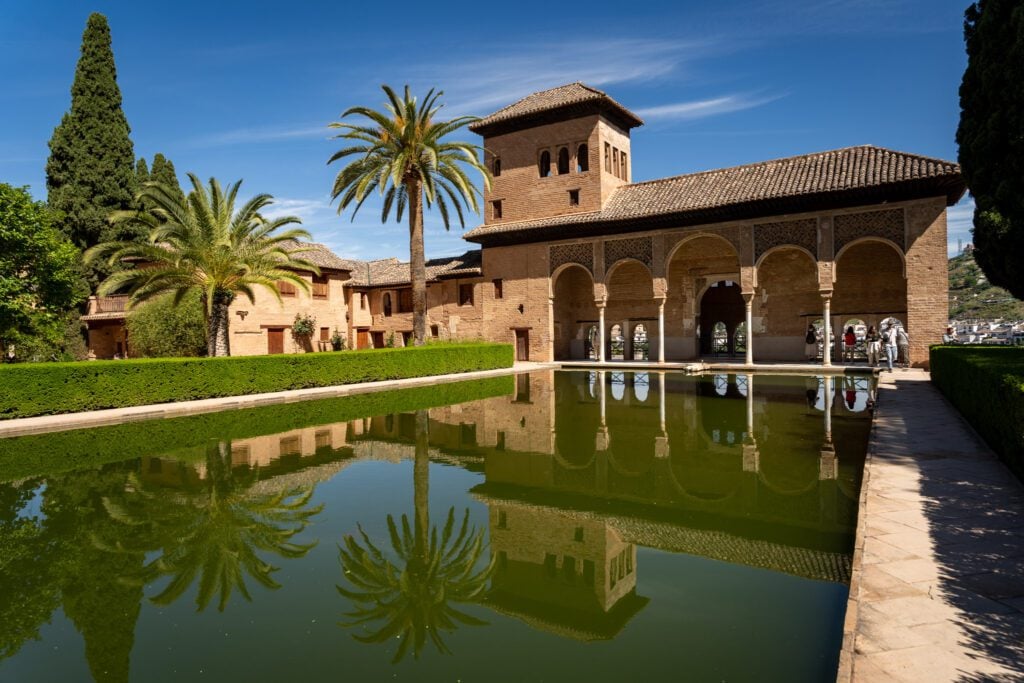
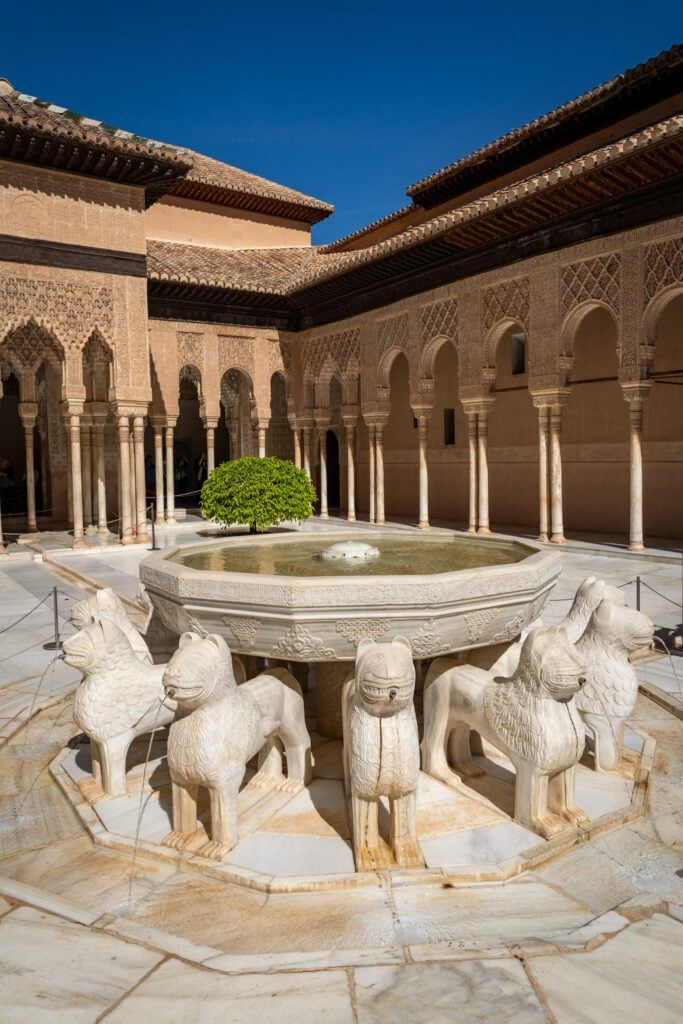
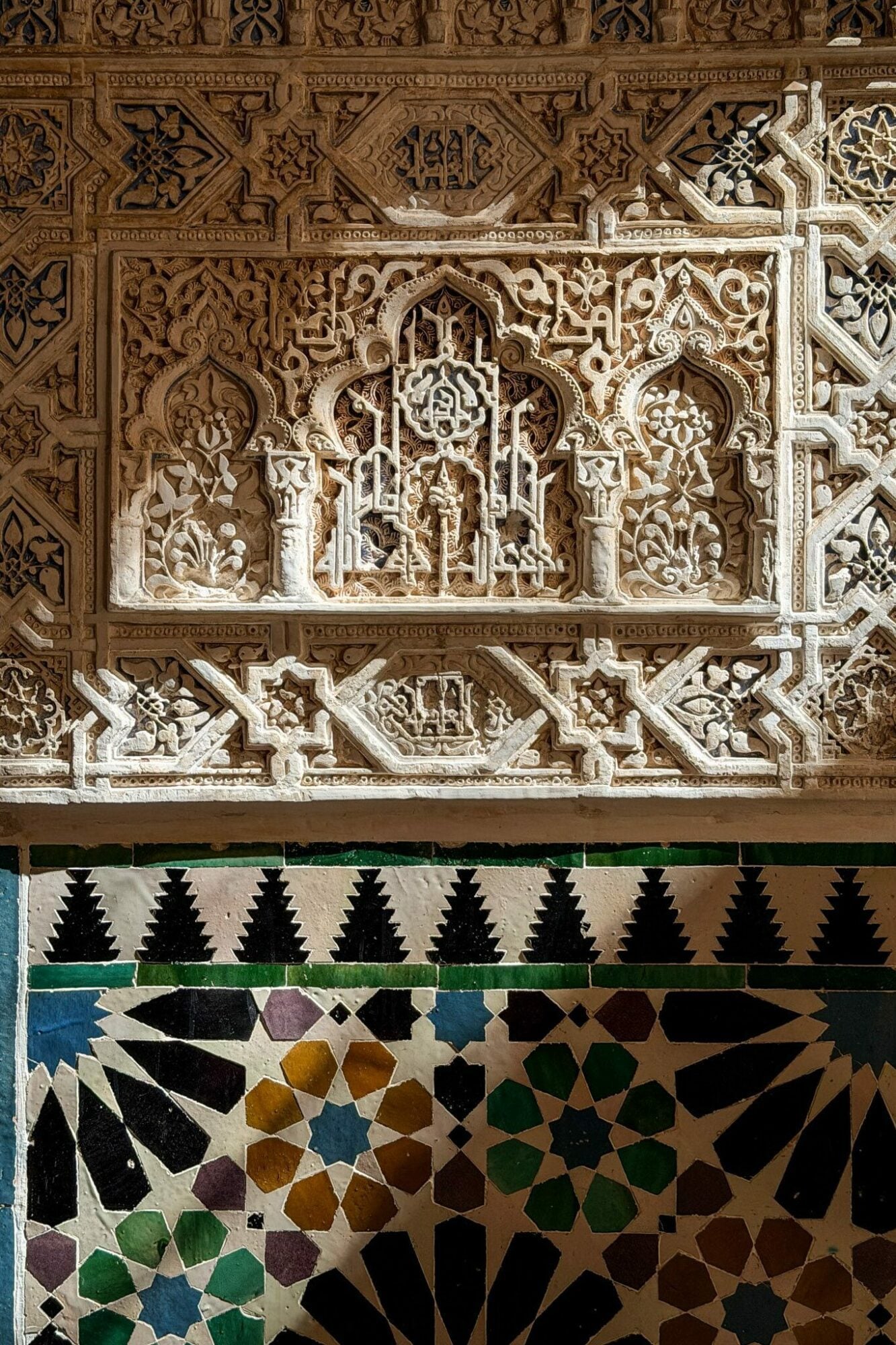
- The Nasrid Palaces: The crown jewel of the Alhambra, this is where you’ll want to spend the most time to appreciate the exquisite craftsmanship that went into every single little detail of the structure. The design follows the principle of an interior courtyard (often with greenery and a water feature) surrounded by a series of rooms. Two highlights of the complex (which is truly a masterpiece) are the Patio de los Arrayanes and the Patio de los Leones.
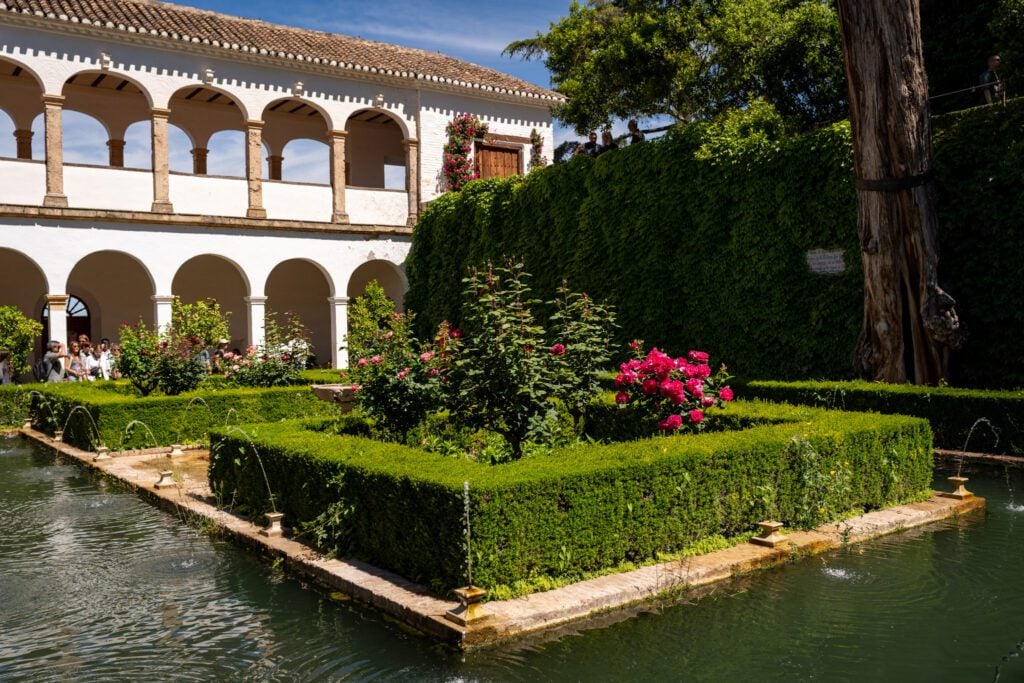
- The Generalife: The summer palace at the eastern edge of the complex (technically outside the original walls) is all water features and plant life to deal with the summer heat in southern Spain (which the Muslims had plenty of experience dealing with). It’s lovely, though it doesn’t have quite the same flair as the Nasrid Palaces.
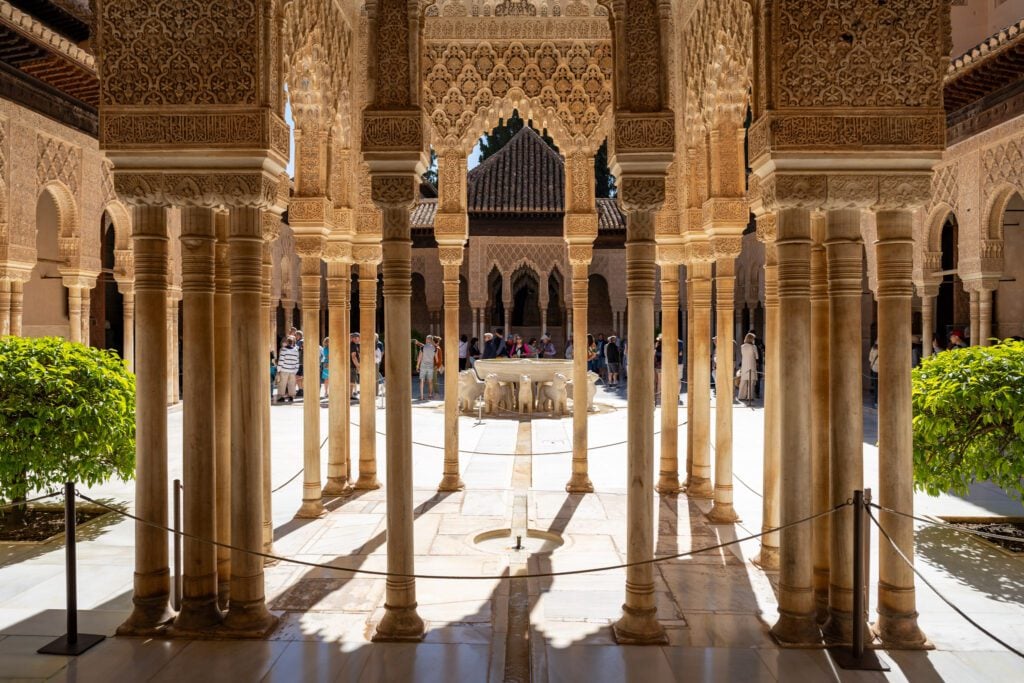
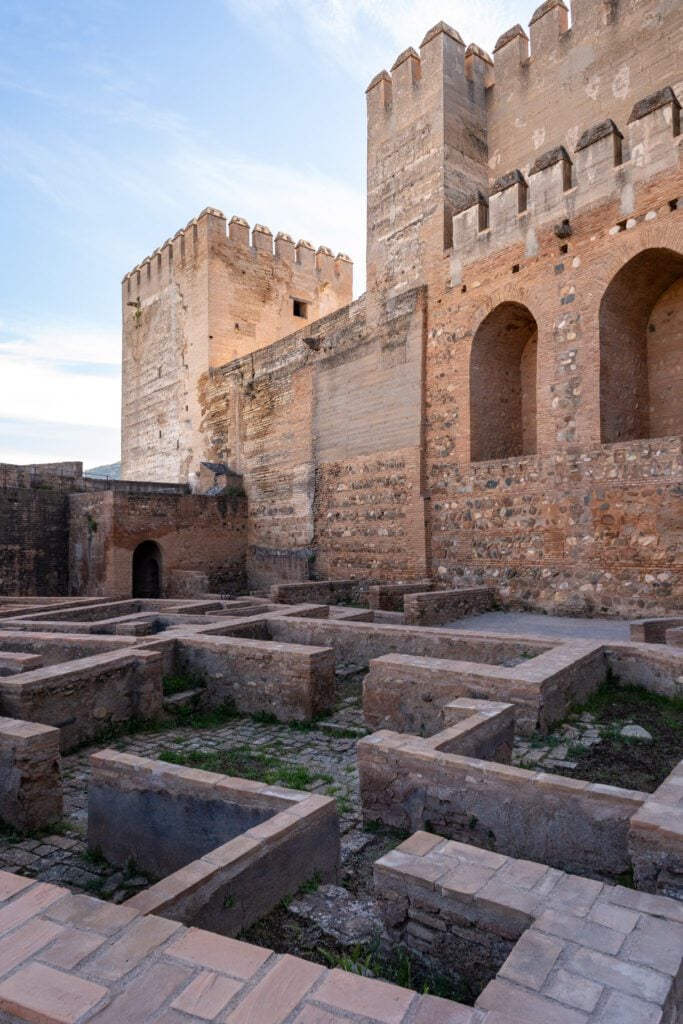
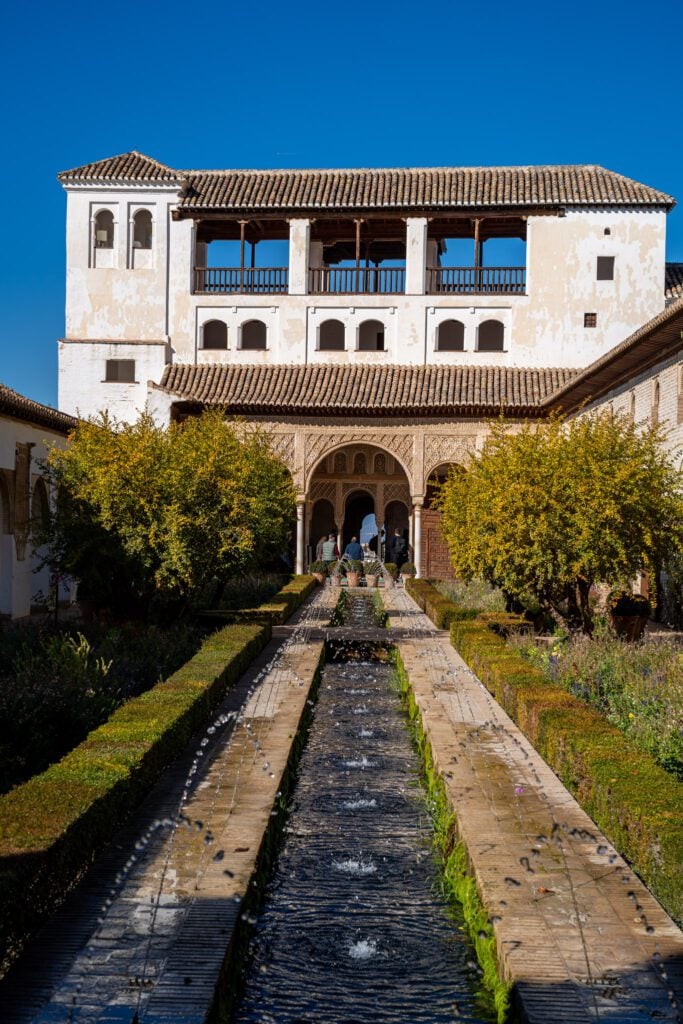
There is a fourth element – the massive stone Renaissance Palace built by the Holy Roman Emperor (who ruled Spain at the time) Charles V – but we wouldn’t dedicate too much time to that particular element. It sticks out like a sore thumb, in our opinion.
It’s worth noting here that the Nasrid Palaces is the one element of the complex that requires a timed entry.
When you book your tickets, you will select a timeslot, and that timeslot refers to your entry time for the Nasrid Palaces, which is by far the most popular slice of the complex.
Planning Your Time at the Alhambra
Now that we’ve talked about the different elements of the complex, let’s talk about how to organize your time at the Alhambra to maximize your time.
As we noted, the only element that requires a timed entry is the Nasrid Palaces, so you’re going to want to build the rest of your itinerary around the timeslot that you secure for that (don’t worry, we’ll walk through how to do that below).
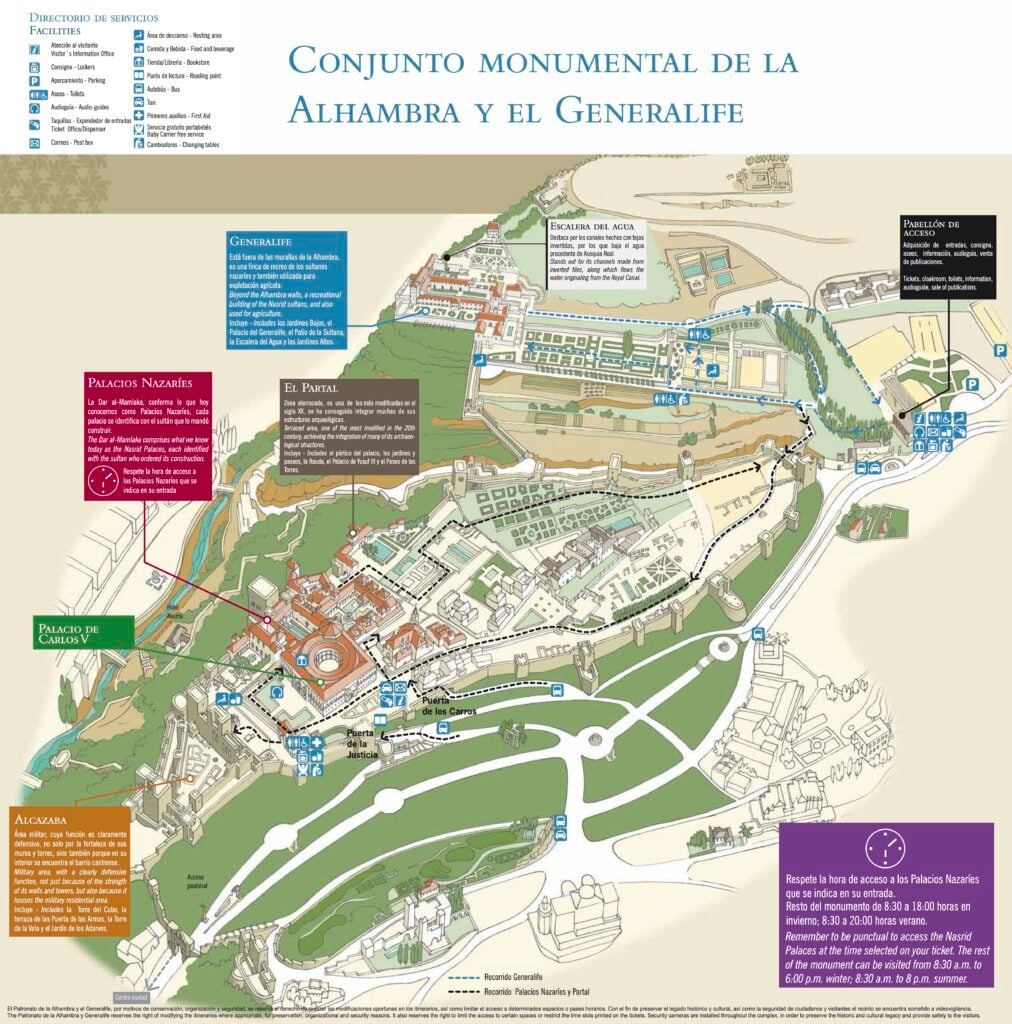
There are two entrances to the Alhambra; the Puerta de la Justicia on the western end (here on Google Maps) and the Ticket Office (here on Google Maps).
Here’s a map of the complex for reference. It’s in Spanish, but you can see the main elements and where they’re located.
Generally speaking, we think you should make your way from one end of the complex to the other so that you’re not doubling back too much (it’s already a lot of walking, especially if it’s hot).
Importantly, far fewer people enter at the Puerta de la Justicia (despite the fact that it’s closer to the city center).
As a result, our recommendation is to start there, and do the Alcazaba, the Nasrid Palaces, and then wander through the gardens of the Generalife before exiting at the main ticket office.
Of course this is all dependent on your timeslot for the Nasrid Palaces.
We’d plan on booking a timeslot that is 30-60 minutes after the time you plan on entering the complex to give yourself plenty of time to tackle the Alcazaba before you make your way to the palaces.
For example, if you’re planning on getting to the Alhambra at 9:00am, book your Nasrid Palaces timeslot at either 9:30am or 10:00am.
One note here: We’d plan on starting your visit as early as possible (in this case, it’s 8:30am) and booking the earliest possible timeslot for the Nasrid Palaces (if that’s not available, a late afternoon slot is probably best for the thinner crowds).
Getting Your Tickets for the Alhambra
Unsurprisingly, at least to us, the website for the Alhambra isn’t particularly intuitive, so what we’re going to do in this section is walk through exactly how to secure your tickets, step-by-step.
First, even finding the official website is confusing: here’s the link to the ticket portal. You can toggle to different languages at the top of the page.
On that page, scroll down to see the options under the heading “Select Your Entry.”
There are a lot of ticket options, but there are only a few that you should actually consider.
The main ticket that includes the Nasrid Palaces, Alcazaba, and Generalife is called “Alhambra General – Full Tour.”
The cheaper ticket called “Gardens, Generalife and Alcazaba” includes everything in the complex EXCEPT FOR THE NASRID PALACES. Which we’d say is a must-visit if it’s your first time.
The only other relevant tickets (we think) are the two night visits, which are a cool idea, but we don’t think it’s a good option for your first visit because part of the magic of the Alhambra is being able to see all the incredible detail, which is harder when it’s dark out.
Even during the day, the light is low inside the rooms of the palaces (by design, to keep them cool).
Assuming you’re going for the base ticket, hit the “Buy Tickets” button under the “Alhambra General – Full Tour” heading.
The next page gives you some information, and you need to hit the big “BUY” button in the top right to get to the schedule and go through their security measures (CAPTCHA and retrieving a code via email, at the time of writing).
Once you’ve done that and hit the “go to step 1” button, it brings up the interactive schedule that shows ticket availability.
Find your date, select it, and enter the number of people (and the category of ticket – adult, child, etc) and hit continue.
That brings up the available timeslots for the visit to the Nasrid Palaces. Choose your time and hit “go to step 3,” and finish by entering your personal information.
Like we said above, you’ll want to plan your visit around this timeslot, and for thinner crowds we’d suggest either a 9:30am (ish) slot, or a slot later in the afternoon (after 4pm or so).
You will need to enter your passport information and bring your passport to the Alhambra. They will check it.
What to Do if Tickets Are Sold Out
If tickets are sold out, you essentially have two options (aside from skipping it entirely).
The first is to look at third party resellers, who often sell tickets at a markup, but have better access to tickets than you as an individual.
The one we’d look at is Get Your Guide, a reputable tour company in Europe that we’ve used many times.
You’ll pay a bit more for the tickets, but they sometimes have better inventory at the last minute than the official website.
The second option is to book a guided tour that includes tickets. Like this excellent tour that we did on our first visit to the Alhambra a few years ago.
To Tour or Not to Tour (Is That Even a Question?)
If you’re familiar with our approach to travel, you probably already know what’s coming in this section.
There is so much historical and cultural context behind the beautiful architecture and design that you’re seeing at the Alhambra.
Investing in a guided tour of the Alhambra will help you understand the significance of what you’re looking at and lead to a much deeper, richer experience.
Visiting these big tourist attractions is almost always better with a guide (especially a guide with both a handle on the history and who is a good storyteller), and we try to do guided tours whenever we can to take advantage of that knowledge and to make it more digestible and engaging.
Because of all the context you need to fully understand the Alhambra’s importance, there is perhaps no other attraction in Spain where we think a guided tour is more important than the Alhambra.
The Prado Museum in Madrid and the Sagrada Familia in Barcelona are the only two things that come close.
To prove our point and put our money where our mouth is, we’d like to point out that we’ve visited the Alhambra twice, and done a guided tour both times (and learned plenty on both of them).
Our first trip, we did this excellent guided tour (which includes tickets) that gave us a great foundation for understanding not only the Alhambra, but Granada and Andalucía more broadly.
That tour covers the Generalife, Nasrid Palaces, and Alcazaba over the course of three (ish) hours.
It does start midday, though you’ll be starting after the morning rush (which is when many of the big tour groups show up).
On our latest visit, we did this guided tour and our guide, Nacho, was both charismatic and knowledgeable, and pointed out little details throughout the complex that we didn’t even notice on our first trip.
It’s worth noting that the second tour DOES NOT include tickets, which means you will still need to buy tickets on your own.
The three hour tour starts early and spends more time on the Alcazaba and Nasrid Palaces (definitely not too much time, though, it’s a good balance), and leaves you inside the complex at the end to check out the Generalife on your own.
Practical Tips for Visiting the Alhambra
Here are a few practical tips for your visit.
The hours vary by season. The complex opens at 8:30am all year, but closes at either 6:00pm (October 15th – March 31st) or 8:00pm (April 1st – October 14th). It’s closed two days per year – December 25th and January 1st.
Book your tickets as far in advance as possible. As soon as you know when you’ll be in Granada, go and buy your tickets for the Alhambra. They sell out.
Technically, there are tickets available the day of, but you’ll need to get to the ticket office several hours before it opens at 8am, and even then there’s no guarantee you’ll actually get them.
Book an early morning or late afternoon entry slot to minimize crowds. We also covered this, but if you hope to avoid the height of crowds you’ll want to book the early morning (9:00am or 9:30am) or late afternoon (call it 4:30 or 5:00pm) entry slots for the Nasrid Palaces.
For the late afternoon, remember that they close at either 6:00pm (October 15th – March 31st) or 8:00pm (April 1st – October 14th), so your time may be slightly limited on the later end of that timeframe in the winter.
You need to bring your passport. As we covered above in the next section about securing your tickets, you will need to put your passport information in when you buy tickets, and they will check it when you enter the complex.
Bring your passport with you when you go to the Alhambra, and make sure you enter the correct information when you buy tickets.
Plan on spending 3-4 hours at the Alhambra. At a minimum, we’d say. We’ve spent almost exactly four hours each time.
Wear comfortable shoes + bring snacks and water. It’s a lot of walking, so leave the stilettos at home and wear shoes that are comfortable for walking on uneven ground.
It’s also likely going to be hot, depending on when exactly you’re there, so bring a reusable bottle of water and a snack to tide you over between meals. They do have vending machines of water and snacks onsite.
In addition to those tips, there’s a lot of good information on the official website that we’d take a read through before your visit.
Planning a trip to Spain? We’d love to help!
Here are our other Spain travel guides to help you plan an incredible trip (even if you have to eat gluten free!).
If there’s no link below, it means we’re still working on it – long, in-depth guides take time! We’re working on it, though, we promise.
The first place to start, if you haven’t already found them, is with our detailed itineraries. We have one shorter version for 7 days in Spain, one version that covers 10 days in Spain (a good middle ground, we think), and one longer version for two weeks in Spain (with ideas for more and less time in both guides).
Our Barcelona Guides
- What to do in Barcelona (as a First Timer)
- How to Plan an Amazing 4 Day Barcelona Itinerary
- Where to Stay in Barcelona: A Complete Guide for First Timers
- 12 Things to Know Before You Visit Barcelona
- Gluten Free Barcelona: A Complete Guide to GF Restaurants + Bakeries
- Where to Find the Best Specialty Coffee in Barcelona
- How to Plan an Incredible Day Trip to Montserrat (from Barcelona)
Our Madrid Guides
- What to do in Madrid (as a First Timer)
- How to Plan an Amazing Madrid Itinerary (2 Days)
- Where to Stay in Madrid: A Complete Guide for First Timers
- 12 Things to Know Before You Visit Madrid
- Gluten Free Madrid: A Complete Guide to GF Restaurants + Bakeries
- How to Plan an Amazing Day Trip to Toledo (from Madrid)
Our Sevilla Guides
- Our Favorite Things to Do in Seville (for First Timers)
- A Perfect 2 Day Seville Itinerary (for First Timers)
- Exactly Where to Stay in Seville (The Best Areas + Hotels)
- Gluten Free Seville: Our Favorite GF Restaurants & Bakeries
The Rest of Spain
