
3 Days in Seattle: A Perfect Itinerary for First Timers
Seattle is a beautiful city, full of things to do, see, and eat no matter what you’re into. I know, because I lived in the Seattle area for almost 20 years from elementary school to after college, and spent a large part of that time exploring all corners of the city.
There’s something special about Seattle’s location at the confluence of the mountains (two sets of mountains, really) and the ocean (really, the Puget Sound) that makes it extra spectacular for people who visit from places that have neither of those things.
Like the original American settlers from the Midwest who arrived here and made a series of (humorous) missteps that stemmed from the fact that they were from the midwest where there is exactly zero oceanfront property.
But we’ll get to that story below, I promise.
At its core, Seattle is – and has always been – a city brimming with optimism and an entrepreneurial spirit.
From its establishment and subsequent growth as a result of a clever marketing campaign related to the Klondike Gold Rush to the modern version where tech companies seem to be growing on trees, Seattle always seems to have its eye on what’s next.
It’s a city of contrasts, and I often talk about “old Seattle” versus “new Seattle,” a theme that has become more and more prevalent as big tech companies have built up an entire neighborhood from run down warehouses to 50 story glass skyscrapers in the past decade or so.
There are obviously pros and cons to that development, like the fact that Seattle’s cost of living has skyrocketed over that timeframe, but overall it has led to the establishment of Seattle as a, uh, real city with solid infrastructure (for the U.S., anyway) and a vibrant culture scene.
The point is that Seattle is great, and you’re probably going to walk away going “man I could see myself moving here” (before you do, you should probably visit in the winter and revisit that take).
With that preamble out of the way, let’s talk about what you’re going to find in this guide.
In this guide to planning your trip to Seattle, you’ll find a detailed 3 day Seattle itinerary, complete with things to do, see, eat, and drink, along with the important details you need to know like how to see Pike Place Market and where to find the best views of the Space Needle.
You’ll also find logistics – like how to get around and some useful tips and tricks for visiting Seattle – that are important for planning your trip.
We hope you enjoy this guide, that you find it helpful for planning your trip, and we help you discover something new and exciting, whether it’s your first time, or tenth.
Sound good to you? Let’s get into it.
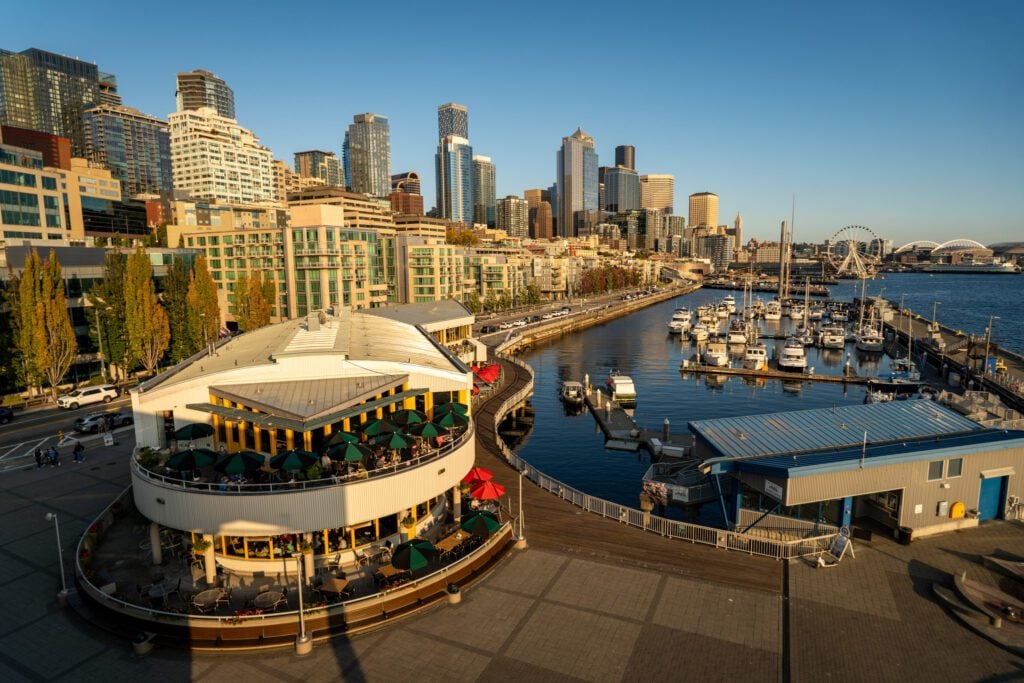
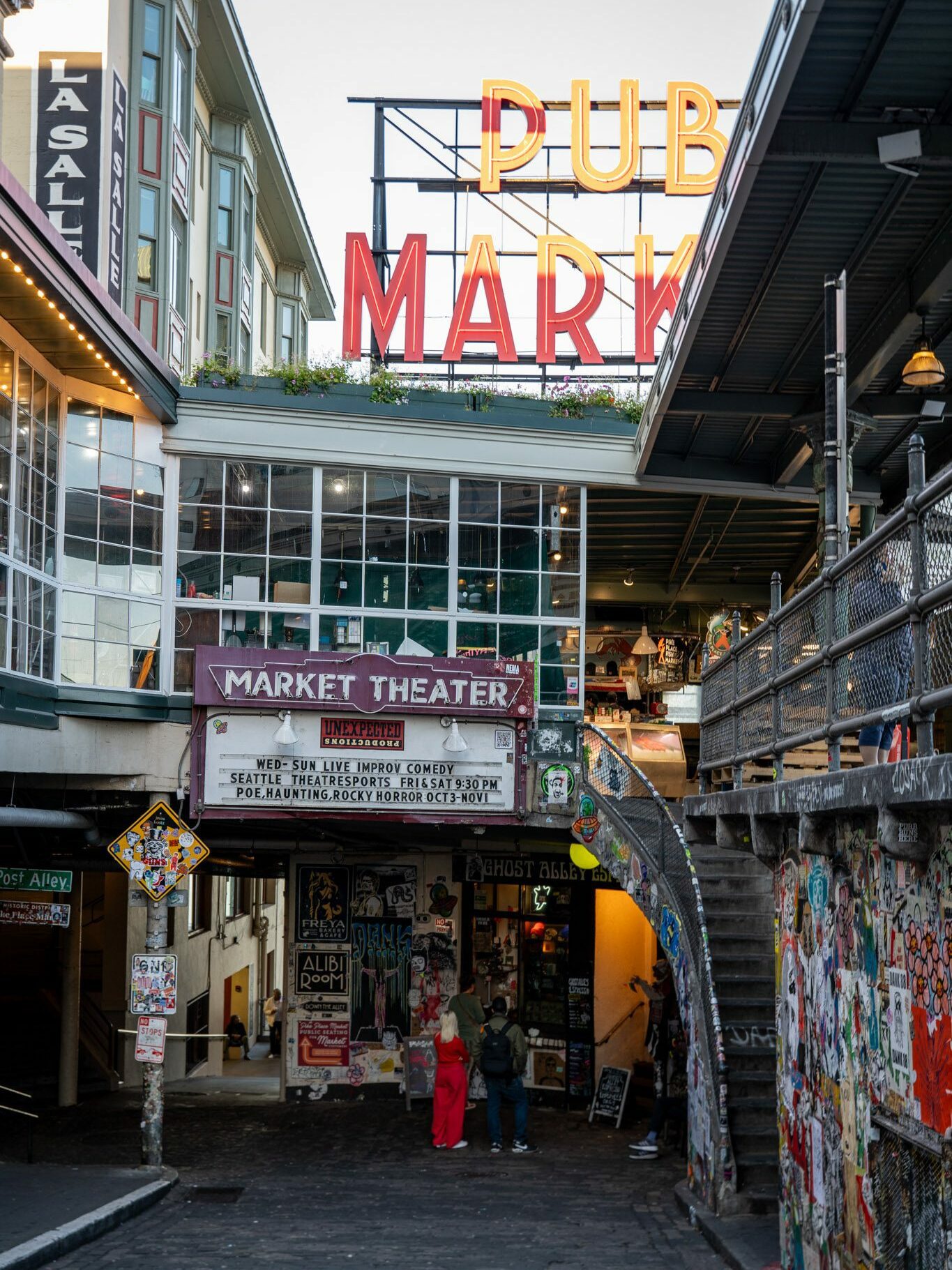
Disclaimer: Some of the links in this post, like hotel links, are affiliate links, meaning at no additional cost to you, we make a little bit of money if you click through and book. That being said, we would never recommend something to you that we don’t stand behind 100%.
What Can You See with 3 Days?
It goes without saying that three days is not nearly enough time to see everything in Seattle.
But Seattle is a relatively compact city, and we think three days is an ideal balance that will give you some flexibility and ability to get out and really see the city (not just go to Pike Place Market and the Space Needle and call it a day).
We think three days gives you a solid amount of time to do the three things we think are “must-do” when you’re in town: explore the downtown core, including Pike Place Market and Seattle Center, get out to the neighborhoods, and hop on a ferry to see the city from a different side.
Unfortunately, we don’t really think you have time to get into the other thing we think makes Seattle special, the plethora of day trips and stunning natural beauty within an hour of the city center (here’s our guide to the best day trips from Seattle).
That would be something to add with a fourth day, which we have suggestions for in the “with more time” section below the main itinerary.
Where to Stay in Seattle
At a high level, if you’re only in Seattle for a few days (like a long weekend), then we’d recommend you opt for one of the neighborhoods that is close to the Downtown Seattle core rather than some of the further out (but equally fun and exciting!) neighborhoods like Ballard and Fremont (which are both in the itinerary below, but we don’t think you should stay there).
There is a reason why the vast majority of hotels are in the downtown core: It’s where most of the big tourist attractions in Seattle are located, like the Space Needle, sports and music venues, and Pike Place Market.
For reference, we’d define that core as Downtown, Belltown, Queen Anne, and South Lake Union, roughly.
If your itinerary is going to mostly be focused on those things (which the itinerary below is, for the most part), then we’d recommend staying in one of those central neighborhoods because it really is the most convenient place to stay.
Plus, for the purposes of the itinerary you’re about to get into where we have you going to neighborhoods in Seattle’s outer ring, like Fremont and Ballard, the connections from the downtown core are excellent (there are express buses running up through Fremont and Ballard that are very useful).
There are two neighborhoods we’d recommend for first-timers with 2-3 days: Belltown and Downtown Seattle (specifically the area near Pike Place Market).
A plug here at the top for the CitizenM Seattle in South Lake Union, which is a Dutch hotel brand that is our favorite hotel chain in the world (we’ve stayed at three locations around the world – including this one – over the past few years).
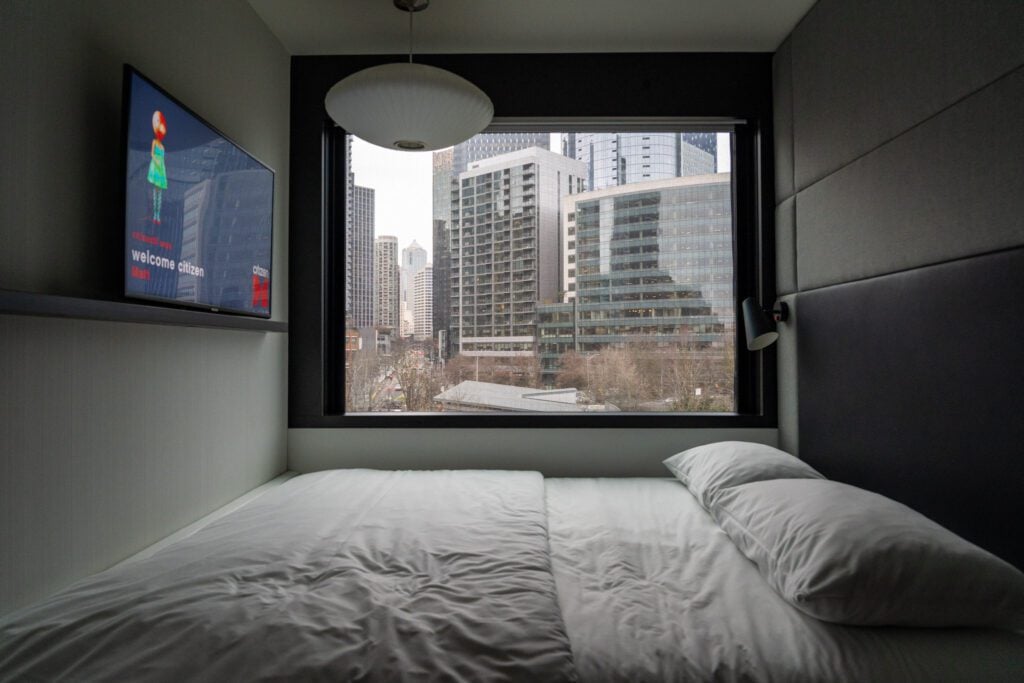
It’s modern, comfortable, and in a nice location on the south end of beautiful Lake Union (though it’s not in the two neighborhoods we’re covering here).
For a more in-depth guide with all the details you need to decide on the right place to stay, read our guide to where to stay in Seattle.
Belltown (Central & Hip)
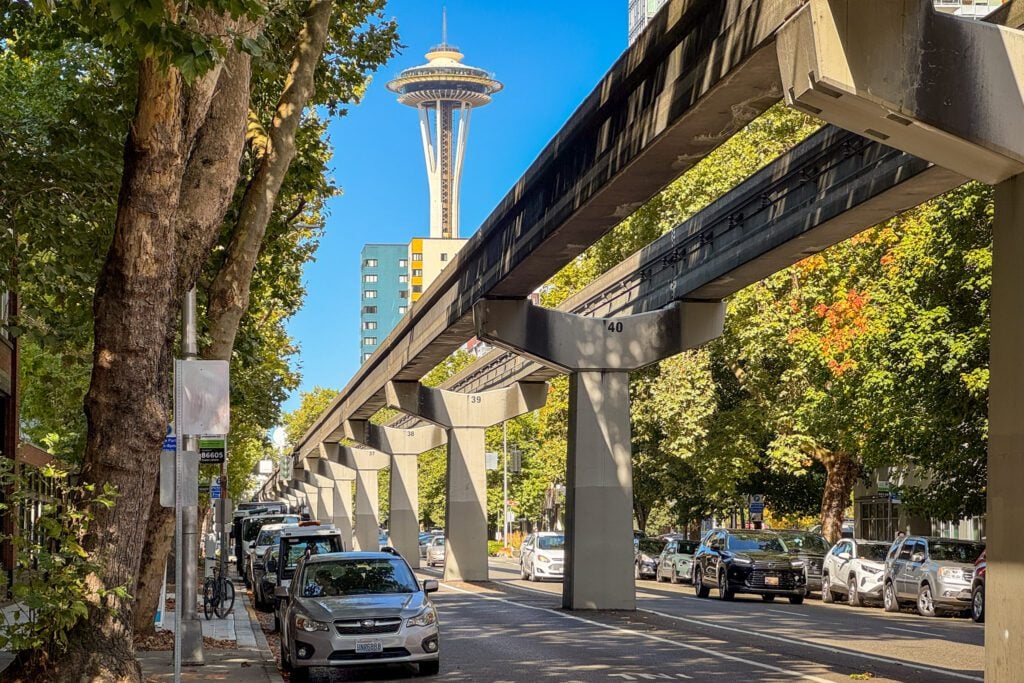
Belltown is a historic neighborhood sandwiched between Pike Place Market and Seattle Center (which is where the Space Needle and Climate Pledge Arena are located), and it combines the convenience of staying downtown (good connections and plenty of hotel choices) with the great food and drink options that you’ll find in less central neighborhoods.
You’ll be able to walk almost everywhere, and many of the useful bus lines for tourists (and the Light Rail) are also just a short walk away.
For us, there’s no better place to spend your first trip to Seattle, especially if you’re going to be exploring Pike Place and Seattle Center.
There are plenty of good places to eat and drink in Belltown, from cozy coffee shops and tropical-themed cocktail bars to restaurants serving a wide variety of cuisines.
We’ve stayed at the Ace Hotel in Belltown (a hipster classic!), which is a short walk away from Pike Place Market in the heart of Belltown, and we’d recommend it.
Our dream hotel in Belltown is Hotel Ändra, which is a hip boutique hotel right in the heart of some of our favorite food and drinks in the neighborhood.
If you’re on a budget, the StayPineapple Hotel Five is one of the better values in the center of the city (and it’s in a great central location).
Downtown Seattle (Near Pike Place Market)
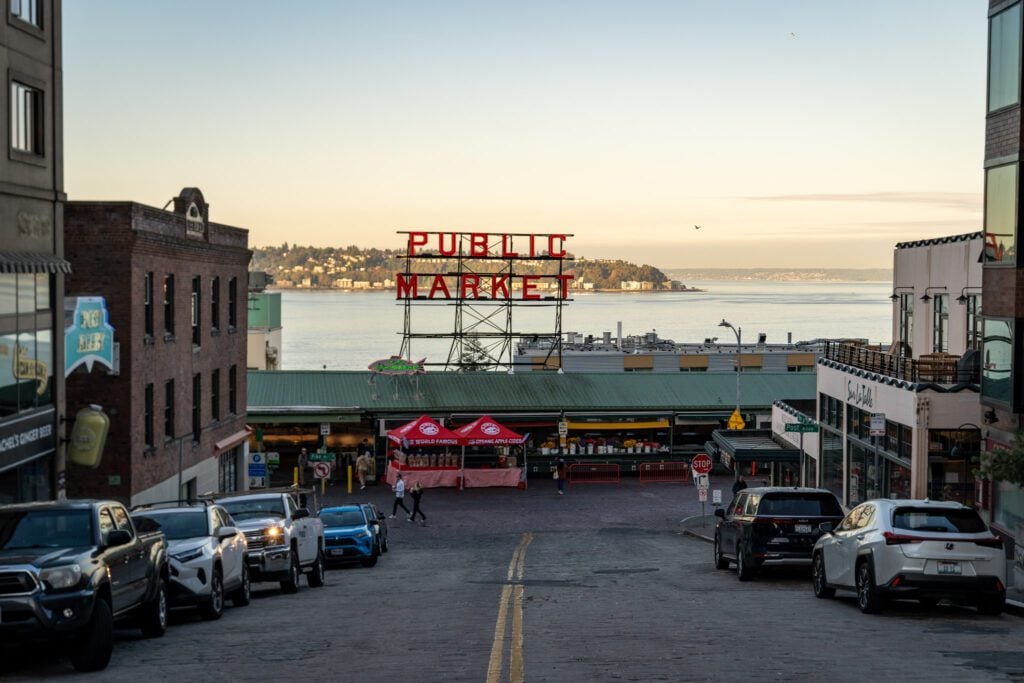
While Downtown Seattle isn’t necessarily the most interesting neighborhood in its own right – it’s mostly a financial district, with office workers filling the sidewalks during the day – the upside of staying downtown is that there are tons of hotels, and it’s walking distance to the entirety of the downtown core (including Seattle Center, Capitol Hill, Belltown, and the stadiums).
We’d focus on the area immediately around Pike Place Market, which will not only put you close to the most interesting “touristy” attractions, but will also put you adjacent to both Belltown and Pioneer Square, which are cool parts of town to explore that you’ll find in this itinerary.
On my most recent trip to Seattle, where I spent a few days revisiting the things in Seattle that you’d do as a tourist (which I hadn’t really done for years because I lived in Seattle for so long), I decided to stay a block away from Pike Place Market (at the independent State Hotel, which was great!).
I chose it for the central location that would allow me to walk everywhere. Sure enough, over the course of my itinerary I walked A LOT.
I walked to the Space Needle and Seattle Center, Capitol Hill, and Lumen Field, and for everything I couldn’t walk to, like Fremont and Ballard, there was either a bus or Light Rail route within a few blocks to get me where I needed to go.
Like I mentioned, on my last trip up to Seattle I stayed at the State Hotel, an independently owned boutique hotel one block from the iconic “Pike Place Market” sign, and it was excellent.
The room was nice, the location is a 10/10, and the view from the rooftop terrace out over the market and Elliott Bay is magnificent.
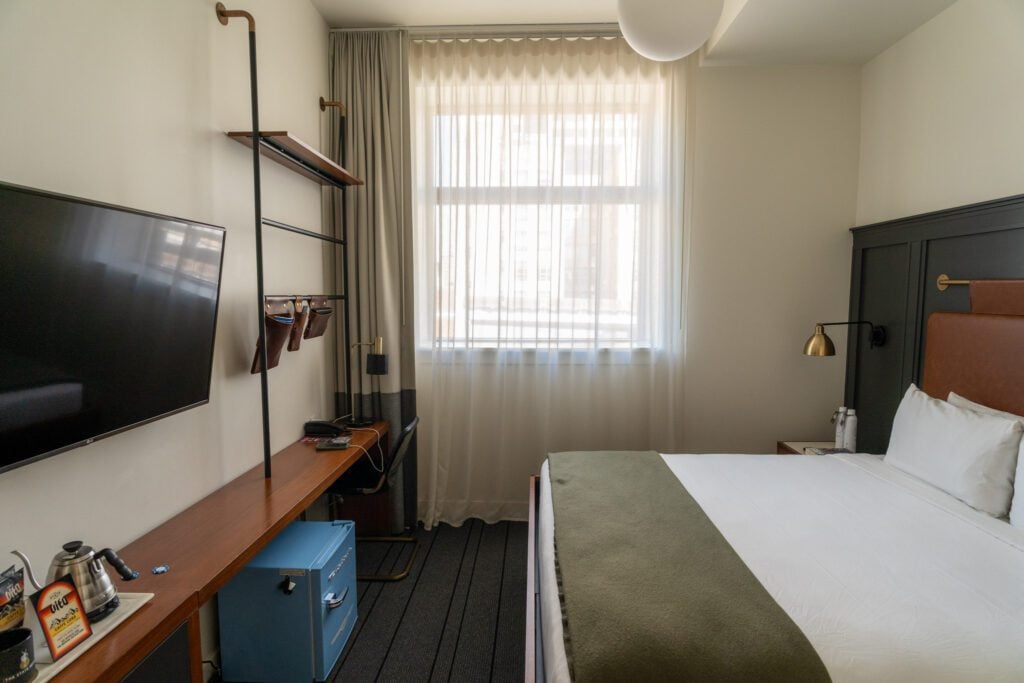
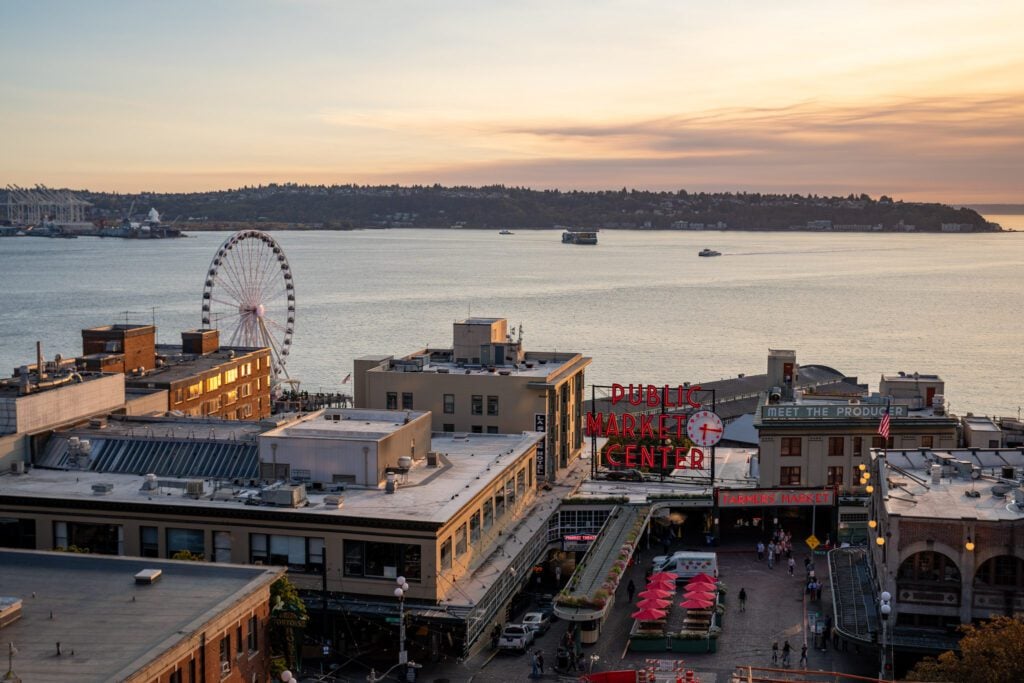
Another good option is the nearby Inn at the Market, which is where my mom used to stay when she visited Seattle for business and also has some pretty incredible views out over Puget Sound.
Do You Need a Car in Seattle?
In short, if you’re planning on hanging out inside Seattle’s city limits, you won’t need a car. In fact, we’d say it’ll be more of a nuisance than anything else.
Parking in Seattle can be horrendous, depending on where you are. Pay attention to street parking signage, which varies by time of day and day of the week.
Seriously, you might be tempted to drive from place to place during your day in the city, and we’re here to tell you NOT to do that.
If you rent a car, you’ll probably have to pay for either a) a parking garage or b) a parking ticket.
Unless you’re trying to take a day trip from Seattle, don’t rent a car. If you need to go somewhere that’s not on a convenient public transportation route, use Lyft.
If you’re trying to fit in a day trip to a place like Mount Rainier (here’s our guide to planning a day trip to Mount Rainier) or the mountains east of the city, then a car will be worth having.
You could do a guided day trip that includes transportation, but the car will give you more flexibility to explore at your own pace.
If you do have a car and choose to drive it around the city, you’ll need to plan on either paying for parking, or spending 15-20 minutes at each stop trying to find free parking (and potentially paying for parking tickets).
If you’re renting a car and using Seattle as a jumping off point for a Washington road trip, we have a few tips.
First, we’d suggest renting it downtown, and renting it for only the time you’ll need it (aka the day you’re going to do the day trip).
For example, if you fly into Seattle and are planning on spending a day in the city before heading out, we’d rent the car starting on the day you’re leaving.
Of course, if Seattle is the end point for your road trip, just reverse it and drop it off at the airport before staying in the city.
An alternative would be to park your rental car in a covered, secure lot. If you’re staying overnight and your hotel has parking, we’d choose to pay for it and plan to use Lyft / public transportation to get around.
We have now lived in cities like Seattle, San Francisco, and Portland for more than a decade, and are intimately aware that car break-ins are a common occurrence, especially for cars that don’t have local license plates (which are more likely to be tourists and have stuff in the car).
Do not leave ANYTHING in your car, even if it’s in the trunk and it’s not visible.
An important note on public transportation in Seattle: Inexplicably, it is extremely difficult to figure out how to pay for bus rides as a tourist in Seattle.
There is no tap-to-pay on Seattle’s buses, and getting an ORCA Card (the local public transit card) is too much work for a short trip.
The best way to do it is to download the Transit Go app, which is where you can buy bus tickets (single or day pass) electronically, along with tickets for several other useful public transit agencies.
A Perfect 3 Day Seattle Itinerary for First Timers
And now, let’s get into how to spend a weekend in Seattle (at least according to us).
Let’s get something out of the way up front: We’d recommend skipping the Space Needle and the Seattle Great Wheel, which are both overrated and pricey, and using that time elsewhere.
You will find these on most Seattle itineraries, and we’ve done both, including a ride on the Great Wheel on a rainy night when, spoiler alert, you can see almost nothing through the rain running down the car windows.
I’m not bitter, you’re bitter!
Anyway, the point is that neither is worth the time or money. Trust us. There are better views to be had in Seattle, and we’ll tell you where to find them below.
Day 1: An Introduction, Seattle Center, & the Best View in Seattle
Look, this first day is ACTION-PACKED, with the main tourist attractions in Seattle all packed into one day so that you can spend your other days on the sides of the city that we are generally more interested in.
You’ll start with an introduction to Seattle’s history and culture in Pioneer Square (on the most unique walking tour around), make your way to Pike Place Market for lunch, and then continue up to Seattle Center to round out the day before retiring for dinner and drinks in Belltown.
It’s a lot, but given the fact that we only really recommend choosing one thing at Seattle Center (and it’s not the Space Needle!), we think it’s actually pretty achievable (Matt did a version of this day on his last trip to Seattle, and enjoyed it immensely).
But First, Coffee!
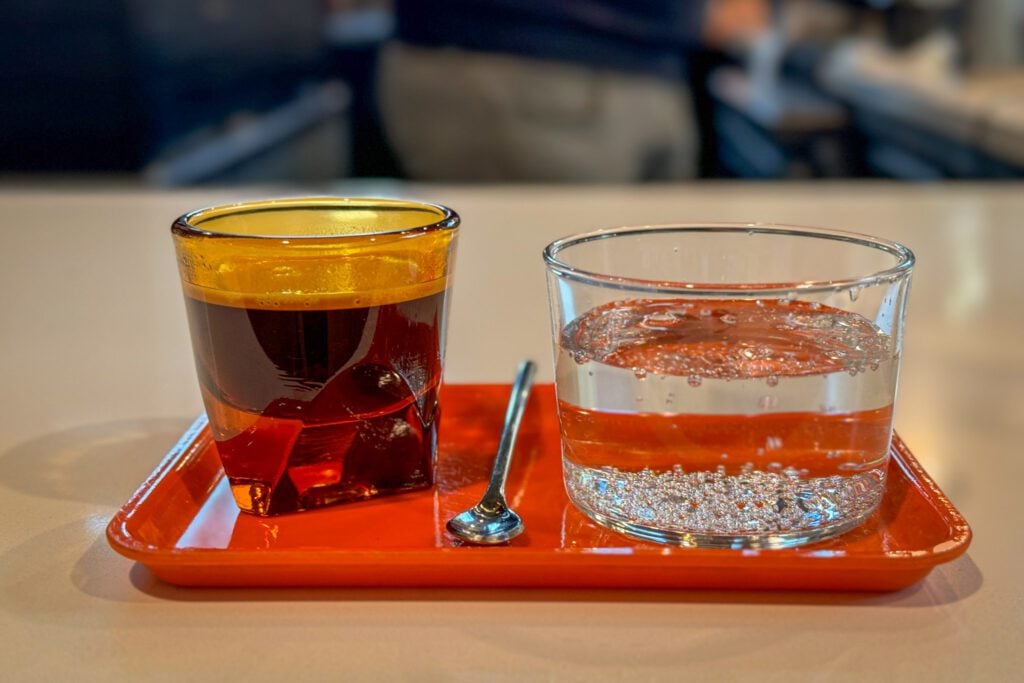
When you think of Seattle, coffee is probably somewhere in the top five word associations you have with the city, most likely alongside “grunge,” “green,” and “Seahawks/Mariners.”
And it’s true, Seattleites drink a lot of coffee. It takes a truckload of caffeine to get out of bed when it’s your 47th drizzly and grey day in a row in the depths of winter (seriously it rained for something like 90 straight days one year when I was growing up).
While Starbucks was born in Seattle, I would encourage you to absolutely not visit any Starbucks (ESPECIALLY not that Starbucks, which I have a mini rant on below) and instead explore the plethora of locally owned coffee shops where you will find better coffee, happier workers, and infinitely better vibes.
Now, I’m a bit of a coffee nerd, and I’m very particular about my coffee. I’ve spent a lot of time exploring Seattle’s coffee scene (which you can read in my guide to the best coffee in Seattle).
Here are my top picks for getting coffee in and around the downtown core.
Day Made Kaffe: Straight out of Copenhagen, this is a tiny shop down near the stadiums that serves a simple, coffee-forward menu using coffee from Coffee Collective from Copenhagen (where the owner worked before coming back to Seattle and eventually deciding to open their own shop). This is probably my top pick for coffee if you’re downtown (it’s a short walk from Pioneer Square).
Slow Day: A delightfully cozy little space in the heart of Belltown (not much seating, so don’t plan on lingering), they’re serving some of my favorite roasters from around North America (including September and Prodigal).
Victrola: One of the O.G. Seattle coffee spots, they have a nice location downtown a couple of blocks from Pike Place Market (here on Google Maps) that I’ve been to multiple times.
Straightforward menu with coffee roasted a little darker than the two options above (if you like your coffee a little more chocolatey and nutty, this is the place for you!).
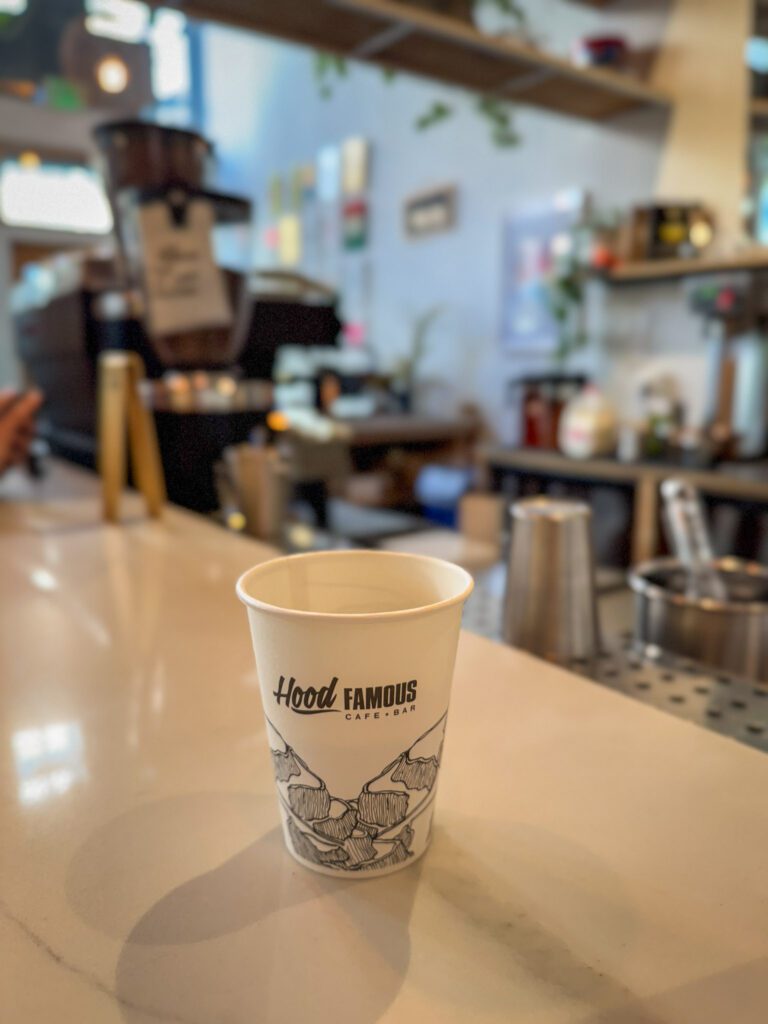
Hood Famous: Famous (ha) for their baked goods, this place is the best example of bringing their cultural background to coffee.
They serve coffees from Asia (though not necessarily roasted there), and I had a Chinese coffee and a Laotian coffee here (my first coffee from Laos ever).
They also have a unique menu of seasonal and signature drinks incorporating Filipino ingredients like calamansi (Philippine lime), sampanguita (the national flower of the Philippines), and lillikoi (the Hawaiian word for passionfruit).

An Introduction to Seattle in Pioneer Square
One of the things that I enjoyed most on that recent trip where I spent some time revisiting all the “touristy” things in Seattle was re-learning about the origins of the city in what would be classified as “Old Town,” Pioneer Square.
In the original version of this itinerary (that I have almost completely reworked after that trip), I was hesitant to send people to Pioneer Square because it is a little rough around the edges, with the highest concentration of services for Seattle’s homeless population and is where that population is most visible.
This can be a bit uncomfortable even for me, someone who has exclusively lived in cities on the west coast with similar challenges around cost of living and affordable housing, much less someone who isn’t from a big city.
However, I do think that Pioneer Square is worth exploring because it is where Seattle’s history as a major city in the United States began.
This is the oldest part of the city, and was designated a historic neighborhood in 1970, which means that the historic facades that have been replaced by glass-paneled skyscrapers in other parts of the city are still standing here.
Which makes it an excellent place to learn about Seattle’s beginnings.
The Beneath the Streets Tour
I love a good walking tour to introduce me to the layout and history of a city, and we generally do at least one in every new European city that we visit.
Generally speaking, there are far fewer walking tours available in American cities for a variety of reasons, and I often lament the fact that there’s no good way to learn about the history of some of our cities (granted it’s a much more compact history we’re talking about).
However, after revisiting the Beneath the Streets tour – which I had done as a kid as a field trip in school many years ago – this is the tour you’re looking for if you’re looking to learn a bit about Seattle’s history as a foundation for the rest of your trip.
After doing this tour on that recent visit, which I thoroughly enjoyed and gushed about to Alysha when I returned above ground, I highly recommend it as a fun way to learn about Seattle’s history.
The area that is known as Pioneer Square today was originally built at sea level in a tideflat.
So when a fire ripped through the city in 1889 and burned it to the ground, they reevaluated their decision and decided on a different approach that involved filling in the land to raise the street level roughly a story above sea level.
The issue was that the project for raising the street level would take a decade (most unsurprising spoiler in history: the big public works budget went over budget and took twice as long as expected). And the city couldn’t afford to just put business on pause.
So they came up with an innovative compromise. They rebuilt the downtown area at sea level, and then embarked on a big project to progressively raise it, with business still active and accessible during that period.
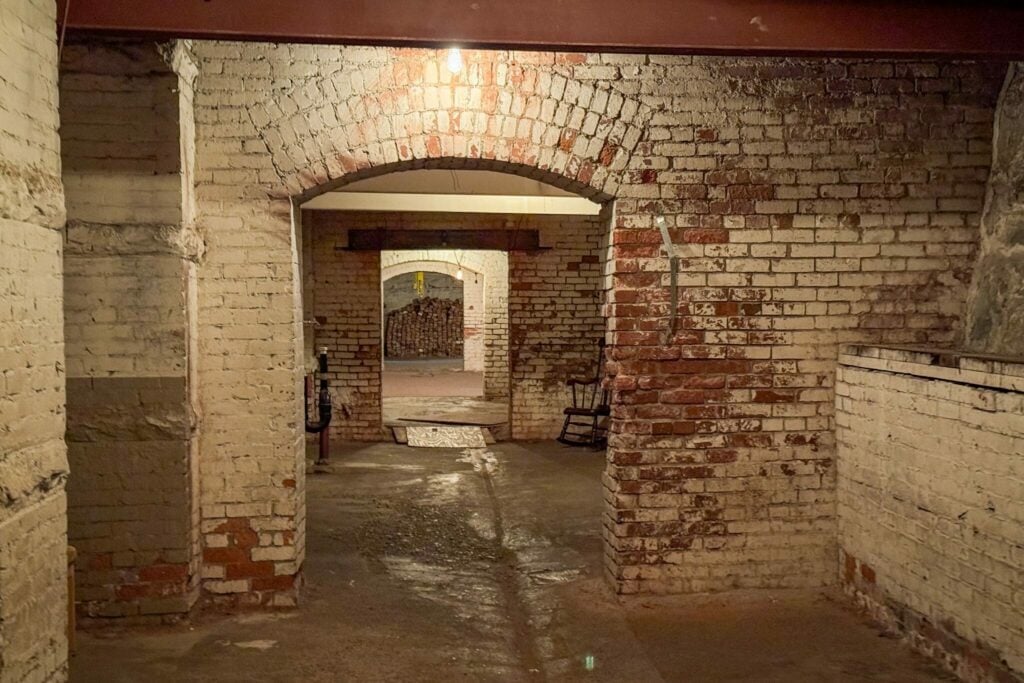
The result is that there is a network of underground tunnels beneath today’s streets that are the original street level, and they have held up for centuries despite the multiple big earthquakes that have happened over that time period.
The Beneath the Streets tour takes you into those tunnels to explore Seattle’s history from a different, unique perspective.
It’s almost more of a comedy tour than a dry history tour, but it does center around the underground tunnels that exist below Seattle and how they tell a story about the city as a whole.
It’s focused on the area around Pioneer Square, which is a historic part of the city and is what you might call “Old Town” or “the Historic Center” if it was in Europe.
It’s a fun way to spend an hour or so, though not if you get claustrophobic in tight spaces because you will be in underground tunnels (though they’re not particularly tight spaces, you’re just below the street level).
The Klondike Gold Rush Museum
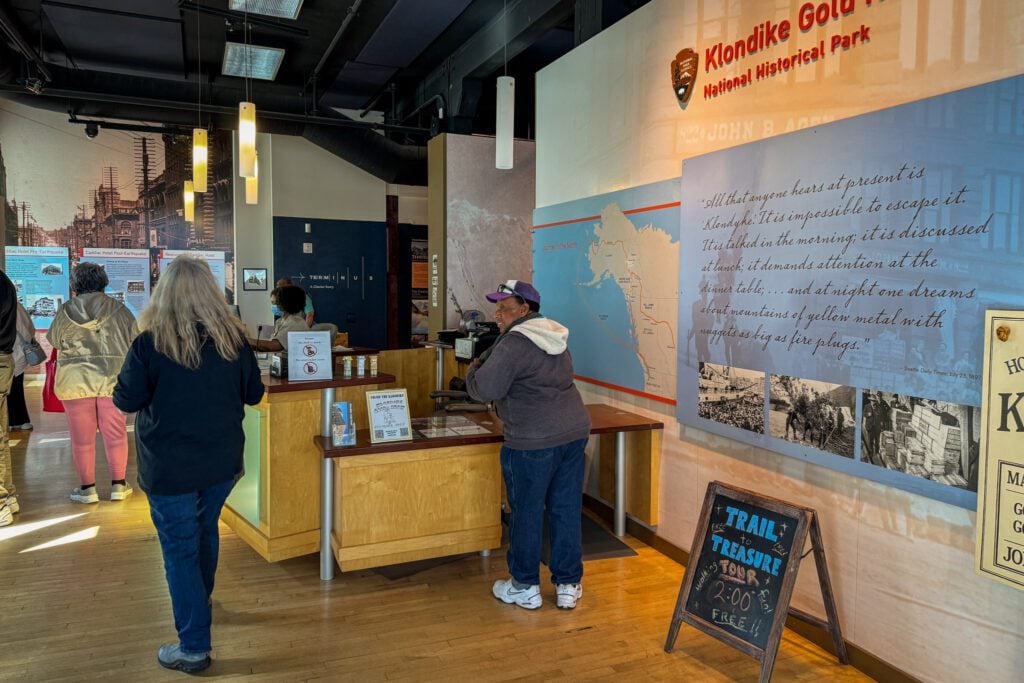
This compact little museum is actually run by the National Park Service (officially it’s “Klondike Gold Rush National Historical Park”) and tells the story of the Klondike Gold Rush, which took the world by storm in 1896.
Eventually, through a combination of ingenuity, entrepreneurial spirit, and sheer luck, this is the event that established Seattle as a real city and put it on the proverbial map.
I’m not sure I would have prioritized this compact (but informative) museum if it had not been for the tour guide of the Beneath the Streets tour, who positioned the Klondike Gold Rush as a pivotal point in Seattle’s development and mentioned this free museum as a good place to learn more.
Here’s the short version of the history around the Klondike Gold Rush as it relates to Seattle.
As we already covered, the tiny city known as Seattle burned to the ground in 1889, allowing for a re-do on the design and planning of the city.
Shortly after that, gold was discovered in the Klondike up in Alaska, and a couple of savvy businesspeople (really, marketers) in Seattle saw the opportunity to establish Seattle as the gateway to the Klondike and sprang into action, running media campaigns that would make today’s marketers proud.
A range of businesses catering to those hopeful travelers sprang up and filled the pockets of those early Seattle residents, including outfitters to sell them all the gear they needed to make it up north, and casinos and other, uh, less “above-board” businesses to capture their winnings on the way back south.
All that money was reinvested in the city, with people like John W. Nordstrom getting their start during that timeframe and establishing businesses that are still in Seattle (not to mention the rest of the country) today.
The museum itself is both free and relatively small, so there’s not a huge barrier to entry here. It’s two floors of interactive exhibits with pictures, videos, and explanations of what that time in Seattle was like, and how it led to Seattle’s growth in the years afterward.
I enjoyed it, and very much think it’s worth less than an hour of your time to round out your foundation for understanding Seattle before moving on to the bigger attractions over the rest of the day.
Pike Place Market for Lunch
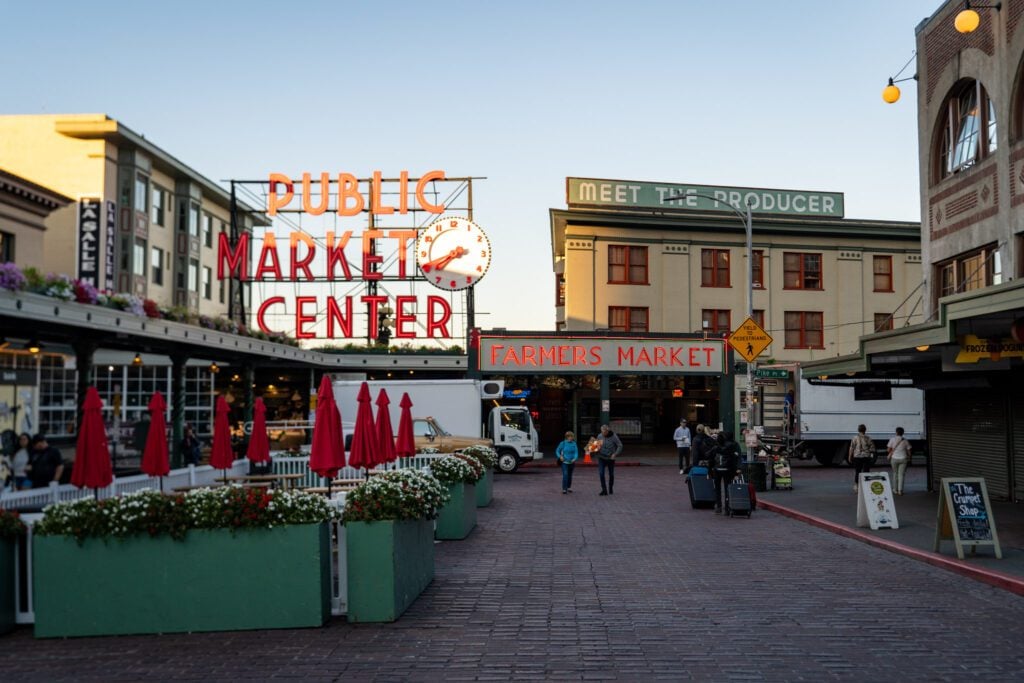
I, Matt, the former Seattleite, unironically love going to Pike Place Market, especially when I’m with people who have never been and I can bring them to all of the fun food spots in the market.
Pike Place Market is an institution for a reason.
Is it packed full of tourists? Absolutely, yes. Especially when there’s a cruise ship docked, which feels more and more frequent these days.
Is it hit-and-miss in terms of the quality of food nearby? Like all big tourist attractions around the world, yes (but there are some gems!).
Is it worth visiting on your trip to Seattle? Absolutely, yes. Especially if you know the spots to hit and which ones to skip (looking at you, “original” Starbucks – more on that in a second).
First of all, note that it is “Pike Place,” not “Pike’s Place.” And you should probably be at least a little skeptical of anyone who calls it Pike’s Place and offers you advice on anything Seattle related.
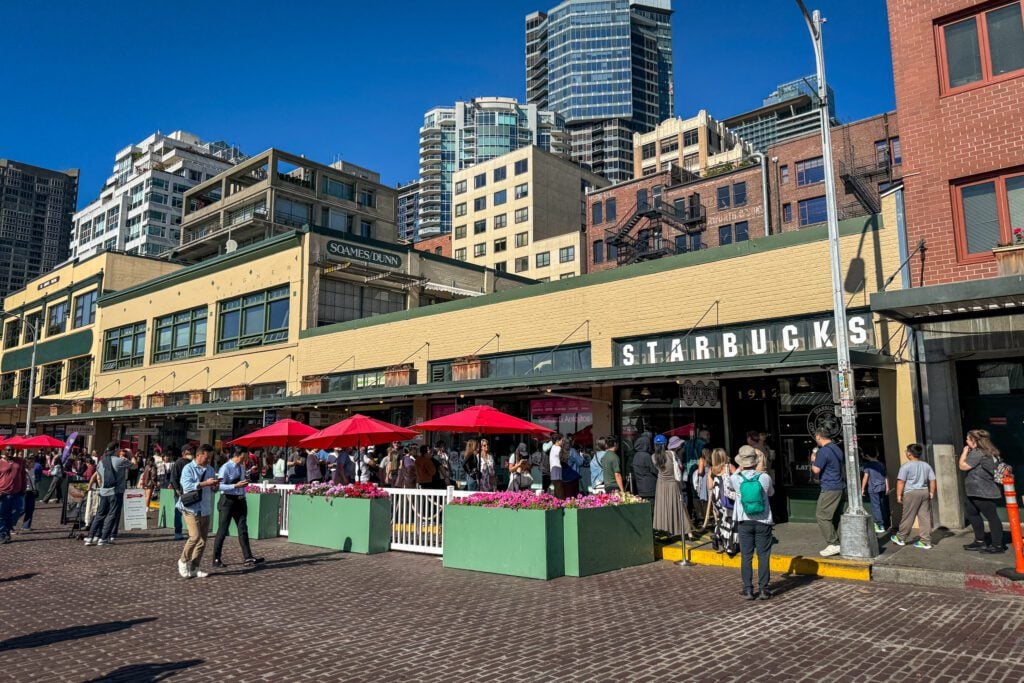
Second of all, time for my favorite Seattle rant. And it’s about the “original” Starbucks at Pike Place Market, where you will find lines of up to an hour in the peak summer months.
Do NOT wait in that line, or go to the “original” Starbucks at all.
It’s not actually the original location (just good branding of a relatively old location) and there are several better places to get coffee within a few blocks (Victrola, Anchorhead, or Ghost Alley Espresso, which is right under the market).
If you absolutely must have Starbucks (boo), go to one of the other 17 locations within a few blocks of the Market, which are almost exactly the same and will not have nearly the same line.
The only difference is that the mermaid logo has a top on at those other locations and you’ll get your coffee in a more timely manner.
If you’re interested in diving deeper into the market and its food scene, we’d do this guided food tour, which will take you to some spots we mentioned above, and some other ones on a two hour culinary journey with plenty of tastings along the way.
You’ll get a dose of history, a dose of food, and an opportunity to ask a local food expert where you should eat for the rest of your time in Seattle (which is also a valuable opportunity!).
They also have an early morning version of that tour, which is our favorite time to be at the market when it’s significantly less crowded.
With all that out of the way, here are some spots at the Market that we love and think are worth stopping by.
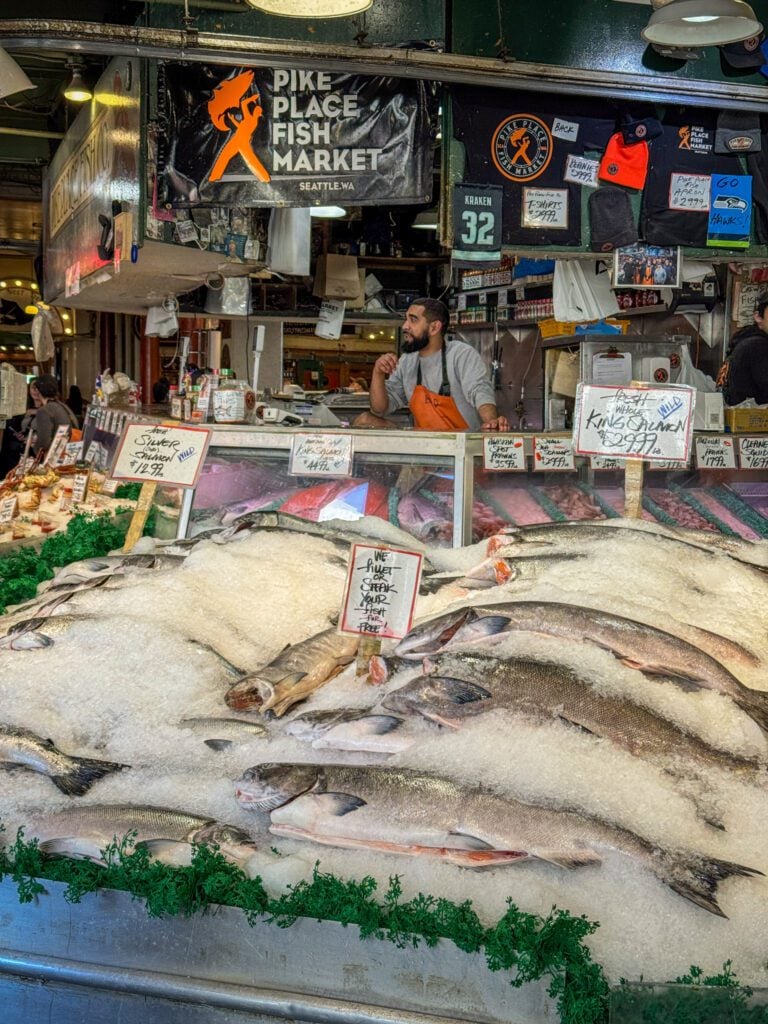
The Flying Fish: A Pike Place classic – hang out around the fish area right under the main Pike Place sign (here on Google Maps) to see the fish throwing in action.
For one of my friend’s birthdays recently, we actually bought fish and other seafood here, which was a fun experience and was definitely my first time doing anything other than watching the fish fly.
Piroshky Piroshky: A cult classic, this place has been serving up Russian pastries since the early 90’s, way before Seattle was “cool.”
Various fillings are wrapped in a buttery, flaky puff pastry (I think that’s what it is, anyway) and served out of a literal hole in the wall. They have vegan and vegetarian options, but no gluten free options.
Beecher’s Cheese: Is Beecher’s my favorite PNW cheese company? Maybe (there are too many good ones to choose from!), but their flagship cheddar is absolutely in the conversation and is nearly always present on cheese plates around the holidays.
Their shop at Pike Place sells their retail cheese along with ready-to-eat items like Mac & Cheese or a grilled cheese sandwich (neither are safe for Celiacs, but the cheese itself is!).
Biscuit Bitch: Southern style biscuits and gravy with a bunch of different varieties to choose from. Follow your nose and the long lines to get here.
IMPORTANT: The gluten free biscuits are made in the same area and on the same equipment as the rest, and are NOT SAFE FOR CELIACS. Everyone else, go crazy.
Pike Place Chowder: One thing you need to know about Seattle is that seafood is serious business, particularly salmon. For chowder made with fresh seafood, head here. Pro-tip: Get the salmon chowder, and get it in a bread bowl.
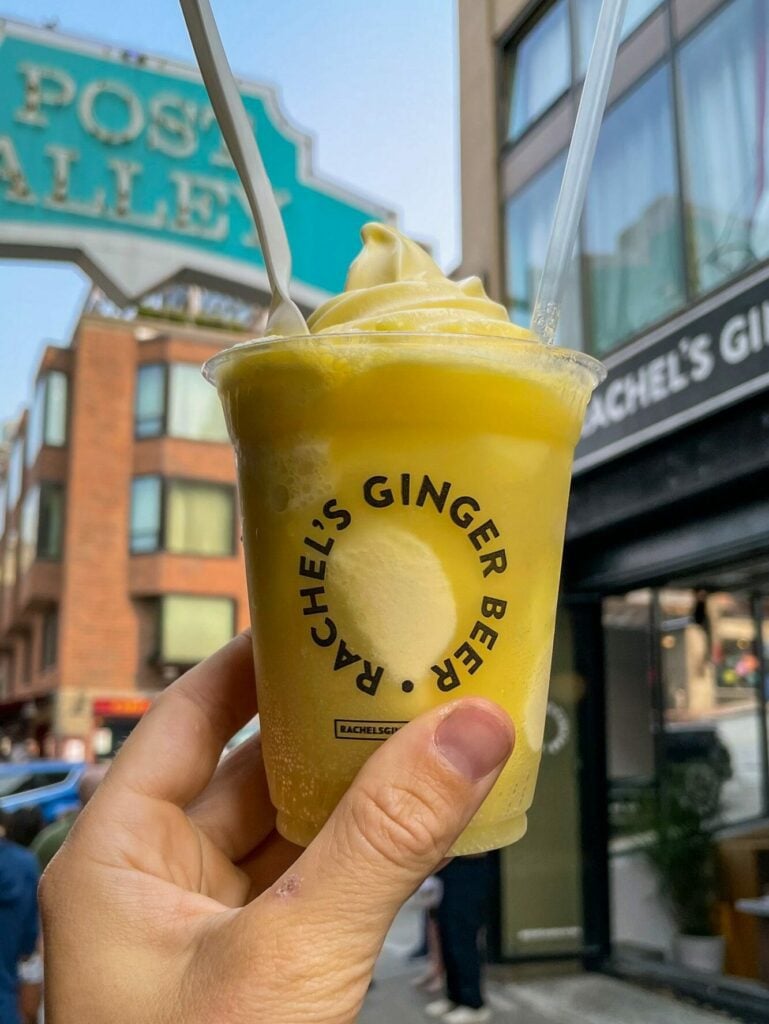
Rachel’s Ginger Beer makes, you guessed it, ginger beer! You can get it straight or as part of a cocktail. They have some really fun flavors, like Caramelized Pineapple and Blood Orange, and they are constantly churning out new ones. Everything they make is gluten free and dairy free.
Indi Chocolate: I mean, high-quality, small batch, single origin dark chocolate. Need I say more? We particularly like their drinking chocolate, and there’s a fantastic view out over Seattle and the Puget Sound from the patio area right outside.
Walk the (Brand New) Waterfront
After Pioneer Square and the underground tour, the second biggest revelation I had on that latest trip to Seattle was the fact that the redevelopment of Seattle’s waterfront is amazing.
A slight detour here to talk about Seattle’s urban planning history, one of the topics that I’ve become fascinated by in recent years.
Until a few years ago, there was a double decker freeway – the Alaskan Way Viaduct – running right through the center of Seattle above the waterfront, essentially separating the waterfront from the rest of the city. Gross.
But it was deemed unsafe and, instead of repairing or rebuilding it, they (thankfully) landed on rerouting it.
The removal of that viaduct took years of planning and countless ballot measures, but it finally got done in 2019.
From there, Seattle put in both dollars and work to make the waterfront a pedestrian friendly, walkable place.
And apparently I had not been here in years because I was absolutely flabbergasted at the great infrastructure that has been put here to connect Pike Place Market (which is up on the hill) with the waterfront (which is at sea level).
If you’re curious, here’s a before and after photo of the area before and after the removal of the viaduct.
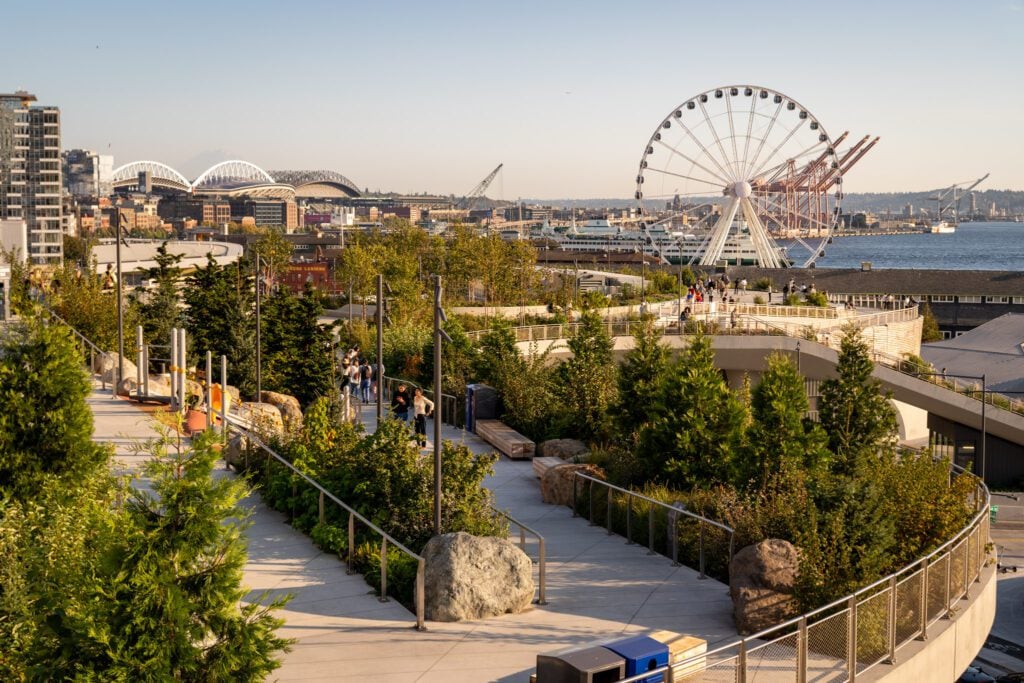
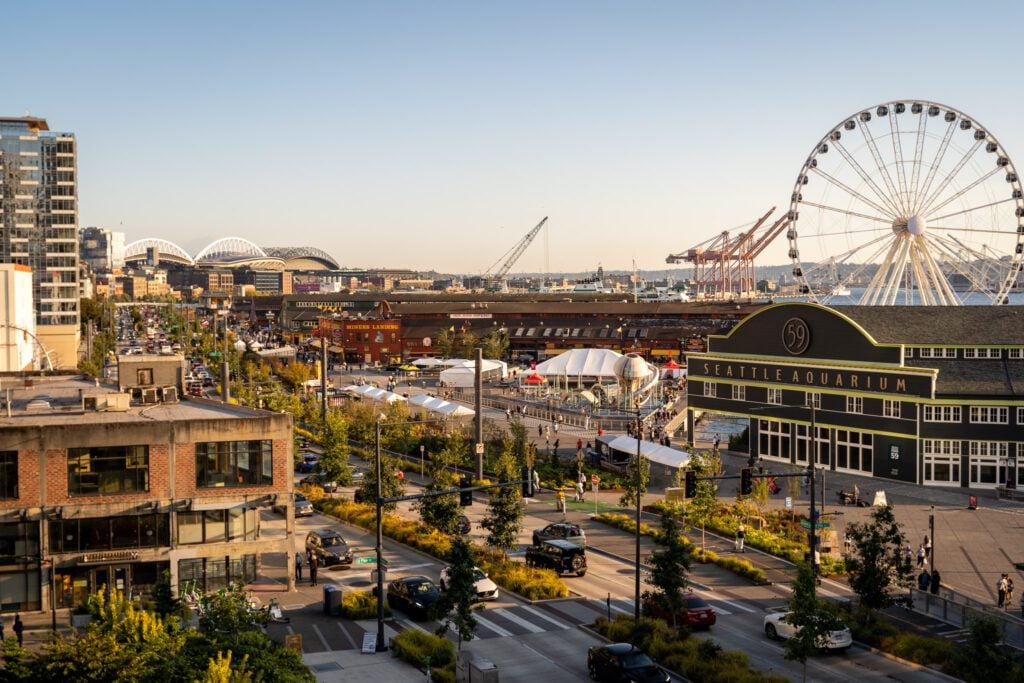
It is hard to overstate how much more pleasant it is to be able to walk along the water without the roaring of hundreds of cars overhead.
Urban planning detour over.
The point is that you should definitely head down here from the market and walk to your next destination along the water.
The tourist attractions down here (including the Great Wheel and the rest of Miners Landing) aren’t really worth your time or energy, but there is a great view from the top of the cruise ship terminal at Bell Harbor Observation Deck (here on Google Maps) that is worth visiting.
If the weather is nice, it’s worth taking a short detour to the north. Continue straight along the water to the string of beaches – our favorite is Pocket Beach (here on Google Maps).
Continue north to Olympic Sculpture Park, which is a permanent art installation furnished by the Seattle Art Museum down on the water.
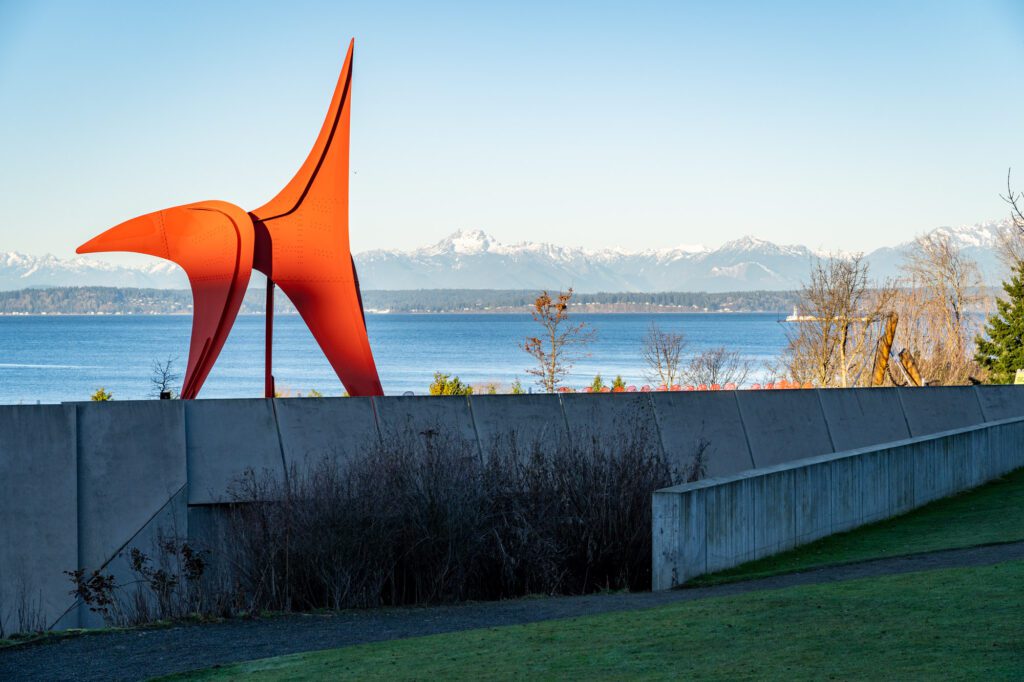
On a clear day, you’ll find the huge red sculptures backed by the snow capped Olympic Mountains.
Here’s a map of the route we’d take from Pike Place Market along the waterfront to Seattle Center, your next stop.
Seattle Center: Choose Your Own (Museum) Adventure
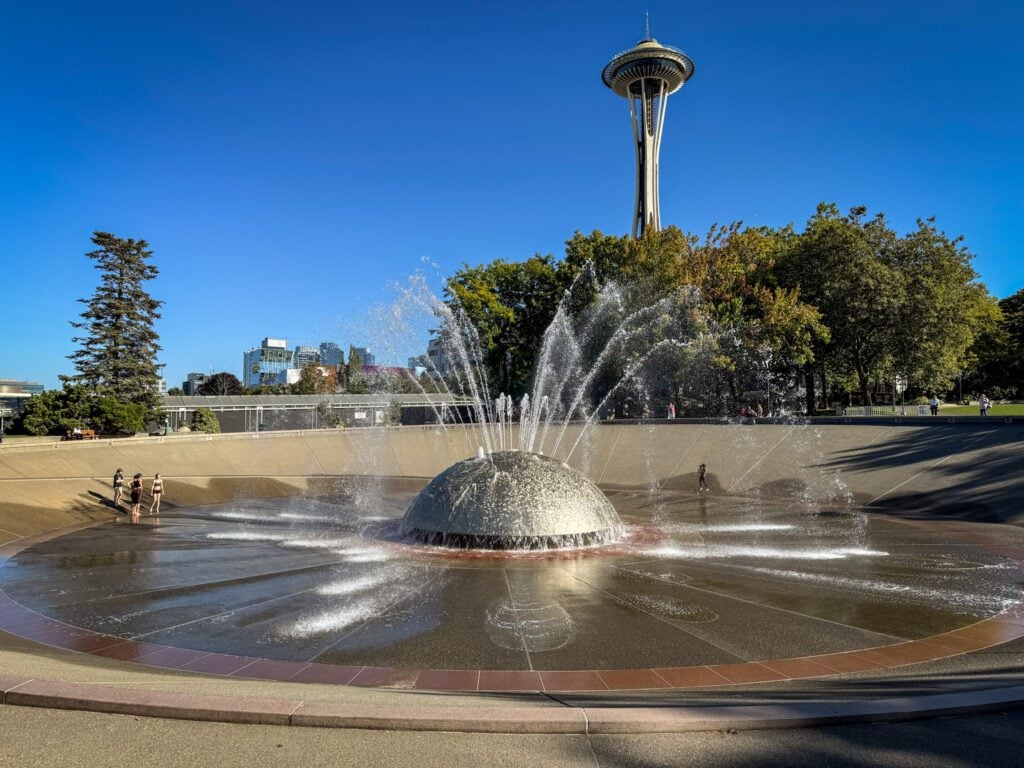
Along with Pike Place Market, Seattle Center is the other tourist-centric hub in Seattle. It’s north of Pike Place Market on the other side of Belltown, at the base of the hill in Lower Queen Anne.
There are a bunch of attractions here, but there are three that stand out to us (for positive and negative reasons); the Space Needle, the Museum of Pop Culture, and the Dale Chihuly Gardens and Glass. Those are the ones we’re going to focus on.
With just a couple of days, our recommendation is to pick one of the main attractions here (we’ll give you three options) and focus on that, plus a trip to the International Fountain (for the view of the Space Needle) and Vita at KEXP for coffee.
Here are some quicker hits on the other things to see here.
KEXP + Caffe Vita: While it’s not quite our pick for the best coffee in the city, it’s hard to argue that this cafe doesn’t have the best vibe of any in Seattle.
They’re in is a big, airy warehouse-feeling space that is adjacent to the recording studio (and offices) of KEXP Seattle, which is a well-known alternative station that rose to fame with Seattle’s ascent to the top of the grunge scene.
International Fountain: A cool fountain with a view of the Space Needle right outside Climate Pledge Arena.
Climate Pledge Arena: Formerly Key Arena, home of the Seattle Supersonics who were shamefully stolen and taken to Oklahoma City (your loss, I guess), this is now the home of the Seattle Kraken, Seattle’s NHL franchise, and also one of the entertainment venues for bigger acts coming through Seattle.
The Pacific Science Center: This would be an excellent thing to do with kids, because it’s a very interactive, kid-friendly museum. There’s an iMax theater here too, and they actually do some fun adult themed nights like laser shows to Jimi Hendrix music.
Now let’s talk about those three major attractions.
The Space Needle
The first thing we need to talk about is the Space Needle, which is usually either the first or second thing on people’s agenda when they’re visiting Seattle.
While Pike Place Market is absolutely “touristy,” it’s also absolutely worth visiting and spending a good chunk of time exploring (and mostly eating and drinking).
We have the exact opposite view of the Space Needle, and Matt tells everyone he encounters (whether they’re actively planning a Seattle trip or not) that it is one of the most overrated tourist attractions in the world (trailing “Juliet’s House” in Verona, which is a joke, and followed closely by Fisherman’s Wharf in San Francisco).
There are a few reasons why that is the case, but it’s mostly a cost issue.
At the time of writing, it costs a whopping $42.50 per adult (slightly cheaper for kids and seniors, slightly cheaper before 11am and on Tuesdays and Wednesdays) to ride the elevator up to the top of the Space Needle.
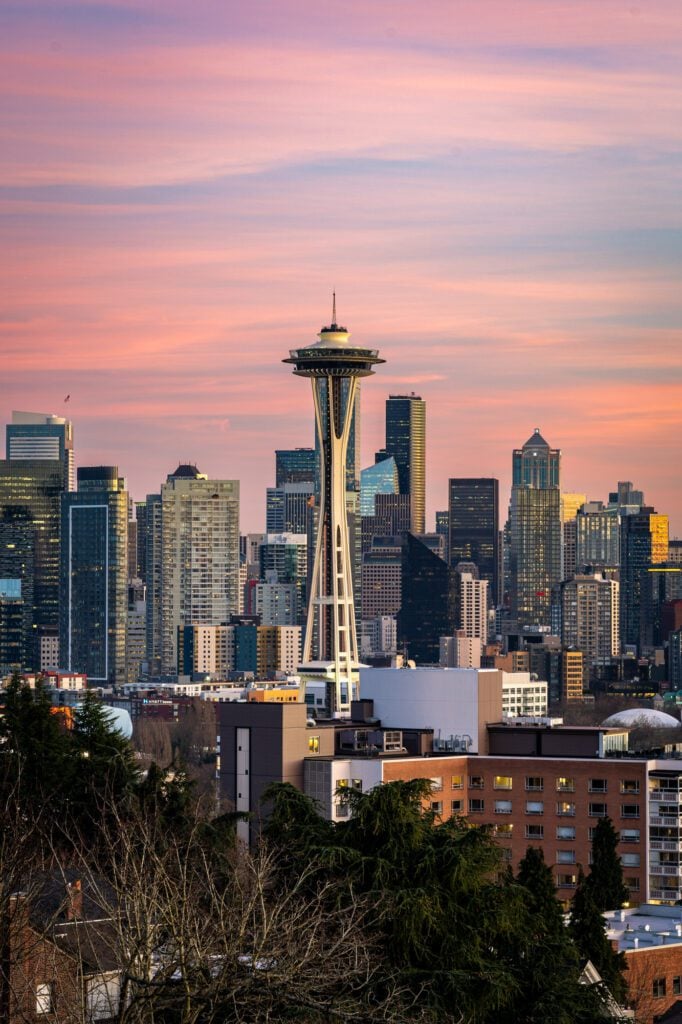
You’re mostly doing it for the view, and the biggest problem with the view of Seattle’s skyline from the Space Needle is that… the Space Needle isn’t in it.
Not only that, but the best view of Seattle’s skyline (we think) is a public park that is FREE, is a short walk from Seattle Center (~15 minutes uphill), and includes the Space Needle in its view.
That park is Kerry Park, which you can find here on Google Maps.
One thing to know if you do want to do the Space Needle is that, for the most part, the best time to be up here for pictures is around sunset (you also get the benefit of being able to see the city light up at dusk) because the best view is looking southeast towards the skyline and Rainier, and the sun will be behind Mount Rainier in the morning hours.
More information on the Space Needle, including current prices and hours, here.
The Museum of Pop Culture
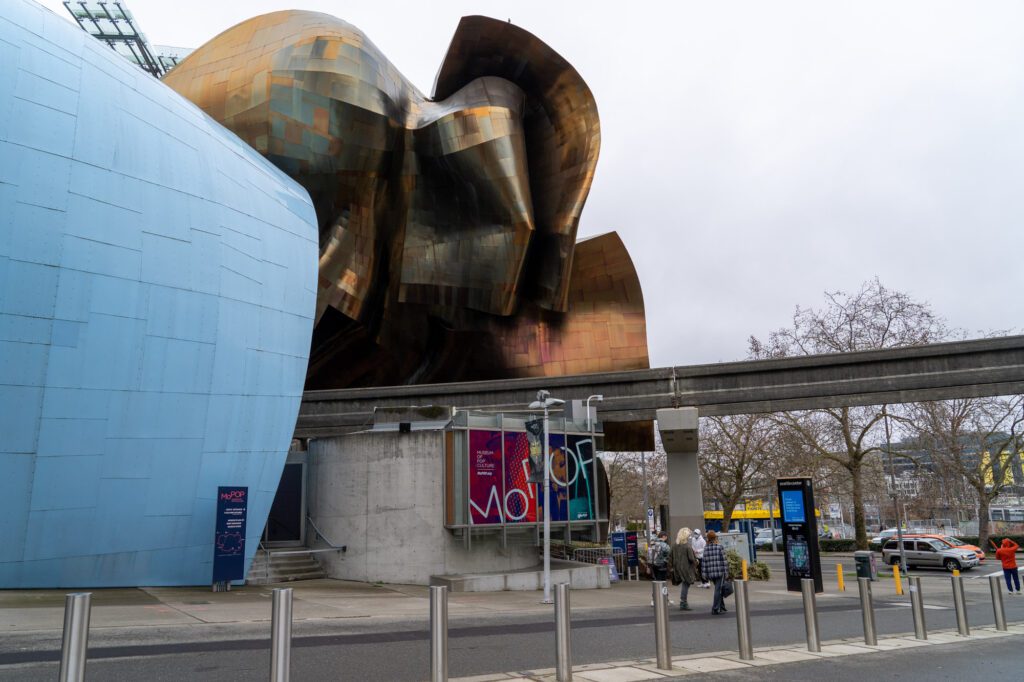
Of the attractions at Seattle Center, this is BY FAR our favorite of the bunch. It used to be the Experience Music Project, a funky looking multicolored building that seems to swallow up the Seattle Monorail as it passes by, but has since broadened its purview to include all things pop culture.
Fun fact: Matt had his high school prom here!
The Museum of Pop Culture has a range of permanent exhibits, including a few focused on Seattle icons like Pearl Jam and Nirvana, along with a set of rotating exhibits (we went when there was an exhibit about the rise of hip hop in the 90’s and 2000’s and it was FANTASTIC) and some more experiential exhibits.
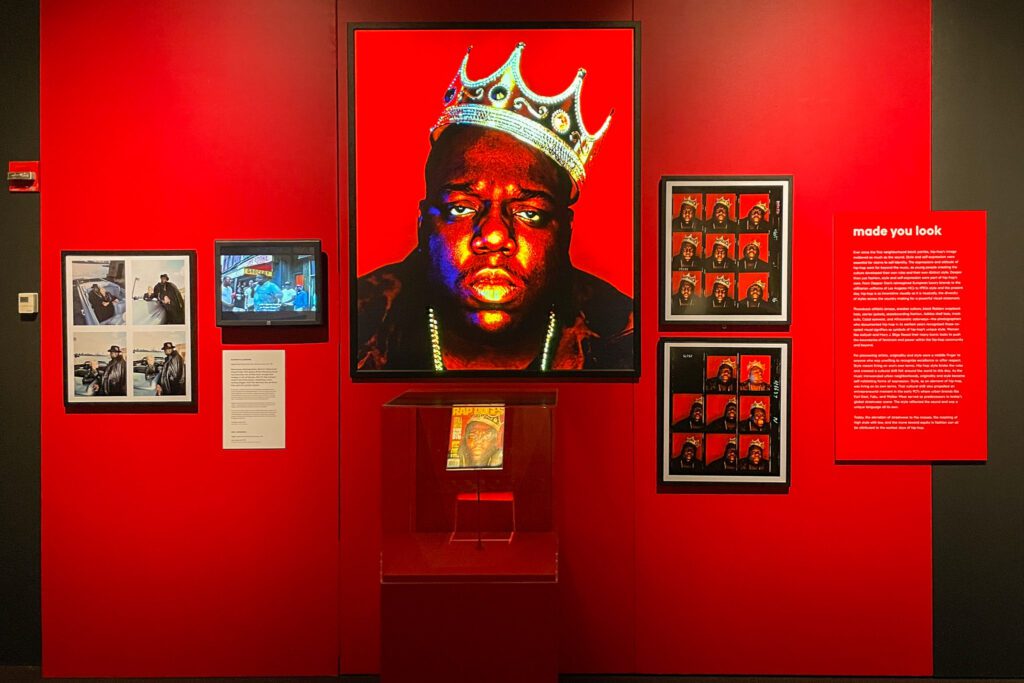
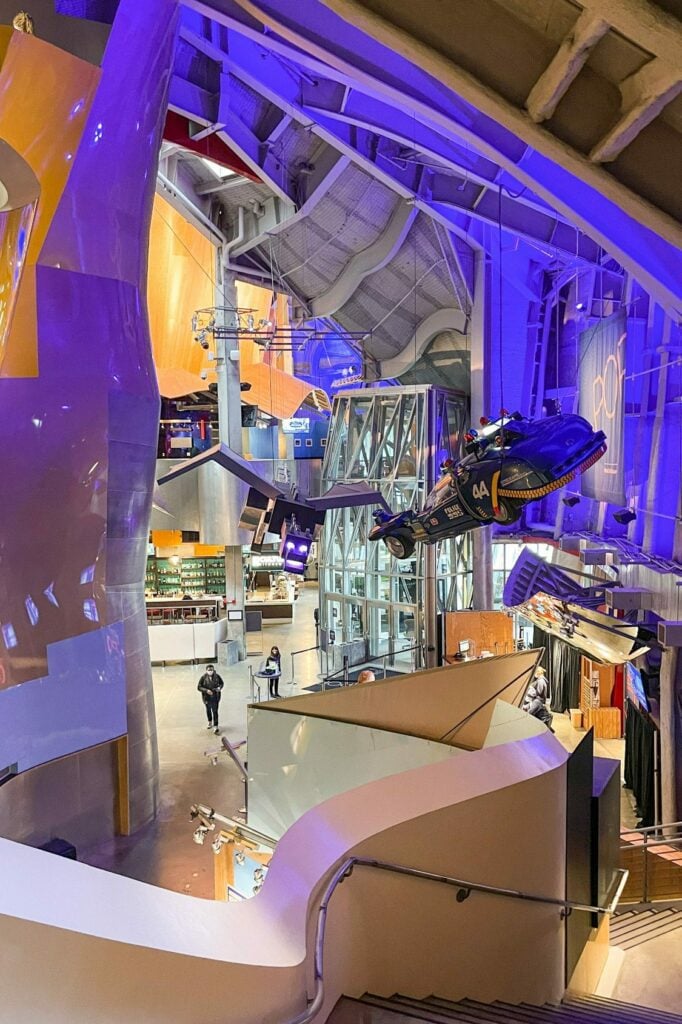
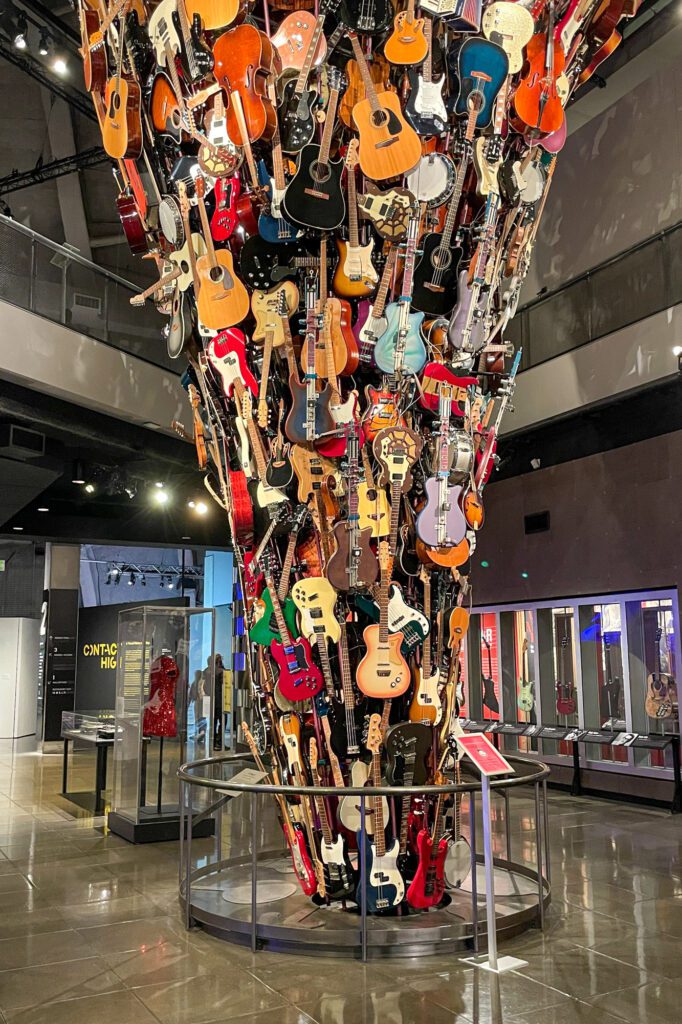
The only downside is that it’s a little bit expensive, starting at $35 per adult (they do dynamic pricing, so it’s generally a few dollars cheaper the further out you book), but we absolutely think it’s worth it if you want to learn about some of the cultural icons that have shaped Seattle over the past few decades (like grunge music).
It’s also worth checking out their current exhibitions to see if there are any interesting temporary things happening while you’re in town.
Chihuly Garden & Glass
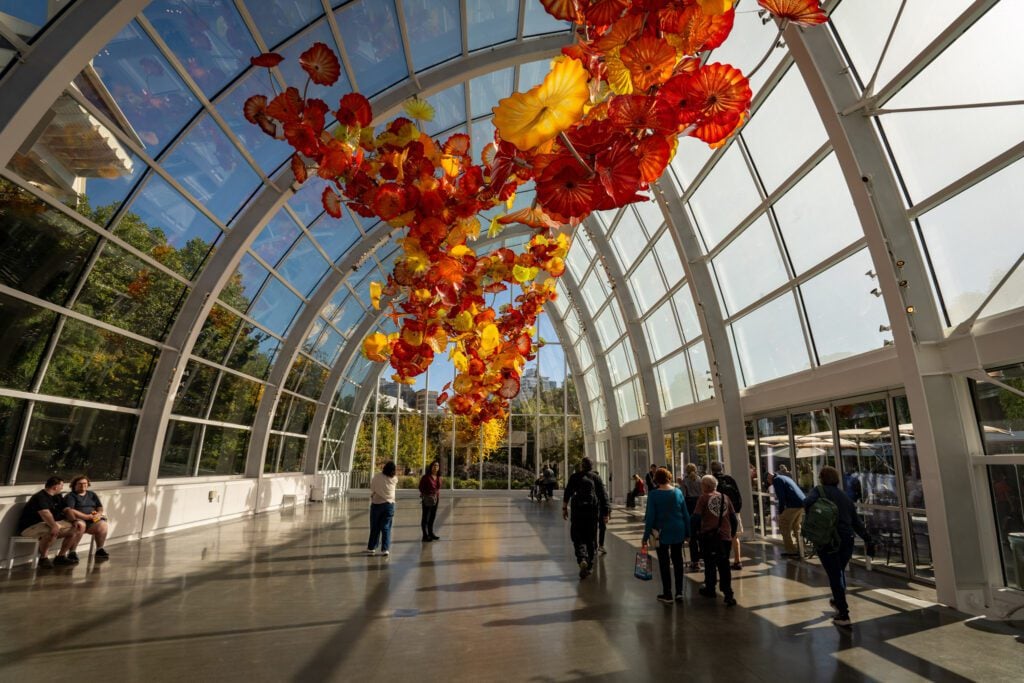
If you’re not interested in the Museum of Pop Culture, this museum across the street is a worthy alternative.
I would actually consider doing them both if you have the time and budget, because both tell pieces of the story of Seattle’s entrepreneurial, optimistic, creative story.
It’s focused on the work of legendary glass artist Dale Chihuly, who spent his life in the Seattle area creating incredibly intricate glass sculptures.
If you visit, I can almost guarantee that you’ll say something to the effect of “how did he do THAT” at least once.
I experienced it for the first time on my latest visit (somehow I’d never done it before?) and I was blown away at both the work and the way it’s displayed.
There are also live demonstrations throughout the day where you can see how the glass is made, which was arguably my favorite part.
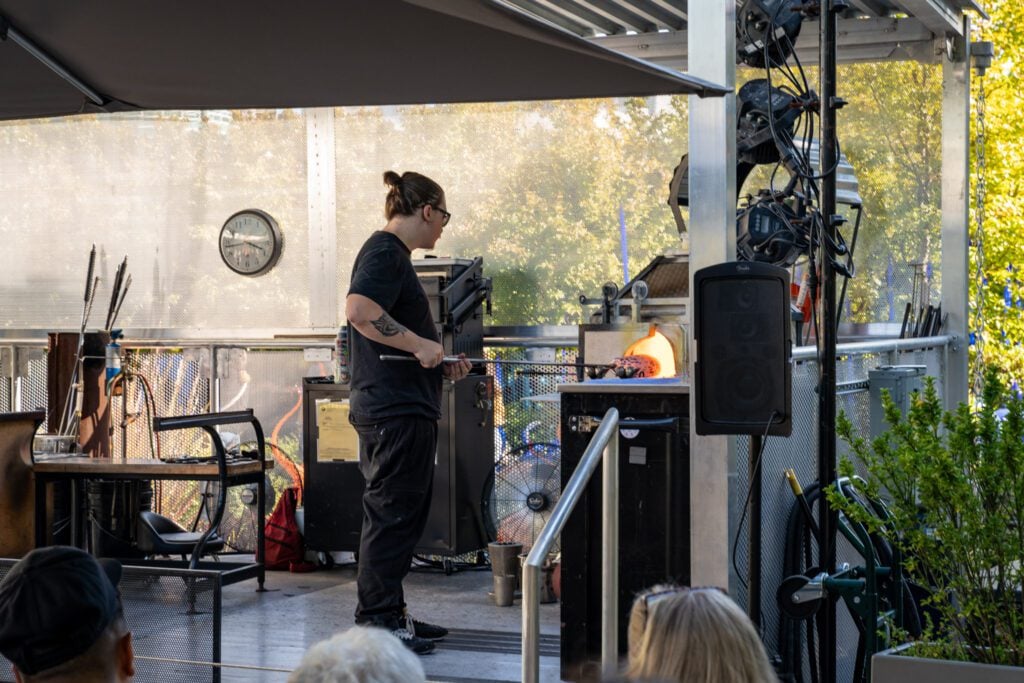
I would also prioritize sitting down and watching whatever video they’re showing in the theater area, which will also give you some insight into the process behind the art.
There are multiple exhibitions and things to see here, including the glass gardens (think a botanical garden, but the installations are made of glass and are integrated with the natural world).
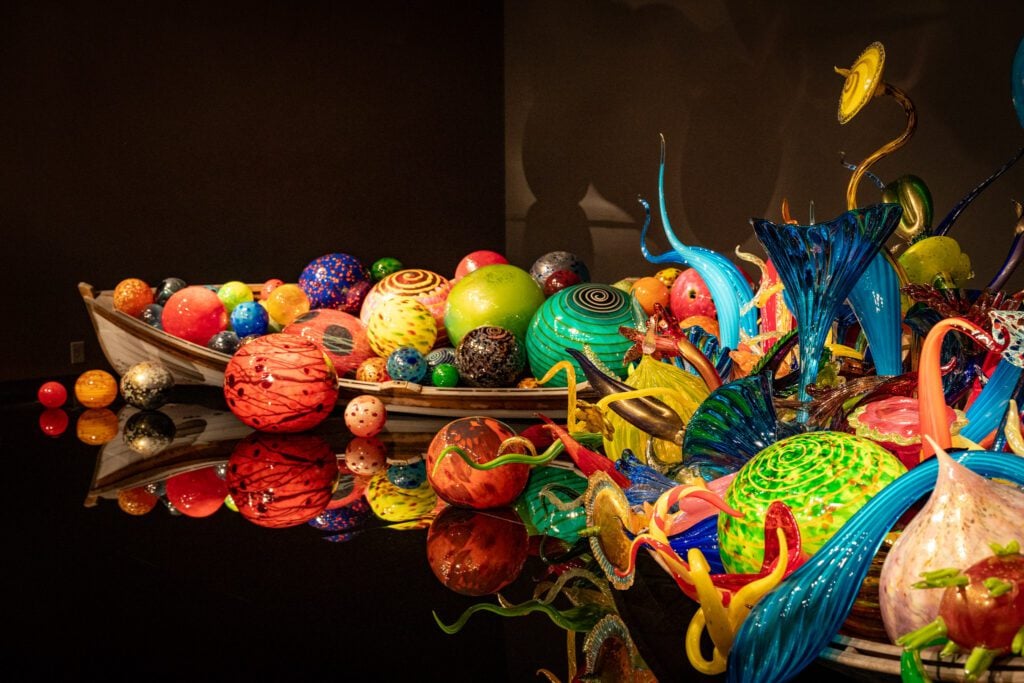
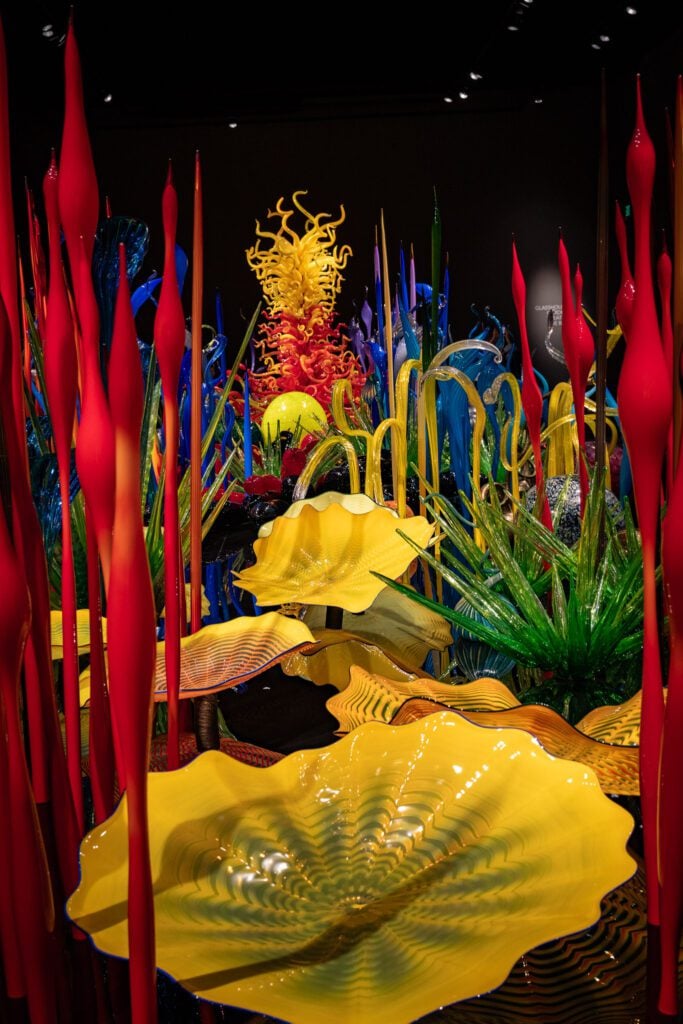
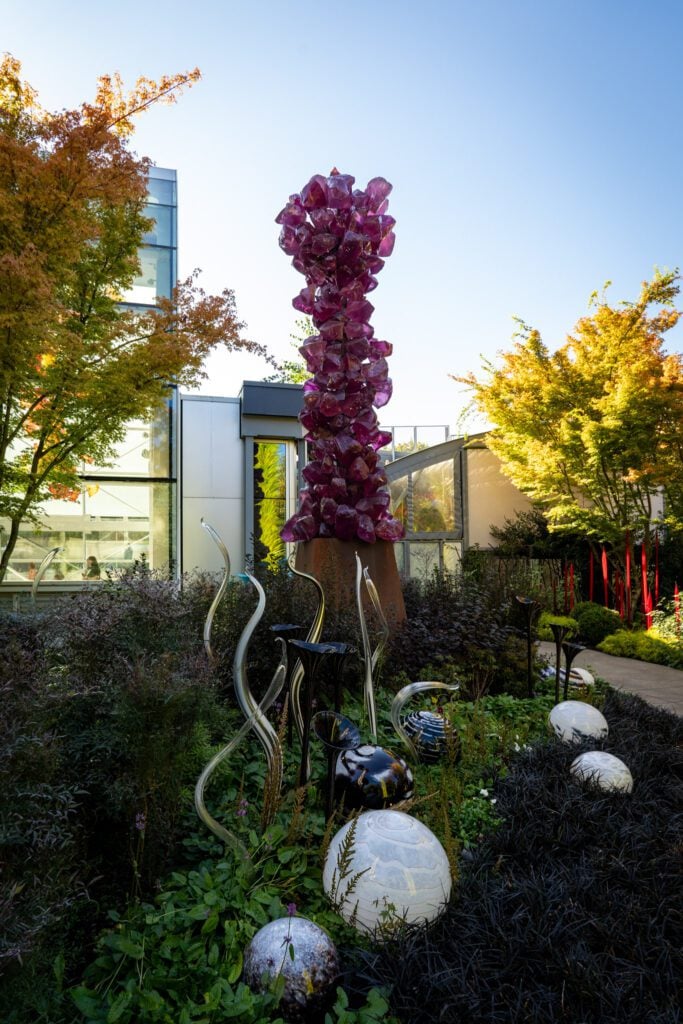
Tickets here start at $35 for adults, and fluctuate based on time of day and other factors. It’s kind of expensive, which is part of why I had never done it before, but I loved it. More information here.
Kerry Park (the Best View in Seattle)
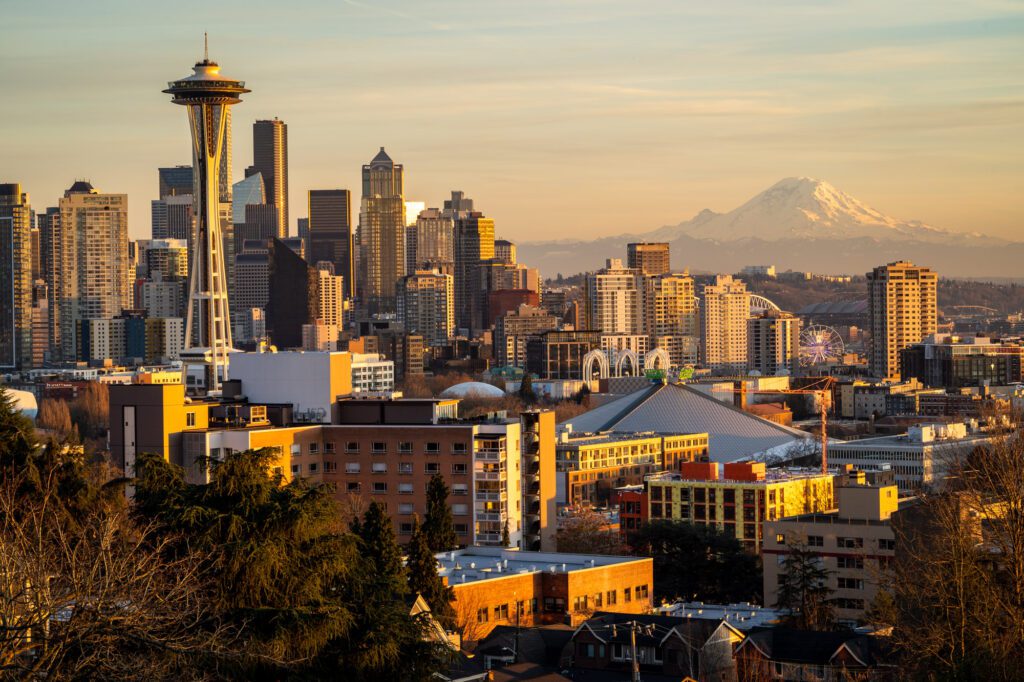
If you’ve skipped the Space Needle like we recommended, the one thing you haven’t gotten today is sweeping views of the city and surrounding area.
Ladies and gentleman, I present to you Kerry Park, which is not only our favorite view of the city, but is also 100% free since it’s a public park.
It’s a short walk up the hill to reach it, and it’s worth the effort. You’ll likely share the view with a group of people, but you’ll hardly notice since you’ll be so busy picking your jaw up off the ground.
From Kerry Park, you’ll get a view out over the entire city, from the Space Needle in the foreground, to Elliott Bay and even Mount Rainier (if you’re lucky and you’re here on a crystal clear day) in the background.
It’s spectacular, and it’s worth the detour.
Pro-tip: Stop by Toulouse Petit in Queen Anne for an awesome happy hour featuring Cajun/Creole cuisine. Or, if you’re on a tight budget, you can’t go wrong with Dick’s Drive-In, which is Seattle’s answer to In-N-Out. Be aware though, no substitutions!
Dinner & Drinks in Belltown
After Kerry Park, head back down to Belltown, which is the neighborhood just north of Pike Place Market, for dinner and drinks.
This is our favorite part of the downtown core because it is absolutely packed with amazing bars and restaurants.
Here are a few of our favorites (some of them are on the downtown side of the border, but close enough).
For drinks, head to…
- Bathtub Gin for fancy cocktails in a speakeasy setting (yes, there is a bathtub).
- Seattle Beer Co. for a nice selection of local beers and ciders near Pike Place Market.
- Cloudburst Brewing to experience the local craft beer boom at the source.
- Navy Strength for great tropical cocktails and a fun atmosphere.
For dinner, head to…
- Serious Pie: Alysha’s favorite, this is the place to go for pizza. It’s a Tom Douglas restaurant – he’s a famous Seattle restaurateur – which means it’s probably going to be good.
- The Pink Door: Pasta and a burlesque show? It’s a really fun place for dinner (though the entertainment varies night to night). Make a reservation in advance if you can, though half of the restaurant is saved for walk-ins. At the time of writing, burlesque shows are Saturdays at 9:30 pm, and you’ll want to reserve in advance.
- Lola: One of our favorites, this is Tom Douglas’ take on Greek food. Get the haloumi and fig kebabs.
The Alibi Room: Below Pike Place Market, this dimly lit bar serves up some great wood-fired pizza – it was a pre-Celiac favorite for Matt, and he dragged Alysha here the first time she came to Seattle with him to watch her eat one of their pizzas, despite the fact that he couldn’t eat them himself.
Day 2: Discovery Park, Ballard, and Fremont
On your second day, head north and start your day with the city’s best urban hike (it’s really more of a walk) and then eat and drink your way through the neighborhoods on the northern end of the city, Ballard and Fremont.
A quick note: We think the Ballard Sunday Farmers Market is one of the best around, with countless stalls of farm-fresh produce, small-batch packaged food items like cider, hot sauce, and vinegar, and a range of rotating food trucks. We’d recommend doing your best to make this day fall on a Sunday, if you can.
Discovery Park and the City’s Best Urban Hike
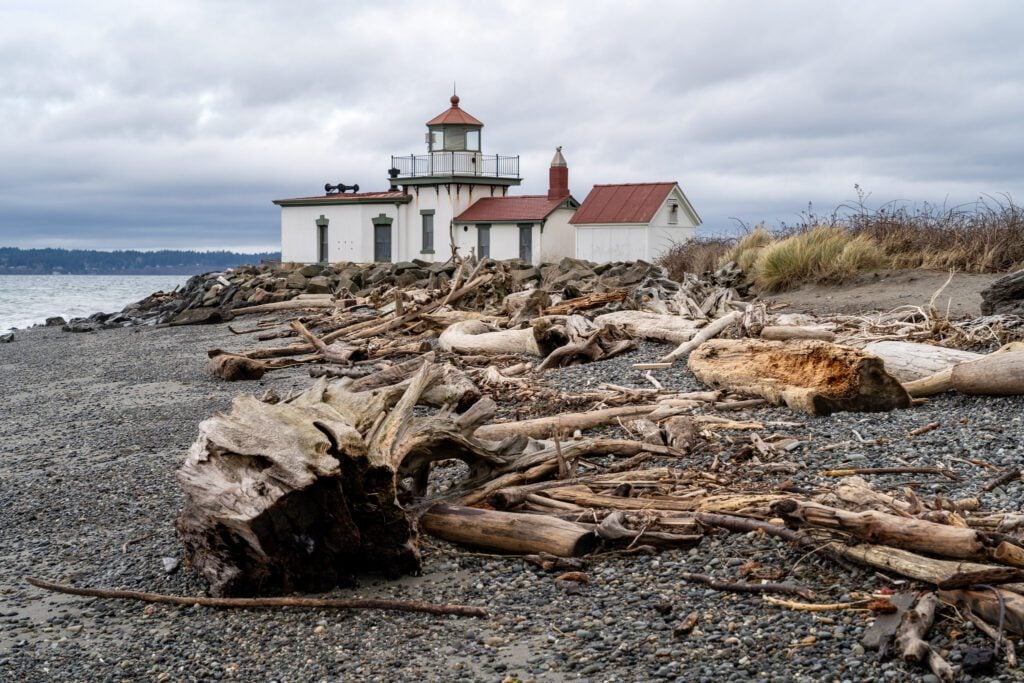
First, head out to northwest Seattle for a morning hike (our favorite hike in Seattle) through what we think is Seattle’s best green space – Discovery Park.
Discovery Park takes up 538 acres in northwest Seattle, making it the largest park in Seattle.
You’ll park (or get dropped off by your rideshare) and start your walk atop a coastal bluff with great views of the Sound and Olympic Range before descending down to the water, where there’s a nice driftwood-laden sandy beach called South Beach.
At the point just a few hundred feet away, you’ll find the West Point Lighthouse, where you’ll usually find a bald eagle hanging out (at least we have almost every time we’ve been here).
Take this loop through the park, which is a relatively easy walk, keeping an eye out for eagles passing overhead.
There are a couple of starting points to choose from – this is the one we’d recommend because it’s next to the Visitor Center and bathrooms.
Explore Ballard (and the Breweries)
Ballard is the place that we tend to find ourselves in Seattle most often despite the fact that it is literally the furthest possible neighborhood from my mom’s house east of the city.
Mostly because Alysha’s favorite tea place and the best farmers market in Seattle are in Ballard.
Originally the land of the Duwamish people, the area that is now known as Ballard saw its first European settlers in the mid 19th Century, when some rich guys acquired the land in hopes that the Great Northern Railroad would come to Seattle to jack up the value of their investment.
From there, the area became an industrial hub with mills and canneries galore, which is why you see so many industrial buildings today that have become craft breweries.
Ballard used to be an independent city, and at one point it was the second largest city in King County by population (after Seattle).
Today, Ballard is a hip, young, fairly residential area with a nice walkable “downtown” area near Ballard Ave that is one of the most popular stretches in the city, day or night.
It’s still dense and close enough to Downtown Seattle, but a little more low key.
Put succinctly, Ballard is where people in their 30’s move after living in Belltown or Capitol Hill and deciding they want more space and a less urban setting, but don’t want to move to the burbs.
Ballard also has great access to green spaces, with the Burke Gilman trail running right through it (to connect you to Fremont and the University of Washington on a bike ride or run), and Golden Gardens Park and Discovery Park on its doorstep.
Here are some of our favorite things to do and see in Ballard, in no particular order.
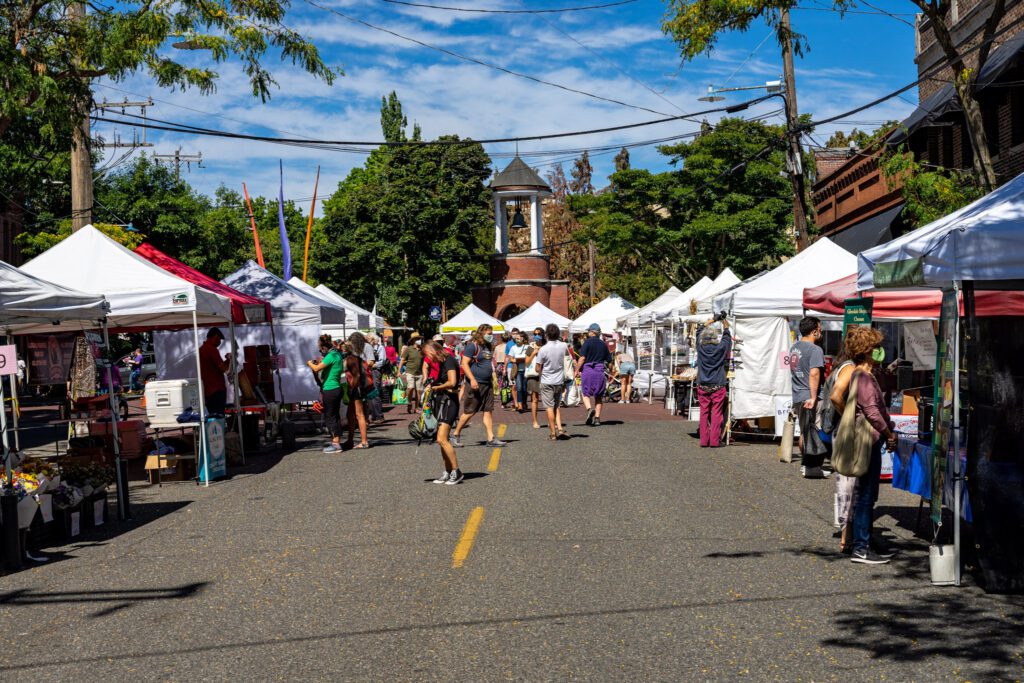
The Ballard Farmers Market: We definitely think you should visit if you’re in town on a Sunday. It’s a display of the incredible bounty of fresh ingredients and makers in Western Washington, from cheese and mead to ready-to-eat foods out of stalls and food trucks. It’s a fun atmosphere, and is worth prioritizing, we think.
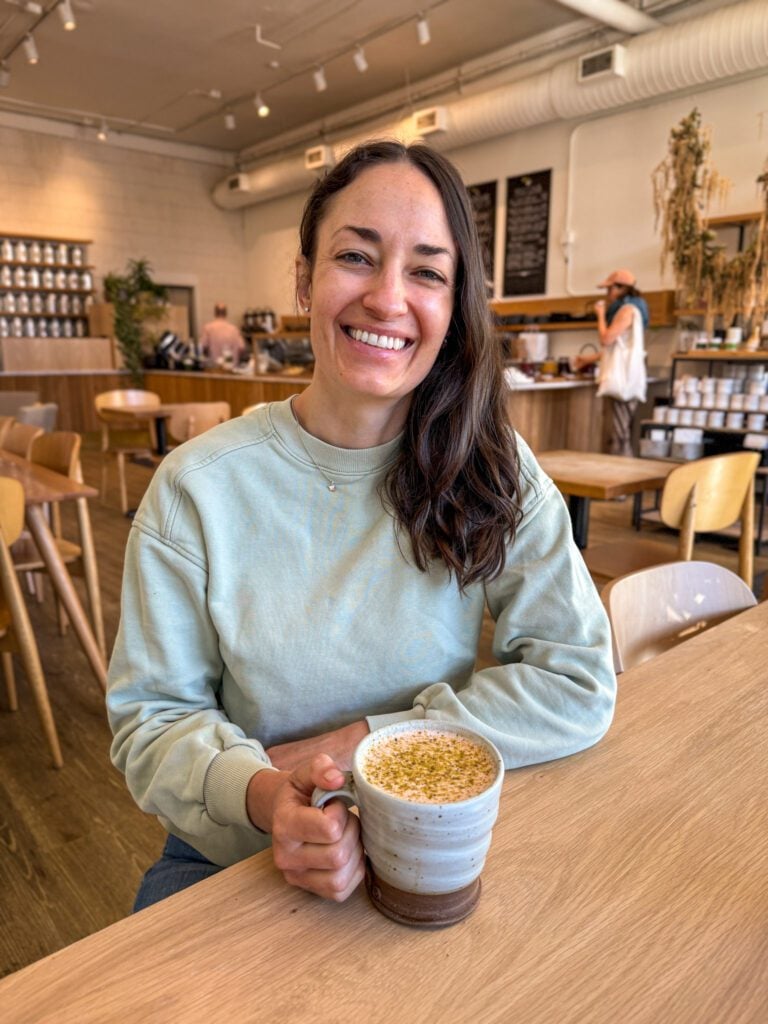
Miro Tea: Alysha’s favorite tea spot in Seattle, their pink chai is legitimately one of the best drinks we’ve ever had. They also have a bunch of other fun chai and matcha drinks, along with plenty of loose leaf tea options (with free samples available, most days). Definitely a must-stop for tea lovers in Ballard.
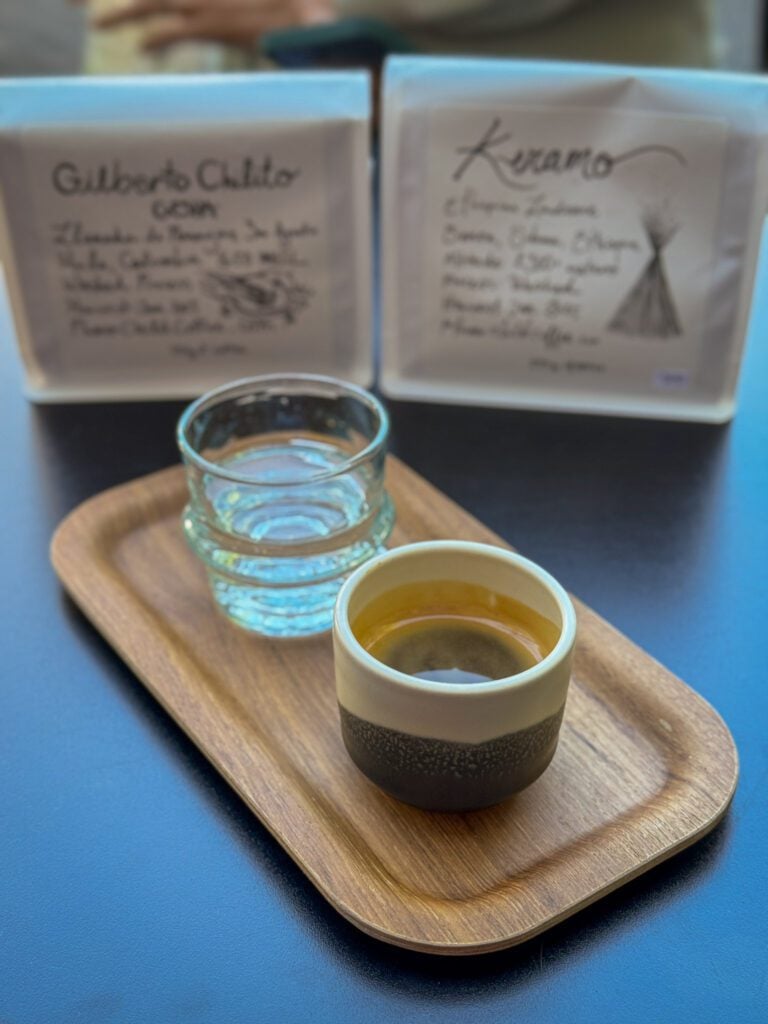
Homage Coffee: What Miro is for tea lovers, Homage is for coffee fiends (like Matt). They have a variety of roasters from around the country (and world), and they have pour over and single origin espresso for the nerds (along with your usual espresso and milk drinks and some good seasonal specials).
The Ballard Locks: Another unique thing! The Ballard Locks are just west of the heart of “downtown” Ballard and are worth a walk along Salmon Bay to check out the viewing platform of the fish ladder (sometimes you can see salmon, mostly in the summer!).
The locks here are the most prolific in the U.S. in terms of boat traffic, and are actually a big piece of shaping modern day Seattle by lowering the water levels to allow for more expansion (basically the same idea as filling or reclaiming land like Boston did, but with far less labor).
Venue: There’s a lot of good shopping to be had on Ballard Ave, but this place is my favorite because it’s basically a gallery for a wide variety of local artists and we’ve discovered some of our favorites here over the years (like Red Umbrella Designs and Gianna Andrews). Good for souvenirs and local art.
Yonder Cider & Balebreaker Brewing: We’ll get deeper into the brewery and cidery scene below, but we love this place in particular and usually find ourselves here on our trips to Seattle because it’s a great indoor/outdoor space (firepits in the winter make it cozy) and you can bring your own food, so we go get takeout from one of favorite gluten free restaurants in Seattle and bring it here to enjoy. Good cider, too, made in Eastern Washington (which is where all the apples are grown).
Optional: A Self-Guided Brewery Crawl in Ballard
If you’re into craft beer, I would say that heading up to Ballard’s brewing district is a must-do while you’re in Seattle.
As someone who lives in Portland now, I think I might be excommunicated for saying this, but I think there is no better place in the Pacific Northwest to experience the craft beer scene in all its glory.
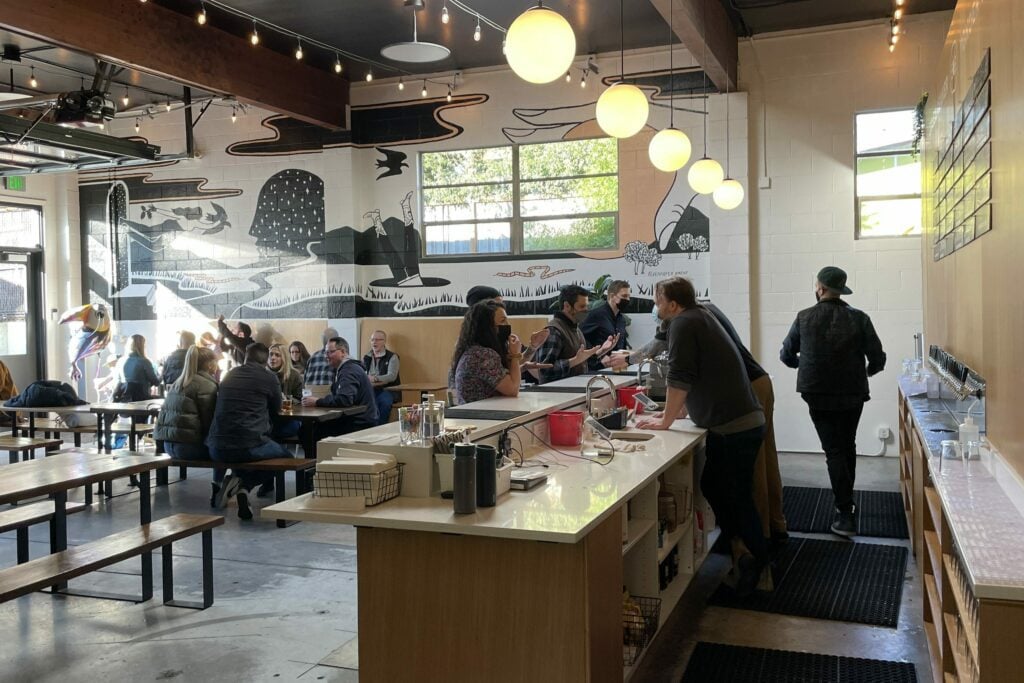
There are a bunch (we’re talking 20-30) of breweries here in an industrial area full of warehouses that has recently become hip, and they’re all within an area that is roughly four blocks by four blocks.
It should be noted here that craft beer in general is in a bit of a weird place right now, with younger generations choosing to drink less and the rise of seltzer and cider taking big chunks of the market away.
The result has been consolidation by megacorporations like AB-Inbev, who have gobbled up a surprising number of local craft breweries in Portland and Seattle over the past decade or so (even the ones you think aren’t owned by them probably are at this point).
The point here is to do your research and support locally-owned craft breweries!
Here are a few of my favorites.
Yonder Cider / Balebreaker: This is my top pick, partially because I have Celiac Disease and can’t have beer so I enjoy Yonder Cider, and partially because the indoor/outdoor space is great.
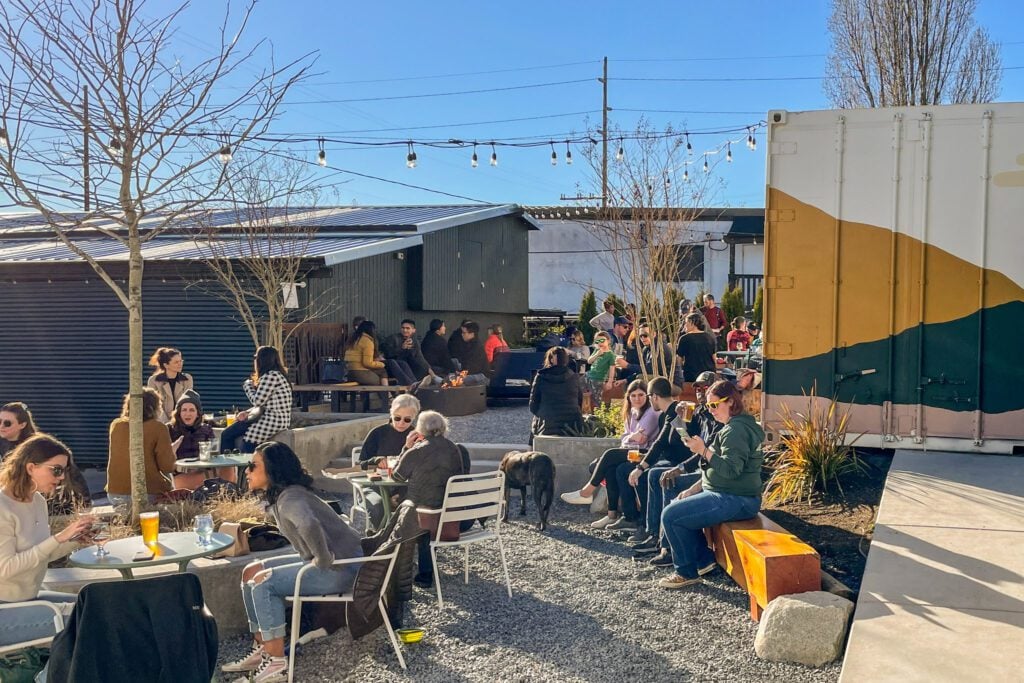
Plus you can bring your own food, so we get Filipino fried chicken from the Chicken Supply in Greenwood and feast! They’re two companies based in eastern Washington, which is where the hops and apples that every brewery in Seattle uses are grown.
Reuben’s: I believe that Reuben’s was the very first craft brewery to open up a spot in this part of the city (if not first, then somewhere in the top three or so), and it has been around as long as I can remember (since 2012, I believe).
It was started by a homebrewer who won a bunch of homebrewing awards, decided to go to school to learn more, and proceeded to open one of the most successful breweries in Seattle.
Their Ballard taproom is one of the few places here that actually has a robust food program (not gluten free, but that’s not surprising).
Stoup: When you ask a Seattleite where to get the best beer in Seattle, Stoup usually comes up at some point. They’re known for west coast IPA’s, and were one of the first breweries to open in this part of the city.
As someone who quit a more traditional and stable job to focus on something I was actually passionate about (spoiler: it’s this site), the story of three people who loved beer and had stable jobs betting it all on a brewery resonates with me. Good events calendar and food truck lineup, too.
Urban Family: If you’re into sours, this is the spot for you. In a sea of IPA’s (of various levels of haziness) that you’ll find at the other breweries in this section, Urban Family has six different sours on tap (don’t worry, they also have plenty of IPA’s too).
I love their logo (a raccoon stealing a beer), and they have a nice lineup of food trucks and host square dancing lessons and stand up comedy (which they call “The Sour Hour”).
Cloudburst: Cloudburst’s Shilshole taproom is located on the other side of Ballard, so you’ll have to walk ~15 minutes through the heart of the neighborhood to get to it, but I wanted to include it here because it’s one of the OG craft breweries in Seattle and part of the rise of the west coast IPA.
It was started by someone who worked at a bunch of famous breweries around the country before deciding to start Cloudburst when the brewery he worked at was acquired by AB-Inbev.
As you can see, all of these breweries are within a few blocks of each other in an industrial section of Ballard that is a short walk from the heart of the action on Ballard Ave.
Gasworks Park at Sunset
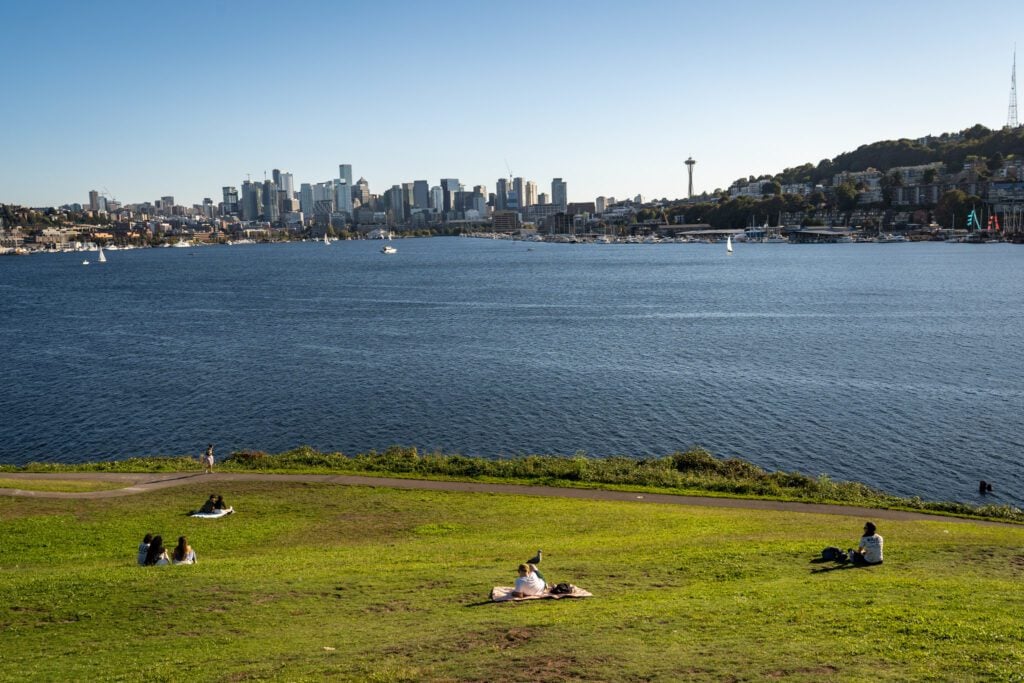
After you’ve had some fun exploring the bars, breweries, and boutiques of Fremont, head down to the Fremont Canal Park (here on Google Maps) and hop on the Burke Gillman trail heading southeast towards Gasworks Park.
It’s a nice walk along the canal, and eventually you’ll reach what has to be among the top parks in Seattle.
The park is on the north side of Lake Union, opposite Downtown Seattle on the far end, and is named for the huge structures that dominate it, which are part of a former Seattle Gas Light Company plant.
The park itself also has kind of a cool story.
It’s on the site of a former (prolific) gas plant that served the area including Seattle and suburbs as far south as Tukwila.
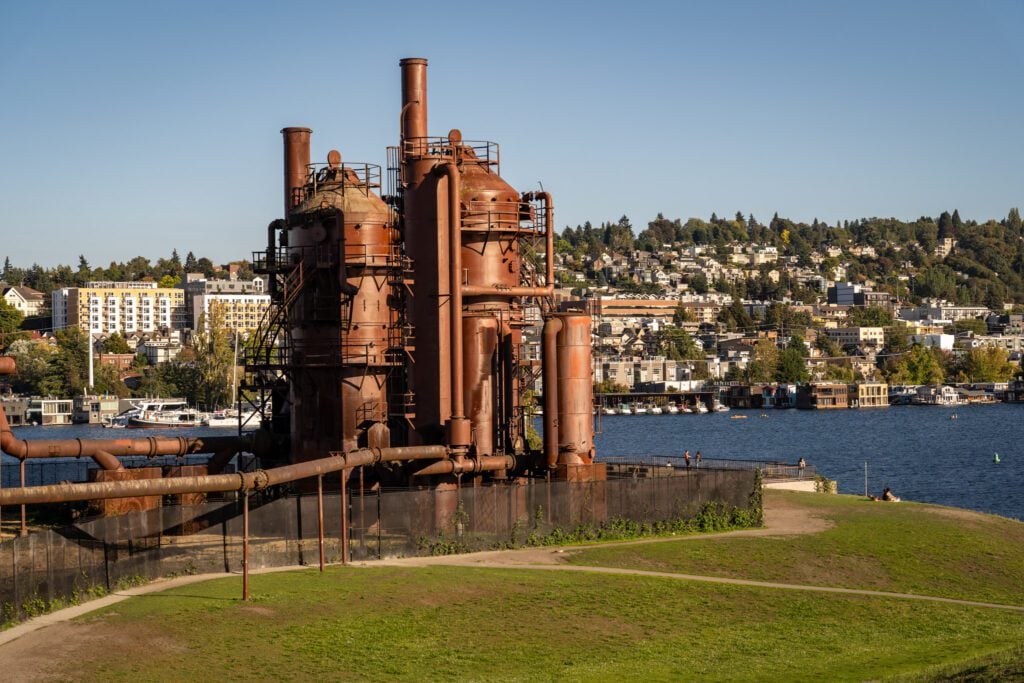
The plant ceased operations in the mid 1950’s when Seattle moved over to natural gas, and eventually the city built the land, detoxified it, and turned it into a park.
The real highlight is the view, which is great at sunset.
On a nice summer evening, come a little early to get a seat up on the grassy hill to watch the light show unfold as the sun sets behind the Olympic Range to the west.
An Evening in Fremont

From Gasworks, you’re less than a mile from the heart of Fremont, another of the charming residential neighborhoods north of Seattle with a nice “downtown” area full of places to eat and drink (and shop).
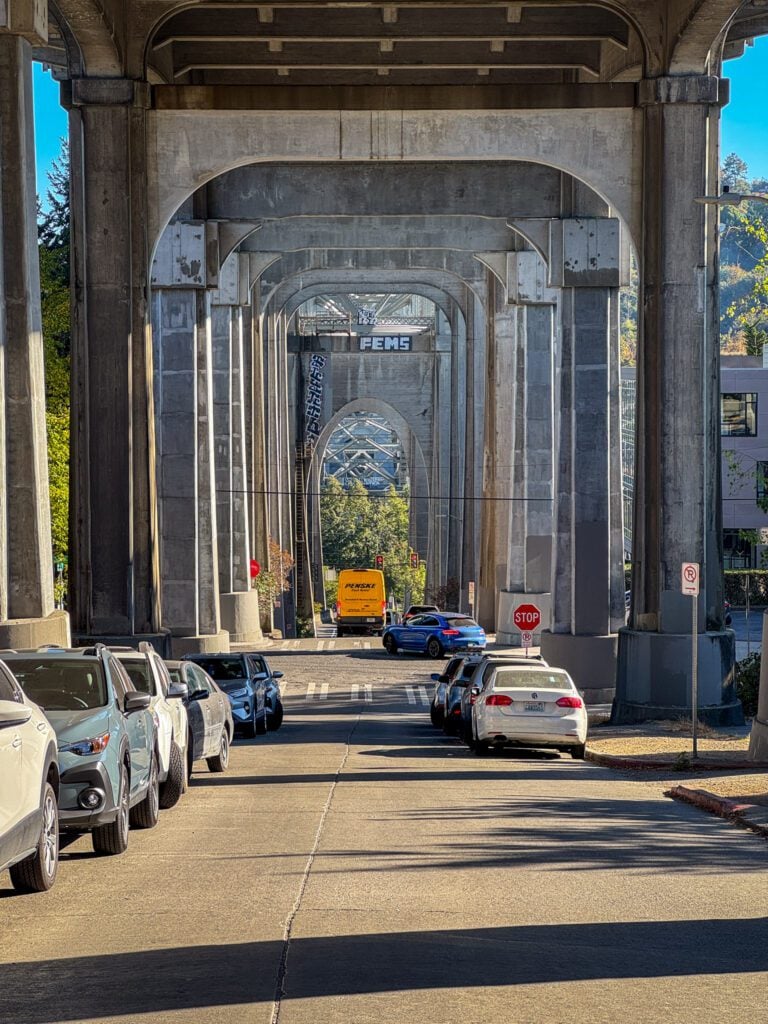
The most famous spot in Fremont has to be the troll under the bridge, which is worth stopping by here (though it’s at the top of a big hill). It’s a big stone sculpture tucked away under the Aurora Ave bridge, and it’s fun!
For dinner, there are tons of options in Fremont to choose from. Here are a few that we like.
Frelard Tamales: We LOVE Frelard, and we often ask Matt’s mom to pick up frozen tamales to bring home when we visit because they are spectacular. They’re massive, and the chorizo and cheese tamale is the one we dream about.
They used to operate out of a window up near Green Lake, and recently opened up a new location in Fremont with seating and a bigger menu.
Ester’s Enoteca: A cute little neighborhood joint that is cozy, warm, and inviting, and has an Italian-inspired menu with panini and pasta (and it’s all available gluten free, which is why it’s on our list of our favorite gluten free restaurants in Seattle). Extremely friendly owners and staff, and a nice place for date night.
Cafe Turko: Authentic Turkish food (and Turkish coffee!) steps from the heart of the neighborhood. It’s always packed when I walk by, whether it’s lunch or dinner time, and I’ve been meaning to go here for years (but I can’t say no to the previous two whenever I’m in Fremont).
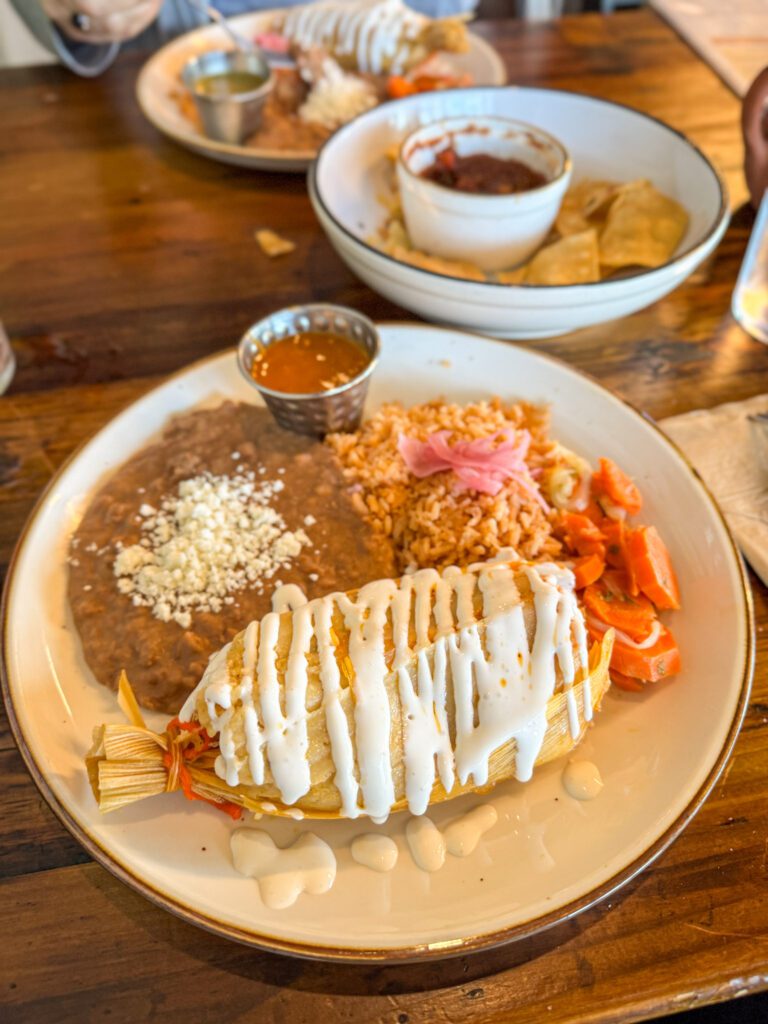
If you’re looking for post-dinner drinks in Fremont, head to Schilling Cider House for a selection of 25+ taps of ciders (mostly from the Pacific Northwest!), Fremont Brewing, or Imperfetta (a nice little wine bar).
Day 3: A Scenic Ferry Ride + An Evening in Cap Hill
On your third day in Seattle, spend the morning on a scenic ferry ride out to Bainbridge Island, which is one of the most unique aspects of Seattle’s geography and urban development, and then spend the afternoon wandering (and eating and drinking your way through) Capitol Hill, another of Seattle’s great neighborhoods.
Take the Ferry to Bainbridge Island
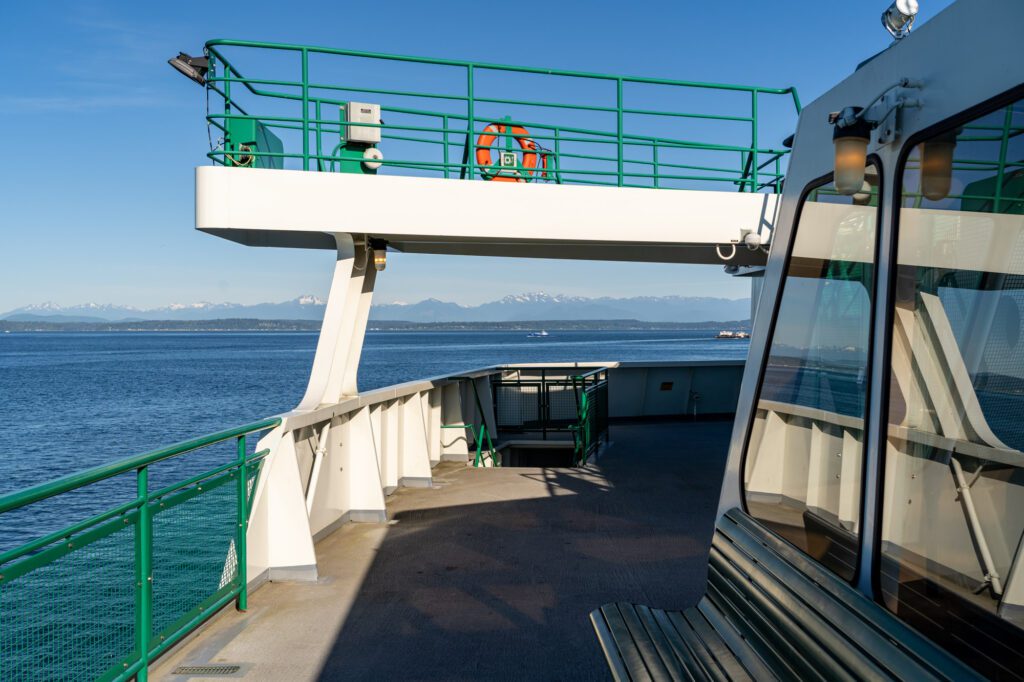
One of the things I didn’t appreciate before relocating to Portland is that Portland is not actually on the water.
Sure, it’s on the river, but the coast is roughly 90 minutes west, which means it tends to be more extreme (five to ten degrees warmer or colder, depending on the season) and you don’t have the stunning water views that you get all over Seattle.
Unlike Portland, Seattle is perched right on Elliott Bay, and in many ways, that access to the Puget Sound and Pacific Ocean has shaped the city that exists today.
One of the most unique aspects of Seattle’s location on Elliott Bay and the chain of islands that runs off the west coast of mainland Washington is the fact that travel by ferry is a common occurrence.
And we’re not talking about small ferries here, we’re talking about big car ferries.
If you have the time, we definitely think you should make an effort to see the city and surrounding area from a ferry because there might be no better view on a clear day than the 360 degree view from the middle of Puget Sound.
You’ll have the Seattle skyline and Mount Rainier to the east and south, and the Olympic Range looming ahead to the west.
It’s pure magic, especially if you’re not from the Pacific Northwest.
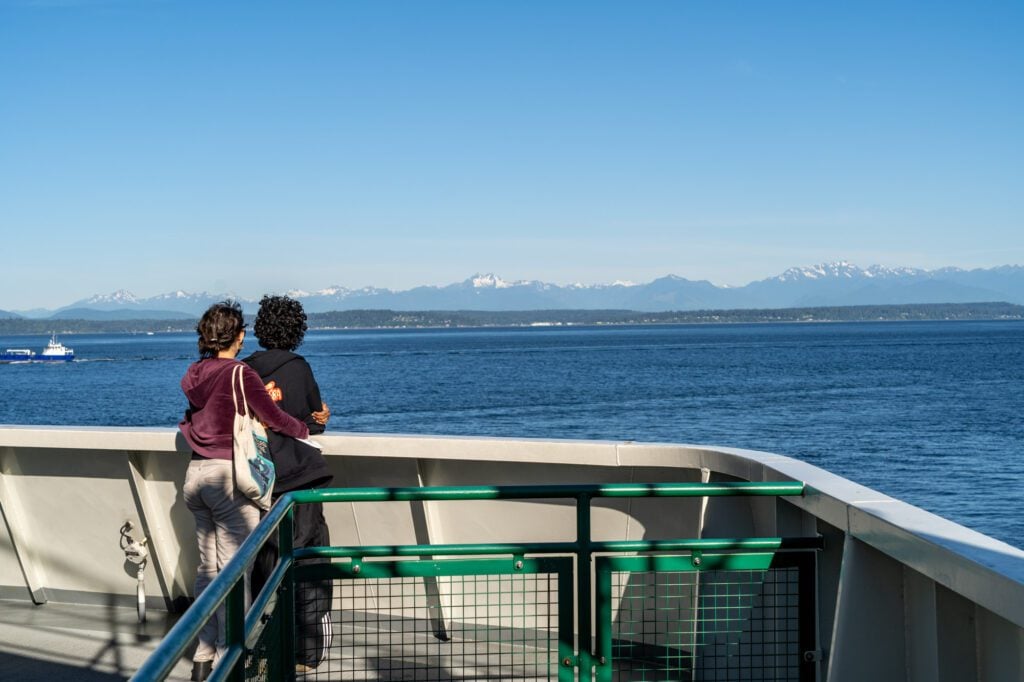
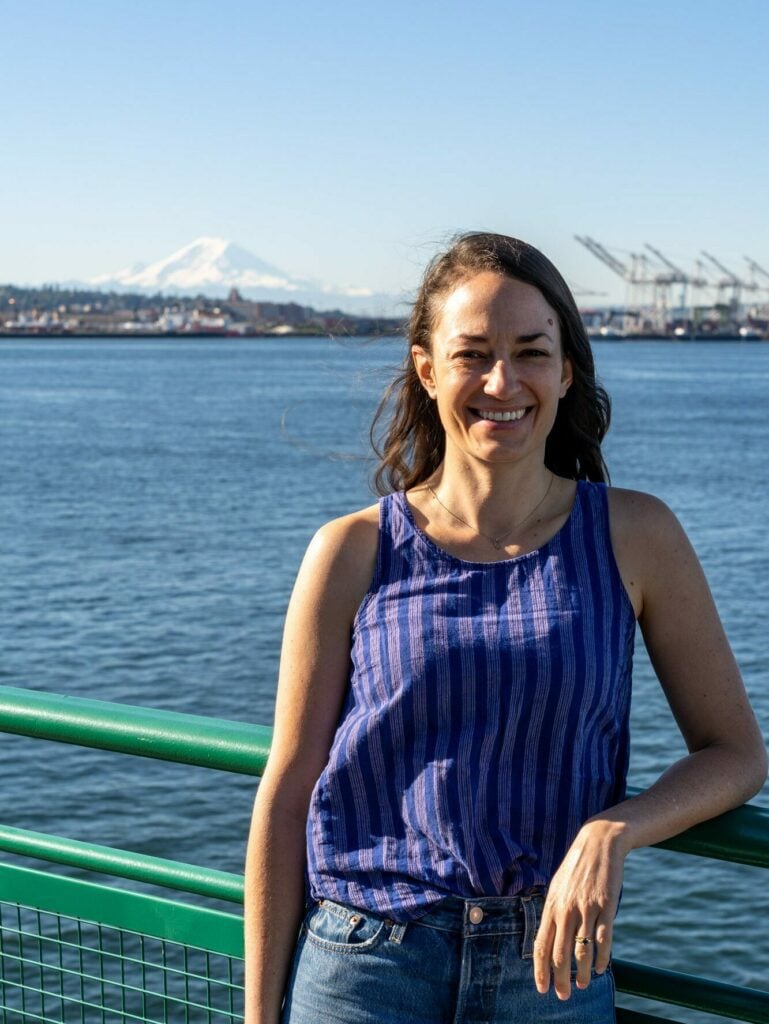
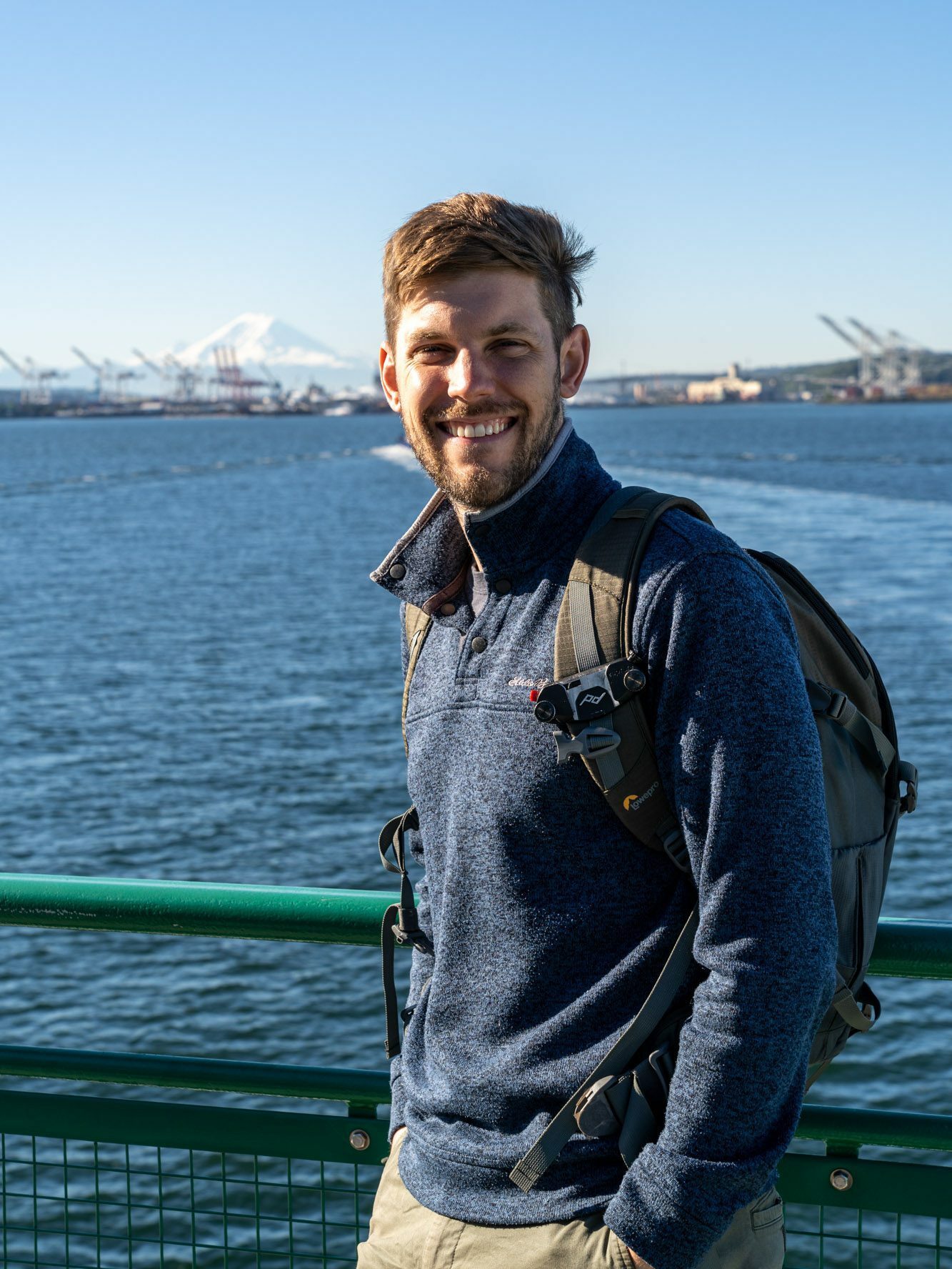
There are two good ferry options from Downtown Seattle if you don’t have a car.
Bainbridge Island is a ~40 minute ferry ride to the west across Puget Sound, and is our preferred option because it heads further out past the edge of Elliott Bay into the Sound.
You can walk onto the ferry pretty easily, and the terminal is along the waterfront near Pioneer Square (here on Google Maps).
From the ferry terminal on Bainbridge, it’s an easy walk into the cute little downtown area, where you can grab pastries (at Blackbird Bakery), coffee (at Pegasus), and stroll the main stretch along Winslow Ave E which is lined with shops, cafes and restaurants, and a couple of bars and breweries (like Bainbridge Brewing, which is right across from the ferry terminal).
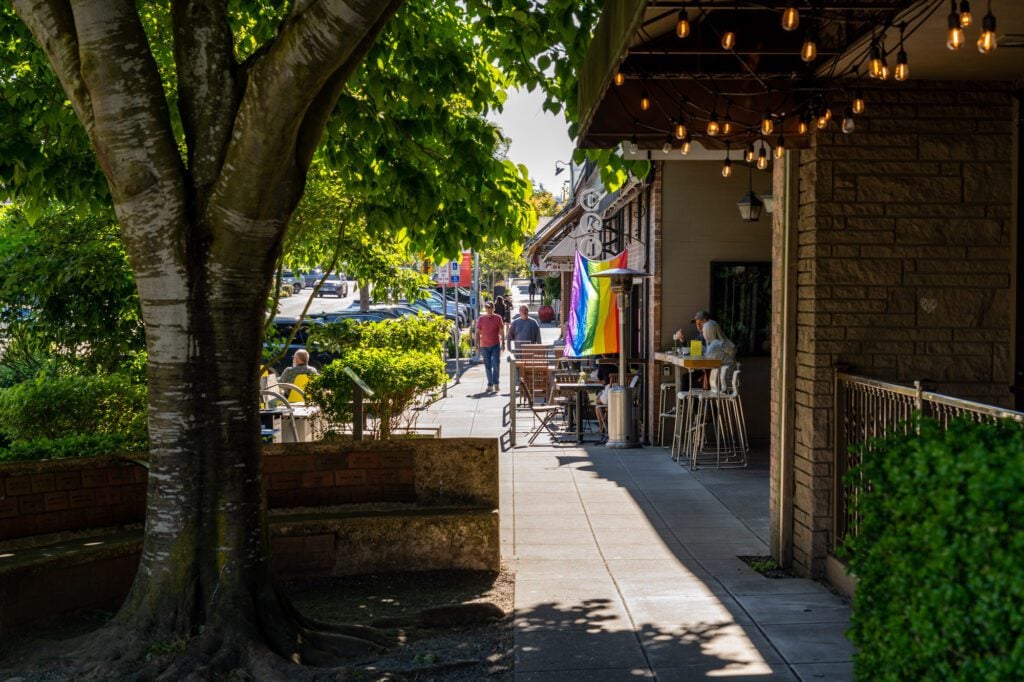
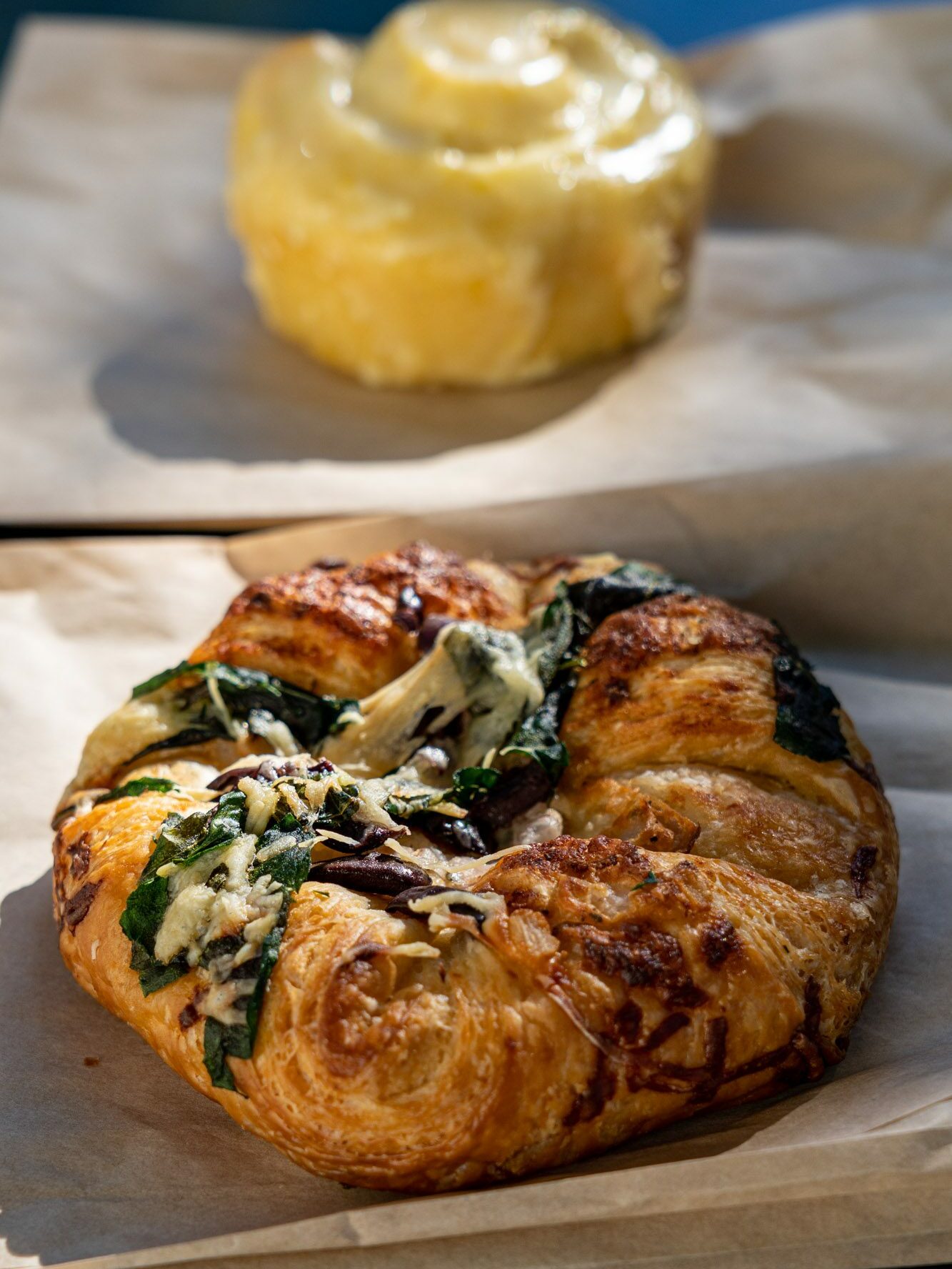
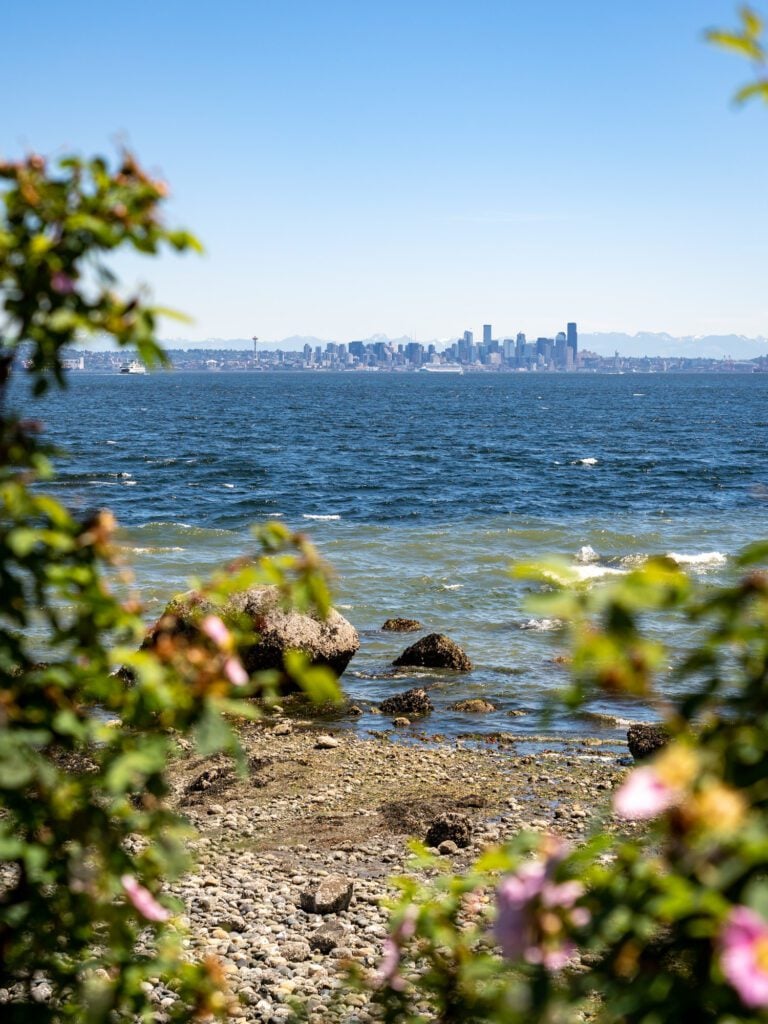
We have an entire guide to taking a day trip out to Bainbridge Island via the ferry, which has our favorite places to stop on that side of the Sound along with more practical tips for the trip. Read that for more detail.
It will take about a half day or so (minimum) to do the day trip out to Bainbridge and back.
An Afternoon & Evening in Capitol Hill
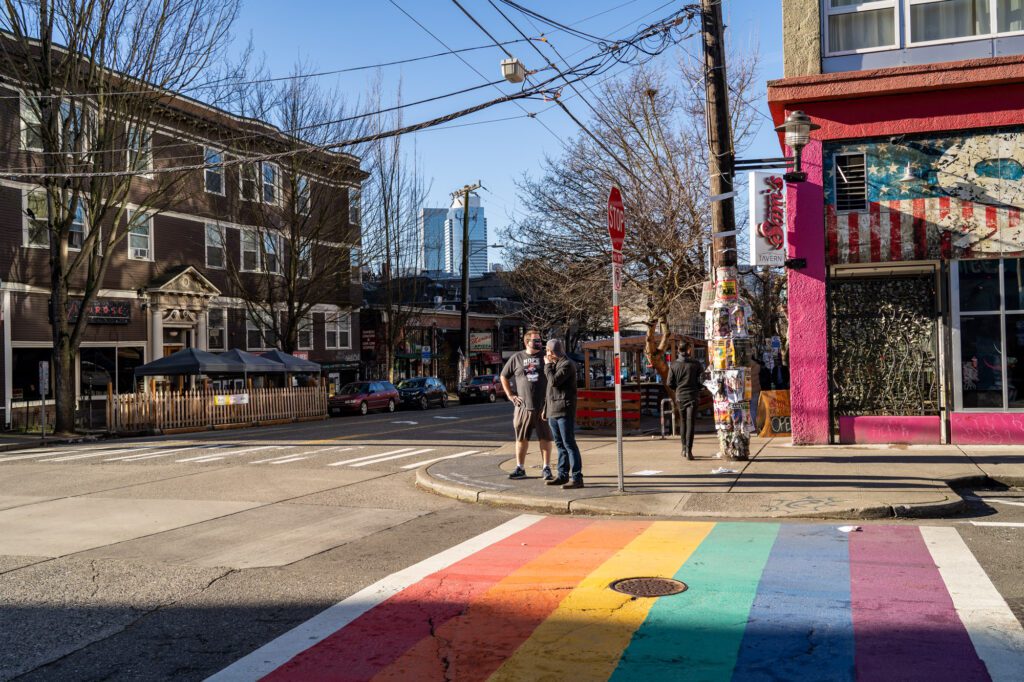
In terms of the neighborhoods that we tend to spend the most time in when we visit Seattle, Capitol Hill is probably tied with Ballard.
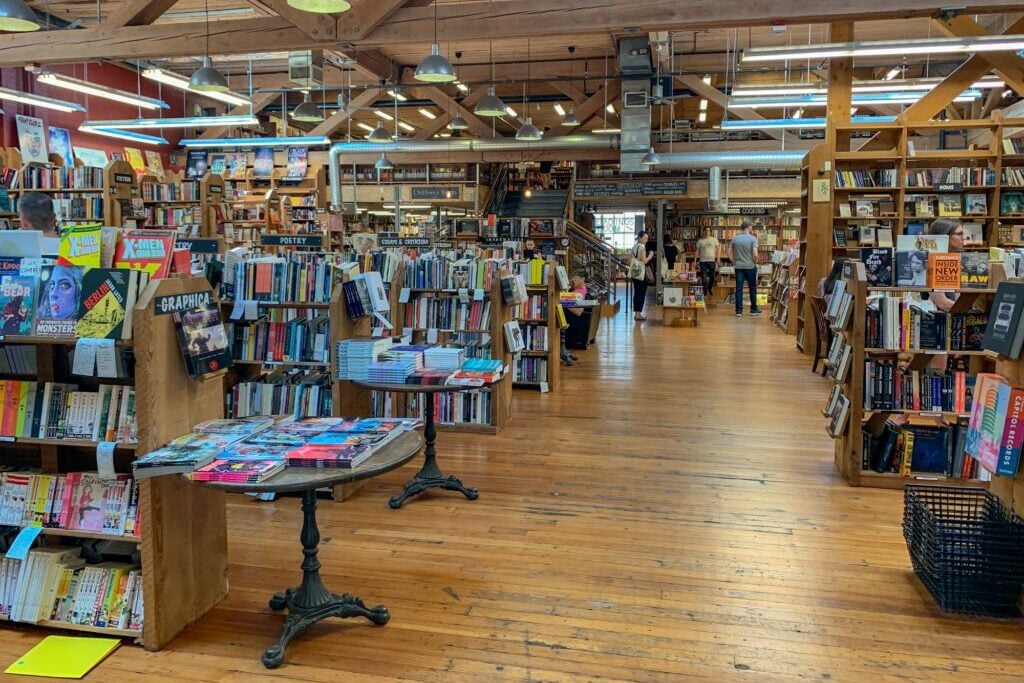
It’s full of great places to eat and drink, has some good walkable stretches with shops to browse, and is home to our favorite independent bookstore in Seattle.
Capitol Hill is arguably within the downtown core because it’s just across the freeway from the heart of Downtown Seattle (albeit up a small hill).
However, to get there, you do have to cross over I-5 (gross) and once you’re up into the Pike/Pine corridor, it looks and feels significantly different than the downtown core.
It’s more residential – though still dense – with a higher proportion of people who actually live here (versus people who just commute here for work, like downtown).
There’s plenty to do and see in Capitol Hill to fill an afternoon and evening, and we’d split your time into walking the Pike/Pine corridor to get a feel for the neighborhood (with plenty of shops to poke your head into along the way) and then eating and drinking.
In terms of walking, we’d go from the base of Capitol Hill on Pike Street (here on Google Maps) and walk straight up Pike to get to Elliott Bay Books, the best independent bookstore in Seattle (well worth a visit, and support them!).
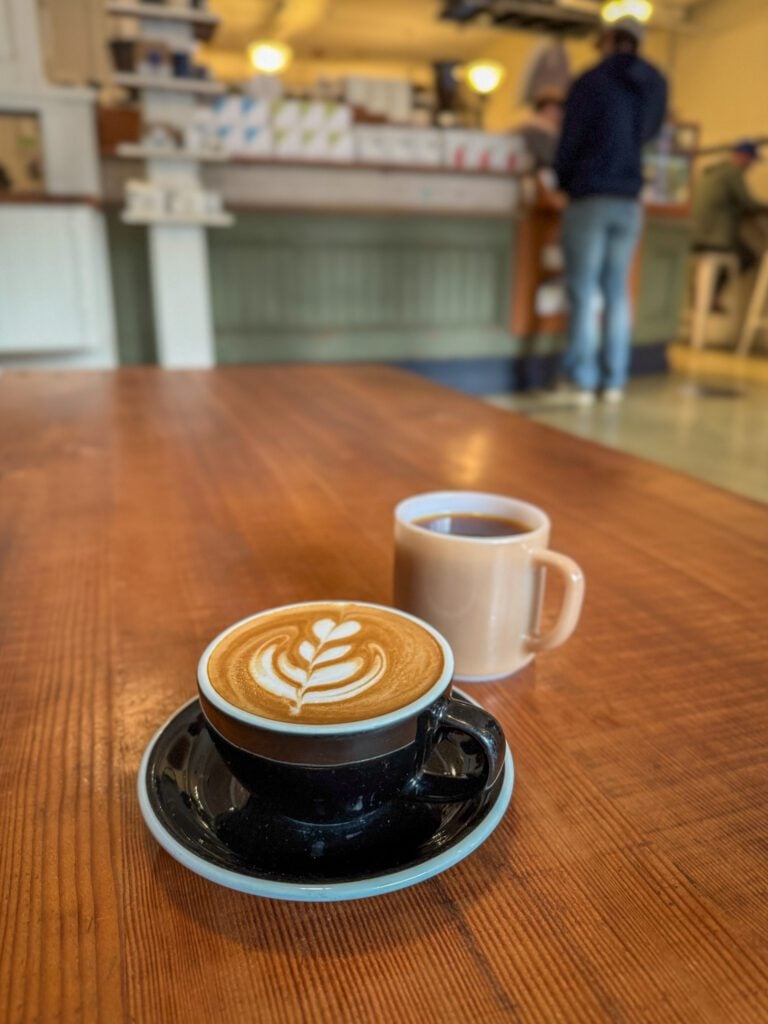
If you’re looking for coffee and tea, there are a bunch of great options here. We like:
Analog Coffee: Probably my favorite coffee shop in Capitol Hill, they bring in roasters from all over the Pacific Northwest (usually Camber from Bellingham is a staple) and have a nice menu of espresso-based drinks, and pour over options for coffee nerds like me.
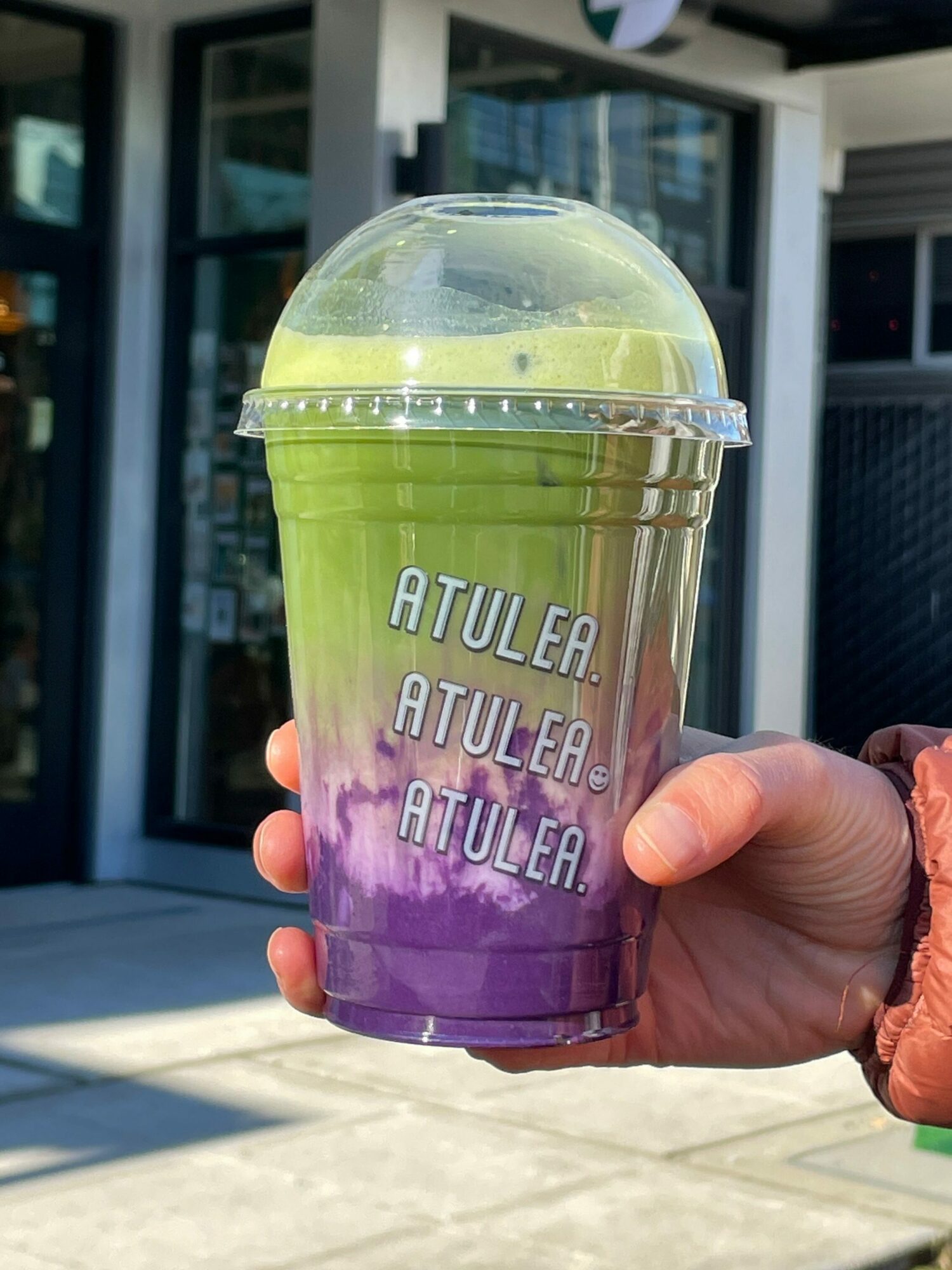
Atulea: Alysha’s favorite! They do matcha and bubble tea, and their matcha ice cream is a huge draw. Alysha is all about the Ube Matcha Latte.
After that walk, time for dinner!
You’re in a top-tier food neighborhood, here are some good options for dinner in Capitol Hill.
We picked some restaurants that we (mostly Alysha, who doesn’t need to eat gluten free like Matt) have on our list with a bias for things that are unique to Seattle that you might not have at home (like local shellfish and great Asian food).
We’d also suggest reading Seattle Met’s guide to eating in Seattle, which has 50 restaurants (and a big chunk of them are in Capitol Hill).
Taylor Shellfish Farm: In Melrose Market, they serve a menu focused mainly on local shellfish, with a wide variety of Washington oysters available. If you’re into seafood, this would be a good spot to come to explore Washington’s veritable bounty of seafood.
Taurus Ox: A bit further into the residential part of Capitol Hill towards Volunteer Park, this place serves Laotian food AND most of the menu is gluten free (though they do have a shared fryer, so the menu isn’t quite correctly marked for Celiacs like Matt).
Laotian food is something you don’t find terribly often outside of Seattle (and other big cities), which is why we think it deserves your time.
Ramie: In a world where Vietnamese food has kind of been pigeonholed a little bit, I love places that are pushing the boundaries and expectations that we have.
For example, we absolutely love Berlu, a Vietnamese bakery in Portland run by a James Beard nominated chef that, at one point, had a fine dining experience that was mindblowing.
Ramie is a similar idea, taking flavor profiles and techniques of traditional Vietnamese food and trying something new.
Dick’s Drive-in: A Seattle classic! Dicks is Seattle’s answer to In-N-Out, but unlike California’s resident burger chain, where substitutions are unlimited and part of the game, there are no substitutions here.
Very basic menu – burger (with cheese, without cheese, one patty, two patties), fries, shakes and ice cream. About as affordable as it gets in modern-day Seattle.
For dessert, there are two top-tier ice cream spots in Capitol Hill.
Molly Moons: Seattle’s OG ice cream spot, which now has an empire with locations all over the city. Great seasonal flavors with fresh ingredients, and fresh-pressed waffle cones.
A lot of people, for some reason, will send you to Salt & Straw, which is fine, but they’re from Portland, and I’m not sure why you would recommend them when the Seattle original, Molly Moons, is also right there!
Frankie and Jo’s: If you’re looking for gluten free, plant-based ice cream, this is a good option in Cap Hill (though they do use gluten free oats in basically everything, if you’re someone who’s gluten free and can’t have oats).
For drinks, here are a few good options.
For cocktails, head to Tavern Law (great cocktails) or Canon (excellent whiskey list).
Alternatively, book a seating at Inside Passage, a fun reservations-only tropical-themed cocktail bar inside of Rumba (my family goes here for special occasions).
For beer, either head to the Pine Box to try a range of beers from breweries all over the city (and beyond), or head to Stoup’s location for one of the best local breweries that tends to show up on every Seattle beer lover’s list of favorite breweries.
What to Add with More Time in Seattle
Here are a few things to consider adding to your itinerary if you find yourself with more time in the city.
For plenty of other ideas to consider, head over to our guide to the best things to do in Seattle, which has even more thoughts on cool things to add.
Add a Day Trip
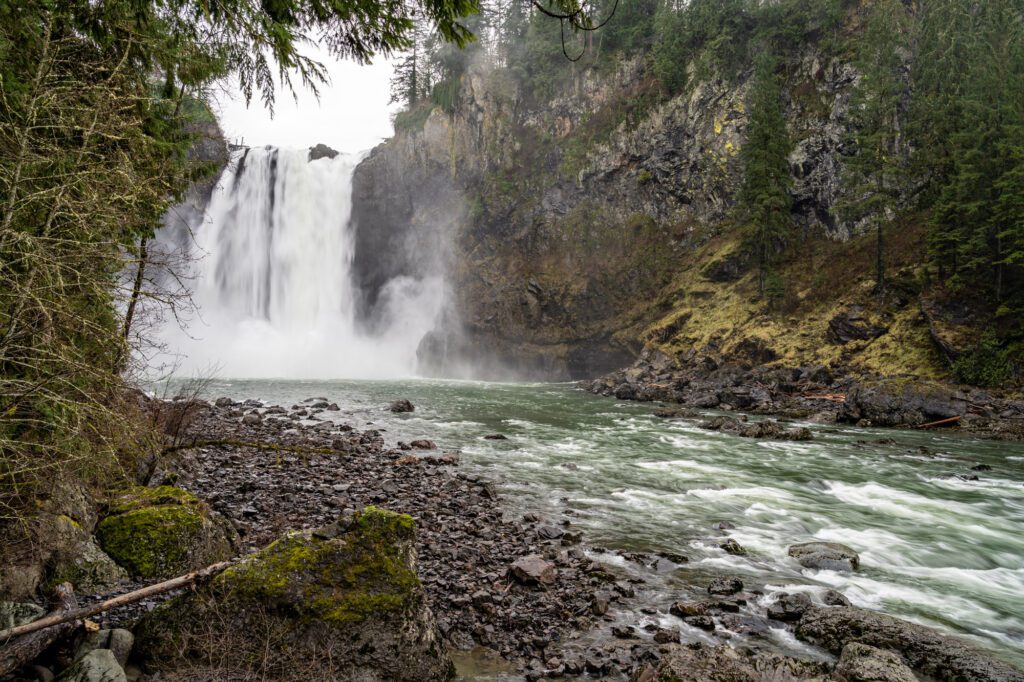
One of the things we love about the Pacific Northwest’s two biggest cities (Seattle and Vancouver, with Portland as an honorable mention) is the incredible access to nature from each city center.
As we mentioned multiple times throughout this guide, Seattle’s geography means that, from your “front door” in Seattle, you have a myriad of choices in terms of excellent day trips spanning the highest peak in the Pacific Northwest (Rainier), the chain of islands just off the coast (Vashon and Whidbey, along with Bainbridge), and plenty of other mountainous adventures to the north and east.
Lucky for you, we have an entire guide dedicated to breaking down our favorite day trips from Seattle, along with all of our favorite things to do and see in each place and some important logistical information.
Generally speaking, you will need a car for most of them. However, there are some tour options that will get you from the city out into nature without having to deal with a car.
Day trip to Snoqualmie Falls: Two of our favorite hikes near Seattle in one day trip! This tour picks you up in town and whisks you out to the east to Snoqualmie Falls, a massive waterfall with a short hike, and then onwards to Twin Falls, a nice hike through a ferny forest that ends at a nice two-tiered waterfall (it’s the hike we do with my mom when we’re visiting in the winter or spring).
A trip to Wallace Falls: Our favorite waterfall in Washington State? It’s a close one, but Wallace Falls is definitely near the top. It’s a moderate hike up to three separate waterfalls and a nice view out towards the Olympics. This tour takes you up there (it’s 60-75 minutes north) and back in a relatively small group.
A Day Trip to Mount Rainier: Look, trying to get to Mount Rainier and back in a day is a lot. But it’s also true that Rainier is worth it because it’s so spectacular.
If you’re a big hiker and want to experience some of the best alpine wonderland available in the region, this tour is for you (and it includes transportation there and back).
Summertime only (basically August through mid-October), and it’s a full day trip.
Catch a Sporting Event
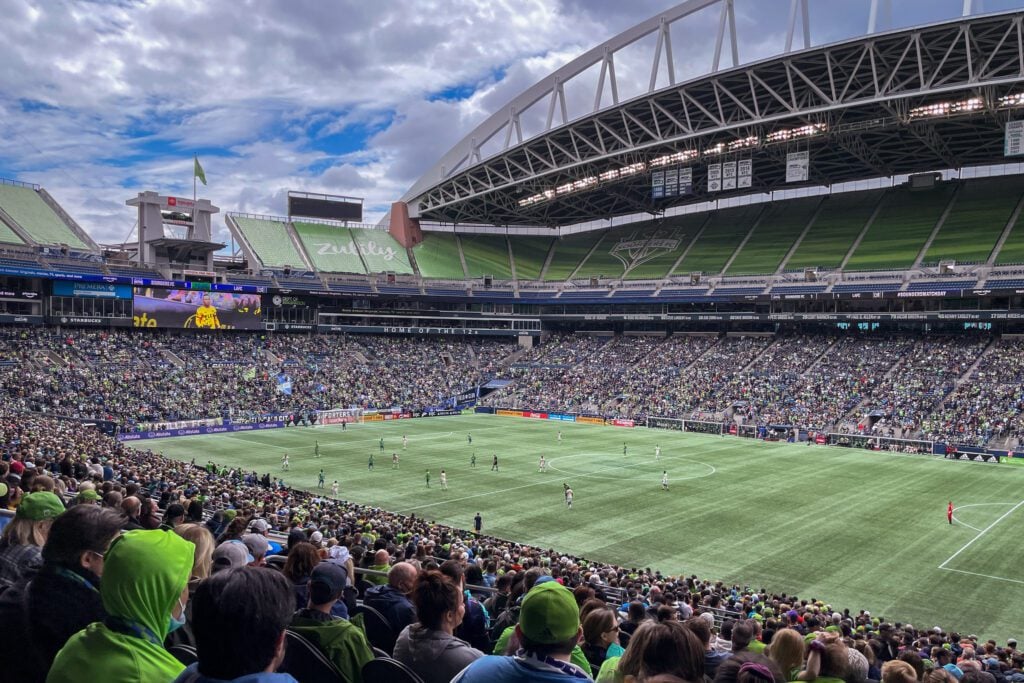
Seattle is an excellent city to catch a sporting event (like the World Cup in 2026!) for one big reason: the sports venues are all right in the middle of the downtown core. No hour-long drives to get to the stadiums here!
Plus, there are a bunch of teams to choose from, and whatever time of year you’re visiting Seattle, there’s bound to be one of them in-season (though not necessarily playing at home – you’ll have to check their schedules).
There are four big franchises in Seattle, and three of them play within a few blocks of Pioneer Square on the south end of downtown Seattle at two stadiums; T-Mobile Park and Lumen Field.
The Seattle Seahawks are the football team that play in the NFL and the Seattle Sounders are the soccer team (go Timbers), and they play at Lumen Field, along with the Seattle Reign, the city’s NWSL team.
The Seahawks play from fall to early winter (roughly September to January, depending on playoffs) while the Sounders play from spring to fall (roughly April through December, also depending on playoffs).
The Seattle Mariners are the baseball team, and they play at T-Mobile Park (which is across the street from the other stadium).
The season is from spring to fall, and while we’re not baseball people, catching a game on a warm summer evening definitely deserves a spot on this list.
The newest major sports franchise in Seattle is the NHL franchise (that would be hockey), the Seattle Kraken, who play at Climate Pledge Arena (formerly Key Arena) in the middle of Seattle Center. The season here is more winter-focused.
If you’re into soccer, there’s also Ballard FC in the USL, who played in the championship against Vermont Green last year (at the time of writing).
I also want to just mention that we used to have the Seattle Supersonics (as evidenced by my vintage Luke Ridnour jersey that I got when I was a kid), but they were ripped away from us and sent to Oklahoma City (their loss, really).
What to Do with Less Time in Seattle
The first day of the itinerary above is, essentially, the same as our guide to spending one day in Seattle (though we swapped Capitol Hill for Belltown). That’s a good place to start if you’re in Seattle for just a day.
If you only have two days, we’d follow the first two days of the itinerary above as written, and we’d probably swap in Capitol Hill for Belltown in that version too.
More Seattle Travel Guides
Planning a trip to Seattle? Matt grew up in the Seattle area, and though we live in Portland now, we find ourselves up north multiple times a year to visit friends and family.
As you get into planning your trip, you might find some of these other detailed guides we’ve written about Seattle helpful.
- Exactly What to Do in Seattle (for First Timers)
- Where to Stay in Seattle: A Complete Guide for First Timers
- How to Spend One Amazing Day in Seattle
- Gluten Free Seattle: A Complete Guide (for Foodies)
- The Best Coffee in Seattle: A Coffee Nerd’s Guide
- How to Plan an Amazing Washington State Road Trip

Hi Matt,
I appreciate this itinerary. It will come in handy as I visit for the first time next week. I especially appreciate your compassionate mention of the unhoused community in Seattle. I’ve been disheartened that this has been the first thing several people have “warned” me of when I mention going. Thank you for reminding your readers that everyone is worthy of dignity regardless of their housing status.
Hey Madison! Thanks for the kind words.
We moved to Portland, and often the first thing people from other places in the US (but oddly not in other countries) ask about is riots, “isn’t the city on fire,” etc. We have yet to see even one riot while living here.
It reminds us that it’s important to remember that a) not everything you read on the internet is true and b) humans are humans, whether they have the resources to afford a home or not, and deserve to be treated with dignity.
Hope you enjoy your trip – cheers!
Thank you for this! Traveling this week and will be taking many of your suggestions
You’re welcome, Camille. Enjoy!
Thank you for your thoughtful and thorough suggestions. as first timers to a Seattle, your suggestions are extremely helpful.
Thanks for the kind words, Annabelle!
Your blog has been so helpful! We are planning a trip to Washington for next summer, to several of the National Parks you have shared information on and Seattle, and I have 2 Celiac’s to plan around. So, so helpful to have the perspective of both while traveling!!
Hey Jodi! Sounds like you came to the right place! Let us know if you have any questions as you’re planning. Summer is a lovely time to be here – we basically spend the next six months daydreaming about long, warm, blue summer days.
I’ve been to Seattle for extended holidays lots to visit family friends (mainly as a child/teenager) but heading there next week for a long weekend so wanted a handy itinerary for 3 days and this is perfect, thank you!
You’re welcome, Ruth! Hope you enjoy the city as much as we do!