
2 Days in Madrid: An Amazing Itinerary (for First Timers)
We’re going to start this guide out with a somewhat hot take: Madrid is our favorite city in Spain (yes, we like it more than both Barcelona and Sevilla), and is a top tier European city.
We loved Madrid from the first moment we arrived. After spending a week in Barcelona at the beginning of our month-long Spain adventure, we arrived in Madrid, bright eyed and bushy tailed, ready to explore the Spanish capital.
With other cities in Spain getting all the headlines (namely Barcelona and Seville, at least in our experience), we weren’t quite sure what to expect from Madrid.
Despite the fact that it’s Spain’s biggest city and it’s the country’s capital (though until the 16th Century when it was named the capital, it wasn’t much of a city at all), we just didn’t really know that much about it.
The reason we like Madrid so much is the simple fact that, compared to Barcelona or Sevilla, Madrid feels more like a real city rather than a tourist Disneyland.
Perhaps the biggest difference between Barcelona and Madrid is that, even in the city center of Madrid, it feels like a real city where people actually live. Which, thanks to overtourism (among other factors), isn’t really the case in Barcelona, particularly in places like the Gothic Quarter and El Born.
Madrid is charming, real, and because it’s a big city, full of amazing neighborhoods and corners to explore.
Plus, it has a world-class art museum (among the best we’ve experienced in Europe), and a vibrant food and drink scene (very important as two people who travel to eat and drink, mostly).
Over the course of your time in Madrid, you’ll get a taste for what makes the city special and learn about its pivotal role in Spanish history, particularly from the 16th Century onwards, which is the beginning of the golden age for both the Spanish Empire as a whole, and for Madrid as a city.
In this guide to planning your trip to Madrid, you’ll find a detailed 2 day itinerary, complete with things to do, see, eat, and drink, along with the important details you need to know.
You’ll also find logistics that are important for planning your trip.
We hope you enjoy this guide, that you find it helpful for planning your trip, and we help you discover something new and exciting, whether it’s your first time, or tenth.
Sound good to you? Let’s get into it.
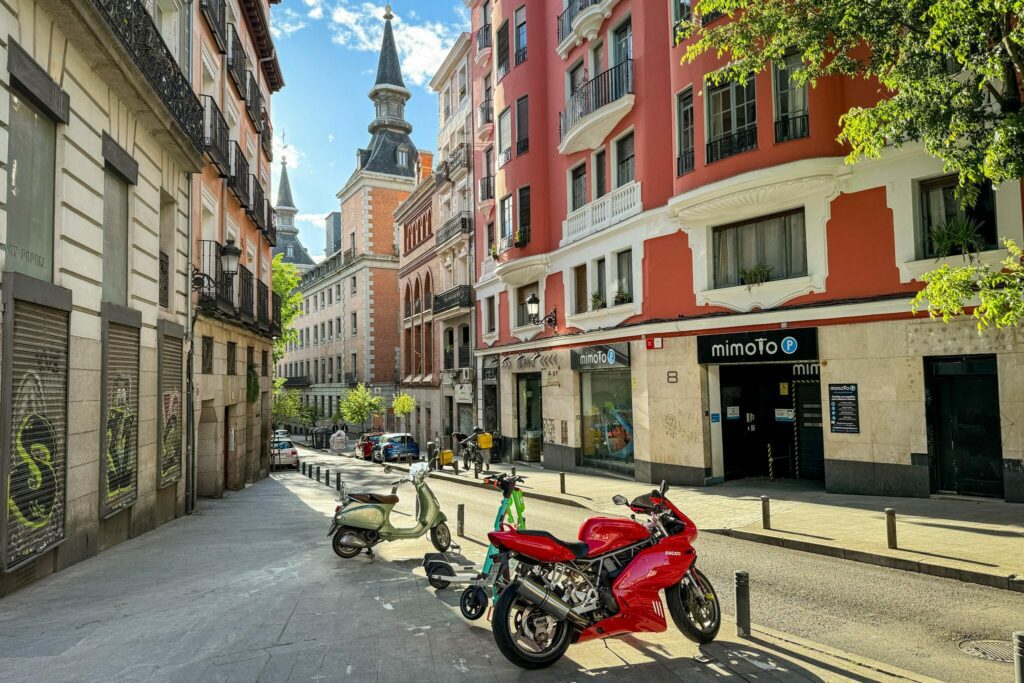
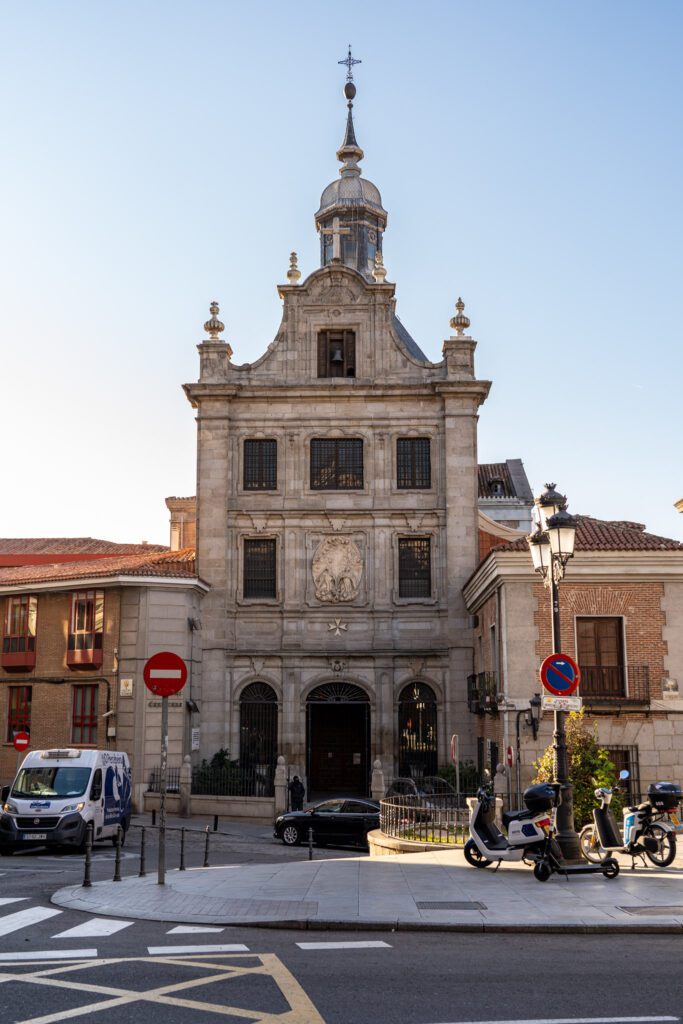
Disclaimer: Some of the links in this post, like hotel links, are affiliate links, meaning at no additional cost to you, we make a little bit of money if you click through and book. That being said, we would never recommend something to you that we don’t stand behind 100%.
How Many Days Do You Need in Madrid?
We have now been to Madrid several times in the past five years, and after exploring the city, we think that two days is the right amount of time to see the main highlights of the city.
Though you should know that there’s PLENTY more to do, see, eat, and drink to fill your time if you’re lucky enough to have more.
With 2 days, you can do a walking tour to understand Madrid’s layout, history, and significance, visit both the Prado Museum and the Royal Palace, walk in Retiro Park, and eat your way through La Latina and Malasaña.
We foresee plenty of history, culture, and of course, food and wine in your future.
If you want to take a day trip to Toledo, which we highly recommend for its historical significance in the history of the Iberian Peninsula, then you’ll need at least three days in Madrid.
If that’s what you’re looking for, follow this itinerary as written for two days, then head over to our guide to planning a day trip to Toledo to lay out your third day.
Because we generally don’t recommend doing two big, information-heavy things on the same day, the other thing you’re going to have trouble fitting into two days is a food tour.
The food culture of a place tells you so much about the culture, history, and influences that have shaped it, and exploring a city through its food scene is a unique perspective that a lot of people don’t even consider.
However, unless you’re really up for trying to fit everything in, we’d prioritize the walking tour and the Prado Museum over a guided food tour (and do a self-guided DIY tour instead).
Which is why the food tour is in the “with more time” section below the main itinerary.
For what it’s worth, this is the food tour that I’m sending my mom and her friends on for her upcoming trip to Madrid (it will be her first time, and I’m excited for her).
We did a version of that tour in Basque Country and it was the highlight of our trip to northern Spain.
However much time you have in Madrid, we’re here to help you make the most of it.
Below the detailed two day itinerary, you’ll find our thoughts on how to organize your time with one day, three days, or even more time in Madrid.
Where to Stay in Madrid
Madrid is a big, sprawling city, and it can be pretty overwhelming to figure out where exactly you should stay based on your particular needs, style, and budget. It’s like the New York City of Spanish cities (though the scale is much more manageable).
We wrote an entire guide to choosing where to stay in Madrid, which has infinitely more detail than this section.
If you want to go deeper on the pros and cons of each area, read that.
Otherwise, here are the high level takeaways for two of the best places to stay in Madrid.
At the highest level, we think you’re essentially choosing between two walkable areas: Malasaña, the hip, cosmopolitan area, and Barrio La Latina, the historic, charming area.
Our top recommendation is to stay in Malasaña, which is our favorite part of the city.
It’s more cosmopolitan than other parts of Madrid, and you’ll see a mix of all kinds of different bars and restaurants as you walk around.
It’s a central location – I walked everywhere when I stayed here – and it has tons of great places to eat, drink, and shop.
Plus, it’s full of narrow streets and bustling plazas, which are peak Madrid to us.
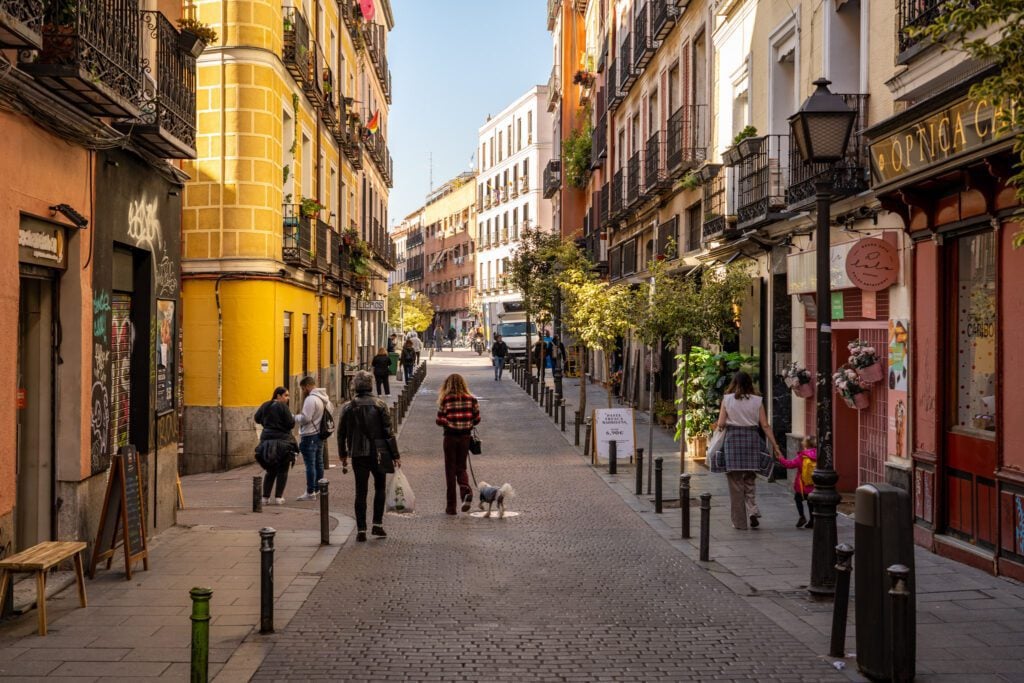
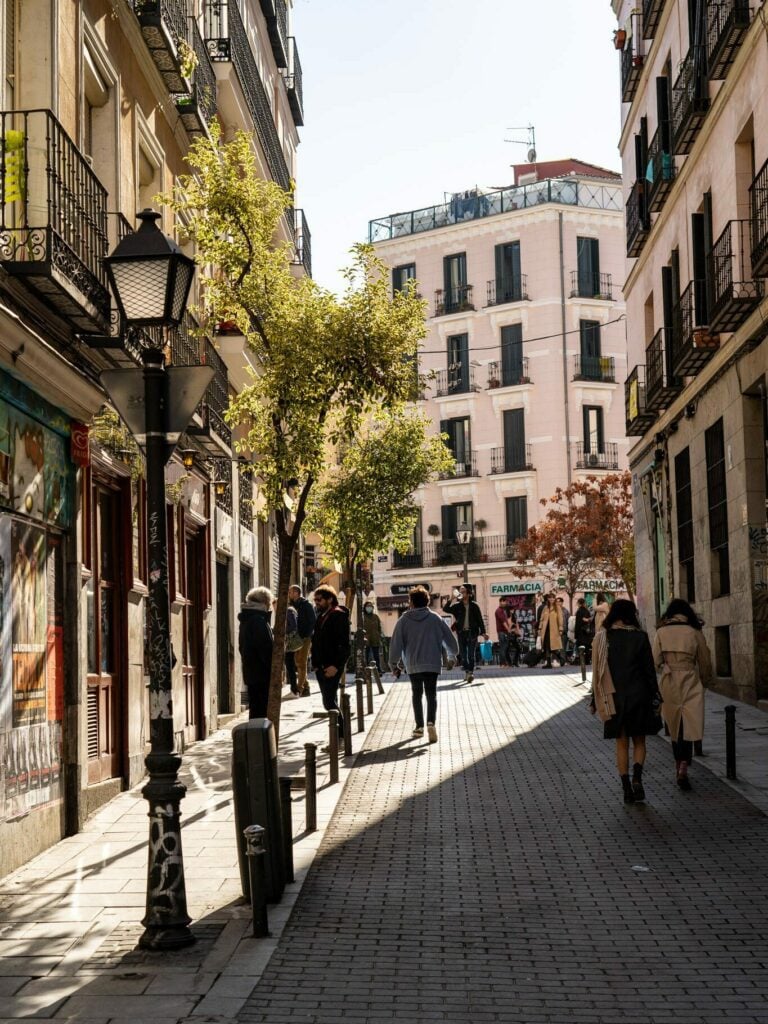
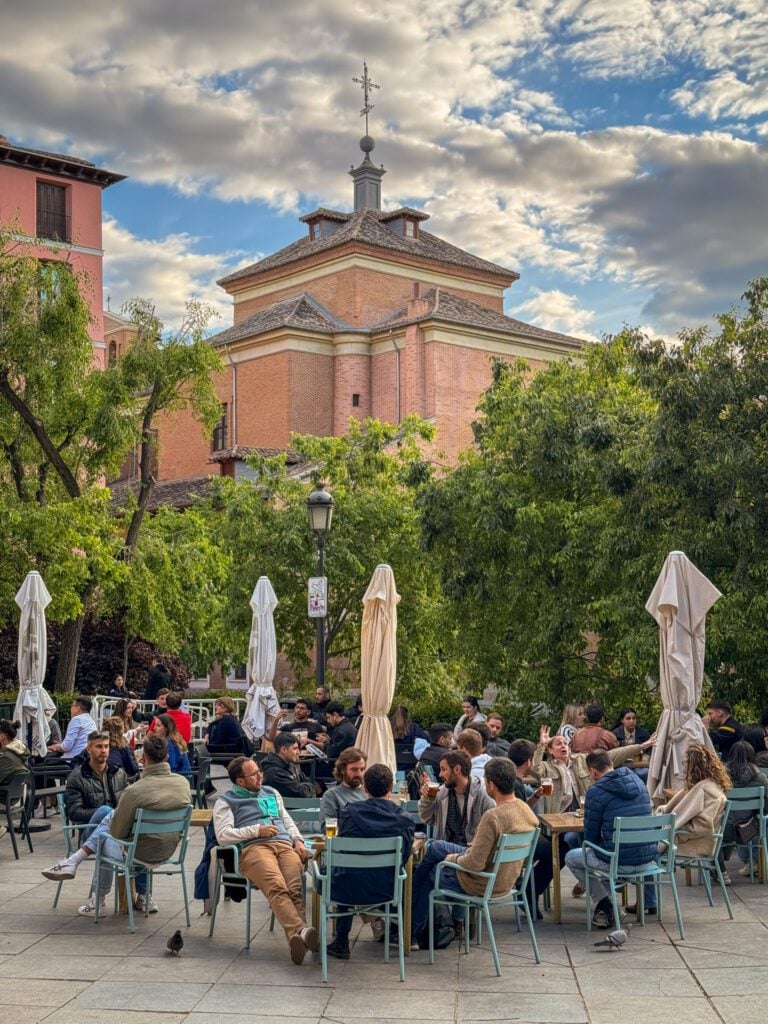
The big downside here is the fact that the nightlife is great, and it can be extremely loud, depending on where you stay.
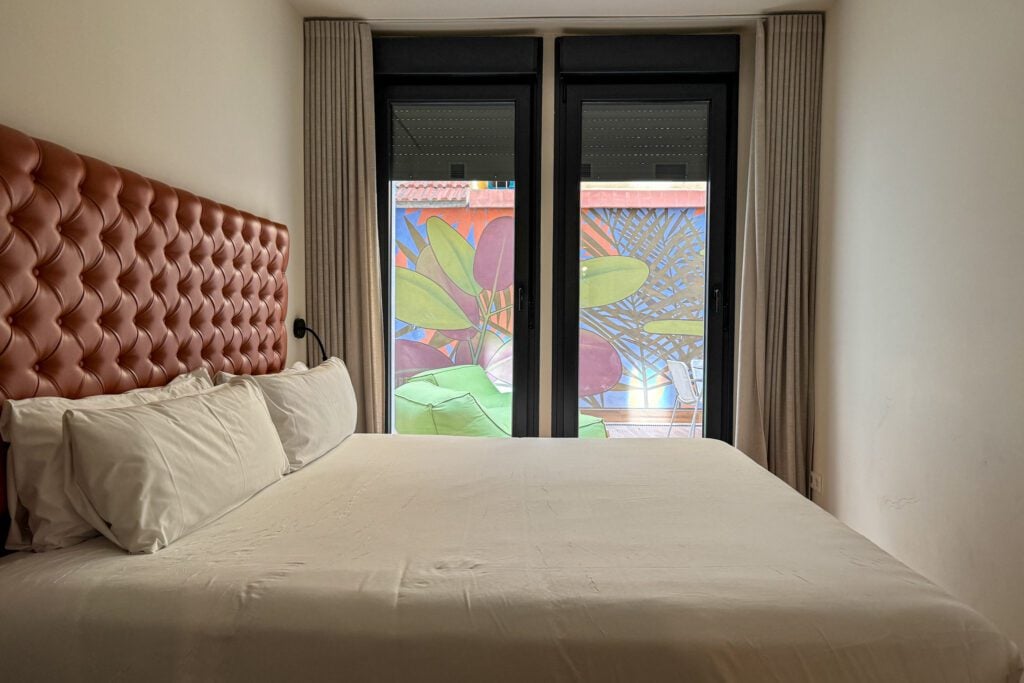
If you want a hotel, look at the lovely 7 Islas Hotel, which is in a walkable and well connected location on the border between Malasaña and Sol, and is decorated beautifully.
If you want an apartment, look at Casa Malasaña, a nice apartment building with a handful of units (all units are two bedrooms, so perfect for a group of four) on the western edge of the neighborhood, which is a little quieter and also closer to transit connections.
We’ve stayed in Malasaña at a Sonder location that has since closed (RIP Sonder) and been rebranded (and renovated) to be Libere Malasaña, which has modern apartments (studio and one bedrooms, mostly) in a great, surprisingly quiet location two blocks from both the metro and Plaza del Dos de Mayo.
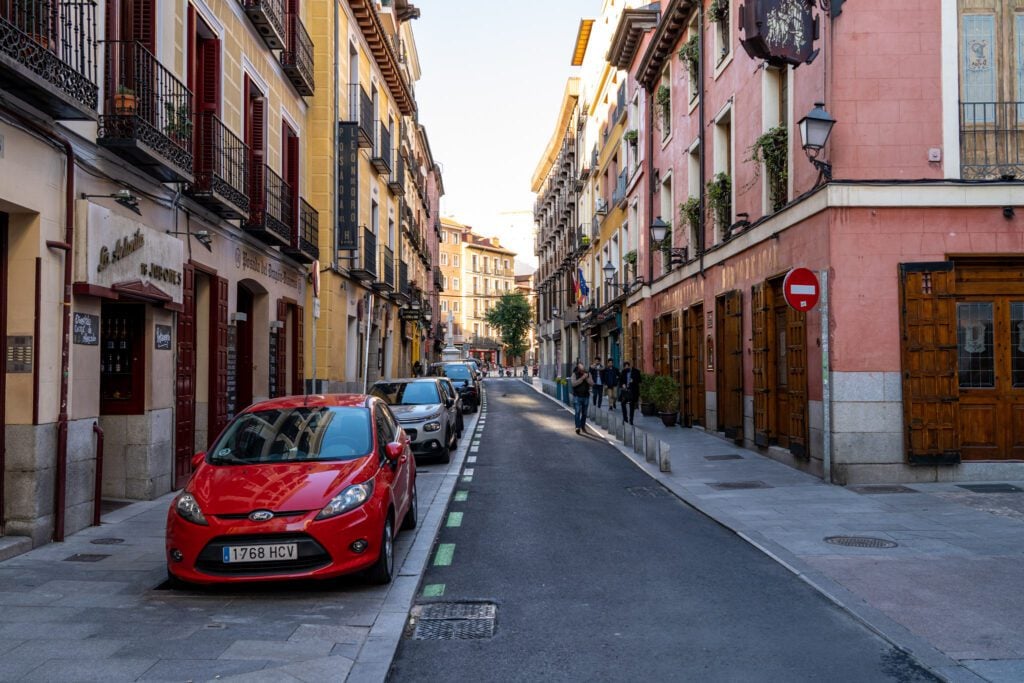
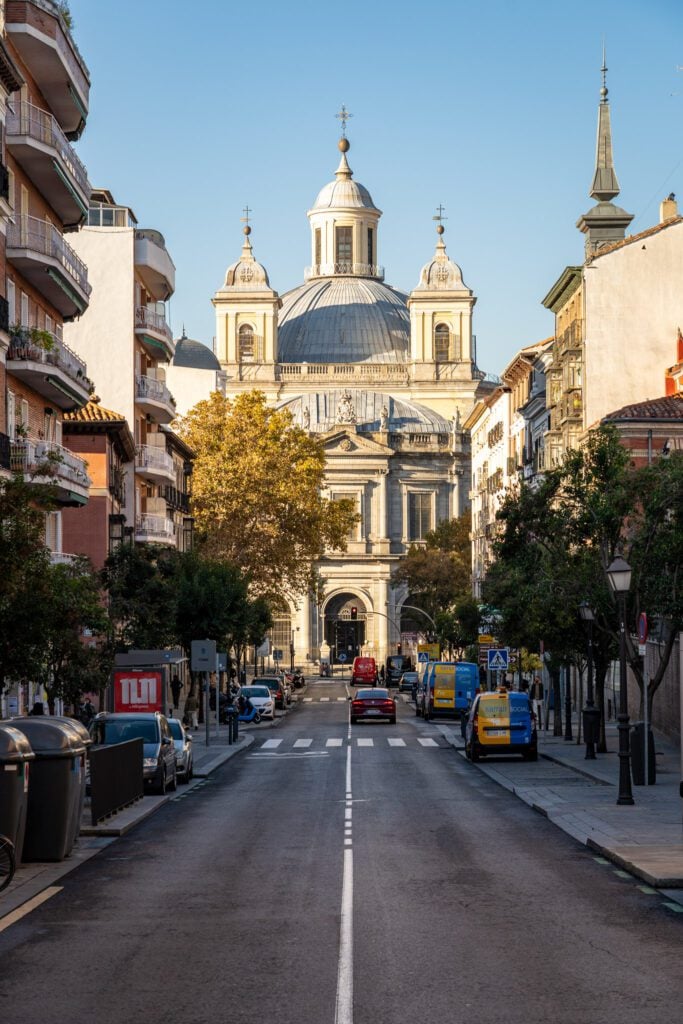
If you’re looking for the most charming part of Madrid with top tier food and drinks, we love Barrio La Latina (home of the famous tapas street, Calle Cava Baja).
Located just south of Plaza Mayor, it’s more residential than other parts of the center, which means there are fewer places to stay.
It’s also a bit more historic and traditional than, say, Malasaña, and most of the restaurants and bars here are doing tapas.
There are a trio of great hotel options to choose from here.
Our pick is One Shot La Latina, which is a bit removed from the action (read: quieter) and is a beautiful, brand new hotel.
The other two are next door to each other right in the middle of the action on Calle Cava Baja; Posada del Dragón is the more affordable one, Posada del León de Oro is the fancier one.
2 Days in Madrid: A Perfect Itinerary for First Timers
And now, let’s get into the meat of this itinerary.
We have a secret for you. And it’s a lesson that it took us years of traveling to finally learn on our three month European extravaganza a few years ago.
Travel is better – and by better, we mean more rewarding, interesting, and fun – when you try your best to connect with locals to see the place through their eyes.
We took that to heart in Madrid, and have done a bunch of different tours and experiences over the past few visits that have opened our eyes to a new side of the city, culture, and people.
In terms of structure, we always do our best to anchor the days in our itineraries around a main experience, with time on either side for things like coffee, cocktails, and good old fashioned wandering around a neighborhood.
And we never, ever do multiple museums in a single day.
Trust us and learn from our mistakes – you WILL be exhausted by the time you get to the second one, and will get a lot less out of it.
An important note at the top here: Matt has Celiac Disease, which means the way we experience a city’s food scene is almost certainly different from the way you will.
It’s worth noting that Madrid is an elite gluten free city (here’s our gluten free guide to Madrid if you also need to eat gluten free), and there are SO MANY great gluten free options around the city.
If you don’t, we wanted to take a second to link you to resources we’d use to figure out what to eat and where to eat it (aside from booking this food tour with Devour, which we’ve done a version of elsewhere in Spain and loved).
The first place we’d turn to is the Eater guide to Madrid, which is a look at the essential places that local food writers recommend.
It’s not the end-all, be-all, but it’s a great starting point (we look at the Eater guide to Portland often as a sort of gut check, and generally agree with their recommendations).
Another place we like to look for food recommendations is Reddit threads, mostly because on Reddit, you’re usually getting crowd-sourced information from locals or fellow travelers that have actually experienced the things they’re mentioning.
Check out this thread and this thread as a starting point.
Here’s an overview of the detailed itinerary you’re going to find below.
- Day 1: A Walking Tour, the Royal Palace + Cathedral, and La Latina
- Day 2: The Prado Museum, Parque El Retiro, and Malasaña
Now, let’s get into exactly how to plan an amazing itinerary!
Heads up: You’re going to want to book the Prado Museum in advance of your trip.
This is the only attraction in this itinerary that you really need to book in advance, because it will sell out (especially for peak times like spring and summer).
It’s the most popular museum in the country, and you get a lot of both international and Spanish tourists visiting. More on this in the Prado section in the itinerary below.
Day 1: Walking Tour, the Royal Palace, and La Latina
Start your day with a guided walking tour of the center of Madrid with a historian to dive deeper into Madrid’s medieval quarter and fascinating history and set yourself up for a deeper, richer, more rewarding trip (plus, all the tips on what to eat and where to eat it!).
Then put together a DIY tapas crawl through the oldest part of the city and spend the afternoon at the Royal Palace (and the Almudena Cathedral) before heading to La Latina, home of the most famous tapas street in the city.
Coffee in Malasaña
Before you set off for the day, you’re going to need coffee. And I have some strong opinions on where you should get it after scouring Madrid for the best coffee in the city (if you’re into coffee, read my guide to Madrid’s best coffee).
Head to Malasaña for your caffeine fix, and there are two places a few blocks away from each other that are well worth your time.
The first is Ambu Coffee, which is my top pick for the best coffee in the city.
It’s a multi-roaster cafe, which means they have beans from some of Europe’s best roasters and have a menu with pour over and espresso drinks.
The second is HanSo Cafe, which is another of my favorites and was the first coffee shop I ever visited in Madrid, so it holds a special place in my heart.
They also rotate through roasters, mostly local roasters, and have rotating filter and espresso options.
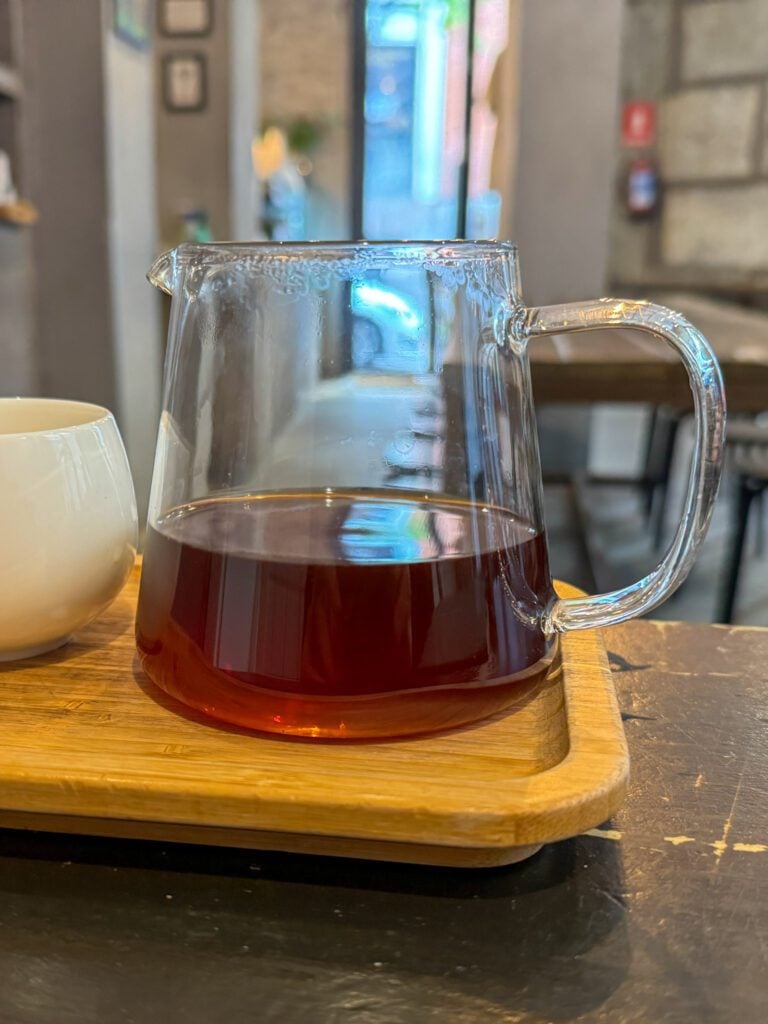
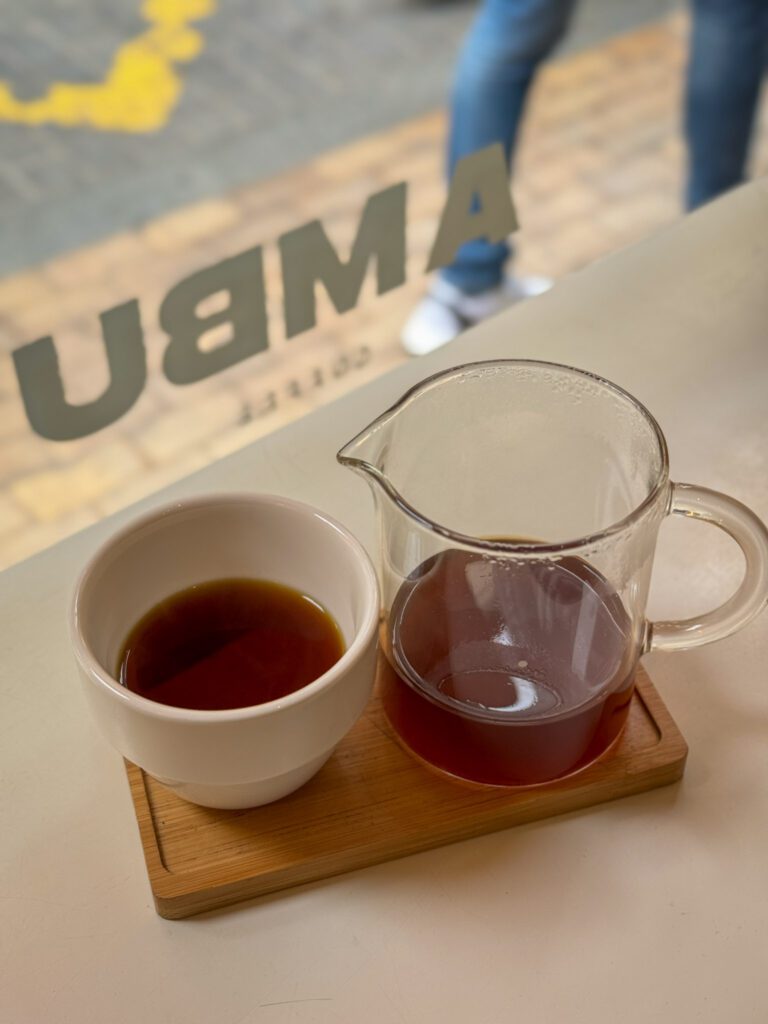
Both also have light breakfast menus, if you want something before you head out on your walking tour.
Head south to Puerta del Sol, mainly to see the statue of El Oso y el Madroño (the bear and the Madrono tree – madronos are a kind of berry, NOT a madrone tree like we originally thought). Find it here on Google Maps.
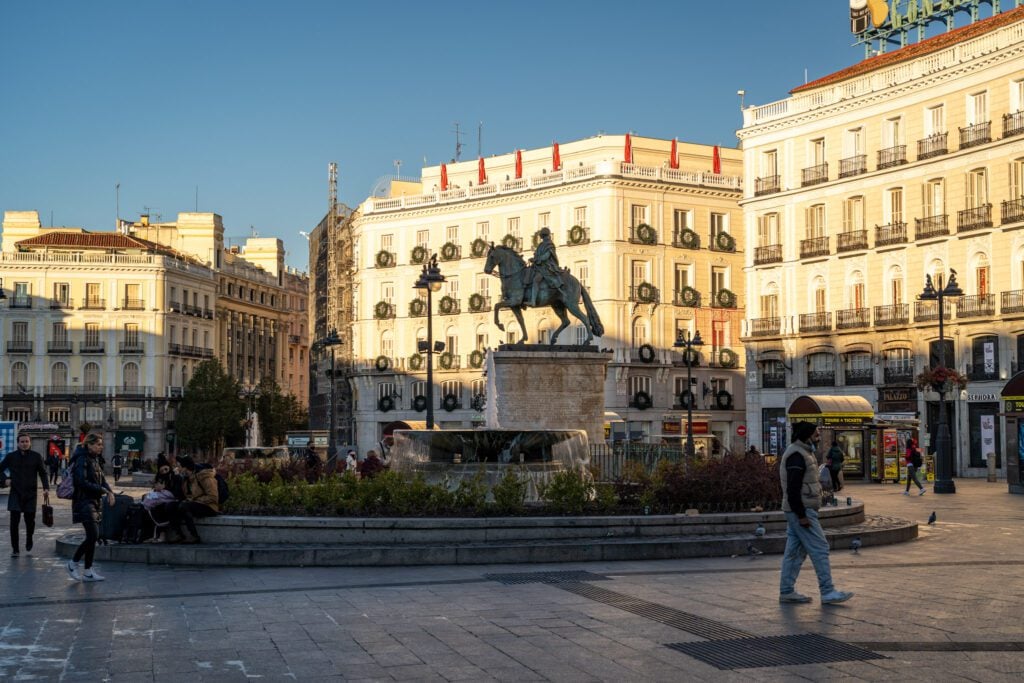
This is the symbol of Madrid, and it has evolved over the years. Yes, there used to be bears in Madrid. No, there are no longer bears in Madrid (sad!).
If you’re looking for a more extensive range of pastries and coffee near the meeting point for the next stop on this itinerary, we walked by La Mallorquina on Plaza del Sol multiple times (here on Google Maps), and it got recommended to us as a historic place for pastries.
It has been on this corner since 1894, and they have a nice range of pastries. The highlights are the napolitanas (the first pastry we think of when we think of Spain), the ensaimadas, and anything with the egg yolk custard, one of our favorite recent discoveries in Spain.
Continue on to Plaza Mayor, which is where you’ll meet your walking tour.

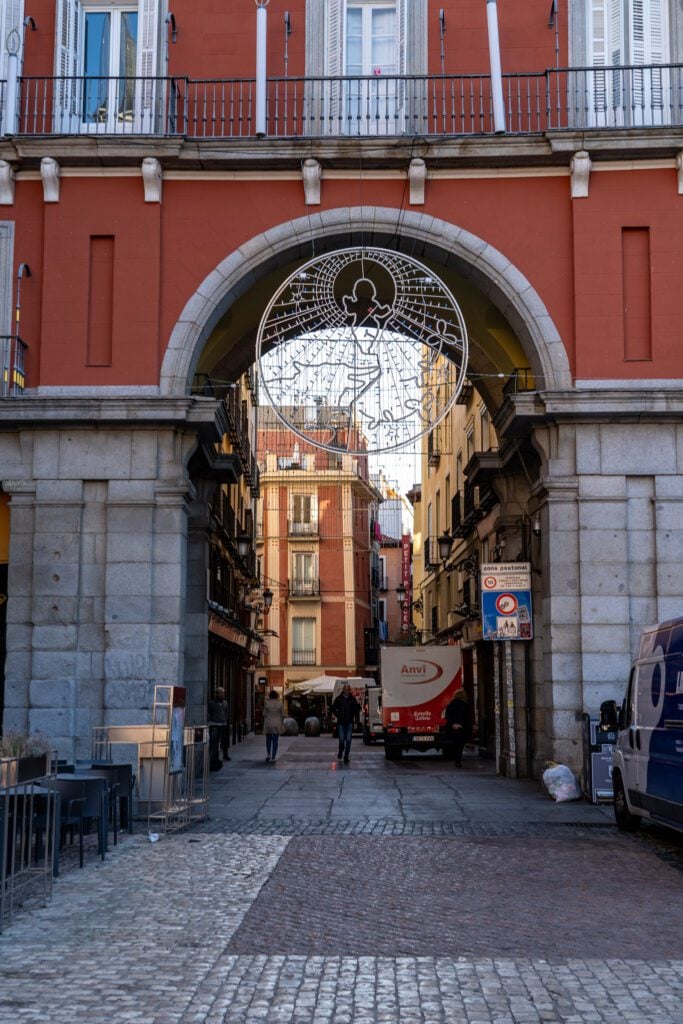
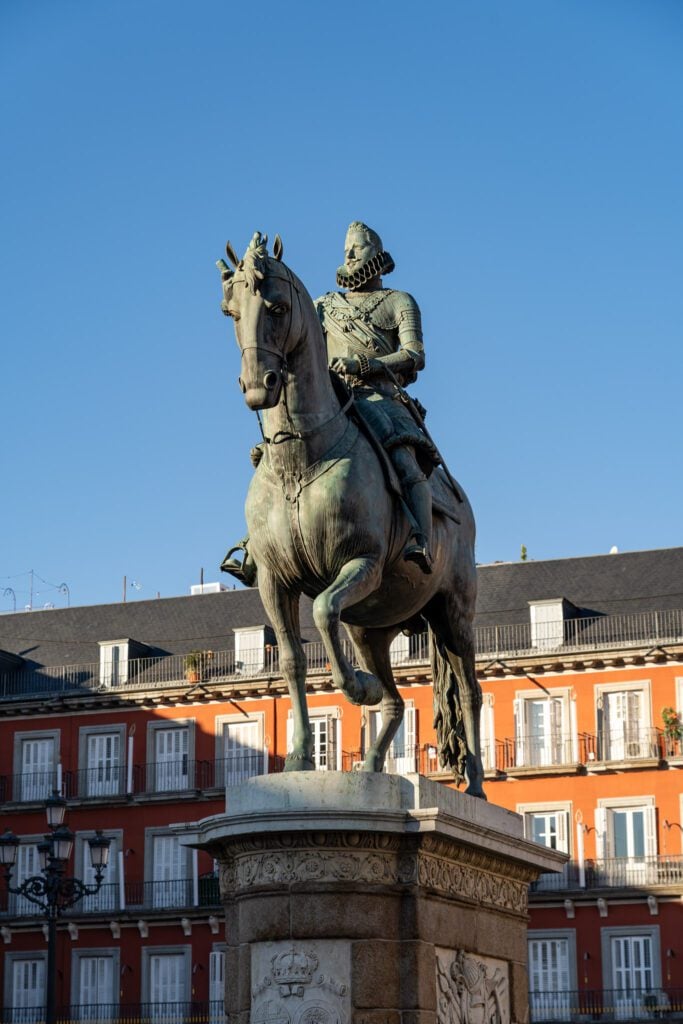
This is perhaps the most famous plaza in the entire city, and there’s a statue of Philip III in the middle of it (note the neck ruff, which was fashionable at the time).
He, apparently, wasn’t really a great king like his father, more mediocre at best. But he still gets a statue, for some reason (must be nice!).
An Introductory Walking Tour with Lexi
Over the past few years, we’ve come to the realization that walking tours are often our favorite way to get oriented in a new city for a few reasons.
First, you get a crash course in history and culture, which is a valuable baseline that will make the rest of your trip more enjoyable.
Second, you get to spend a few hours with a local who will give you all sorts of tips about what to eat, drink (and see), and specifically where to find the best version of said things.
Last, but not least – and this was especially evident in Madrid because I had done a self-guided version of this tour and didn’t see 90% of it – you’ll discover places that you definitely would never have found on your own.
All this is to say that if you want to get below the surface of the historic center of Madrid, which is “the room where it happened” as Hamilton would say, you should absolutely do a guided walking tour.
If you’re looking for the best introductory walking tour to Madrid, I want you to run – don’t walk – to book Lexi’s historical walking tour for your first day in Madrid.
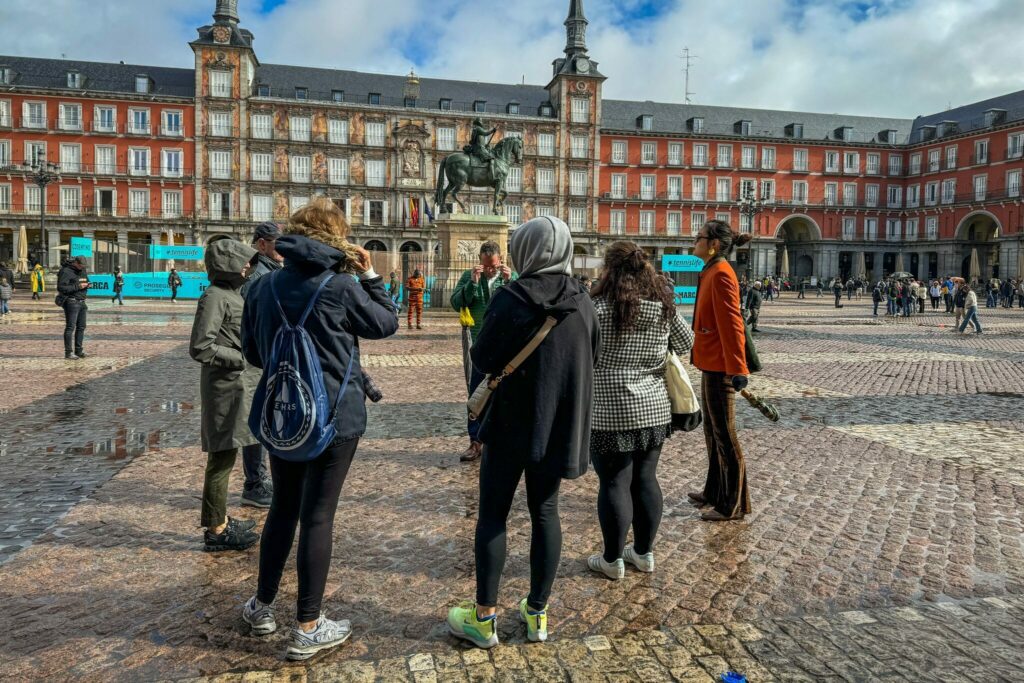
A little background on why I think I can make that “best” statement.
By the end of that return trip a few years ago, I had done FOUR different walking tours, and Lexi’s was BY FAR the best in terms of storytelling and scope. So good that I think it’s actually the best walking tour I’ve ever done. Ever. And I do a BUNCH.
For a walking tour to be good, you essentially need two things: a handle on the history and culture (beyond just memorizing a set of bullets) and someone who is charismatic and passionate.
Spoiler alert: Lexi checks both of those boxes.
She’s a historian (specifically focused on Spanish history), so it makes sense that she has a great grasp on the history, but she also weaves in recommendations on where to eat, drink, and shop (with a handy map sent to you at the end of the trip).
As I referenced, I did this tour for the first time a few years ago when I was in Madrid solo, and told Alysha how good it was and that if we ever made it back to Madrid together, she had to do it with me.
Fast forward a couple of years, we were back in Madrid on this most recent trip to Spain, and we showed up on a rainy morning in Madrid to do Lexi’s tour (for me, for a second time).
It was equally as good on the second visit even though I basically already knew all the information.
There’s usually one tour in each city that is a can’t-miss, and we think this is the one in Madrid.
Click here to check prices, reviews, and availability for Lexi’s tour
A DIY Food Crawl around Plaza Mayor
After your walking tour, you’re probably going to be getting a little hungry.
Remember that in Spain, lunch is the big meal, and Spaniards generally eat lunch sometime between 1pm and 4pm, depending on the person. Then, dinner is somewhere between 9pm and 11pm (gross).
That timing is quite a bit different than at home in the States, and throws us for a loop every time.
For lunch, we put together a little bit of a “choose-your-own-adventure” of Madrid’s historic center, sampling a few different types of food and moving from one place to the next.
- Cervecería La Campana: Go here for the fried calamari, specifically the fried calamari sandwich (un bocadillo de calamares), which is a surprising staple of Madrid’s cuisine that goes back to the days of the Franco regime. Long lines to eat it there, but you can order from the to-go window and find a place to sit down and eat it. Find it here on Google Maps.
- Mesón del Champiñón: Go for the champiñones al ajillo (this was a recommendation from Lexi, the walking tour guide). Find it here on Google Maps.
- Casa González: A nice little meat and cheese spot over in Barrio de las Letras that is a good spot for a glass of wine and some tasty cheese and jamon. Find it here on Google Maps.
- Casa Revuelta: Stop here for their famous fried cod and gildas (our favorite discovery in Basque country – it’s two olives, a vinegar-y pepper, and a salty anchovy on a stick)! You want the taberna (here on Google Maps).
If you’re looking for a fancier, more traditional sit down lunch, there are two places on the south side of Plaza Mayor that have been recommended to us and get pretty good reviews.
Both are in atmospheric caves under the hill the Plaza Mayor sits on top of, which is pretty unique.
The first, and arguably the most famous restaurant in Madrid, is Botín.
It is often heralded as the oldest continuously operating restaurant in the world (how would you really know that, though?), and it has been in this location since 1725 (okay, that’s pretty old).
It’s a very hard reservation to get, and I was told that it’s sometimes easier to show up 30 minutes before they open for lunch and wait for one of their “standby” tables. Though even that is a little risky.
They’re probably most famous for their roast suckling pig, though they do a bunch of pretty classic Spanish dishes.
If you can’t get a reservation there, a good alternative would be Las Cuevas de Luis Candelas, another atmospheric, old restaurant under the hill of Plaza Mayor.
This one has only been around since 1860 (which is older than just about anything in our home city, Portland, Oregon).
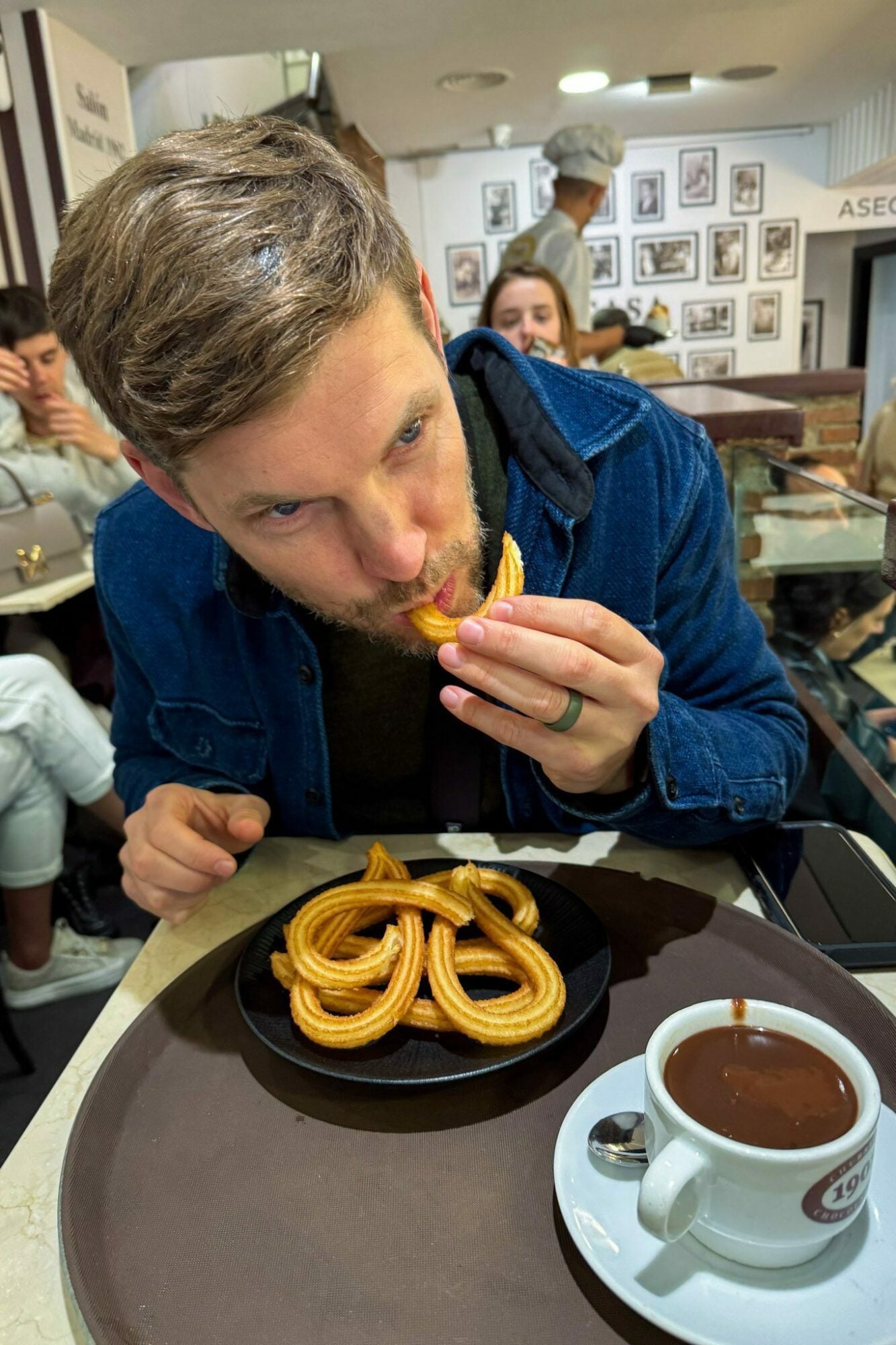
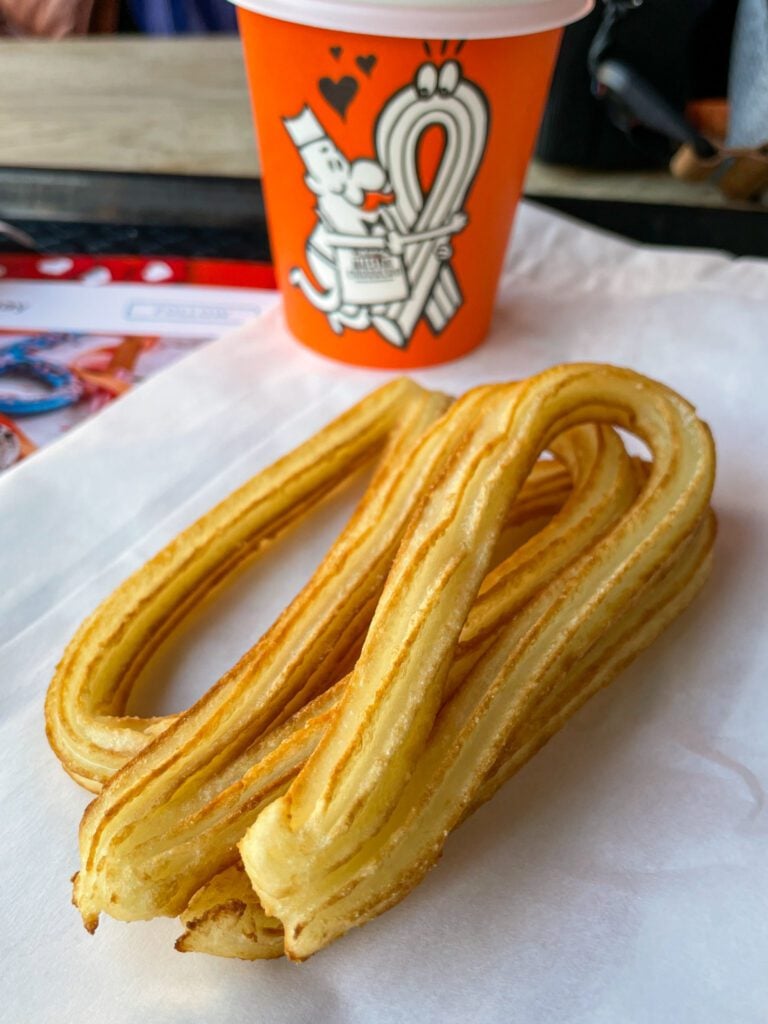
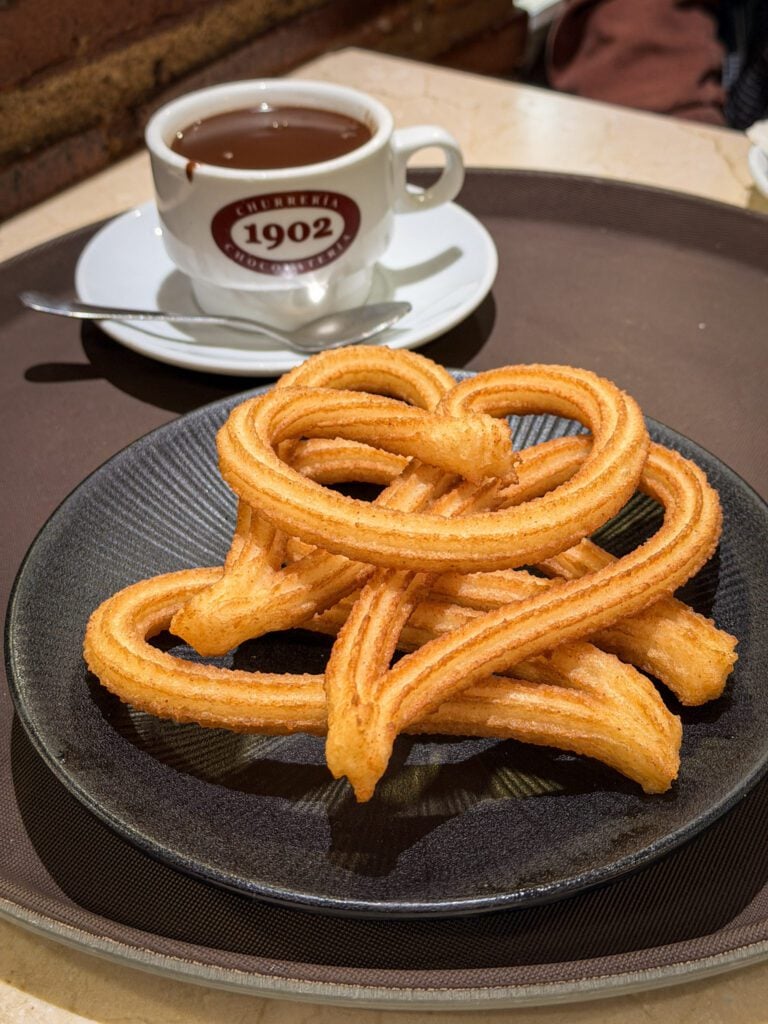
Finally, the next thing we’d seek out is churros con chocolate. It’s worth noting here that the churros you’re going to get in Madrid (or elsewhere in Spain) are more savory than what you’re picturing if you’re from North America.
They aren’t usually dusted with cinnamon sugar like they are here, they’re usually just long, thin pieces of dough, fried and served with a side of thick hot chocolate that doubles as a dipping sauce.
The order here is a ración of churros (usually six, sometimes four) and a “chocolate tradicional” (though we prefer dark hot chocolate, if they have it).
There are three places we’ve either been to or had recommended to us for churros (including two gluten free options!).
Chocolatería San Ginés is the famous one that everyone goes to because it has been there for more than 100 years. No gluten free options here, so we skipped it. It’s just north of Plaza Mayor (here on Google Maps).
Maestro Churrero was recommended to us as a less famous but better quality churro spot, and they do have gluten free churros prepped separately in a way that’s safe for Celiacs like Matt.
However, they weren’t great (though the chocolate was pretty good). They have a location two blocks east of Plaza del Sol (here on Google Maps).
Churrería Chocolateria 1902 is a block north of San Ginés and is by far our favorite gluten free churros (they also have regular churros). The gluten free churros come out on a different colored plate from a completely separate kitchen.
I can’t comment on the quality of their regular churros, but we liked their gluten free version way better than Maestro Churrero.
We do want to briefly (ish – brevity isn’t our strength) cover a fairly important topic here: what NOT to eat in Madrid.
Most people don’t fully appreciate this, but Spain is a big country, which means that the food culture is highly regionalized because the raw ingredients that exist in, say, Barcelona and Madrid, are wildly different.
As much as possible, you should try to eat the local specialties in the place you’re in, rather than trying to seek out the most famous Spanish dishes.
Which brings us to paella. Paella is a rice-based dish that, aside from being so clearly influenced by cuisine from North Africa, comes from Valencia, a city along the coast towards Barcelona.
We have one golden rule in Spain that we have broken a few times and regretted it: do not order paella in a restaurant that is not specifically Valencian or specifically known for paella (often called an “arrocería”).
There are, I’m sure, exceptions, but ordering paella out at a random restaurant is usually not going to be good, speaking from experience.
Another example is sangria. As far as we can tell, sangria is a completely made up concoction designed for tourists.
Which doesn’t mean it’s bad, necessarily, but we believe that you should try to drink what the locals drink, and that’s not sangria.
Instead, when you’re in Madrid, you should drink wine, beer, vermut (we love Spanish vermouth!), or sherry (Manzanilla is the dry version).
After all that food, you’re likely going to need a little nap, so take a few hours to relax before heading back out to explore the Royal Palace and cathedral (and get ready to eat…again).
Admire the Palacio Real de Madrid
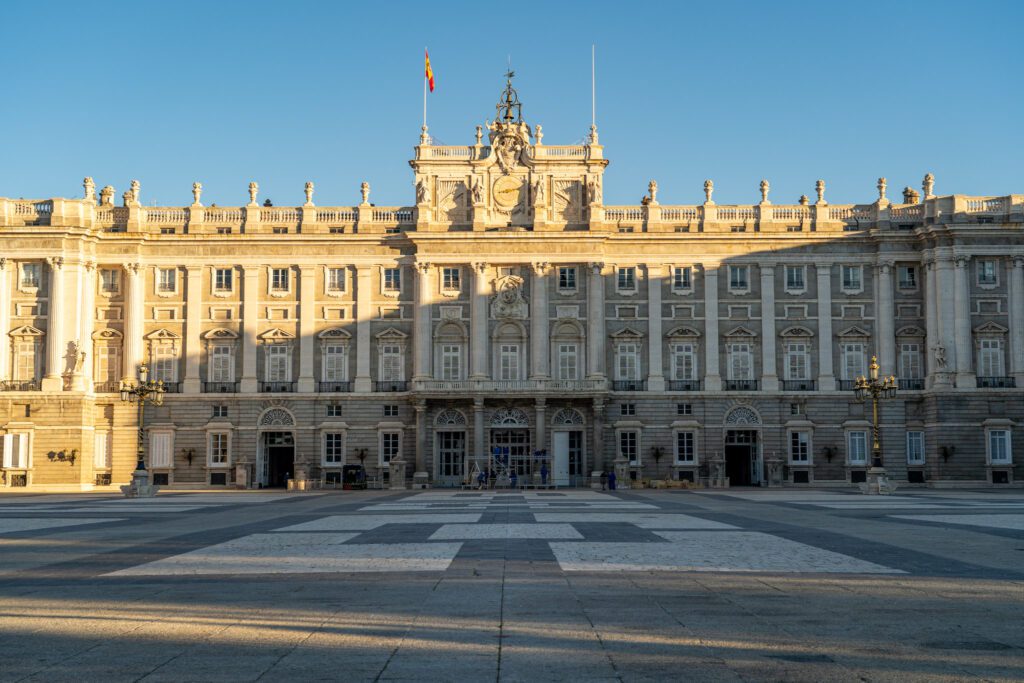
Ah, the Royal Palace of Madrid. Did you know this is the biggest royal palace in Europe? Sure, the royal family rarely shows up here anymore, but it has a very important role in the history of the city.
Full disclosure: we haven’t been inside Madrid’s Royal Palace. Mostly because royal palaces aren’t really our thing, especially when they are explicitly a copy of a palace we’ve seen multiple times (Versailles), with the only difference being the royal who commissioned it saying “make it bigger.”
The area where the royal palace is today is the original heart of Madrid, then called “Mayrit,” which comes from an Arabic word (though there are different theories around what exact word is the origin of the name).
It was built by the Emir of Cordoba as a fortress on the border between the Christian lands and Arab stronghold in southern Spain in the 9th Century.
This is not the last time you’ll hear about the Arabic influence on Madrid, which is not something I had really understood until visiting and learning about Madrid’s history on various tours with experts.
Even the Spanish language has influences from Arabic, as our guide for the Prado Museum Jaime (pronounced “hay-may” with a guttural sound at the beginning that I had a hard time replicating) pointed out, using the sound at the beginning of his name to illustrate his point.
Madrid was originally just a small town built around that fortress, and nearby Toledo was the main city in the area. In fact, Toledo was the capital before Madrid!
Madrid was conquered by the Christian forces in the late 11th Century as they made their way towards Toledo, and then fast forward a few centuries to when Madrid was named the capital of Spain in 1561, and the Royal Palace as we know it today was created.
Except it burned down a few times, and was subsequently rebuilt (it’s a somewhat scandalous story you’ll hear from Lexi, if you booked her walking tour). But you get the idea.
Today, it’s essentially a museum, and is open to the public except when there’s an official state ceremony happening (which isn’t often).
Only a portion of the rooms are open to the public, but you can see the throne room, banquet hall, and royal apartments, among other things.
If you do want to visit the inside, make sure you buy your ticket in advance! The line to enter gets pretty gnarly, often wrapping the building and taking up to two hours to make it through.
You can easily skip this line with a little advance planning – all you have to do is go to the official website and book your tickets ahead of time. Do this as far in advance as you can – they do sell out.
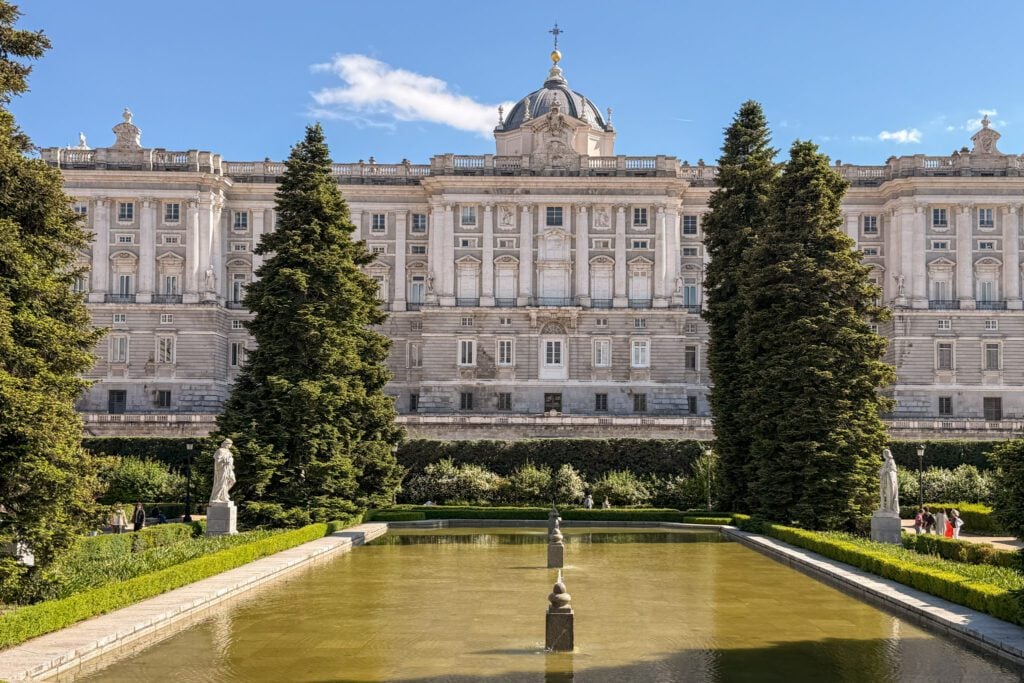
If you’re not inclined to go inside, we would recommend a walk around the Jardines de Sabatini (here on Google Maps) on the backside, which are very pleasant.
Pro-tip: It’s free to visit from Monday to Thursday between 4:00 and 6:00 pm, but lines are LONG, it’s packed, and the last entry is at 5:00 pm.
If you want to visit for free, you’ll need to show up around 3:00 pm or so.
What if tickets are sold out? You have three options. First, stand in line at the ticket office. Second, check Get Your Guide to see if they have any skip-the-line tickets available. Third, join a guided tour that includes tickets, like this one (we were going to do this tour, but ended up skipping it).
Step Inside the Catedral de la Almudena
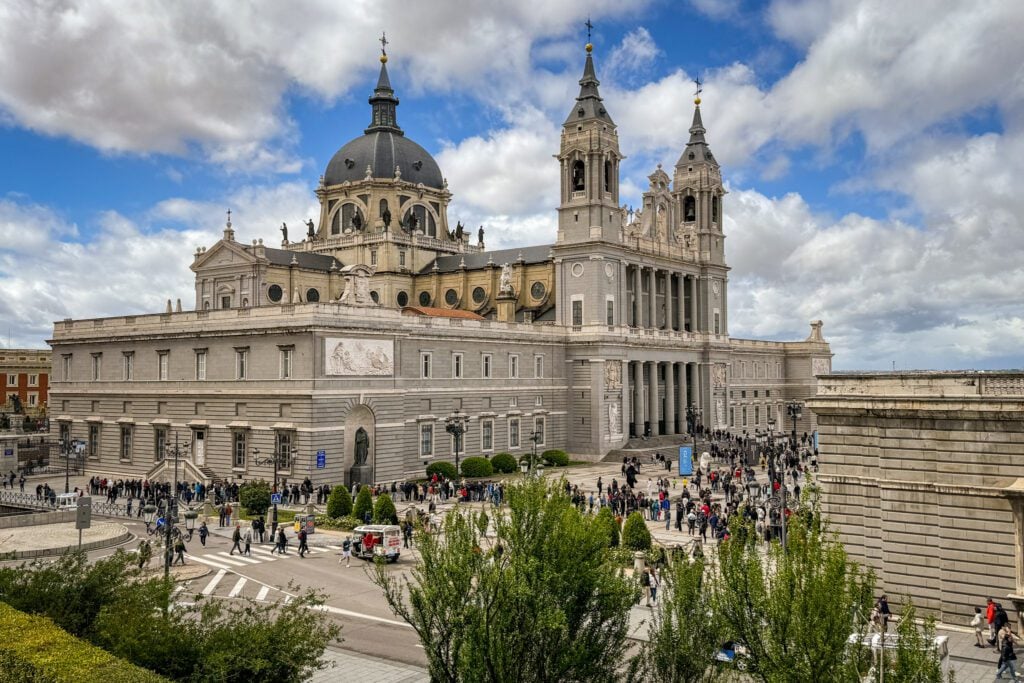
Just across the way is the Madrid Cathedral. It might look old (sort of), but it actually wasn’t consecrated until 1993, which makes it the youngest cathedral of any major European city (we think – hard to check this fact).
Before that, Madrid didn’t have its own archbishop despite being the capital of Spain.
Toledo was the seat of the Roman Catholic Archbishop, and had been for centuries. Now, Madrid has its own, and this cathedral is their seat.
Construction started in the late 19th Century, but was interrupted by the Spanish Civil War and construction picked back up in the 1950’s under a new architect.
40 years later, it was finally complete, and the first royal wedding took place at the new cathedral in 2004.
Before that, the royal family had to trek allll the way from the palace across the city to get married at a church on the other side of the city.
It has a beautiful interior, and it’s not nearly as opulent as many cathedrals around Europe. I personally love the stained glass windows, which are particularly vibrant and colorful.
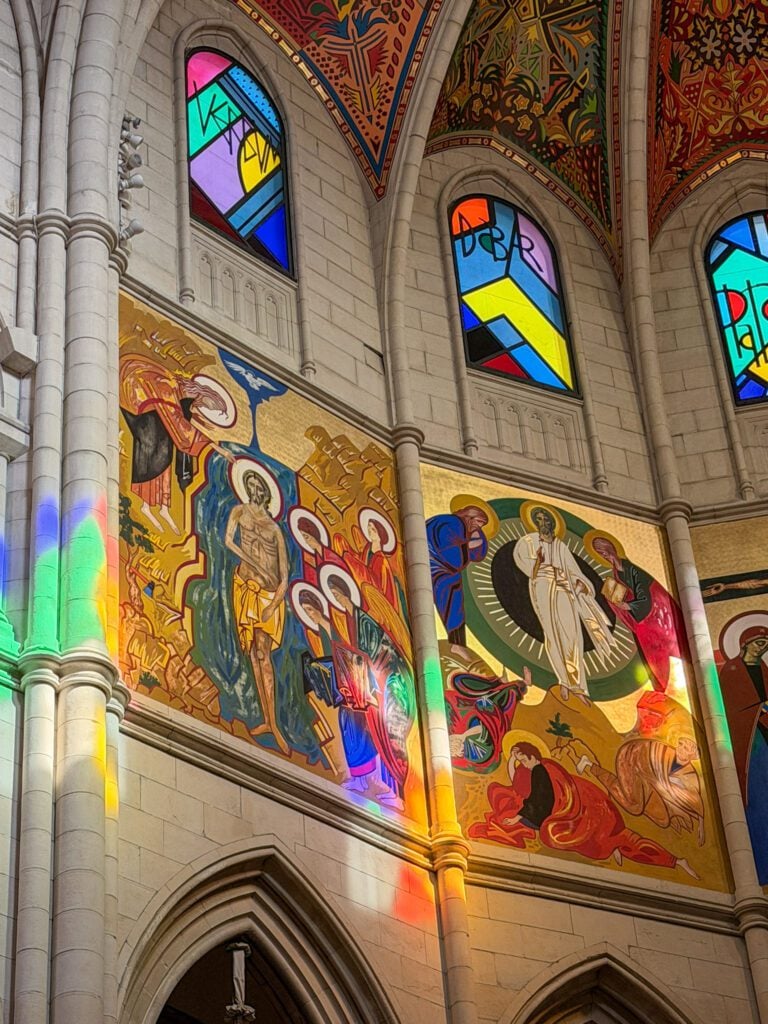
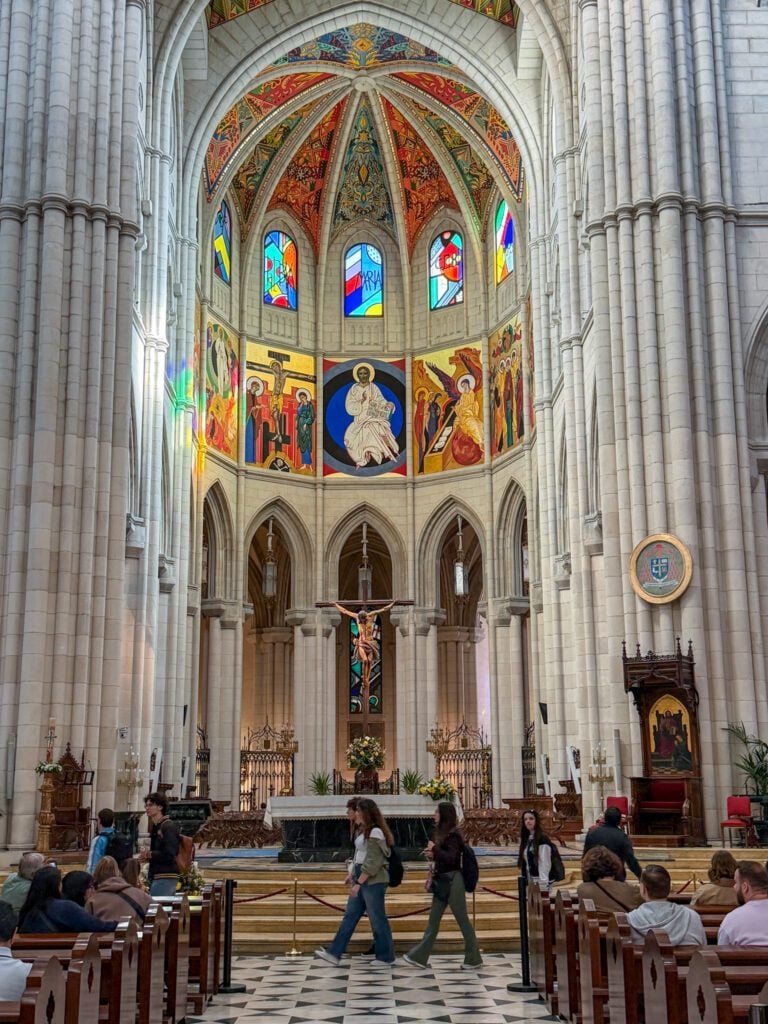
Since it’s free to visit, we’d recommend poking your head in and taking a look around.
It’s a quick visit, and it’s particularly nice in the afternoon when the sun comes through the western face and lights up the stained glass on that side.
More information on visiting the cathedral here.
Tapas in Barrio La Latina (on Calle Cava Baja)
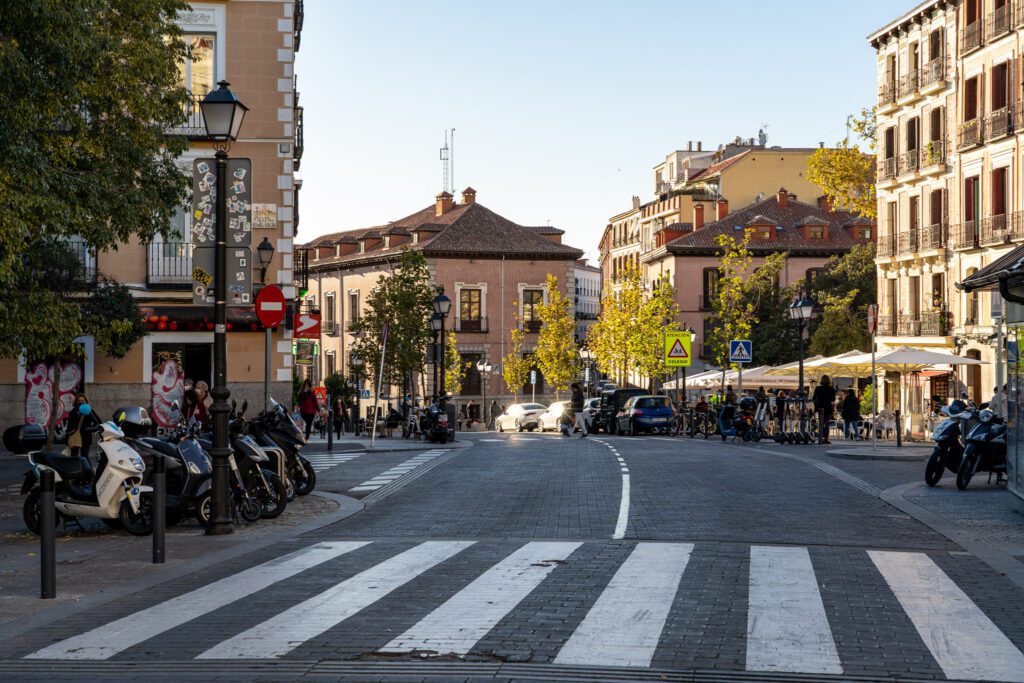
After your exploration of the Royal Palace and Cathedral, head over to the nearby La Latina neighborhood, so-named for Beatriz Galindo (known as “La Latina”) who was a teacher of Queen Isabella and an important figure in the neighborhood’s history.
Today, it’s the place to go for tapas.
Particularly Calle de la Cava Baja (or just “Cava Baja”), which is lined with tapas bars on either side of the street that, come lunchtime and later in the afternoon, are bursting at the seams with a combination of hungry Madrileños and tourists shoulder-to-shoulder, eating their hearts out.
The whole neighborhood is worth exploring more in-depth than just coming here for tapas.
There are a couple of excellent coffee shops (namely, Ruda Café), a food market that is significantly more “local” (which is a weird way of explaining it, but hopefully you understand what I mean) than Mercado de San Miguel (the one right next to Plaza Mayor that’s packed with tourists), and the famous El Rastro flea market that happens every Sunday.
The Museo de San Isidro (which is free) is also worth 30 minutes of your time, covering the history of Madrid from the first humans to present.
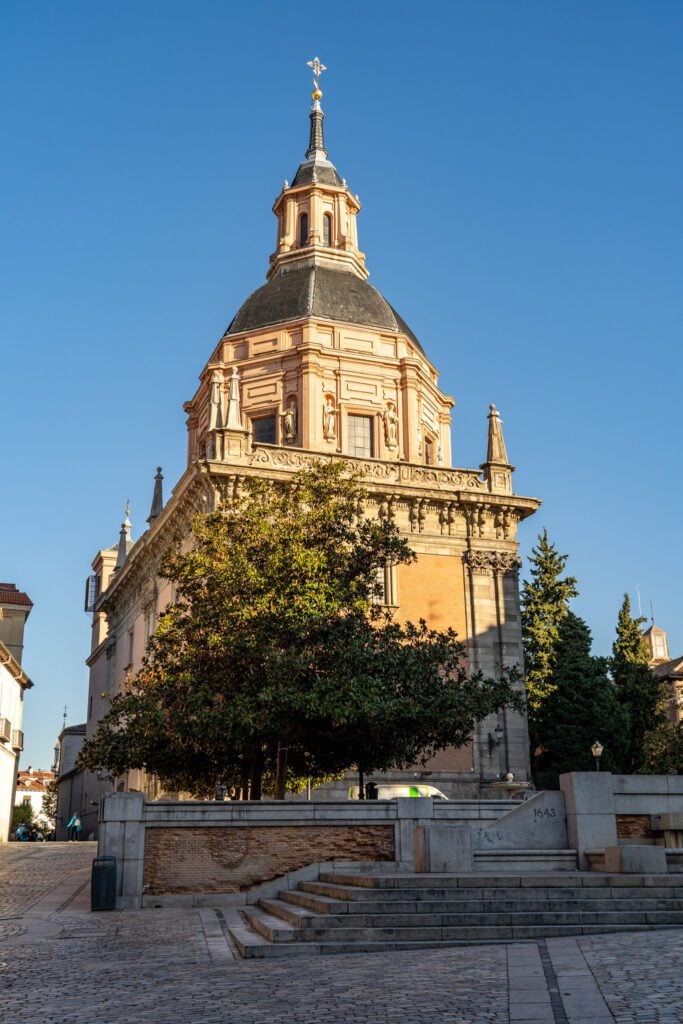
The plaza just outside – Plaza de los Carros – is also an exceedingly pleasant place to relax in the afternoon sun or on a warm summer evening, in the shadow of the dome of the Iglesia de San Andrés Apóstol.
As you can tell, we really enjoyed La Latina, and think it’s worth an afternoon and evening of your time.
Our ideal version of an evening in La Latina looks like this: start at the Museo de San Isidro for a quick history less, then grab a vermut or two on the sunny patio at La Vermudena (we liked this place – they have a bunch of different Spanish vermuts on tap so you can try a range of styles), and a tapas crawl through the many tapas bars lining Calle de Cava Baja.
Taberna El Tempranillo and Casa Lucas were recommended to us, though we went to La Lina because they have excellent gluten free options for me.
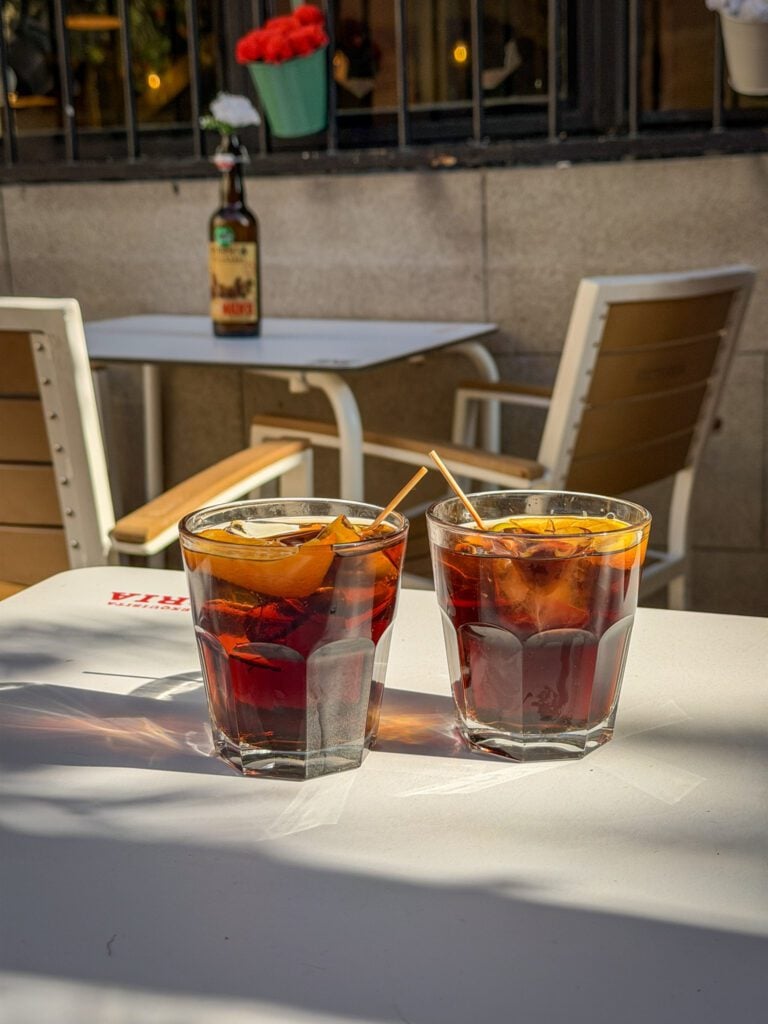
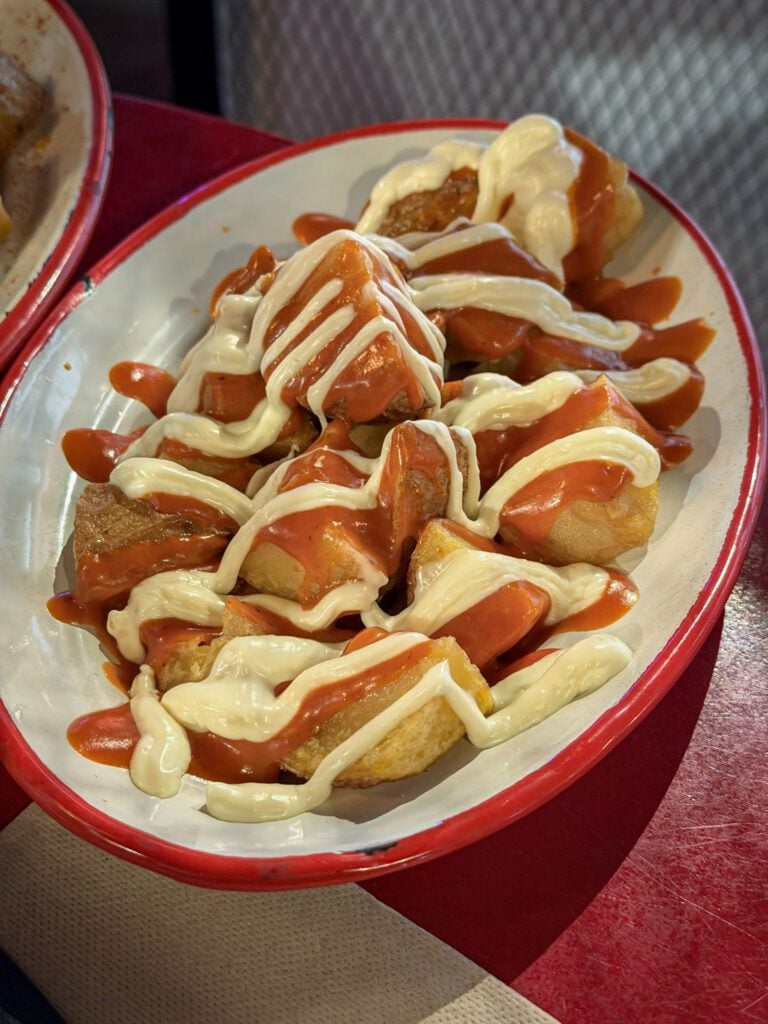
If you’re really looking to dive into Madrid’s food culture, you should hop on a tapas and history tour with a guide who can play a similar role as Lexi or Jaime and provide you with that all-important history and context to help you gain a deeper understanding of Madrid.
Afterwards, grab a drink on the terrace of one of the bars lining either Plaza San Andrés (here on Google Maps) or Plaza de Cascorro (here on Google Maps). Or, really, anywhere that catches your eye as you’re walking around.
One last recommendation for you – if you’re into natural wine, make the trek down the hill from La Latina to Bendito, Vinos y Vinilos for natural wines and light bites.
Day 2: The Prado, Parque El Retiro, and Malasaña
The highlight of your second day in Madrid, and potentially your entire trip to Madrid, is the vast and excellent Museo Nacional del Prado, which has an extensive collection of mainly paintings from Spanish, Italian, and Flemish artists.
Then, explore El Retiro, a lovely park in Madrid’s center, and end your day in Malasaña, our personal favorite neighborhood in Madrid.
Note that the timing today hinges on your Prado Museum tickets, which YOU NEED TO BOOK IN ADVANCE.
More below on exactly how to do that, but you may need to shuffle things around and do Parque Retiro before the museum depending on when your visit / tour of the Prado happens.
A Morning Stroll through Barrio de las Letras
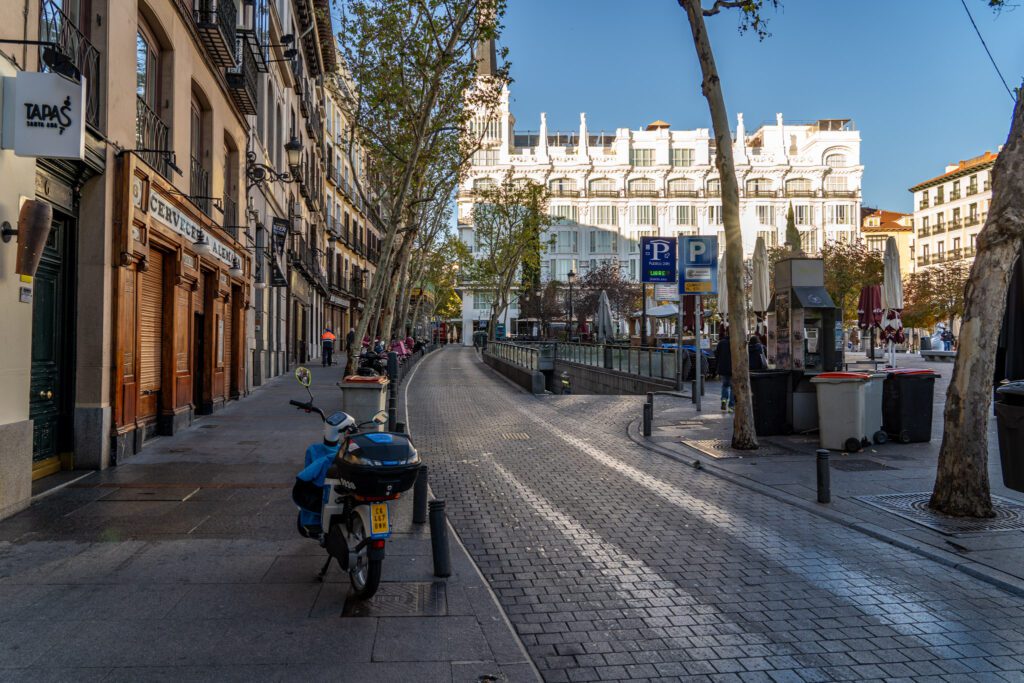
Barrio de las Letras (which is also known as Huertas) is a very romantic part of the city to the southeast of Sol / Gran Vía, and it’s along the way to the world-famous Prado Museum, which is your main destination today and will take up the bulk of your day.
Barrio de las Letras is famous because it’s where some of Madrid’s (and Spain’s, really) most famous writers lived in the 16th and 17th Centuries, including Miguel de Cervantes, who famously wrote Don Quixote.
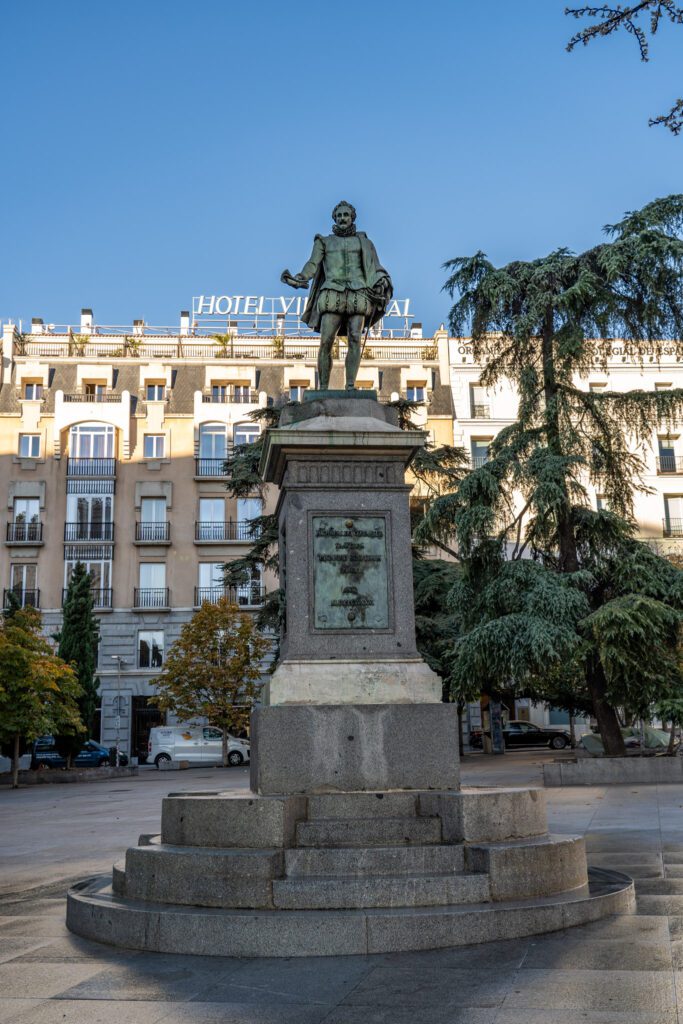
There’s a statue of Cervantes in Plaza de las Cortes (here on Google Maps) at the eastern edge of the neighborhood, which makes a good first destination.
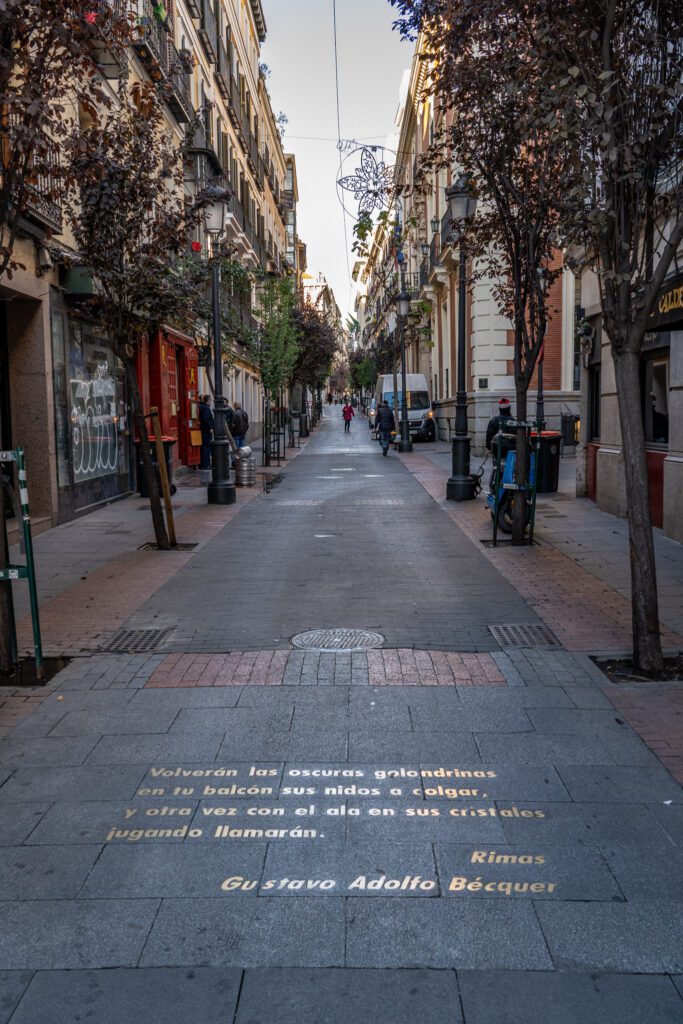
From there, head to Calle de las Huertas, the main corridor here, and look at the street to see some famous quotes from Spanish authors in gold along the cobblestones.
Don’t miss the neighborhood’s main plaza, Plaza de Santa Ana (here on Google Maps), which features a historic hotel, several historic bars that have been around for hundreds of years (worth coming back to grab a drink at Cervecería Alemana that has been open since 1904).
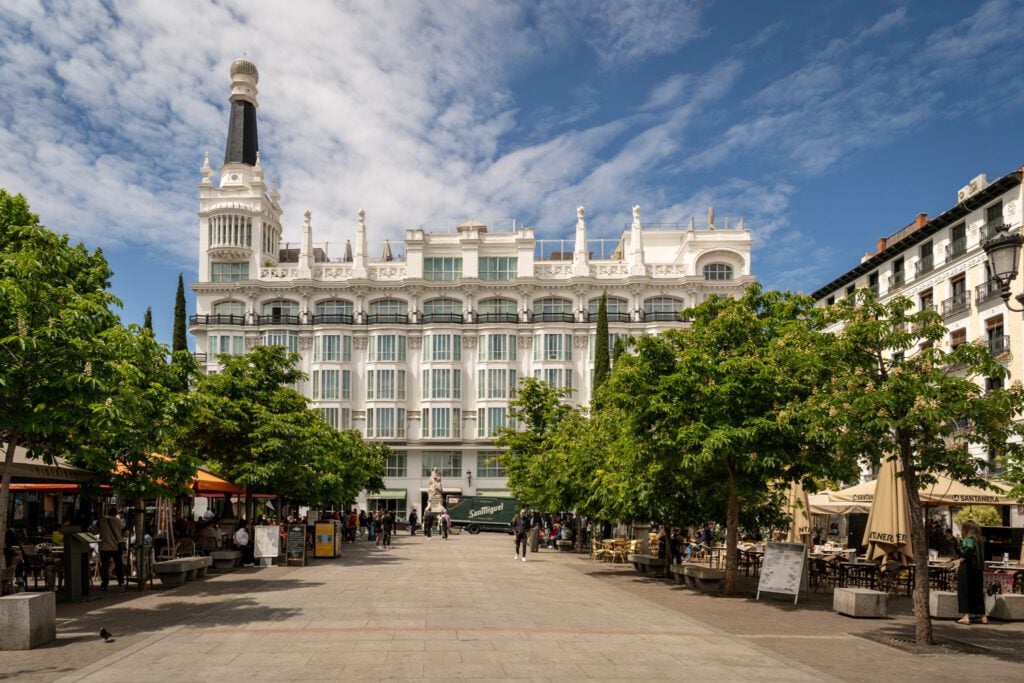
In terms of coffee, there are a trio of really good options here within a few blocks of each other.
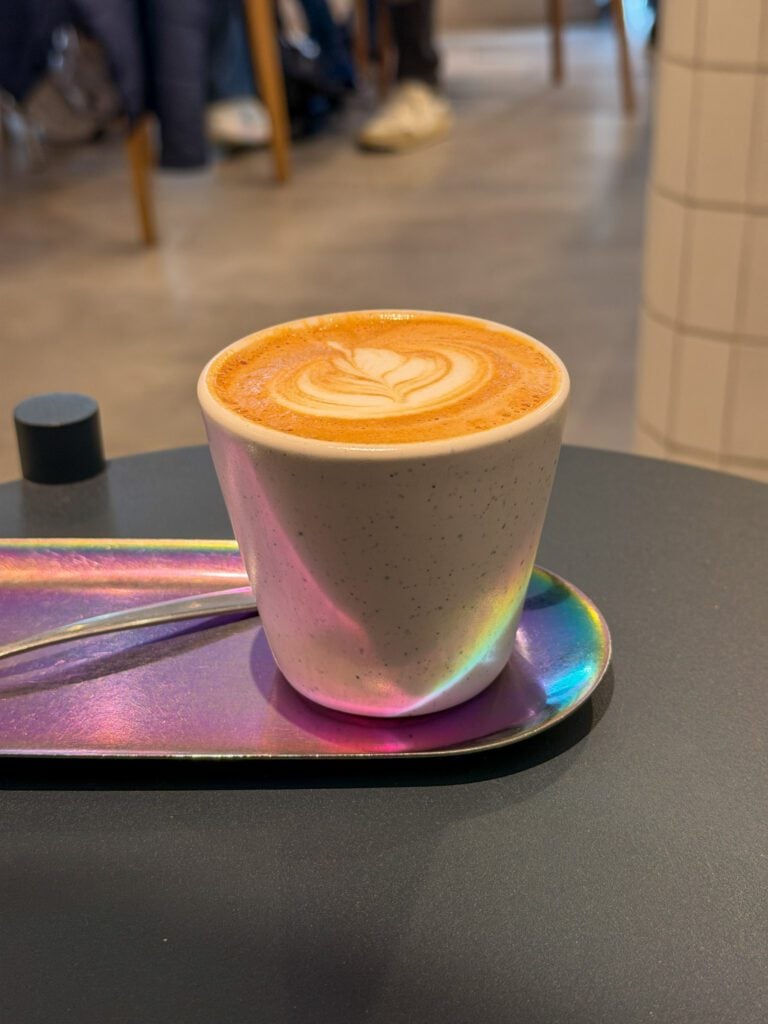
There’s the aforementioned Ambu Coffee, who have a compact location on Calle de las Huertas and have a rotating selection of coffees from some of the best roasters in Europe.
Then there are two places literally right next to each other further east towards Paseo del Prado.
Etual Café is a nice vibe, with good coffee and pastries and would be a nice place to relax and linger for a second.
Nubra Coffee next door is one for the coffee nerds and is the best roaster in Madrid, though their seating and ambiance isn’t nearly as nice as the other two.

Marvel at the Prado Museum’s Extensive Collection
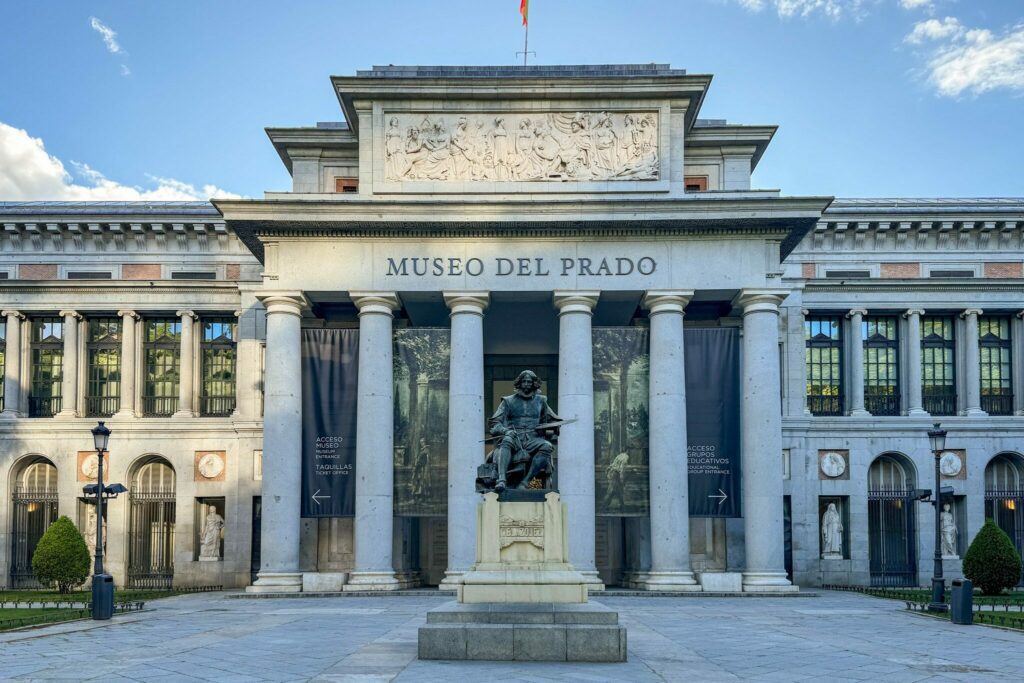
After my three separate visits in the past five years, I can honestly say that I think the Prado Museum (or Museo Nacional del Prado in Spanish) is one of my favorite art museums in the entire world.
There are two reasons why it stands out to me.
First, it says something about the place it’s in.
Some big museums, like the National Gallery in London as an example, are just kind of a sprawling collection that doesn’t necessarily say anything specific about the place it’s in.
In contrast, the Prado’s collection was largely acquired, assembled, and commissioned by the Spanish Royal family (much of it during the Spanish Golden Age that coincided with the exploration and exploitation of the Americas).
The stories behind a lot of the paintings here are related to marriages, wars, or other big events from that time period.
The second reason I like the Prado is the fact that it doesn’t try to do too much, which is a category that the Louvre and the Met – while amazing – fall into.
It’s basically all about the paintings, and the paintings are mainly from Spanish, Italian, and Flemish artists.
“Flemish?!” I hear you saying. Yes, Flemish, and it was actually my favorite part of the museum (though the Italian and Spanish sections have their high points too).
The museum is full of art that ranges from 12th to 20th Century, but there are a few main highlights that I think you shouldn’t miss:
- The work of Flemish painter Hieronymus Bosch: Particularly the Garden of Earthly Delights, which is a mind-bending, imaginative, dark, and colorful masterpiece.
- The statue of Charles the III, one of the most famous characters in Spain’s history. The armor he’s wearing (or isn’t – it was off when I was there) is REMOVABLE. How cool is that?
- Tintoretto’s play with perspective in Christ Washing the Disciples’ Feet (make sure to look at it from both sides!).
- The Work of Francisco Goya: Especially the “black paintings,” which are really, really dark (and were painted on the inside walls of his house – what a creepy thing to have on your bathroom wall).
The first thing you need to know is that you should book your Prado tickets as soon as you know you’re going to visit Madrid.
It does sell out, particularly in the summer and on weekends, so if you want to see it, you need to plan a little in advance.
All you do is head over to the official website and hit the little ticket icon in the top right (or get there through the menu under “VISIT”, if you’re on your phone).
Tickets go on sale 60 days in advance and cost €15 a person for the “general collection” ticket, which is the one you want.
However, to get the most out of your visit, we’d highly recommend investing in a guided tour of the museum.
I (Matt again) have now done this guided tour of the Prado museum with Jaime twice – once on my own, once to share it with Alysha on our most recent visit – and I cannot recommend it highly enough.
He’s an expert in art history and was born in Madrid, and was able to bring a level of richness, detail, and humor to the experience that we would never have gotten on our own.
The main reason that we think you should invest in a guided tour is this: you could spend a full day exploring the Prado and not see everything.
The expert leading your tour (Jaime, in this case) is going to curate a selection of paintings for you to illustrate the historical patterns and influential works, helping you understand what you’re looking at, and what you should be focusing on.
Then, you’ll end the tour inside the museum, so you can continue exploring if you’d like.
We’ve been to many, many museums all over the world. The ones we remember most – and most fondly – are the ones where we’ve decided to do a guided tour.
The stories behind the art and the context around the time period when the art was created are essential to really understanding what you’re looking at, and while you may be an expert in art history, we certainly are not.
Which is why we recommend a guided tour – to get that extra level of richness and context that will make your experience much, much more memorable (not to mention enjoyable in the moment).
This is the tour we did on that first trip that cemented the Prado as one of our favorite art museums in the world.
On a recent return trip to Madrid where I explored the city solo for almost a week, I decided to revisit the Prado on a different tour.
This time on a VIP early access tour before the museum opened to the public with Walks, my favorite tour company in Europe.
That tour is only 90 minutes long (versus Jaime’s, which is two and a half hours long), which is not really enough time to see the entire collection.
However, being in the museum alone (literally it was only staff, and we were there when they unlocked the front door) was a special experience, especially considering how busy the museum is during the day.
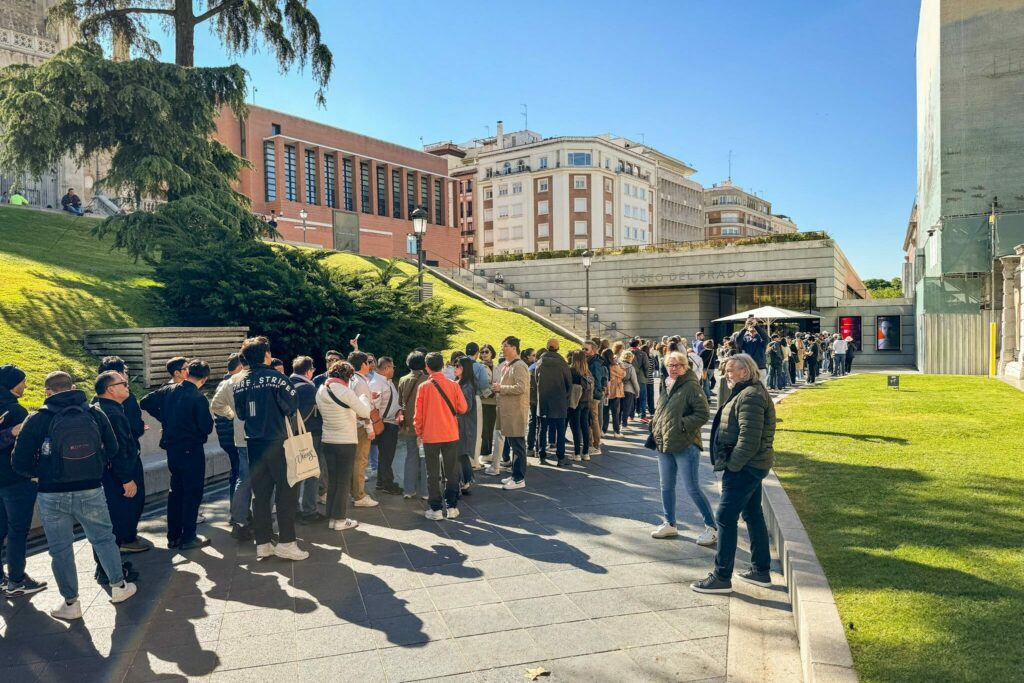
Plus, you end up inside the museum with the ability to continue perusing, so you can stick around and see anything you missed (ask your guide to point you in the right direction).
We have an entire guide dedicated to visiting the Prado Museum, which you should go read for more details, including exactly how to buy tickets, tips for visiting, and more detail on our top highlights that you shouldn’t miss.
Wander Through Parque El Retiro
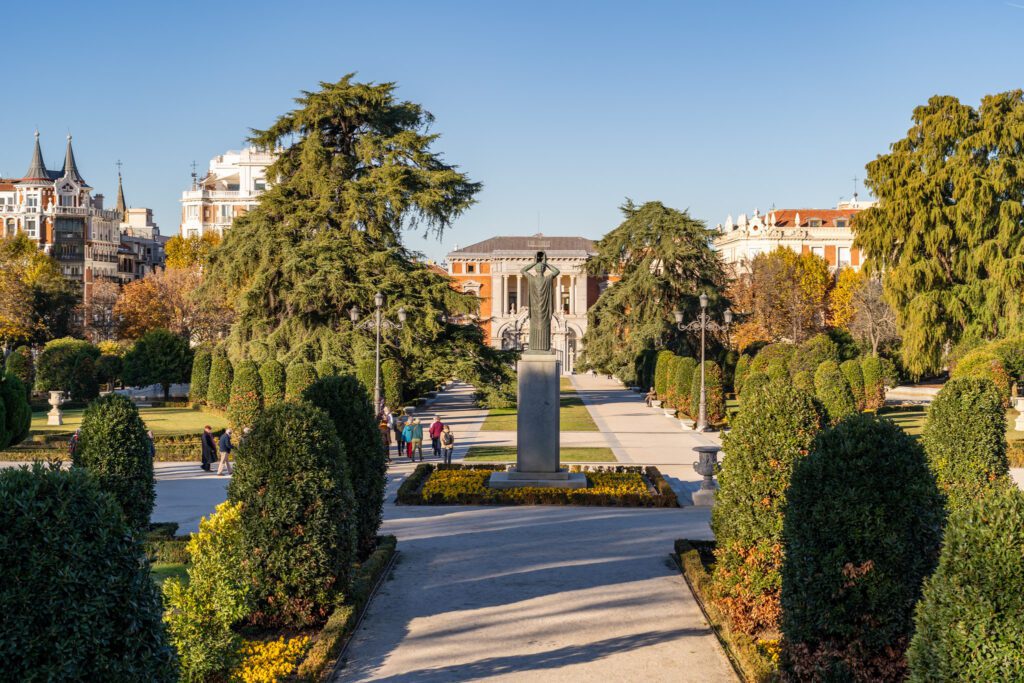
We love a good urban green space, having lived in San Francisco with Golden Gate Park and Portland with…all the parks?
This is Madrid’s best green space, we think, and it’s so easily accessible from the city center that it’s a perfect spot for an afternoon stroll to decompress after the information overload at the Prado.
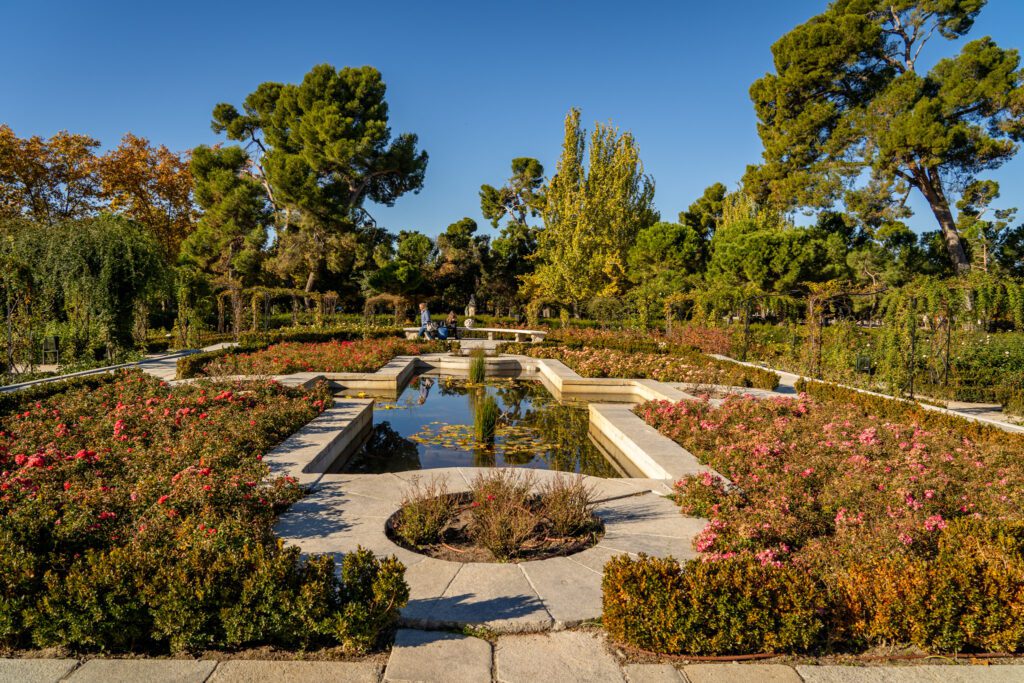
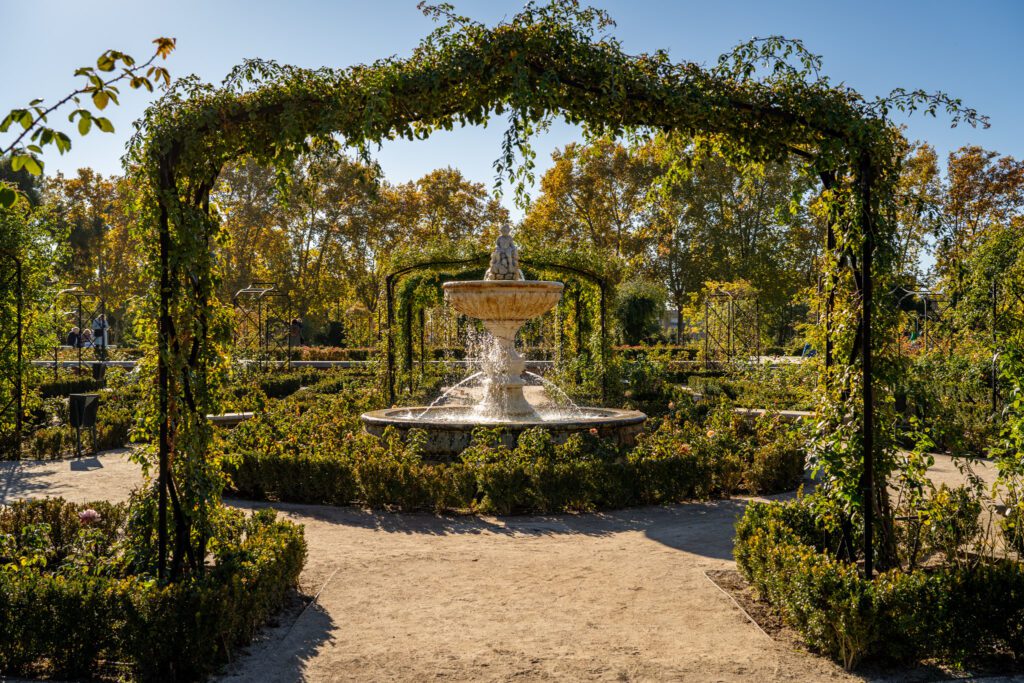
You can really spend your time wandering – it’s a lovely place to get lost and soak up the afternoon sun – but here’s the route we’d choose (in map form here).
Start from the northwestern corner and the Puerta de Alcalá, a triumphal arch (every major European city has one!) built on the site of one of the original five gates into the city of Madrid.
Make your way south, past the pond, to the opulent Palacio de Cristal, which is gorgeous, and then onwards to the rose garden at the southern end of the park, La Rosaleda.
Head back towards the city center by passing the statue of Jacinto Benavente, and exiting through the Puerta de Felipe IV at the midpoint on the western side of the park.
An Evening in Malasaña
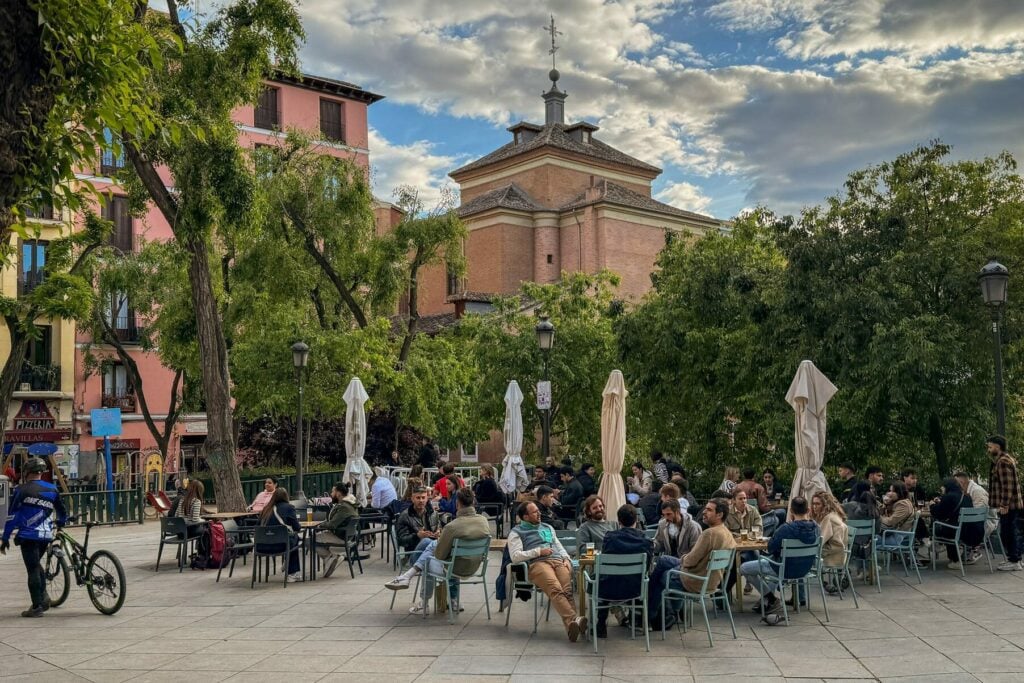
While La Latina on the southern end of Madrid’s historic center is packed full of classic Spanish tapas spots, Malasaña and Chueca – the areas immediately north of Gran Vía – are more cosmopolitan and hip.
We love both areas for similar reasons (great vibes, excellent food and drinks, plenty of outdoor terraces for a drink), but the types of food you’re going to find can differ wildly.
We would love to have included a food tour in this section, but after a morning at the Prado, we think you’re going to be a bit overloaded with information.
If you do want to do a food tour, we’d do this Tapas, Taverns, and History tour with Devour (we’ve done tours with them elsewhere in Spain and enjoyed them).
Once again, there are tons of choices here in terms of eating and drinking. Walking through this area in the morning and evening are VERY different experiences, which we like.
Unlike La Latina, which is all about the tapas, this area is full of all sorts of restaurants from all corners of the world. We ate here multiple times, and enjoyed food from Central and South America, Asia, and Italy.
Our favorite place to eat in this neck of the woods is Okashi Sanda, a gluten free and dairy free Japanese food with plenty of vegan/vegetarian options.
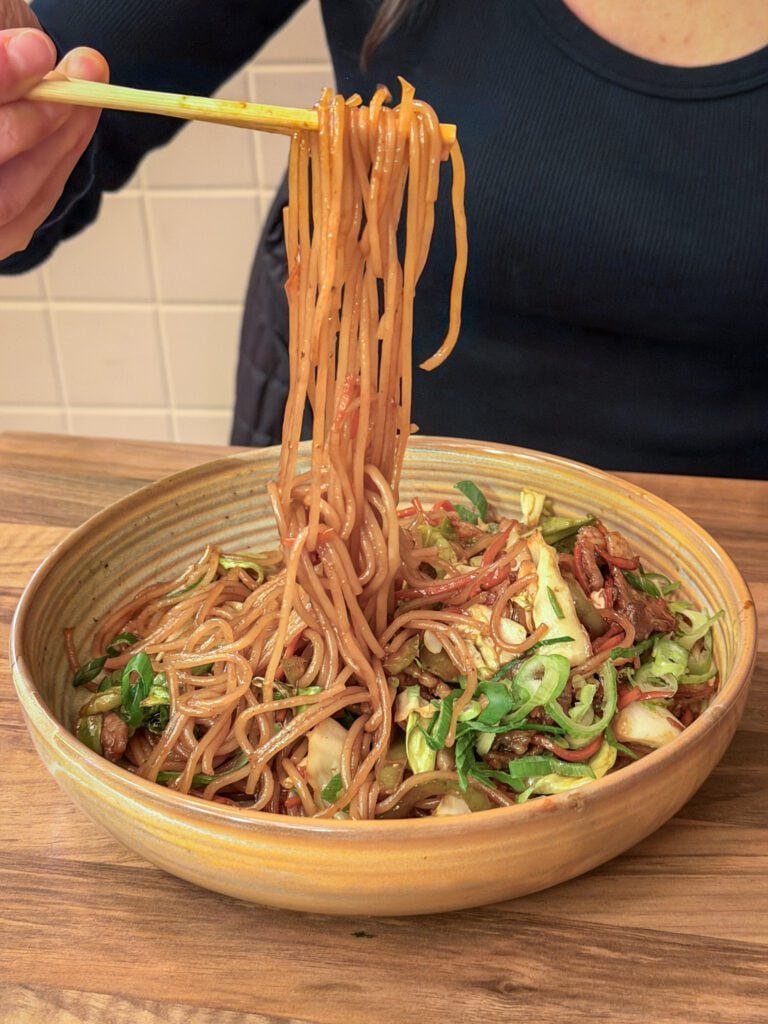
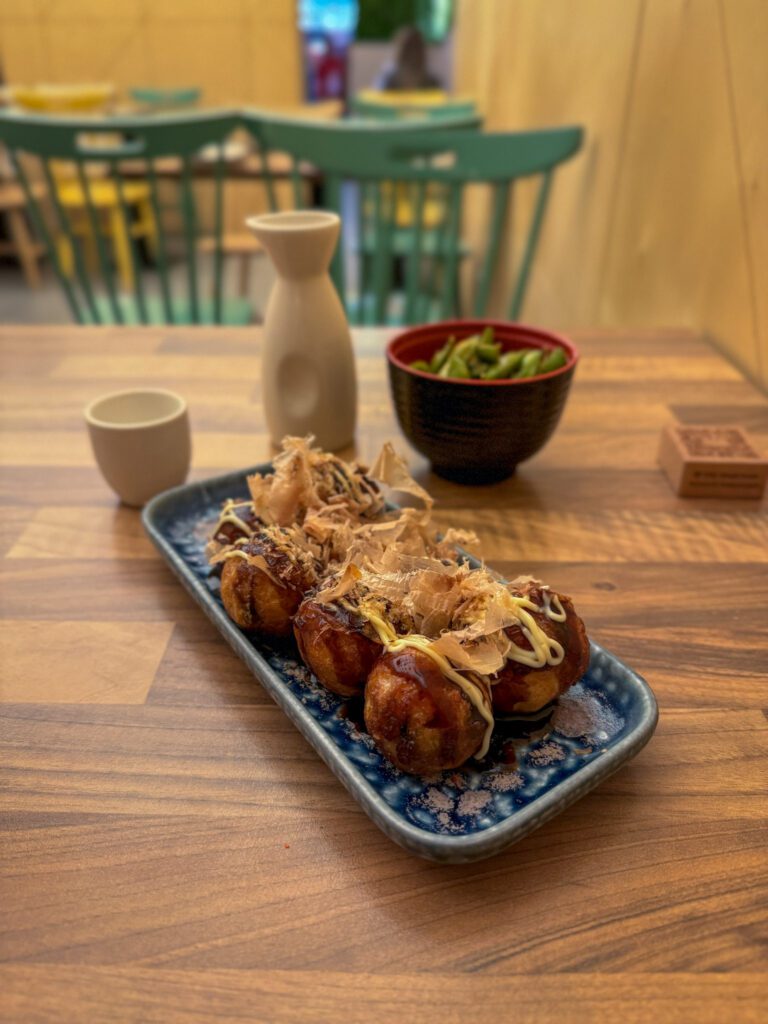
It’s difficult to find Japanese food (that isn’t sushi) made gluten free, and this place is amazing (the yakisoba is the thing to order).
We also really like both Pasta Balboa (here on Google Maps – 100% gluten free) for their affordable pastas, and Maíz Sabor (here on Google Maps – good gluten free options) for their empanadas and arepas (arepas are one of our favorite food groups).
As you can see, tons of different options here spanning all sorts of global cuisines.
What to Do with More Time in Madrid
If you happen to find yourself with more time in Madrid, here are a few suggestions for what to add to your itinerary (along with roughly how much time to allocate and what to do and see).
We would, of course (because we love Madrid), also recommend spending more time eating and drinking your way through Madrid, which is a great food city.
For even more ideas, head over to our guide to our favorite things to do in Madrid.
Take a Day Trip to Toledo (+1 Day)
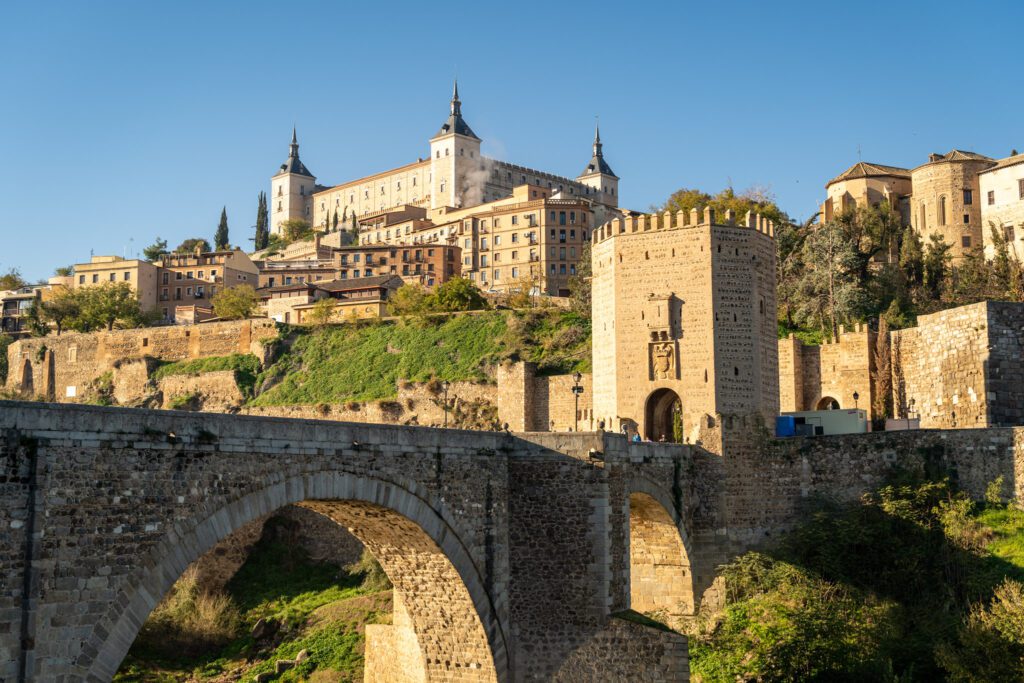
With an extra day in Madrid, we’d recommend following the itinerary above as written and spend your third day on a day trip to Toledo, which is an excellent place to visit for a unique insight into Spanish history.
Toledo served as the regional capital until it was moved to Madrid in the 16th Century, and is a good illustration of the three religions – Christianity, Judaism, Islam – living together in relative harmony.
That’s not to say there weren’t some bumpy times along the way, but compared to what we saw in, say, Andalucía in the 15th Century, it was downright peaceful.
It’s one of the few places in Spain where you can see a cathedral, a synagogue (two, really), and a mosque all in one compact area (normally the mosques have been turned into cathedrals).
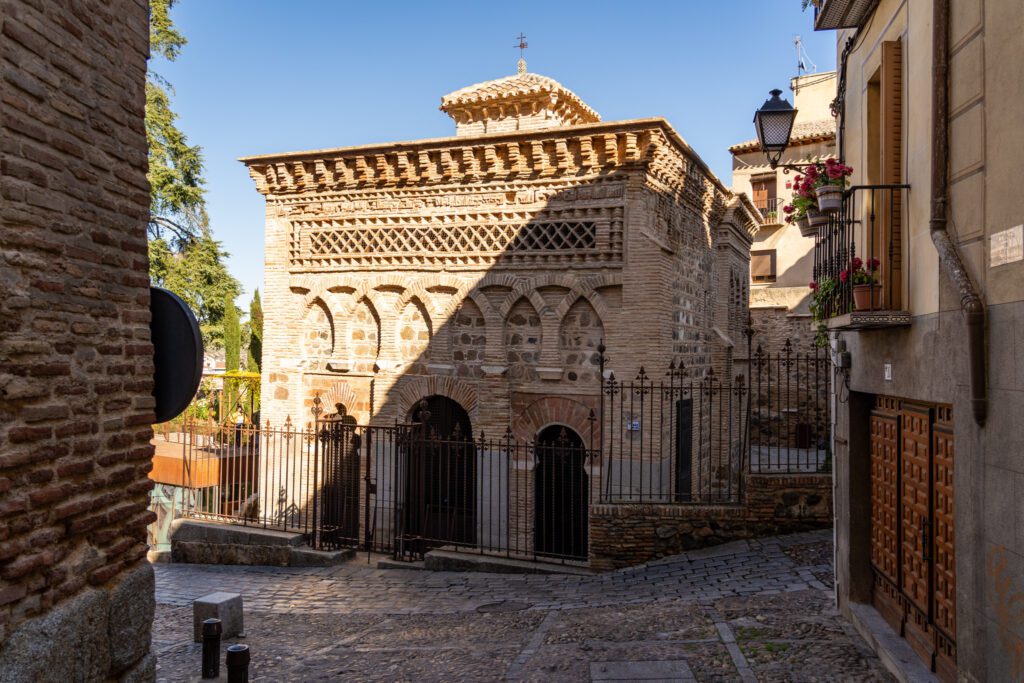
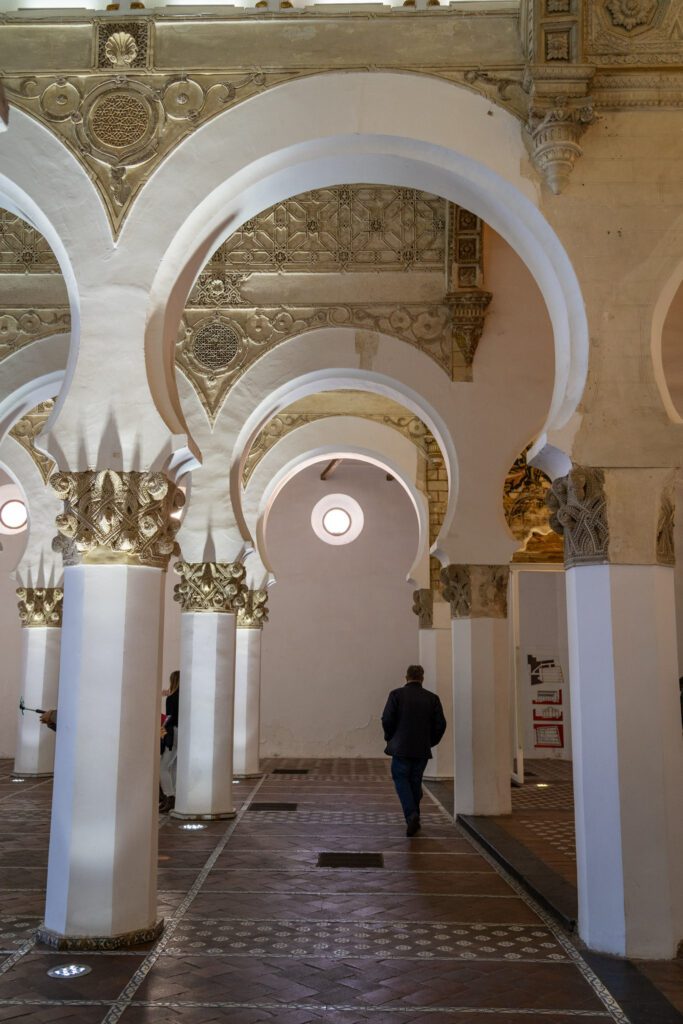
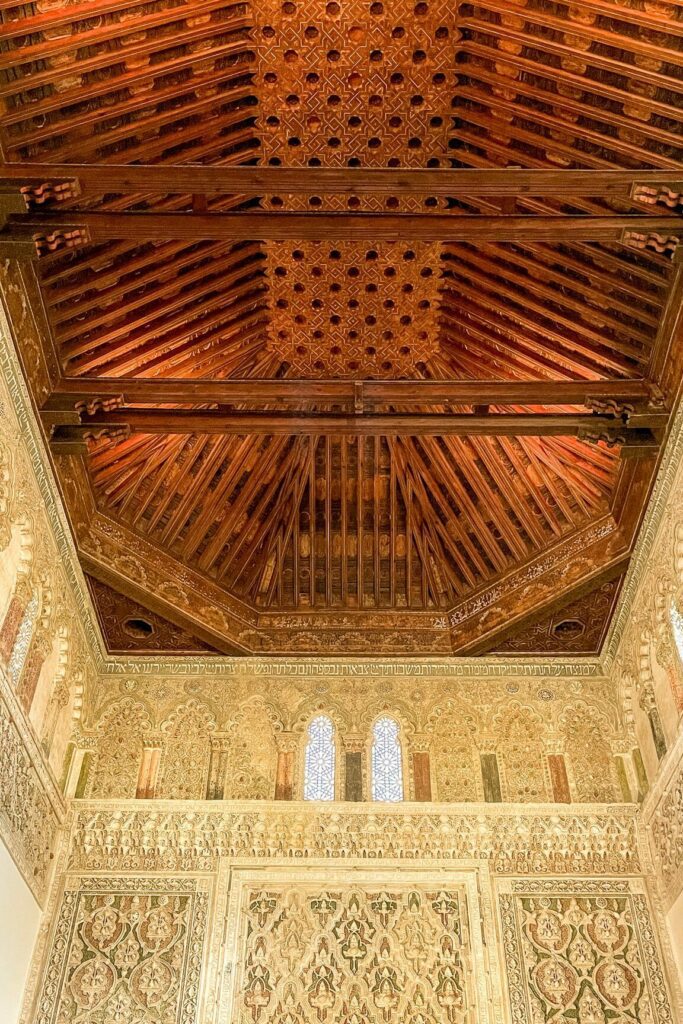
Plus, Toledo is a beautiful city, with the alcazar perched atop a hill overlooking the Tagus river (that’s the same river that passes through Lisbon, if you’re familiar) below.
Even the walk to the center from the train station is gorgeous. You cross a bridge with the center of Toledo across the river, towering above you.
Rather than cover it all here, we put together an entire guide to planning a day trip to Toledo, which you should go read for all the information on how to get there, what to do, and more.
Take a Food Tour (+½ Day)
We already sort of covered this, but one of the biggest decisions we made in this itinerary is the decision to exclude a guided food tour.
As we noted above in the DIY tapas tour section, the food culture of a place tells you SO MUCH about the history and geopolitics.
Now, diving into the food culture in places we’re visiting is one of our favorite aspects of traveling, and we try to include a food tour, cooking class, or market tour in most places we visit.
The food of a place tells you so much about the culture, history, and influences that have shaped it, and exploring a city through its food scene is a unique perspective that a lot of people don’t even consider.
Unfortunately, the reality is that because Matt has Celiac Disease and can’t have even a speck of gluten without being sick for days, a food tour or cooking class wasn’t in the cards for us in Madrid.
HOWEVER. That does NOT mean it shouldn’t be for you!
We’d highly recommend it because it gives you a local’s perspective on the city’s food scene – what and where to eat and drink – and you get to connect with fellow travelers and try some amazing food.
Our recommendation is Devour’s Tapas, Taverns, and History Tour, which is a three hour food and drink extravaganza that takes you to a bunch of different spots around the center of the city to try local specialties, including drinks.
We like Devour, who are in many ways the O.G. of this style of food tour in Spain, and their sister company (Walks) is our favorite tour company in Europe (we’ve done 8+ tours with them across Europe over the past few years).
We actually did a Devour tour up in San Sebastián on this latest trip to Spain and it was arguably the highlight of the entire trip to Spain.
The Reina Sofía (+½ Day)
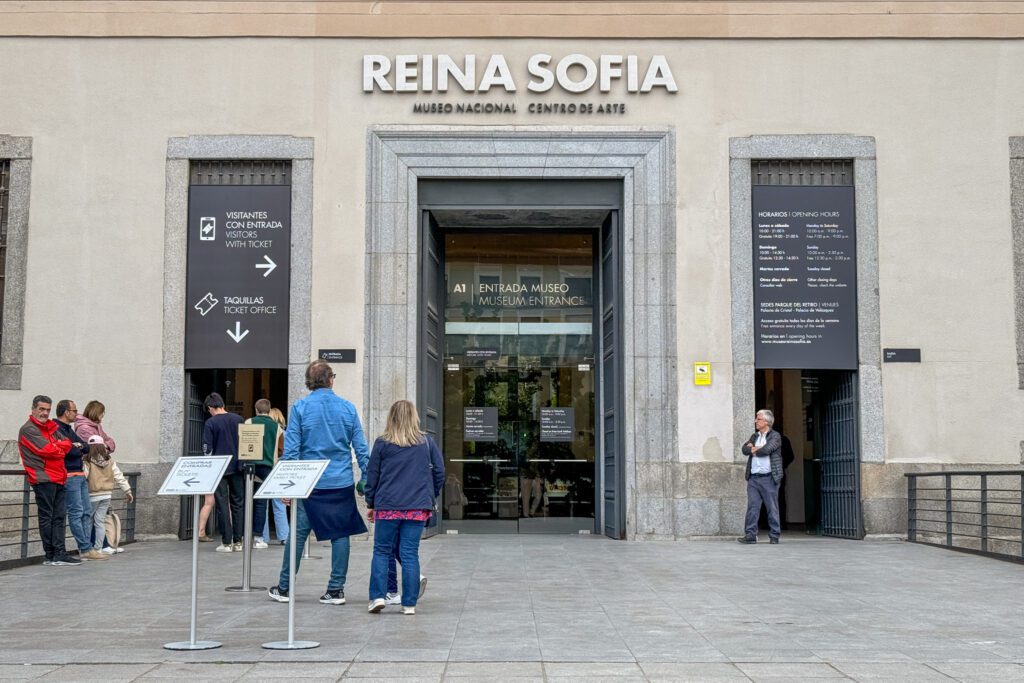
The other big museum to add to your list in Madrid (we think) is the Reina Sofía.
The Prado Museum covers art from before the 20th Century, and on our first visit I asked our guide why the museum doesn’t have any works from the famous modern artists like Salvador Dalí and Pablo Picasso.
Turns out, those are held over in the Reina Sofía just a short walk away, which is the city’s modern art museum.
I, Matt, did the Reina Sofía on my solo trip to Madrid a few years ago and walked away impressed with the collection.
Though, I should say, I did a guided tour (this one) because modern art is not my thing and I need someone to explain what the heck I’m looking at.
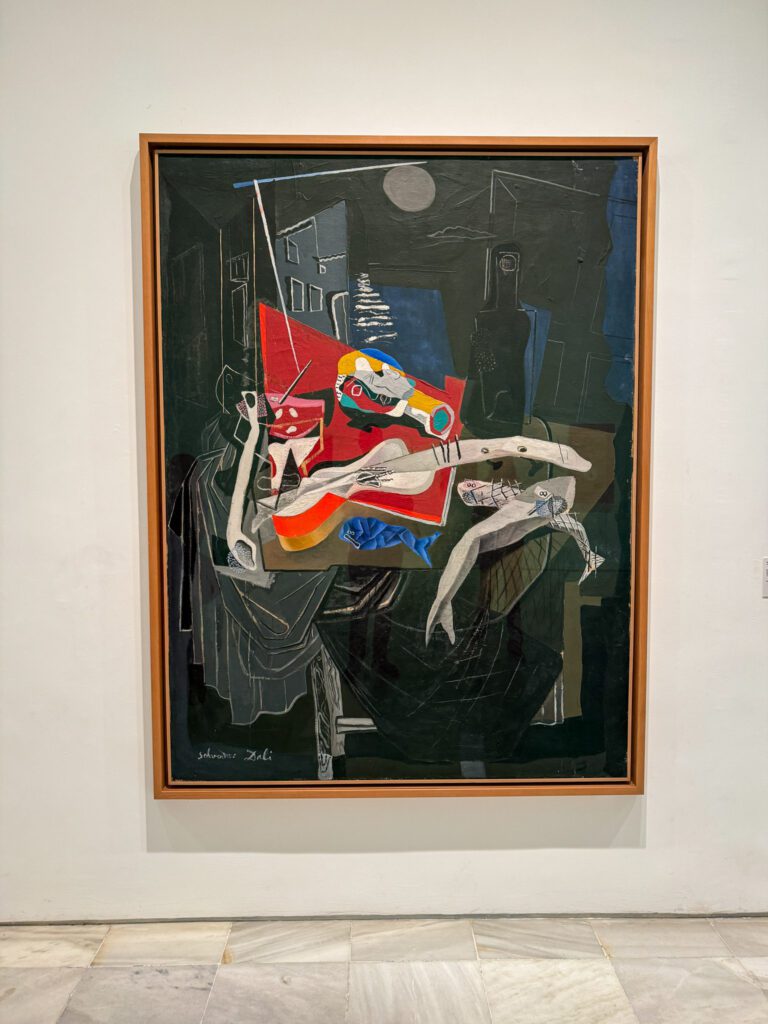
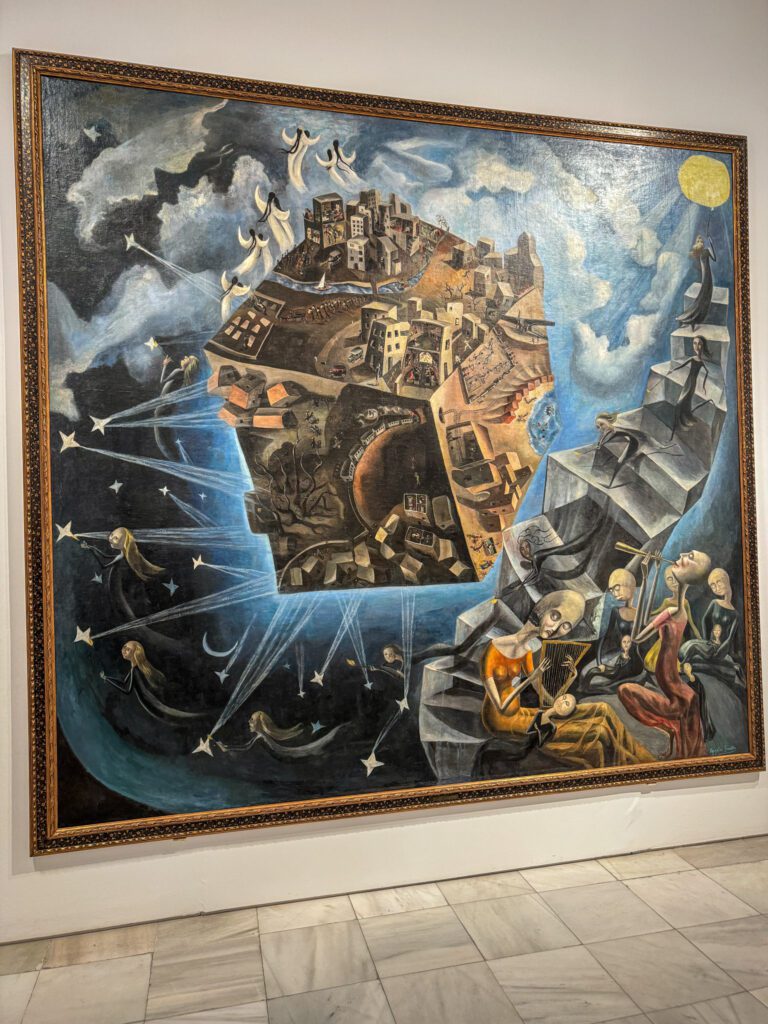
The biggest tip we have here is that the museum is actually free for the last two hours it’s open (usually 7pm-9pm, check the website to double check).
If you can plan your visit for that time, we’d do it. It’s going to be a bit more busy (and it’s a little odd to do a museum at night), but it’s free (you don’t need to book in advance).
Otherwise, if that timing won’t work for you, head over to the official website to book tickets in advance and skip the line at the ticket office (which can be long on weekends).
What to Do with Less Time in Madrid
If you find yourself with just one day in Madrid, we’d break your day up into three parts; the Prado Museum, seeing the historic center through a tapas tour, and an evening in La Latina.
You can use the sections from the main itinerary above to fill in the details for each of these things.
First, spend your morning on a tour of the Prado Museum.
Before your tour, go to Malasaña for coffee and breakfast (at the excellent HanSo Cafe or Ambu Café) and then walk through El Retiro briefly before meeting your guide at 11:00 am.
In the afternoon, make your way to Puerta del Sol and Plaza Mayor, following the section on a DIY tapas tour in the main itinerary above, and then head down to admire the Royal Palace from the outside, and go inside the Madrid Cathedral (it’s free!).
End your whirlwind day in Madrid with tapas in Barrio La Latina on Calle Cava Baja, which is known for its tapas bars.
Planning a trip to Spain? We’d love to help!
Here are our other Spain travel guides to help you plan an incredible trip (even if you have to eat gluten free!).
If there’s no link below, it means we’re still working on it – long, in-depth guides take time! We’re working on it, though, we promise.
The first place to start, if you haven’t already found them, is with our detailed itineraries. We have one shorter version for 7 days in Spain, one version that covers 10 days in Spain (a good middle ground, we think), and one longer version for two weeks in Spain (with ideas for more and less time in both guides).
Our Barcelona Guides
- What to do in Barcelona (as a First Timer)
- How to Plan an Amazing 4 Day Barcelona Itinerary
- Where to Stay in Barcelona: A Complete Guide for First Timers
- 12 Things to Know Before You Visit Barcelona
- Gluten Free Barcelona: A Complete Guide to GF Restaurants + Bakeries
- Where to Find the Best Specialty Coffee in Barcelona
- How to Plan an Incredible Day Trip to Montserrat (from Barcelona)
Our Madrid Guides
- What to do in Madrid (as a First Timer)
- How to Plan an Amazing Madrid Itinerary (2 Days)
- Where to Stay in Madrid: A Complete Guide for First Timers
- 12 Things to Know Before You Visit Madrid
- Gluten Free Madrid: A Complete Guide to GF Restaurants + Bakeries
- How to Plan an Amazing Day Trip to Toledo (from Madrid)
Our Sevilla Guides
- Our Favorite Things to Do in Seville (for First Timers)
- A Perfect 2 Day Seville Itinerary (for First Timers)
- Exactly Where to Stay in Seville (The Best Areas + Hotels)
- Gluten Free Seville: Our Favorite GF Restaurants & Bakeries
The Rest of Spain

Awesome blog. Very detailed. Thanks. I had a question:
1. If I plan to take the guided tour of Prado that you recommended, then does the guided tour cost include Prado entry or do I need to get those separately.
Thanks.
Hey Vish!
For this particular tour, you do need to book them separately (in other words, the entry tickets ARE NOT included). It was easy to do for us, but you do need to make sure you communicate with Jaime to make sure you get the right time. The sooner you can book the tour + tickets, the better (especially in summer). Hope that helps!
-Matt