
Exactly Where to Stay in Seville: A Complete Guide
We like Seville (we prefer to call it Sevilla, the Spanish name, because it sounds WAY better) and think that it’s probably the most emblematic of the reasons we love Spain.
Namely its complex history, and how that history has influenced the tastes and traditions of modern-day Spain.
Nearly everything we can think of that is stereotypically “Spanish” – Flamenco, paella, the language – has been shaped by the 700+ years of Muslim rule on the Iberian Peninsula that ended in the 15th Century.
At nearly the same moment, Spain was in the midst of planning the exploration of the New World (though they didn’t know it was the New World at that point), which would kick off the Spanish Golden Age of Exploration.
Where did both of those major events in Spanish history take place? Andalucía (and for the second one, specifically Seville).
Which is why we love Seville, and think you probably will too (unless it’s August, then it’s just too hot for us Pacific Northwest residents).
Seville is a relatively compact city, especially compared to other big cities in Spain like Madrid and Barcelona.
Walking from one end of the city center (the area that most tourists are going to spend their time) to the other only takes 20 minutes or so, which is good because the public transit in Seville is miles behind other Spanish cities.
In this guide, we’re going to use our experiences exploring the city to walk you through all the information you need to figure out where to stay in Seville for your particular style, budget, and preferences.
Rather than just give you a list of hotels, we like to focus on the different neighborhoods and what makes each of them special (and what they offer to visitors) so that you can find the right one for your style.
Each neighborhood offers a different blend of vibes, prices, and pros and cons, and we’ll cover it all below so that you’re armed with all the information you need to figure out where to stay.
Our intention is that, by the end of this guide, you have everything you need to choose the right place to stay for you and your travel companions.
Sound good to you? Let’s get into it.
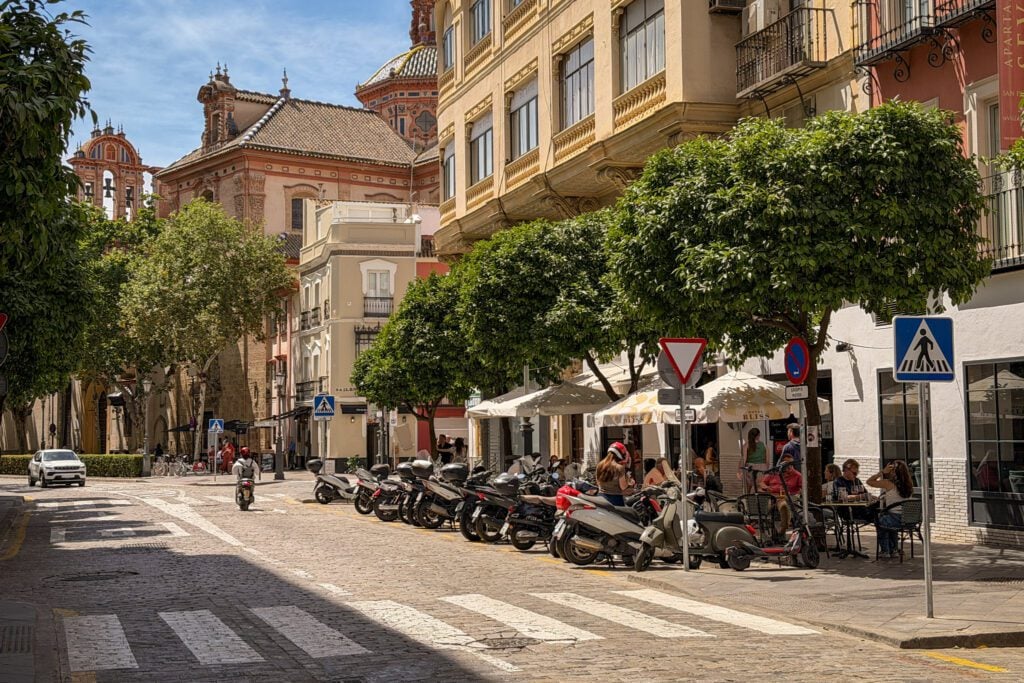
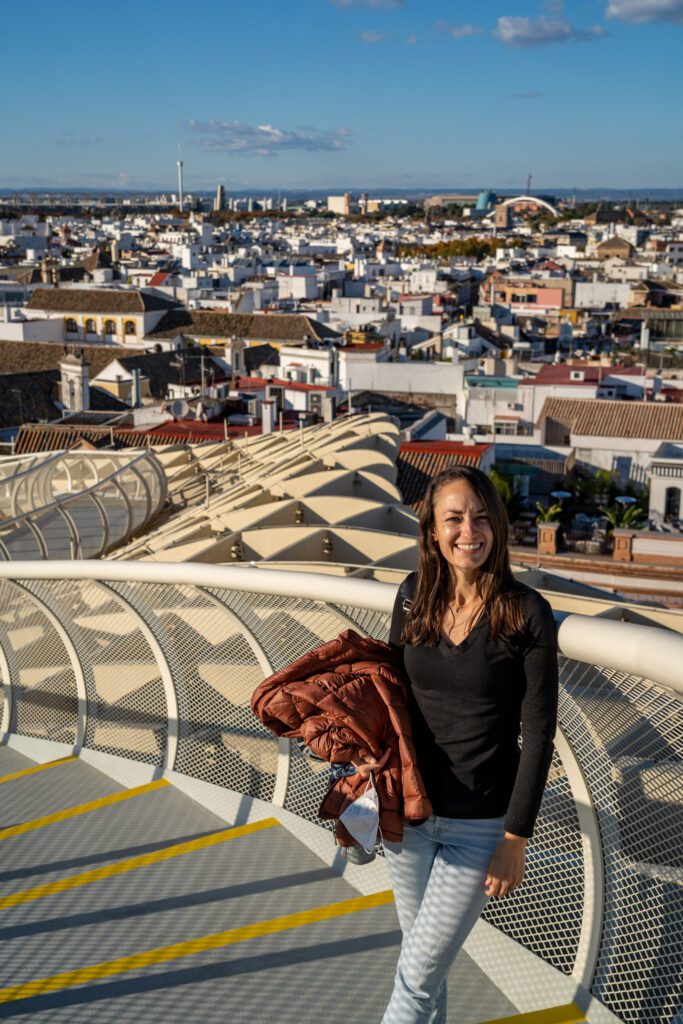
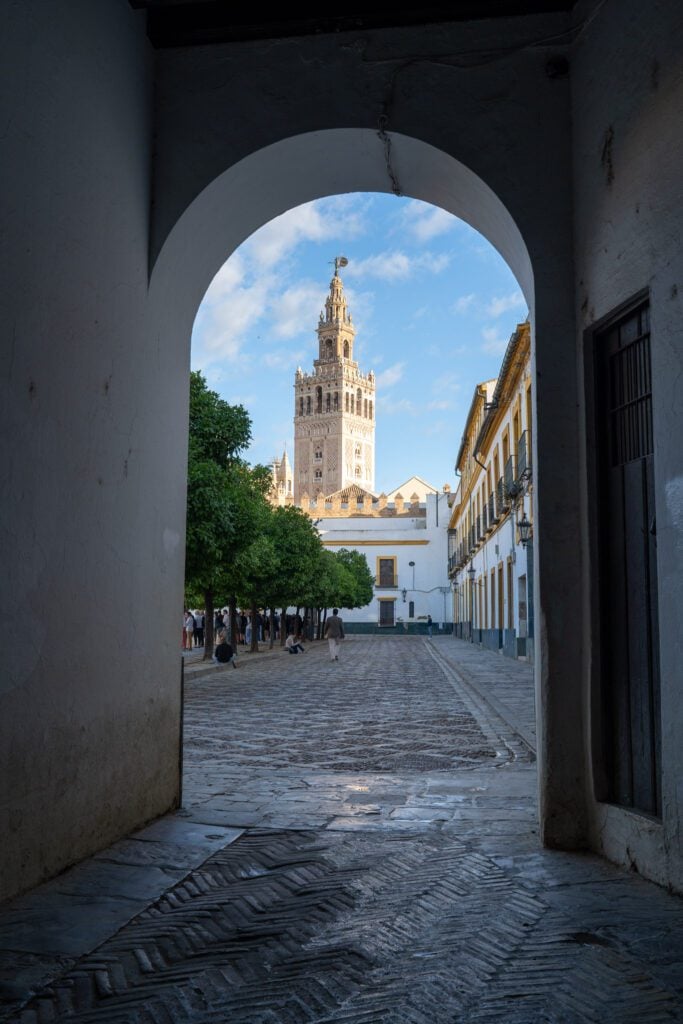
Disclaimer: Some of the links in this post, like hotel links, are affiliate links, meaning at no additional cost to you, we make a little bit of money if you click through and book. That being said, we would never recommend something to you that we don’t stand behind 100%.
Where to Stay in Seville: The 4 Best Areas
Our philosophy when it comes to deciding on a place to stay is to first choose the neighborhood, then move on to finding a great hotel, hostel, or apartment in that area.
For that reason, we’re going to go through four great neighborhoods in Seville, along with the pros and cons of using each as a home base, in the guide below.
We’ll start with the neighborhood – what makes it special, how convenient it is, etc etc – and then move on to specific places to stay in that area that stood out to us.
We’re well aware that a few of you are currently ready to throw your left shoe at the screen, saying “I don’t have time to read all of that, JUST TELL ME THE BEST PLACE TO STAY!”
Here’s a quick summary of this guide if you’re short on time (though we’d recommend reading the section of the place you end up staying for tips and places to add to your list!).
If it’s your first time in Seville, you can’t go wrong staying in the middle of all the action in the Casco Antiguo (Old Town).
While it’s full of tourists throughout the day, it’s walkable to everything you’re going to want to see, eat, and drink while you’re in Seville.
As hotels go, we like the look of the abba Hotel right next to the Setas (we stayed at an abba Hotel elsewhere in Spain and it was great) and the NH Plaza de Armas location on the river.
If you’re looking for an apartment with more space and a kitchen, we’ve stayed at nQn Apartments and Suites, which is a great, modern aparthotel inside a former convent in a very walkable location.
We’ve also stayed at the Casa de las Especias, another aparthotel in the center, which was good for the price and location (but not nearly as nice).
If you’re on a budget, you’ll want to look outside the Old Town, and we’d recommend looking across the river in Triana.
Triana is, historically, the more working class neighborhood that sat outside the city walls, and some of that remains today.
It’s one of the places where it feels like people actually live (which is not the case in the Casco Antiguo, we’d say).
There are a nice range of places to stay in Triana in terms of budget and style, from the relatively affordable Triana House B&B (not to be confused with the boutique hotel next door with a similar name) to a big Eurostars location at the mid-range, to the semi-luxurious Monte Triana at the top end (which looks fantastic, we might add).
There are two other areas in the old walled city that we like that offer a slightly different vibe.
First is the narrow alleys and shaded courtyards of Barrio Santa Cruz, the former Jewish quarter, which is adjacent to the Alcázar and Cathedral.
Stay at the Petit Palace Santa Cruz, which is a good value given the great location.
Second is the more hip, bohemian neighborhood around the Alameda de Hércules, a big oval-shaped plaza that is home to a bunch of our favorite bars, restaurants, and coffee shops in Seville.
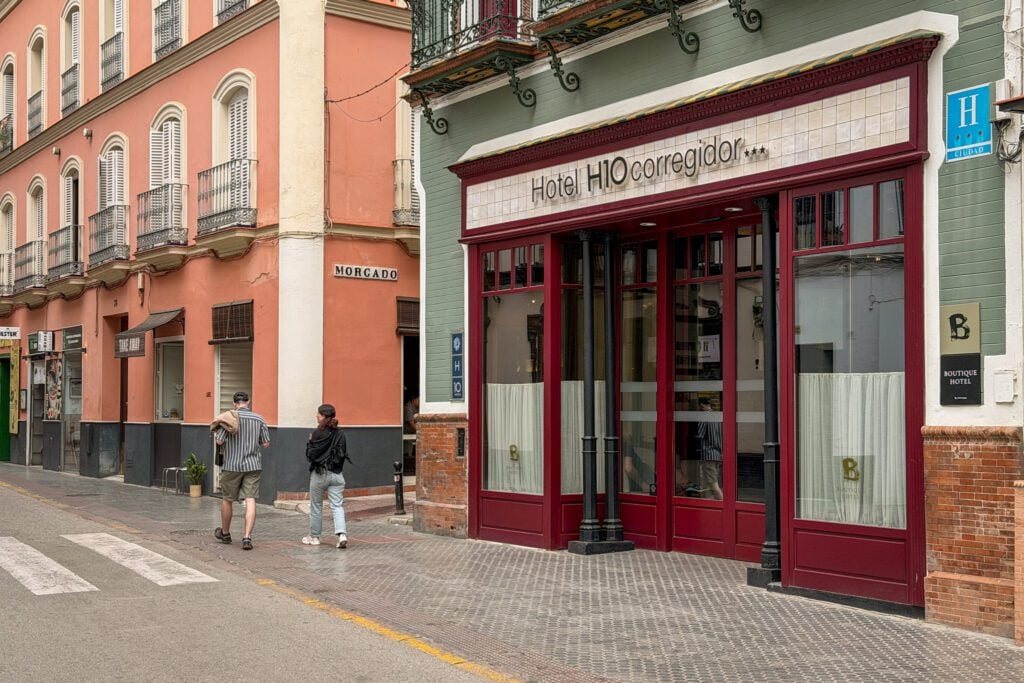
Stay at the H10 Corregidor, a newly renovated boutique hotel one block south of the Alameda, or the Corner House, an affordable guesthouse right on the plaza.
We put together an interactive map so that you can visualize the areas we’re talking about and how they fit into the city’s geography.
In the neighborhood descriptions below, we’ll talk about the layout and orientation of the neighborhoods, and hopefully this map will help you understand what we’re talking about.
If you want to see a full screen version, just hit the icon in the top right of the map to expand it.
Casco Antiguo: The Historic Center (As Central As it Gets)
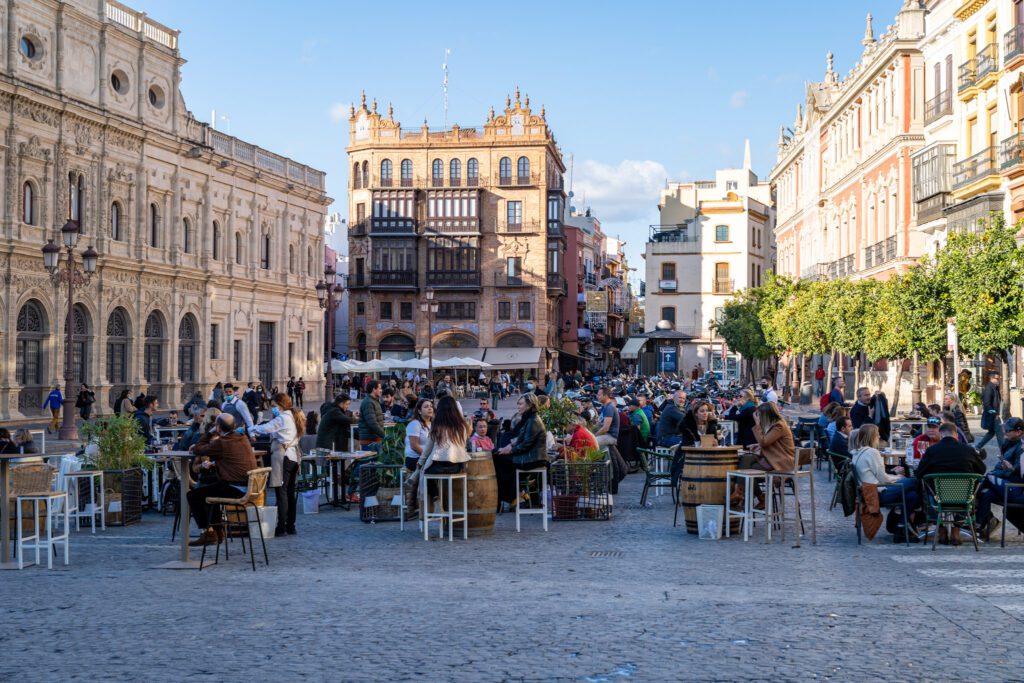
The Casco Antiguo is Seville’s Old Town, and it occupies a wide swath of land on the eastern bank of the Guadalquivir, the river that runs straight through the center of Seville and is largely responsible for its prominence during the Spanish Golden Age of Exploration.
At its peak, this entire area was surrounded by city walls, which have been largely demolished with the modernization of the city over the past several centuries.
You can still see a standing city gate at the northern edge of the Casco Antiguo at the Puerta de la Macarena (here on Google Maps).
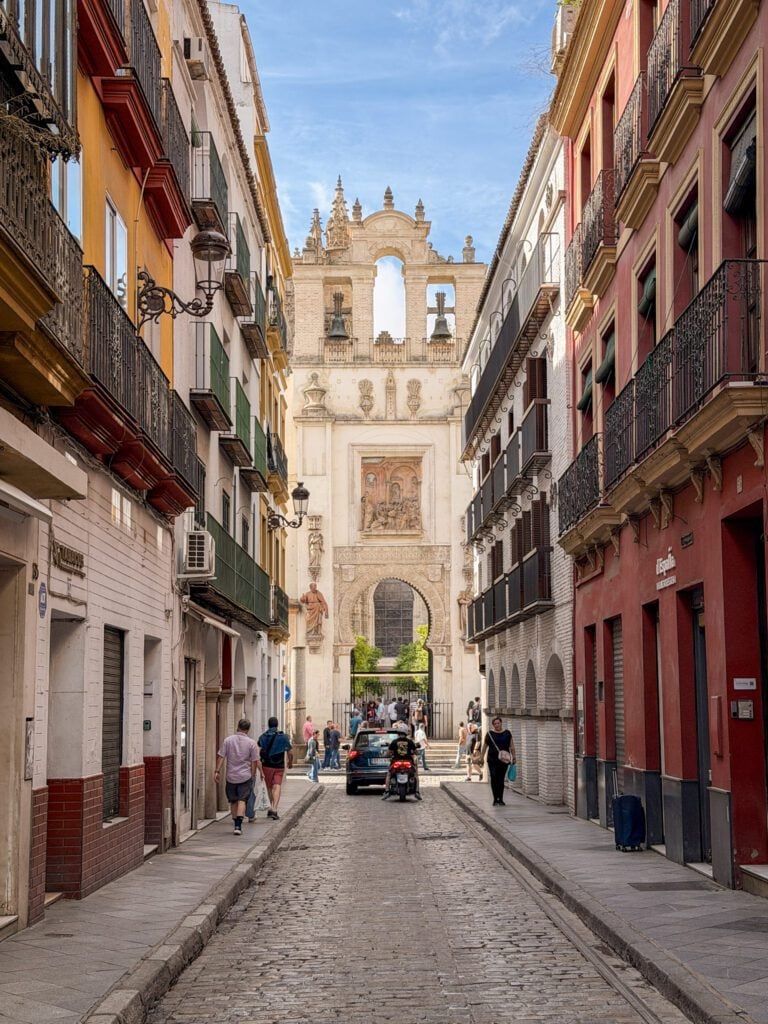
As you might imagine, staying in the Casco Antiguo is going to put you right in the middle of all the action, with the Real Alcázar de Seville and the Catedral de Seville right on your doorstep (or more accurately, somewhere between 5 and 15 minutes away on foot).
Now, technically speaking, the Casco Antiguo is made up of 12 smaller districts that span from the Alcazar up to Macarena (yes, it’s related to the song), including Barrio Santa Cruz, which we’ll cover separately for reasons we’ll explain shortly.
For the purposes of this guide, we’re going to focus on the three at the southwest corner – Museo, Arenal,and Alfalfa – because they share a similar look and feel and offer a similar location and experience for visitors.
For what it’s worth, we’ve personally stayed in this area on both of our recent trips to Seville, and we would absolutely do it again because we value being able to walk everywhere.
The whole thing here is the location. Staying here means that you’re walkable to the river (and Triana across the river), the main attractions, and all the great places to eat and drink in the center of Seville.
The tradeoff, as you might imagine, is that it’s packed full of tourists from dawn until (well after) dusk, and it can be a little more expensive than other parts of the city.
If peace and quiet and a “local feel” is what you’re looking for, this probably isn’t it (and we’d look across the river to Triana for that).
However, if being able to walk almost literally everywhere over the course of your trip to Seville is what you’re looking for, this is the neighborhood for you.
Pros and Cons of Staying in the Casco Antiguo
Here’s our take on the pros and cons of staying in the Casco Antiguo based on our two recent trips when we stayed here.
Pros of Staying in the Casco Antiguo
It’s central AF. Go figure, the historic center is central. If walkability is what you want, this is as walkable as it gets, including to places like Triana and Plaza de España.
Lots of choices in terms of hotels. This is sort of a pro and a con simultaneously. There are tons of hotels and aparthotels…because the center of Seville has been hollowed out in recent decades to cater to tourists. Still, a good selection here.
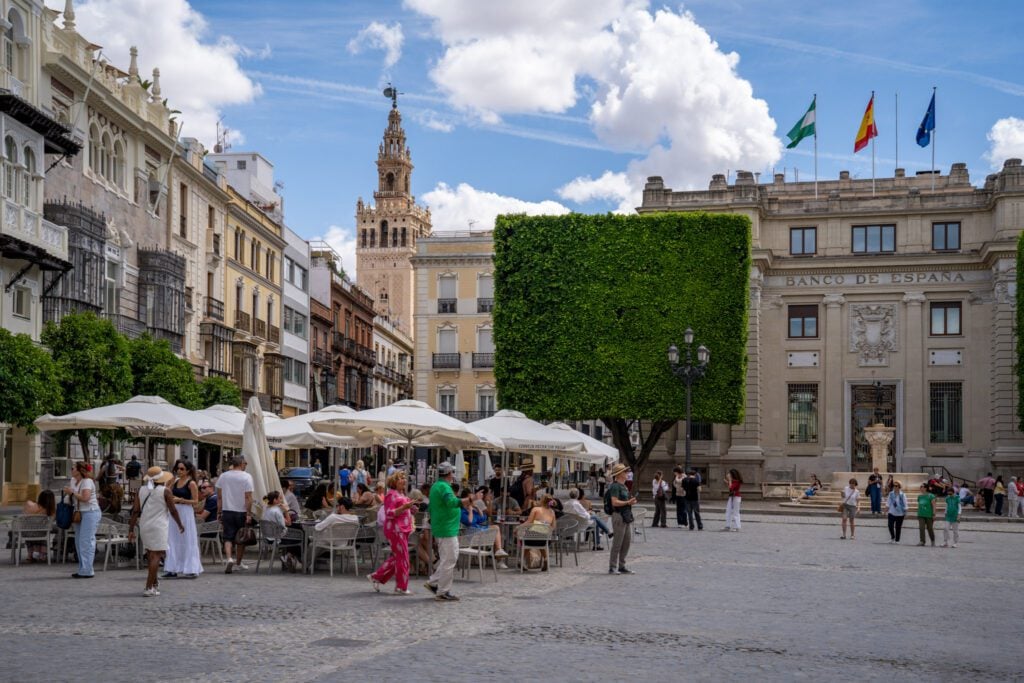
Good vibes and bustling plazas with terraces full of people. There’s something really nice about heading out and coming across a plaza full of tables all occupied by people enjoying their drinks and coffees in the sun.
It’s a great atmosphere, and there are several plazas like this throughout the Casco Antiguo (Plaza de San Francisco and Plaza del Salvador are two of our favorites).
Cons of Staying in the Casco Antiguo
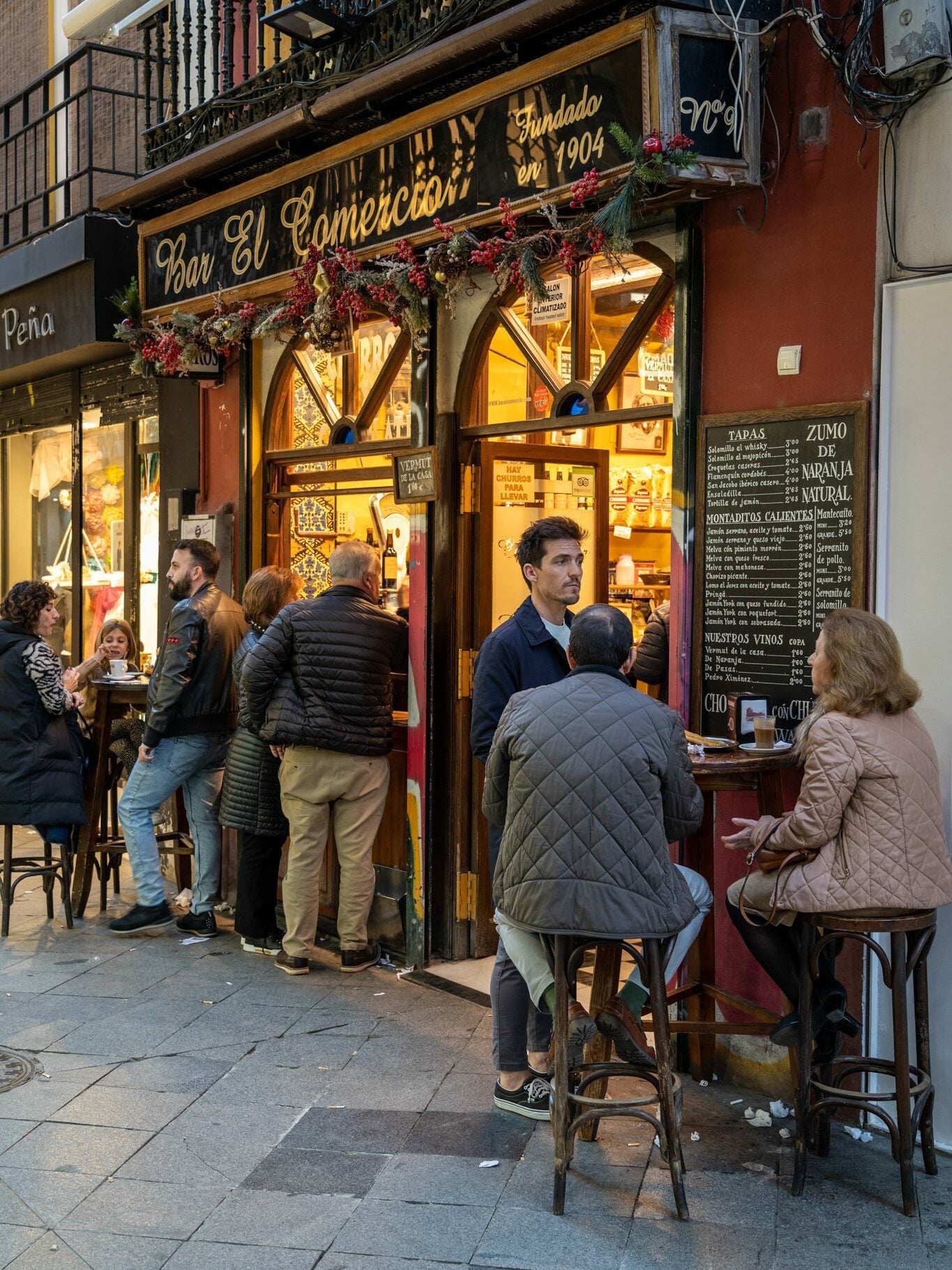
Tourists everywhere. It’s truly a nonstop flood of tourists from 10am to 10pm. Not necessarily a bad thing given all the positives, just something to know. Probably not the place to stay if you want to “feel like a local.”
It can be loud at all hours of the day. With that presence of tourists comes a low hum of activity at all times. Plus, garbage trucks in the early morning (ask us how we know).
The location means it’s relatively pricey. You’re going to pay a bit more for a room here just due to the nature of the location. Is the tradeoff between convenience and price worth it? Only you can answer that question (but given our choice to stay here twice, we’d say yes).
The Best Places to Stay in the Casco Antiguo
Here are a few places to stay in the Casco Antiguo that stood out to us in our search for a place to stay.
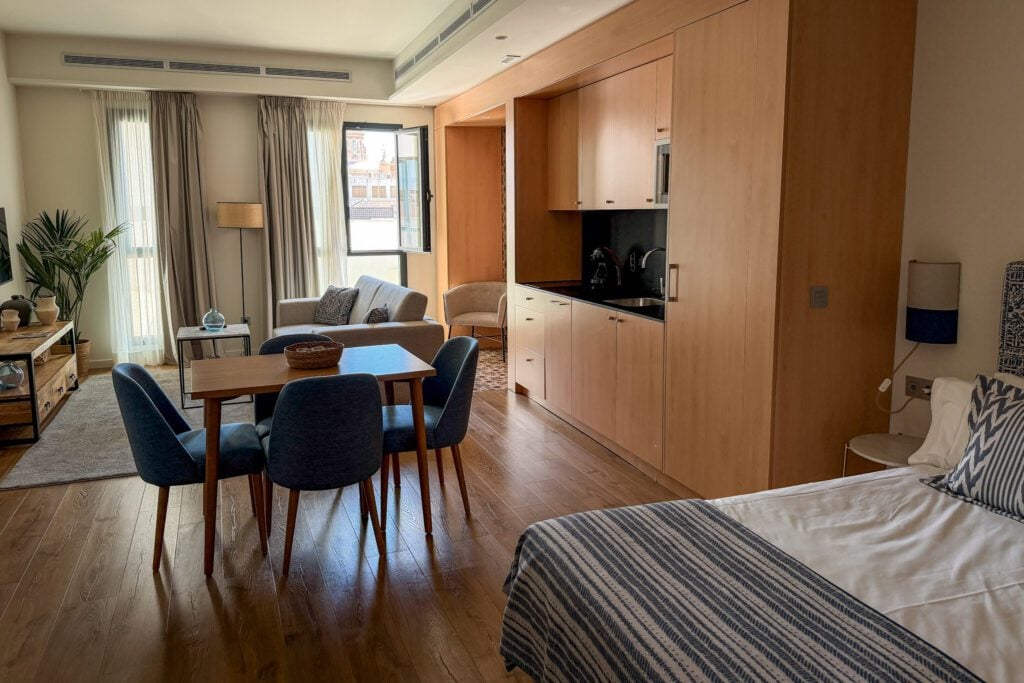
nQn Aparts & Suites (Aparthotel): We stayed here, and we really liked it. It’s an aparthotel, so it’s set up like a hotel (with a front desk), but the rooms are all apartments with full kitchens.
Nice amenities, like a rooftop pool and access to laundry, too. Highly recommend.
Abba Sevilla (Mid-Range): Located on the south side of the plaza with the Setas, this is a great location in terms of walkability.
Nice, modern hotel with big rooms (some have Giralda views), free coffee in the morning, and a rooftop terrace. For what it’s worth, we stayed at an abba hotel in Bilbao and it was great.
NH Sevilla Plaza de Armas (Mid-Range): Over on the side of the neighborhood towards the river, this is a big hotel chain in Europe, and the rooms and amenities are pretty middle of the road.
Comfortable and modern, but nothing too fancy. Nice, newly remodeled rooms and good views (including from the rooftop terrace + pool).
Numa Solea (Aparthotel): A modern aparthotel where everything is done online and there’s limited onsite staff (which might not be for everyone).
We’ve stayed at Numa properties, and they’re nice if you want an apartment with more space and a kitchen.
Great location here, just 5-10 minutes from the main attractions. We almost stayed here, but ultimately chose nQn.
Barrio Santa Cruz: Ultra Charming and Walkable
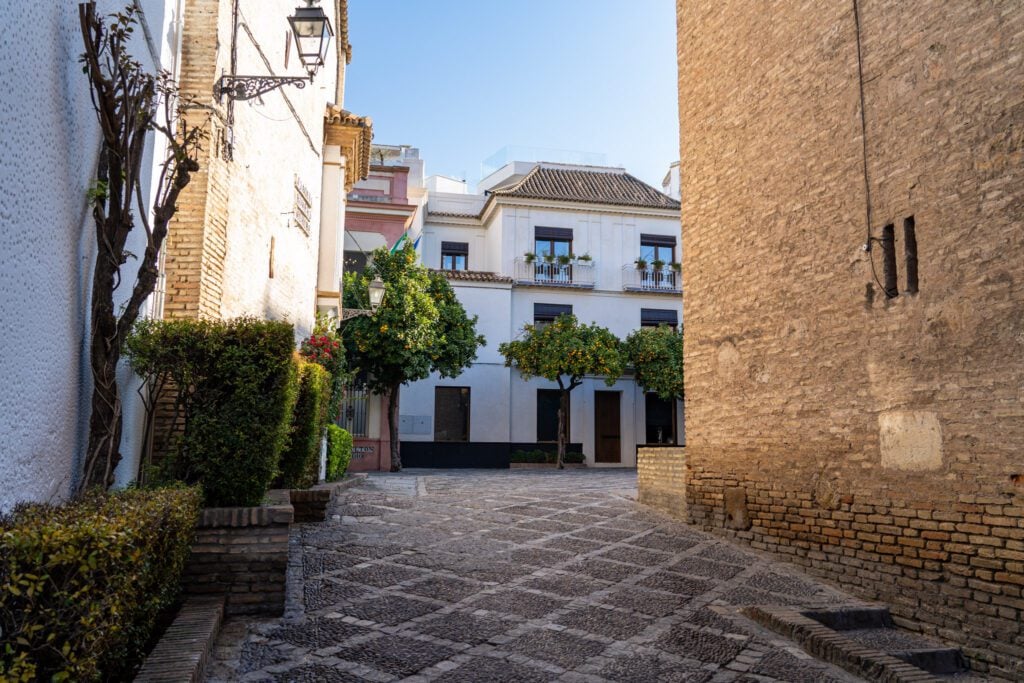
Barrio Santa Cruz is the former Jewish Quarter of the Old Town that was created after King Fernando III conquered Seville in the 13th Century.
It shares a wall with the gardens of the Alcázar, sitting southeast of the main square with the three UNESCO World Heritage sites in town (Alcázar, Cathedral, Archivo General de Indias).
This is where the relatively large Jewish population of Seville was allowed to settle, though the situation deteriorated relatively quickly, ending with the expulsion or forced conversion of the Jewish population in 1492.
It was originally surrounded by a dedicated set of walls with a series of gates (to keep people in, or to keep people out – a little of both?).
Why are we separating this part of the city from the rest of the Casco Antiguo? Because this area has a distinctly different feel from the rest of Seville’s Old Town.
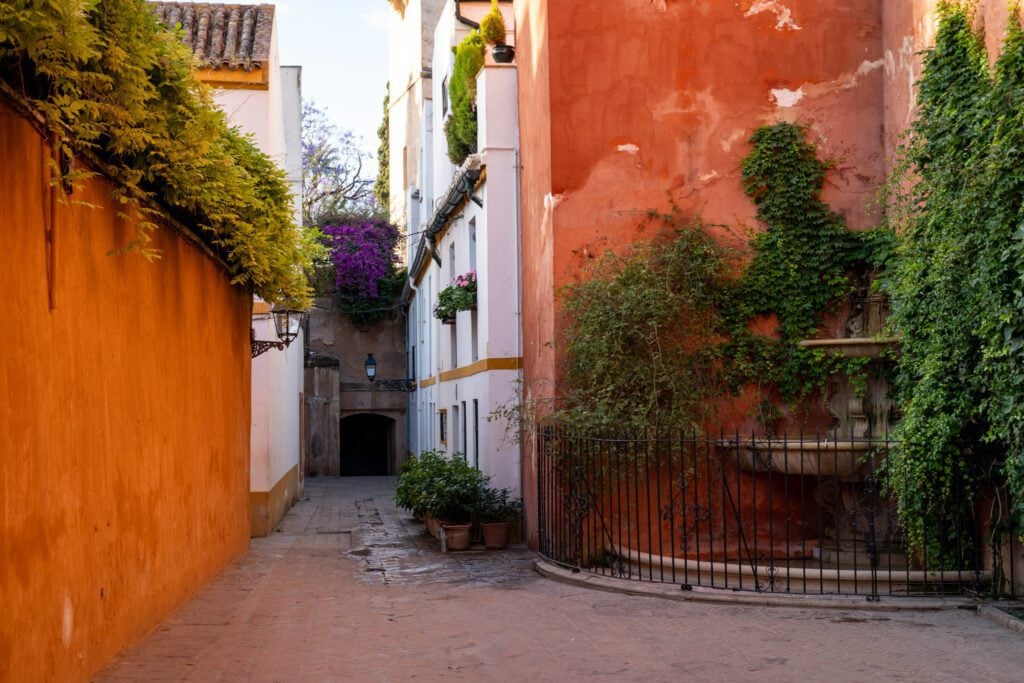
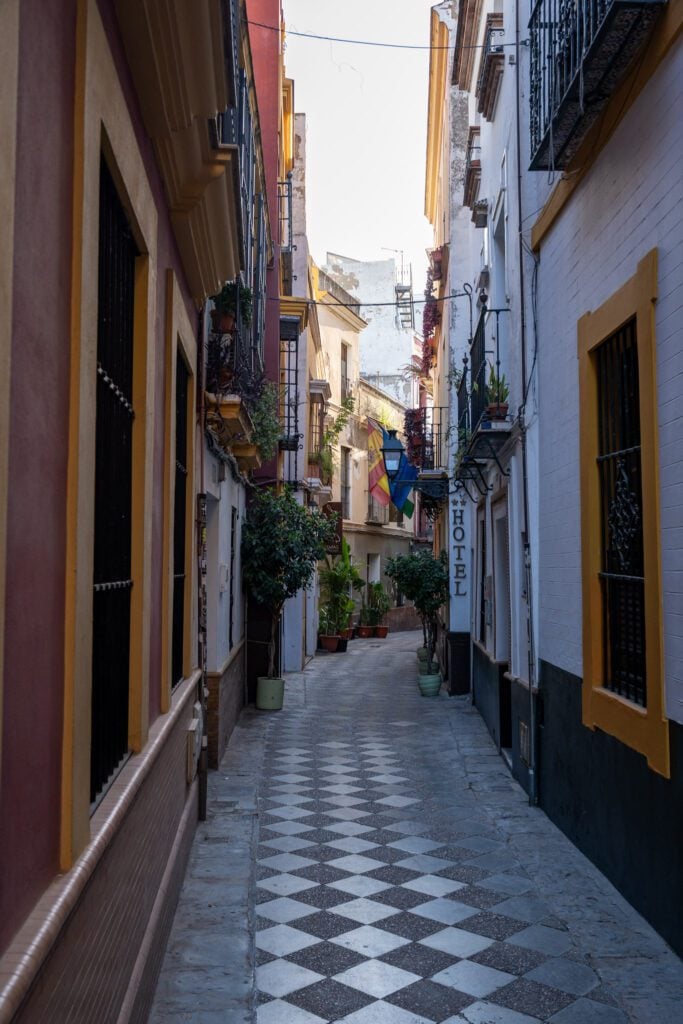
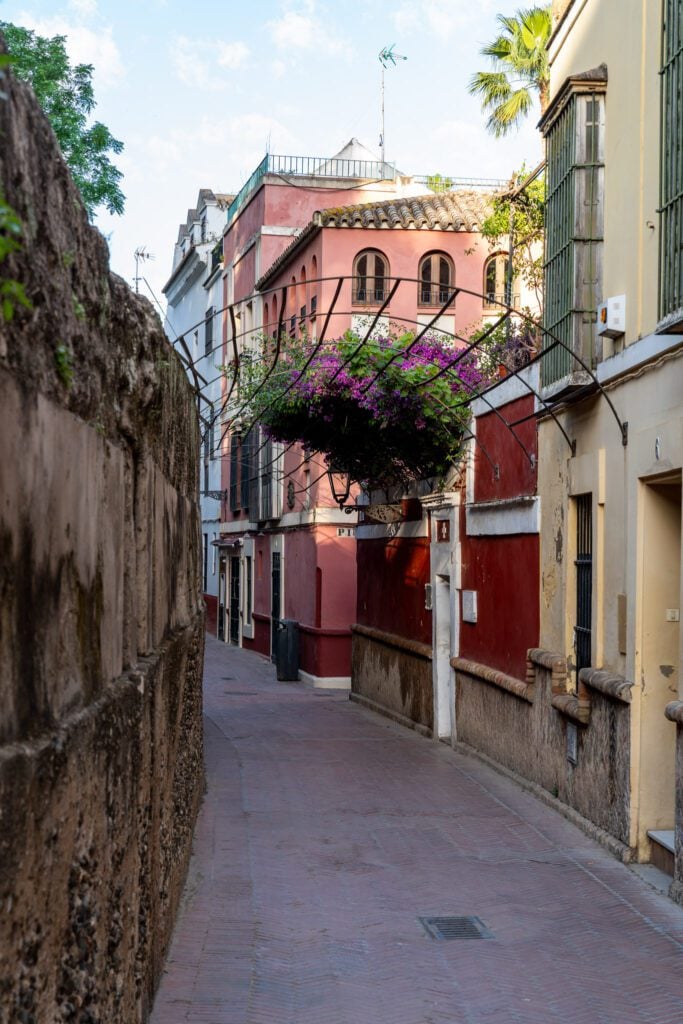
As you enter Barrio Santa Cruz, passing through the proverbial (now non-existent gates), you’ll trade the big open streets lined with modern shops and wide open plazas for narrow alleyways barely wide enough for two people to walk through shoulder to shoulder.
It’s perfect for those blistering summer days in Seville because you get very little direct sunlight in those alleys, and your room is going to stay relatively cool because of that.
However, as you navigate those alleys, every once in a while you’ll round a corner and emerge onto a beautiful little patio set between buildings, like Plaza Doña Elvira or the Plaza de la Alianza (here on Google Maps).
In the middle of the day, it’s not exactly calm and quiet (which isn’t surprising given its proximity to the city’s main sights), but in the early morning and late evenings, it’s one of the few places in Central Seville where you’ll find a slice of tranquility.
Putting aside the somewhat depressing history, the neighborhood today is charming and central, and is an excellent home base for exploring the rest of the city.
Pros and Cons of Staying in Barrio Santa Cruz
Here are the pros and cons of using Barrio Santa Cruz as your home base in Seville as we see them.
Pros of Staying in Barrio Santa Cruz
Charming narrow alleyways (that stay cool!). You might not think this is a benefit, sitting in your house that is almost certainly in a place significantly cooler than Seville, but it is.
Especially if it means your hotel room also stays relatively cool because it’s in a building that’s on one of those alleys.
Walkable to everything. Just about everything in Seville is going to be somewhere between 5 and 15 minutes away, walking.
Easy journey to and from the train station. Seville’s main train station – Santa Justa – is a hop, skip, and a jump northeast of Santa Cruz.
Cons of Staying in Barrio Santa Cruz
Expensive. The fact that there are relatively few hotel and guesthouse options in this excellent location means that the ones that do exist are expensive.
Busy during the day. Like we said above, it’s not necessarily quiet and tranquil during the day, when it’s full of tourists wandering the narrow passageways. Which isn’t surprising given the proximity to the biggest attractions in Seville.
Not super accessible for cars. Because of the nature of the narrow streets, there are many places where cars can’t go in Santa Cruz.
If you’re reliant on taxis and rideshares for getting around (or if you’re driving), you may have to walk a little extra to catch them.
The Best Places to Stay in Barrio Santa Cruz
Here are a few places in Santa Cruz that stood out to us.
Hotel Fernando III (Luxury): Located right in the heart of Santa Cruz, this is definitely on the expensive end of the spectrum, but you’ll love the rooftop terrace and pool with views out over Seville. Nice rooms, including some apartments with kitchens.
Hotel Rey Alfonso X (Luxury): On the eastern end of the neighborhood (so a little bit removed from the crowds who tend to stay closer to the main attractions), this is the sister hotel of Hotel Fernando III. Nice, modern rooms and, of course, a rooftop pool.
Petit Palace Santa Cruz (Mid-Range): At the northern end of the neighborhood (close to Alfalfa, one of our favorite parts of central Seville), this place is a nice balance of location and comfort, though you’ll forgo the more upscale amenities (for example, no rooftop terrace and pool here).
Planning a trip to Seville? We’d love to help!
Here are our other Seville guides that you might find useful as you get into planning your trip.
The Best Things to Do in Seville / 2 Day Seville Itinerary / Gluten Free Seville / Seville to Córdoba Day Trip
Triana: The Other Side of the River + More Affordable
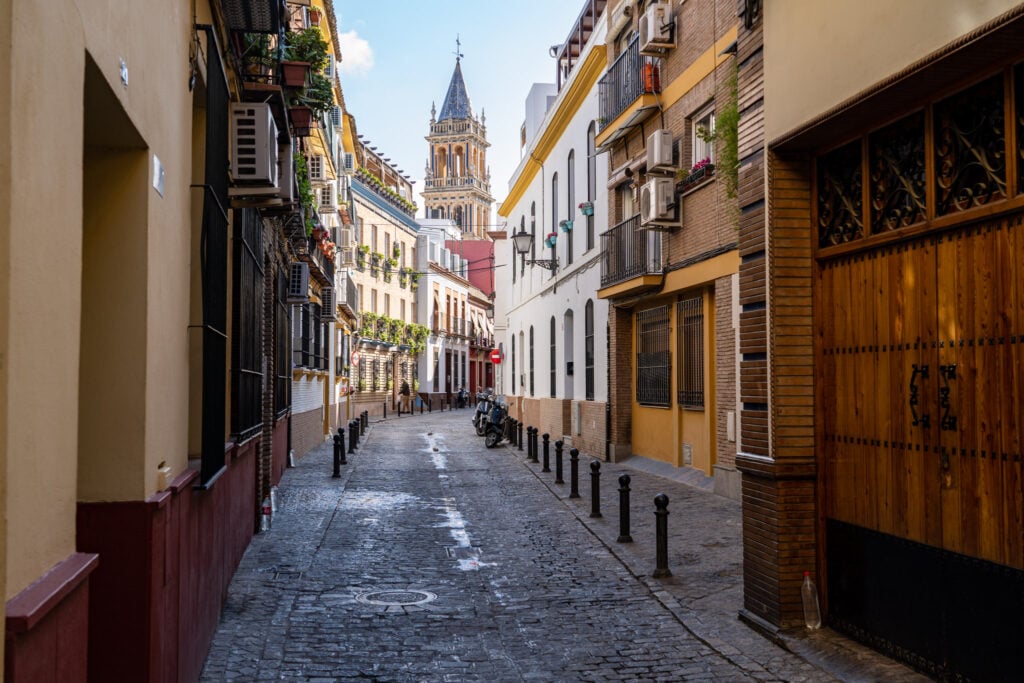
If you’re looking to stay in a part of Seville where locals actually live, the somewhat sad truth is that you’re going to have to leave the Casco Antiguo behind.
Outside of the original city’s footprint, you’ll find a ring of neighborhoods where the architecture gets less ornamental (for lack of a better word), the housing gets more dense, and the likelihood of only hearing Spanish spoken increases.
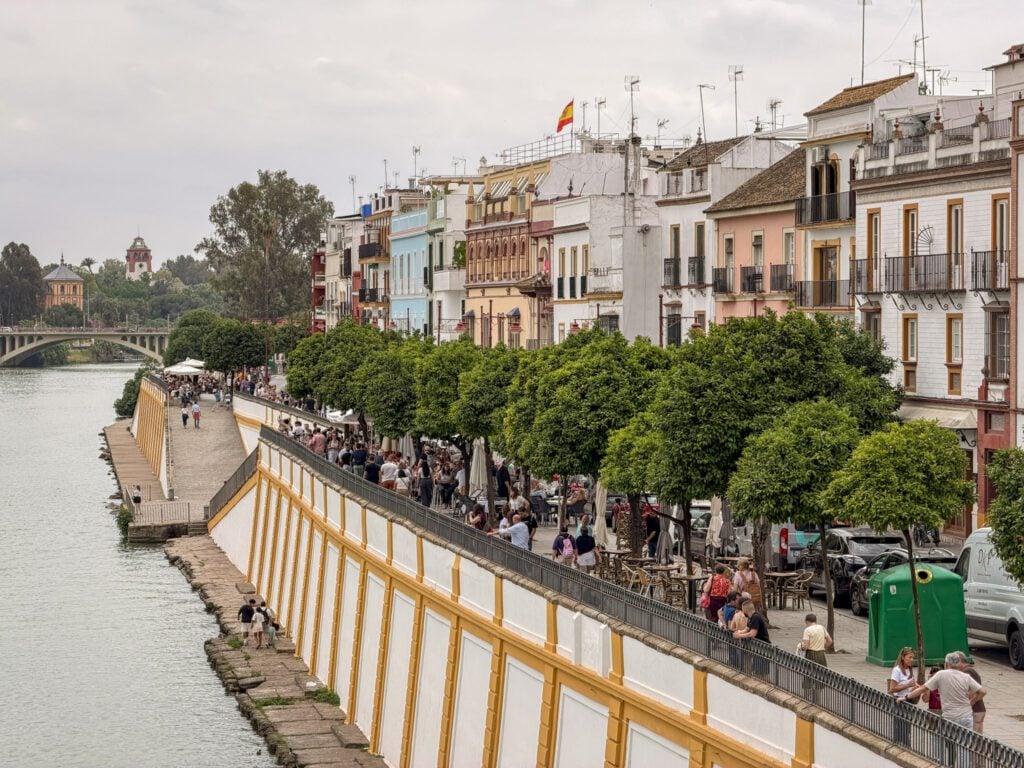
Of those neighborhoods bordering the city center, we’d argue that Triana, the neighborhood that sits across the river on the western bank of the Guadalquivir River, is the best option as a tourist.
While the Casco Antiguo is the center of political and religious power in Seville (and has been for nearly 1,000 years), Triana is where everyday working people actually live.
Up until relatively recently, Triana had a bit of a bad reputation driven by the fact that it was the neighborhood outside the city walls – on “the other side of the tracks”, if you will – and was where the Romani population settled.
There’s a painting in the Museo de Bellas Artes de Sevilla of Triana in the 19th Century, and the waterfront promenade is depicted as something closer to a slum than the vibrant, modern neighborhood you see today.
Even today, though the city has undoubtedly changed drastically, you still see signs of that working class heritage with the presence of the ceramics industry still evident (head to the Ceramics Museum and the area nearby with all the ceramics shops if you’re interested), along with the thriving flamenco scene in Triana.
When we’re talking about Triana, we’re referring to the neighborhood on the western bank of the river, between the Puente del Cristo de la Expiración (here on Google Maps) and the Puente de los Remedios (here on Google Maps).
Generally speaking, the closer to the river you are, the closer to the vibe of the Casco Antiguo.
We wouldn’t eat on the riverfront promenade because, like the other side, you’re going to be paying a lot for a meal that probably isn’t the best quality you can find in Seville.
The exception to that rule, though, is the Mercado de Triana, the neighborhood’s food market, which is worth visiting for lunch over the course of your Seville itinerary.
Pros and Cons of Staying in Triana
Here are the pros and cons of staying in Triana.
Pros of Staying in Triana
Great food and drinks. There are tons of great bars and restaurants in Triana that are actually frequented by locals. Again, the closer you are to the river, the more similar it is to the Casco Antiguo in terms of prices and authenticity.
Feels like a real neighborhood (not Disneyland). This is not to say that there are zero tourists in Triana, but the volume certainly decreases the deeper you go into Triana.
The area around Mercado de Triana is full of tourists, but that doesn’t mean you shouldn’t go there for lunch.
Relatively affordable. Compared to Santa Cruz and the Casco Antiguo, the price you’re going to pay here for a similar room is going to be lower.
Especially as you go further west into the neighborhood (which also means further away from the parts of the city you’ll spend the most time in).
Cons of Staying in Triana
It’s a bit further from the action. Staying here means you’re not in the middle of all the action. It’s still walkable to most parts of the city, but the walk is a little bit longer.
It’s more of a trek to the train station. The train station is on the opposite side of the city, which means a slightly longer journey (likely a taxi ride) to get there, if you’re taking the train to other destinations on your Spain itinerary.
Fewer choices in terms of accommodations. The more residential nature of Triana means there are fewer hotels and aparthotels here. Which is kind of both a pro (the reason you stay here is because it feels like a real neighborhood) and a con.
The Best Places to Stay in Triana
Here are a couple of places in Triana that we’d take a look at, with a variety of options depending on your style and budget.
Triana House B&B (Affordable): Honestly, I’m not sure the location could be any better. You’re roughly equidistant from the two southern bridges (which are the two most useful), and a short walk from the best Triana has to offer.
They have two properties next door to each other. The B&B linked above is the more affordable option, with smaller rooms and less luxurious amenities than the boutique hotel next door (that goes by a similar name).
Eurostars Guadalquivir (Mid-Range): A big hotel chain in Europe, this is right on one of the main boulevards in Triana (which means good bus connections to the center).
Nice rooms, some with terraces, in a convenient location in Triana about 20 minutes from the main attractions on foot.
Monte Triana (Boutique): A short walk north of the Mercado de Triana and the heart of the ceramics industry, this is a beautiful, modern hotel with a great rooftop pool (guests only) and spacious, light-filled rooms.
Alameda de Hércules: Great Food, Drinks, and Nightlife
Technically speaking, this is another slice of the Casco Antiguo, this time at the northern end, but once again, we think it offers a different experience than staying right in the middle of all the action, which is why we’re breaking it out as a separate neighborhood for the purposes of your decision on where to stay.
As we were thinking about the structure and organization of this guide while we explored Seville on our most recent trip, one of the things we were looking for was the neighborhood that we gravitated to for things like bars, restaurants, and coffee shops.
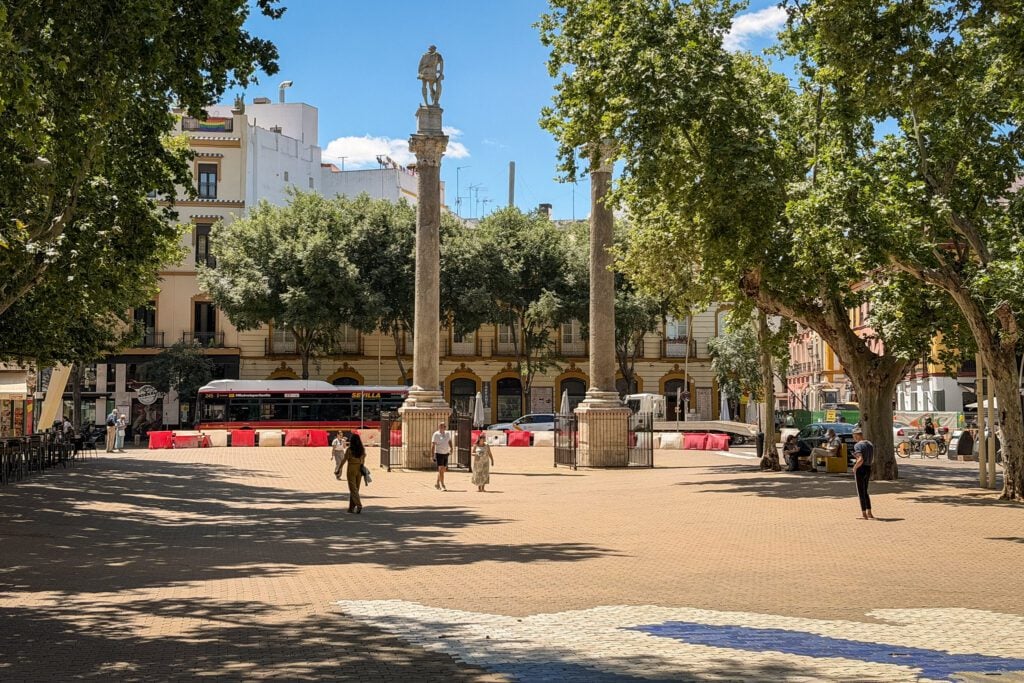
In Seville, that neighborhood was the one surrounding the Alameda de Hércules.
The Alameda is a large oval-shaped plaza with two big Roman columns at its south end, one of which is topped by the Greek God Hercules who is said to have created the Strait of Gibraltar between Europe and Africa.
It’s just north of the slice of the Casco Antiguo that we covered above, but as soon as you cross the border (which we’d call Calle Alfonso XII / Calle Imagen), you leave behind the wide streets and modern stores and enter a more residential neighborhood, with bars and coffee shops on the ground floor.
It reminds us of places like Capitol Hill in Seattle or a Malasaña in Madrid in that the concentration of great places to eat and drink is much higher than other parts of the city (though other parts of Seville aren’t necessarily lacking in that department).
It’s also a nightlife hub, so there may be some residual noise at night.
Pros and Cons of Staying near the Alameda
Here are the pros and cons of staying around La Alameda, as we see them.
Pros of Staying near Alameda de Hércules
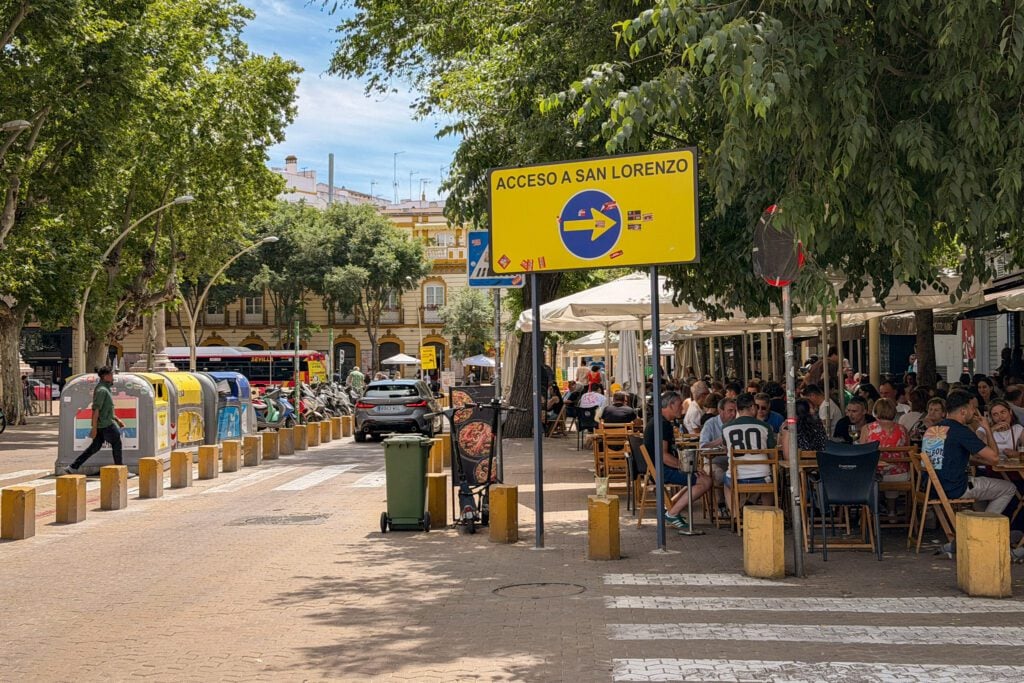
It’s lively. Especially through the afternoon and evening, when the tables on the outdoor terraces for the bars and restaurants lining the square are full of patrons eating and drinking.
Lots of good places to eat and drink. It’s a nice mix of traditional and more modern, too, so you can get everything from brunch and specialty coffee to more traditional tapas and vermouth.
There are plenty of lodging options. This area has a surprising number of places to stay, from boutique hotels to aparthotels and bed and breakfasts.
Cons of Staying near Alameda de Hércules
The nightlife is loud. Pretty expected for a place known for nightlife. It’s in pockets, and the best way to see if a hotel is loud is by reading reviews (and searching for the word loud or noise).
It’s a little further from the main attractions. Located on the northern edge of the original walled city, you’re a 15-20 minute walk from the main attractions. Not a deal breaker, but a bit further than if you stayed more centrally.
The accommodations skew more expensive. The relatively recent gentrification you see here means that the lodging options tend to be on the more expensive end of the spectrum.
The Best Places to Stay near the Alameda
Here are a few places near the Alameda de Hércules that stood out to us.
The Corner House (Affordable Guesthouse): Right on the Alameda, this is one of the more affordable places to stay near the Alameda that we came across. Compact rooms and no luxury amenities, like rooftop infinity pools and penthouse suites, but the location is great.
Mercer Residences (Luxury Apartments): A beautifully refurbished aparthotel a short walk south of the Alameda. Spacious apartments with kitchens. Not the cheapest option, but the location and high quality furnishings and design are what stand out to us.
H10 Corregidor (Boutique Hotel): One block south of the Alameda in a terrific location, this is a newly renovated location of H10, a big chain in Europe. Nice rooftop terrace and pool, as seems to be the standard in Seville.
Casa Romana (Boutique Hotel): Nice boutique hotel on the southern end of the neighborhood, close to the border with the tourist center. Rooftop terrace, and some rooms have their own private patios.
Planning a trip to Spain? We’d love to help!
Here are our other Spain travel guides to help you plan an incredible trip (even if you have to eat gluten free!).
If there’s no link below, it means we’re still working on it – long, in-depth guides take time! We’re working on it, though, we promise.
The first place to start, if you haven’t already found them, is with our detailed itineraries. We have one shorter version for 7 days in Spain, one version that covers 10 days in Spain (a good middle ground, we think), and one longer version for two weeks in Spain (with ideas for more and less time in both guides).
Our Barcelona Guides
- What to do in Barcelona (as a First Timer)
- How to Plan an Amazing 4 Day Barcelona Itinerary
- Where to Stay in Barcelona: A Complete Guide for First Timers
- 12 Things to Know Before You Visit Barcelona
- Gluten Free Barcelona: A Complete Guide to GF Restaurants + Bakeries
- Where to Find the Best Specialty Coffee in Barcelona
- How to Plan an Incredible Day Trip to Montserrat (from Barcelona)
Our Madrid Guides
- What to do in Madrid (as a First Timer)
- How to Plan an Amazing Madrid Itinerary (2 Days)
- Where to Stay in Madrid: A Complete Guide for First Timers
- 12 Things to Know Before You Visit Madrid
- Gluten Free Madrid: A Complete Guide to GF Restaurants + Bakeries
- How to Plan an Amazing Day Trip to Toledo (from Madrid)
Our Sevilla Guides
- Our Favorite Things to Do in Seville (for First Timers)
- A Perfect 2 Day Seville Itinerary (for First Timers)
- Exactly Where to Stay in Seville (The Best Areas + Hotels)
- Gluten Free Seville: Our Favorite GF Restaurants & Bakeries
The Rest of Spain
