
Exactly How to Spend 2 Days in Vancouver, B.C.
Of all the international cities we’ve been to in our travel careers, there is no place that feels more like home than Vancouver B.C.
Maybe it’s because it has the same natural beauty as Seattle (where I, Matt, grew up), with the mountains meeting the sea.
Maybe it’s because it has some excellent green spaces around the city like we have in our adopted home city of Portland.
Maybe it’s because the city feels compact, urban, and dense like San Francisco, the city where we met and eventually got married.
Whatever combination of the factors above it is, we love Vancouver, and we’ve been a bunch of times over the past few years, including a trip this past fall.
In this guide to planning your trip to Vancouver, you’ll find a detailed 2 day Vancouver itinerary, complete with things to do, see, eat, and drink, along with the important details you need to know like how to see Stanley Park and where to find the best views of the Vancouver skyline.
You’ll also find logistics – like how to get around and some useful tips and tricks for visiting Vancouver – that are important for planning your trip.
We hope you enjoy this guide, that you find it useful for planning your trip, and we help you discover something new and exciting, whether it’s your first time, or tenth.
Sound good to you? Let’s get into it.
Disclaimer: Some of the links in this post, like hotel links, are affiliate links, meaning at no additional cost to you, we make a little bit of money if you click through and book. That being said, we would never recommend something to you that we don’t stand behind 100%.
What Can You See with 2 Days?
Usually, we spend this section saying something to the effect of “no, X days is not enough time to see everything there is to see, so don’t try.”
While that is true of Vancouver – 2 days is not nearly enough time to do and see everything that makes the city special – we do think a weekend is a good starting point for the city itself.
You can see the main sights within the city limits, like Granville Island and Stanley Park, and get a taste of some of Vancouver’s best neighborhoods in a couple of days.
However, what you won’t be able to do is explore outside of the city.
Vancouver is a gateway to all sorts of amazing day trips, and with 4-5 days you’d be able to knock one or two of them out, like a drive up the Sea to Sky Highway towards Whistler, or a trip to Grouse Mountain just north of the city.
However, with only a couple of days, we’d focus on the city itself (with a bonus trip to a nearby park) and save the other day trips for next time.
Where to Stay in Vancouver
In terms of layout and urban design, Vancouver is interesting because it is simultaneously similar and different from the other cities in the northwest (plus San Francisco).
It’s similar in that the vast majority of the hotels are found in the downtown core, which is a part of the city that isn’t necessarily our favorite to visit, but is certainly a convenient home base for getting around to other parts of the city.
It’s different because due to strict short term rental laws (you can only rent a place out for less than 30 days at a time if it’s your primary residence, and they’ve started cracking down on it over the past few years), and it’s also basically the only option because there are very few hotels outside of that core.
All that is to say that while you’re in Vancouver, you’re likely going to end up in the city center.
However, that city center is made up of a few different sub-neighborhoods that offer a different vibe.
The two neighborhoods we’d focus on here are the West End, which is the more residential part of the city that’s adjacent to Stanley Park, and Yaletown, the ultimate urban neighborhood on the eastern side close to B.C. Place and Rogers Arena (the stadium and arena where you’ll find most sporting events and big concerts).
We have an entire guide dedicated to helping you decide where to stay in Vancouver, which you should absolutely go read for more detail if you’re deciding on the right neighborhood.
The West End: Residential + Access to Stanley Park
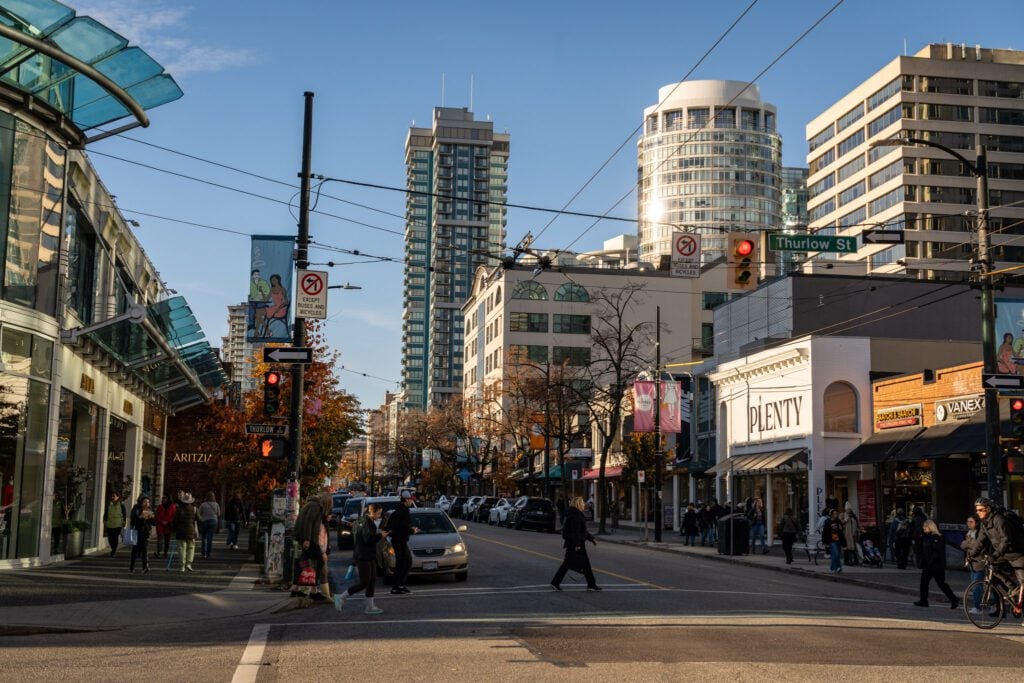
The West End is tucked away between the greenery of Stanley Park and the towering skyscrapers of Vancouver’s financial district.
It covers a big swath of land, and its two main streets are Davie Street and Robson Street, which run east-west from the Financial District out to Stanley Park.
When you’re walking around the West End, it feels much more residential than many other parts of the downtown core, but it’s still fairly dense.
The big draw here is the great access to Stanley Park – it’s actually a little less convenient for getting around because there’s no SkyTrain stop in the West End to get to and from the airport (you’ll have to go downtown for that).
A big plus of staying in this part of the city is the fact that there are a bunch of solid hotel options across a range of needs and budgets, from swanky luxury hotels to budget B&Bs (and everything in between).
The Sylvia Hotel is a mid-range option in a great location on the southern side of the neighborhood, right across the street from a few excellent beaches (English Bay Beach is right across the street) and the Seawall path through the park.
The brand new Como Hotel is in a similar location (a bit further inland, but still close to the beach and waterfront path) and is a little bit more upscale.
If you want an apartment with a little more room, go with the Times Square Suites, an affordable aparthotel right at the corner of Robson and Denham and a few blocks from the Seawall and Stanley Park.
Yaletown: An Urban Paradise
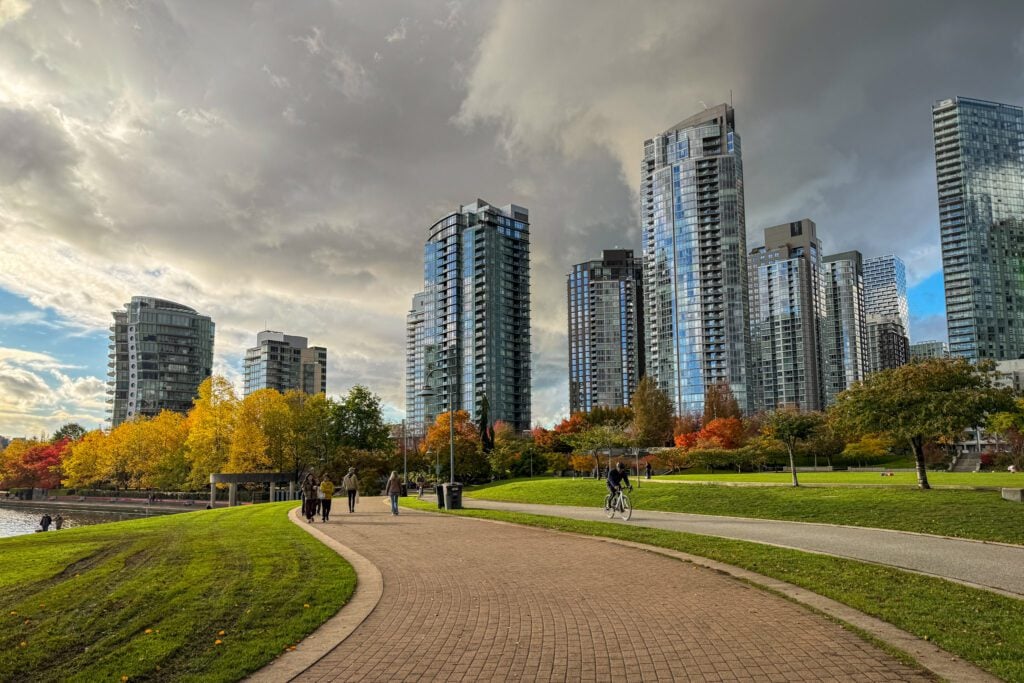
If you’re into big city vibes, you’re going to love Yaletown.
It’s perhaps the best example of a dense urban neighborhood that still feels walkable and liveable thanks to a few innovative approaches to designing a city, like mixed use zoning (shops on the ground floor, dense housing above) and facades that feel like a single floor building, but are actually tall towers, so it feels walkable.
It’s convenient and walkable, and well-connected to other parts of the city with public transit between the SkyTrain stop and the ferries that run up and down False Creek.
It’s also the best place to stay if you’re in town for a show or sporting event at B.C. Place or Rogers Arena because it’s within a 5-10 minute walk of the two big venues.
There are just a handful of hotels in Yaletown, and most are clustered in the area around the two sporting venues.
The Georgian Court Hotel is a great option in the mid-range, and OPUS Vancouver is probably the single best hotel in the neighborhood (and it’s right across the street from the SkyTrain stop, so easy access to the airport and other parts of the city).
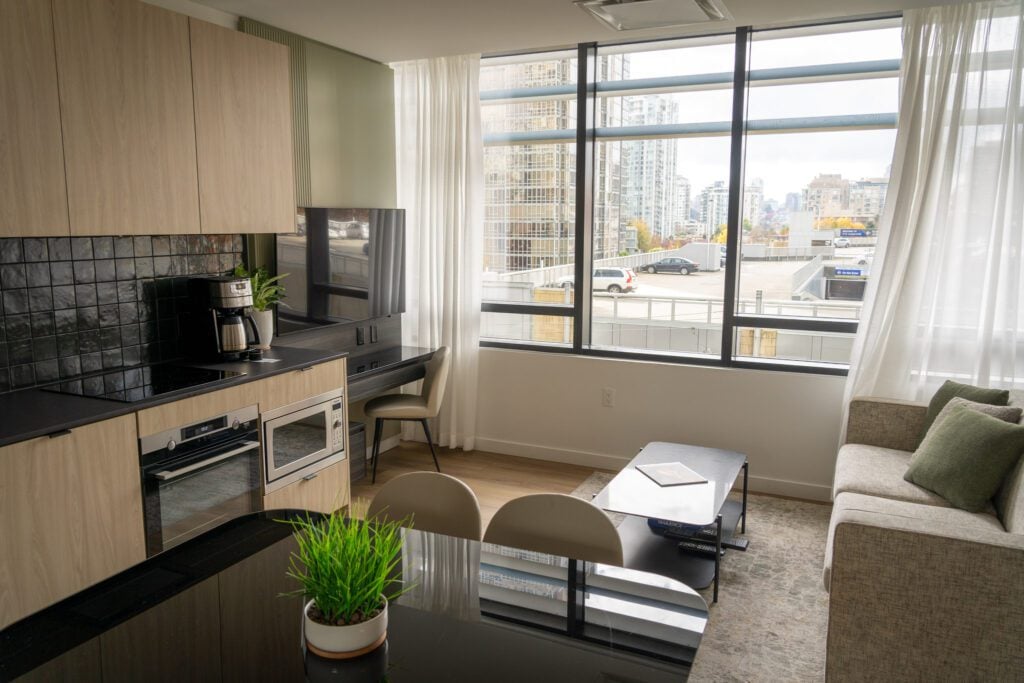
On my (Matt here) last trip to Vancouver, I spent most of the week at the Smithe House, a brand new aparthotel in a great location with full kitchens in all of their units.
It was really nice, and I’d recommend it if you want an apartment.
Exactly How to Spend a Weekend in Vancouver (2 Days)
Now that we’ve covered some of the important logistics, let’s get into exactly how we’d plan out your itinerary.
Day 1: Stanley Park, Granville Island, and Kitsilano
On your first day in Vancouver, start with a foray into Stanley Park (after coffee, of course), the best urban green space in the city (and perhaps in the entire Pacific Northwest), and then cross the water over to Granville Island for lunch, ending your day in hip Kitsilano.
But First, Coffee (in Gastown)
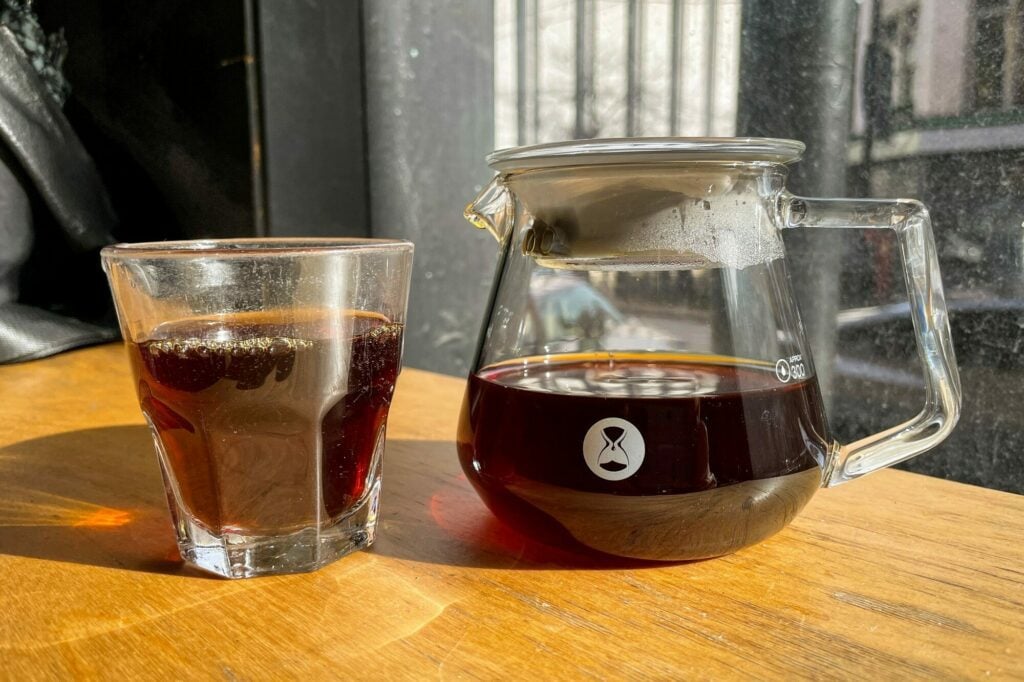
Before your day gets going in earnest, start your day with coffee in Gastown, our favorite coffee neighborhood in the city.
Matt is an intense coffee nerd, and several of his favorite places for coffee in Vancouver are in Gastown, a neighborhood on the northeastern side of the downtown core that is known for its cobblestone streets and working steam clock.
However, while the steam clock seems old, you should know that it was only built a few decades ago.
While it is cool, and is only one of a few working steam clocks in the world, it’s not like it’s some old relic (the tourist attraction bit is mostly manufactured by the city).
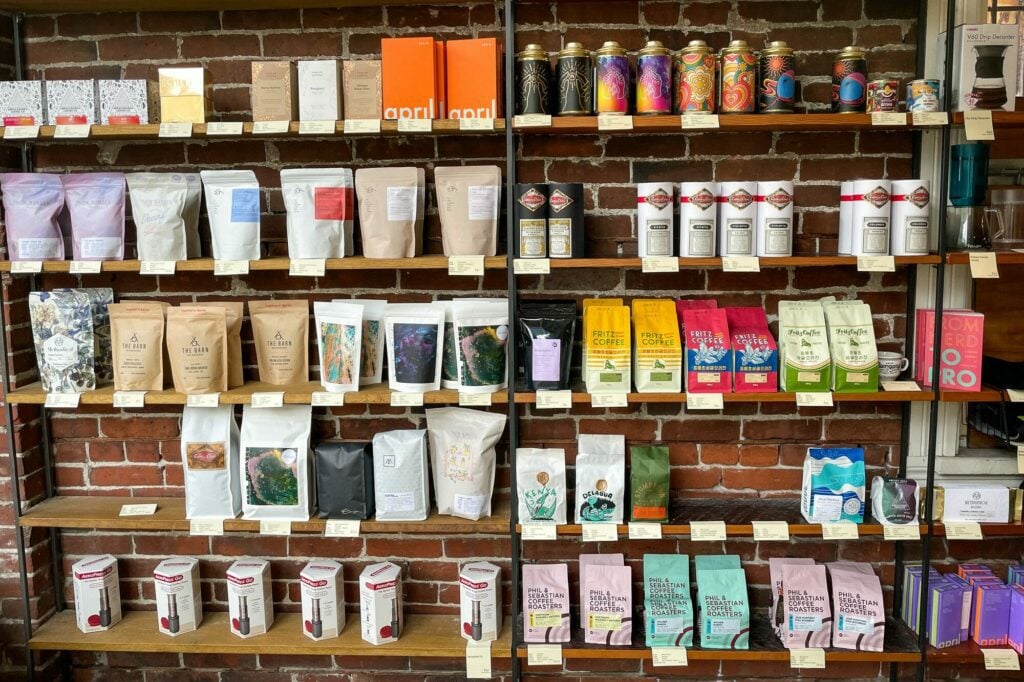
There are several good coffee options in Gastown to choose from, but my top choice – and it’s not particularly close – is Revolver Coffee.
They have a great selection of coffee, especially if you want to buy a bag or two to take home because they have an entire wall of coffee sourced from roasters all over the world.
The other two choices are both coffee roasters, meaning they roast all of their own beans in house. They are Timbertrain (also nice) and Nemesis (you’ll be able to try them on the North Shore on day two, if you want).
A Morning in Stanley Park
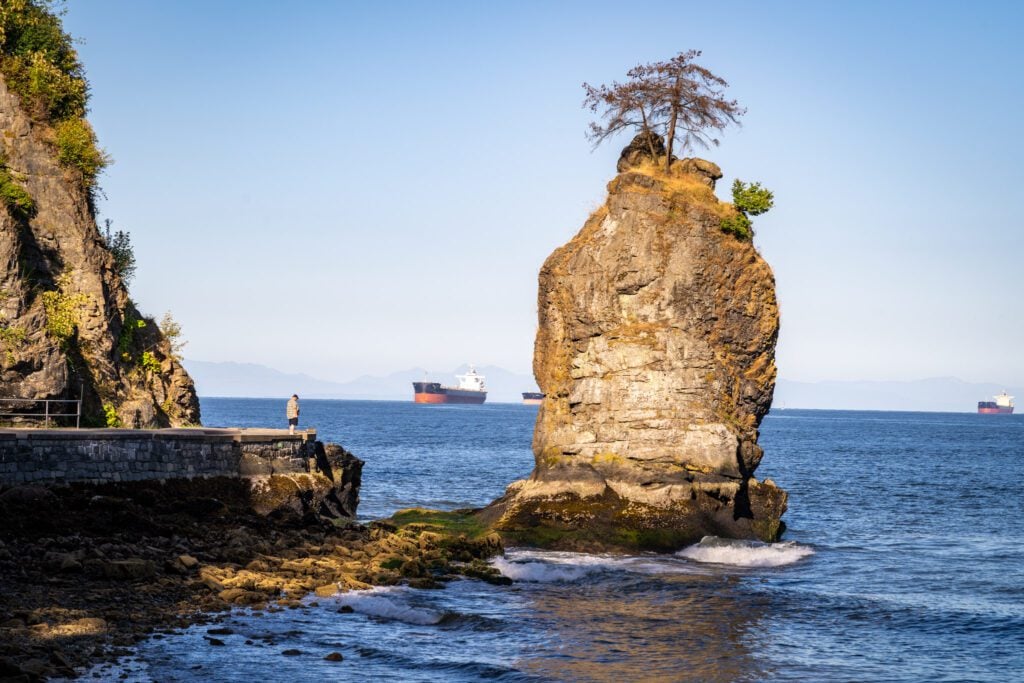
Similar to Portland, where the main tourist attractions are a bookstore and a rose garden, Stanley Park is probably the single biggest tourist attraction in Vancouver (which we’re here for).
We’re big fans of a good public green space – it’s part of the reason why we love Portland so much – and having a massive public park right in the downtown core of the city is a really unique feature that speaks to Vancouver’s appreciation for outdoor activities.
It’s also a massive urban planning win to have a public park taking up such prime real estate without being sold off to developers to build more housing (which Vancouver does desperately need).
Stanley Park is well worth a few hours of your time while you’re in Vancouver, and we’ll get into the ways to see it in a second.
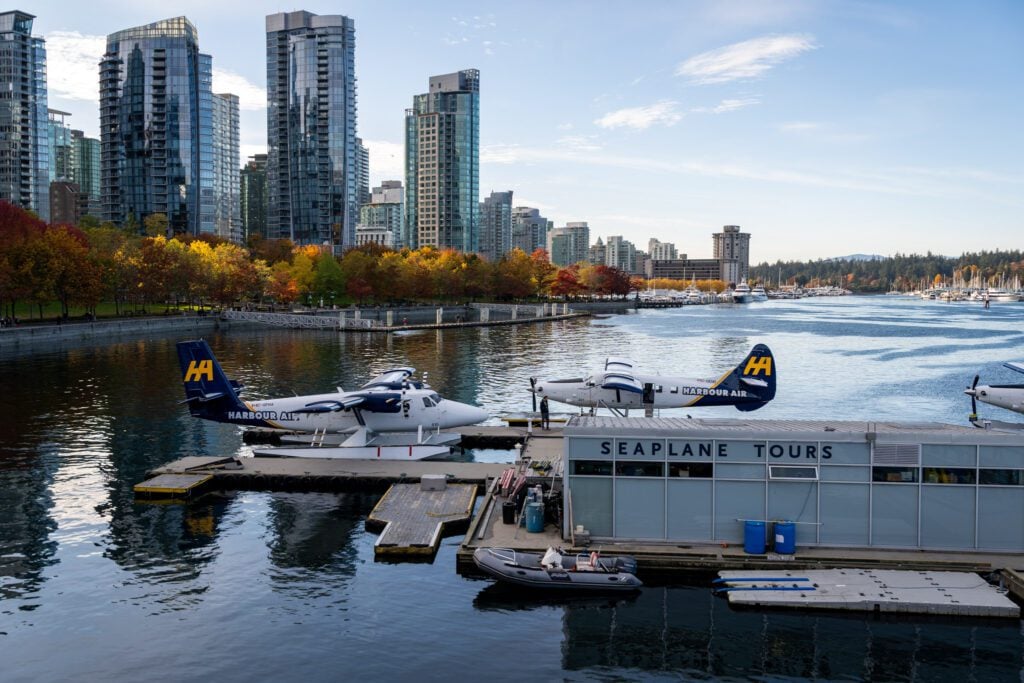
One thing to know is that we really love the walk along the northern waterfront from Canada Place (here on Google Maps) to the border of Stanley Park, where you have great views of boats and seaplanes (sometimes landing or taking off) to keep you company with the mountains in the background.
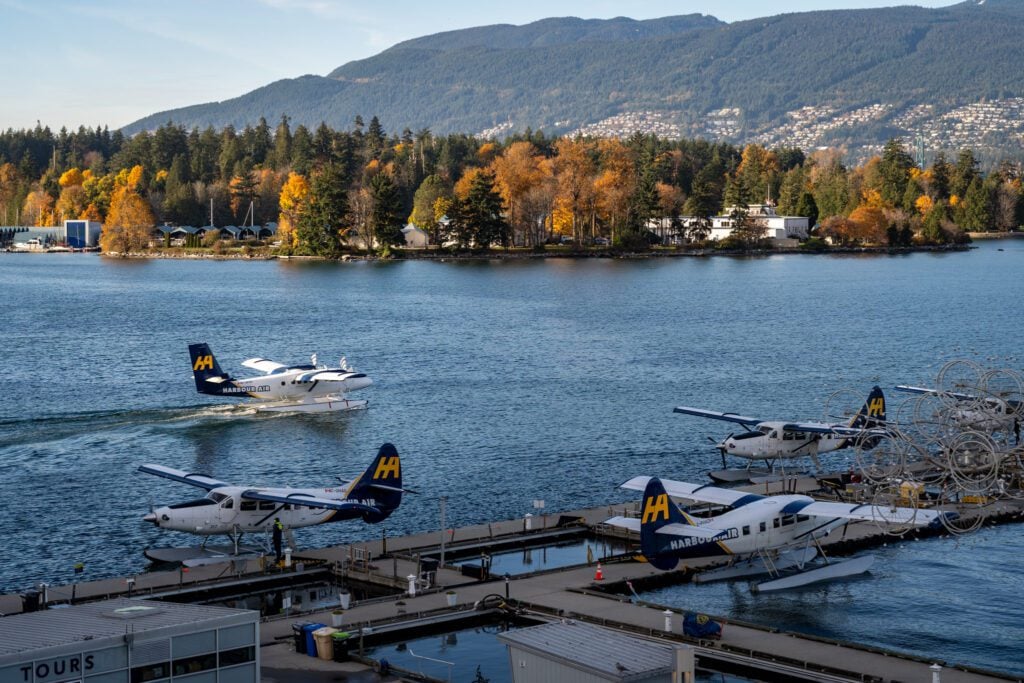
For that reason, we’d recommend starting your journey there, and working your way west into the park, making your way around the peninsula that is Stanley Park counterclockwise (you can also easily do it in the opposite direction).
Here’s a map of the rough route that we’d take around the exterior of the park, which is our favorite part.
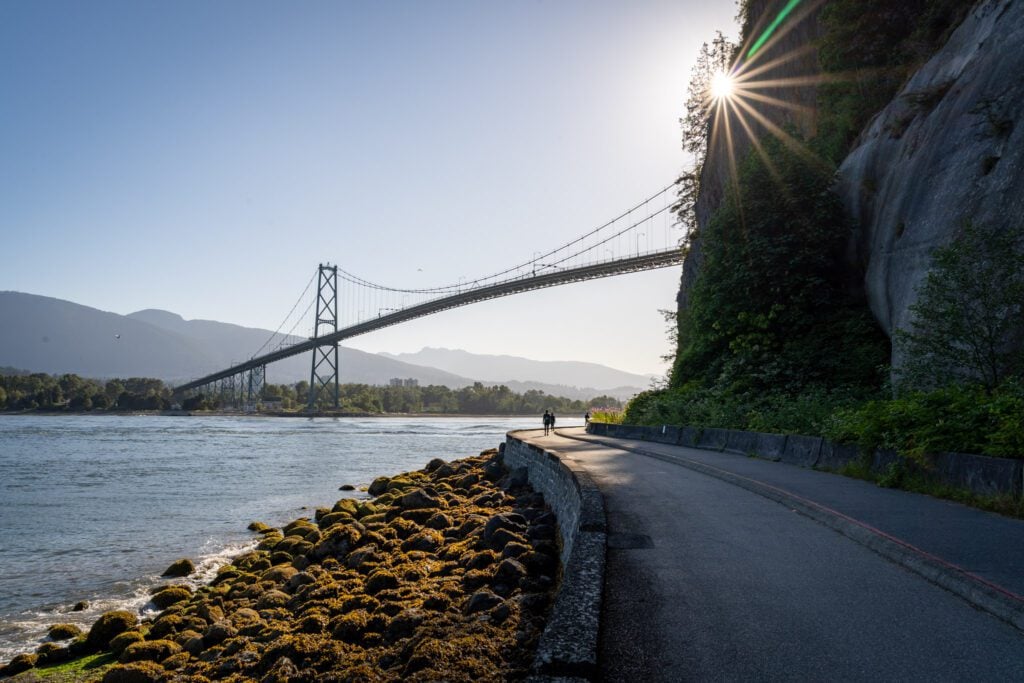
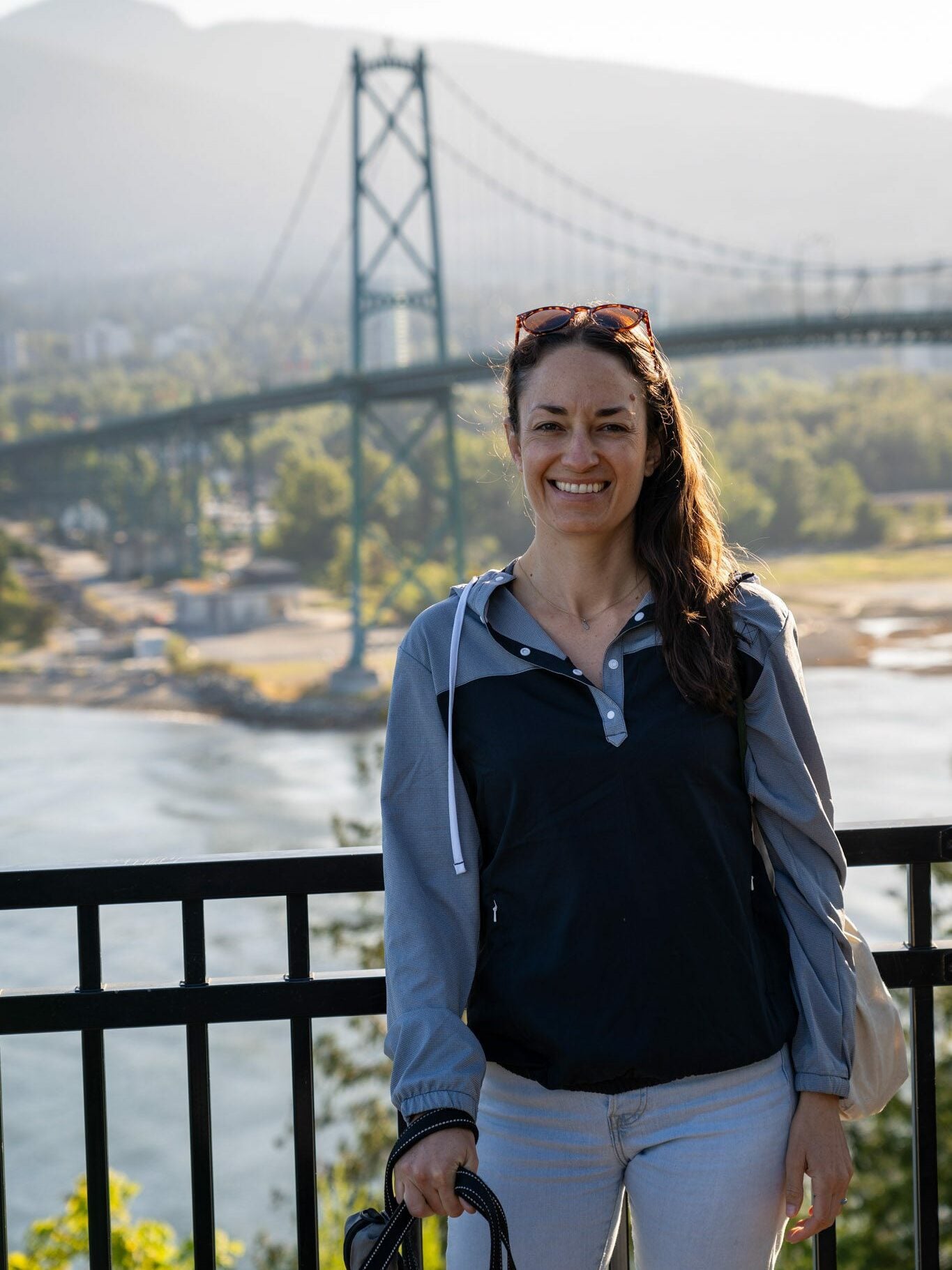
One place this route does miss is Prospect Point (here on Google Maps), which is elevated above the Seawall (the mixed use path that runs along the perimeter of the park) and has a great view of the Lions Gate Bridge heading into North Vancouver.
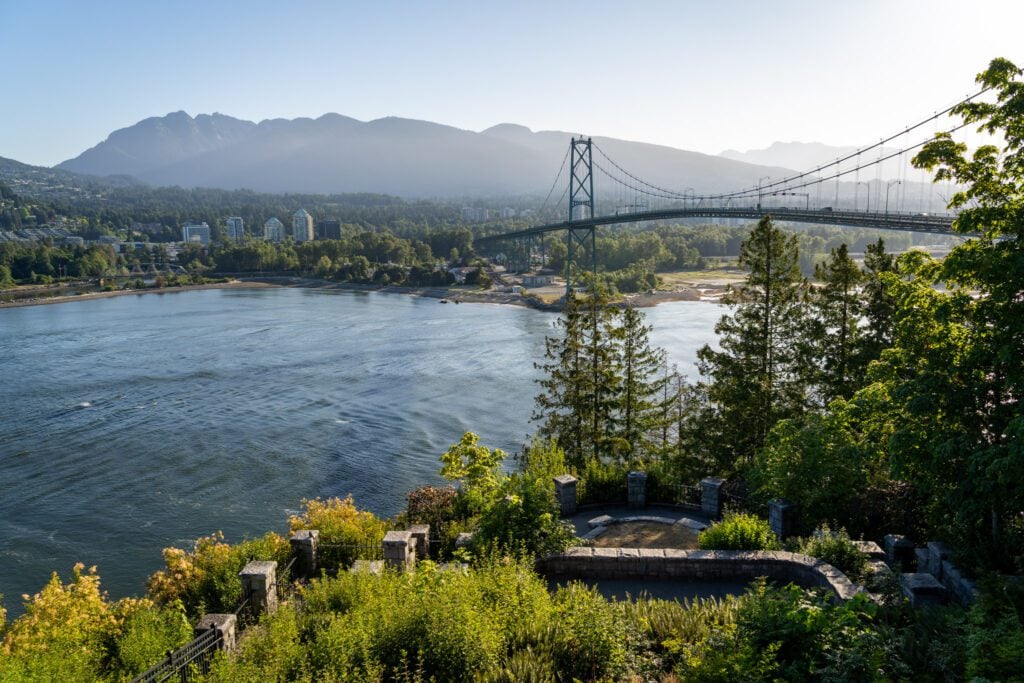
Now, you may be saying something to the effect of “whoa, that’s a long walk!” And yes, even for the two of us who love walking, it is certainly a long walk.
A more time-efficient option for exploring Stanley Park is to rent a bike and see the park on two wheels, which will take about an hour with limited stops (though we’d recommend lingering a little more than that, because it’s a beautiful ride).
We’ve done it both ways, and both are a really nice way to see the park at slightly different paces (walking means more opportunity for pictures, which I, Matt, am very much here for).
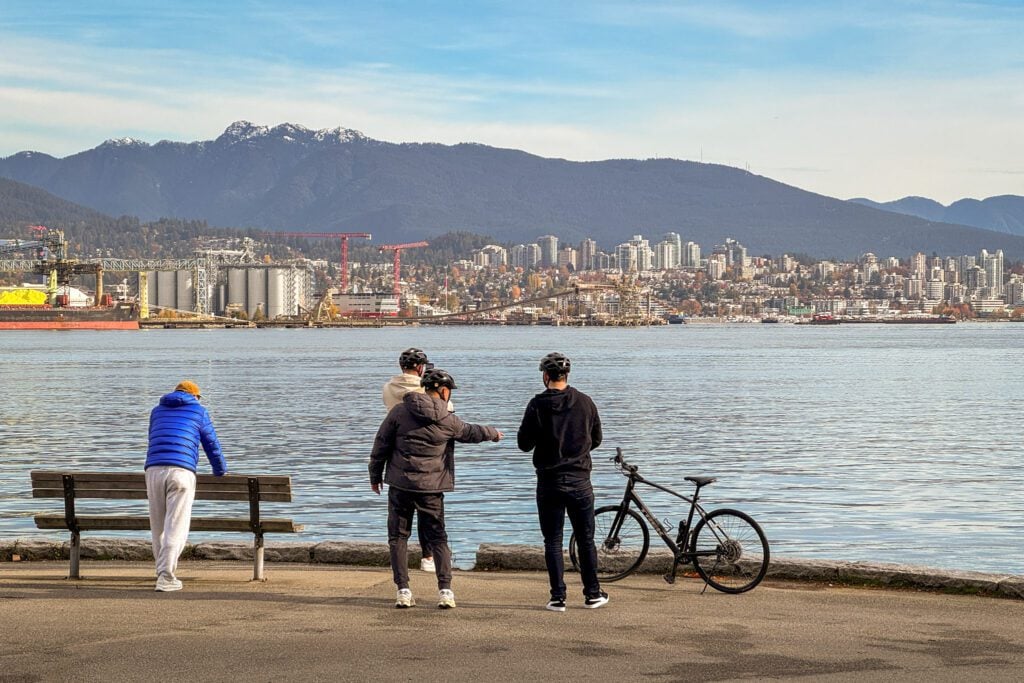
There are a couple of options for renting bikes here.
First is Vancouver’s public bike share program, Mobi, which allows you to pick up a bike at a station around town using an app, pay per minute, and drop it off at a different station.
Lucky for you, there are plenty of stations near the park (for example, there’s one here in Coal Harbor, and one here at Sunset Beach). You should download the app and complete the sign up process before you want to get a bike.
This makes it pretty easy to do a one-way ride and avoid backtracking (and having to ride through the busy city streets).
The downside of this approach is twofold.
First, bike inventory can be unpredictable (especially in the summer, when everyone wants to do this ride).
Second, it can get expensive, especially if you make a longer stop in the park without returning the bike to a station (a 90 minute ride will cost approximately $27 CAD, more for an e-bike). Worth noting that there are a couple of stations inside Stanley Park, and we’d drop off the bike if you stop for a beer or something.
The second option is renting from a bike rental shop near the park, which means you’ll have to make a loop (which involves riding on city streets no matter which way you slice it) and is likely going to be more expensive.
Cycle City and Yes Cycle are two good options on the north side of downtown with good access to the bike paths leading into the park.
You can rent in advance, you get equipment like a helmet and nicer bikes, and the pricing makes the most sense with a two hour trip, give or take.
Take the Ferry to Granville Island
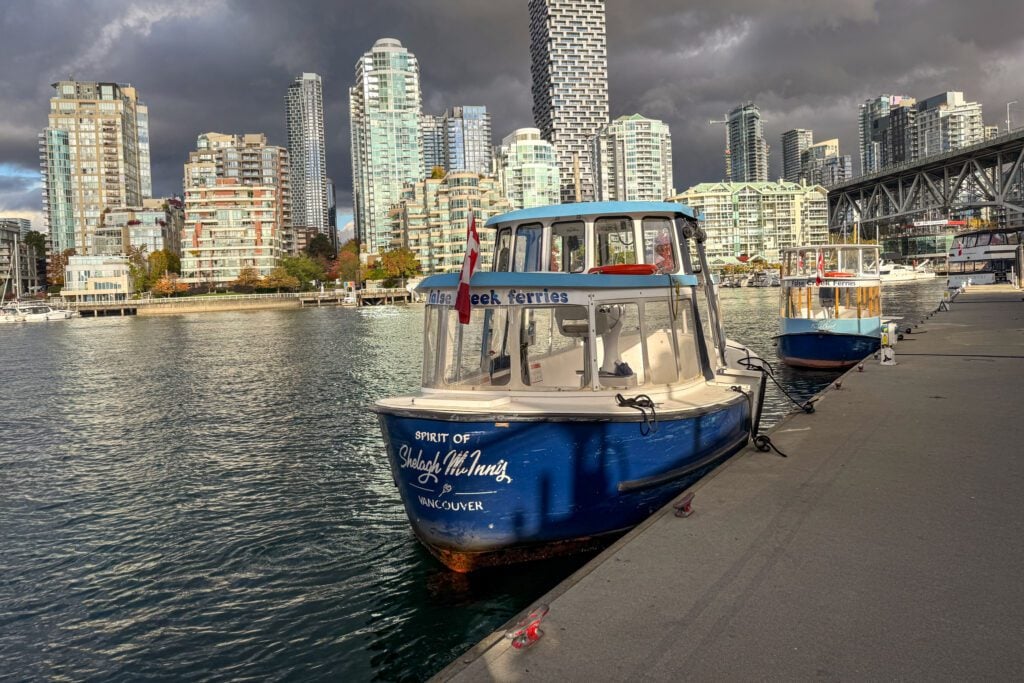
Once you’re done with your (and assuming you’re ending somewhere on the southern side near Sunset Beach), your next stop is Granville Island, which is across False Creek.
This is a challenge that every city with a water feature (like Venice, or even Portland) faces: it can be hard to get across the water.
Not so in Vancouver! It’s time to hop on our favorite mode of public transportation in Vancouver: the adorable False Creek Ferries!
Sure, you could take the long way by walking up and over the Burrard Bridge and then along the water to Granville Island, but why do that when you can hop on a ferry that covers that ground in a much more fun and scenic way?
They operate a series of ferries that run on a continuous loop (technically two loops), connecting Granville Island with places to the west, like Sunset Beach and Kitsilano Beach, and places to the east, like Yaletown and the Olympic Village.
The fare structure is a little confusing if you’re trying to go from the western line to the eastern line, but lucky for you, if you take the ferry from Sunset Beach (the terminal is here on Google Maps), it’s one stop that takes you across the water to Granville Island.
The ferries are tiny, and you can tap-to-pay on board (or pay cash to the operator). They’re very fun, and I take them as often as possible when I’m in town.
Lunch on Granville Island
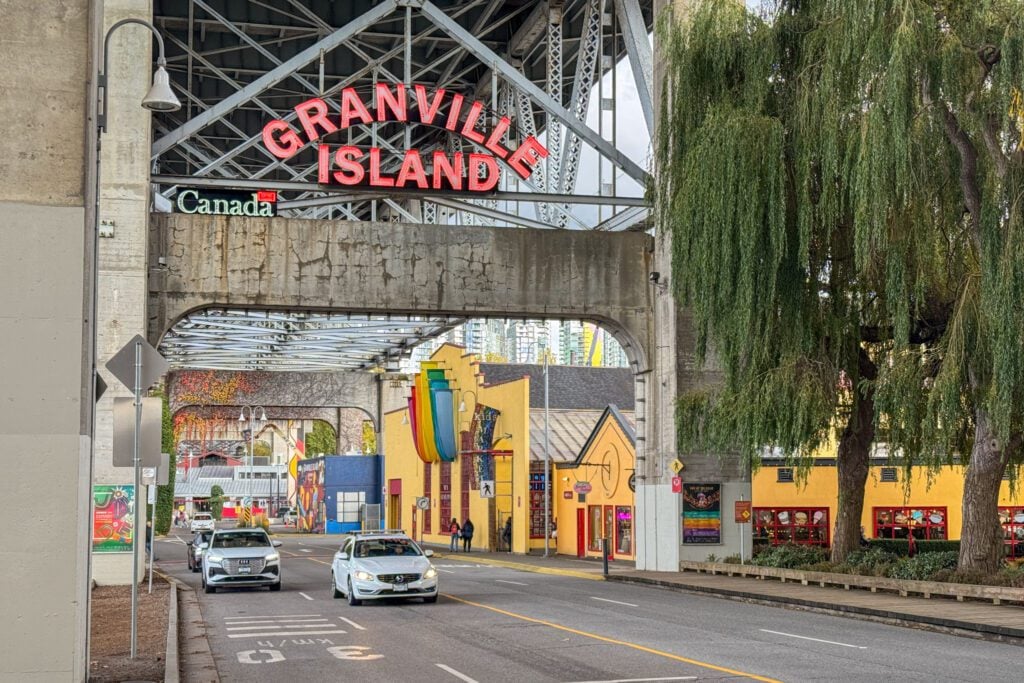
After a busy morning exploring the park, it’s lunch time! For lunch, we’d head to the Granville Island Public market, which is part grocery and produce market, part ready-to-eat food market, and part artisan market.
As someone who grew up in the Seattle area and lived there for 20+ of my most formative years, I am extremely familiar with the idea of a public market being a big tourist attraction.
That being said, I also unironically love going to Pike Place Market in Seattle whether or not there are people who I’m showing around town, and I kind of feel the same way about Granville Island Public Market.
There’s a certain energy that comes with a public market that you don’t really find elsewhere, and I, for one, am here for it (even if most of the places to eat and drink aren’t going to be great quality or value because they cater to tourists).
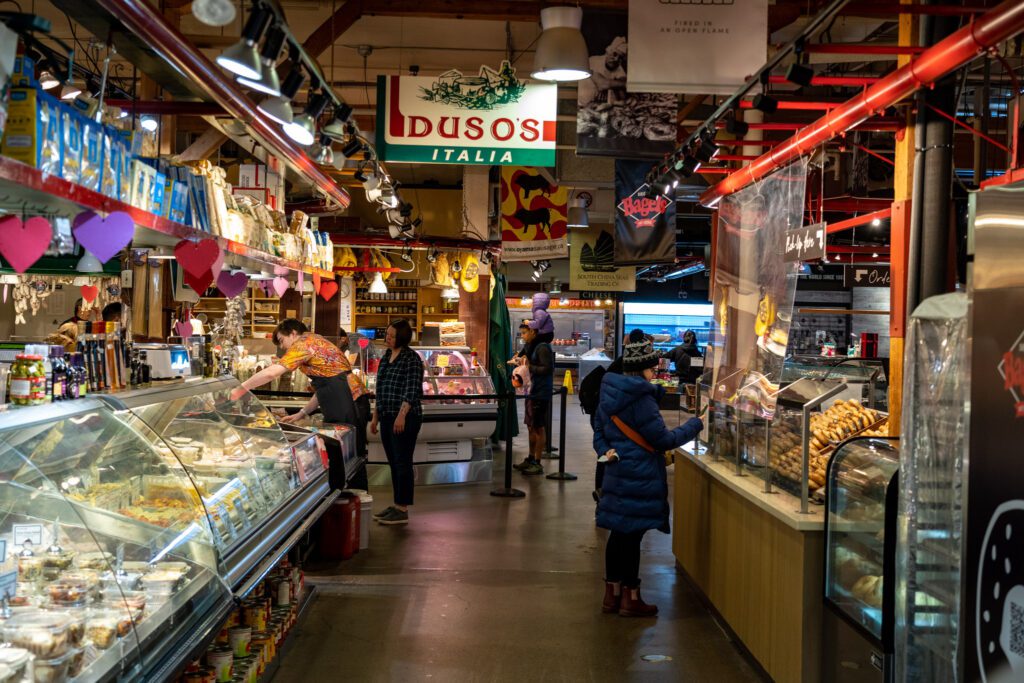
It’s a fun place to wander, and I’d encourage you to walk down to the eastern end of the island, where you’ll find far fewer tourists and a couple of cool businesses.
There is one note I want to make here, and that is the fact that I, Matt, have Celiac Disease and need to eat gluten free (hence the name of this website).
There aren’t many gluten free options at the Granville Island market (here’s my gluten free guide to Vancouver, if you’re curious), but I love asking people I meet along the way where I should eat anyway, which is where I got most of my recommendations below.
Here are some spots that are worth your time, in no particular order.
Bon Macaron: This leads the list for exactly one reason: it’s the only place selling ready-to-eat gluten free food that I can actually eat.
The texture, in particular, was as close to perfect as it gets, with a nice crunchy crust that sort of melts away when you bite into it.
They have some really fun, unique flavors, including a series partnering with other businesses on Granville Island.
I had a jasmine macaron that I was very skeptical of, but it ended up being amazing.
Oyama Sausage: A big case full of cured meats, various pates, porchetta, and more. This plus Benton Brothers below are a great one-two punch if you’re looking to make a picnic to take to the beach.
Benton Brothers Fine Cheese: Two former engineers turned cheesemongers! Good selection of cheeses, including a bunch of local options (I grabbed some cheese from B.C. to take to my apartment and enjoy) and famous cheeses from around the world, like Basque and Burgundian cheeses.
Siegel’s Bagels: A few years ago, we fell in love with Montreal after our first foray into Quebec, and Seigel’s makes Montreal-style bagels, which are levered into a wood-fired oven on a long wooden stick, and are a distinctly different texture and taste from the more common NYC-style bagel.
This was a top recommendation from the guide on my bike tour of Vancouver, and while I can’t partake due to gluten, that doesn’t mean you shouldn’t! Bagels and bagel sandwiches are the highlights.
Sen Pad Thai: Good pad thai and other noodle dishes, though not the best in Vancouver.
Kasama Chocolate: An underrated gem on the southeastern side of the island, their hot chocolate is magic in a cup.
Get the drinking style chocolate, which is rich, creamy, and is basically joy in a cup. They also have bars, which would make a great souvenir for a foodie back home.
An Afternoon / Evening in Kitsilano
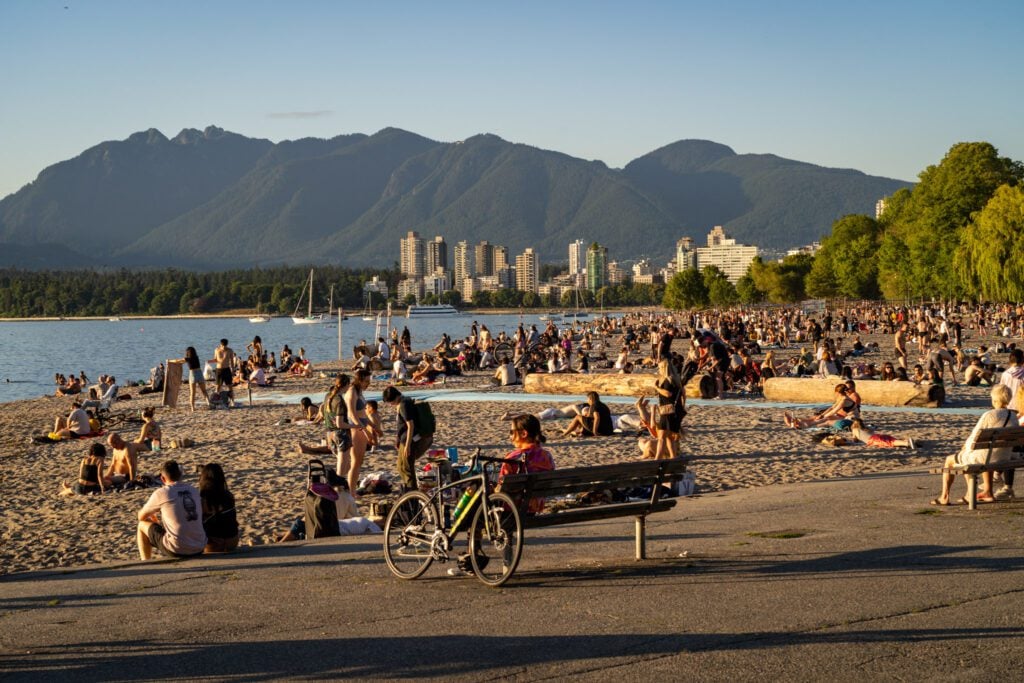
Round out your first day in Vancouver by walking another waterfront path, this time from Granville Island to the west towards Kitsilano Beach.
Here are some stops along the way that we think are worth your time (and the slight detour).
Oidé Coffee: A tiny detour from the waterfront path brings you to this excellent coffee shop, which has coffees from roasters all over the world and brews them expertly, whether it’s a latte or a fancy pour over.
Go Fish: THE place that got recommended to me most by local Vancouverites, this fish and chips joint is just outside the entrance to Granville Island on the boat docks.
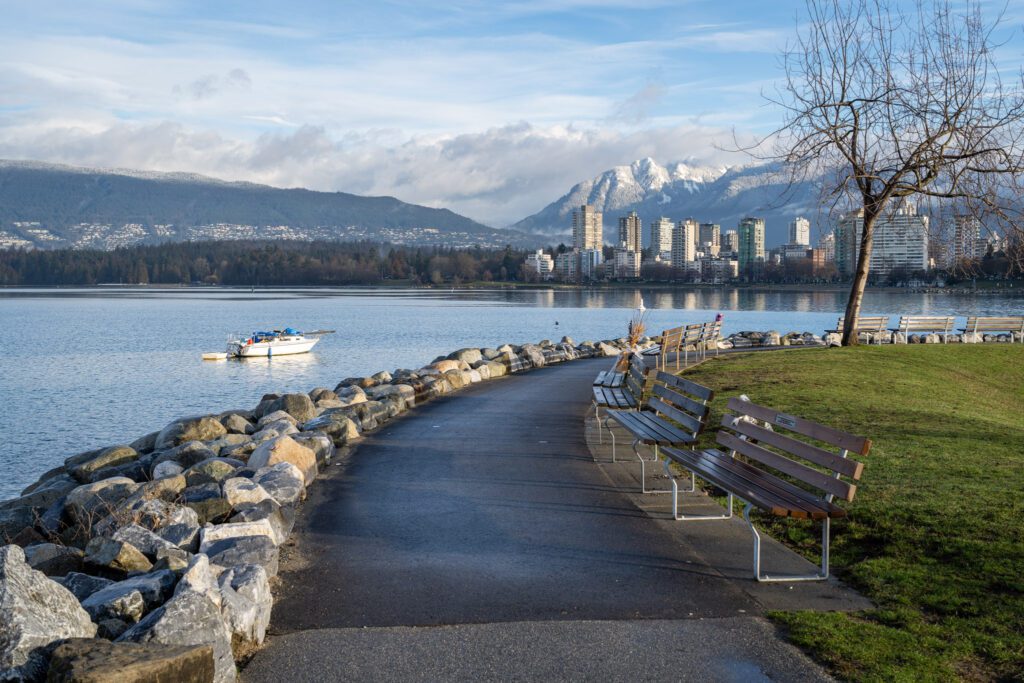
Elsje Point: One of our favorite views in Vancouver? Definitely. From this mini peninsula northeast of Kitsilano Beach, you get a great view of Stanley Park and the West End across False Creek, with the snowcapped mountains in the background. Find it here on Google Maps.
Just past the point, you’ll find yourself at Kitsilano Beach, which is probably the most popular beach in town.
We came here multiple times during our longer summer stay in Vancouver, and every single day the beach was packed with people playing volleyball, picnicking with friends, and just soaking up the sunshine.
It’s a nice, sandy beach with great views of the skyline, especially from the northern point (here on Google Maps), where you have an essentially unobstructed view of the West End across the inlet.
In the summer, Kitsilano Beach in particular is a raucous party, with all of the pale people who just spend six months indoors or covered in multiple layers out and about enjoying their small slice of paradise that is Vancouver between June and September.
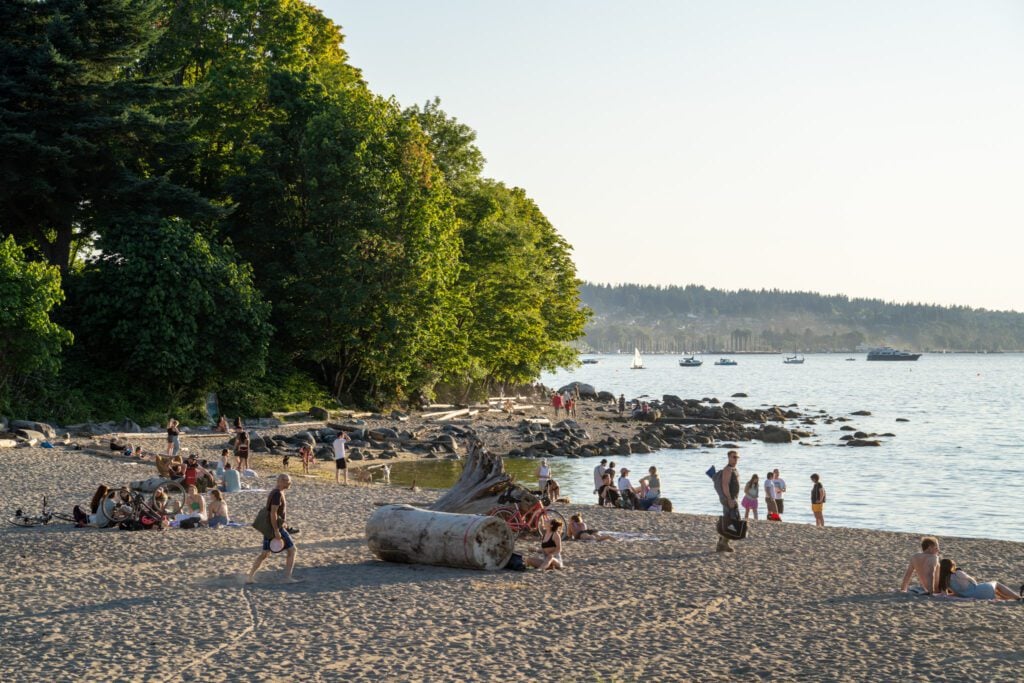
From the beach, there is a lovely neighborhood up the hill to the south that has some really great places to eat and drink, and we’d spend your evening doing just that.
W 4th and W Broadway are the two main east-west thoroughfares here, and here are our favorite spots along those stretches (mostly).
Kits Beach Coffee: Hip cafe right on the border of the park where you’ll find the beach. Definitely leans a little brunch-y for me, but it’s a nice space with good coffee made with locally roasted beans from a variety of roasters. Good happy hour deals, too!
O5 Rare Tea Bar: If you’re into tea, this is a must-do while you’re in Vancouver. We came here because Alysha loves tea like I love coffee, and we ended up spending several hours on a slow weekday afternoon chatting with the barista and drinking some truly excellent teas. Great kombucha made in-house, too!
Les amis du Fromage: A fun little cheese shop on the eastern end of the neighborhood, right across Burrard.
I can almost guarantee you’re going to walk in and be overwhelmed by the cheese selection, but I would say that you should definitely ask them to help you find some cheeses you like, which is what we did.
A truly mind boggling cheese selection, plus things like crackers, spreads, and more to make a perfect picnic to take to the beach (which is what we did).
La Quercia: Anytime I see an Italian restaurant outside of Italy with “primi”, “secondi”, etc etc on the menu, I know I’m in for a good time!
They don’t have gluten free options, sadly, but they do make a bunch of stuff in-house and have a menu focused on northern Italian cuisine.
It’s very popular and comes highly recommended, so make reservations if you want to go. They also have a deli where you can grab ready-to-eat meals and sandwiches.
Cockney Kings Fish & Chips: I walked by this place multiple times, and got a kick out of the name each time.
Then, when I asked someone where to get good fish and chips in Vancouver, this place was the first place he recommended, and I immediately recognized it because of the name.
They have mushy peas on the menu, so you know it’s going to be good (definitely not gluten free, though).
Day 2: Mount Pleasant, the North Shore, and Gastown
On your second day in town, start your day in Mount Pleasant with coffee, a light breakfast, and a walk along the southern seawall before heading across the water to North Vancouver and then ending your day in Gastown.
Breakfast and Coffee in Mount Pleasant
Of all of the neighborhoods in Vancouver, Mount Pleasant – which is right across False Creek from Yaletown – is the part of the city that most feels like our neighborhood at home in southeast Portland.
You have a waterfront industrial area that is quickly transforming, a couple of strips of commerce with food, drinks, and shopping, and a residential neighborhood with single family homes.
And, when you start to ask questions and dig a little deeper, it makes sense why that is the case.
Similar to our neighborhood, it was one of the first places where people started to settle outside of the downtown core, and has gone from a slightly sketchy neighborhood with lots of poverty to one of the hippest spots in Vancouver over the past several decades (which is a strikingly similar story to Division Street in Portland).
Today, it’s a really nice place to start your day, with a couple of great coffee spots (and plenty more pretty good ones) and some nice breakfast options to start your day.
For coffee, we have two great options for you that are in the southern end of the neighborhood near the water (both of which make our list of the best coffee shops in Vancouver).
Prototype Coffee: This is actually the place I’ve personally been to the most, but I’ve only ever been to their original location up on E Hastings.
The thing I like about them is the sheer number of coffee options on the menu, which is a theme that has continued here.
They roast in tiny batches (you can see their roasters working on the counters at their original location) which allows them to have a bunch of different options, from clean classic washed coffees to crazy fermentations.
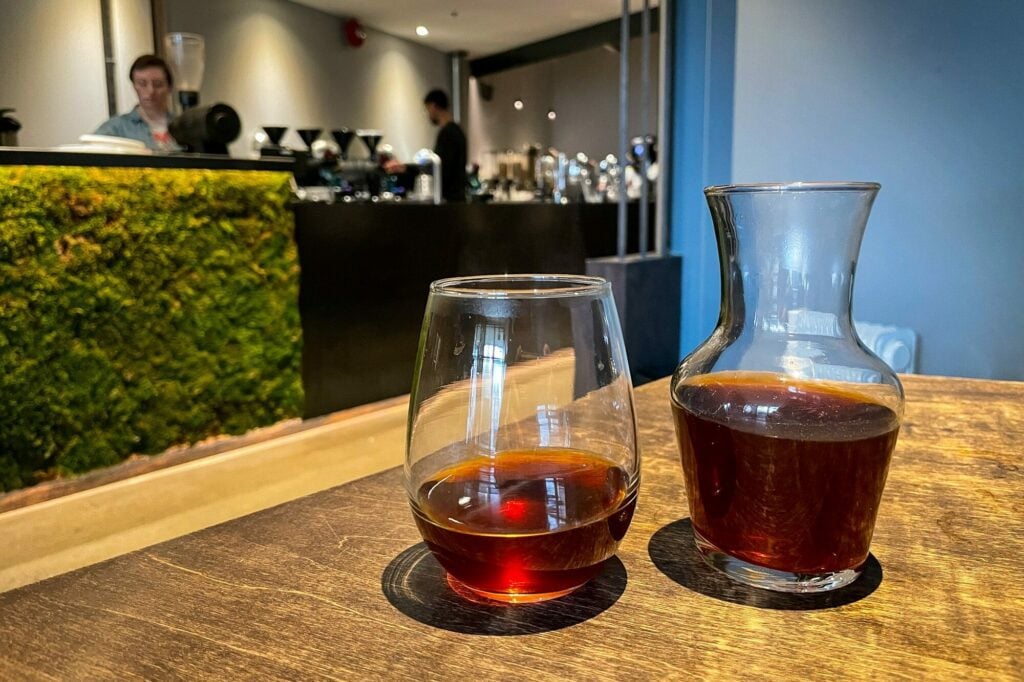
Coffee Roastery Modus: Located right on a major artery, which means it’s not the most charming location, I really like the coffees I’ve had at Modus.
They characterize their coffee menu by flavor profile, and have a bunch of coffee options for pour over and espresso (if you’re into that) along with your standard milk drinks.
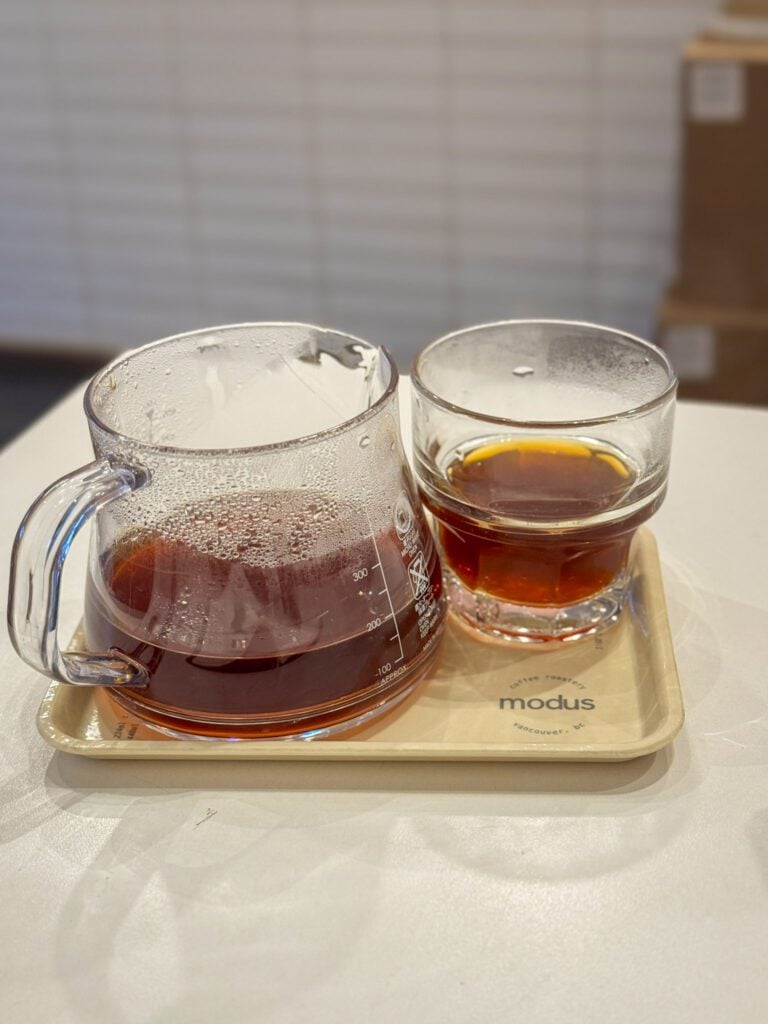
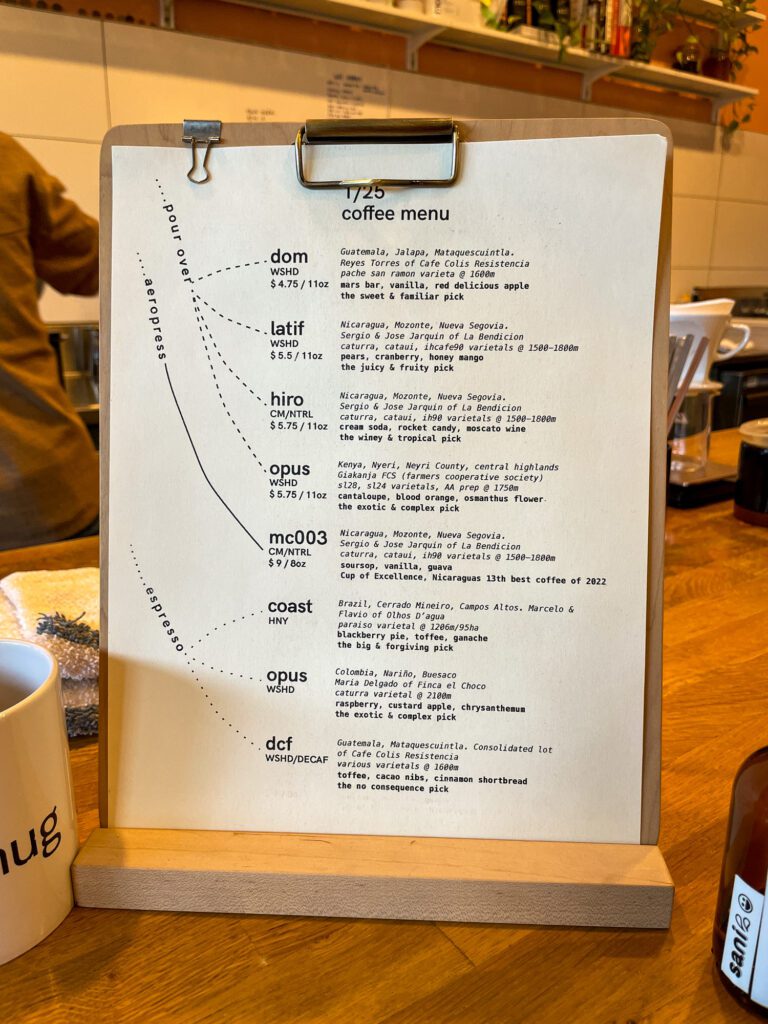
For breakfast, there are a couple of good bakeries in the same vicinity, and it comes down to what kind of breakfast you’re looking for (e.g. breakfast sandwich versus croissants).
Worth noting that the first two options here are NOT gluten free – Matt has Celiac Disease and can’t have even a crumb of gluten – but the third one is one of his favorite gluten free bakeries in the city.
Melo Patisserie: For pastries, like cakes, scones, and croissants, this is the place. They do have more savory options, like a couple of versions of a breakfast sandwich or quiche, but I think the highlight is probably the sweeter items.
Purebread Bakery: If you’re in the mood for something savory, this is where we’d go. They do have sweet pastries – danishes, muffins, etc etc – but they have a wider range of savory options than Melo, from pastries to sandwiches, which is what we think stands out here.
Lemonade Gluten Free Bakery: Last, but certainly not least, a gluten free bakery! They have a great selection of gluten free pastries, including croissants (a rarity) that are pretty good. It’s a little further south, over on Cambie St, but it’s worth the journey for gluten free folks.
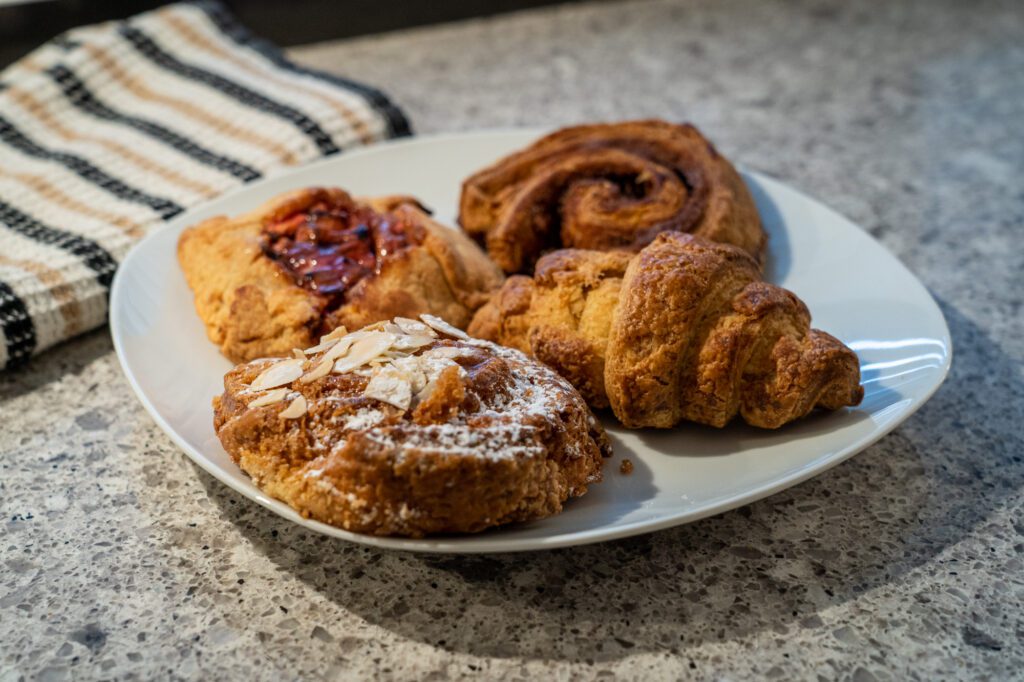
It’s also worth noting that my absolute top gluten free recommendation – the Gluten Free Epicurean – is a short distance to the east of Mount Pleasant, and is equally worth the journey for gluten free foodies.
After coffee and breakfast, you’re going to want to head to the Olympic Village – a neighborhood along the southern edge of False Creek that was built for the 2010 Winter Olympics in Vancouver – to start a nice walk along the southern part of the Seawall. Head here on Google Maps.
Walk the Seawall from Science World to Granville Island
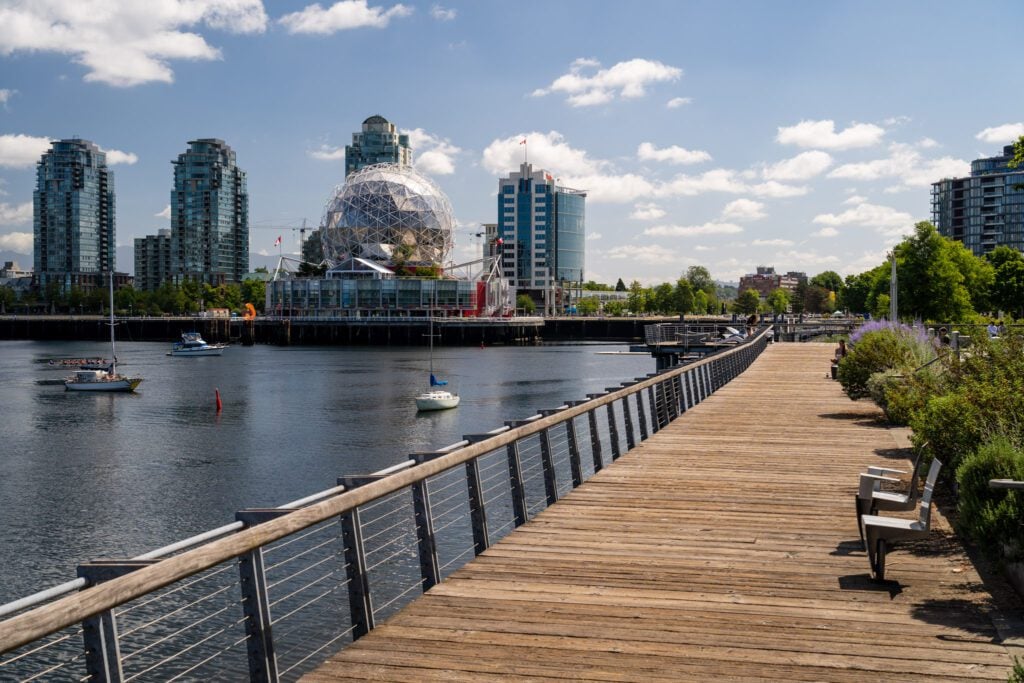
Maybe it’s just because London is top of mind after a relatively recent trip, but walking the southern seawall of Vancouver from Kitsilano past the Olympic Village to Science World very much reminded me of walking the south bank of the Thames in London, which I always try to do (often more than once) when I’m over there.
Throughout the walk, you’re looking across False Creek towards the skyline of Vancouver, and you’ll see it change from the dense towers of Yaletown (plus, B.C. Place, the main football – both kinds – stadium in the city) to the less dense West End.
We’d start at the eastern end of the Seawall near Science World and work your way back west towards Granville Island (you already did the western piece that connects Granville Island and Kitsilano Beach yesterday).
You’ll be starting in the Olympic Village, which was built for the 2010 Winter Olympics that were held in Vancouver.
It’s pretty wild to think about the huge infrastructure project that the city had to invest in to create this entire section of the city, turning it into a dense urban mixed-use neighborhood.
It took a while for it to fill up as a residential neighborhood, but today it’s a fantastic example of mixed use zoning and high-density housing.
The waterfront path through this part of town has stunning views of the skyscrapers of Yaletown and B.C. Place across the inlet.
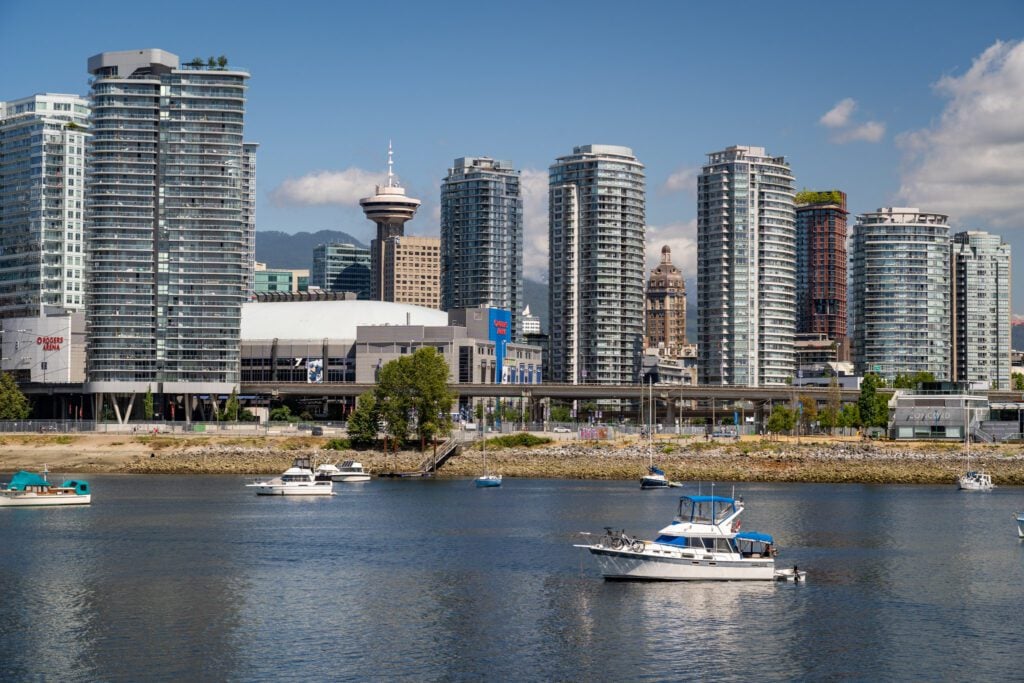
As you head west, don’t miss Habitat Island, which is a nice little diversion from the concrete path onto an island with great views across the inlet (it’s here on Google Maps).
We’d go all the way back to Granville Island, which you can either revisit, or use as a base for getting over False Creek to the other side of the water to get to your next destination.
You can also do this by bike, using Mobi Bikes (explained in the Stanley Park section), which is Vancouver’s bike share program.
A Pit Stop at the Bill Reid Gallery
One of the things I enjoyed most on my recent foray up to Vancouver was finally making it out to the Anthropology Museum at UBC, which is pretty clearly one of the best anthropology museums I’ve ever been to.
It’s a treasure trove of history and culture that existed in this corner of the continent before European settlers showed up, and offers a ton of insight into how the many different tribes that occupied these lands lived and viewed the world.
Plus, a lot of the art is downright impressive, like the towering totem poles featuring different creatures.
However, the big problem with the Anthropology Museum is the location.
It’s out on the peninsula to the southwest of the downtown core, which takes around an hour on the bus to reach (I know because I rode the bus out there).
With just two days (and without a car), you’re looking at dedicating about a quarter of your trip to getting out there and back, which probably isn’t worth it for most people.
If you don’t have time to make it all the way out to UBC, I’d highly recommend going to the Bill Reid Gallery of Northwest Coast Art, which is right downtown and has some great work from Bill Reid (as you might have guessed from the name), a Haida man who was into making all sorts of things with his hands.
The thing I found interesting about him is the fact that he only started exploring his ancestry when he was well into his 20’s, when he already had a penchant for working with metal and other materials, and eventually became one of the most well known artists in the northwest.
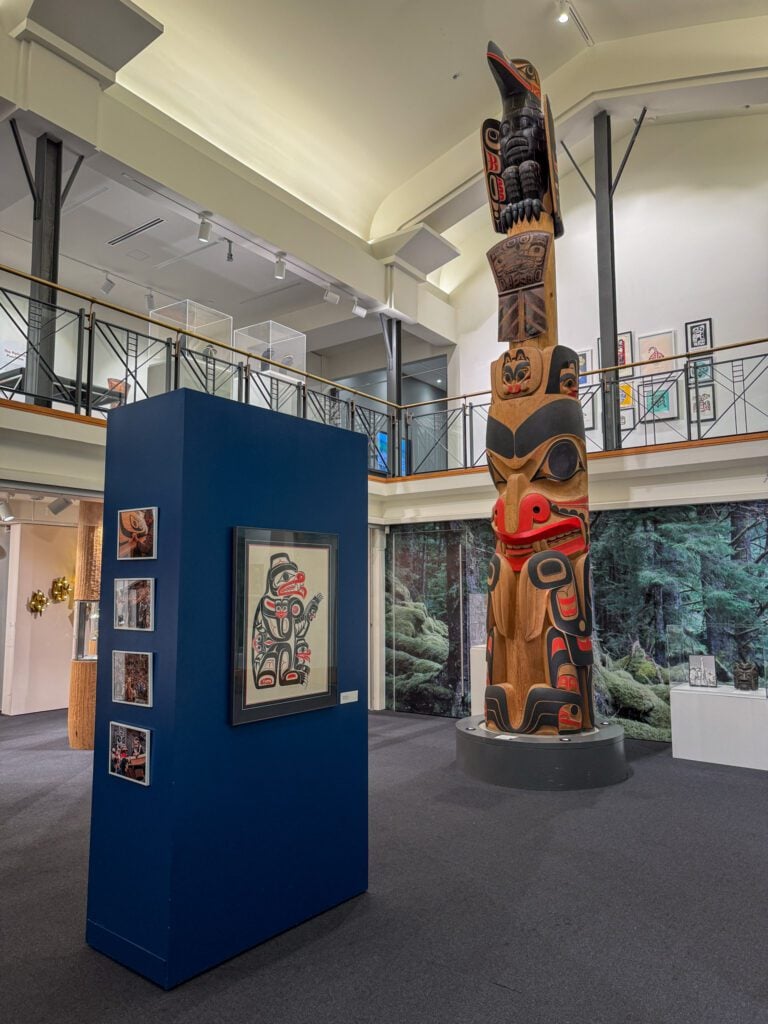
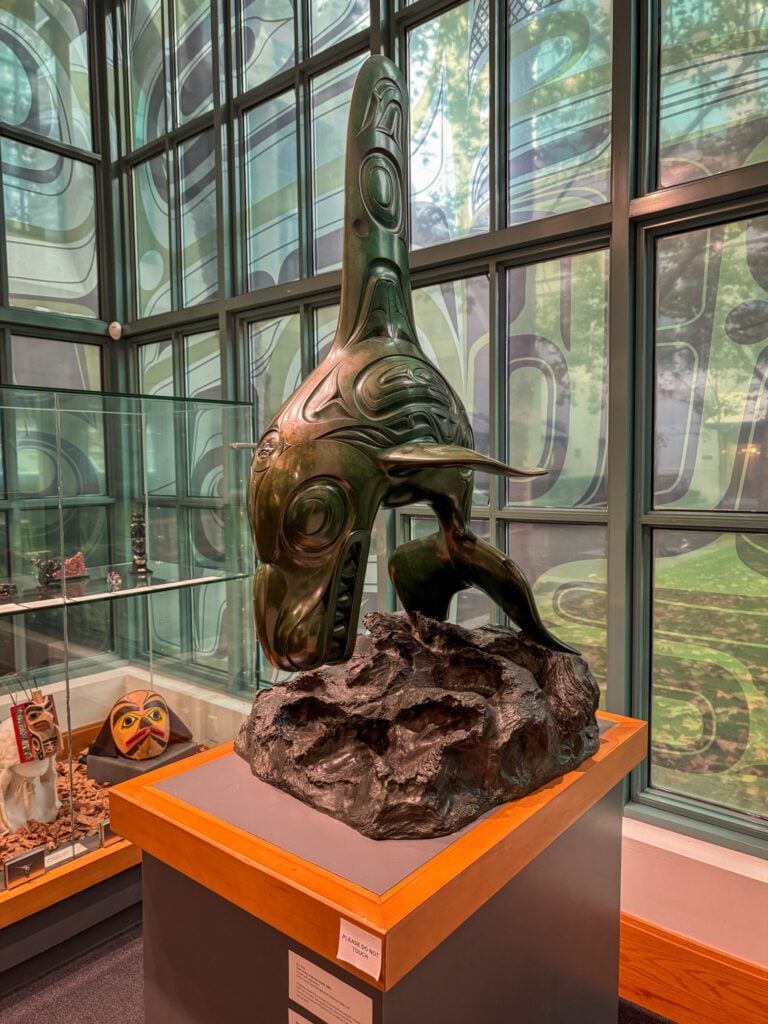
He actually worked with UBC on a lot of their projects, both as an artist and as an advisor and cultural ambassador (the famous Raven and the First Men at the Anthropology Museum is Reid’s work).
It’s worth a stop even if you do visit the Anthropology Museum, but it’s DEFINITELY worth stopping by if you can’t make it out there because it will give you a nice introduction.
Take the Ferry to the North Shore
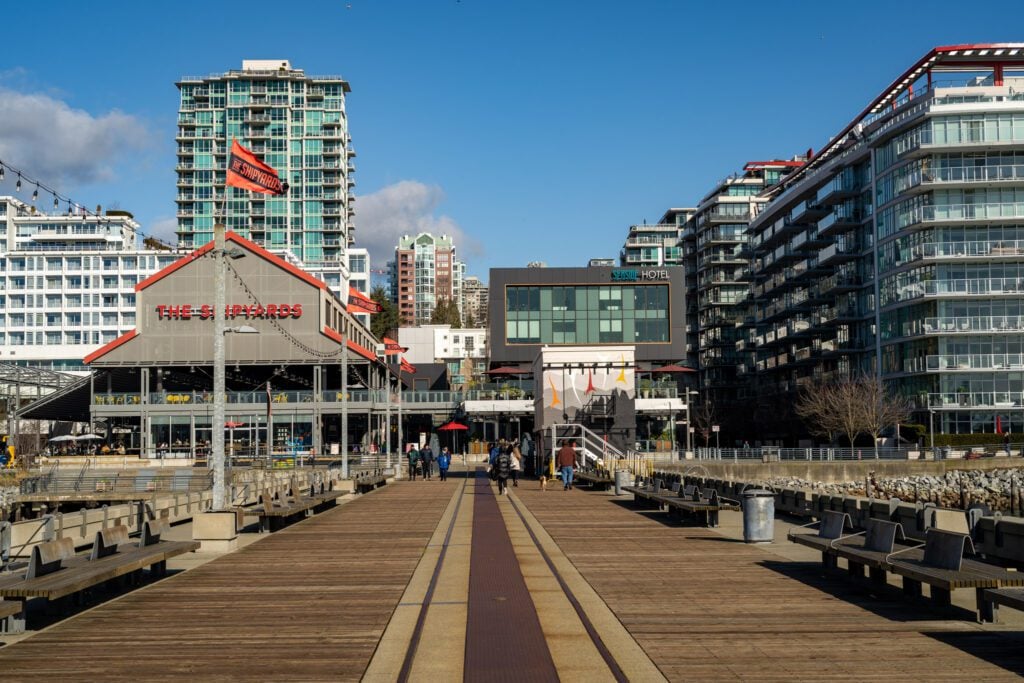
If there’s one thing we’re suckers for, it’s ferries that serve as public transit.
Maybe it’s the fact that I, Matt, grew up in Seattle, where ferries are a fairly common way to cross the Puget Sound to the islands, but I love hopping on a ferry to get around.
The SeaBus is a passenger ferry that connects Lonsdale Quay on the north shore of Vancouver with downtown Vancouver.
As you might imagine, it’s a very scenic ride, which is part of the attraction, and it only takes 12 minutes, so it’s actually an efficient way to get between the two places.
You’ll need to find your way across the downtown core after being on the south side of False Creek for the morning. Here is the Ferry Dock on Google Maps.
Here’s the SeaBus schedule – there’s only one route, and ferries run continuously back and forth all day, with more frequent ferries during commute hours.
Once you’re up on the north shore, here are some stops we’d make.
Nemesis Coffee: One of my favorite coffee spots in Vancouver that roasts their own coffee (versus buying coffee from someone else), they have a very nice space in the Polygon, an interesting building in North Vancouver. Good coffee, whether you just want a simple latte or you want a fancy single-origin espresso.
The Breweries: The area to the east of the main waterfront path gets very industrial, very quickly. Which makes sense given that this is a key piece of the port of Vancouver, one of the busiest ports on the west coast of North America.
Similar to industrial spaces in Seattle and Portland, that industrial area soon attracts new businesses who need space…like breweries.
There are a few of them tucked away between the car repair shops and other warehouse-y businesses, like North Point Brewing and La Cervecería Astilleros, that would make a nice self-guided brewery crawl.
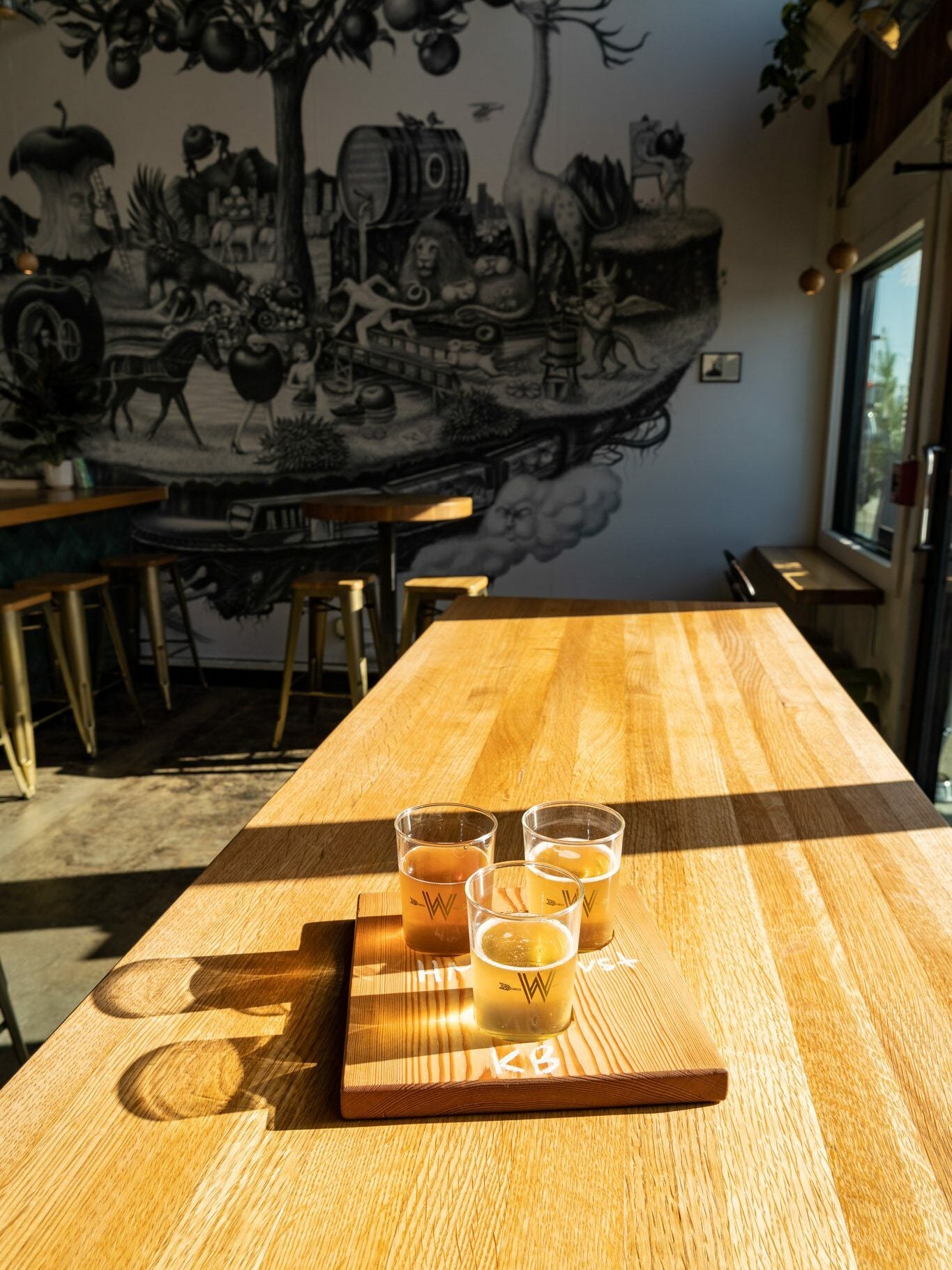
Windfall Cider: A cidery right in the heart of that industrial area! Good cider, too, especially if you’re into dry ciders.
Lonsdale Quay Market: Part food hall, part artisan craft fair, this is a little covered market on the waterfront promenade that is worth a stop. We found a nice souvenir shop here to grab some gifts to bring home for friends and family (we also liked Makers, here on Google Maps).
Earnest Ice Cream: A must in the summer, they have a scoop shop on a few blocks north of the main stretch along Lonsdale Quay. They also have a bunch of vegan flavors if dairy isn’t your thing.
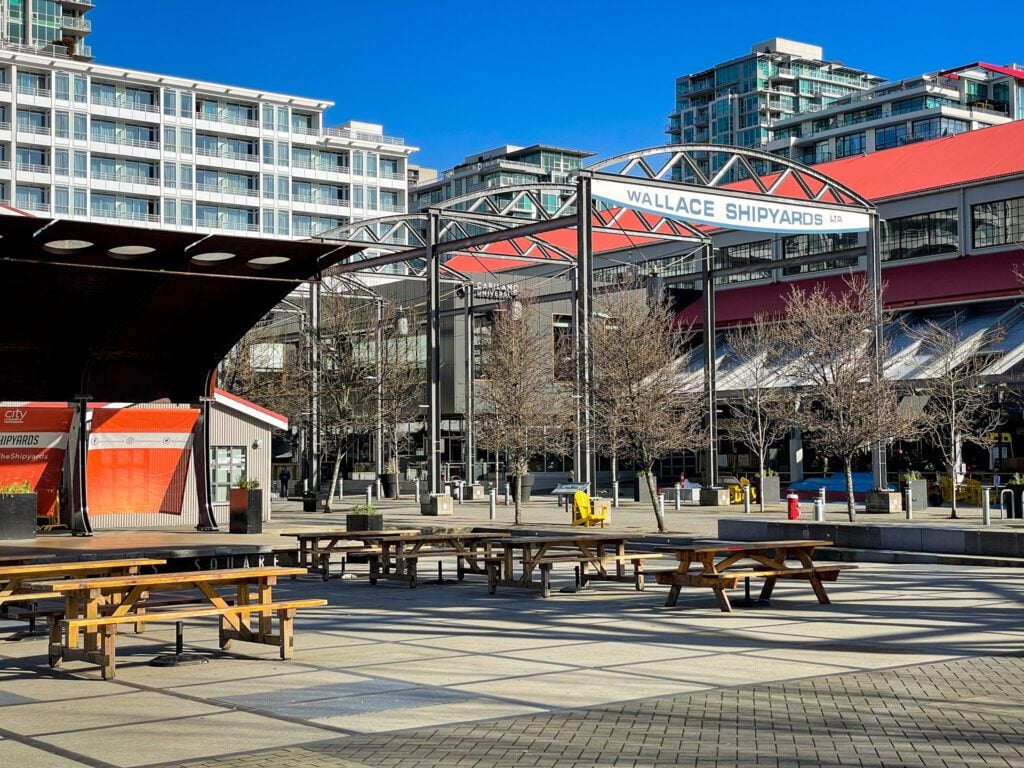
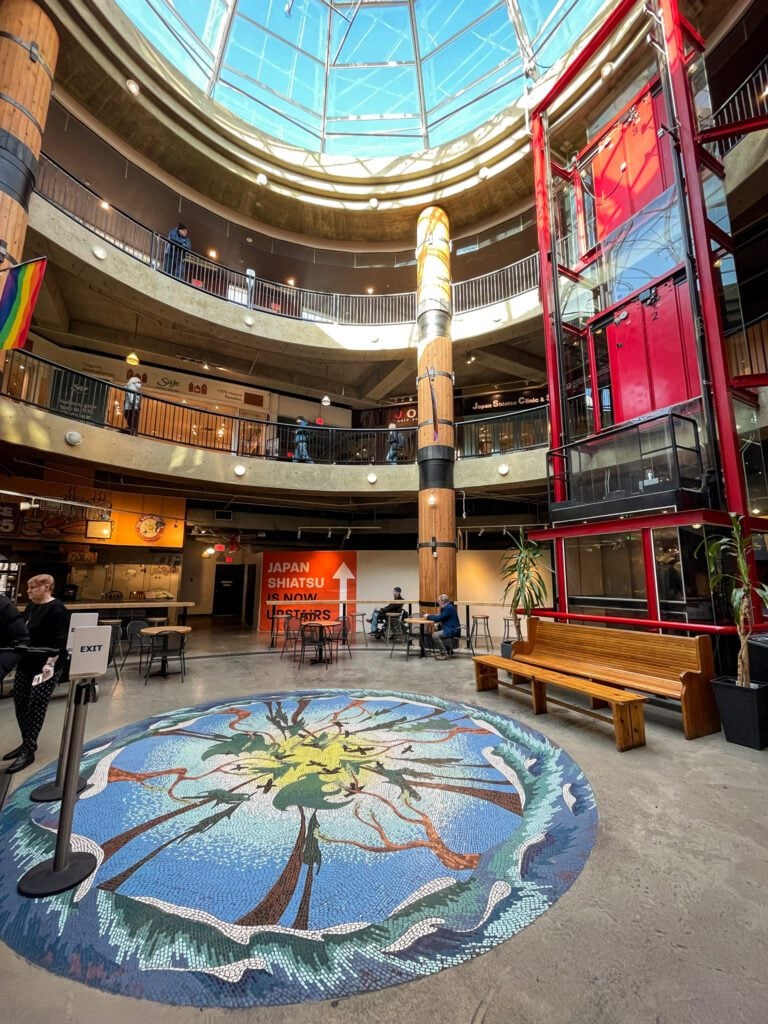
Every Friday evening in the late spring and summer, there’s the Shipyards Night Market on the North Shore, which has live entertainment, food trucks, a beer garden, and more.
Worth the journey on a warm Friday night during the summer if that’s when you’re in town.
An Evening in Gastown
Gastown is probably the best coffee neighborhood for that morning caffeine hit, but it also happens to be a great food neighborhood to close out your day with dinner and drinks.
For drinks, you have a few nice options, and once again it depends on what you’re into.
For a range of local craft beer (and a great cider menu), head to the Alibi Room, which is the O.G. craft beer taphouse in the city, and is right in the heart of Gastown.
They have an excellent craft beer and cider menu from local breweries and surprisingly good happy hour deals (that feature all of the beers on tap!).
For wine and cheese plates, head to Is that French, a wine bar on a back alley (that we have actually been to when it was called something different a few years ago).
They also have a dinner menu, but we’d say it’s a good spot for a glass of wine or two and an appetizer.
For dinner, you (once again) have quite a few options to choose from.
Here are three of our favorites.
Ask for Luigi: This is legitimately the best (gluten free) Italian food I’ve had outside of Italy. And it’s not particularly close.
Proper Italian food, not the Italian-American variant we so often find at home in the States. Cute little dining room – we loved the atmosphere.
It’s a very popular spot, and reservations are hard to come by, so reserve as far in advance as you can (usually the first of the month, the month before your reservation).
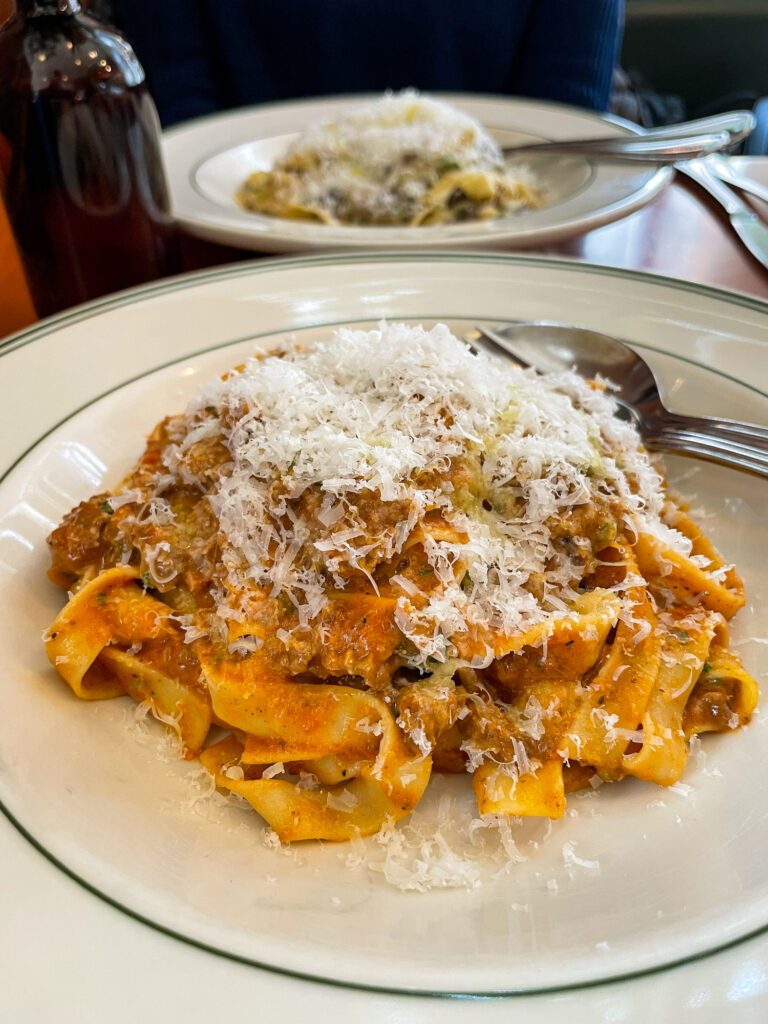
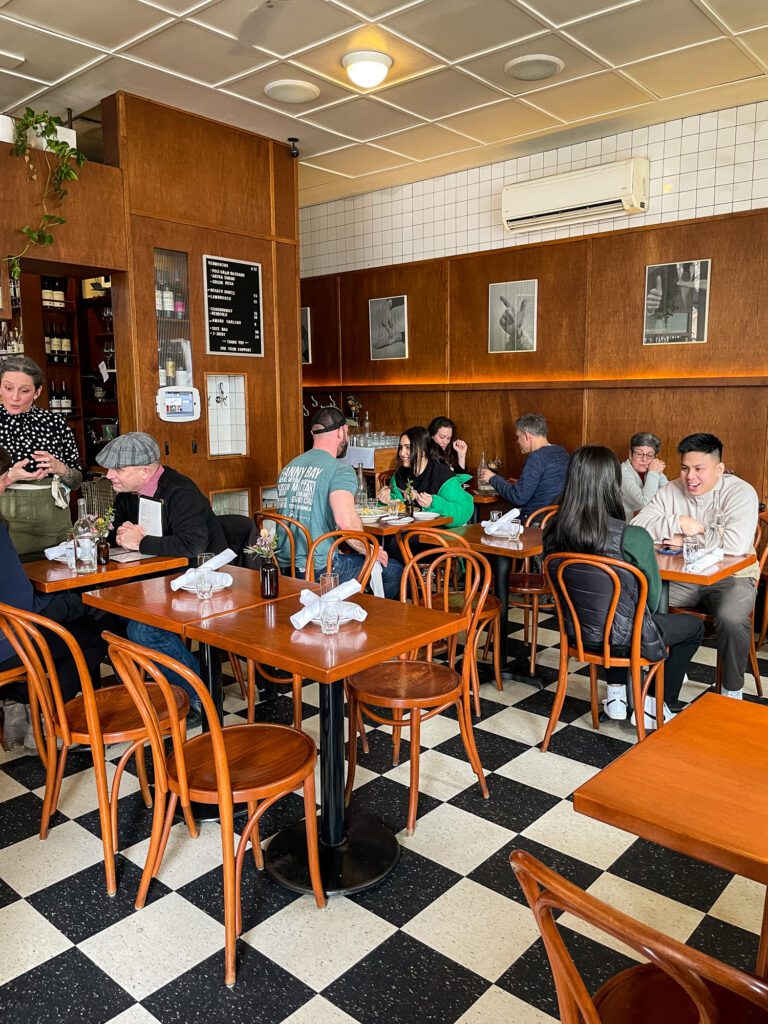
Machete: Not quite in Gastown – it’s near Science World or Chinatown to the southeast – but we wanted to include it here because it was my (Matt) favorite meal on my last trip to Vancouver.
They make machetes, which are basically long and skinny corn quesadillas (in the shape of a machete blade, roughly), which we’ve recently fallen in love with.
It’s not fancy, but it’s one of the most authentic Mexican spots I’ve ever been to outside the southwestern corner of the US.
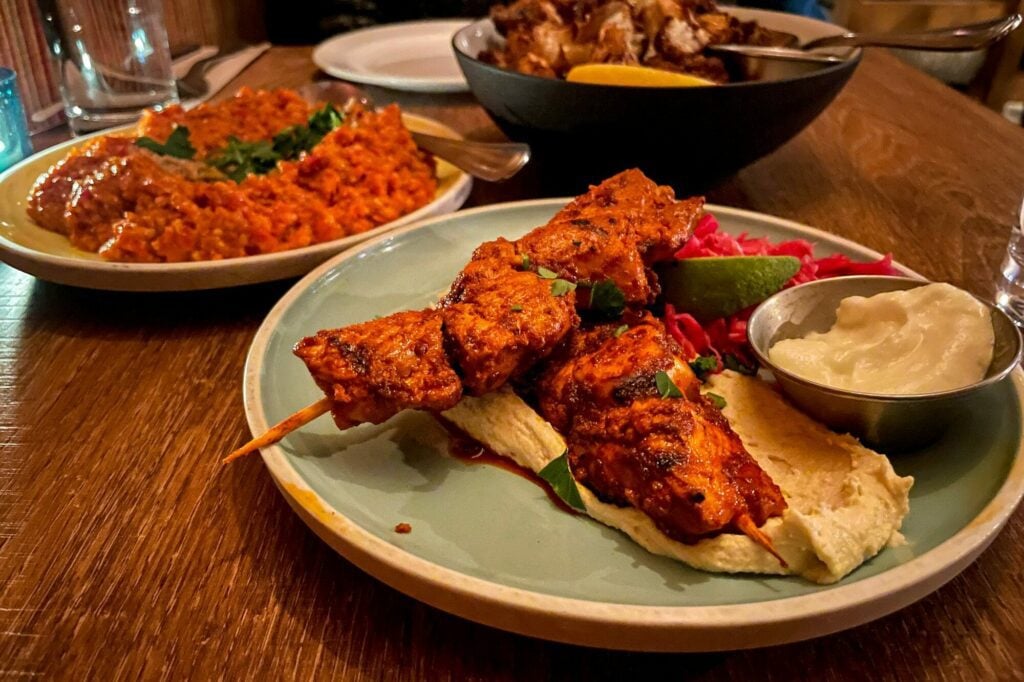
Nuba: We spent a very snowy New Years Eve here on one of our first trips up to Vancouver wayyyy back when, and it has been a staple on our trips ever since.
Mostly because it has a ton of gluten free options along with one of the best versions of shish tawook, a lemon-y, garlicky grilled chicken dish that we love.
What to Do with More Than 2 Days in Vancouver
If you’re lucky to have more time in Vancouver, here are a few things we’d add, along with the amount of time you’ll need.
For even more ideas, head over to our guide to what to do in Vancouver, which has all of our thoughts on what to do both in the city and within a short day trip.
Hit the Other Beaches (+½ Day)
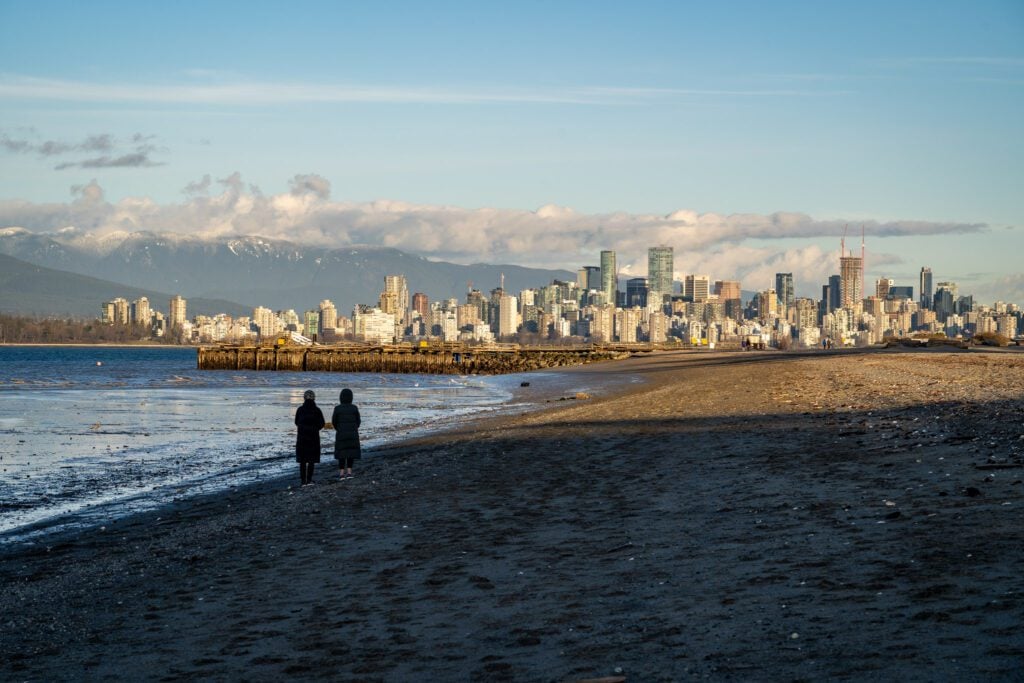
Did you know that Vancouver is a beach city? Neither did we until a recent trip when we had a car and took some time to drive around the peninsula where you’ll find UBC (west of Kitsilano), where you’ll find a string of sandy beaches, some of which have great views of the city.
Here are our favorite beaches (outside of Stanley Park) to visit in southern Vancouver:
Spanish Banks Beach: The place where we discovered that Vancouver is a beach city – Spanish Banks Beach is like Kitsilano, but with far fewer people because it’s just a bit further from Downtown Vancouver (though it’s still busy on a summer day).
Great views of the skyline, and lots of nice facilities like volleyball courts and picnic tables.
Wreck Beach: Wreck Beach is on the southwest side of UBC (just south of the Anthropology Museum), and you should know going in that it’s clothing optional, so you may see some naked people.
The other thing to know is that it’s a big descent from the road to the beach down a long flight of stairs, and what goes down must come back up.
With those two notes out of the way, it’s a lovely driftwood-laden sandy beach that looks west across the Strait of Georgia towards Vancouver Island.
You can find it here on Google Maps. Oasis Beach, which is a little further south, is also worth a visit.
You can make a nice afternoon by starting at Spanish Banks Beach (or Jericho Beach, which is just west) and walking along the coast around the peninsula, alternating between the beachfront path and the forested Admiralty trail (which is just across Marine Dr.).
Something like this would be lovely, which is a 6-7km walk (that’s around four miles, for us Americans).
Learn a Thing or Two at Vancouver’s Museums (+1-2 Hours Each)
There are a couple of museums in Vancouver that we enjoyed, and if you’re interested in diving a little deeper into the city’s past to learn how we got to the beautiful urban paradise you see today, they’re worth a couple of hours of your time.
The UBC Museum of Anthropology: Honestly, this museum should be high on everyone’s list when they come to Vancouver because it is the single best museum of its kind that I have ever experienced (and I LOVE an anthropology museum).
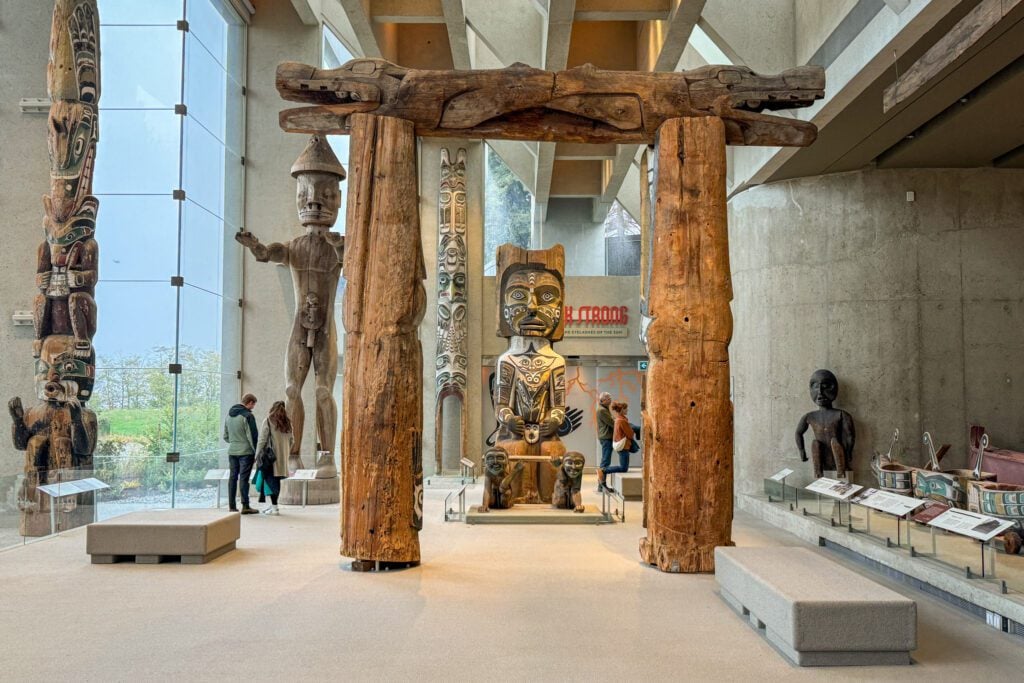
The reason why most people are going to end up skipping it is the fact that it’s wayyyy out on the peninsula to the west, and it’s not particularly easy to reach if you don’t have a car (more on that in a second).
However, logistics aside, I really enjoyed it, and think it gives you great insight into the diversity of cultures that exist in the northwest corner of North America.
A lot of the pieces in the gallery are also just downright impressive, like massive totem poles with all sorts of creatures, huge canoes, inventive little dry boxes that are built to be watertight for transporting important goods on the water.
One of the things that I found really interesting – and it’s something that makes a ton of sense once you think about it – is the fact that most of the big artifacts you’ll find here are not things that were taken from existing villages, but they were commissioned by the museum (not all, because some were collected before that policy was in place).
A great example of this is the famous Raven and the First Men, which is in the Bill Reid Gallery and is displayed beautifully.
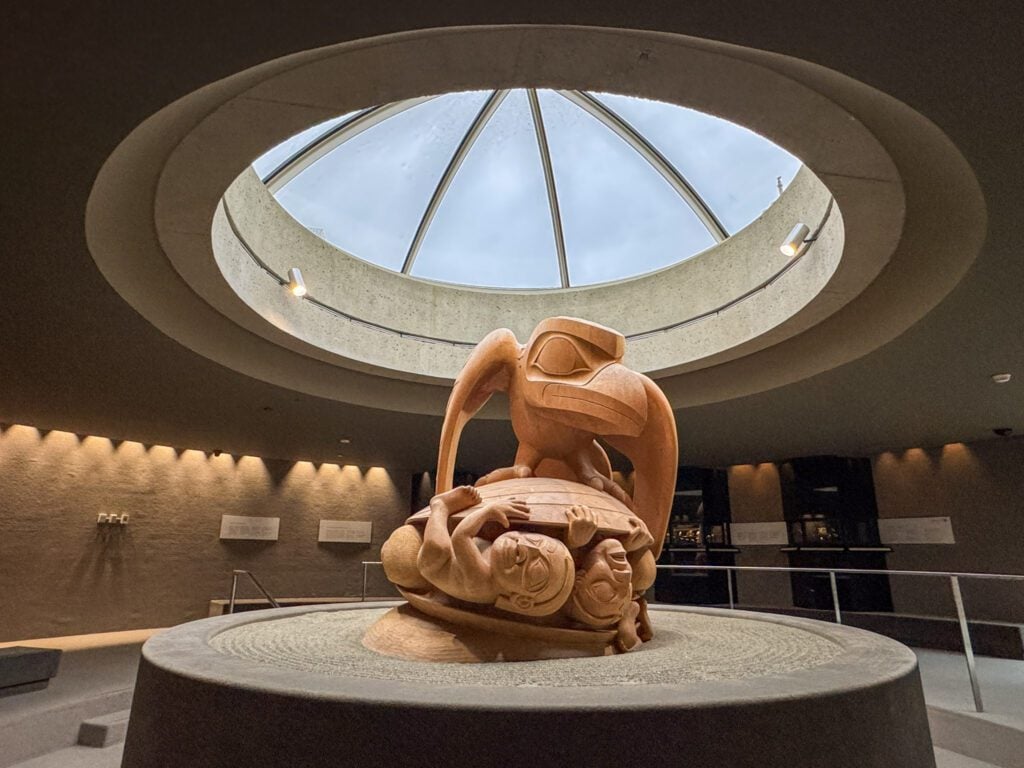
It’s worth noting that I tried to come on a day and time when they had a guided tour running, and the people at the front basically said that the website wasn’t updated and not to trust it. Which was a bummer for me, but is good context for you.
The museum is open late on Thursday evenings (until 9pm), and admission is half off between 5pm and 9pm.
Now for the logistics. One of the most challenging parts of visiting is the location on the peninsula on the southern side of False Creek (and the Burrard Inlet). If you have a car, it’s easy, and you can make a nice half day of it by including all the beaches around the point!
If not, you’ll have to take a long bus ride from the downtown core out there, which is what I did. It’s easy to do, since there are so many buses coming from the rest of the city to UBC, but it does take a while on the bus.
The Museum of Vancouver: This compact museum on the point near Kitsilano is small, but takes you on a journey through the history of the city from first nations people who called modern-day Vancouver home, to the important urban planning choices they made in the 20th Century to maintain the city’s urbanity, and plenty more.
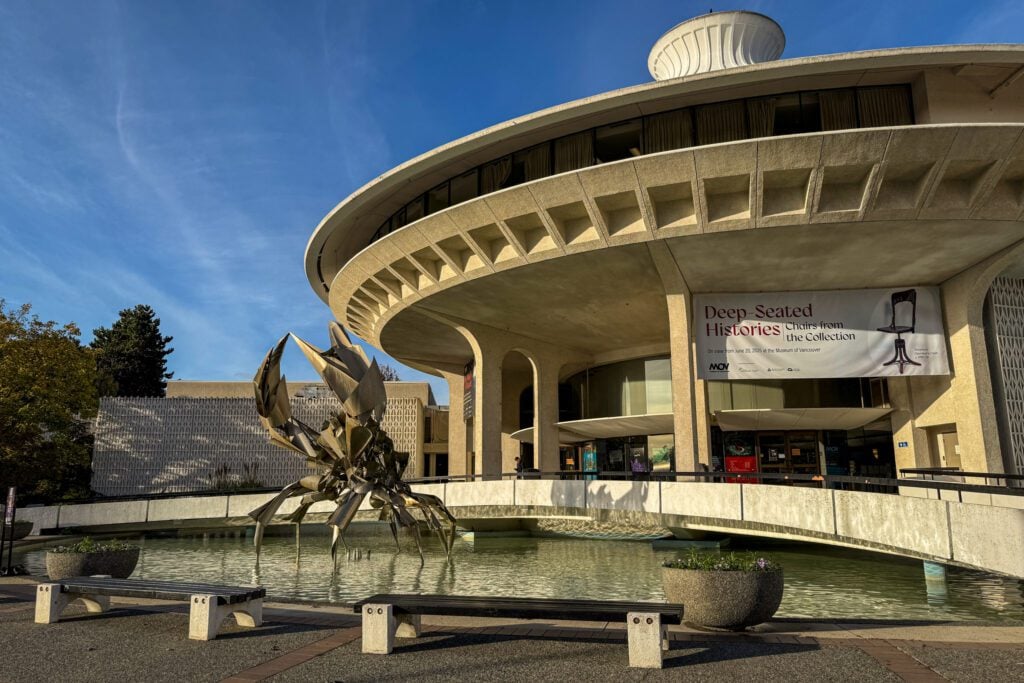
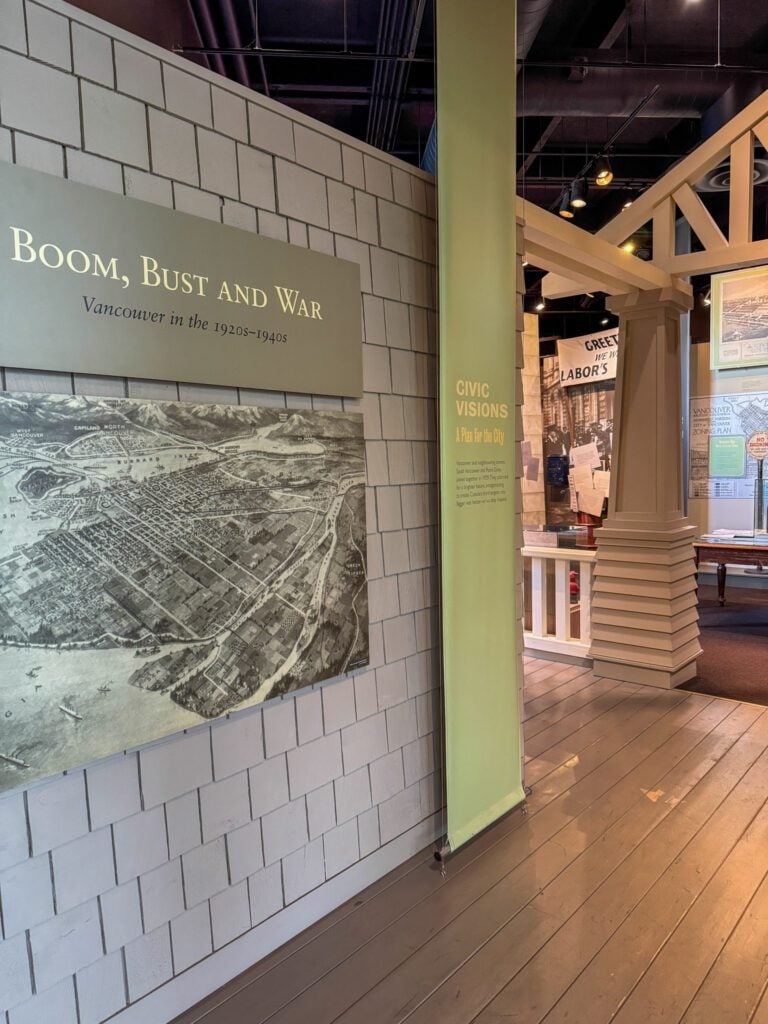
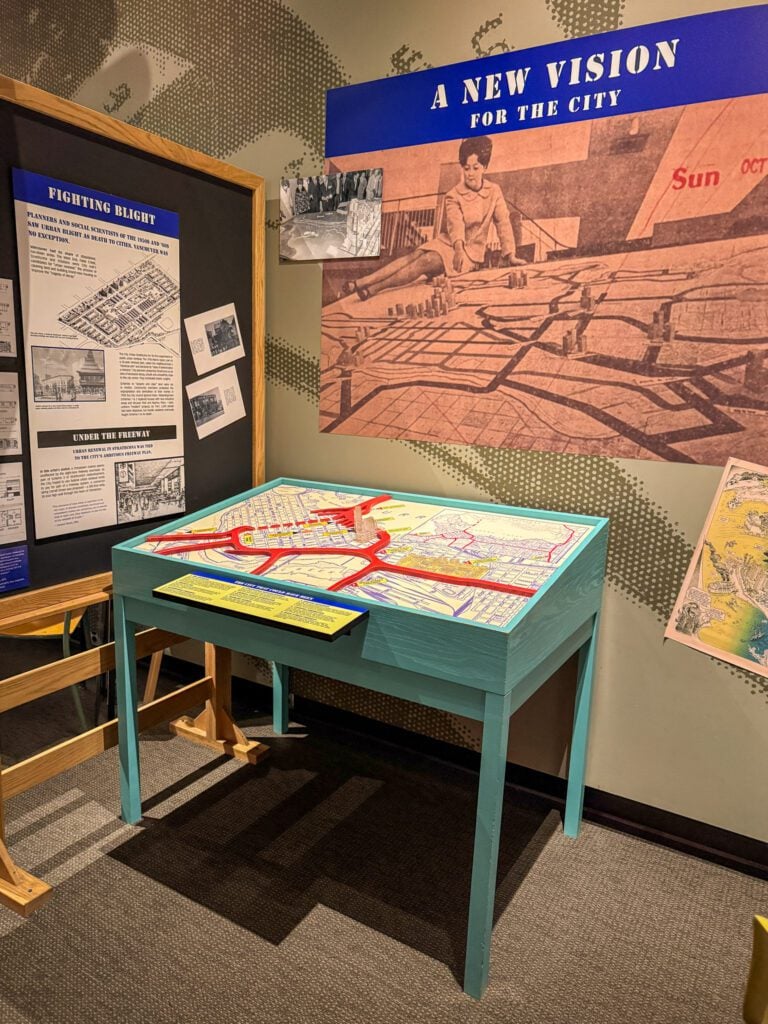
The location makes it an easy addition to the walk to Kitsilano on day one.
Catch a Sporting Event – Mainly, Hockey (+2-3 Hours)
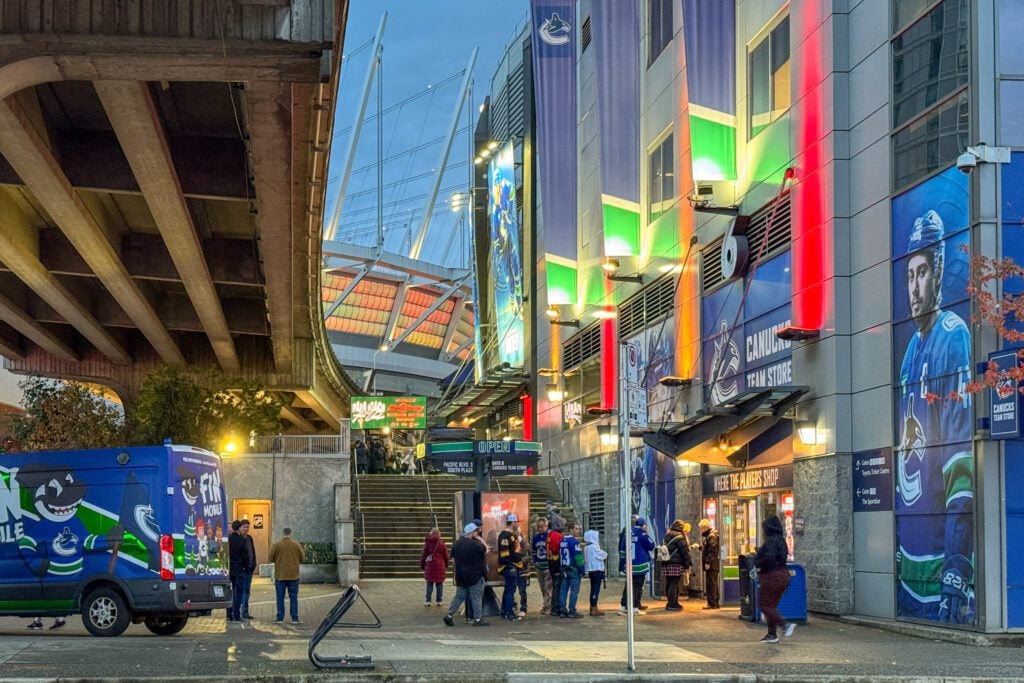
This one very much depends on what time of year you’re in town, and whether or not you get lucky with planning a trip on a weekend where one of the teams happens to be playing at home.
The stereotype of the friendly Canadian is very much a stereotype for a reason. All of the Canadians I know personally are extremely friendly, helpful, and affable (hey Brian and Jenna!).
However, when it comes to hockey, they turn into Philadelphians, who are famous for their rowdiness around sports (win or lose).
You may remember back in 2011 when the Vancouver Canucks lost in the Stanley Cup and fans absolutely just lost their minds for 12 hours, rioted, and caused ~$5 million in damage to the city. It made global news, and there were a bunch of people who were arrested and charged with their role in it.
The sports hub of Vancouver is in Yaletown, on the eastern end of the downtown core, where you’ll find the two main sporting venues; B.C. Place (home of the Vancouver Whitecaps of MLS, and the BC Lions of the Canadian Football League) and Rogers Arena (home of the Vancouver Canucks, the city’s NHL team).
We’re big fans of cities where the sports infrastructure is nestled within the city center – like Portland, Seattle, and Vancouver – rather than an hour outside the city in a big parking lot, which is what you’ll find in many North American cities (read: American cities).
Hockey season runs from roughly October to June, so if you’re here in summer and early fall (which are the best times to visit, we think), you’ll be in town outside of hockey season.
Otherwise, that’s the sport we’d recommend choosing while you’re in Vancouver.
In the summer, we think the move is a Whitecaps game.
Sure, this is partially driven by the fact that Matt is a big soccer nerd, but it’s also true that the long, warm summer evenings make for a lovely atmosphere to catch a soccer game at B.C. Place (also, the Whitecaps are good right now at the time of writing!).
The BC Lions – the Canadian Football League team in Vancouver – also play during the summer, so that is another good option.
Lynn Canyon Suspension Bridge (+½ Day)
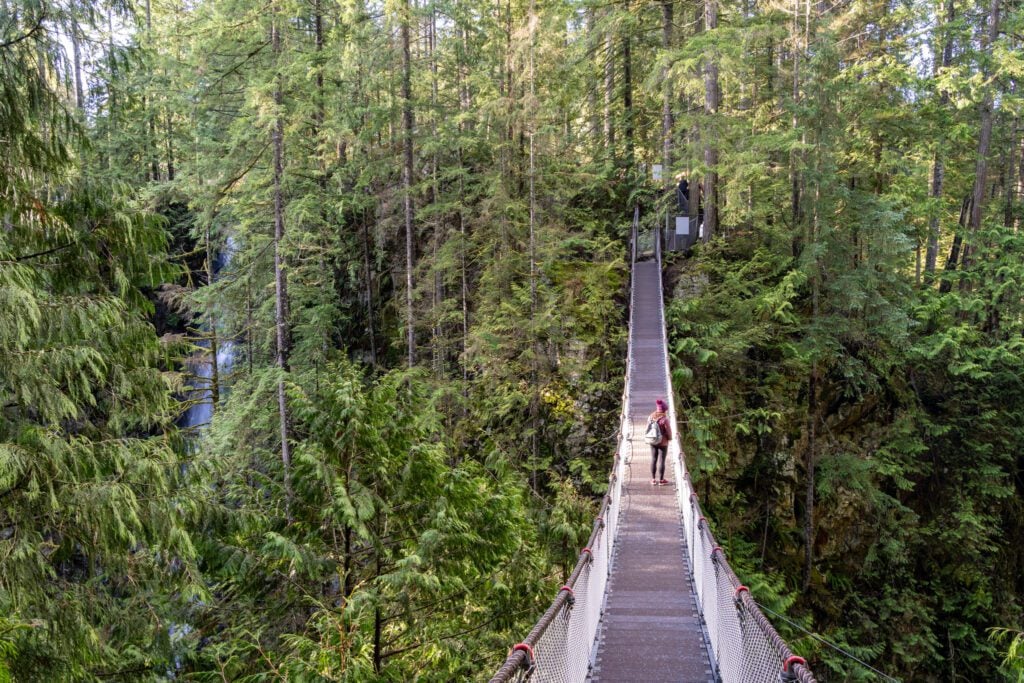
While Capilano Suspension Bridge is the more famous one, we were shocked to see their ticket prices a few years ago ($75 CAD per person at the time of writing this), and immediately pivoted to Lynn Canyon, which is a free park northeast of the downtown core.
If you’re looking for a suspension bridge for the low price of completely free, this is the place to go!
Sure, the facilities aren’t as neat as the ones at Capilano and it’s a bit harder to get to (especially without a car), but it’s a county park and it’s free to visit.
We’ve done it, and there’s a very nice forested loop that takes you to the Lynn Canyon Suspension Bridge and then down to the water level. More trail information here.
The challenge here is transportation.
It’s best if you have a car, but you can get here on the bus either straight from downtown Vancouver (Route 210 to Underwood Ave and Evelyn St) or from Lonsdale Quay on the north shore (Route 228 to Lynn Valley Rd and Dempsey Rd).
It makes the most sense to tack this on to a trip to the north shore, we think, because you’re already more than halfway there by the time you’ve crossed the water on the SeaBus.
Lighthouse Park (+½ Day)
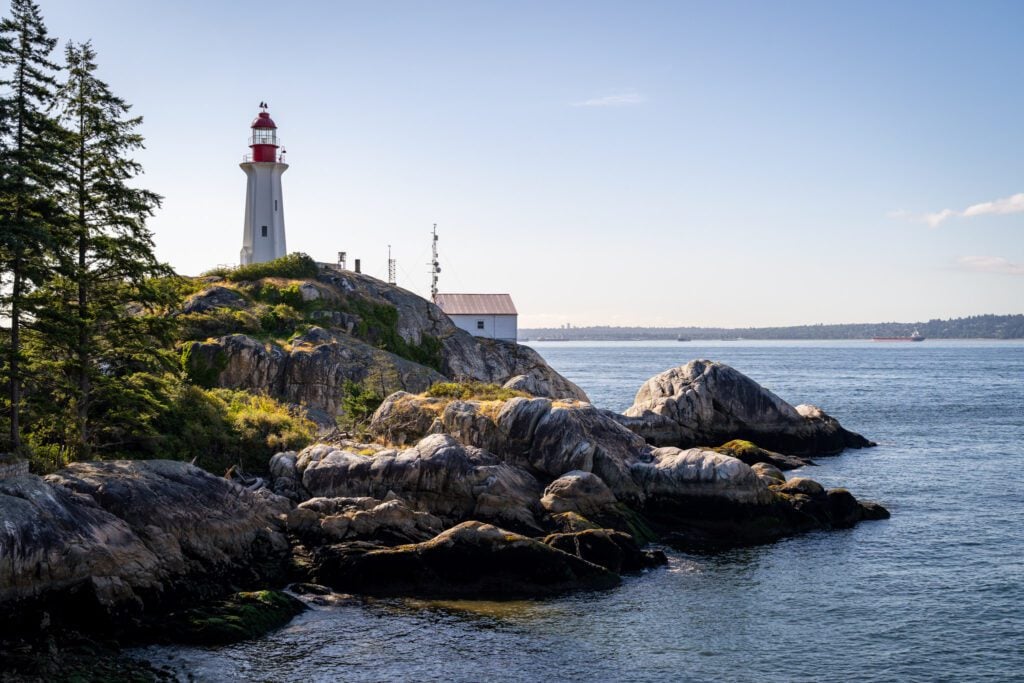
If you happen to have a car – this one is really only accessible with a car – we really enjoyed this little coastal hike when we did it.
Lighthouse Park is out in West Vancouver at the western end of the city’s north shore before it turns north and has, you guessed it, a lighthouse that you can hike to on a nice little loop.
We came out here on a beautiful summer morning and found a very pleasant hike with nice coastal views towards Bowen Island and Vancouver Island in the distance.
If you have a car, this would be our second choice after Lynn Canyon, though it’s basically not possible if you can’t drive yourself.
Make sure to stop at Isetta, which is right on the road out there, on your way there or back for coffee (or drinks) and a bite to eat.
What to Do with Less Time in Vancouver
If you find yourself with less time in Vancouver, likely between 24 and 36 hours, we’d essentially follow day one of the itinerary above as written and potentially grab dinner in Gastown instead of Kitsilano, depending on what you’re into and what reservations you’re able to get.
With an extra half day, we’d probably stay in the city and explore Mount Pleasant rather than heading across the water to North Vancouver.

Thanks for this lovely and thoughtful post. I am from the PNW, so you won me over with your coffee recommendations at the start of each day. Thanks, this is much better than asking AI 😉
Thanks for the kind words! Spoiler alert: AI is getting its information from sites like ours anyway, so you might as well go directly to the source. Cheers!
Thank you so much for this information. It was a delightful read and I hope to do some of your recommendations.
Thanks for the kind words, Patty! Hope you love Vancouver as much as we do.