
Our Favorite Things to Do in London (for First Timers)
Is London our favorite city in the world? It’s hard to pick just one, but if the criteria is something about rich history, great food, and extremely good public transportation (Matt is a nerd), then it has to be somewhere near the top.
Put a different way, if we have a chance to go spend anywhere from a few days to a couple of weeks in London, we’re probably going to do it.
Over the past few years, we’ve spent a month in London, and we have plenty of thoughts and opinions on what you should prioritize (and what you shouldn’t) with limited time.
London is a massive city with tons of great history, art, and churches. However, while those things are great, we don’t think a trip to London should be full of running between those traditional tourist attractions.
Instead, we think it should be a blend of those things plus exploring London’s food markets, walking some more off-the-beaten path routes, and soaking up the atmosphere of the city’s excellent green spaces.
In this guide, we’re not going to give you a list of every single museum, park, and church that you could possibly see in London.
Instead, we’ll give you a blend of the main attractions in London – what they are, some historical context, and how to see them – but we’ll also give you some of our other favorite things to do in London.
Armed with that (and our guide to planning a London itinerary), you’ll be ready to plan a trip that will go a level deeper than most and learn about the different aspects of London’s complex history as a global superpower that shaped the city (and world) as we know it today.
Learning is our favorite part of travel, which you’ll probably realize as you read this.
Sound good to you? Let’s get into it.

Disclaimer: Some of the links in this post, like hotel links, are affiliate links, meaning at no additional cost to you, we make a little bit of money if you click through and book. That being said, we would never recommend something to you that we don’t stand behind 100%.
See Where it All Began at the Tower of London
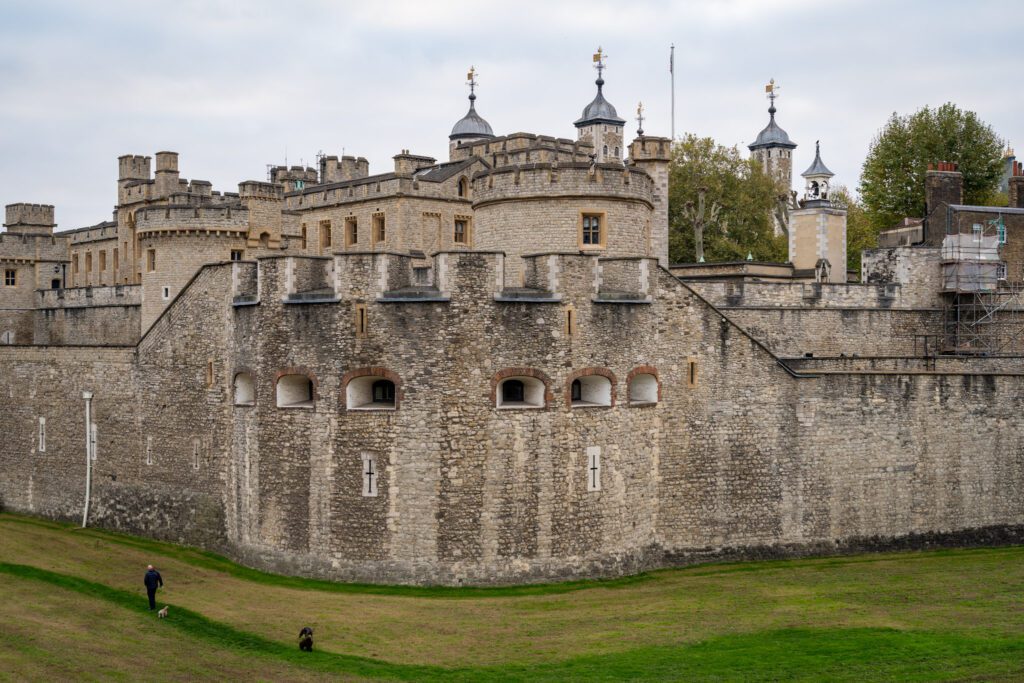
Prior to my last trip to London, I had been to the Tower of London two separate times, both independently.
The thing I took away from the Tower over the course of those two visits – aside from how ridiculously opulent the crown jewels are – was that they did a lot of torture on those grounds.
I viewed it as kind of a quirky tourist trap, and decided it wasn’t even worth visiting on my first trip back to London after almost a decade away.
However, it wasn’t until after my latest visit (when I did this early access tour with Walks, my favorite tour company in Europe) that I grasped how central – literally and figuratively – the Tower of London is in the city’s history.
Over my last two trips to London, which have spanned just a hair under a month in total, I have done several walking tours and asked countless (very patient) Brits questions to understand how, exactly, this massive modern metropolis ended up here on the banks of the Thames.
And, generally speaking, the area around the Tower of London plays an important role starting with the Romans, who established Londinium as a trading post and built a wall around the settlement, pieces of which are still standing today (you can see it near the Tower of London here).
The Tower of London as we know it was built about 1,000 years later, and served as a fort and castle overlooking the Thames, a crucial route for accessing the British Isles.
Since then, it has served multiple other purposes, including palace and prison, and is inherently intertwined with the history of the city.
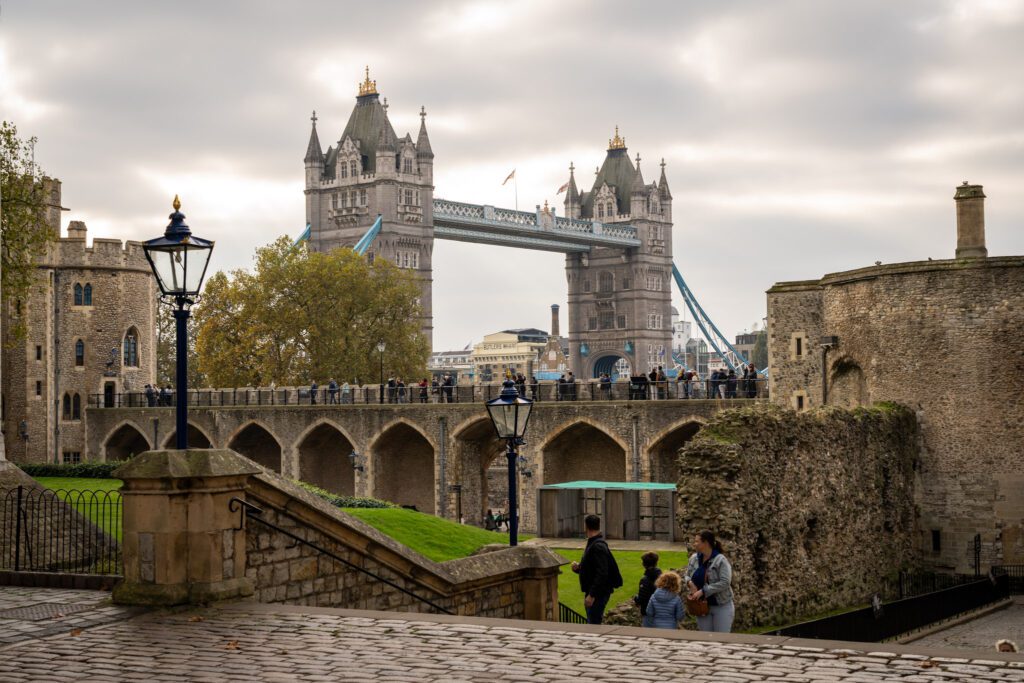
There are two things that the Tower of London is most famous for.
First, the crown jewels.
The royal collection of ridiculous jewelry (my favorite is the solid gold bathtub-sized wine vat and the matching bejeweled serving ladle) sits in the ground floor of one of the buildings at the Tower, and it’s the busiest piece of the complex.
It’s worth seeing – the only time they’re not there is if they are being used for a royal ceremony – but it’s also worth remembering that a lot of the things you’re seeing were straight up stolen (sorry, obviously freely given to the British Empire as tribute or as part of a peace treaty).
Second is the darker side of the Tower of London, its history as a prison and torture center for the royal family.
The most famous execution is that of Anne Boleyn, the second wife of Henry the VIII (divorced, beheaded, died, divorced, beheaded, survived), who was executed for high treason for the crime of… only giving the king a daughter and no sons?
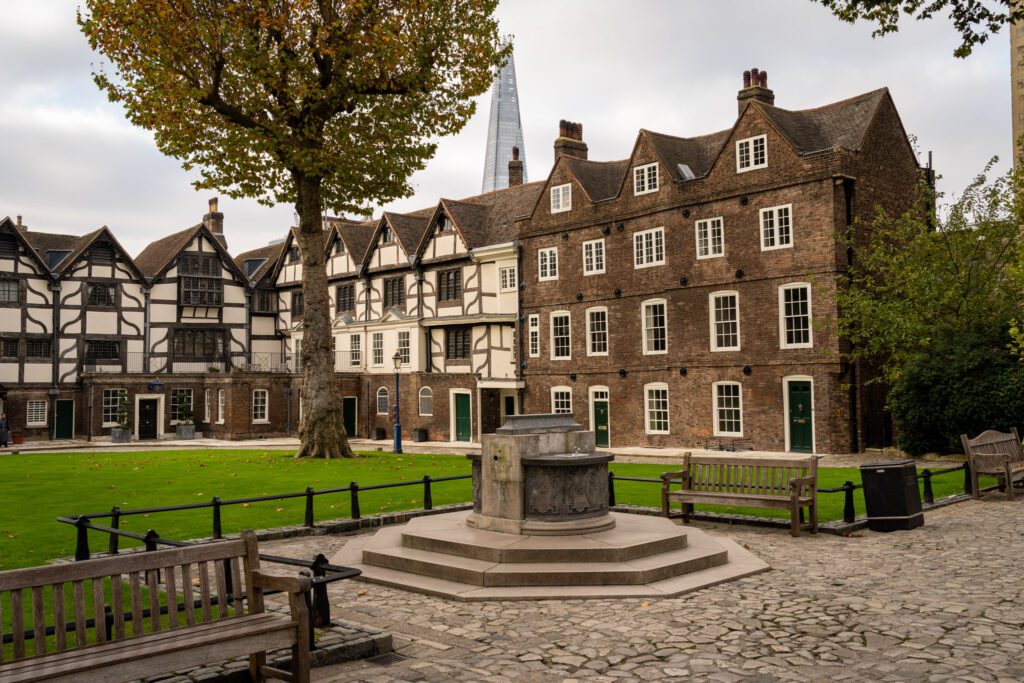
It’s dark. Though it’s made a bit less dark by the musical SIX, which we saw a few years ago and absolutely loved.
There are a couple of rooms around the Tower of London with a variety of torture devices that you can check out.
Don’t think too hard about it because it gets dark FAST.
In terms of your visit, we’d buy tickets in advance, and we’d try to get tickets for the earliest possible timeslot so that you can make a beeline for the crown jewels, get that out of the way before the long lines form, and proceed to explore the rest of the tower at a more leisurely pace.
This is the official site for buying tickets.
If you want to do a tour to get a deeper understanding of the Tower of London and get somewhat exclusive access to the key ceremony, where the Yeoman Warders march the keys to and from the front gate to unlock (or lock in the afternoon) the gates, I highly recommend this early access guided tour, which I did on my last trip and really enjoyed (plus it gets you in before the general public).
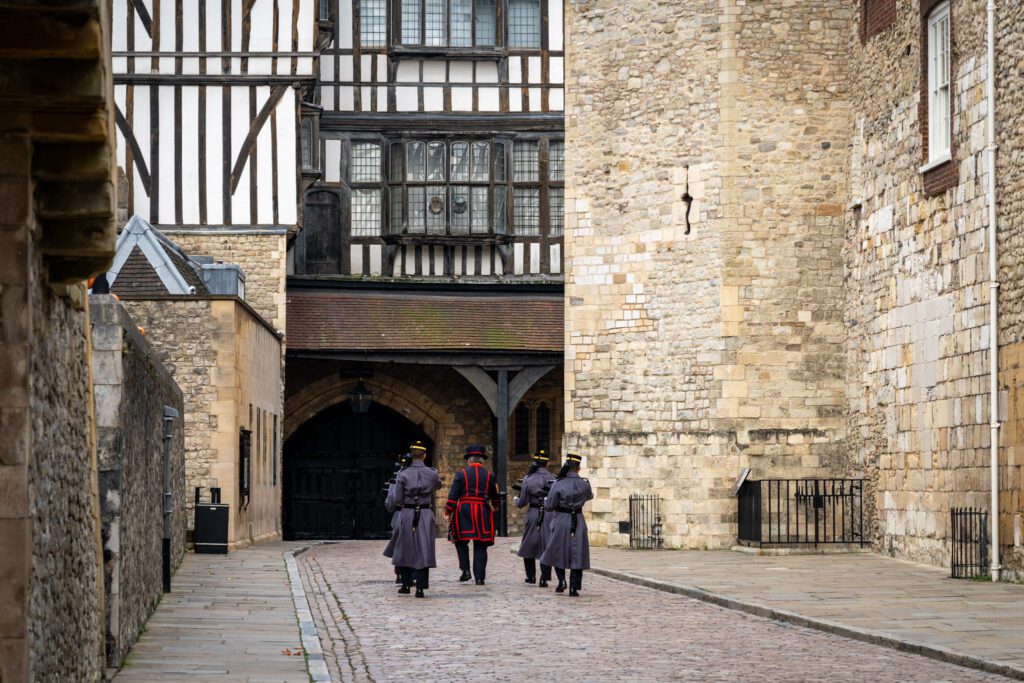
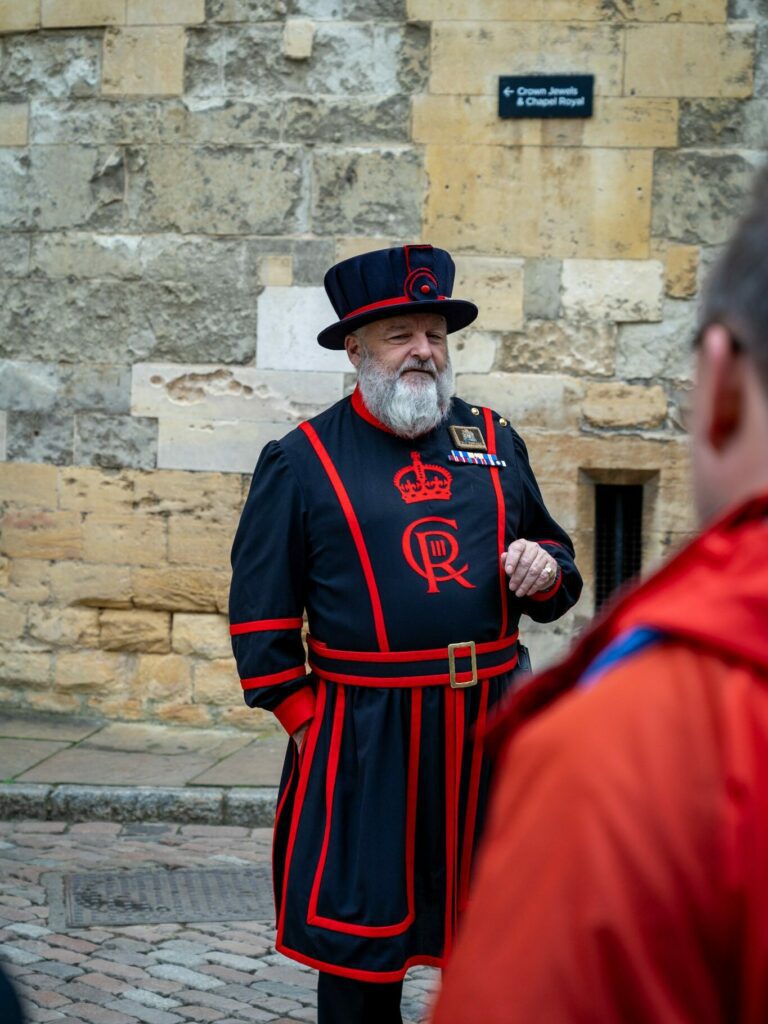
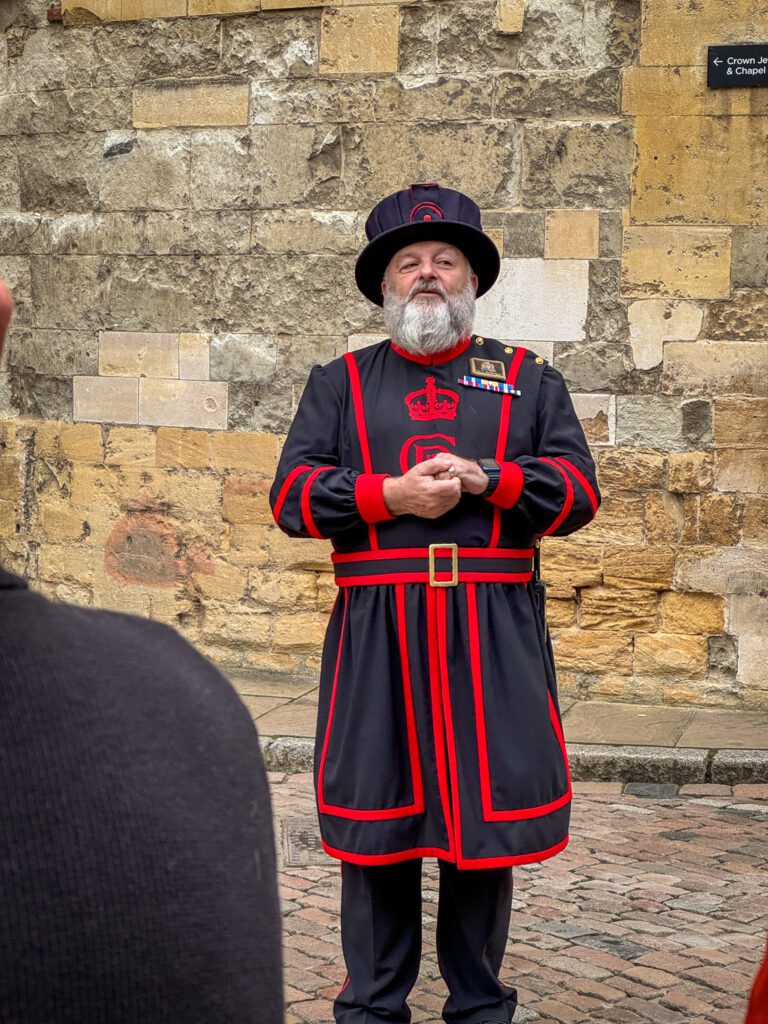
They also have a similar after hours tour that gets you into the Tower after it is closed to the public, which would be another good option if you want to see it with a fraction of the crowds.
Take a Walking Tour to Dive Deeper into London’s Roots
Over the past several years, we’ve come to the realization that walking tours are often our favorite way to get oriented in a new city for a few reasons.
First, you get a crash course in history and culture, which is a valuable baseline that will make the rest of your trip more enjoyable.
Second, you get to spend a few hours with a local who will give you all sorts of tips about what to eat, drink (and see), and specifically where to find the best version of said things.
Last but not least, you’ll discover new and interesting places that you definitely would never have found on your own.
We almost always start our trip with a walking tour for these reasons (and the fact that it’s helpful to get outside and move to combat jet lag).
London is no different, but the size and scope of London make choosing a walking tour a little different than other more compact cities.
There is simply no way to see any significant portion of London’s main sights on foot.
Instead, doing a walking tour in London is about zooming in on a specific aspect of the city, like a neighborhood or a theme, and focusing on that thing as a way to gain a deeper understanding about the city as a whole.
We’ve done two great walking tours in London over the last few years, and had another one on our list, but the timing didn’t quite work out.
The first is a tour focused on the archaeology in the City of London, London’s original core that was surrounded by the city walls, but is mostly a financial district in modern times.
You’ll cover 2,000 years of history over the course of a couple of hours, seeing the remnants of that original city in modern London with Khalid, an archaeologist who has been involved in multiple projects unearthing new ruins around London.
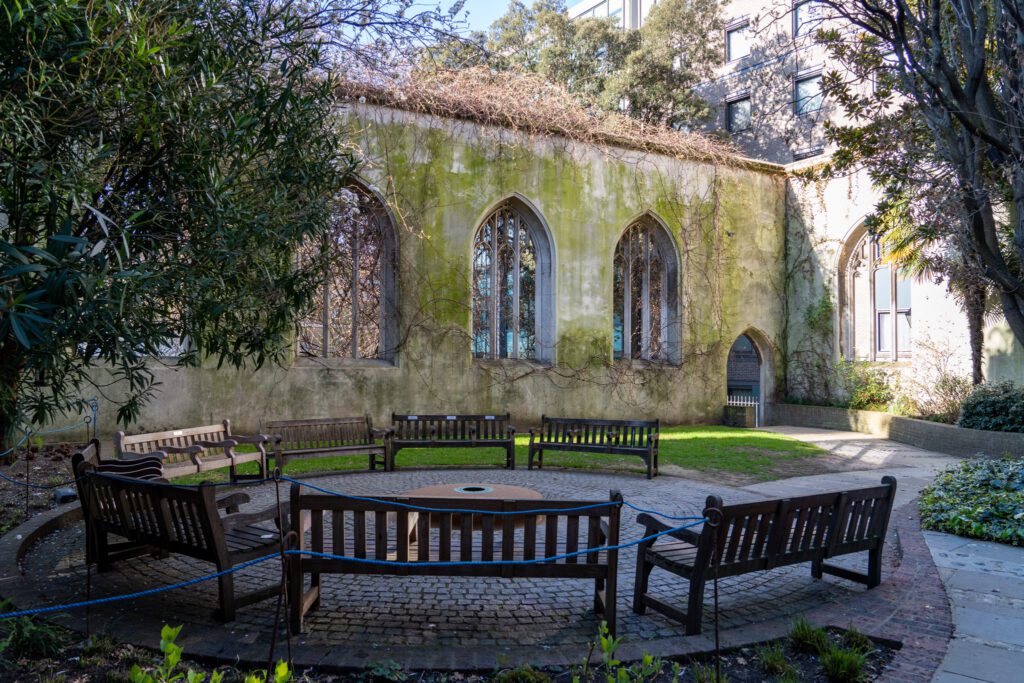
He’s truly an expert in the field, which makes all of the anecdotes and stories he tells that much more immersive.
The second is a walking tour focused on the City of Westminster with a Terry, a historian and professor, which takes you through a different slice of the city’s dense history by focusing on the borough that started as a pastoral backwater outside the city walls and became the center of political and religious center of the British Empire.
Both are great walking tours, and which you choose will largely depend on what you’re interested in.
For what it’s worth, the first tour with Khalid covers a bit more ground and takes you to places like Tower Bridge and St. Paul’s Cathedral, which we enjoyed to get a bit more context on those sights.
We’d highly recommend choosing one to do on your first day in London as a way to get oriented, both from a directional standpoint and from a historical and cultural standpoint, and to have a planned activity that gets you up and moving to combat jetlag and serve as a nice foundation for the rest of your trip.
Climb the Dome of St. Paul’s Cathedral for a Great View
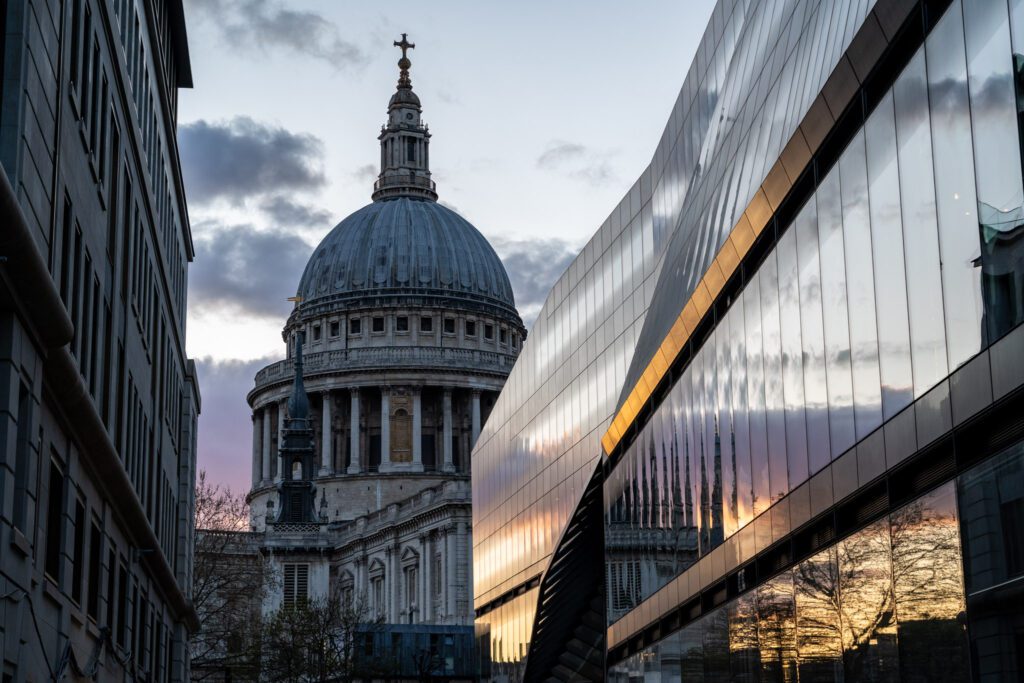
While there are multiple great places in the center of London to get a view of the core of the city, like the Shard’s Viewing platform and Sky Garden, we actually like the view from the top of St. Paul’s Cathedral the best.
Plus, St. Paul’s Cathedral is an important symbol in the city’s history, and it’s worth taking a second to explore its role.
St. Paul’s Cathedral is a massive cathedral smack dab in the middle of London, and it has been the symbol of resilience in the face of adversity since its reconstruction in the 17th and 18th Century, when the current version of the cathedral was built following the destruction of central London by the Great Fire of London in 1666.
That fire ripped through the part of the city within the old Roman walls, and basically burnt everything to the ground.
Following that tragedy, the city’s leadership decided they were going to rebuild bigger and better than ever, and decided to invest in St. Paul’s as a symbol of that rejuvenation.
Two hundred (ish) years later, the cathedral once again became an important symbol during World War 2, when London was relentlessly bombed by German forces.
Despite a couple of direct hits over the course of the Blitz, the dome of the cathedral stood tall (despite nearly everything around it having been reduced to rubble).
There are three portions of the cathedral that are worth lingering on.
The first is the ground floor of the interior, which is full of tombs of people who served the British Empire (and were Catholic, not Anglican) who you may or may not know of.
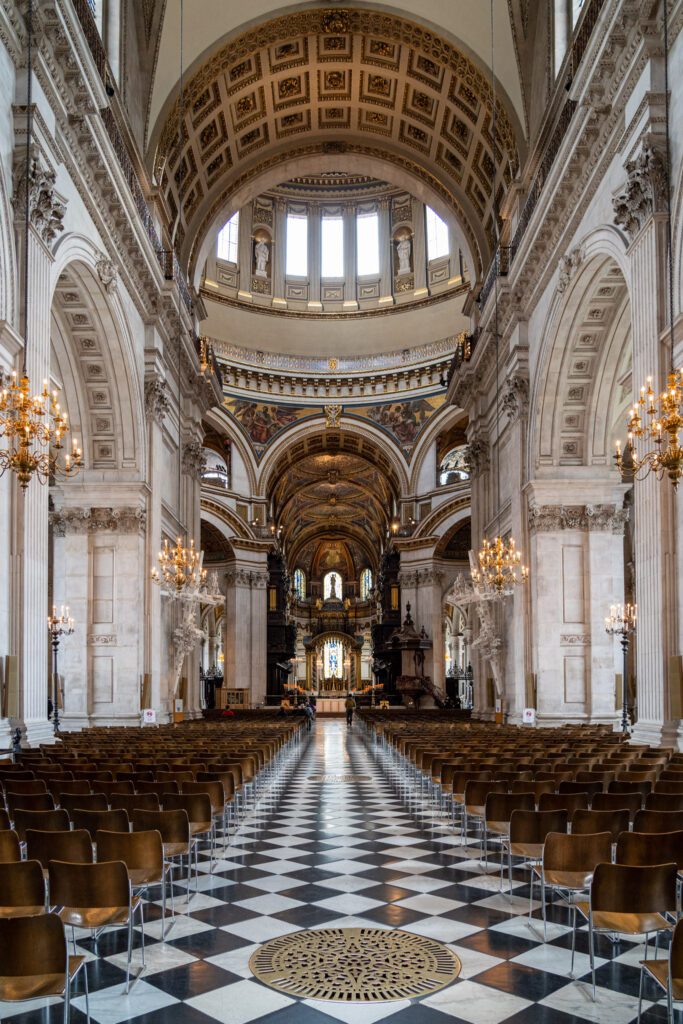
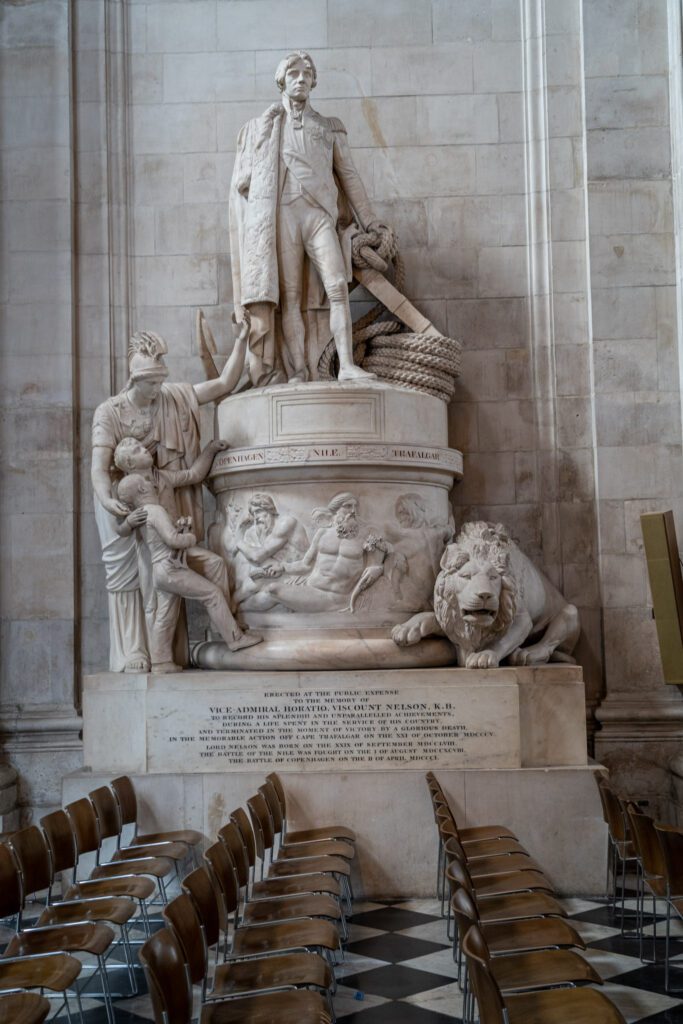
The central location and importance of St. Paul’s means that it’s the location where famous people’s funerals are held and where they are put to rest.
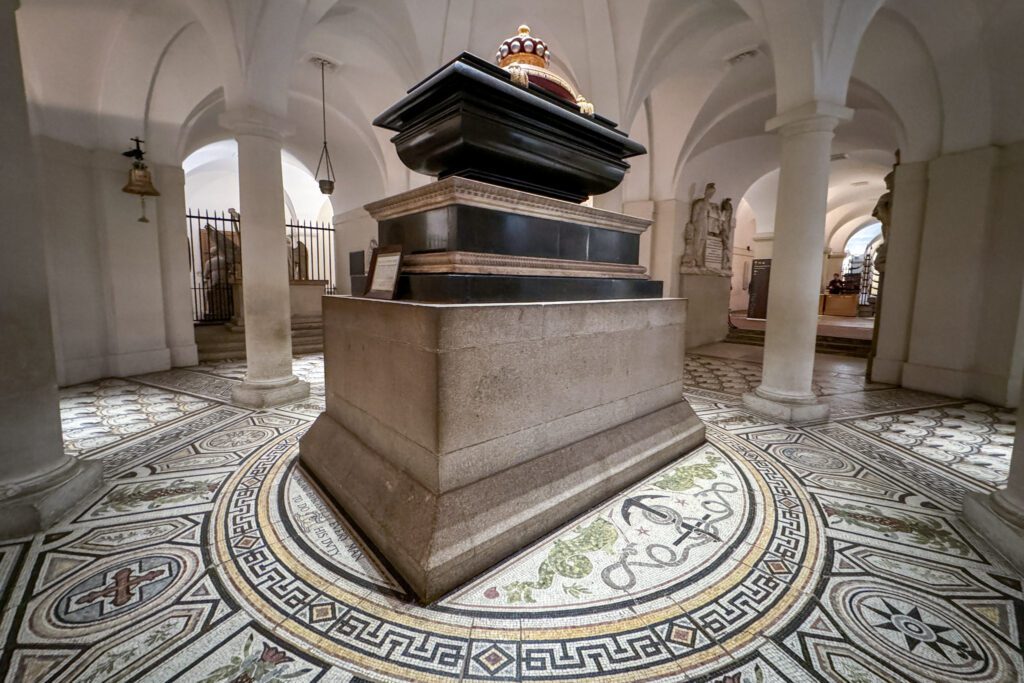
The second aspect is the crypt, the lower level where you’ll find tombs of famous Brits like the Duke of Wellington and Admiral Nelson, two crucial figures in the defeat of Napoleon in Europe.
Last, but certainly not least, is the view from the dome of St. Paul’s Cathedral, which is our favorite view in Central London.
You have to do some climbing on stone steps through narrow passages, so it might not be great if you have mobility restrictions or get claustrophobic, but it also gives you some cool views of the interior.
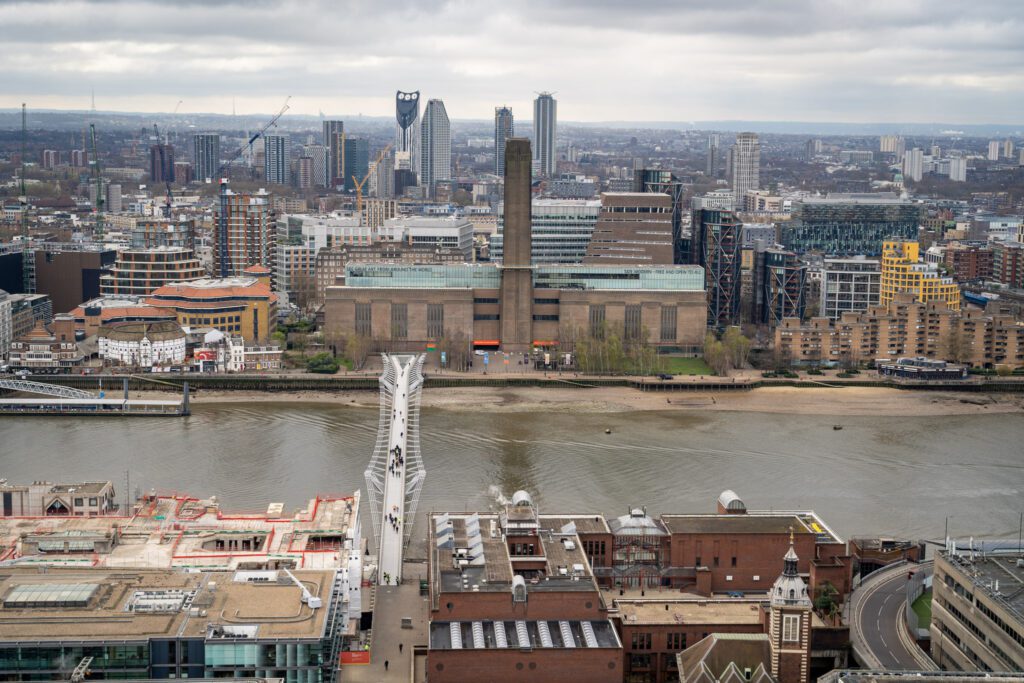
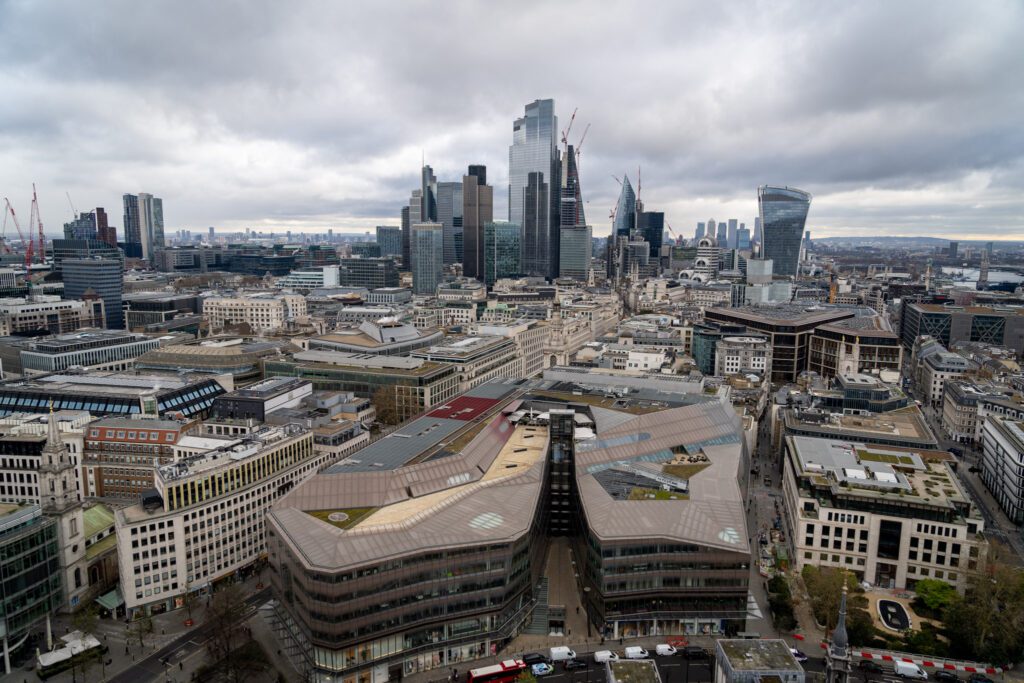
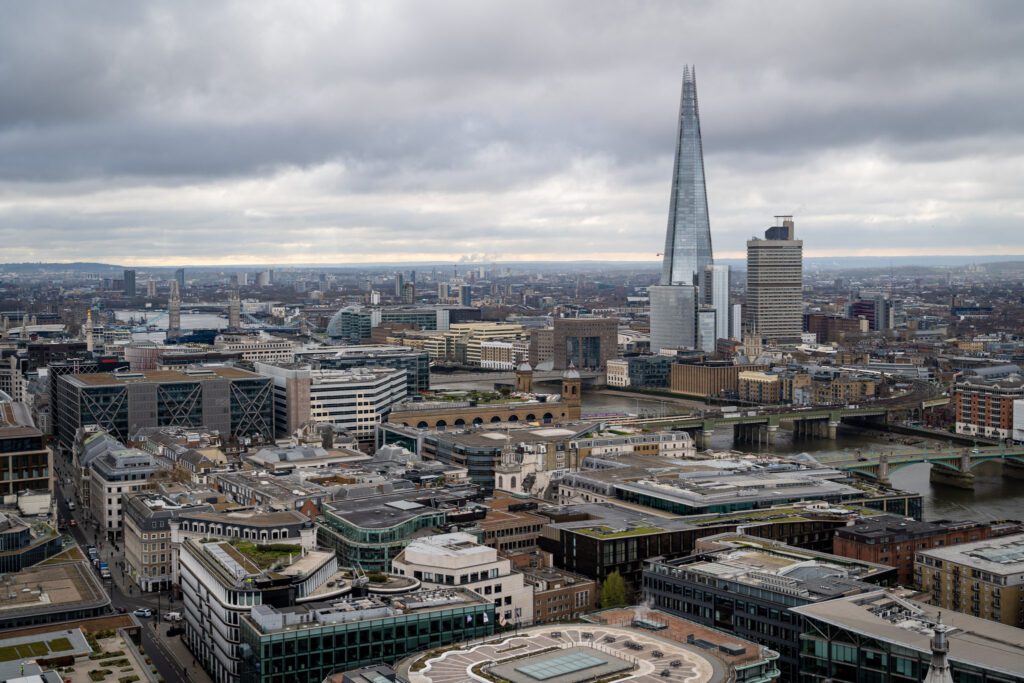
There are a couple of viewing platforms up high – the Stone Gallery at the base of the Dome, the Golden Gallery near the top.
It can be a little confusing once you’re up there, but you want to make sure you see both (some people accidentally head down from the Stone Gallery, which is a shame).
This is the official site to buy tickets. Buy them in advance to skip the sometimes long lines at the ticket office.
They have a bunch of guided tours available that are included with your ticket (and a couple that cost extra but take you to places you wouldn’t otherwise be able to access), so make sure to check those out to plan around them, if you’re interested.
Explore London’s Political Center in Westminster
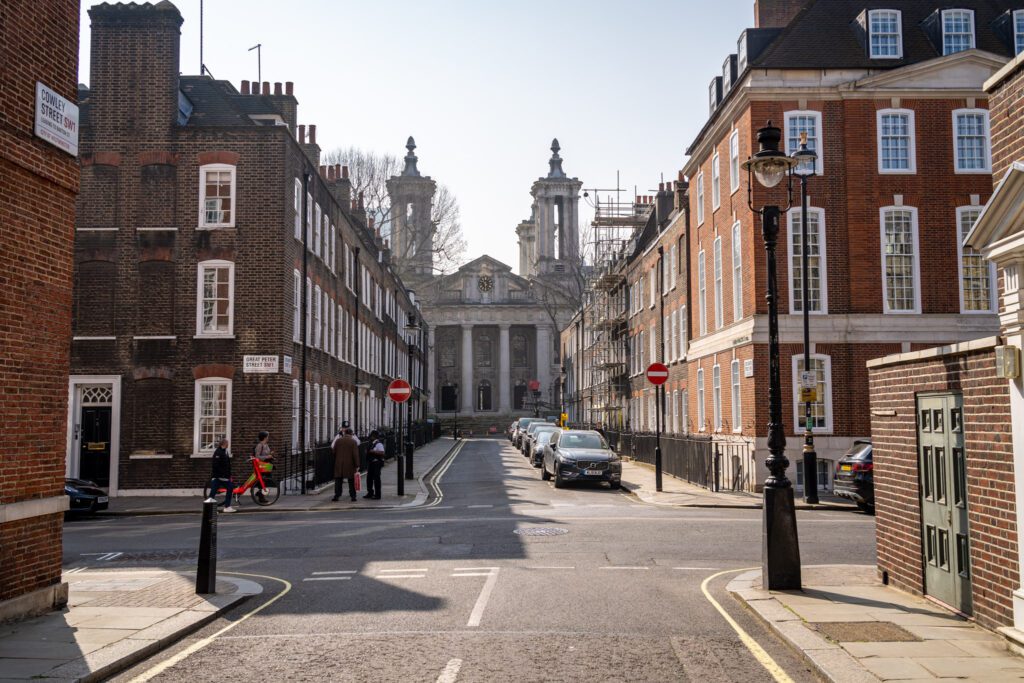
At one point in history, the section of the city that we now know as “Westminster”, which is very much the modern political and religious center of the city (if not the country), was actually a separate town that was an idyllic, pasture-filled, shire-like suburb outside of the dirty, grimy, plague-ridden City of London (which was centered around the area near the Tower of London).
Eventually, London expanded and swallowed up the small town of Westminster, and it became a borough within the larger city rather than an independent town (though, technically, it is still the City of Westminster, which is very confusing).
Today, of course, it’s a small piece of the massive metropolis, but it’s where you’ll find the Houses of Parliament, Big Ben, and Westminster Abbey (which we’ll cover next in a separate section), which makes it a major center of power of all kinds in the modern United Kingdom.
You’ll also find Westminster School, one of the most prestigious schools in the country, right behind the Abbey.
We think the first stop in this part of the city should be the eastern end of Westminster Bridge, across the river from Big Ben.
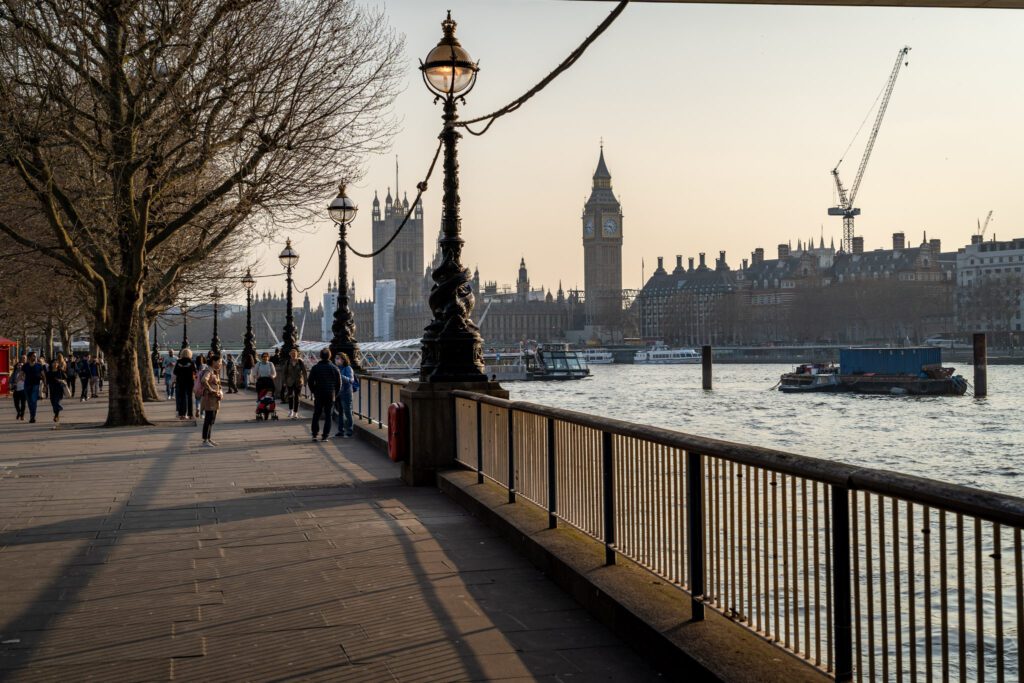
You might be tempted to go straight to the Westminster tube station, but we think starting across the river and doing the walk over the bridge is well worth it because of the excellent view of Big Ben you get as you cross the bridge.
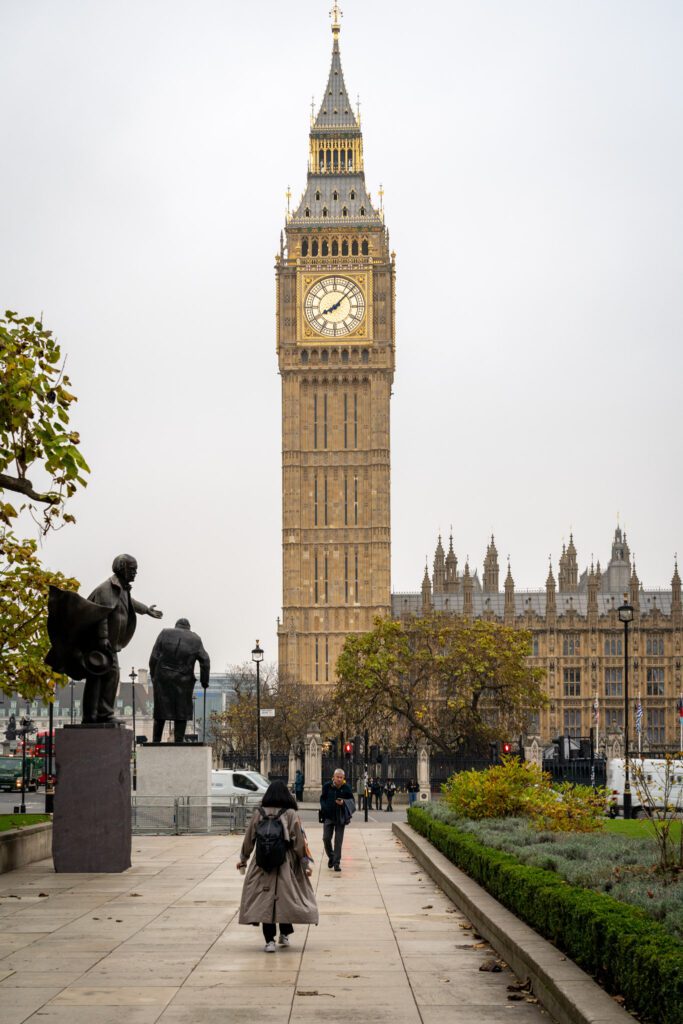
For the record, “Big Ben” refers to the bell, not the tower (which is officially known as the Elizabeth Tower, but nobody actually calls it that).
To hear the bell going off, you’ll want to be on the bridge about 10 minutes before the turn of the hour (so, 8:50 am to hear the 9:00 am bells).
Either side of the bridge works fine, but the better view is going to be from the southern end of the bridge.
Once you’re at the foot of Big Ben, you’re standing at the northern end of the Palace of Westminster, which is the home of the Houses of Parliament.
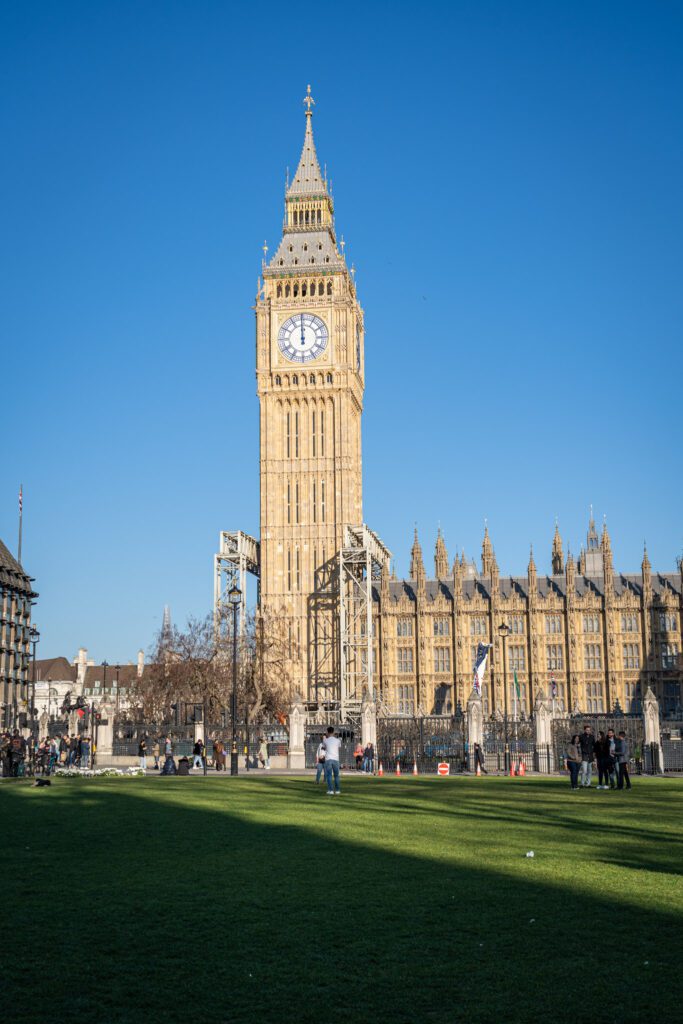
You can actually visit the Houses of Parliament and take a guided tour that allows you to access parts of the complex you wouldn’t ordinarily be able to.
If that sounds interesting to you, you can find more information here (it’s a 90 minute tour, and it’s fairly pricey).
If you’re more interested in a broader look at Westminster and its history, we did this excellent walking tour that covered the City of Westminster on a recent trip, which is a great opportunity to learn more about London through this small (but important!) slice of the city with a local historian.
Learn About the City’s Religious History at Westminster Abbey
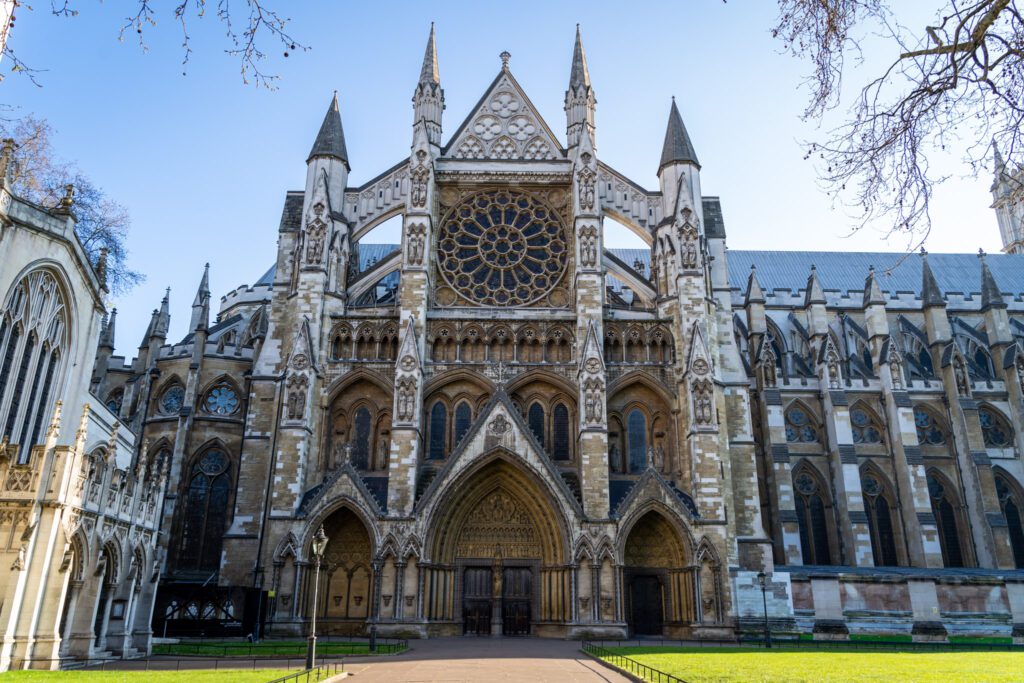
While St. Paul’s Cathedral is the most important Catholic church in London, Westminster Abbey is the most important Anglican church in the city.
Westminster Abbey is an excellent place to stop and talk about the big divide in the United Kingdom between the Catholic Church and the Anglican Church (an offshoot of Protestantism), a divide that has led to wars and bloodshed over the course of history.
The Anglican Church is essentially an offshoot of the Catholic church where, instead of the Pope being the head of the church (which is the case for Catholics), the monarch is the head of state.
It’s related to the Protestant Reformation in that a lot of the same ideas apply, but there’s a distinctly nationalist piece of the Anglican identity that goes back to its roots and founding in the 16th Century.
For centuries, tensions built between the King of England and the Pope in Rome over various aspects of control, which both parties claimed lordship over.
The monarchy wasn’t particularly thrilled with sharing power with the Pope, surprise surprise, so they just said “yeah, we’re not doing that anymore”, passed a law (the Act of Supremacy in 1534) and created the Anglican church.
The funniest bit about the whole thing is the straw that broke the camel’s back.
While the idea had been bubbling for a long time and tensions with Rome were at an all time high, so it certainly wasn’t the primary driving factor, the issue that preceded the passing of that law and the subsequent separation was Henry VIII’s desire to annul his marriage with his first wife, Catherine of Aragon.
The Pope denied Henry VIII’s request, because divorce isn’t allowed in Catholic doctrine, and that was the opportunity they needed to separate (divorce, if you will) from the Catholic Church and establish their own religious order.
As a bonus, Henry seized the land and assets of the Catholic Church in England, which he used to fund his military adventures around Europe, but I bet that wasn’t a factor in the decision at all.
Over the next several centuries, the tension between Anglicans and Roman Catholics within England was vicious, and sometimes devolved into violence, war, and persecution based on religion.
As the Anglican church was the primary religious power, it was mostly the Catholics who faced discrimination.
As the center of Anglican power in the U.K. – this is the place where coronations happen in modern times – Westminster Abbey is quite the spectacle and is well worth visiting because there is a ton of history represented within its walls.
Some version of a church has existed in this location along the banks of the Thames since the 11th Century, but the modern version you see today was built over the course of the 13th to 16th Centuries.
It’s the final resting place of Edward the Confessor, who is also the person who started the construction of the first iteration of the church here.
More than 3,000 Brits are buried in Westminster Abbey – the most famous being many of the royals of the last few centuries, and people like Sir Isaac Newton and Charles Darwin.
Make sure to look down as you walk around the interior – it seems like every step you take inside of the Abbey, you’re walking onto a new burial site with the name and dates of their life/death.
The Abbey opens at 9:30 am (9:00 am on Saturdays, closed on Sundays), which is pretty early, and we’d recommend trying to be one of the first people in the door.
To do that, we’d buy online tickets in advance, which go on sale two months in advance.
Of the main attractions in London, this is probably the one that we’d prioritize a tour of first because the story of the intermingling of the church and state is such a fascinating topic, and you’d largely miss it if you just entered the church and took a look around.
If you’re looking for a tour of just the Abbey, check out this three hour tour with Walks, our favorite tour company in Europe (we’ve done 9+ tours with them and their sister company, Walks of Italy, with more planned on our next trips).
They also have a tour that combines Westminster Abbey and the Houses of Parliament, which sit right across the street from each other and represent the center of political and religious power in the U.K, which gives you a pretty comprehensive look at the country’s history and modern-day situation.
Experience the Joy of London’s Free Museums
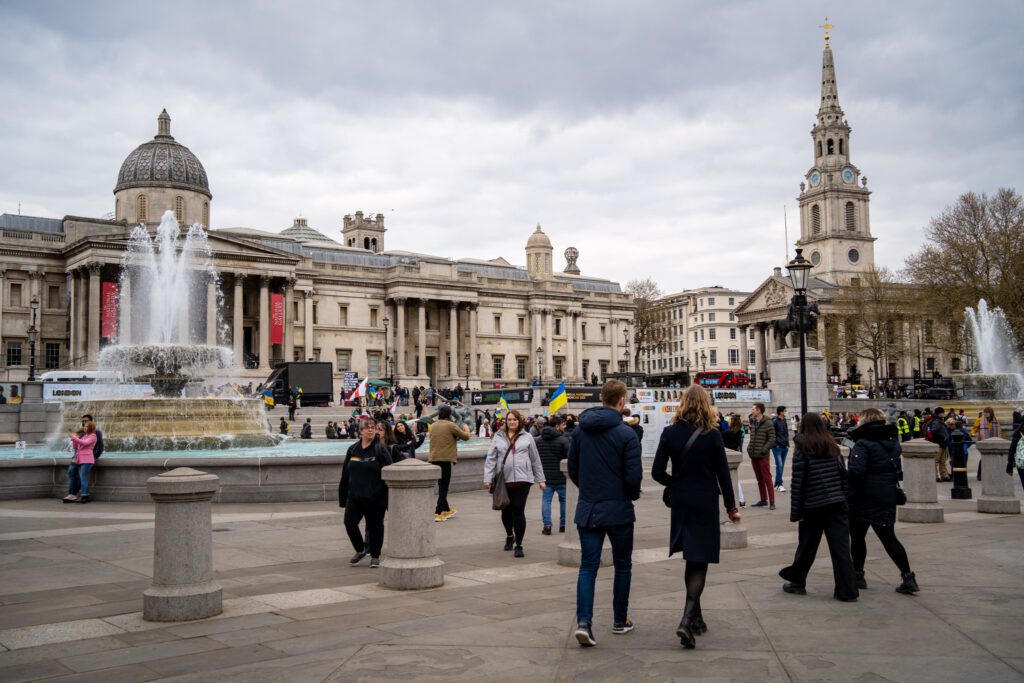
Another thing we love about London is the fact that many of its main museums – with the exception of the Churchill War Rooms, which we’ll talk about in a second – are free.
Though it may be worth making a reservation in advance to skip the long security lines in some cases (we’ll talk about it below).
We’ve got separate sections throughout this guide for a few different museums that we think tell an important story about London – the London Museum and the Imperial War Museum – which we think will set a good foundation for understanding the city.
The London Museum in particular is something we’d absolutely prioritize first before the museums in this section.
There are three main museums that we think belong in this section, and we’ll cover each of them below, along with our thoughts and recommendations on which to prioritize.
There are two additional museums that you might be interested in, depending on what you’re into, that are down in South Kensington. They are the Natural History Museum (good for kids, and it’s in a beautiful building) and the Victoria & Albert Museum (more focused on fashion, art, and design).
The British Museum: Easily the most controversial of the five, but also the museum (out of these five) we’d prioritize first.
On one hand, we are queasy about the fact that many of the artifacts were essentially stolen and they have refused to return them despite requests from the modern countries who they should belong to.
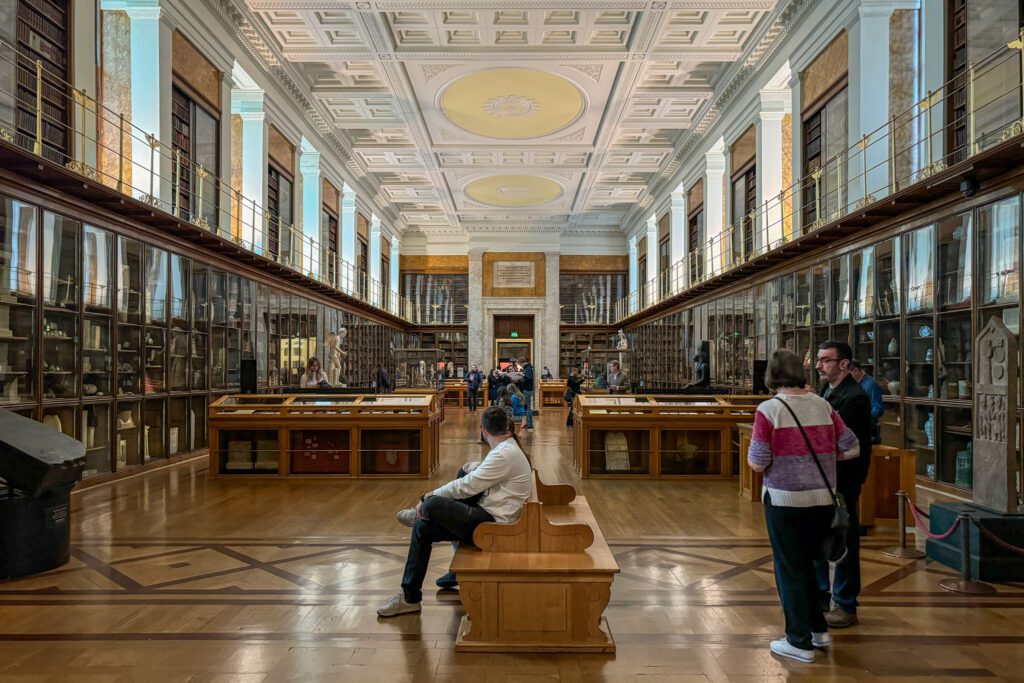
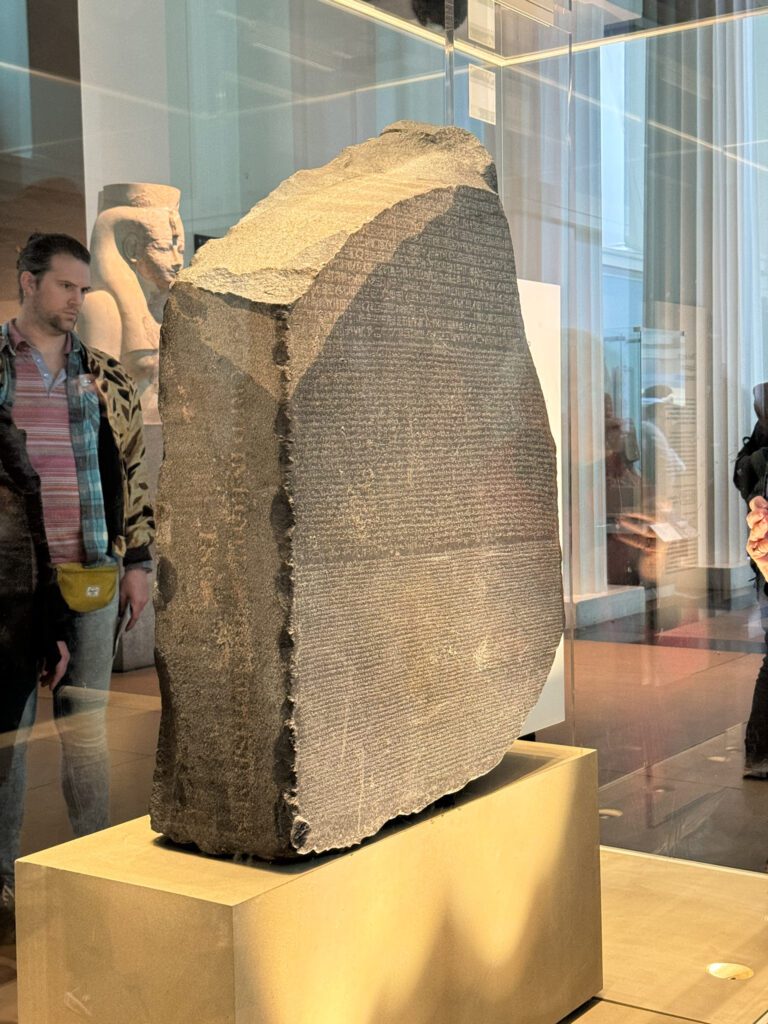
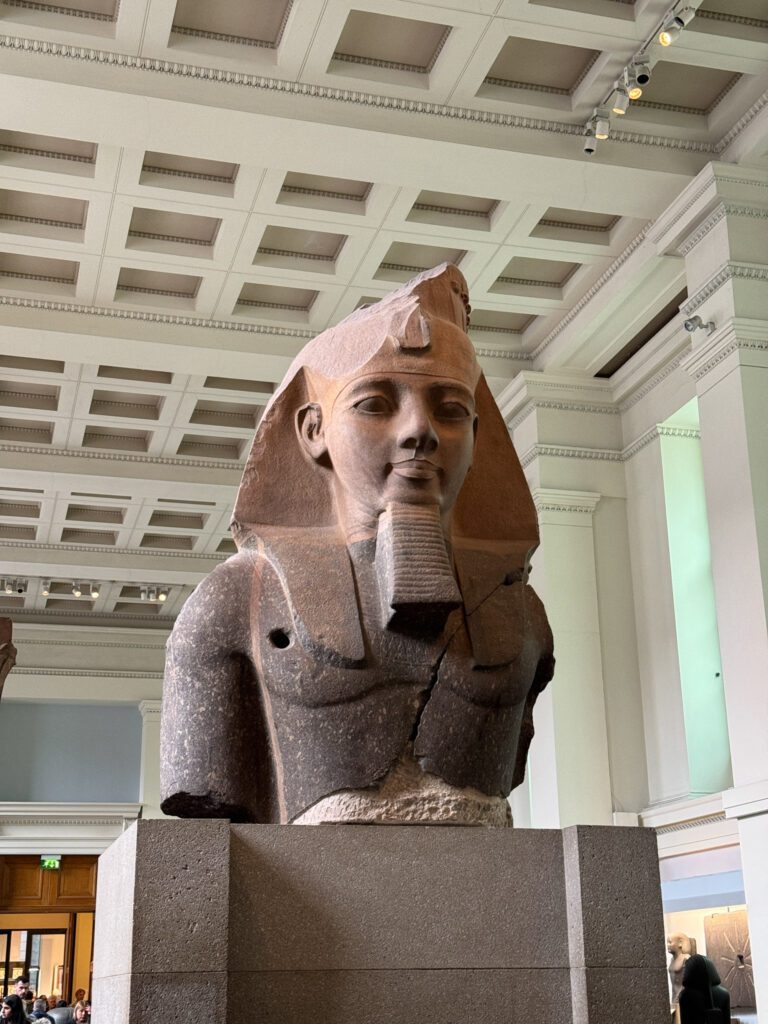
On the other hand, it may be the museum that says the most about the place it’s in, which is something we always look for in a museum when we’re traveling (it’s part of the reason why some other museums get their own section in this guide).
For some personal context here, a few years ago we spent two weeks in London to reacquaint ourselves with the city.
We visited the British Museum, spent 15 minutes wandering, ended up in the Egyptian section where they have mummies, and decided we were done.
Can you imagine a reverse scenario where British people’s coffins and bodies were on display in Cairo? Feels like we may not be super into that idea.
Putting aside that controversy (which is difficult to do, I know), there are some truly spectacular artifacts inside the museum from all over the world.
It’s free to enter, but we’d book tickets in advance to gain priority entrance, which you can learn about and do here.
There are tons of amazing pieces to see from all over the world, and it can be difficult to figure out where to start.
On my more recent visit, I wanted to revisit the British Museum, and stumbled across this guided tour that tackles the issues with the amazing artifacts you see head on.
We did it and loved it, and if you’re interested in understanding the deeper context around the pieces on display – like the cultural significance in its home country and how it ended up here in London – we can’t recommend it highly enough.
I’ve also gotten recommendations for the early entry guided tours through the museum itself, which you can find here. You’ll be able to see the collection without the crowds with a guide, though it is not free.
The National Portrait Gallery: This was also on our itinerary on my latest trip to London, and it was my first time doing it.
I enjoyed it, and I think seeing the history of the U.K. through portraits – which doesn’t necessarily always mean just a picture or painting of a single person in a funny wig – is a fun way to explore history.
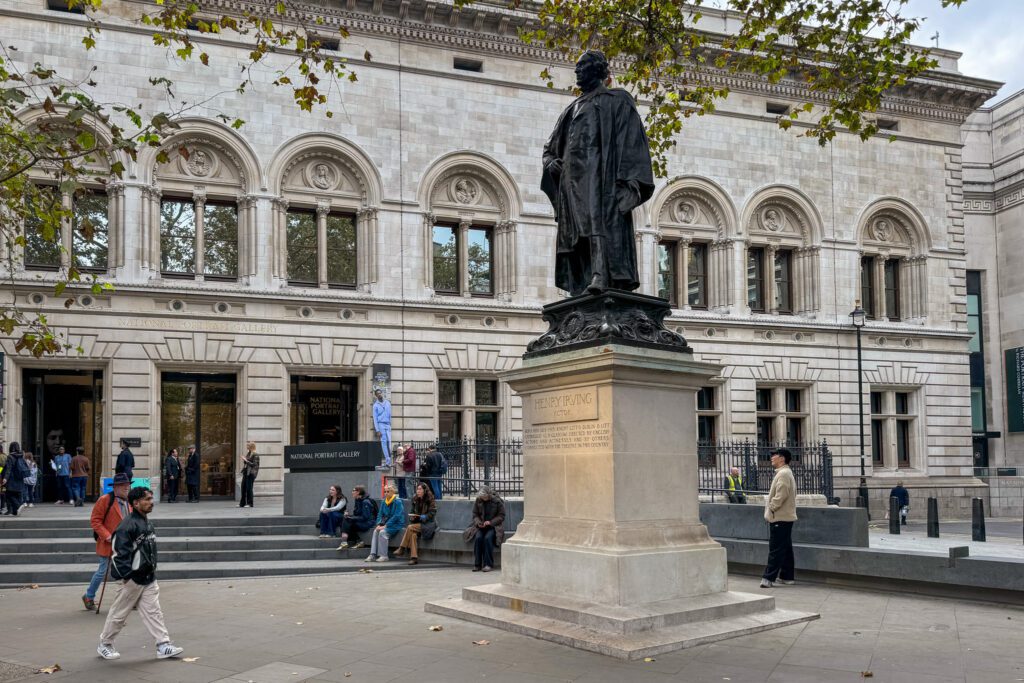
Now, one thing I do want to mention here is that I don’t know that I would have enjoyed this museum as much without the knowledgeable guide we had, who helped paint a broader picture, putting the portraits into context.
We did this excellent tour, and it was a nice blend of seeing the highlights (portraits of famous figures from British history) and focusing on lesser known but equally important figures, like abolitionists and suffragettes.
If you’re interested in a deeper look at the art and history here, I’d recommend that tour.
The museum also runs free tours daily that I would try to plan your visit around if you’re not going to do the tour we did above.
They have a couple of versions – a highlights tour and a “portrait of the day” tour – which happen a couple of times a day. More information here.
This is another museum that is free, but you can book admission in advance to skip the long ticket office lines, which you can do here.
The National Gallery: Set on Trafalgar Square, the National Gallery is probably the most famous of the three museums just because of the location, but of the three in central London, it’s the one we’d recommend the least.
Cards on the table here, this style of museum – a vast collection of art without a real narrative or focus – is our least favorite kind of museum.
The Louvre is another good example. Is there a lot of cool art? Definitely. Is it a meandering, sprawling collection that doesn’t really tell a story about the place it’s in? Also yes.
We much prefer the Musée d’Orsay and the Rodin Museum, which tell a tighter story about a specific movement or artist.
The collection here includes pieces from artists across Europe (mostly) and sprawls across hundreds of years, from Renaissance masters like Titian to Dutch Masters like Vermeer and impressionists from France (including Van Gogh).
Don’t get me wrong, there are a bunch of priceless pieces of art in this museum, it just lacks a cohesive narrative about the place it’s in, which is generally what we look for in an art museum.
This is another museum that you can pre-book tickets for that will allow you to skip part of the line and get in faster – more information here.
Eat Your Heart Out at London’s Food Markets
We come from Portland, Oregon, land of the plentiful food carts, which we argue play a crucial role in Portland’s vibrant, diverse food scene.
It’s a low(er) cost way to try something different without investing tons of money, and there are countless food businesses around Portland that started as a food cart or farmers market stand and now have a huge following and multiple brick and mortar locations.
Our favorite part about visiting London, as two people who LOVE to eat, is the food markets, which are London’s take on Portland’s food carts. Both the outdoor markets and the indoor covered markets.
Littered around the city, these food markets take over entire streets or buildings and are lined with stalls making and selling a wide variety of street food, from Indonesian curries to Venezuelan arepas to roti wraps and sushi burritos.
One of the things we enjoy about London’s food scene is the fact that, due to different immigration patterns (driven in part by the existence of the British Empire), the cuisines you find in London are different from the ones we see at home.
For example, here in the U.S. we have tons of great Mexican and Central American food (never trust the Mexican food in Europe if you’re from the west coast – it’s just not as good!).
However, I can only really think of one, maybe two west African places in Portland, while London is full of them.
It’s great, and it’s a lovely smorgasbord of flavors that we don’t see terribly often, so we usually end up eating several of our meals in London at these food markets (and it’s usually the first thing we tell people not to miss).
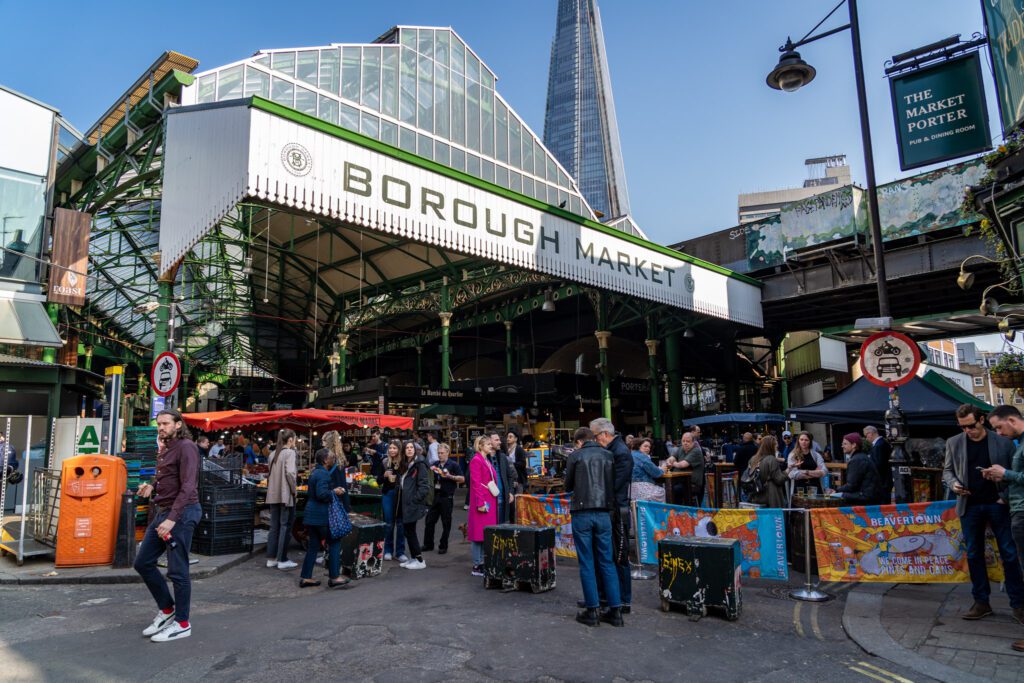
Now, the most famous of these food markets is going to be Borough Market, which is on the south waterfront near London Bridge (which is the boring grey one, not to be confused with Tower Bridge, which is the cool one that had the Olympic rings on it).
We have mixed feelings on Borough Market, and it’s certainly not our favorite of the bunch (we’ll get there in a second).
However, it is the most centrally located, it’s definitely a vibe, and it’s worth visiting and walking through.
If you’re willing to brave the crowds, there are some good spots to be found too. We really like the dosas and chai at Horn OK Please, the pad thai at Khanom Krok, and the gluten-filled sandwiches at Black Pig, which are worth lining up for (Matt can’t eat there, but both Alysha and Matt’s brother Connor have enjoyed their massive sandwiches).


The London Cider House is a little cider bar tucked away in Borough Market that is a great place to sample English ciders, which are also a vibe and are diverse and different from what we usually find here in the U.S.
Borough Market is decidedly a lunch spot (it’s only open until ~6pm), and we would avoid visiting on the weekends if you can, because it is unbearably busy.
Our favorite of the city’s food markets is Broadway Market, which takes over the equivalent of several city blocks in Hackney in North London on weekend mornings and afternoons. It’s a foodie’s paradise.
To illustrate my point, take a look at my last trip. My brother and I were in London for 10 days on a soccer-focused trip, and our trip spanned two weekends.
Of the four possible weekend days we could have eaten at Broadway Market, we ate there three times. And we got different things each time.
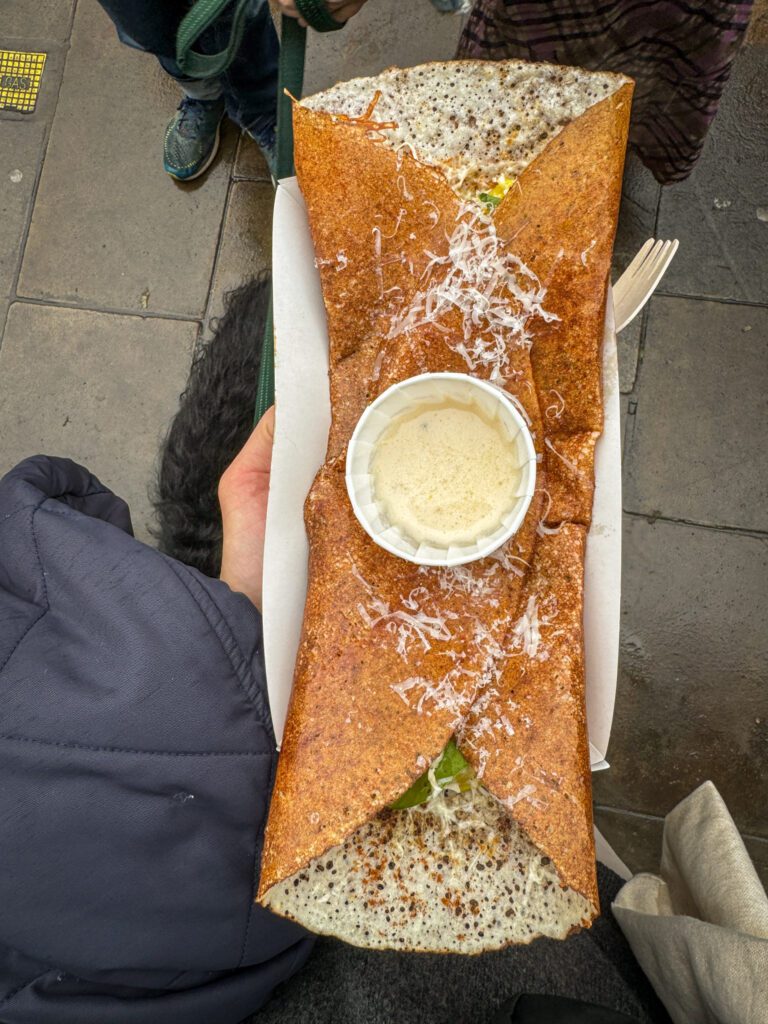

The market is also on a nice park, which you can stroll through to walk off the food you just stuffed your face with, and there’s a great coffee shop (Paradox Coffee, one of the best coffee shops in London), a great cider shop (The Fine Cider Company), and a great pub with a nice patio to watch Premier League games at (Pub on the Park).
There are a couple of other food markets scattered around London that we’d put on your list:
Upmarket & Brick Lane: Kind of an indoor/outdoor situation in Shoreditch, with a market on the ground floor of a big brick building that then sprawls out into the street, lining both sides of Brick Lane as it heads north (here on Google Maps).
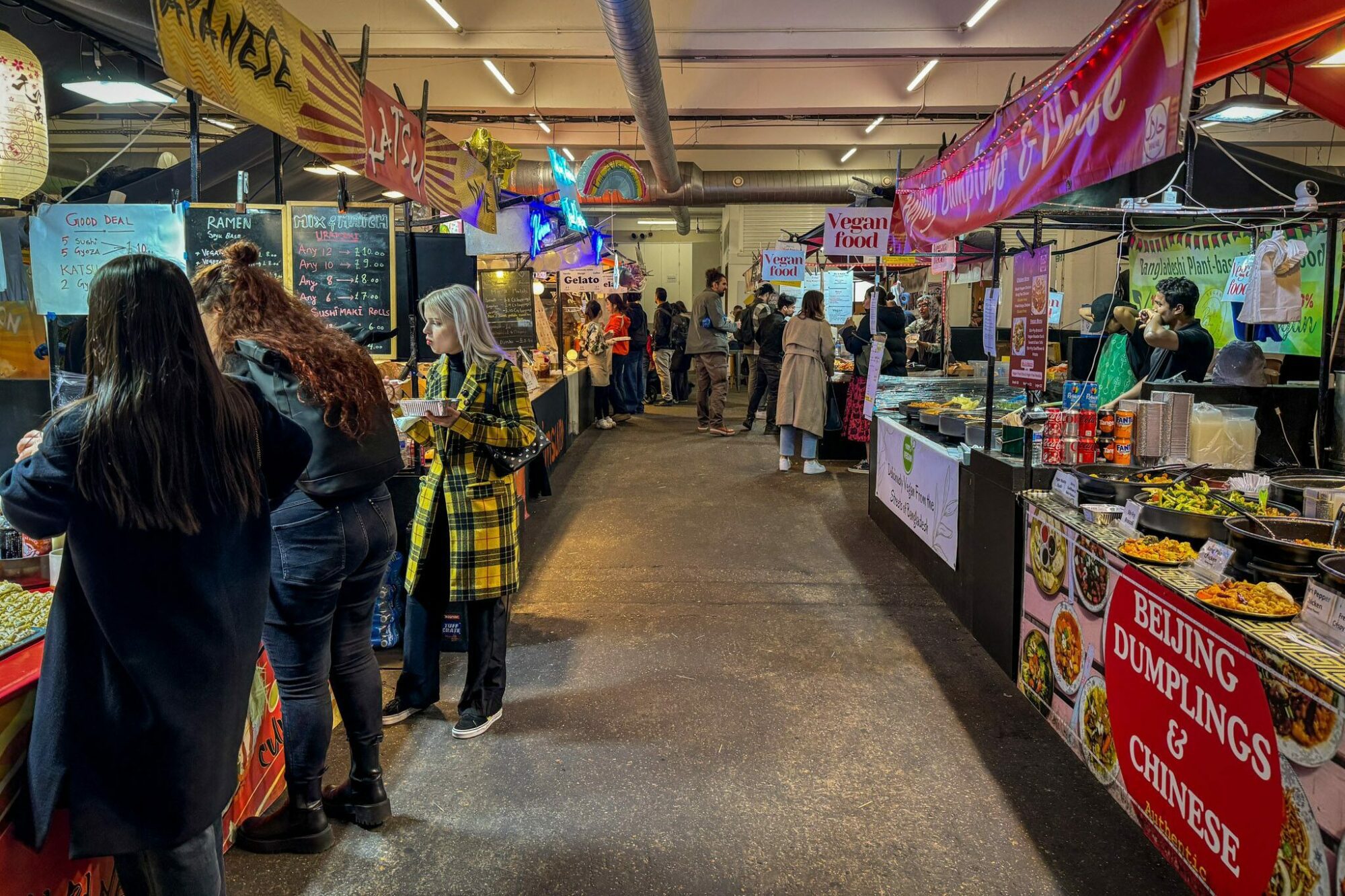
The indoor section is an amazing array of street food from all over the world (we like Arepas & Cachapas and Chai Baba and will go out of our way to go here for them).
Spitalfields Market: A big indoor hall that is half filled with food vendors, half filled with arts and crafts (think jewelry, cards, t-shirts and tote bags, etc etc).
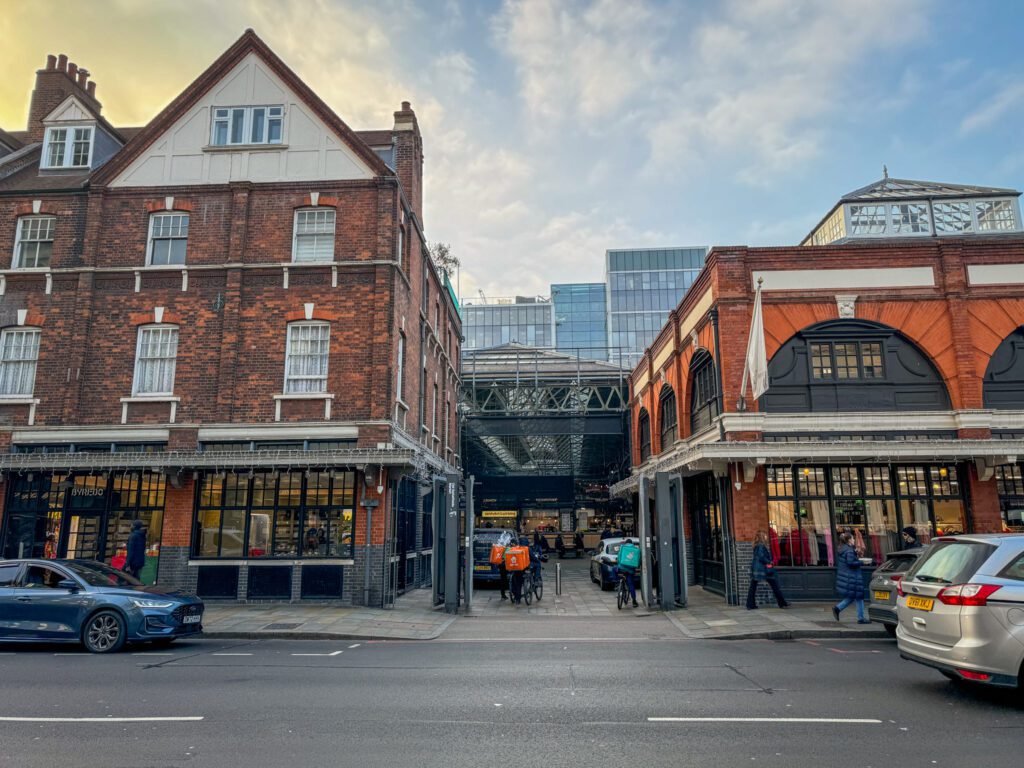
The food vendors here are good (it’s more of a permanent situation), and the market is best on the weekends when it’s bustling and full of all sorts of local vendors.
There are tons of food vendors here, but we like Wicked Fish (100% gluten free fish and chips – here’s our gluten free guide to London if you’re like Matt), Chai Guys, and the Dumpling Shack (not GF). Don’t miss Nagare Coffee right outside the building, which is a top five coffee shop in London for us.


Southbank Centre: A relatively small food market right behind the Southbank Centre, just off of the waterfront promenade along the south bank of the Thames.
We come here for the excellent Venezuelan arepas at Pabellon, but once again, there is a fantastic variety of food here from all over the world. Find it here on Google Maps.


Learn About London’s Experience During World War 2
If you know anything about Londoners, you know that they are extremely proud of their resilience during World War 2 in the face of adversity.
They tightened their belts, got to work, and protected their communities as best they could as bombs fell over London.
You may be aware that there is a famous tourist attraction in central London called the Churchill War Rooms, which sits underneath 10 Downing Street (residence and office of the Prime Minister) and is the site of the bunkers from which the British leadership planned the war effort.
It also tells the story of the life of Winston Churchill (more on this in a second), with documents like photos and letters as sources to help understand how he became the man who led the Brits through the Second World War.
It’s one of the few museums in Central London that isn’t free – it costs £33 a person.
I’m here to share an unpopular opinion: I think you should skip it (there’s a better, free option nearby).
After doing it on my last trip to London with my brother, we both walked away disappointed.
Sure, it’s cool to be in the proverbial “room where it happens” – you are literally walking through the bunkers, which are basically in the same condition they were during the war, and some of the artifacts related to Churchill are cool.
But the biggest gripe I had with the museum is the Churchill-focused part, which was borderline propaganda.
Now, I’m American, and we’re certainly guilty of whitewashing our famous historical figures, but this was about as bad as I’ve ever seen.
Winston Churchill was a flawed man who was the right wartime leader, but he made some mistakes (although he would probably not characterize them as such) that led to the loss of hundreds of thousands (if not millions) of lives in the colonies.
Just read through this Wikipedia page – not great, especially in the 20th Century!
I’m certainly not saying that Churchill is singularly responsible for millions of deaths in the Bengal Famine of 1943, I’m simply saying that he might make a different choice if you had let him go back and have a do-over (which means mistakes were probably made).
Even though the exhibit talks about his relationship with the colonies, there is not one single mention of anything negative.
They even touch directly on his policies and relationship with India! No mention!
For that reason, I walked away frustrated and bemused, and it reminded me of being in Spain and cracking a joke about Christopher Columbus only to be met with things like “he was a great man, a great explorer.” Uh, weird hill to die on, but sure.
If you’re really into the specific history of Britain during World War 2, you may feel like it’s worth it, but I didn’t (and I’m generally into history, including World War 2, and listen to hours and hours of history audiobooks and podcasts every month).
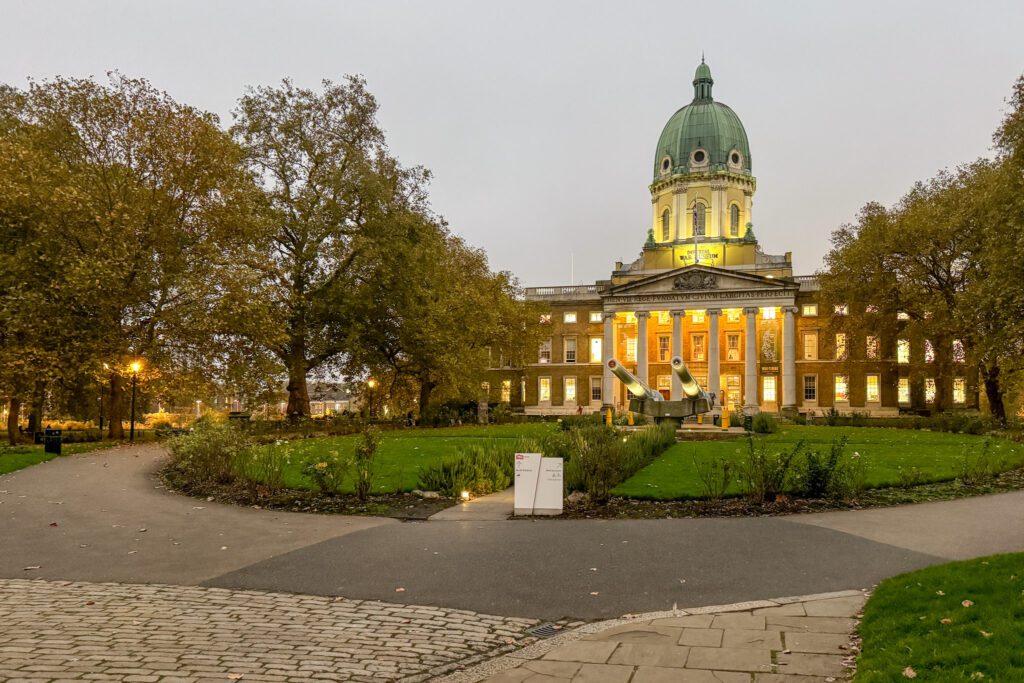
I shared that opinion with a tour guide later in that trip, and he largely agreed with our assessment and pointed us to the Imperial War Museum across the river (here on Google Maps), which are free AND provide a more complete view of the war effort during both world wars.
We actually really enjoyed the free version of the museum, and felt like it gave a more comprehensive view of the two world wars (which is not surprising because that’s not really what the Churchill War Rooms set out to do).
They also have a moving Holocaust memorial, which is worth taking the time to go through after the exhibits on the two world wars.
Again, if you’re really into the British war effort during World War 2 and Churchill himself, you might find the War Rooms worth the money.
If you’re not, I’d skip it and go to the Imperial War Museum (which is, again, free) for that history.
Buckingham Palace & the Changing of the Guard
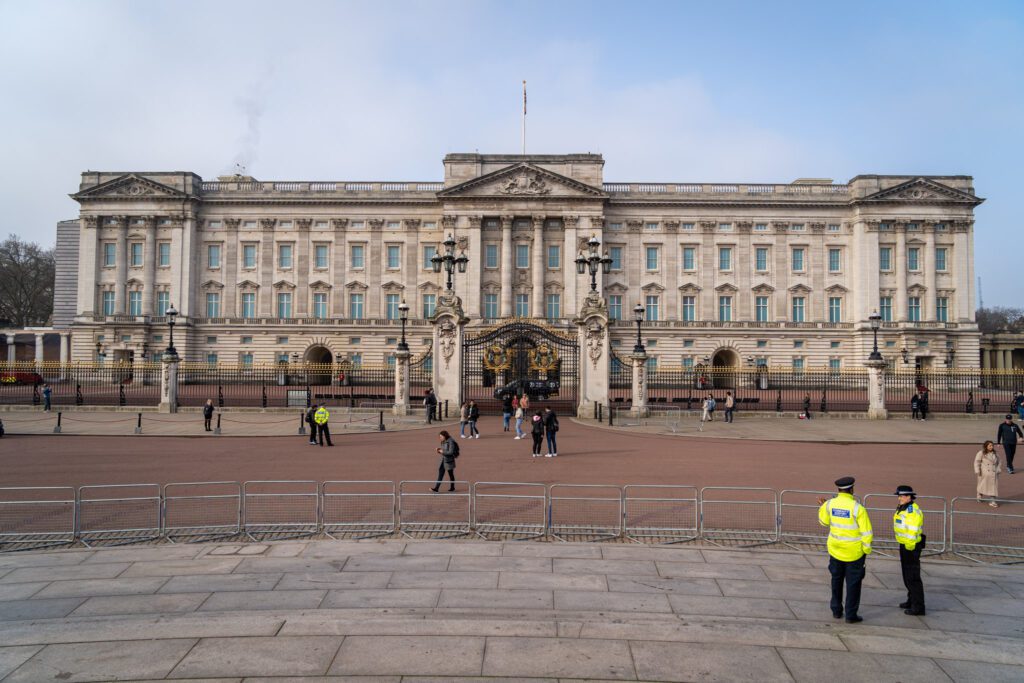
First of all, it should be noted here at the top that we don’t really think the Changing of the Guard is worth your time.
It’s very busy, which means you either a) have to get there really early to secure a spot or b) not be able to see anything meaningful because it’s so packed.
In either scenario, we truly believe that your time is probably better spent elsewhere.
However, we also know that this is, for many people, a top sight in London and a “must-do”, so we wanted to cover it in this guide and give you our take on the best way to do it (and offer you a much less visited alternative).
All that being said, it’s quite the spectacle.
We can’t believe this still happens, to be completely honest, and it’s worth seeing once as long as you’re prepared for the crowds and have the flexibility to show up a little early at a specific time on a specific day.
These days, Buckingham Palace is mostly symbolic – the royal family is rarely there – but it sits on the western end of St. James’s Park, the oldest park in central London and serves as the official residence of the monarch.
Its main use these days is to host official state visits.
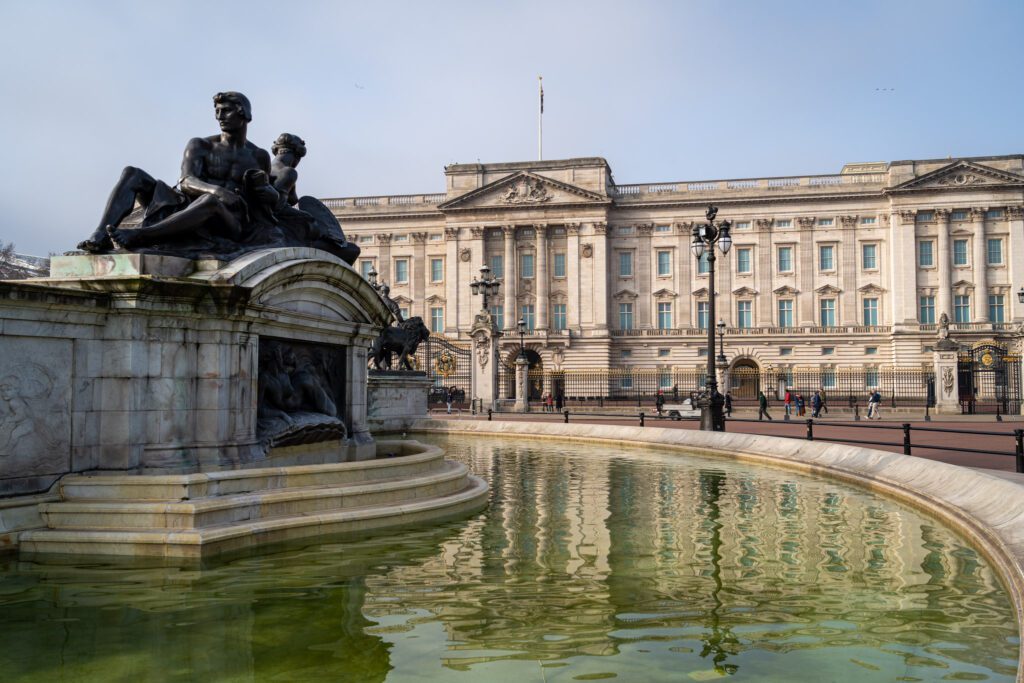
The Changing of the Guard is a royal ceremony that is basically an extremely structured, traditional way of passing responsibility for guarding the palace from one set of guards to another. All with a live band!
It’s extremely over-the-top, we think, but it has a certain buzzing energy that you obviously wouldn’t get if the guards just swapped places without any fanfare.
Side note: What the heck is going on with that “s’s” at the end of “St. James’s Park”? Yes, that’s the correct spelling. We had to quadruple check.
You’ll need to pay close attention to the official schedule for this one, as the ceremony schedule varies by the season.
You’ll also need to plan your day to arrive here by 10:45 am at the very latest, and probably a lot earlier if you want to get a good view, especially in the summer.
If you’re into coffee and you’re craving some caffeine, we’d recommend a slight detour out to Formative Coffee or Nostos Coffee, which are a short walk from Buckingham Palace and are both among our favorite places in the city for great coffee.
What if you’re not super into the idea of braving the crowds to get a far-off glimpse of this ceremony?
We recently stumbled upon a different ceremony – the Horse Guards Parade – on the big open sandy field (here on Google Maps) at the eastern end of St. James’s Park, and would 100% recommend that over the Changing of the Guard.
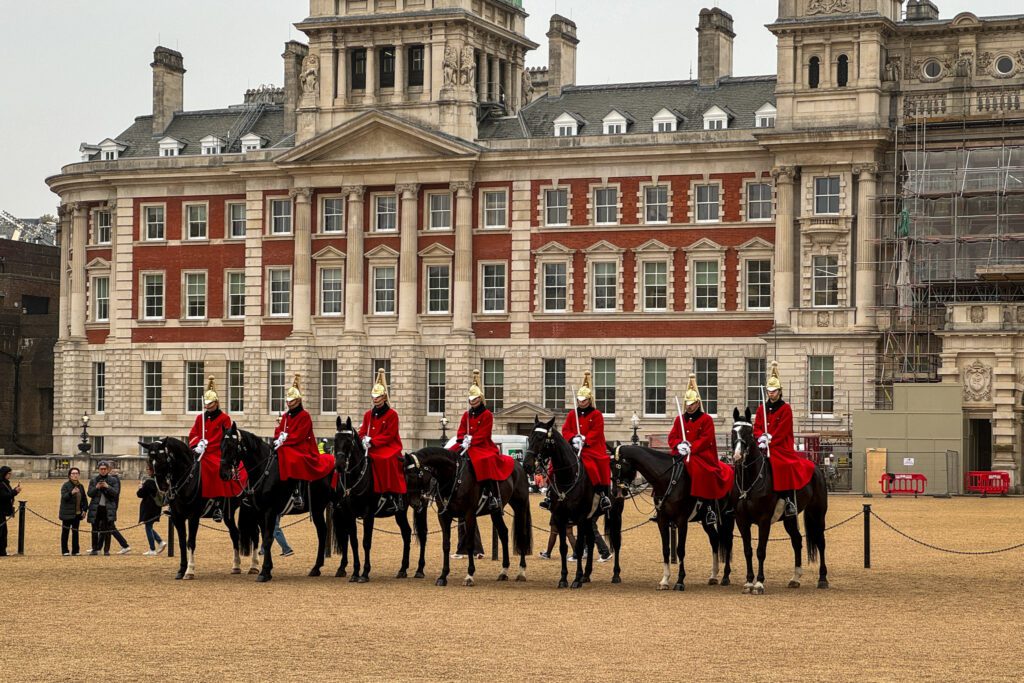
It’s far less popular, so you can actually get a good view of what’s going on, and because it involves horses, which is way cooler than the humans-only affair at Buckingham Palace.
The ceremony takes place at 10am on weekdays and Saturdays, 11am on Sundays.
Walk the South Bank of the Thames
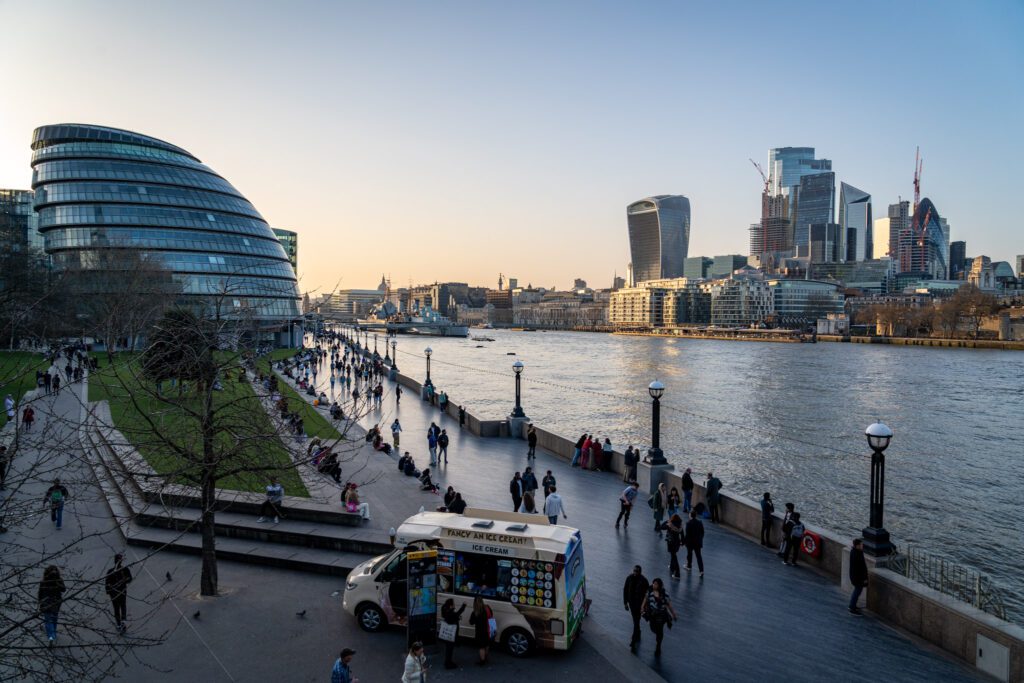
Nearly every time I’m in London, my trip begins with a walk along the South Bank of the Thames from Tower Bridge – that’s the fancy one (a lot of people think it’s London Bridge) – to Big Ben, walking west along the beautiful walking path that follows the river.
It’s a great way to get outside, get your legs moving, and get a jump on getting over jetlag (which I’m notoriously bad at) after a long transatlantic flight (if you’re coming from the U.S., like we are).
Along the way, you’ll pass food markets (Borough Market and Southbank Centre) if you’re looking for something to eat, some good pubs and riverside bars, and enjoy some pretty great views across to the modern City of London, the dome of St. Paul’s Cathedral, and Westminster.
Starting at Tower Bridge, you’ll work your way west, mostly staying along the riverfront, which means views across the river towards the City of London, but occasionally it’s worth deviating and cutting south into Southwark for food, drinks, or both.
Right as you set off from Tower Bridge heading west, there are some great views of the bridge looking back the way you came. From there, follow the Queen’s Walk west, all the way to Westminster Bridge.
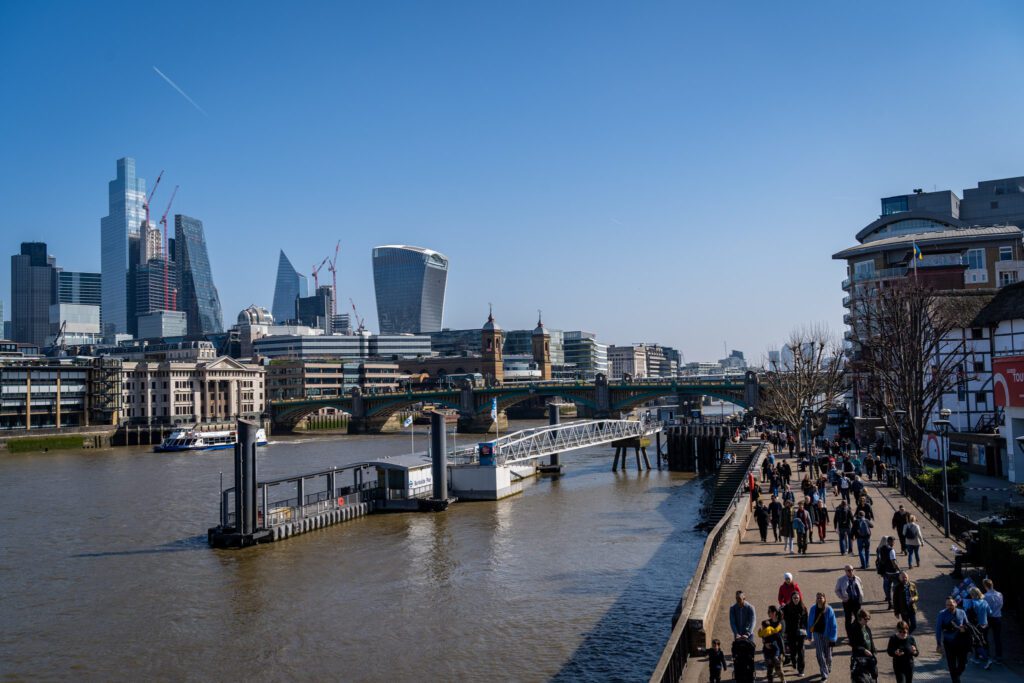
Here are the stops we’d make along the way.
Southwark Cathedral: An underrated cathedral from an architecture standpoint that is tucked away right off of the river next to Borough Market.
You can see the foundations of one of the original church buildings from the 12th Century, and the modern building has some really nice architecture to marvel at.
It’s free, so it’s worth popping your head in if you’re nearby. More information on visiting here.
Borough Market: As you head south, you’ll pass right by Borough Market, the first of the two good food stops on this route.
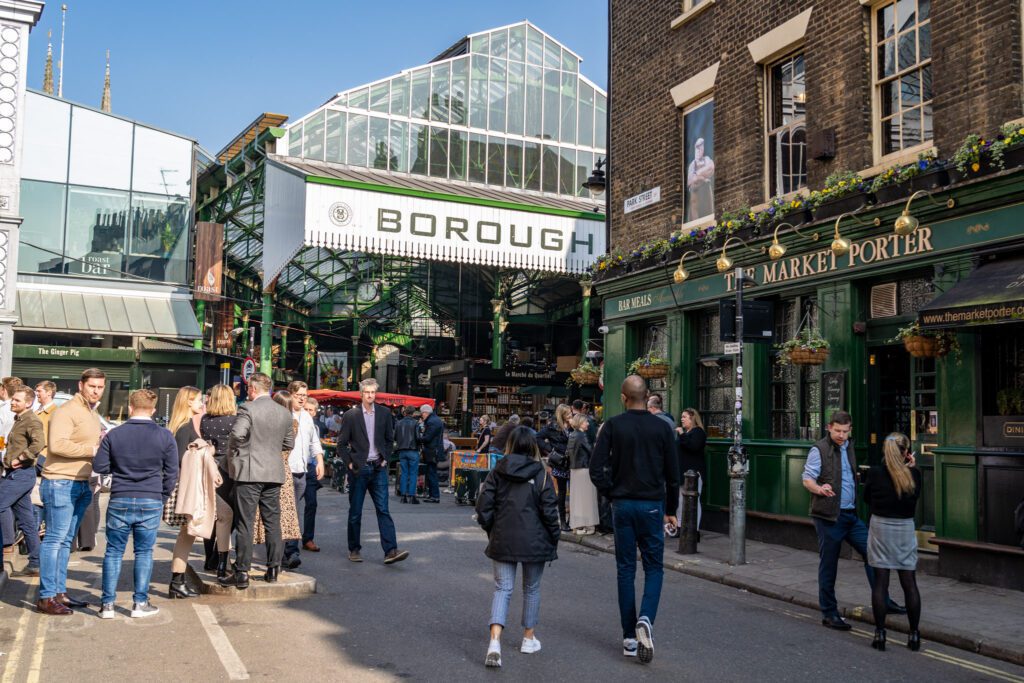
It’s more of a lunch spot because it closes at ~6pm.
We have a whole section on eating at London’s food market above, which has more details on what to eat (and when to visit).
Nagare Bankside & Scenery Coffee: Two of my favorite spots for coffee lovers are right off of the south bank of the Thames (maybe a 10 minute detour).
Nagare is a Japanese-inspired shop with a rotating selection of roasters from around the world (find it here on Google Maps), and Scenery is one of the best coffee roasters in the country and has a new (ish) cafe that you can find here on Google Maps.
The Tate Modern: Located at the former Bankside Power Station, the Tate Modern is well worth a visit as you wander along the waterfront.
The Tate Modern is England’s national gallery dedicated exclusively to modern art.
The permanent collections are completely free of charge to view, and include an impressive selection of art from the likes of Picasso, Rothko and Monet.
On the 10th floor of the Tate’s Blavatnik Building is an open terrace with fantastic views across the city to St. Paul’s and Canary Wharf.
Millennium Bridge: Just outside the Tate, this bridge is in this guide for one reason: the excellent view across the river to St. Paul’s Cathedral.
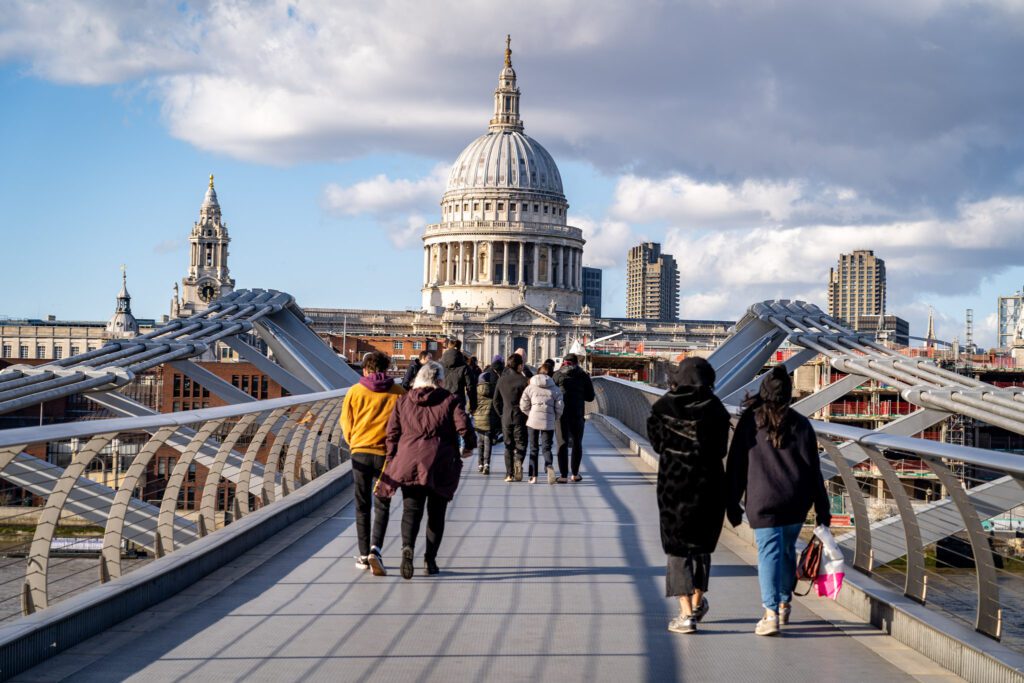
It’s one of the best views in London, and is worth a slight detour to catch it. It’s here on Google Maps.
Fountain & Ink: We’ve been to this nice little beer-focused pub a couple of times now, and it’s a good stop for a beer along this route (though there are several waterfront places to grab one, especially in the summertime when the riverfront is lined with outdoor patios full of people).
Foyles Bookshop: This is one of the best bookstores in London, and they have a location on the ground floor of Southbank Centre, right before you get to Jubilee Bridge (if you’re heading southwest).
Southbank Centre Food Market: This was a happy accident. It’s Friday-Sunday only, so skip it if this day happens to be a weekday. We walked by it on a walk down the river and discovered Pabellon, our favorite arepa place in London.
Arepas are basically a sandwich made between two corn patties that comes from Venezuela. Seriously, go here. It was so good we went back three times.
There are plenty of other food stalls here, and there’s also a nice outdoor courtyard with food and shopping called “Gabriel’s Wharf” a little ways back (here on Google Maps) that is worth poking your head into.
You may have noticed that we completely skipped The London Eye, and you should know that it was completely intentional.
It’s extremely overrated and pricey, if we’re being honest. I (Matt) have done it before, but opted out on every trip since.
It’s a little expensive, the lines are long, and the view from the Tate Modern viewing platform (which is free) is a little better.
If you have kids, this is a fun experience. If not, we’d probably skip it and spend time elsewhere.
Finally, you’ll arrive at Westminster Bridge, where you have a picture-perfect view of Big Ben.
Especially from the southern end of the bridge, where you have a nice view directly looking at the most famous clock tower in the world.
Catch a Show in the West End
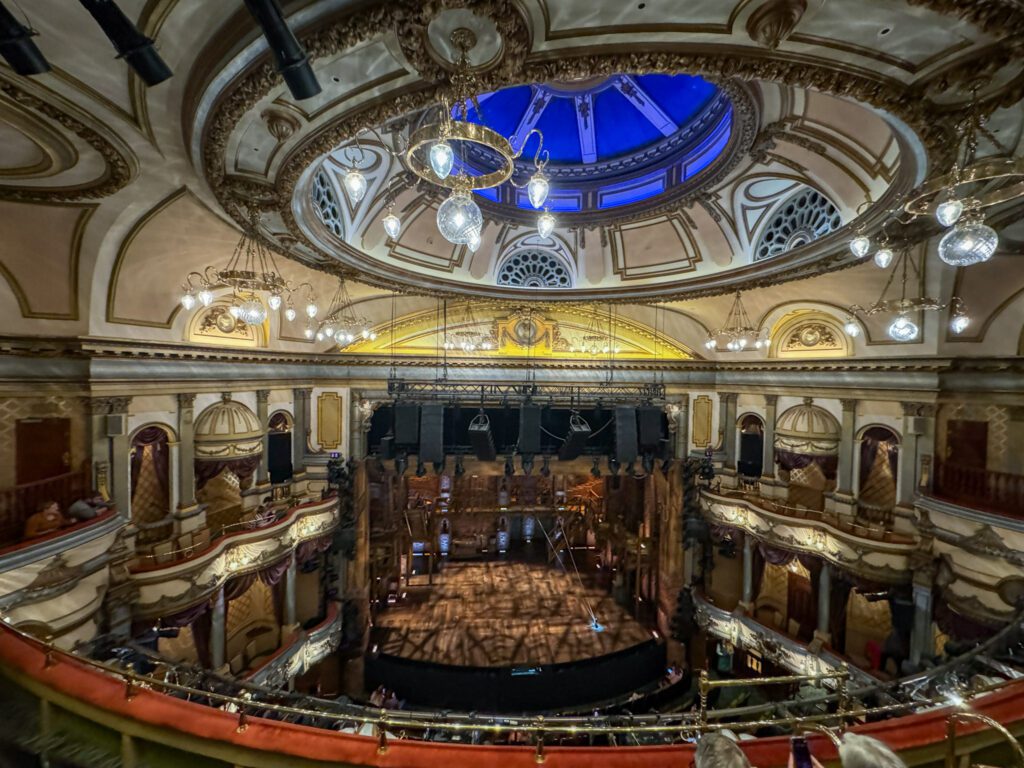
On my last trip to London, aside from doing a day trip, another big thing I wanted to make sure to do was catch a show in the West End.
We actually ended up catching two shows – Hamilton (which was significantly cheaper than the touring version at home) and Operation Mincemeat, a comedy musical about an operation in World War 2 featuring a five person case playing a BUNCH of different roles (it’s very fun).
The West End, which is the slice of London immediately west of Covent Garden, is London’s version of Broadway in New York City, though I’d actually argue that the West End’s productions tend to be a better value than what you’ll find on Broadway.
As an example, we saw Hamilton for ~$50 a ticket, which is CHEAP compared to Broadway, where the current cheapest price is $132.50 for a Tuesday show.
If you had asked me in my 20’s, I would have told you that theater is not something I’d really enjoy.
But after seeing several productions over the past few years (in my 30’s), either as they come to Portland on tour or in the West End, I’ve come to really enjoy it.
Which really shouldn’t be that surprising since my favorite thing to do is watch people who are really, really good at something (and equally passionate about it) do that thing, and ideally ask them questions about it.
There are many, many choices when it comes to shows in the West End, and you’ll likely find all of the famous shows that you’ve read about, like Les Mis, Moulin Rouge, and the Lion King (among others).
Which show you choose is largely going to depend on what you’re into and interested in. However, we, of course, have opinions that we will happily share with you.
- The Lion King: I have a soft spot for the Lion King, which was my favorite Disney movie as a kid, and our first dance at our wedding was to the Timon & Pumba version of Can You Feel the Love Tonight. The costumes and production value are amazing, and the songs are, of course, excellent.
- Moulin Rouge: I went into Moulin Rouge with zero expectations, having known nothing about it and deciding I wasn’t going to read anything beforehand, and it blew me away. It’s a sad story, but the mood is brought up by a modern soundtrack featuring contemporary musical jams. Very fun!
- SIX: Topically relevant here, this is the story of the six wives of Henry VIII, told in the form of a reality music show like American Idol. Great songs, and it’s a short production, so it’s very digestible as a first show.
- Hamilton: If you haven’t seen Hamilton, the music and storytelling really is unmatched. I’ve seen it twice now, including once in London, and I would see it a third time in a second.
- Operation Mincemeat: Five cast members, hundreds of different roles. Very fun and funny, it’s a comedy about the Allied war effort during the second World War.
- Book of Mormon: From the writers of South Park, very funny, but definitely a little vulgar and not good for kids (or people who are easily offended, which I recognize nobody is going to raise their hand and say “hey, that’s me!”).
I’m seeing Les Mis for the first time soon, and having read it in high school (in French, no less), I’m excited for that one too.
Check out what shows are happening in London while you’re in town here.
The best place to book is going to be the official website for whatever show you’re seeing, but you can also book through that site.
Catch a Soccer (Football?) Game
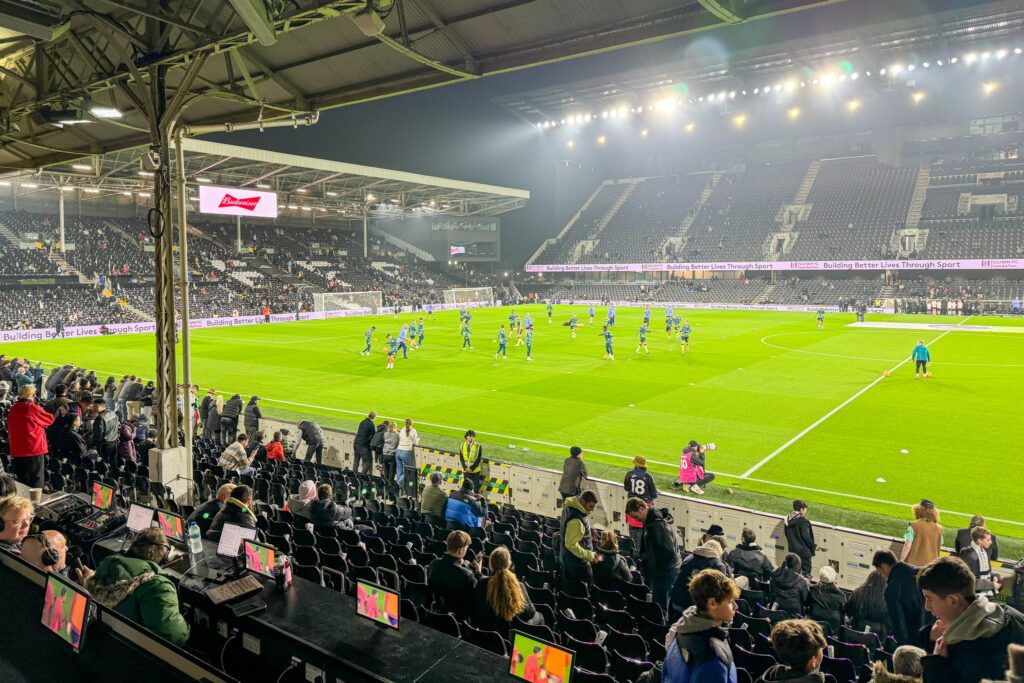
In addition to high fantasy, another thing that I’m passionate about is soccer. Or football, as it’s called in the rest of the English-speaking world.
I’m quite literally sitting here at home writing this section with a Premier League game on in the background.
The big reason for this latest trip was to catch a few Premier League games with my brother, who is a West Ham fan (COYI). I support Brentford, so we did our best to see both (and succeeded).
The first thing you need to know is that Premier League tickets are heavily regulated, and the secondary market is somewhere between nonexistent and illegal (depending on who you talk to) in an effort to preserve prices for season ticket holders.
Which means tickets are harder to get than you might be used to if you’re coming from an American context.
On the bright side, you’ll find that tickets are SIGNIFICANTLY more affordable than they are in the US.
On the not-so-bright side, it’s definitely more complicated to get them, especially for big Premier League games.
Here’s the gist of it: Tickets are released in waves, first to season ticket holders, then to members, then to previous purchasers, then to the general public (or some variation of this).
To get tickets to a game, you have a few options.
- Become a member of the club you want tickets for ahead of time, and then wait for tickets to be released to members.
- Wait until tickets go on sale to the general public and hope that there are still some available.
- Purchase a “hospitality package” that includes some extras and comes at a higher price and skips all of the minutiae above (P1 Travel was the recommended company).
Generally speaking, it is easier to get tickets to lower league games (teams in the Championship of League One, two lower tiers of English soccer) than it is for Premier League games.
I’ve been to Craven Cottage, home of Fulham (and a few good American players over the years, like Clint Dempsey and Antonee Robinson) several times now, and love the intimate nature of the stadium (the front row of seats are basically on the pitch).
We also went to the London Stadium to see West Ham, which was far less charming and interesting (though it’s huge).
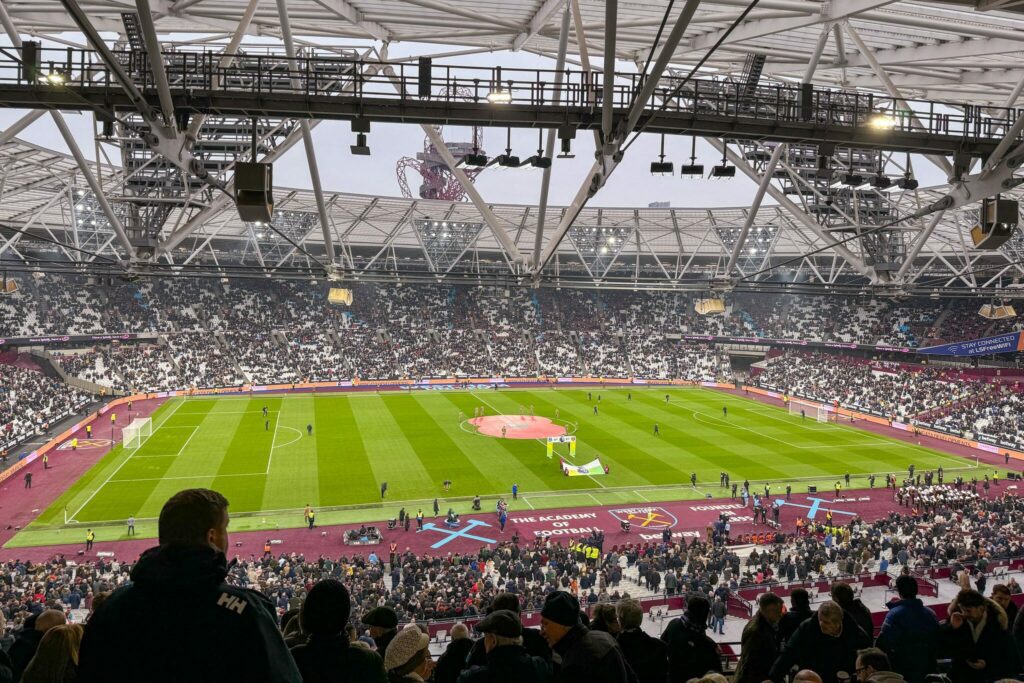
Other clubs to look at other than the big ones (Tottenham, Chelsea, and Arsenal) would be Crystal Palace, Leyton Orient, and Brentford.
Take a Walk Along the Regent’s Canal
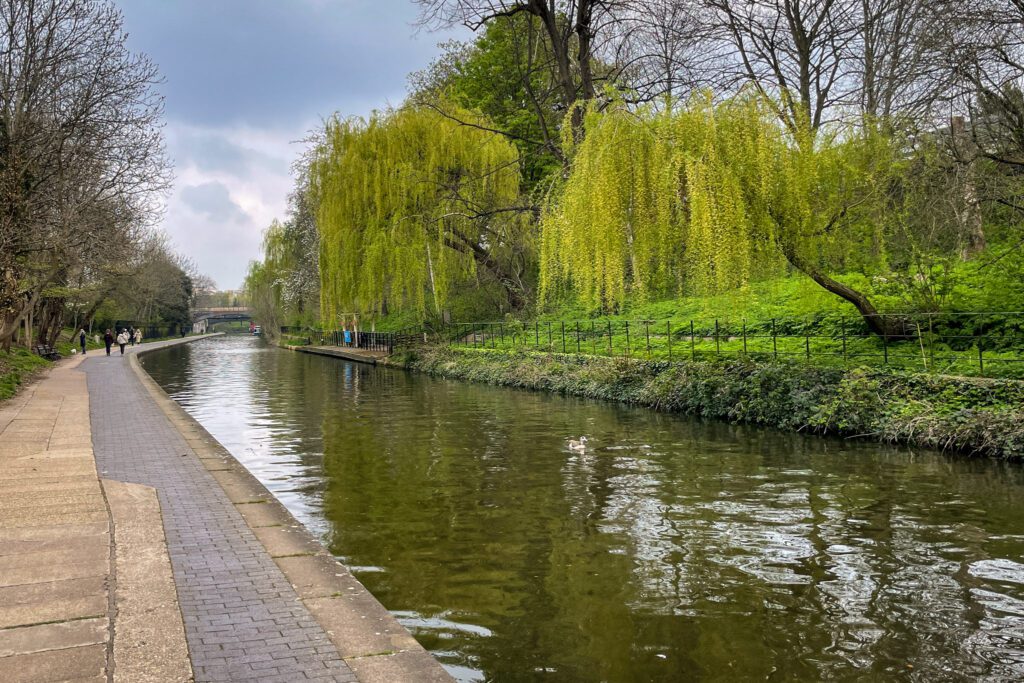
Before a recent trip, we would have never really considered that London is a “canal city.”
We’ve spent a fair amount of time in Amsterdam recently, and we’ve also revisited Venice, so we’re well aware of how water can shape a city.
In London’s case, the water that has shaped the city is undoubtedly the Thames, which is a crucial piece of London’s development from its early history through modern times.
However, after a long afternoon walk following the Regent’s Canal in London from Camden all the way down to Notting Hill, we realized that the city has a series of canals that connect the Thames to other parts of the city that were built and expanded in the 19th and 20th Centuries, when moving things on the water was often the most efficient way to do it.
Regent’s Canal was built to link the Thames with a different canal, the Grand Junction Canal, passing through north London and connecting those areas with towns to the north of Lonodn.
The canal isn’t really used for shipping or transportation in modern times, but instead provides an excellent green space and commute route.
It’s a nice way to see the more residential side of the city – a side that you can forget exists when you’re wandering around the City of London with all its tall, glass skyscrapers – and it very much reminds us of Amsterdam or Venice.
Here is a map of the route we took. There are a couple of places where the canal enters a tunnel and you pick it up again after a short walk, but it’s a lovely way to spend a nice afternoon.
We’d start in Camden and pick up the canal on the north end of Regent’s Park (where you’ll walk past several exhibits of the London Zoo, which is across the canal) and follow it southwest.
Technically you could follow it all the way from where it connects with the Thames (here on Google Maps), which takes you through Hackney and Shoreditch before you get to Camden, but that’s a LONG walk.
See the City’s Great Green Spaces
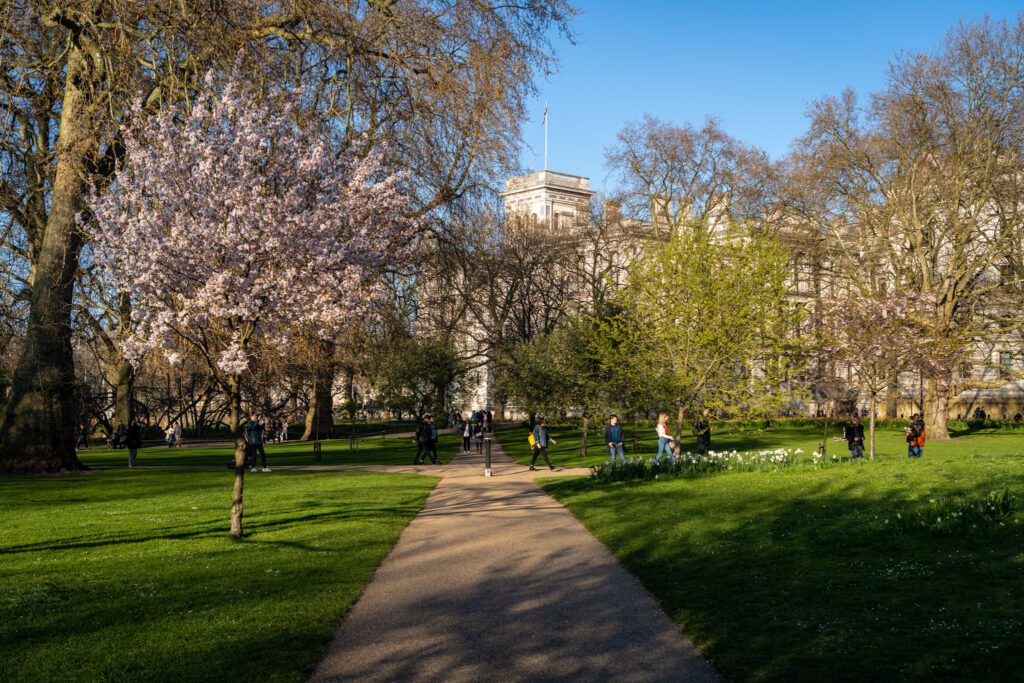
If you know us, then you know that we love a good urban green space (it’s one of the reasons we love our home city of Portland), and London is packed full of them.
There are numerous green spaces right in central London, and if you walk for about five minutes you’re likely to run into one of them.
However, there are a few that rise above the rest that we’d prioritize on your itinerary.
Primrose Hill / Regent’s Park: This park, which is in the same area but technically two separate parks separated by the Regent’s Canal, is up north near Camden, and makes a good addition for the day you visit Camden Market.
Both are big, open green spaces, and Regent’s Park is home to the London Zoo. There are really good views of the London skyline from the north side of Primrose Hill.
St. James’s Park: First of all, yes, that’s the correct number of “s’s.” This is the park that contains Buckingham Palace, and it has a very lovely pond (and resident ducks and swans).
We already covered the Changing of the Guard above, and this is the place where you would see that.
Even if you’re not here for that, it’s worth walking the nice loop around the pond and down to the palace to see it from the outside (especially if you’re here in the afternoon, when the festivities are long gone).
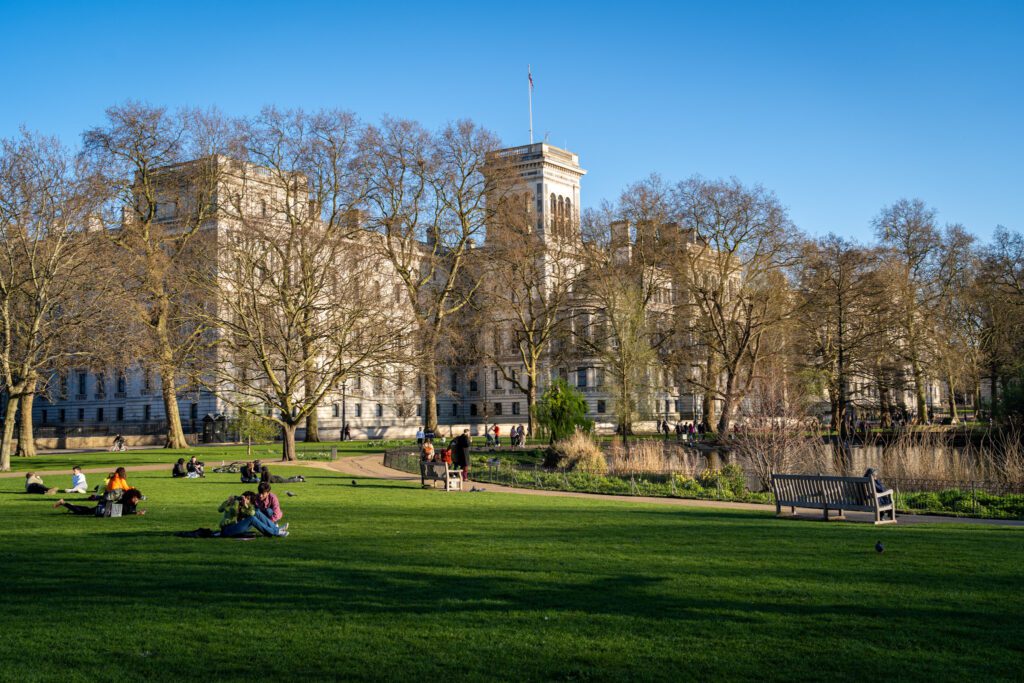
Hyde Park: A big park that was established by Henry VII after he confiscated the land from Westminster Abbey and turned it into a royal hunting ground. It’s now a big, public green space adjacent to St. James’s Park (where you’ll find Buckingham Palace).
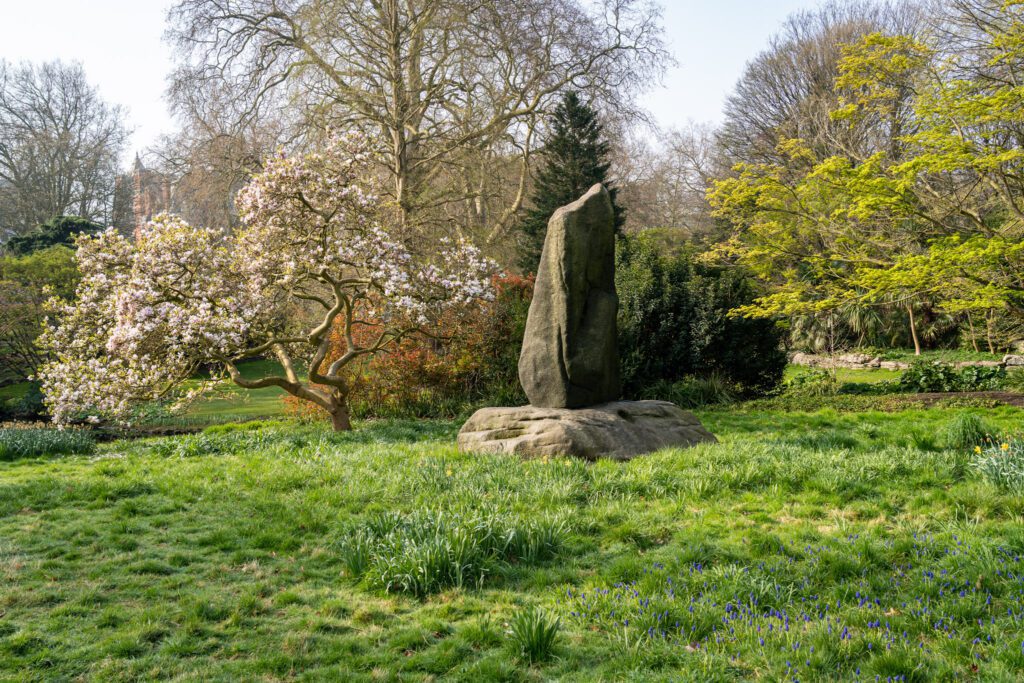
Kew Gardens: Further out to the west, you can take a nice ferry ride along the river from Westminster (more information here) to reach them, which is a fun experience.
Kew Gardens is a big, open green space at a nice bend in the river that houses the Royal Botanic Gardens and flora and fauna from all over the world.
It’s a massive green space, but most of the main sights are on the northern side, closest to the river, and you can see them on a nice loop that will take you a few hours.
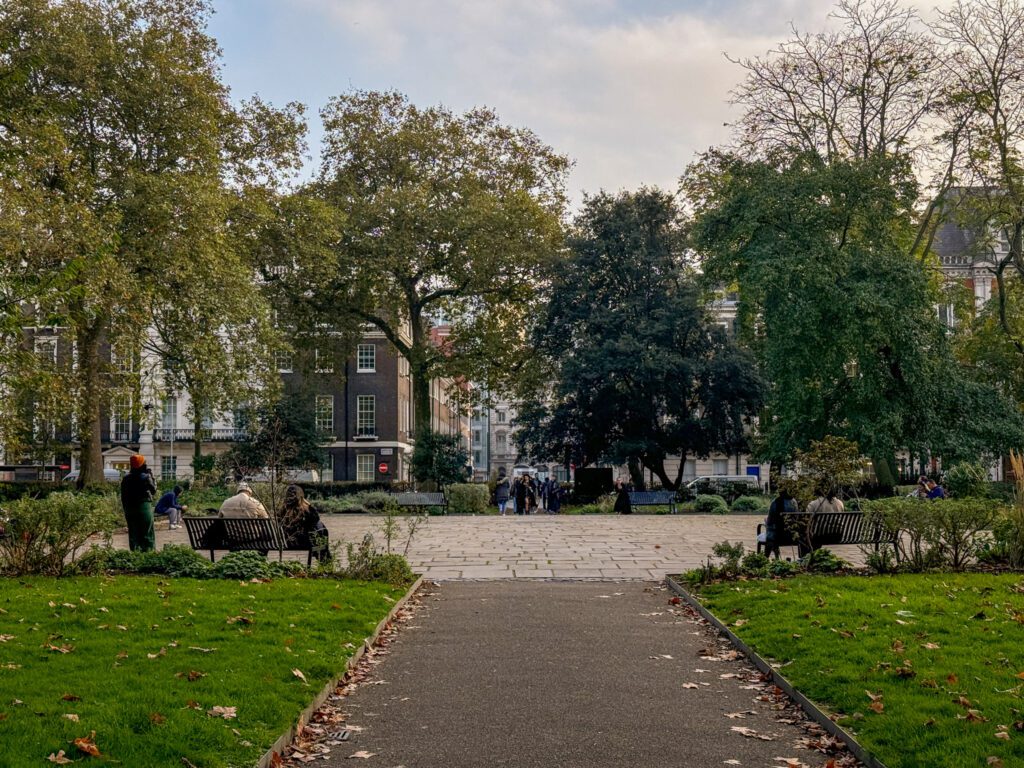
Grosvenor Square: We wanted to add this one because we love a neighborhood plaza, piazza, or square (depending on what country you’re in), and this compact green space in Mayfair is a great example.
It’s always full of people walking their dogs (or babies), meeting up for a chat in the sun (or rain), and is generally buzzing with energy.
Planning a trip to London?
We’d love to help!
We’ve been to London several times over the past five years, including two long trip (10 and 14 days each), and we LOVE London.
It’s a huge city (which can be a little overwhelming) with tons of history, cultural marvels, and a great food scene.
As you get into planning your trip, you might find some of these other detailed guides we’ve written about London helpful.
