
How to Plan a Perfect Columbia River Gorge Day Trip
As you head east out of Portland, the landscape starts to change and you leave the flat valley with a few hills and cinder cones behind and head out along the Columbia River, which funnels you into a deep gorge that has been carved into the Cascades by millions of years of water flowing through it.
The Columbia River is the river that Lewis and Clark came out to the Pacific Ocean on, and they spent three miserable winter months near Astoria before turning around and heading back the way they came.
At just 30-45 minutes away from our front door in Portland, one of the reasons that we love living here is the fact that we have access to the bounty of natural beauty that exists in the Columbia River Gorge.
Massive basalt walls, countless beautiful waterfalls, hills blanketed with wildflowers in the spring – the Gorge has all sorts of things to do, see, eat, and drink.
We’ve done some version of this itinerary countless times with friends visiting from out of town to introduce them to the natural beauty that exists within an hour or so of Portland.
In this guide, we’re going to give you a perfect itinerary for spending a day exploring the best of the Gorge, from chasing waterfalls to exploring Hood River and the fertile Hood River Valley.
We’ll start with some logistics that are important to know going in, and then give you our favorite stops, hikes, viewpoints, and more, all informed by our experiences exploring this area ourselves.
We’re sharing it with you to help you plan your Gorge adventure, particularly if it’s your first time in the area.
Sound good to you? Let’s get into it.
Disclaimer: Some of the links in this post, like hotel links, are affiliate links, meaning at no additional cost to you, we make a little bit of money if you click through and book. That being said, we would never recommend something to you that we don’t stand behind 100%.
A Quick Geography Overview
Before we talk about exactly where to stop, what to do, and which waterfalls to see, we need to take a second to touch on the geography of the Gorge because it affects how you plan your trip.
For the purposes of this guide, we’re referring to the area of the Gorge between Portland and Hood River that is packed with waterfalls, viewpoints, and excellent hikes.
The Gorge continues east past the Dalles, before the river turns north out towards Walla Walla and snakes its way up through Washington State.
The main thing to think about in terms of planning your trip is the fact that there are two sides to the Gorge.
The Oregon side, which is on the south side of the Columbia River, is the more famous part of the Gorge – the one with all the lush forests and waterfalls that you think of when you hear “the Gorge.”
It’s protected from the sun by the high walls of the Gorge, and the result is a more lush, wet environment, which is how you get all the waterfalls.
The other thing to know about the Oregon side is that it’s serviced by a major highway (I-84) which has multiple lanes, but is absolutely full of semi-trucks heading east into Idaho (which makes it a less-than-pleasant drive, we think).
The Washington side of the Gorge, in contrast, is much drier, thanks in no small part to the fact that it doesn’t have the protection from the sun that the Oregon side gets.
While it doesn’t have the waterfalls or lush forests, that exposure means that it’s full of excellent views and, for a couple of months in the spring, blankets of wildflowers covering its rolling hills.
The road along the Washington side of the Gorge is one lane in each direction, and it’s a much more pleasant drive than the Oregon side.
However, it is windy in parts and does take significantly longer.
The main implication for your trip is the fact that, once you’re out in the Gorge, there are only two places to cross the river (and both are toll bridges): the Bridge of the Gods in Cascade Locks, which is about halfway between Portland and Hood River, and the Hood River Bridge.
That, combined with the fact that we think the waterfalls on the Oregon side are a must-see, means that we’re going to focus heavily on that Oregon side of the Gorge, with a few more ideas for things to do and see on the Washington side in the “with more time” section below the main guide.
Do You Need a Car?
The short answer is yes, you will need a car if you want to do this itinerary as written.
There are limited private and public transportation options available if you don’t have a car (more on that in a second), but the main issue with them is the fact that they take you to either stops in the Gorge, or out to the town of Hood River, not both.
So it’s fairly easy to piece together parts of the itinerary below, but not so easy to do the whole thing without a car.
That being said, there are some options if you don’t have access to a car.
The first and best option is to take a guided tour that includes transportation from Portland.
We like this highly rated tour that picks you up in Portland and takes you on a half day waterfall adventure out in the Gorge (that looks to be somewhat similar to our itinerary below).
It’s going to be more expensive, but it includes transportation to and from Portland AND between the different stops, which is unique.
For what it’s worth, we’ve actually done a tour in Portland with that company, and it was great!
The other option is to utilize the Sasquatch Shuttle, which has a two and a half hour shuttle tour that takes you to most of the stops in the waterfall portion of the itinerary below, including Multnomah Falls.
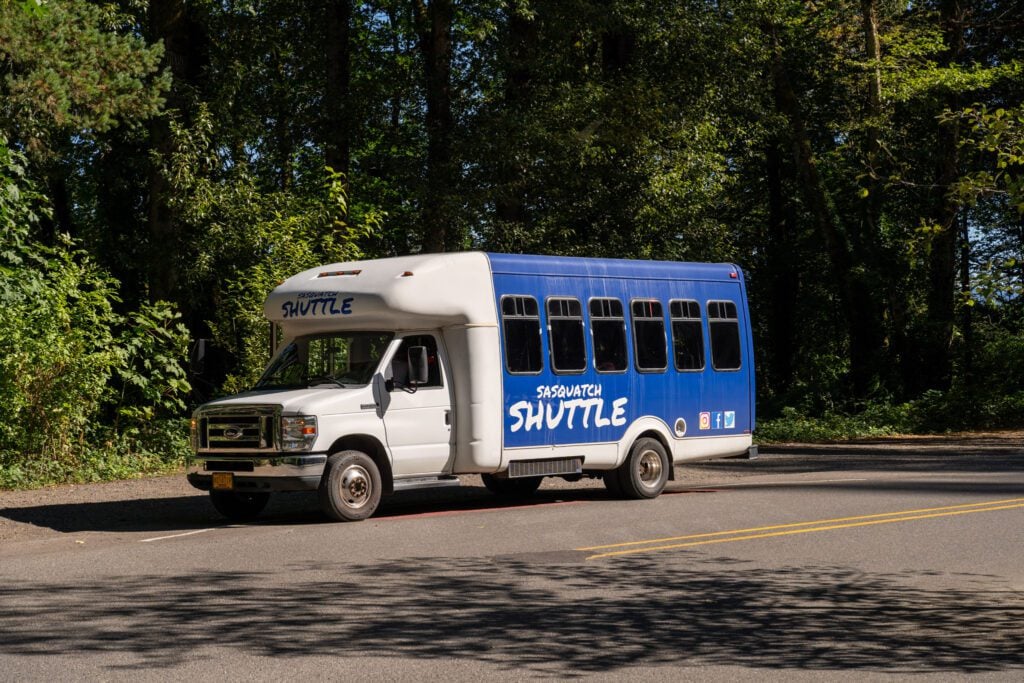
The challenge with that is that you do have to get out to Troutdale (20-30 minutes east of Portland) to catch the shuttle, which is difficult if you don’t have a car. Their parking lot is here.
The last option is to utilize the Columbia Gorge Express, a public transportation option that has stops at the Gateway Transit Center in Portland (with connections to local transit here), Multnomah Falls, and Hood River.
You won’t be able to do a lot of the stops in between, but it is a decent option if you want to see Multnomah Falls and explore around Hood River.
They also have a stop in Cascade Locks, which can be a fun place to grab lunch and do a quick hike to Dry Creek Falls (trail information here).
Like we said, you’ll be able to do parts of the itinerary we recommend for seeing the best of the Gorge, but you really need a car to make the most of your trip.
What to Do in the Columbia River Gorge (on a Day Trip)
And now, let’s get into the best way to spend a day exploring the Columbia River Gorge.
Side note: It’s going to look like you’re doing some backtracking, and it’s true – you are – but it’s in service of getting to Multnomah Falls before the crowds and tour buses arrive.
We’d make that your first stop before heading back the way you came for some waterfalls and viewpoints, and then going deeper into the Gorge for the afternoon.
This is a full day itinerary, with roughly half spent seeing the best waterfalls the Gorge has to offer, and the other half exploring the area around Hood River, the main city in this part of the Gorge.
You’re going to want to get an early start because the crowds at Multnomah Falls during the summer can be stifling.
Multnomah Falls (Viewpoint)
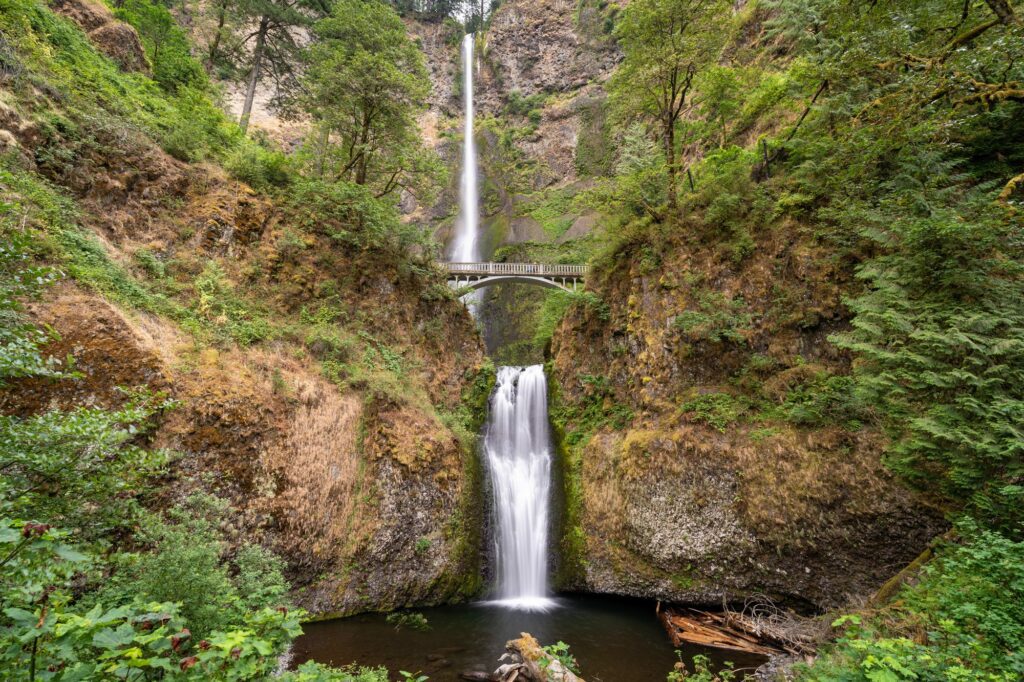
Words really don’t do the majesty of a two-tiered waterfall tumbling 600+ feet over the wall of the Gorge justice, so we’re not going to try.
Instead, we’ll focus on the best way to experience Multnomah Falls (which viewpoints are worth it, etc).
As we mentioned above, we like to make this the first stop of the day for a couple of reasons.
First, to make parking a little bit easier.
While there are a couple of small lots along the Historic Columbia River Highway (the two lane road that runs through the waterfall corridor), we ABSOLUTELY WOULD NOT park in the lots along that road.
The reason? Everyone is trying to park there, and traffic backs up onto that road, which makes it impossible to get by and you’ll be stuck in that lineup.
Instead, we highly recommend parking in the big lot along I-84, which has plenty of room and lots of turnover. Since you’re going to be taking I-84 to get here from Portland, it’s easy to access, too!
Second, because Multnomah Falls really is at its best before the tour buses start to show up (which happens sometime between 9am and 10am).
After that, it turns into a bit of a zoo, and it’s not our preferred way of seeing the falls .
We’d start at the lodge – there’s a bathroom on the ground floor – and walk towards the falls, where you’ll find a good viewpoint at the base of the falls looking up at the stone bridge that sits between the two tiers. This is a great photo opportunity.
Then, we’d walk up the path to the right, which takes you to that stone bridge.
While you are a lot closer to the falls, it’s generally not the best photo opportunity because the spray from the falls can be intense, especially in the winter and spring.
We don’t think it’s worth going further up the trail, which quickly turns into a brutal set of switchbacks that take you up to the top of the falls, unless you’re planning on doing the entirety of the Multnomah – Wahkeena Falls Trail, which is a nice longer hike option.
On its own, the view from the top of the falls is not worth the effort to get up there, and we’d recommend that you spend your time and energy elsewhere.
From Multnomah Falls, we’re going to send you back the way you came, which feels counter-intuitive, but we’ve found it’s the best way to do this.
Since you’ve taken our advice and parked in the big parking lot along I-84, it’s going to be easiest to head all the way to the western end of the scenic drive we’re about to send you on, and make your way back east towards Multnomah Falls.
Remember, the reason we’ve organized things this way is to make your visit to Multnomah Falls as pleasant and straightforward as possible, and it’s worth doubling back to make that work. The route looks something like this.
Important note for Multnomah Falls: You’ll need a timed entry permit for visits at peak times this year.
Here’s the relevant information: “Timed Use Permits will be required between 9 a.m. and 6 p.m. daily from May 22, 2026 through September 7, 2026 and are able to be reserved on Recreation.gov on an hourly basis.”
More information and reservations here.
The Vista House & Women’s Forum Viewpoint (Viewpoints)
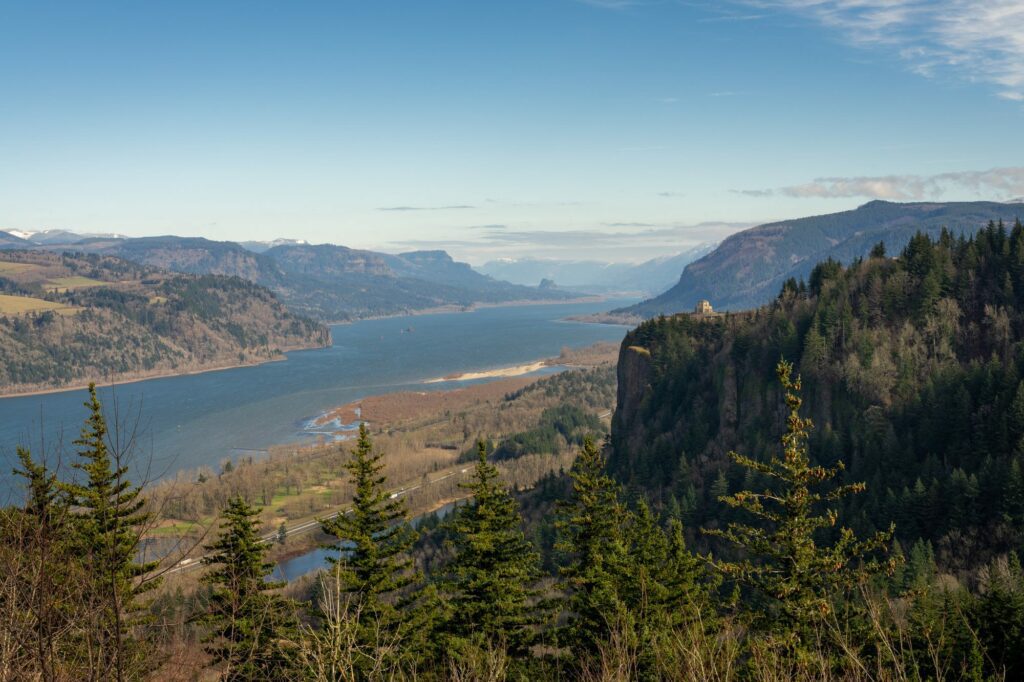
Your scenic drive along the Historic Columbia River Highway – yes, this was the original road through the area before I-84 was built – starts with a couple of truly excellent views of the Gorge from the Women’s Forum Scenic Viewpoint and the Vista House.
From Multnomah Falls, you’ll head back to Corbett Hill Road, which climbs 700 feet from the water level of the river up to the two viewpoints via a steep, windy road up to the ridgeline.
At the top of the ridge, you’ll turn left on the Historic Columbia River Highway and start the scenic drive.
Your first stop is going to be the Women’s Forum Scenic Viewpoint (here on Google Maps), which is simply a parking lot with a magnificent view of the Gorge, with the Vista House (spoiler, that’s your next stop) in the foreground, and the Columbia River Gorge in the distance.
You’ll then hop back on the road and head east, and five minutes later you’re going to hit the Vista House at Crown Point, which is a rest stop and observatory built in the early 1900’s.
There are great views from the road and paths around the Vista House, and you can go inside and climb to the roof for an even better 360-degree view.
From the Vista House, 700 feet above the river level, you’ll start to descend back down through a series of switchbacks.
Latourell Falls (Viewpoint + Optional Hike)
Once you’re back closer to river level, your first stop is the second most impressive waterfall of the bunch, Latourell Falls. Latourell Falls is a two-tiered waterfall, but unlike Multnomah Falls, you can’t see them both at the same time.
There is a viewpoint of the Lower Falls, which is far and away the most impressive of the two, a short walk from the parking area.
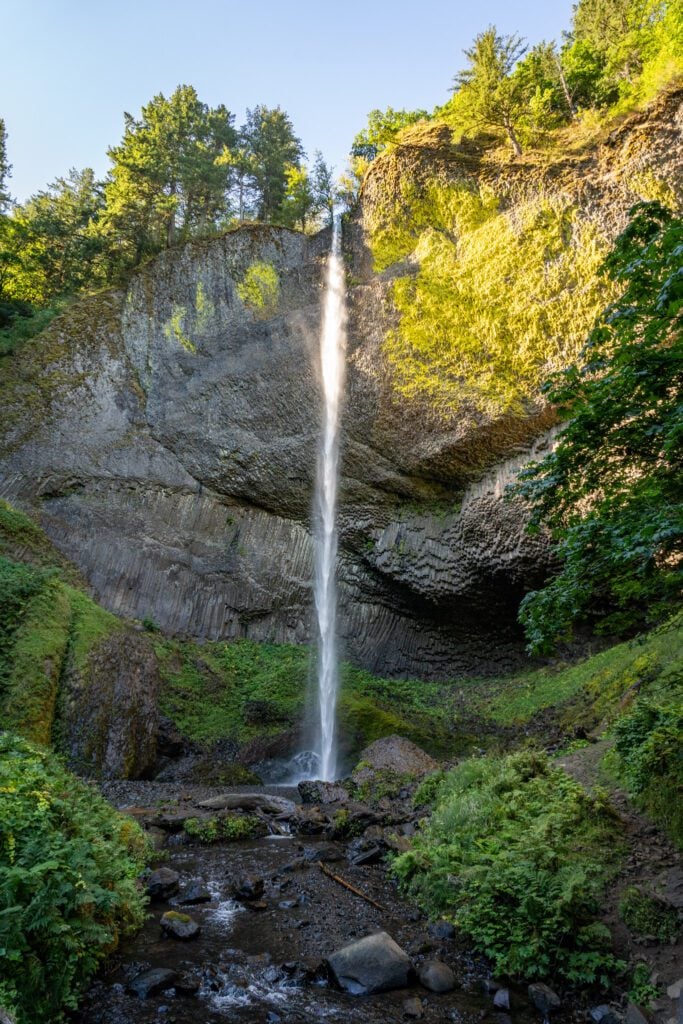
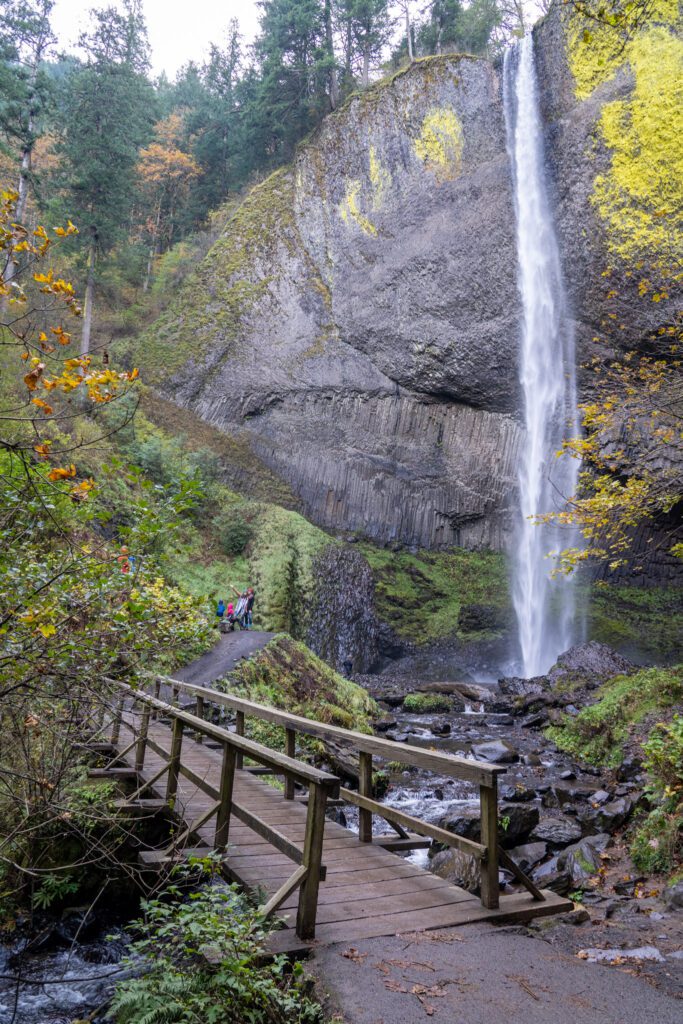
The best view is from the wooden footbridge over the creek at the base of the falls.
To get to the Upper Falls, you need to do a two mile loop hike that we’d categorize as optional.
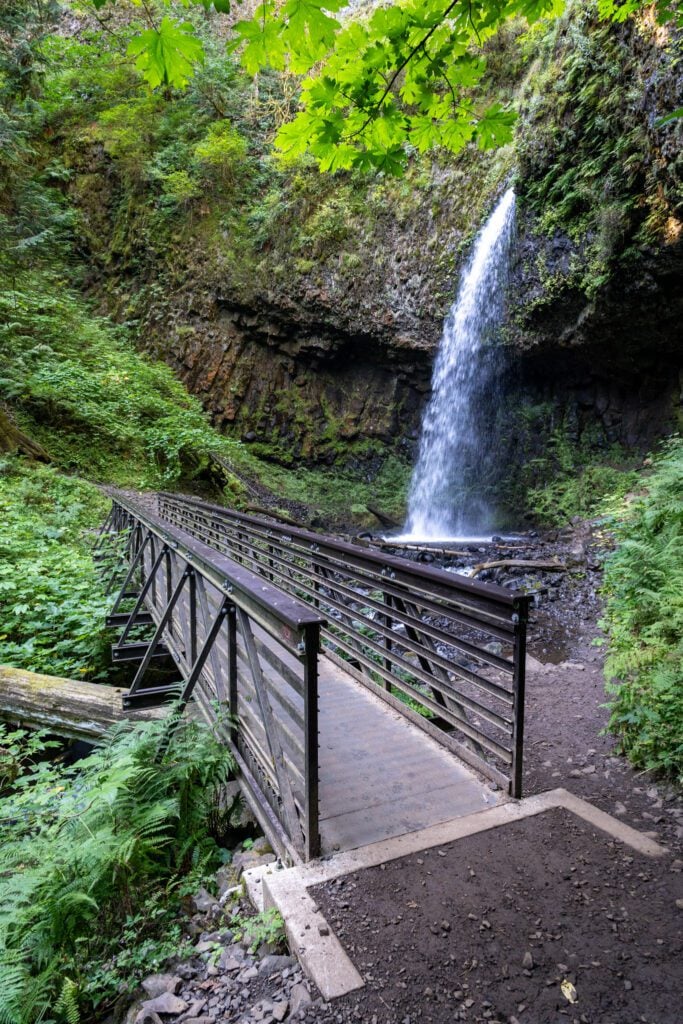
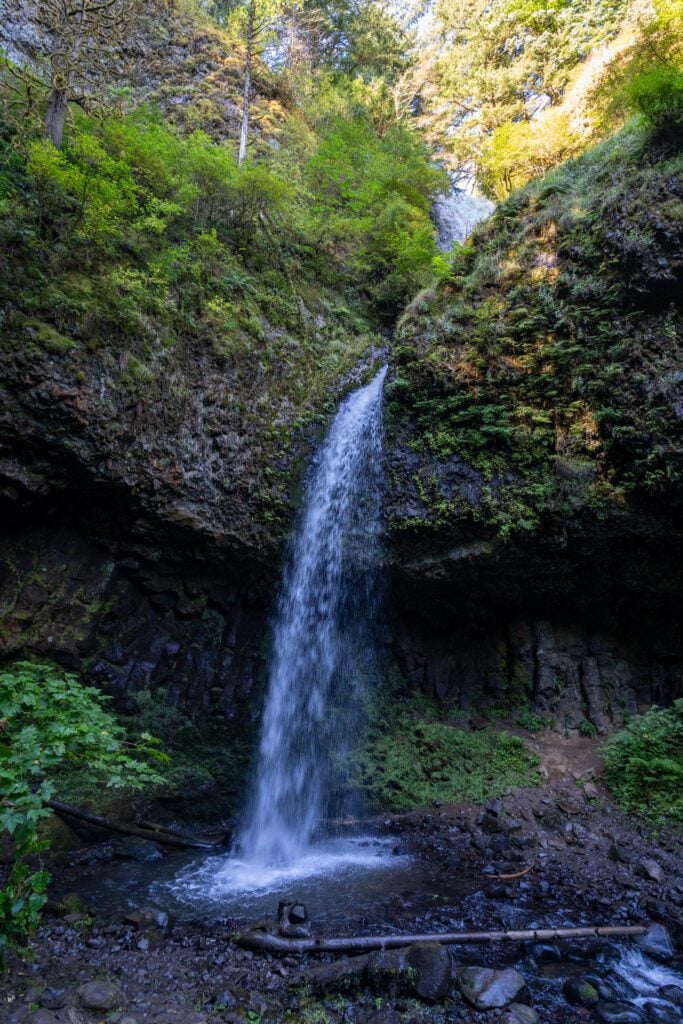
It’s a nice, forested hike that will get your blood pumping a little bit, and if you want to stretch your legs, this is a good option (though your next two stops are waterfalls that involve short walks).
Bridal Veil Falls (Short Hike)
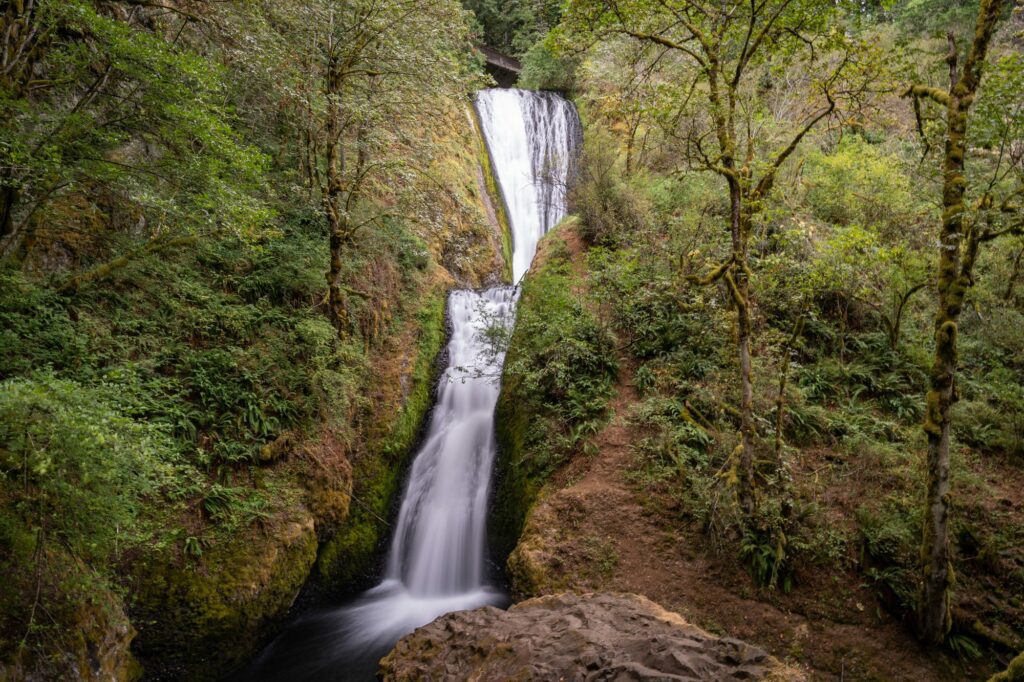
Continuing east on the Historic Columbia River Highway, your next stop is going to be Bridal Veil Falls, which we think is a bit of an underrated gem in the Gorge that offers a really great bang-for-your-buck in terms of the effort it takes to get there.
It’s a very short, mostly easy hike down to the falls, though you do have to descend a bit to get to the falls (which means you’ll have to climb back up on the way back to the car).
There are some steep sections, but overall it’s in the “easy” category.
The good news is that it’s very short, and the juice is worth the squeeze here.
Horsetail and Ponytail Falls (Short Hike)
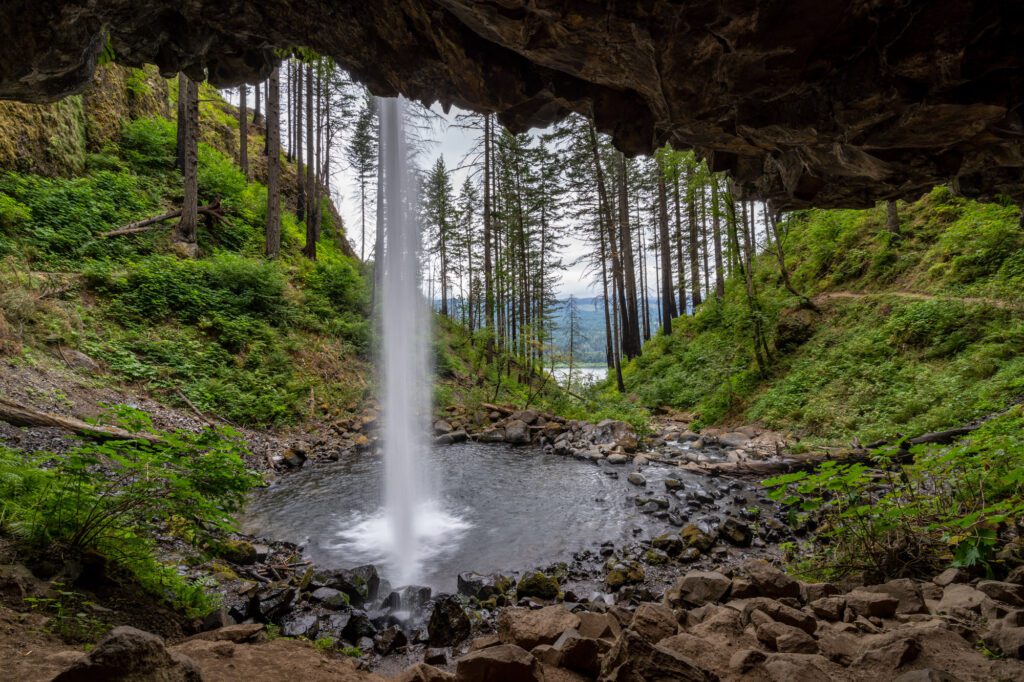
This is another underrated stop in the Gorge, and is one we always include on our forays with friends and family into the Gorge because of the unique perspective of walking behind the upper falls.
Right across from the parking lot along the Historic Columbia River Highway you’ll find yourself at the base of the first waterfall at this stop, Horsetail Falls, which drops 175 feet into the pool below.
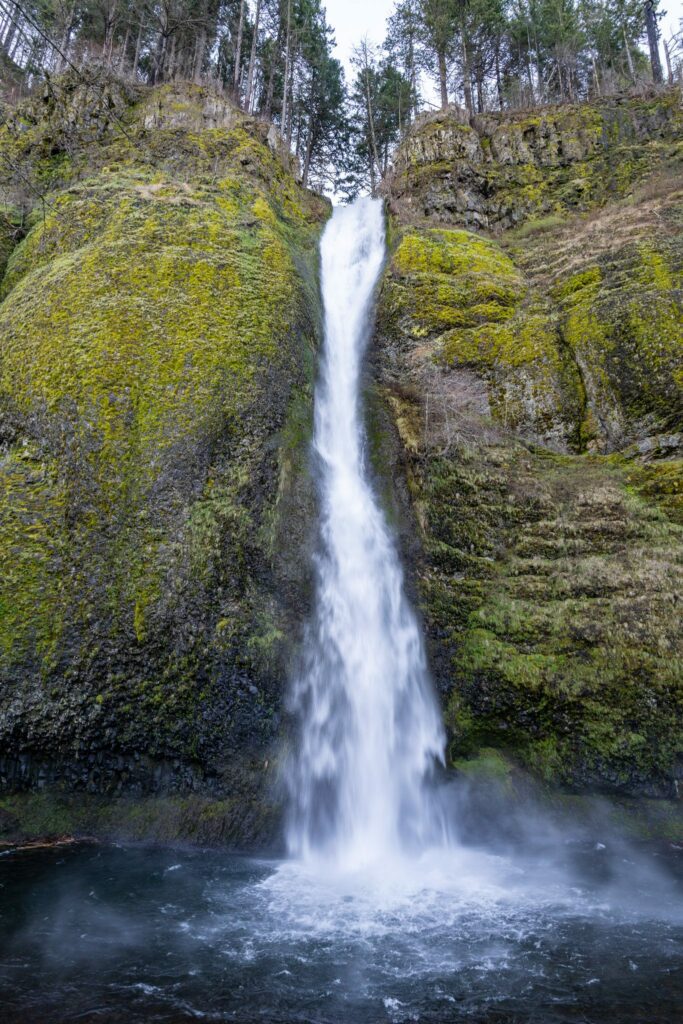
To get to the second waterfall, you’ll need to do some climbing to get up onto the ridge, which you’ll do with a set of switchbacks right off the bat.
Once you’re on the ridge, it’s a mostly flat walk to Ponytail Falls, which is cool because you can walk fully behind the falls.
It’s a relatively accessible hike because it’s just 0.8 miles, but it’s not the easiest 0.8 miles in the world because it does climb 300 feet over that short distance. More trail information here.
Lunch in Hood River
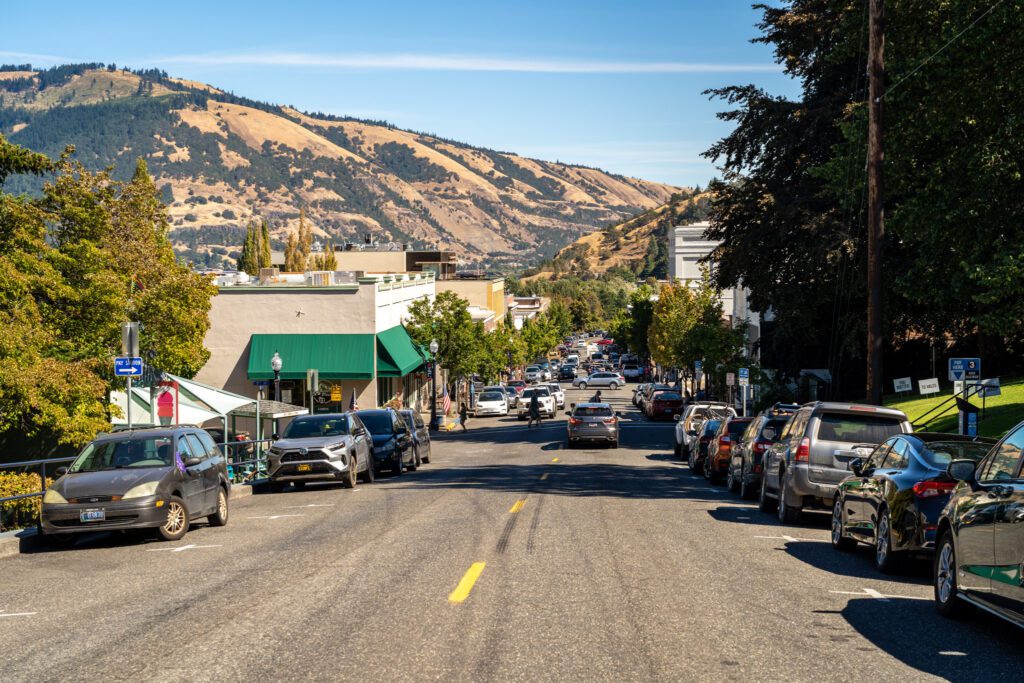
After a morning full of viewpoints, short hikes, and waterfalls, it’s time to transition into the second part of the day: exploring Hood River (and the area around it).
Hood River is an interesting place from a geological and geographic perspective because it sits at the convergence of the lush, green forested landscapes west of the Cascades, and the flat, dry, open landscapes of central and eastern Oregon (and Washington).
Traveling in any direction from Hood River brings you to a completely different landscape.
West takes you to that lush, green, waterfall-laden portion of the Gorge you spent the morning exploring.
South takes you up through the fertile Hood River Valley and up to the eastern flank of Mount Hood, the heart of the Cascades.
North takes you to the Washington side of the Gorge, where things are rockier, more exposed, and drier.
East takes you to the drier, more arid part of the Gorge.
Because of that location at the convergence of so many different landscapes Hood River is an excellent home base for exploring the surrounding areas, which is essentially what this day is all about.
But before that, you’re almost certainly hungry, and there are some good lunch options in Hood River.
Grasslands BBQ: A food truck that’s usually in the riverfront area with some of the best barbecue in Oregon.
The lines get ridiculous, but everyone we’ve talked to has mentioned it when we mention Hood River (Matt has Celiac Disease and can’t eat gluten, so it’s not a great option for him, sadly).
pFriem Family Brewers: Also located right on the riverfront walk, pFriem is one of the original craft breweries in Hood River (and the state of Oregon), and they still have a nice taproom in Hood River.
Good place to try not only their beer, but grab some nice pub food like fish and chips and burgers.
Despite the fact that it’s a brewery, they actually have solid gluten free options if you need that.
Lake Taco: A Hood River classic, this taco truck right downtown has quite a following, and they have a pretty classic taco truck menu with tacos, burritos, and tortas (which means it’s not great for gluten free people, otherwise we’d have been here multiple times by now).
If you’re looking to relax for a second to catch your breath over a drink, there are a bunch of good spots in downtown Hood River to grab a locally made beer or cider.
We already mentioned pFriem, one of the original craft breweries in the state (they started in Hood River), but there’s also Full Sail (another Hood River original) and Double Mountain (another Hood River institution). They’re all within a few minutes of each other either downtown or on the riverfront walk.
For a range of beers, wines, and ciders, both local and from further afield, there’s the Hood River Common House.
They also have a bunch of great cans and bottles of beer, cider, and wine that you can take to go.
P.S. we have an entire guide dedicated to our favorite things to do in Hood River with plenty of other ideas.
Drive the Hood River Fruit Loop
Once you’re done poking around Hood River itself, time for another scenic drive!
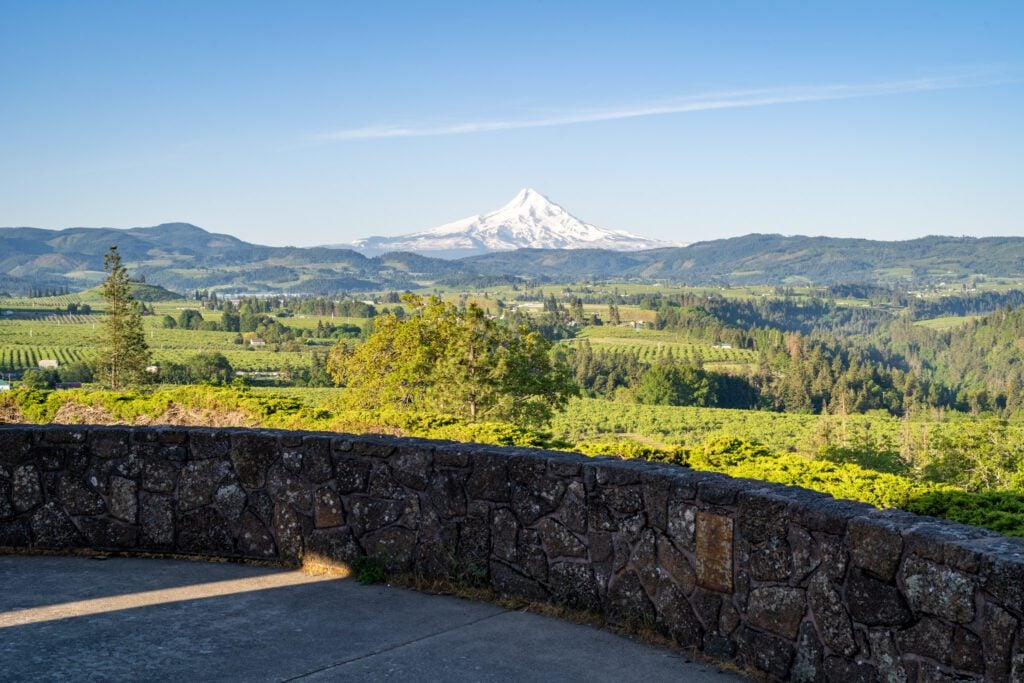
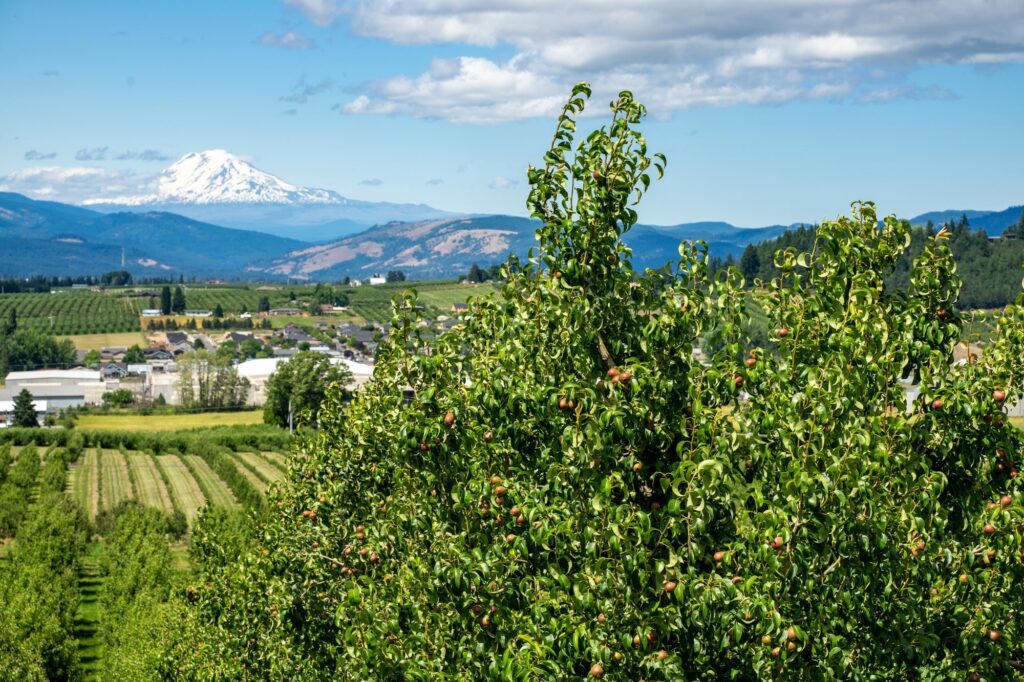
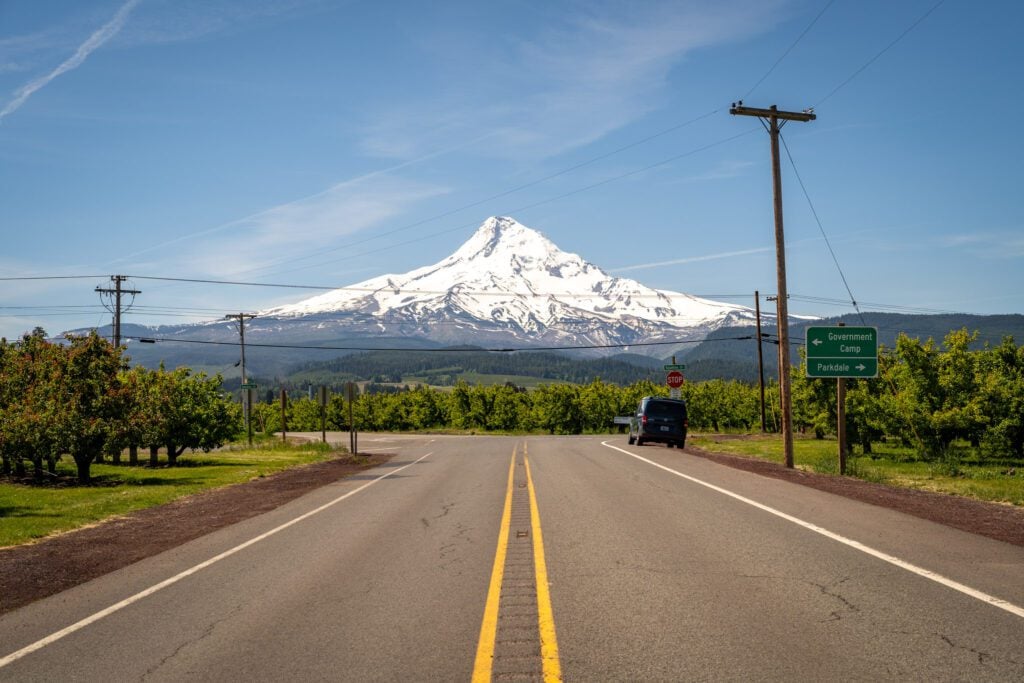
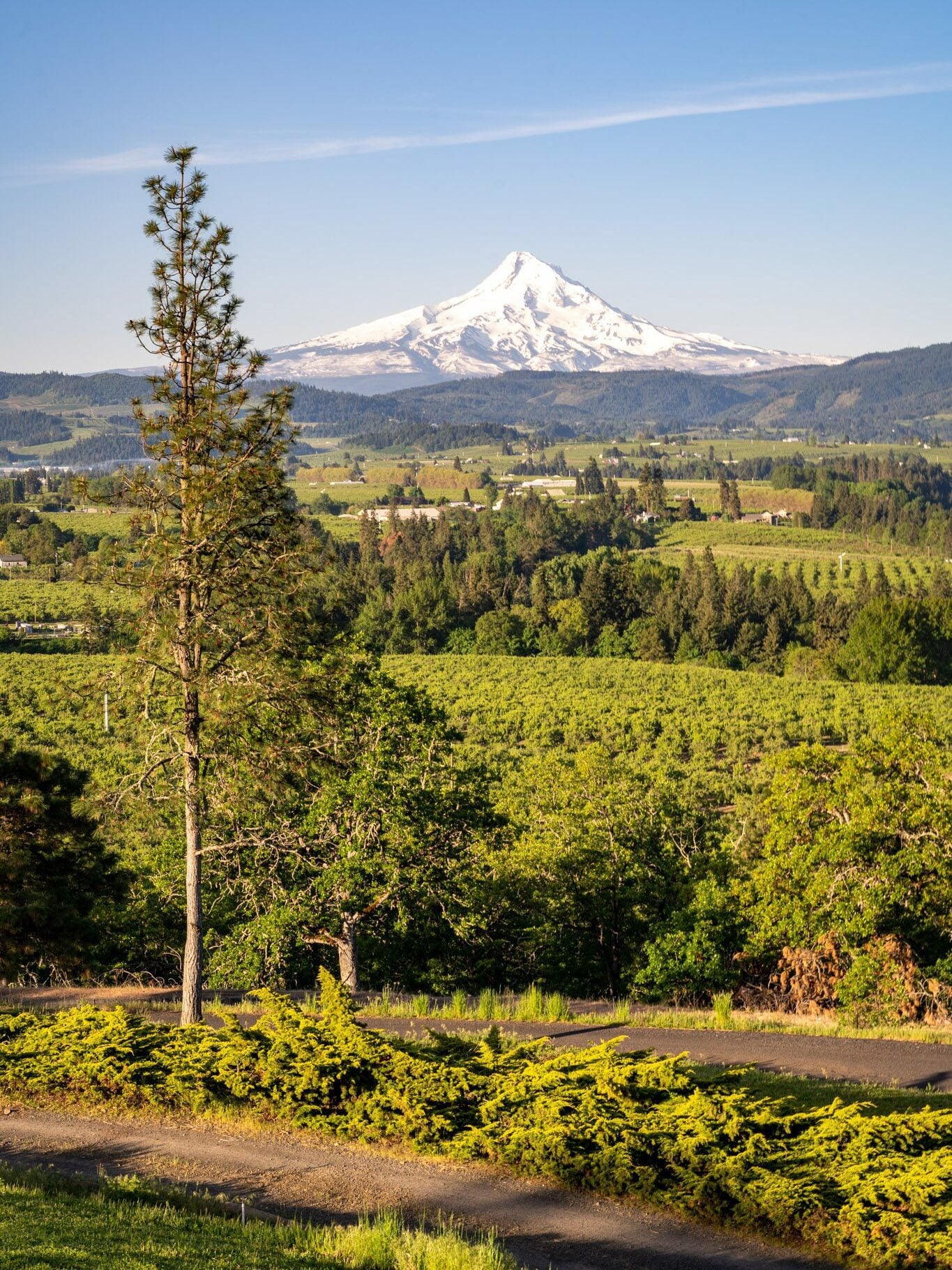
This time, head south out of Hood River into the fertile valley that sits between Mount Hood and Hood River, the Hood River Valley, where vines and fruit trees are backed by picturesque rolling hills and Mount Hood’s snowy peak in the distance.
But wait! There’s more!
When you’re out in the valley, you’ll notice a second snowy peak that appears to the north back towards Hood River; Mount Adams!
It’s a beautiful place, and there’s a bunch of stops to make where you can find great farm fresh produce (seasonally) and other products grown right here.
We’d start your explorations by driving to the far end of the valley, which we’ll call Draper Girls Country Farm, and then making your way back towards Hood River with plenty of stops to oooh and ahhh at the views along the way.
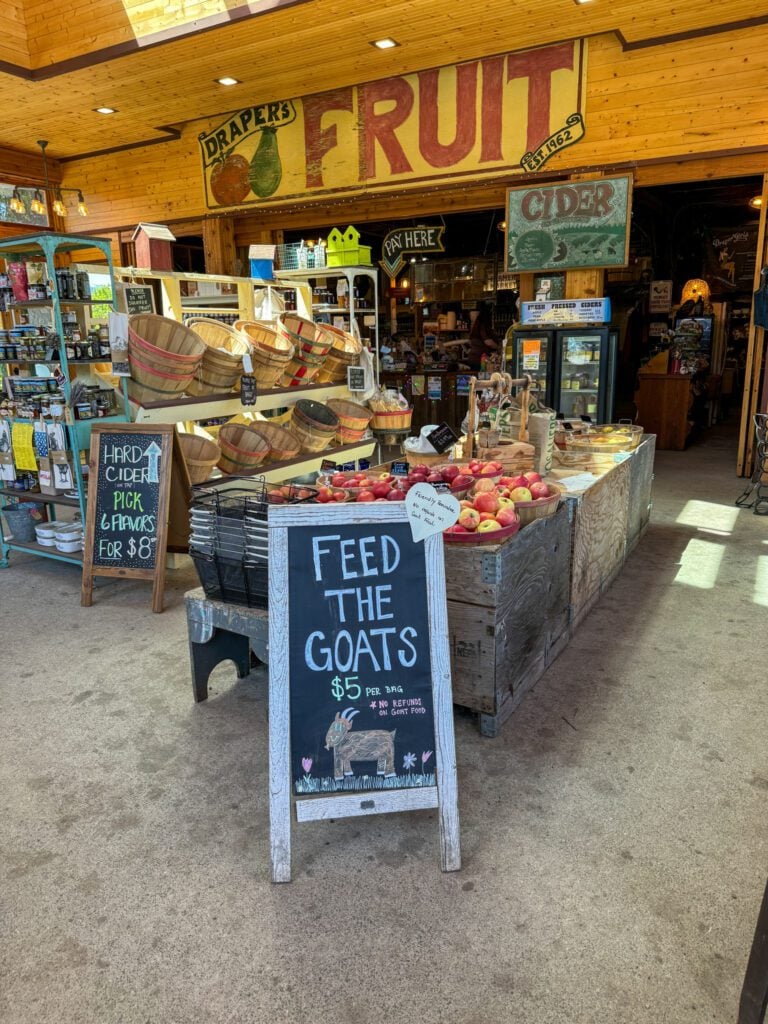
Draper Girls Country Farm: The bounty of produce and products from the Hood River Valley on full display!
We like stopping here whenever we can, but especially in the summer and fall when they have fresh fruit for sale (and u-pick fruit, sometimes).
Packer Orchards Farm Place is another good spot to stop for farm-fresh produce between June and October.
Stave & Stone Winery: While we generally prefer the wineries on the other side of the River in Underwood, Washington, there’s no denying that this is a pretty nice place to enjoy a glass of wine, with vineyards backed by views of Mount Hood.
Hood River Lavender Farm: A nice lavender farm right next to Stave & Stone. Worth a visit when the lavender is blooming (late summer and fall), or to pick up locally made lavender products (we get culinary lavender to make lavender syrups for coffee and tea drinks).
There’s also Hope Ranch Lavender, which is a little further north closer to Hood River.
The Gorge White House: We like stopping here for the atmosphere because it’s essentially a big mansion with sprawling grounds that they’ve turned into a destination with food trucks, farm fresh fruit, wine, and hard cider, and a beautiful outdoor seating area that is at its peak in the summer afternoons and evenings. Lovely place to stop for a drink and a snack.
Panorama Point: One of the best views of the Hood River Valley because it’s a little higher up and gives you some elevation so you can see out over the valley all the way to Mount Hood. You can find it here on Google Maps (it’s just outside of Hood River).
Additional Things to Do in the Gorge That We Love
There are plenty of other great things to do in this stretch of the Gorge – far too much to fit into a single day – so we’ll use this section to give you even more ideas for things to do while you’re out in the Columbia River Gorge.
Many of these ideas involve some kind of hiking, and we have an entirely separate guide to hiking in the Columbia River Gorge which you should read for more information on these trails.
Hikes to Other Waterfalls in the Gorge
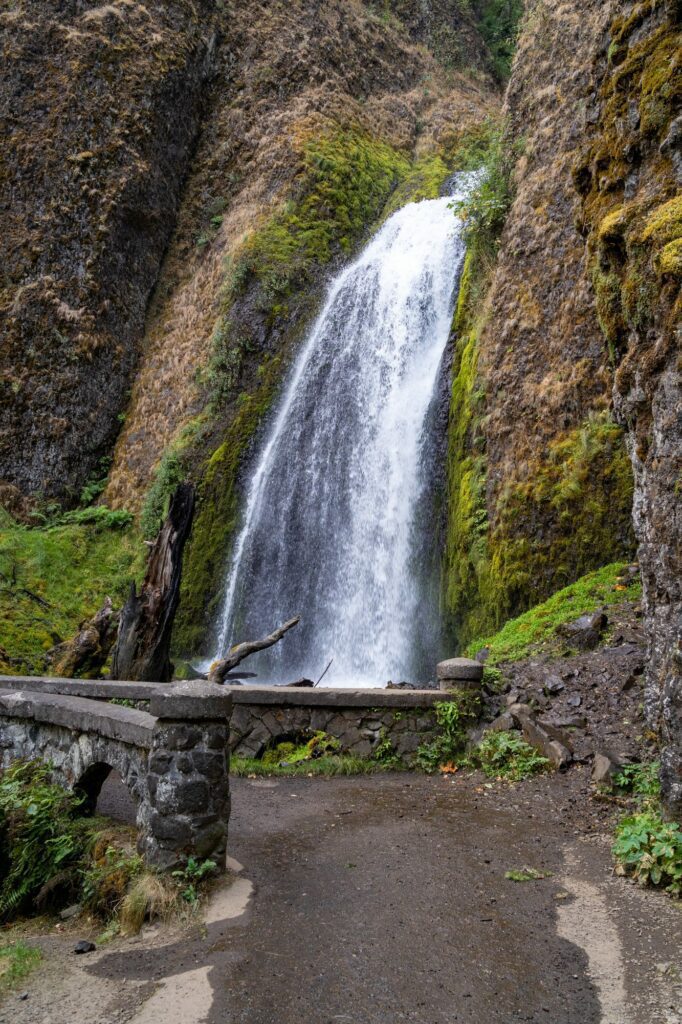
We had a hard time choosing which waterfalls to include in this itinerary because there are just too many! Here are a couple of additional waterfall hikes to consider adding to your trip.
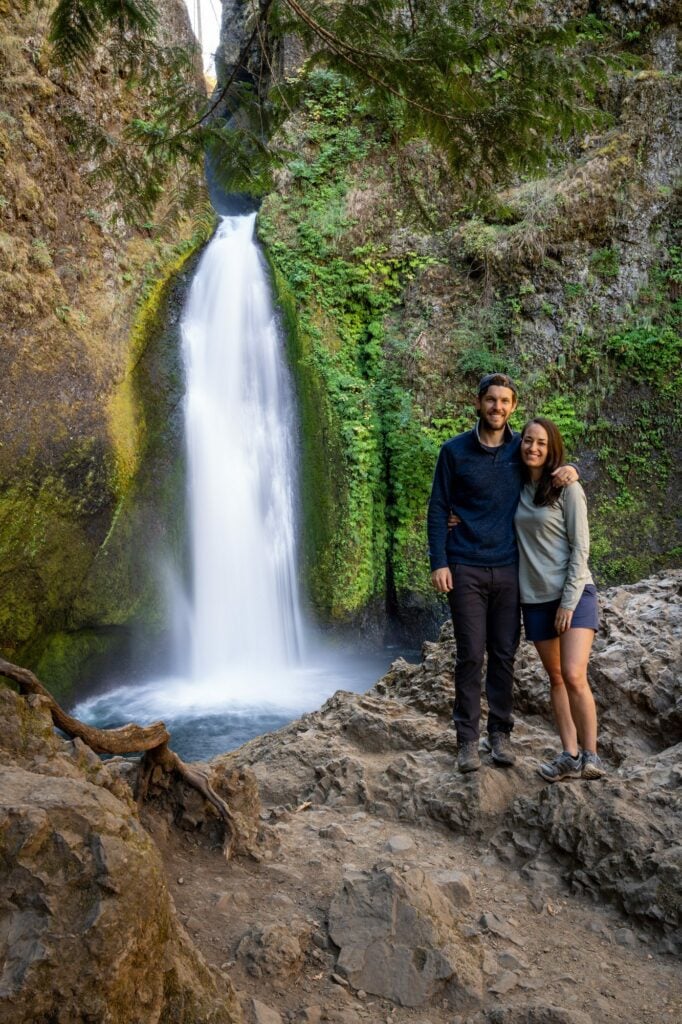
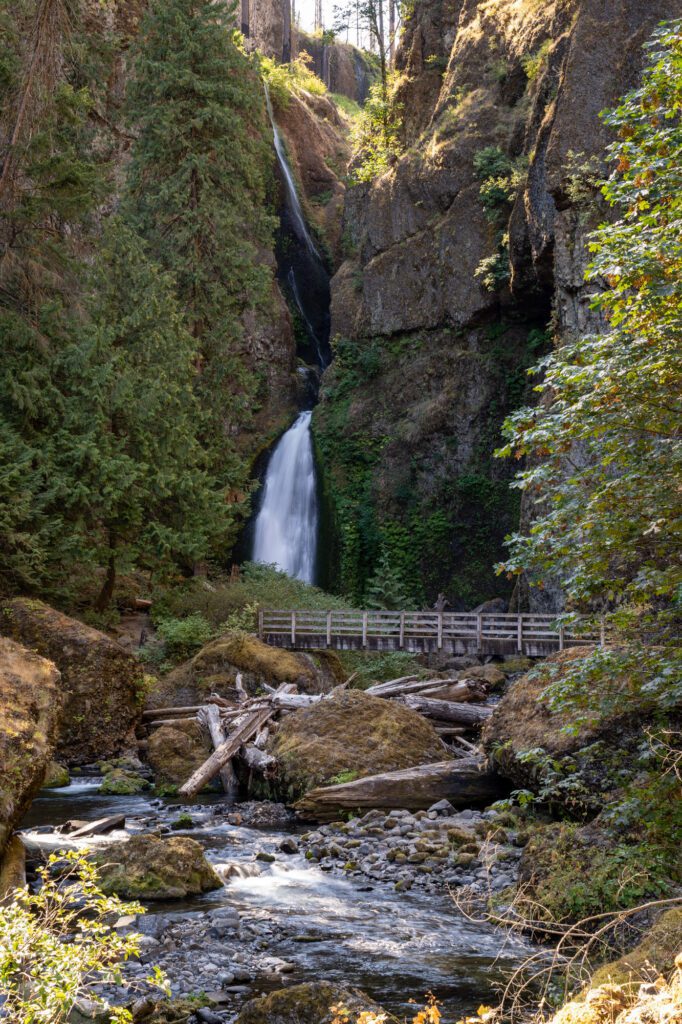
Wahclella Falls: This is our favorite waterfall in the Gorge in terms of bang-for-your-buck hiking.
It’s a nice hike up a gully to Wahclella Falls, and the only downside of this hike is the parking situation, which is a little tough because the trailhead has room for ~10 cars.
We have an entire Wahclella Falls Trail guide for more.
Wahkeena Falls: We actually mentioned this hike already in the Multnomah Falls section – it’s the nice hike that heads up the switchbacks at Multnomah Falls, follows a gorge up to the ridge, and then comes down past another nice waterfall, Wahkeena Falls.
We also have a separate guide to the Multnomah-Wahkeena Falls Loop that covers all the logistics you should know, like where to park and what direction to hike.
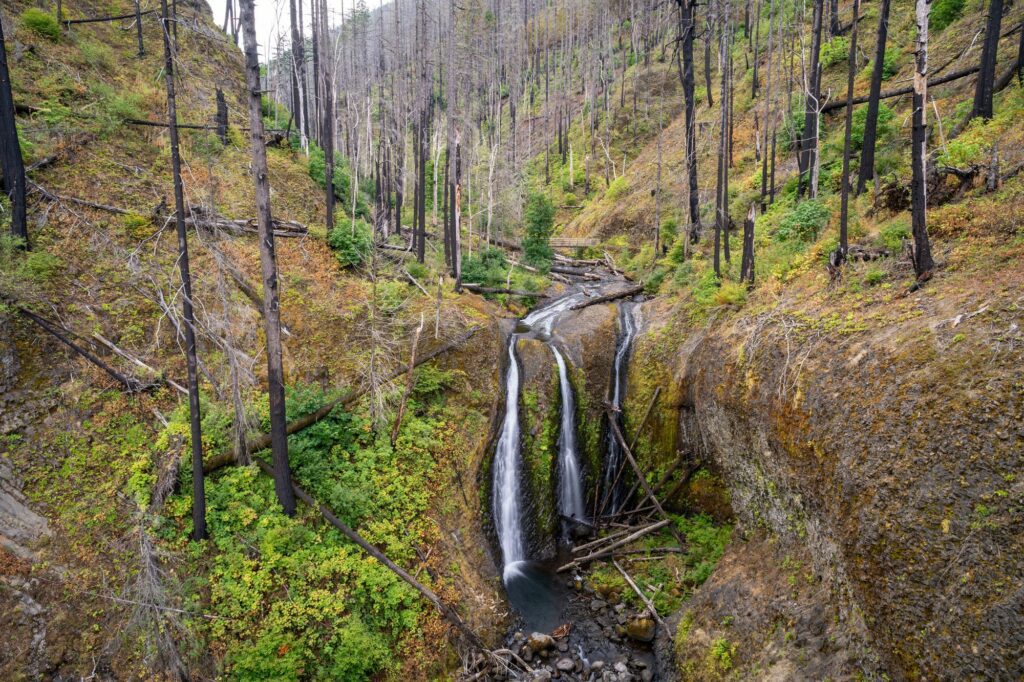
Triple Falls: A less-trafficked trail than most of the ones we’ve covered that ends at a really nice waterfall. Low effort, nice reward.
Wildflower Hikes
We talked about the differences between the lush, wet Oregon side of the Gorge and the drier, more exposed Washington side.
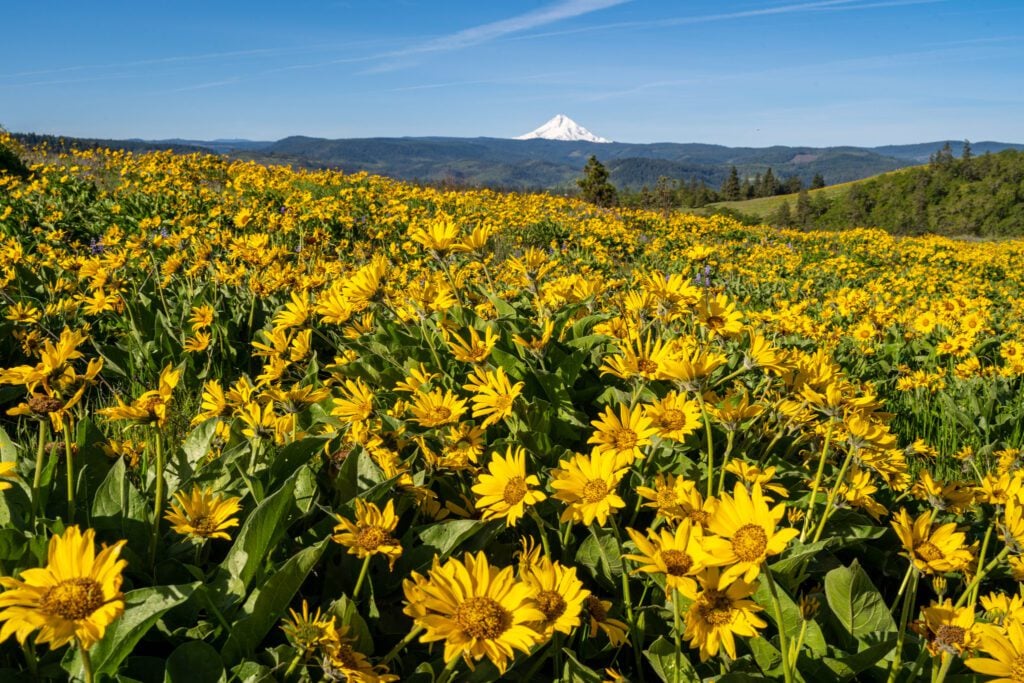
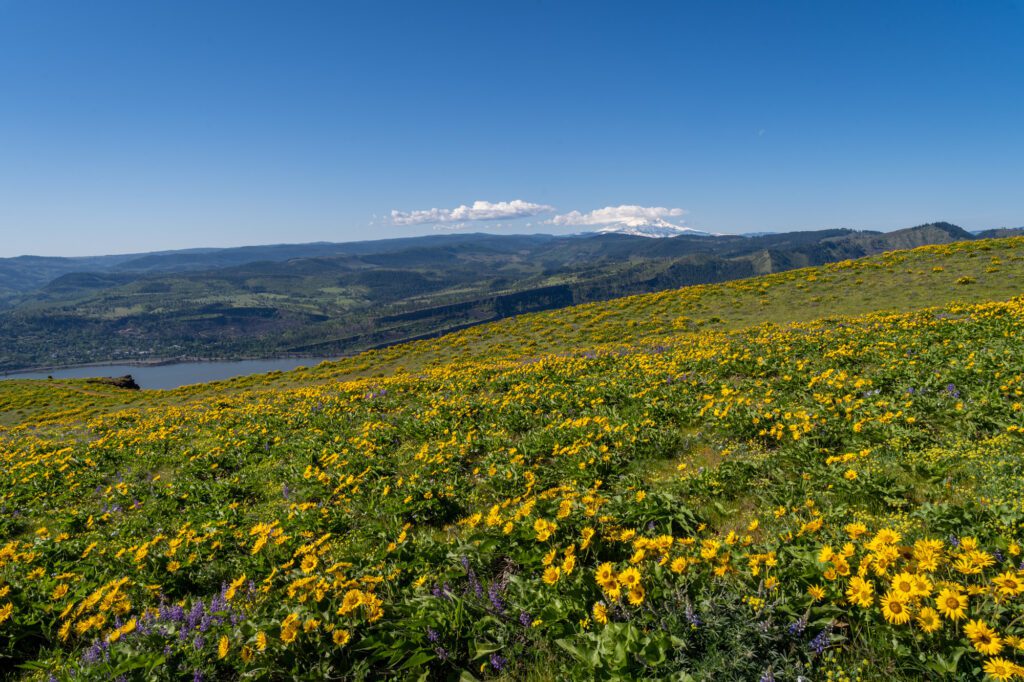
In the spring and early summer, this means that the sun-drenched hillsides on the Washington side of the Gorge become one of the premier destinations for wildflowers in the Pacific Northwest.
Obviously, wildflower timing and prolificness depends on all sorts of factors, and the best way to see what the situation looks like is to read trail reports on AllTrails.
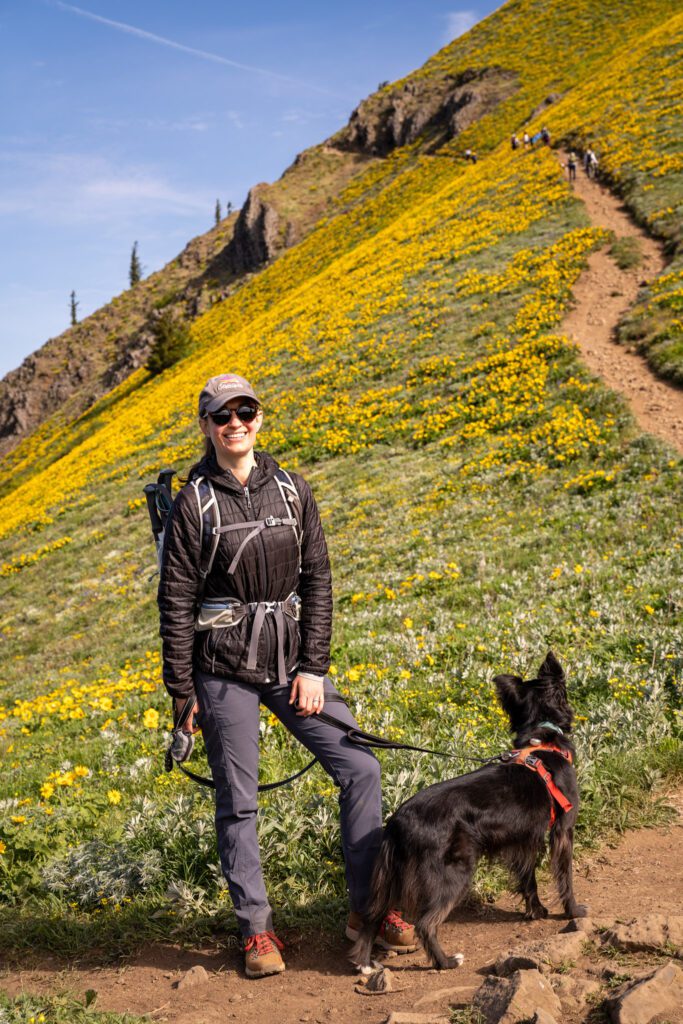
Dog Mountain: We would only ever do this hike during the peak wildflower season, because this hike is HARD.
There are certainly better options in terms of bang-for-your-buck in the Gorge (we’re about to cover three of them), but there are perhaps no higher highs than the top of Dog Mountain when it’s blanketed in yellow balsamroot.
It’s so popular that they instituted a permit system during peak wildflower season (on weekends and holidays).
We have an entire Dog Mountain Trail guide for more information on this hike, including navigating the permit situation.
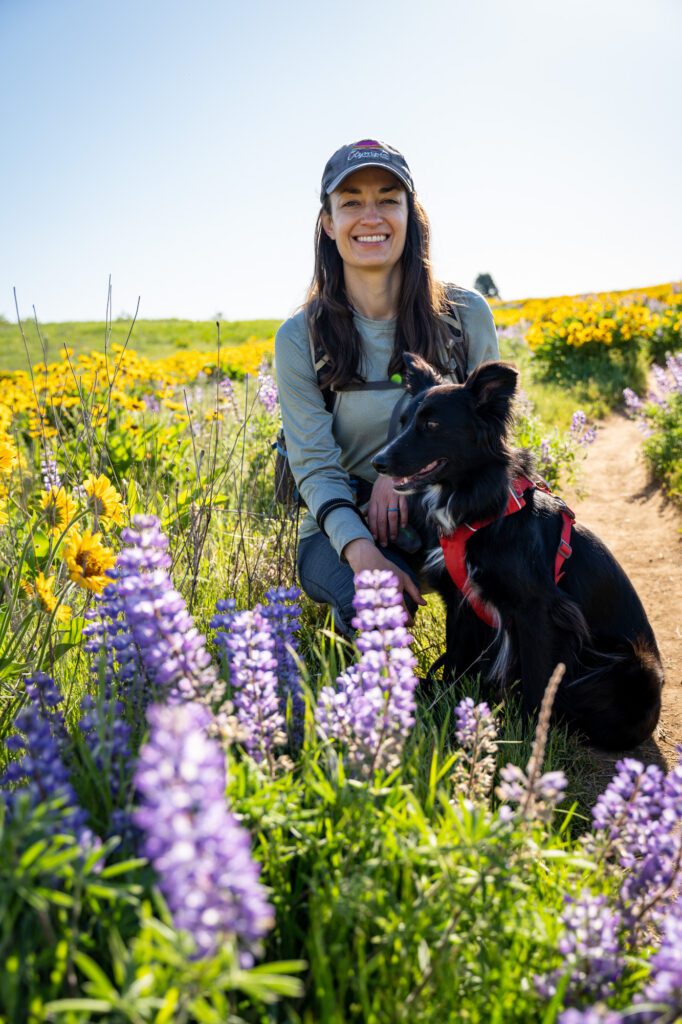
Coyote Wall: This is our favorite hike on the Washington side of the Gorge because the effort is more moderate than Dog Mountain with a lot of the same payoff and a fraction of the hikers on the trail with you.
Great wildflowers in the spring, and nice views out over the Gorge in all seasons. Read our Coyote Wall Trail guide for more information.
Memaloose Hills Loop: A nice little lollipop trail on the Oregon side of the Gorge (east of Hood River) with great wildflower displays.
Lyle Cherry Orchard: Even further east into the Gorge means even fewer people on the trail with you. Great Gorge views and decent wildflowers (though not as good as the other three hikes above, we think).
Viewpoint Hikes
If you’re more into the idea of a hike that ends with a great view of the Gorge, we have a couple of options for you.
Worth noting that all of the wildflower hikes fit that description, but here are two additional hikes that we didn’t cover in that section.
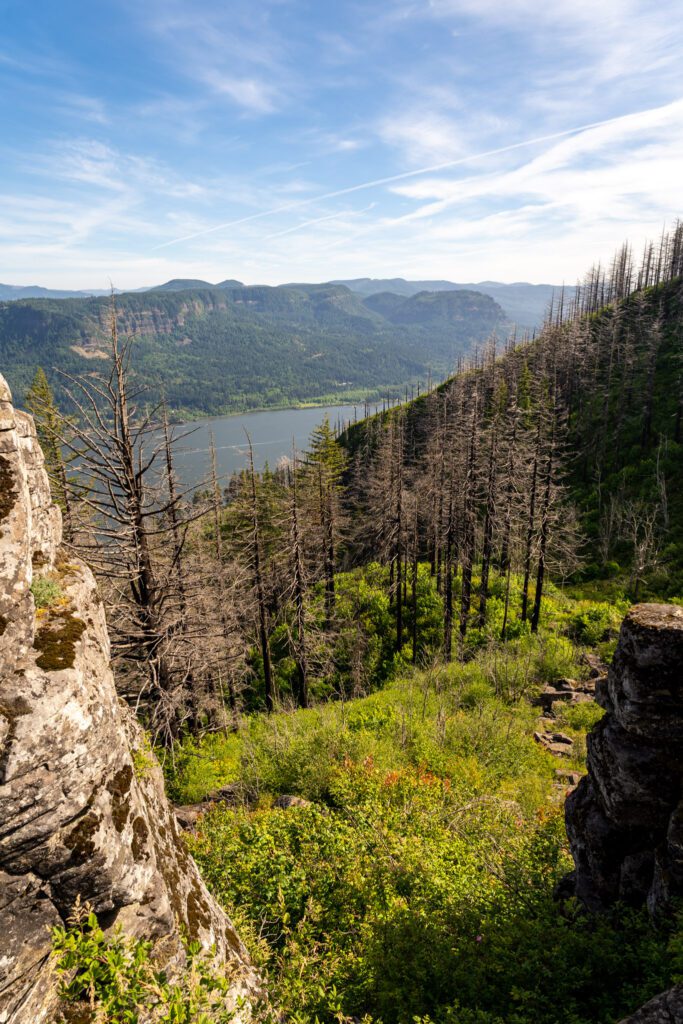
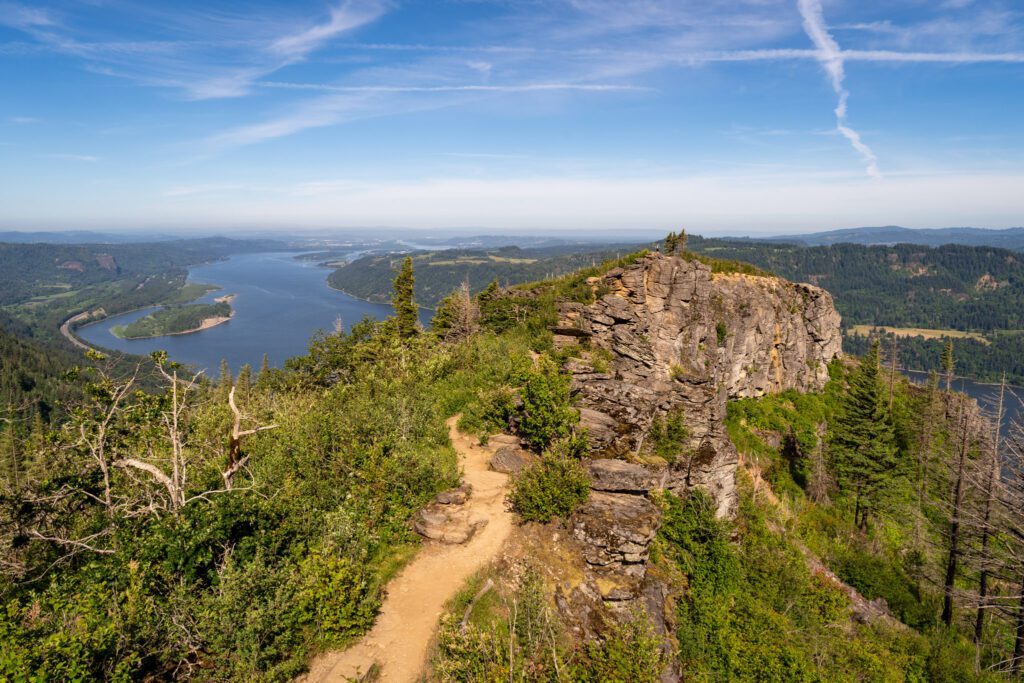
Angel’s Rest: On the Oregon side along the Historic Columbia River Highway, this is a good hike up to a rocky outcropping with excellent views out over the Gorge. Nice workout, nice views!
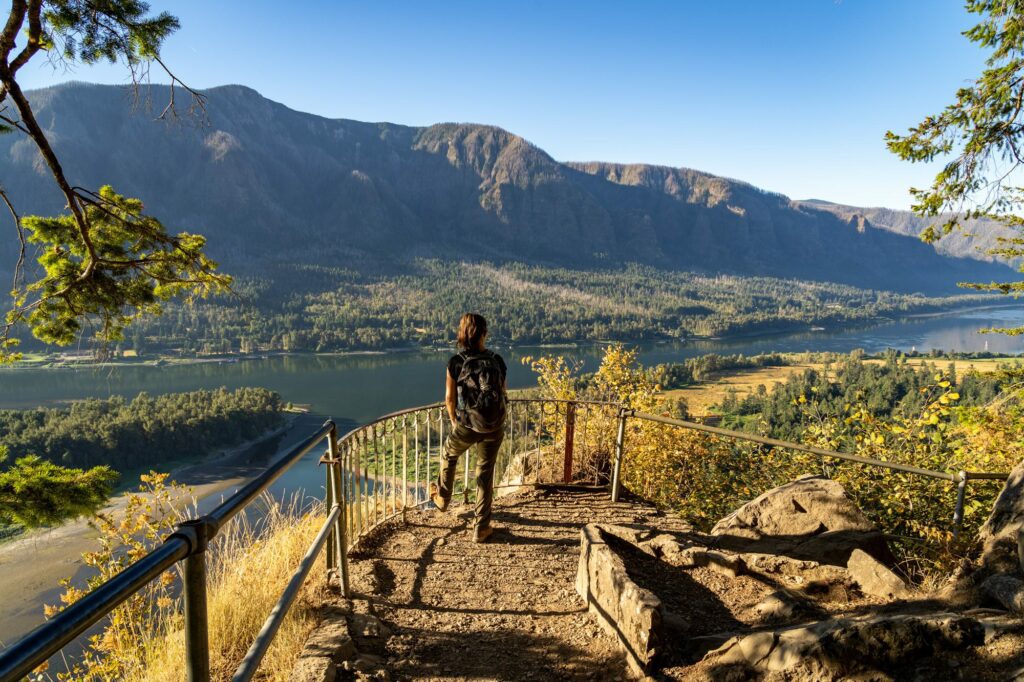
Beacon Rock: On the Washington side, this is a unique hike because it’s a manmade trail that takes you up to the top of one of the defining geological aspects of the Gorge, Beacon Rock, which juts 700 feet straight up out of the riverbed.
It’s not easy – you climb roughly 600 feet over a short distance, and we’ve seen families with kids seriously reconsidering their decisions in life about halfway up in the midst of a tantrum.
Wine Tasting Near Hood River
Taking a left turn from the numerous hiking options, let’s talk about wine tasting near Hood River!
We already mentioned a winery or two in the main section that are in the Hood River Valley, but our favorite place to go wine tasting is actually across the Gorge in Underwood Washington, which is up on a bit of a plateau with more elevation (which generally results in the style of wines that we prefer – more acidity, less tannin).
There are a bunch of wineries up on that plateau, and we’ve been to a few of them (and gotten recommendations from those that we’ve been to or other locals for a couple of other ones).
Loop de Loop: We fell in love with Loop de Loop because of their adorable pup, originally, but now we’ve been back several times and have always had a really nice interaction with the owners, and their tasting room and vineyard have a great view of Mount Hood from the back patio. We’re white wine people, and they have some great, zippy whites that we really enjoy.
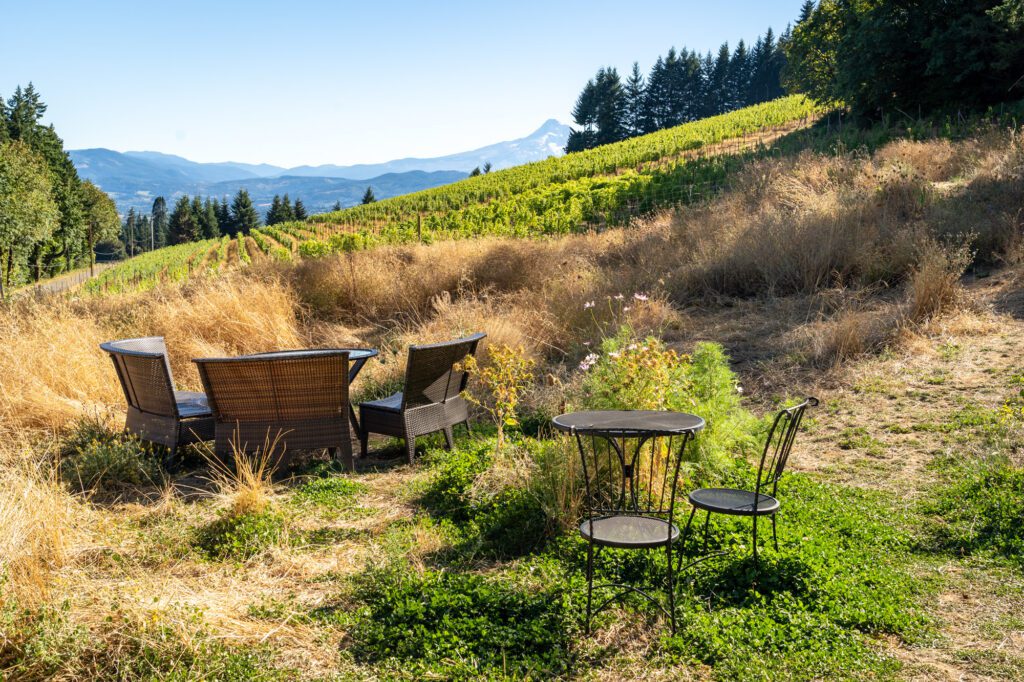
Savage Grace: Right across the road from Loop de Loop, they make some fun wines in terms of process (carbonic maceration, skin contact, etc) along with more traditional methods.
AniChe: Further up the road from the other two, this is a small operation making some really fun wines with a mix of different techniques and styles (think both zippy, high acid white wines and deep, spicy, reds).
Advance reservations are required for tastings. Outside food is welcome here, so you could put together a nice picnic in Hood River and bring it up for your tasting.
Two additional winery shout outs here that we haven’t been to but have had multiple people recommend.
First, Analemma Wines east of Hood River in the hills above Mosier, which has been recommended to us several times. Very focused on the farming side of wine, and their tasting room looks beautiful.
Second is Hiyu Wine Farm, which is a similar idea in that they’re very focused on the journey from soil to wine, and is a well known name in Portland foodie circles.
They make wine, but they also do a bunch of wine pairing dinners and other fun events on their beautiful farm just south of Hood River.
